

Sarah Jackson
Principal at SJackson LLC

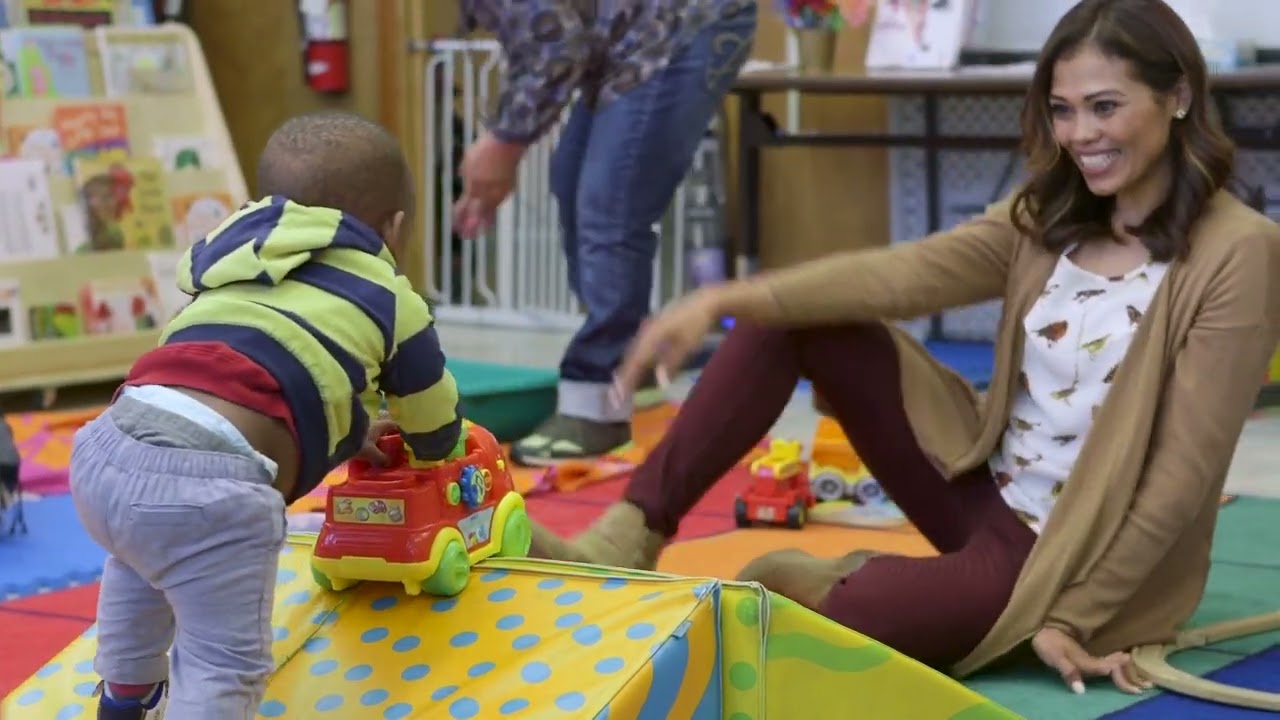
For ten years, New America followed three communities in California: Oakland, Fresno, and East San Jose as they worked to reform their early childhood systems and how teachers are trained. The goal of this work was to help the public and policymakers better understand how to improve teaching and learning so young children have a solid foundation for growth and development.
Communities in California, a state that’s often called a crystal ball for the future of the United States as a whole, struggled with issues like how to provide training across their mixed-delivery systems, for example, or how to serve incredibly diverse populations of children and families. All of this reform took place amid environmental emergencies, a global pandemic, a housing crisis, and deep economic insecurity. Many communities in other states face similar struggles: how to collaborate; how to build on local leadership and expertise; and how to rally support for young children amid competing needs and crumbling federal dollars. We hope these examples from the Golden State provide some lessons for policymaking beyond California’s borders and fuel for how to move forward to build systems to support children and families, even in the toughest of times.
Here’s just some of what we found in California:
At the buttons above, you will find information, articles, and videos on each of those communities. You will also find the full list of articles, videos, and reports we’ve published as part of our “Stronger Teaching and Caregiving for California’s Youngest” work.
New America covered California in partnership with Sarah Jackson. This ongoing reporting was made possible by a grant from the David and Lucile Packard Foundation.
Update on May 2, 2025: This page has been updated to reflect the conclusion of ten years of ongoing work in three California communities.
If California were its own country, it would have the eighth-largest economy in the world, according to the World Bank. In recent years, the state has outpaced most of the United States in economic growth, due in large part to the technology industry in Silicon Valley. Located in the southern San Francisco Bay Area, in Santa Clara County, the region is famous as the birthplace of Hewlett-Packard, Apple, and Google. The area’s rolling hills are home to Stanford University and to tony suburbs like Mountain View and Los Altos, where Facebook and Google engineers are likely to raise their families. Modest two-bedroom homes in these communities sell for over a million dollars. At the epicenter of all this is San Jose, which is often named one of the richest cities in America.
But community leaders say this valley is also a place where people do not always see what really exists. About 15 miles from Google’s campus is the Santee neighborhood of East San Jose, where 86 percent of students at the local elementary school are eligible to receive free or reduced price lunch. Eighty-one percent are English Language learners. Families here, many of whom are recent immigrants from Mexico, Central America, and Asia, often have some connection to the tech industry—working, for example, as service staff on the tech campuses or in manufacturing plants. Yet many are struggling to put food on the table.
Some of these families bought homes in far-out suburbs in central California before the recession, but lost them in the housing crisis. Today, due to the high cost of living in the region, many are now working multiple jobs and living with two to three families and as many as 12 children in two-bedroom apartments, for which they pay upwards of $2,500 a month. There are very few formal care centers for young children in this neighborhood and those who know the community well say most kids are cared for by family, friends, and neighbors. Issues such as low-quality housing, gang activity, and chronic health problems all impede children’s ability to succeed, and thrive, when they reach elementary school.
But many in San Jose recognize the importance of early learning. Thanks to robust community efforts and leadership from San Jose’s Franklin-McKinley School District, things are changing. After five years of work to build partnerships and braid public and private funding dollars, the district is now home to Educare California at Silicon Valley, the first such school in the state. The center is a full-day, full-year early learning and family support program, which is housed in a $13 million building that opened in September 2016 adjacent to the campus of Santee Elementary School. The center is meant to serve as a model early learning environment and a professional development training center. With the arrival of Educare and new support from the Packard Foundation, the school district has begun a ten-year strategy to improve the day-to-day practices of adults who work with children from birth to age five. As Educare Silicon Valley’s new executive director Lisa Kaufman told the San Jose Mercury News in September, "this is Page 1 of a very exciting journey."
The video below spotlights work by the Franklin-McKinley School District to train Pre-K and kindergarten teachers to better support children's social emotional learning.
Fresno often tops lists of the poorest cities in America. Despite its location in California’s Central Valley, one of the nation’s largest agricultural economies, this urban area suffers from high unemployment and rising economic insecurity. The effects of this poverty on the area’s young children have been grave.
Since 2010, about 10 percent of Fresno County’s licensed preschool centers have shut their doors. Nearly half of Fresno’s children live in poverty, a rate that jumped by 16 percentage points from 2007. The national attention Fresno received for its high poverty rates helped galvanize leaders here to better align their systems to support young children. This work, in turn, attracted increased investments from philanthropy. This new focus has helped increase capacity and access to early learning for children birth through age eight.
When money came in from Proposition 30, a ballot measure that increased funding for public education, Fresno Unified School District started shifting resources to the younger ages. The school district invested an initial $7.4 million in early learning in 2011, and has been making significant investments since that time. That money has helped fund 53 new pre-K classrooms, including 18 in 2012-2013. The district has expanded its transitional kindergarten (TK) programs, a new grade level created in California’s public schools in 2010. Plus, a public-private coalition has come together to increase the percentage of students who can read proficiently by third grade. Leaders are looking carefully at improving the quality of programs by supporting the adults who interact with young children in Fresno every day.
Below is a video on how educators in Fresno are working together to improve outcomes for dual language learners.
Oakland is one of California’s largest cities. The birthplace of the Black Panthers and one of the nation’s African American centers for over a century, issues of race and equality are still very present here. Today, Oakland is home to middle-class and working-class black families and an immigrant community from Asia and Latin America; more than 80 languages are spoken throughout the city. There is a 15- year difference in life expectancy between a white child born in the city's affluent Oakland Hills and an African American child born in the low-income neighborhoods in East Oakland. The city boasts an activist population and a strong connection to labor unions, and real progressive change, say those who know the city well, must come from the ground up.
In the past few years, new tech companies like Pandora and Uber and their workers have begun to relocate across the bay from San Francisco and Silicon Valley into less expensive Oakland. This has caused rents to rise rapidly, displacing many of the city’s poor and working-class residents. Teachers are in short supply and the school district is considering a plan to build below-market rental housing for city teachers. Educators and care providers in Oakland have struggled for years to adequately serve the large number of young children who are living in poverty, as evidenced by the Panthers’ Free Breakfast for School Children Program, started in 1969.
Child care centers fought to keep their doors open during the Great Recession, when state budget cuts reduced the number of subsidized child care and pre-K slots by nearly one-quarter. For years, the early childhood program within the Oakland Unified School District functioned as an “island,” separate from the rest of OUSD, and was known as the weak link in the city’s early childhood programming.
In 2009, after years of state control and struggle, the school board regained its power. And with new local leadership it embarked on a robust community engagement process. A new strategic plan includes a cradle-to-career vision and lays out early childhood as a key component of the district’s future priorities. OUSD has become a full-service community school district with an emphasis on partnering across systems and organizations in the city to provide wrap-around services for Oakland’s children in order to address multiple needs and deep disparities.
And more change is coming. With new investments from the Packard Foundation that build on these partnerships, and national attention on the state of the early childhood workforce brought by the landmark Transforming the Workforce study from the Institutes of Medicine, Oakland has begun a ten-year strategy that aims to create universal access to high-quality early learning for children throughout the city. The school district hired a deputy chief of early learning, a new position. And leaders have created a collaborative structure to enable cross-sector participation, including funders, advocates, service providers, and OUSD district staff, all of whom are working together to develop a system of care for children who live in Oakland.
The video below highlights the school district's work to partner with those who care for children before they enter school: families, friends and neighbors.
This blog series, “Stronger Teaching and Caregiving for California’s Youngest,” examines teaching and caregiving in California through a broad lens. Written by policy analysts from New America and journalists from HiredPen, we explore policy and practice challenges and solutions to improving teaching and caregiving in the state. Topics in this ongoing series include budget analysis, policies for dual-language learners, and partnerships to improve training and professional development for all of the adults who work with young children in California’s communities. We examine how communities are working to provide support to informal care providers, look up close at how some districts in the state are providing unique training for principals to give them a deeper understanding of early child development. And much more.
For ten years, New America followed three communities in California: Oakland, Fresno, and East San Jose as they worked to reform their early childhood systems and how teachers are trained. The videos in this collection were produced as part of that decade of interviews and analysis to help the public and policymakers better understand how to improve teaching and learning so young children have a solid foundation for growth and development. These videos document promising efforts to support early childhood educators in San Jose, Fresno, and Oakland.
The video below spotlights work by the Franklin-McKinley School District to train pre-K and kindergarten teachers to better support children's social emotional learning.
Below is a video on how educators in Fresno are working together to improve outcomes for dual language learners.
The video below highlights the school district's work to partner with those who care for children before they enter school: families, friends, and neighbors.
Local Lessons from a Decade of Early Childhood Reform in California
The video below examines ten years of work in three communities in California to build local training programs for teachers and child care providers and the ingredients that led to their success.
Update on May 2, 2025: This page has been updated with a new video examining ten years of work in three California communities.
New America is reporting on how communities in California are reforming the way early childhood systems work and the way teachers are trained. Our aim is to help the public and policymakers better understand how to improve teaching and learning so young children have a solid foundation for growth and development. Our reporting has a special focus on Fresno, Oakland, and San Jose.
These reports dig into promising work across California, explore efforts to improve teaching and caregiving for young children in three communities, and offer recommendations for improving California workforce policies.
Principal at SJackson LLC
Senior Fellow, Early & Elementary Education
Senior Director, Birth to 12th Grade Policy; Co-Founder and Director, Learning Sciences Exchange
Director, PreK–12 Research and Practice