
Making the Case for Community College Baccalaureates
This analysis of the supply of degrees and workforce demand in two Midwest states provides methods showing where CCB programs are needed.
A collection of resources on how community colleges can offer bachelor's degrees
Across the country, states are responding to local labor market needs and student interest by authorizing community colleges to offer bachelor’s degree programs. Our team has been researching and curating stories about how these programs are impacting people and communities. Here, we offer a collection of our writing and analysis on the community college baccalaureate and its place in the higher education landscape.
This analysis of the supply of degrees and workforce demand in two Midwest states provides methods showing where CCB programs are needed.

This brief illuminates the variety of strategies states use to fund community college bachelor's degree programs.
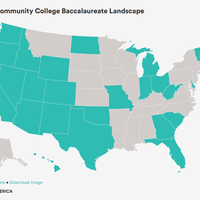
Until now, no comprehensive data set has been created on community college baccalaureate (CCB) programs across states. While states that have long authorized CCB programs, such as Florida and Washington, offer some publicly available data on state agency websites, these offer limited views of the national count of CCB programs and do not capture the many states with fewer or newer programs. Current and accurate data on the number of programs, types of programs, and institutional characteristics of conferring institutions can help policymakers and institutional leaders see when and how CCB programs are supporting students in other communities and states and whether this type of program could similarly benefit their community.

More and more states are passing new laws that allow community colleges to offer bachelor's degree programs. But what are the differences between community college bachelor’s (CCB) degree programs in urban areas versus rural areas?
Our new research shows that community college bachelor’s degree programs have made higher education more affordable, accessible, and equitable in communities of all sizes and in all settings.
But in urban settings, 4-year community college degree programs tend to offer an affordable pathway into high-demand occupations. Meanwhile, in rural areas, they may offer the only local bachelor’s degree option. Furthermore, the types of programs tend to differ between urban and rural areas. For example, community colleges in rural areas tend to offer more agriculture, engineering, and nursing 4-year programs, while urban community colleges tend to offer more IT 4-year programs.
To understand more examples and nuance, New America’s Center on Education & Labor is pleased to share a new research brief with further evidence on the value and impact of CCB programs in America.

In this report explores the demographic characteristics and labor market outcomes of baccalaureate graduates from the Florida College System and compare them to associate degree graduates in similar fields. Better understanding of who CCB graduates are—including how they may differ from other students—and whether they reap better economic rewards than associate degree graduates will shed light on the value these programs bring to equity, access, and attainment conversations. Using state data on three cohorts of graduates, the report analyzes disaggregated data by race, age group, and gender. The three main sections of this analysis focus on the demographics of graduates in the sample and how they compare to the population of Florida, rates at which graduates are employed or pursue further education, and graduates’ wages. This research provides additional data on the outcomes of community college baccalaureate degrees for graduates, which can in turn inform state policy to support and target these types of degree programs.

As additional states embark on the process of implementing four-year degrees at community colleges, they can learn from others’ experience for help navigating the legislative, regulatory, and program approval processes. This brief uses examples from states currently offering bachelor's degrees at their community colleges to provide guidance for policymakers setting up these degree programs.

Across the country, states are responding to local labor market needs and student interest by authorizing community colleges to offer bachelor’s degree programs. Our team has been researching and curating stories about how these programs are impacting people and communities. Here, we offer a toolkit on community college baccalaureates and its place in the higher education landscape for advocates to use when speaking with policy and decision makers.

In this report, we will use data from Florida and Washington to illuminate who CCB students are and how they fare at various points along a CCB journey, from enrollment decisions to employment and wage outcomes after graduation. The results of our analysis suggest that CCBs provide an important baccalaureate access point for adult students and that graduates have strong employment and wage outcomes. Our analysis forms the basis for recommendations for policy and future research.

Until now, there has been little research on the education and career pathways of community college baccalaureate (CCB) students. This research provides qualitative results on who these students are, what information and opportunities drive them toward completion of their programs, and what the CCB degree means to them. The data suggest most of these students are not those who otherwise would have enrolled at a regional public university. For many, the CCB programs took their prior learning into account and used flexible schedules to accommodate their work and family needs. Students felt these programs were designed with adult learners like them in mind, allowing them to enter or stay in programs where they felt supported and able to complete their bachelor’s degree.
Read full findings: https://www.newamerica.org/education-policy/briefs/evaluating-the-student-experience-at-community-college-baccalaureate-programs/

It’ll take time for CCB programs to scale up in California to fill gaps in program offerings, but having the door open to do so is a massive, welcome change.

The recent rise in the number of states authorizing community colleges to implement bachelor’s programs sets up the potential for additional analysis, including comparing this new expansion to what has transpired in early adopting states such as Florida and Washington.

In 2021, one state authorized CCBs for the first time, others expanded opportunities for CCB to new fields and additional institutions, and still more are examining the possibility of bringing CCBs to their state.

Community college baccalaureates are becoming more popular with 24 states now authorizing CCBs. Recent work details the increasing popularity of this strategy particularly in applied occupational fields.

With nearly half of states now authorizing CCB degrees, mirages are disappearing and paths forward for adult learners are emerging across the country

When a recession hits, we know that people with bachelor’s degrees tend to fare better than those without. In the time of COVID-19, the economic stability that a bachelor’s degree can confer is more important than ever. While increasing bachelor’s degree attainment across the country requires many different strategies, a promising one is the community college baccalaureate (CCB).
Read full story here.

A large majority of students who start at a community college with the intention of completing a bachelor’s degree don’t, putting them at a disadvantage in today’s economy. One strategy 23 states have adopted is to allow community colleges to offer “applied” baccalaureate degrees in what were once terminal associate degree areas.
Recently, there has been a wave of states authorizing community colleges to confer four-year degrees. However, these degrees – often called applied baccalaureates – are still fairly new to the higher education landscape. With such a short window of time, research on these programs is relatively sparse. New analysis from trusted sources on community college baccalaureates is a welcome addition to the research literature and our understanding of how this college access strategy.
Read full story here.

It makes perfect sense that community college baccalaureate (CCB) degrees would be magnets for nontraditional degree seekers. In my day-to-day advising for Green River College’s bachelor’s program in Software Development, I often hear the common refrain of “cost, convenience, and applicability” when talking to students about why they’re opting to earn their bachelor’s degree at a community college instead of a university.
Read full story here.
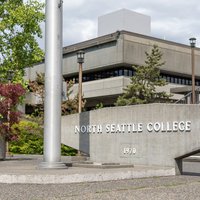
Despite its reputation for tech opportunity, Seattle job market holds little promise for those without a bachelor’s degree. North Seattle’s applied bachelor’s provides an affordable and dynamic new pathway.
Read full story here.


One of only four programs of its type, Centralia's applied bachelor's in diesel technology strikes the right balance of breadth and depth in academic and industry-focused higher education.
Read full story here.

A 5-year retrospective on launching an applied baccalaureate in software development.
Read full story here.

Almost half of states now authorize community colleges to confer baccalaureate degrees.
Read full story here.

Starting a bachelor’s degree in a community college can save students and families thousands of dollars to learn similar material. But the value proposition depends on the student successfully transferring into a four-year institution with standing as a junior, with a full two-years worth of college credit under their belt, and without having to repeat or add new coursework.
Read full story here.

Four-year degrees at the community college can help address equity gaps in degree attainment and create affordable pathways to the bachelor’s degree. They can’t deliver on this promise if they aren’t at widely available. Re-imagining what higher education should be is hard work, but it's time that both 2-year and 4-year institutions do this work – together.

Colorado, like many places around the country, needs more nurses faster than colleges and universities can prepare them for practice. Cities like Pueblo, Fort Collins, Colorado Springs, and Grand Junction are projected to feel the shortage the most acutely, lacking enough nurses to meet patients’ needs. The most expedient way to prepare new registered nurses for the profession is through two-year associate degree programs. Moving students through associate programs in nursing and getting them into the field quickly can help Colorado address the number of new nurses they need working in the state.

This sense of belonging for students who have been successful at a two-year college can be a powerful driver for continuing their education at the same college. In fact, students who have faced the kinds of challenges that Monica has faced may not want to continue their education at any other institution. For them, access means offering the degree they need for the career they are pursuing at their home institution.

In conjunction with EdScoop’s IT Modernization Week, we participated in a webinar discussion on where and how CCB programs are connecting students to opportunity. We cover the basics of where these programs are available, the most common majors, equity implications of CCBs and more.


Community colleges in Arizona can now offer four-year programs, providing more affordable and streamlined pathways to bachelor's degrees.

Debra Bragg was quoted in Higher Education Dive about opening up opportunities for students to earn their bachelor's degree at community colleges in Arizona.

Justin Smock had started along a well-trodden path. Like many others, he graduated from high school and went straight to community college to earn an associate degree. He felt a tug toward sign language interpretation and went back to school to earn a Registry of Interpreters for the Deaf certification. While he thought about pursuing his bachelor’s degree – he even applied to the University of Washington – he really didn’t see the need.
This study examines employment and earnings outcomes for Bachelor’s of Applied Science (BAS) degree-holders who graduated from a Washington community and technical college baccalaureate (CCB) program1 in business, computer and information sciences, healthcare, and visual and performing arts. These graduates are compared to graduates from public regional four-year universities in Washington in similar program areas. Results show both groups have high employment match rates in all four program areas, with CCB graduates demonstrating a slightly higher employment match rate than university graduates.
This study examines the employment and earnings of Washington Bachelor’s of Applied Science (BAS) graduates in business, computer and information sciences, healthcare, and visual and performing arts. We report results of two studies that find high employment match rates and increasing annualized earnings over time for BAS graduates of all four programs.
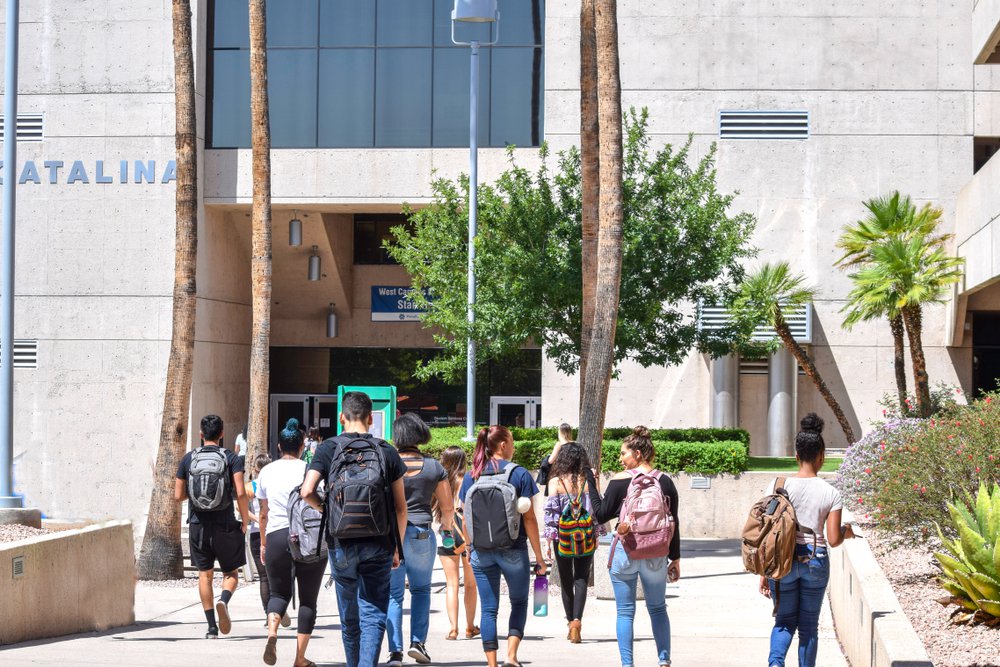
Inside Higher Ed published a story about how graduates of bachelor's degree programs at Canadian community colleges initially earn 12 percent more than university-educated counterparts, but their advantage quickly starts to shrink.
September 19, 2019

Mary Alice McCarthy wrote an article for Washington Monthly on baccalaureate programs at community colleges.
August 26, 2019


Ivy Love, wrote for the Evolllution on community college baccalaureate programs. She explored three aspects of the program proposal and launch process that community college leaders may want to keep in mind.
June 12, 2019
Community college presidents believe they should be allowed to award bachelor's degree to reach students left behind by traditional four-year institutions. Growing evidence says they're right, Mary Alice McCarthy writes in Inside Higher Ed.
April 12, 2019

The conversation around community college baccalaureate programs in Florida started in the 1990s, as leaders were pondering how to address the state’s position as one of the lowest states in the nation for bachelor’s degree attainment. The state set out to employ several strategies to increase access to bachelor’s degrees, and one strategy that quickly took hold was authorizing community colleges, like Miami Dade, to confer bachelor’s degrees.

New forms of baccalaureate degrees (Applied Baccalaureates and Community College Baccalaureates) are emerging throughout the United States, many of which focus on new and emerging occupations associated with science, technology, engineering and mathematics (STEM), career-technical education (CTE), and other fields of study. Many universities confer these degrees but increasingly they are conferred by community colleges that have historically awarded the associate’s degree as their highest credential. The CCRI group is grateful to the Joyce Foundation, and Lumina Foundation for their generous funding of this research and development work in this area.

The conversation around community college baccalaureate programs in Florida started in the 1990s, as leaders were pondering how to address the state’s position as one of the lowest states in the nation for bachelor’s degree attainment. The state set out to employ several strategies to increase access to bachelor’s degrees, and one strategy that quickly took hold was authorizing community colleges, like Miami Dade, to confer bachelor’s degrees.