2025 Year in Review
Highlights from the Fellows Program
Blog Post
Jan. 12, 2026
The Class of 2026
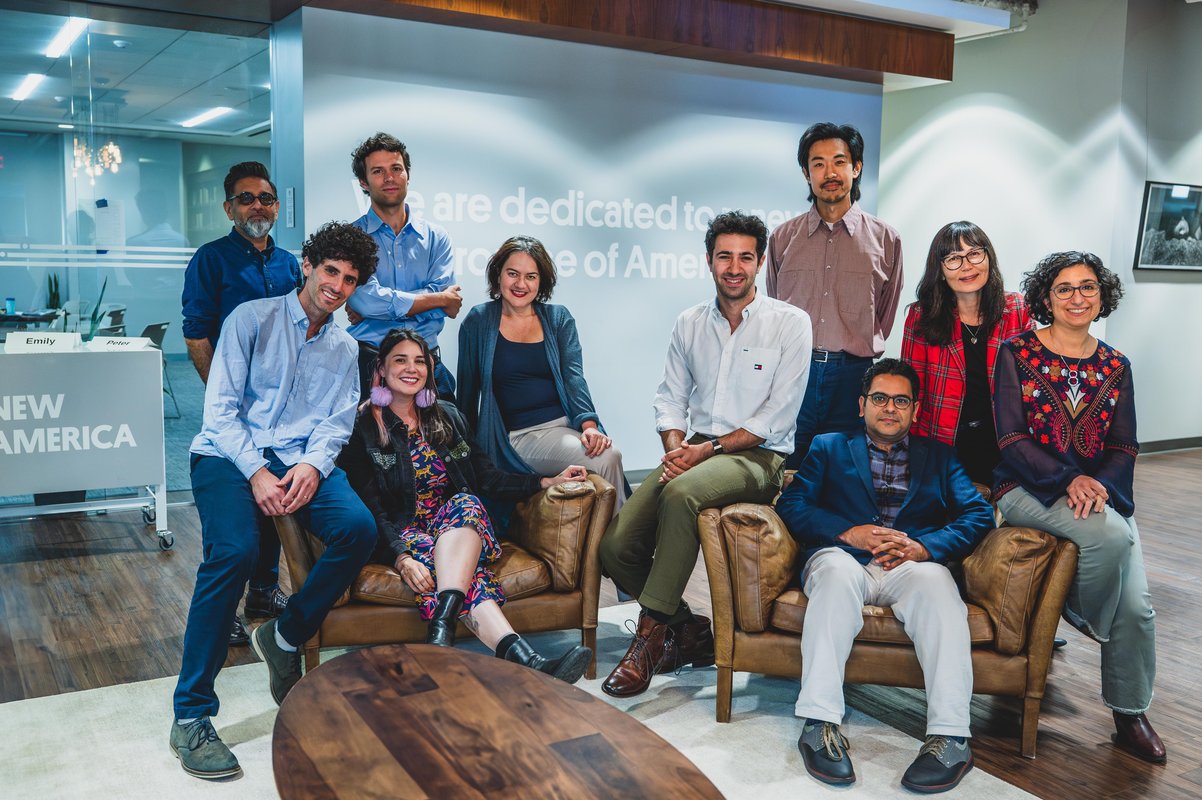
The Class of 2026 New America Fellows in Washington, DC.
At the beginning of this year, we received nearly 400 applications and selected 10 Class of 2026 New America Fellows who are advancing nine books and one film. Meet the Class of 2026 and explore the applicant pool in our Who Applied? Report.
The Year in Books
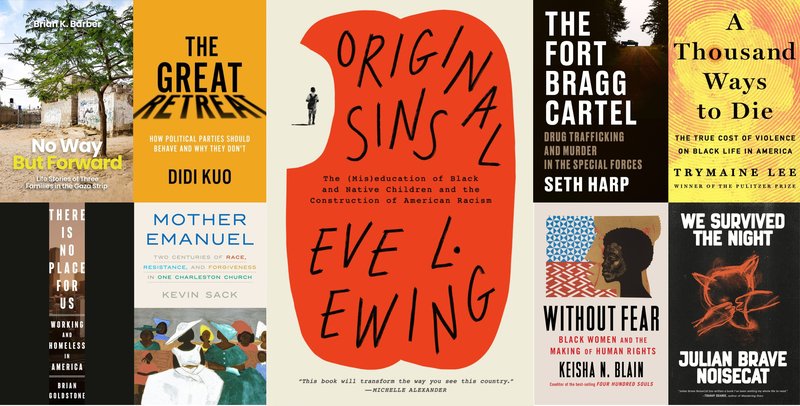
Our Fellows’ 2025 book releases drew significant attention across national and literary media, with multiple titles landing on bestseller lists, best-books roundups, and award longlists. Explore the interactive timeline below to see each publication by month.
Timeline
The Fellows Program supported the publication of nine books in 2025
In January, Brian K. Barber published No Way But Forward: Life Stories of Three Families in the Gaza Strip. The book has been praised for its deeply human portrayal of life in Gaza and was a 2025 finalist for the Independent Author Network’s Book of the Year Awards, recognizing its strength as a compelling narrative of resilience and survival.
In February, Didi Kuo released The Great Retreat: How Political Parties Should Behave and Why They Don’t. The book was reviewed in Democracy Journal, recognizing it for its sharp analysis of party decline and democratic dysfunction, and for offering a timely framework for rethinking the contemporary role of political parties.
In March, Eve L. Ewing’s Original Sins: The (Mis)education of Black and Native Children and the Construction of American Racism debuted at #15 on The New York Times Hardcover Nonfiction Bestseller List and a few weeks later appeared on Publishers Weekly’s list of “Four Books About Racism in U.S. Education.” The book was named one of Esquire’s “35 Best Books of 2025,” received a starred review from Publishers Weekly, and was featured in the New Yorker’s “Briefly Noted” column. Original Sins was longlisted for the Carnegie Medal in Nonfiction.
A second March publication was Brian Goldstone’s There Is No Place For Us: Working and Homeless in America, which garnered extensive national attention and was widely reviewed, including in The New York Times, The Washington Post, The Wall Street Journal, Rolling Stone, The Nation, and the Los Angeles Review of Books. It was recognized on The Atlantic’s “10 list,” was listed as one of “50 notable works of nonfiction from 2025” by The Washington Post, and named one of The New York Times’ “10 Best Books of 2025” as well as one of “100 Notable Books of the Year.” Goldstone was named a finalist for the 2026 Andrew Carnegie Medal for Excellence in Nonfiction.
Kevin Sack’s Mother Emanuel: Two Centuries of Race, Resistance, and Forgiveness in One Charleston Church was published in June. The book was reviewed in The New York Times, was also named one of The New York Times’ “10 Best Books of 2025,” as well as one of its “100 Notable Books of the Year.” Mother Emanuel was also included on NPR’s “Books We Love” list.
Seth Harp’s The Fort Bragg Cartel: Drug Trafficking and Murder in the Special Forces debuted in August at #5 on The New York Times Hardcover Nonfiction Bestseller List and became one of the year’s most talked-about works of investigative reporting. The book has been widely praised, garnering a review from Publishers Weekly and coverage in The New Republic, The New York Times, and The New Yorker, which named it one of “The Best Books of 2025.”
In September, Trymaine Lee published A Thousand Ways to Die: The True Cost of Violence on Black Life in America, a deeply reported blend of memoir and social history that has drawn strong critical praise, including a laudatory review from Kirkus Reviews and prominent coverage on PBS NewsHour, NPR, and CBS, for its searing account of the generational toll of violence on Black communities.
Another September publication was Keisha N. Blain’s Without Fear: Black Women and the Making of Human Rights received strong critical recognition and major award attention. Honoring its contribution to scholarship on human rights and Black women’s political leadership, the book was longlisted for the Carnegie Medal in Nonfiction and was reviewed in the Los Angeles Review of Books.
The last book release of 2025 was Julian Brave NoiseCat’s We Survived the Night, which, immediately after its publication in October, was met with widespread critical attention across literary and national media. NoiseCat’s book was named one of The New Yorker’s “The Best Books of 2025.” It was listed in Harper’s Bazaar among the “30 Best Book Releases of Fall 2025,” on NPR’s “2025 Books We Love” list. We Survived the Night was also on the November “Book Club list” by Publishers Weekly and was recognized by Orion Magazine as one of “12 New(ish) Reading Recommendations.” For his book, NoiseCat was profiled in The Washington Post, and he discussed the book on NPR’s “Fresh Air.”
The Year in Films
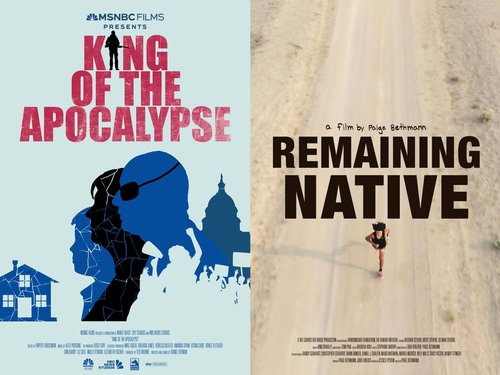
Paige Bethmann’s documentary Remaining Native premiered at the SXSW Film Festival, where it won the Special Jury Award and the Audience Award in the Documentary Feature Competition. Widely praised by critics, the film was recognized for its powerful portrayal of Indigenous resilience and identity, with reviews in Variety, Forbes, and Outside.
Mike Giglio released King of the Apocalypse, a feature-length documentary that delves into the American militia movement and the rise of the Oath Keepers, providing unprecedented access to founder Stewart Rhodes and his family. The film premiered on Sky Documentaries in January and later aired on MSNBC in February, offering a compelling and personal perspective on extremism in contemporary U.S. politics.
The Year in Longform
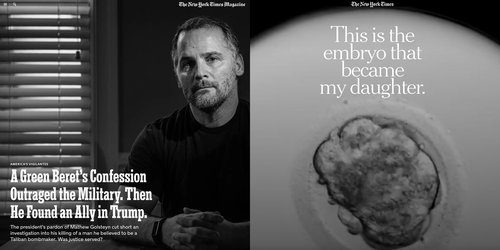
Victor J. Blue and Matthieu Aikins collaborated on “America’s Vigilantes,” an in-depth longform investigation for The New York Times Magazine that traced war crimes and impunity within the U.S. Special Forces in Afghanistan. The series uncovered previously hidden details about misconduct, military culture, and the consequences of battlefield vigilantism, drawing on years of reporting and interviews with military personnel.
Anna Louie Sussman published “The Embryo Question,” a three-part opinion series in The New York Times that investigates the ethical, legal, and scientific frontiers of reproductive technology and human embryos. The series shows how emerging scientific capabilities are straining existing laws and moral frameworks, inviting readers to reconsider long-held assumptions about embryos, science, and reproductive choice.
More New America Fellows Achievements
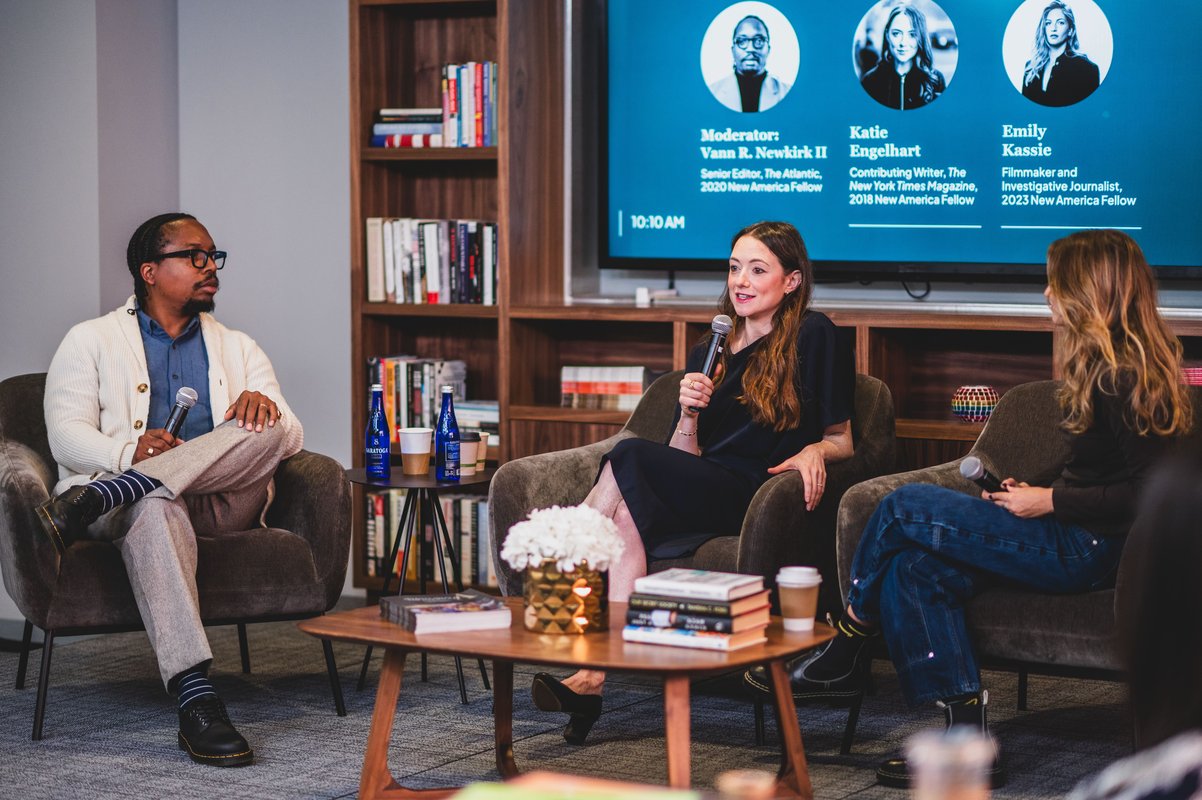
Vann R. Newkirk II (left), Katie Engelhart (center), and Emily Kassie (right) speaking the Class of 2026's Opening Program
- Sugarcane, directed by Emily Kassie and Julian Brave NoiseCat, earned an Academy Award nomination for Best Documentary Feature, won Best Documentary from the National Board of Review, received a Directors Guild of America nomination for Outstanding Directorial Achievement in Documentary, won a Cinema Eye Honors Award for Cinematography, and was nominated for a Peabody Award.
- I Am Ready, Warden, produced by Keri Blakinger, earned an Academy Award nomination for Best Documentary Short Film.
- Rose Eveleth’s podcast Tested received a Peabody Award nomination in Podcast & Radio.
- Tanisha C. Ford won the Hooks National Book Award for Our Secret Society: Mollie Moon and the Glamour, Money, and Power Behind the Civil Rights Movement.
- JoeBill Muñoz’s film The Strike received a Gold Anthem Award recognizing its human rights impact.
- Abrahm Lustgarten was named a finalist for the New York Public Library’s Helen Bernstein Book Award for Excellence in Journalism for On the Move: The Overheating Earth and the Uprooting of America.
- Caleb J. Gayle’s Black Moses: A Saga of Ambition and the Fight for a Black State was longlisted for the National Book Award in Nonfiction.
- The paperback edition of Jonathan Blitzer’s Everyone Who Is Gone Is Here: The United States, Central America, and the Lives In Between debuted at #7 on The New York Times Paperback Nonfiction Bestseller List.
- Both Sheri Fink and Marcia Chatelain were named 2025 Guggenheim Fellows, joining the foundation’s 100th class of exceptional artists and scholars.
2025 Opinion Spotlights
- Brian Goldstone examined the crisis of working homelessness in America, offering a critical analysis of the systemic pressures that leave people without stable housing despite full-time employment and the human costs of an uneven labor and housing system.
- Julian Brave NoiseCat wrote about Sugarcane’s Academy Award nomination, reflecting on Indigenous storytelling and the power of documentary film to expand public understanding of overlooked histories.
- Kevin Sack discussed efforts by the federal government to erase references to slavery from historical sites and national parks, arguing that confronting the full scope of American history is essential to understanding the nation’s shared past.
- In a personal essay, Julian Brave NoiseCat explored fatherhood and generational healing, drawing on his own experiences to examine how relationships and family shape identity and resilience.
Katrina’s America: 20 Years Since the Storm
In July, New America convened Katrina’s America, a symposium marking twenty years since Hurricane Katrina reshaped New Orleans, the Gulf Coast, and the nation. Bringing together 163 participants—including expert Fellows and speakers—the event examined how the disaster exposed enduring failures in infrastructure, governance, media, and racial and economic inequality, and how those fault lines continue to shape public life amid climate change and displacement.
Katrina’s America was curated by Vann R. Newkirk II and organized in collaboration with the New America Fellows Program, the Future Security Program (a partnership with Arizona State University), and the New America Executive Office, with support from the John D. and Catherine T. MacArthur Foundation.
25 Great Thinkers
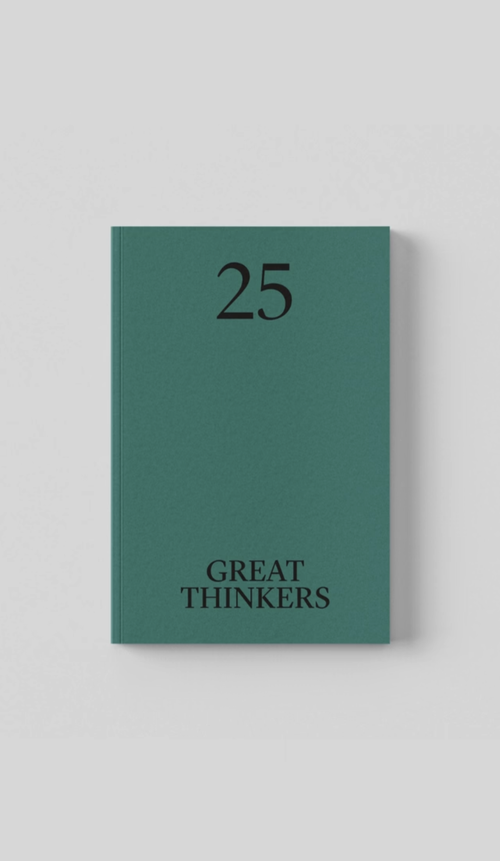
To mark New America’s twenty-fifth anniversary, the Fellows Program published 25 Great Thinkers, a special collection of Q&As and stories about 25 New America Fellows reflecting on their work and its impact. Together, these stories explore how Fellows confront power, pursue truth, and reimagine what is possible in moments of uncertainty and change.
Spanning journalism, scholarship, art, and advocacy, the collection showcases the breadth of the Fellows community and the shared commitment to public-facing work that challenges assumptions, centers lived experience, and expands democratic imagination. 25 Great Thinkers serves as both a celebration of the program’s first quarter-century and as a testament to the role Fellows continue to play in shaping public discourse.
On the Horizon: Into 2026
Looking ahead to 2026, the work continues. In the first half of the year alone, 15 new books, and counting, by New America Fellows will be released, ranging from investigations of political media to reporting on caregiving, mental health, cultural power, and histories of resistance and survival. Alongside new reporting, films, and long-form projects already underway, these forthcoming releases point to another year of ambitious, public-facing work that will shape important public debates.
Keep an eye on the Fellows Archive and sign up for our monthly newsletter, The Fifth Draft, to stay up to date with the latest new work by our New America Fellows.
About the Fellows Program
In 2025, New America celebrated its twenty-fifth anniversary, reaffirming its commitment to placing bold ideas and new voices at the center of public life—and helping turn them into action. From cybersecurity to racial justice, New America’s research and advocacy have shaped public understanding, informed policy, and influenced the tools people use every day.
The Fellows Program embodies that mission. Over the past 25 years, 305 Fellows—journalists, scholars, artists, and public thinkers—have produced 180 books, 43 long-form reporting projects, 18 documentary films, and two podcast series that surface overlooked narratives and expand the public debate.