A Chapter of: Vermont Needed Child Care; Here’s How They Got It
Building a Legislative Case and Growing Grassroots Support
For Adam Necrason, Let’s Grow Kids was never just about lobbying for child care in the state. It was about changing public opinion, about what child care was and who it was for.
“You need to get public opinion to 80 percent in support of this initiative,” Necrason recalls telling Davis in 2014, just as he was pulling a team together to begin Let’s Grow Kids’ legislative work. “When you do, it will click and go.”
Necrason was a longtime state lobbyist. He’d been part of the team that helped usher in Vermont’s first-in-the-nation civil unions, marijuana legalization, and renewable energy standards. Necrason wanted Davis to achieve a series of small victories over the 10-year period, starting small and then building up, growing public support and a team of grassroots advocates along the way.
The plan was to “build an activist ladder where people feel success every step of the way,” he said. “You break change down in a step-by-step process and get everyone on board from the activist to the lawmakers to the nervous budget writers to the anxious philanthropist working step-by-step, sunup to sunrise, and to round up support for major change.”
Necrason and his colleague Rebecca Ramos would serve as the external lobbyists, an annual contract they signed in 2014, as Let’s Grow Kids was just beginning, and that continues today with Let’s Grow Kids Action Network. But Let’s Grow Kids would also need its own legislative team. One of the early hires was Sarah Kenney to lead Let’s Grow Kids’ policy team. Kenney had more than a decade of experience in state advocacy, working on behalf of survivors of domestic and sexual abuse. It was up to Kenney, Ramos, and Necrason to explore ways in which Let’s Grow Kids could build a child care system in the state.
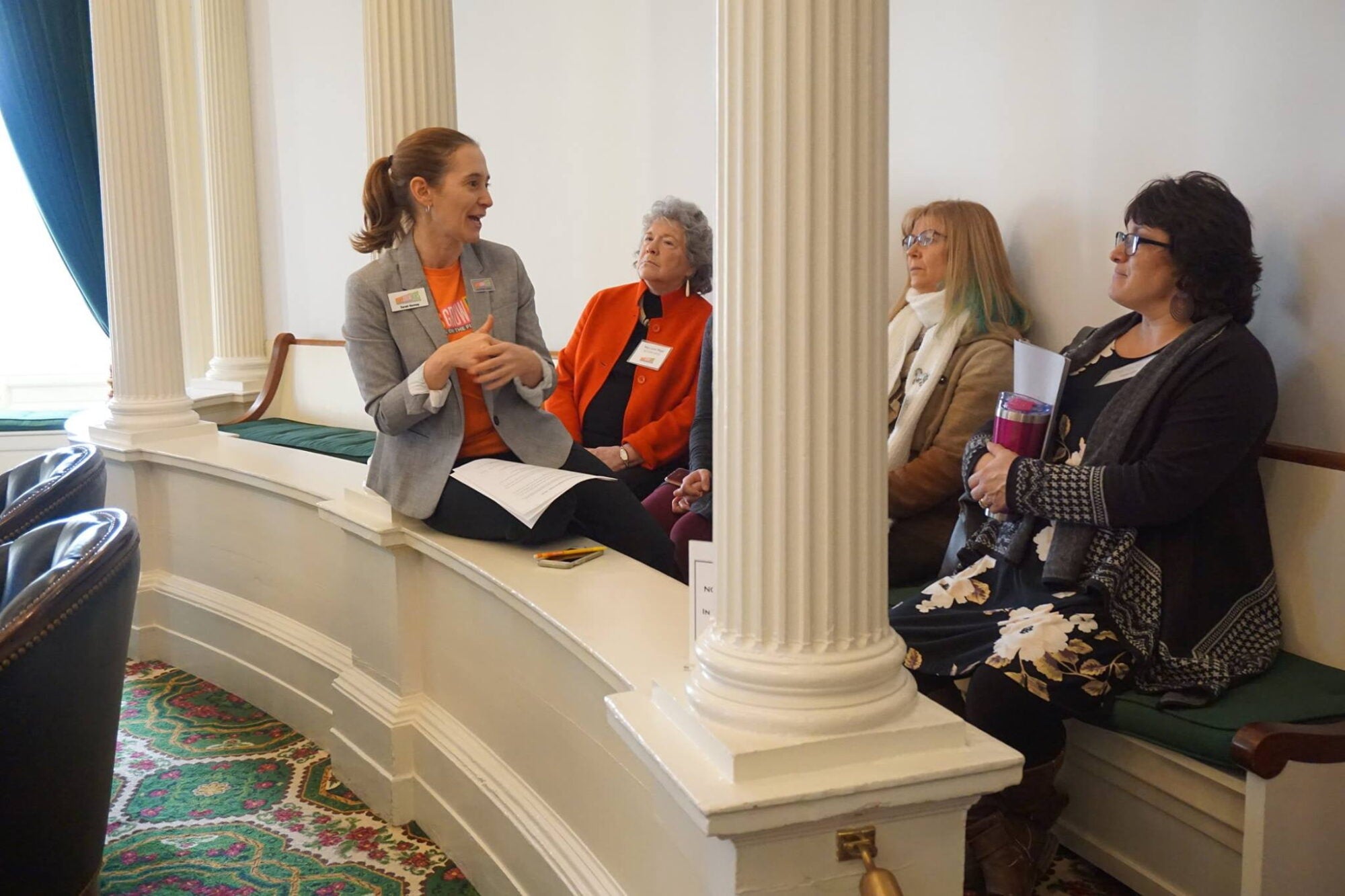
Photo courtesy of Let’s Grow Kids Action Network, used with permission.
In addition to a legislative strategy, they wanted to explore all angles that could build child care infrastructure. One idea that was floated and researched, but quickly ruled out, was a judicial strategy. The policy team envisioned a scenario in which a state lawsuit could be filed about equal access to education from birth to age five.17
“We talked to some attorneys about what it would take, had a pile of research about this strategy, but it wasn’t going to work,” said Kenney. Even if such a lawsuit would win, the state would still lack financial resources to implement any meaningful infrastructure, or if they did it would come at the cost of some other important expense. And though Vermont had changed its K–12 system after a lawsuit, there was no judicial precedent in the country for child care or early education.
A second idea was to fund a child care program using money from the health sector, likely Medicaid funds. This took on a more sustained, researched approach, spanning five years. They contracted with several consultants with backgrounds in health care and early childhood education to explore how the model could work.
Vermont is unique in that it has a Global Commitment Waiver for Medicaid dollars, which allows the state to use federal Medicaid funds more broadly, including for prevention services.18 The argument could be made, the team reasoned, that quality early child care could fall into that category of prevention services, especially against adverse childhood outcomes.
Let’s Grow Kids hired a full-time staff member, Beverly Boget, to look into this option and set up pilot projects through the University of Vermont College of Medicine, exploring ways to leverage the state’s children’s health care system to provide funding for early childhood education. The team also convened a group of pediatricians to weigh in on how child care could fit into the Medicaid payments system.
“We eventually decided it was too logistically complicated and too politically complicated,” said Kenney. At the time, no state had used Medicaid for early education, and further exploration showed that Medicaid or any sort of tax or deferred payment from the health care industry wouldn’t provide the reliable income stream a universal child care system would need. Vermont already had some of the highest health care costs in the country, driven by a variety of factors, including an aging population. The legislative team made the decision to not entwine child care and health care. “We already have so many Vermont politicians trying to solve the health care crisis,” said Kenney. Boget pivoted to work with the health care industry to find child care champions among health care professionals, and the champions in that early pediatrician working group would later become some of the most vocal supporters in favor of the legislative work Let’s Grow Kids was doing.
The third approach was finding a way for the state to pass legislation to create child care infrastructure, but that required funding. Successful infrastructure change would require consistent, stable funding, and that meant identifying a revenue source.
At the time, there was no legislative precedent for child care funding on the universal scale that Vermont was seeking. It wouldn’t be until 2018 that the District of Columbia would launch the first birth-to-three initiative targeting child care for infants and toddlers, with the goal of moving toward universal access. And the team, recalls Kenney, wasn’t ready to say they wanted to raise taxes.
“We didn’t even know how much we needed,” said Kenney, though they were confident it would be a large number. Child care, with its low teacher-to-student ratios, is expensive—and quality child care includes paying teachers livable wages commensurate with experience and professional training. They didn’t need a shot in the arm of funding; they would need a revenue stream that would keep replenishing itself. Before they could even begin to brainstorm effective revenue sources, they’d need to know how much this child care system would cost.
But how much does one even ask for? Kenney remembered thinking. They didn’t want Let’s Grow Kids to be the ones to come up with the number. The advocacy group coming hat in hand to the state legislature with an outlandish ask would undermine their credibility. The number, they knew, would need to come from a respected entity that would be able to focus exclusively on Vermont’s needs, population, and demographics.
So, in 2015, Let’s Grow Kids knew what its first legislative initiative would be: finding out just how much universal child care in Vermont would cost.
The Blue Ribbon Commission
Necrason had lobbied the state legislature for almost two decades before he began working with Let’s Grow Kids, and he knew that child care was a topic that hadn’t seen a lot of legislative momentum previously. He envisioned small, incremental wins each legislative session to transform legislators who had no strong opinions on child care into “child care champions” who would then have buy-in to creating a robust system. While the actual cost of funding a child care system was murky, it was crystal clear to all involved that it would be a large number. They would need time, Necrason knew, to build that support and desensitize lawmakers to what was going to be a big ask.
Ramos knew many of the leadership staff at the state legislature personally. She had worked as an assistant to the president pro tempore of the state Senate and as a legal counsel to Gov. Howard Dean. While most state legislators in Vermont operate without staff, the House and Senate leadership each have a handful of staff members, and Ramos had been one of them. Ramos knew from her experience that commissioning a study was something legislators could support without much opposition. It would come in at a relatively low price point, which Ramos estimated to be $300,000 that could be folded into the larger state budget.
“I knew that if we could get a study that legislators were on and invested in,” Ramos said, “then we could use that study to bring back to them: ‘So you guys said this in this legislative study.’ It becomes a tool and sets up some key things in it.”
Ramos looked at language from previous legislative studies to decide how to model the Blue Ribbon Commission. “We just made it up,” she said. A staff member in the legislature’s Joint Fiscal Office came up with the idea that Let’s Grow Kids would split the cost of the Blue Ribbon Commission with the state.19
But the chair of the House Appropriations Committee rejected the study immediately. “I’m not doing this,” Ramos recalled being told. So Ramos approached House Speaker Shap Smith to intervene, and Smith overruled the chair in favor of the study moving forward.
She took the same ask to the Senate, where the chair of Senate Appropriations, Jane Kitchel, turned her down. “[Kitchel] looks at me and says, ‘I am not going to give you this study. If you get this study, you are going to be back here waving it around, asking for more money.’”
This was exactly the plan, and yet Ramos knew this first step would be the only way it could happen.
“A study is really a booby prize, a way of giving you something and giving you nothing,” explained Kitchel in an interview. Given the financial and budgetary constraints Vermont was facing at the time and the need for a balanced budget, Kitchel said she wanted to avoid offering studies that would “bring expectations and dashed hopes.”
It took significant pressure from other senators and leaders to overrule Kitchel. The “Blue Ribbon Commission on Financing High Quality, Affordable Child Care” passed as part of the state budget in 2015 with little to no fanfare, marking what Necrason called “the beginning of when we became real.” Calling it a “Blue Ribbon” report, he said, gave it a semblance of seriousness and impartiality.
The commission was convened in September 2015 and was composed of 17 members, five of whom were statutorily designated and 12 of whom were appointed by the governor in line with requirements outlined in the commission’s authorizing language. The state hired a temporary employee, Jessica Blackman, to serve as the administrator for the commission. Fifteen months later, in December 2016, the report came out.20 This time, it attracted media attention. The report determined it would cost $206 million a year, an “eye-popping” number according to Kenney, for Vermont to provide child care for every child in the state.21
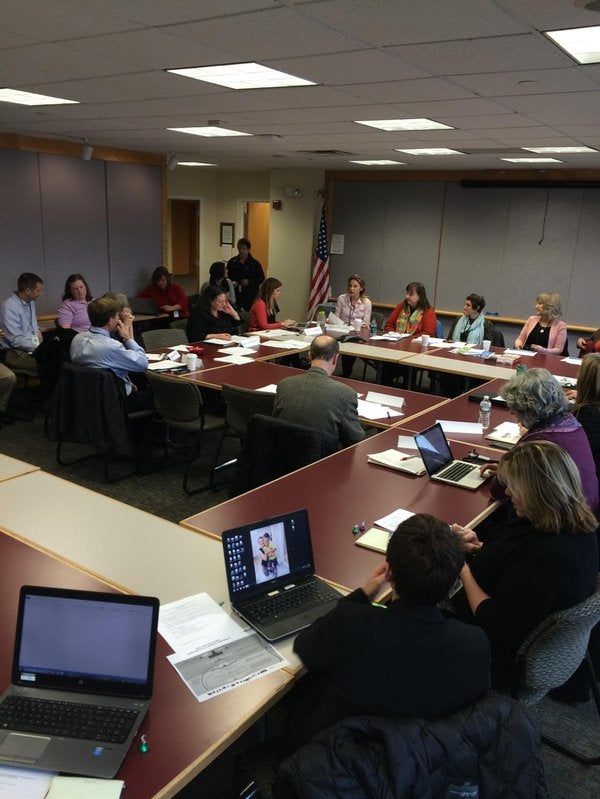
Photo courtesy of Let’s Grow Kids Action Network, used with permission.
The report was issued directly to the state legislature. In addition to setting a $206 million estimate, it defined the elements of what constituted a high-quality child care program and recommended that families contribute no more than 10 percent of their income to child care costs. The report never expressly stated that the state would need to raise taxes. This was important, explained Kenney, because they wanted to build support for child care before introducing ways to generate revenue.
“It was really important to sensitize people,” Kenney said. “We needed to let policymakers know that to solve the child care crisis we weren’t just talking about a couple of million dollars here or there, it will need major investment. Not to the tune of $2 or $3 million, but to the tune of $200 or $300 million. It gave us a platform to start having conversations.”
“If we had started in year three with the big number, then that is all people would be thinking about,” said Necrason. What he and the Let’s Grow Kids’ legislative team wanted was to establish child care as an agreed-upon problem. Then, by the time they started discussing the cost, they’d have built a coalition so deep and so invested that they’d hunt together to find a workable solution. “Revenue would need to be a solution they decide to solve. We hadn’t planned on talking about the cost until year seven or eight.”
People would say that “a study is for losers,” Ramos explained, as often what happens in state government is that when legislators don’t want to do something, they send it to a study. “No,” she would correct them, “there are winner studies and loser studies, and ours was a winner study.” The Blue Ribbon Commission was intentional and purposeful. “We knew that if we could get a really good study that it would be a good step forward.”
Agreeing on a Vision for Child Care
Let’s Grow Kids had a legislative team and an initial legislative win, but the group would also need a strong legislative agenda going forward with distinct priorities. An issue like “child care” or “early education” is vague with no identifying concrete goals or specifics on what requires improvement: Would access to care be the issue or should the focus be on the quality of care? What about teacher compensation? Where would that factor in? Do you build a system that is centered on the most vulnerable populations or one that aims to be universal? And what did Vermont, specifically, need to help families?
Jen Horwitz, the policy and research director, was tasked with finding out what people in Vermont wanted—or needed—from a robust early education system. This included talking to hundreds of Vermonters about what their priorities were—and crisscrossing the state offering spaghetti dinners in town halls and Lions Clubs to have such conversations.
“We did an infographic place mat,” recalled Horwitz, one that she designed herself. “It had pie charts and bar graphs in the early Let’s Grow Kids’ hot pink and baby blue colors.” The goal had been to educate people about the brain science and the importance of the early years, and to solicit what the needs were for child care at a local level.
“At the time, not that many Vermonters thought early childhood was as important,” said Horwitz, “and we were doing public education on why the early years matter.”
They also created a program called “Small Talk,” driving a branded van complete with a mobile recording studio, stopping at town and county fairs, giving Vermonters a chance to talk about their own experiences with child care and early education.22
In 2016, Let’s Grow Kids published Stalled at the Start, a report that examined the supply and demand of child care in the state. The 2016 report was the first, though it would be updated every two years. It detailed the number of kids with all available parents in the labor force and defined them as “children likely to need care.” It also, for the first time, shared the three key components they’d developed with input from early childhood education stakeholders, partner organizations, and Vermont’s citizens, which included (1) improving access for child care in Vermont, (2) capping the cost for a family to 10 percent of their income, and (3) living wages for early childhood educators.
“This coalesced into the framework that we used for the following years,” said Horwitz.
Building Grassroots Support
Up until this point, much of the Let’s Grow Kids fieldwork was done in smaller, local events: county fairs, town meeting days, Dairy Days, Touch-a-Truck Fundraisers, and the Quechee Hot Air Balloon Festival. The field team came with toys, like LEGOs or crafts, for kids to play with and information for parents, or just chairs for families to sit and hang out. The goal was to grow the base of supporters for a child care system, one family at a time. Each family was asked to sign a petition about child care. “Wherever we went we had a clipboard and petitions,” said Shayla Zammuto, former senior field manager for Let’s Grow Kids.
At first they were simply asking people to sign a pledge to support child care, but otherwise there was no specific request, explained Zammuto. “As the campaign grew and we got more policy chops, we got more specific and asked for public investment in child care.” In 2015, Zammuto estimated they had only a few thousand signatures. In only three years, by December 2018, the field team had done such expansive work that numbers of signatures had grown to 30,000.
In spring of 2017, an idea came up: What if they did a flash mob? And what if they had a song written to go with it? Anna Gebhardt, the field director at Let’s Grow Kids, had a personal connection to the recording studio that shared an office building with Let’s Grow Kids—her husband ran it. With in-kind donations of time and creative energy, they commissioned an original song created by two local artists, Kat Wright and Chris Dorman, which would serve as their child care campaign anthem. (Dorman was best known as Mister Chris on Vermont PBS, who sang songs to kids.) Gebhardt hired a choreographer to come up with a dance that could go along with the music and be easy for children to learn. Then the field team went to child care programs around the Burlington area and taught the dance moves to the children, encouraging kids and families alike to come out and perform alongside Kat Wright and “Mister Chris.”

Photo courtesy of Let’s Grow Kids Action Network, used with permission.
The event, Kids Out Loud, became Let’s Grow Kids’ first major public event, dominating the streets of downtown Burlington. On what was a beautiful October day, the Kids Out Loud event featured a thousand people, marching up Church Street wearing colorful Let’s Grow Kids superhero capes and holding signs. On stage, Kat and Chris sang their song, “Something Beautiful,” with children in colorful Let’s Grow Kids T-shirts and capes standing behind them, hands moving through the choreography that went along with the words.
It takes a village
To grow a great person
The fruits of great gardens grow
When we nurture soul
We all have a role to play
We’ve got to light the way.
Take care of the kids today
Someday they will join us and say
I hear something beautiful
To give it life and help it grow.
Open up my heart, open up my mind, to something beautiful.
Open up my heart, open up my mind, to help it grow.
Gebhardt had been organizing phone banks, emailing volunteers, and meeting with child care providers to build the event, but even then, having over a thousand people show up that day “blew her away,” she said. The Kids Out Loud event featured prominently in the music video for “Something Beautiful” and was shared widely with supporters. The costs remained modest: Aside from pizza and snacks for volunteers and paying the musicians who performed on stage, the rest of the video and music production was powered by in-kind donations.

Photo courtesy of Let’s Grow Kids Action Network, used with permission.
“The musicians who wrote the song were really invested in the mission and being part of something bigger,” said Gebhardt. “It wasn’t about making money for them, it was about changing the state.”
The music assets became part of their communications and social media strategy for the following years. The capes, too, had staying power. At future events, the Let’s Grow Kids field team always had some on hand. And for the child care programs too far from Burlington to attend the Kids Out Loud event, the Let’s Grow Kids team made sure to go and visit, connecting with the kids and providers to teach them the song and choreography. And wherever they went, the clipboards and capes came along.
And Just Where Will the Money Turn Up?
In October 2017, Let’s Grow Kids co-facilitated the “Building Vermont’s Future from the Child Up Summit” at the Sugarbush ski resort in Warren, Vermont. They relied on an “appreciative inquiry” model, which uses structured interviews to discover strengths and uncover areas of improvement, and worked to come up with a collective vision on how to address the three areas of their legislative plan. Over 250 stakeholders from across the state turned out, and they began, in essence, to plan what the rest of the 10-year campaign might look like.
By this time, Let’s Grow Kids had a rough estimate of how much a fully funded, high-quality child care system could cost, but still no idea as to how the state would afford it.
Sen. Jane Kitchel was right—the Blue Ribbon Commission was only the first step. The Let’s Grow Kids’ legislative team would be back soon to ask for more.
A campaign to build child care infrastructure in the state would cost money. And though the Stillers had generously seeded the group with funds to get off the ground, they would need more to continue the longer effort ahead.
So Let’s Grow Kids began to do what any advocacy group would do to be successful: build a budget and get aggressive with fundraising.

Vermont Needed Child Care; Here’s How They Got It
- Prelude: What Just Happened in Vermont?
- Looking for Impact, Zeroing in on Early Education
- Building a Legislative Case and Growing Grassroots Support
- Philanthropy: Where to Find $56 Million?
- COVID-19 Shutdown, Support, and Pivot
- Bringing the Business Community on Board
- Getting Political, Giving Endorsements, and Setting the Stage
- Act 76—Child Care or Bust
- Veto Override
- What Comes Next
- Acknowledgments and Methodology
Citations
- There was a precedent for this: Vermont had a lawsuit upend its K–12 education system in the 1997 case of Brigham v. State of Vermont, in which the Vermont Supreme Court ruled that the state must ensure substantial equality of educational opportunities across school districts. (This led to the legislature passing Act 60, paving the way for child care providers to collect pre-K funds and later forming the groundwork for universal pre-K in the state.)
- Also called Vermont’s Section 1115 waiver.
- Ramos said it wasn’t common that organizations would split the cost with the state for studies like this one, but it had been done before, such as with environmental groups.
- See Vermont Blue Ribbon Commission on Financing High Quality, Affordable Child Care, Final Report (Building Bright Futures, November 2016), https://www.buildingbrightfutures.org/wp-content/uploads/2019/01/VT-BRC-Final-Report-1.pdf.
- The $206 million number comes from page 19 of the report, which estimated 70 percent demand for child care. This estimate was the mid-range projection that was based on the population of children likely to need access to child care.
- All of these interviews are archived with Vermont Folklife. Let’s Grow Kids, “Making Small Talk at Lund: Guest Post,” Lund Family Center Blog, July 24, 2015, https://lundvt.wordpress.com/2015/07/24/making-small-talk-at-lund-guest-post-from-lets-grow-kids/.