
Rebecca Gale
Staff Writer, Better Life Lab
Vermont was the first state to codify child care as an entitlement in law, but it may not be the last. The blueprint now exists—it’s up to the changemakers to make it happen.

In the United States, child care remains largely a private responsibility for families, even as providers struggle with low wages and thin margins. While national reform efforts have repeatedly stalled, several states have begun exploring more comprehensive approaches to strengthening their child care systems.
In May 2023, the state of Vermont passed landmark legislation establishing a near-universal child care system, known as Act 76. The law followed nearly two decades of groundwork and an advocacy campaign led by Let’s Grow Kids, which built broad public and political support for reform.
Initially funded largely by in-state donors, Let’s Grow Kids pursued an incremental legislative strategy, cultivating bipartisan support in the state legislature while building a statewide network of parents, providers, and business leaders. During the COVID-19 pandemic, the organization pivoted to support child care providers while continuing to advance long-term policy goals. A business-led CEO task force later helped identify a sustainable funding mechanism for the new system: a payroll tax shared by employers and employees, with retirees exempt.
This report traces the decade-long effort that led to the passage and initial implementation of Act 76, including the coalition-building, strategic pivots, and political organizing required to secure the legislation and ultimately override a gubernatorial veto. By documenting Vermont’s path to reform, the report highlights practical lessons for advocates and policymakers seeking to expand public investment in child care. Going forward, Vermont’s experience, as detailed here, can shine a light on what is possible.
Editorial disclosure: This report features an extensive profile of Aly Richards, former CEO of Let’s Grow Kids, the organization that played a pivotal role in securing public funding for child care in Vermont. The reporting and initial drafting of this publication were completed prior to Richards announcing her candidacy for public office. As a 501(c)(3) nonprofit, New America does not engage in campaign advocacy or endorsement. The views expressed in this report are solely those of the author and do not reflect the views of New America, its staff, fellows, funders, or board of directors.
May 2023
It was lunchtime and Aly Richards was sitting at a cafe, only a few blocks from the Montpelier office of Let’s Grow Kids, when she received a text on her phone.
I think we are there. Come to the State House now.
It was from Rebecca Ramos, one of the lobbyists that Let’s Grow Kids had hired to work on their campaign to bring child care infrastructure to Vermont. The House and Senate would be adjourning that week—they had only a day left to move forward on the legislation.
Lunch was abandoned as Richards and her team rushed across the street. Waiting for her on the steps of the State House was Conor Kennedy, the chief of staff to the Speaker of the Vermont House of Representatives.
“We found a path forward,” Kennedy said.
Richards knew Kennedy from her days working in the former governor’s office. When she leaned forward to shake his hand, it turned into a hug, the professionalism of the moment temporarily suspended as the enormity of what was about to happen sunk in. For the past eight years Richards had run Let’s Grow Kids, a child care advocacy group that had focused on a singular goal: bringing affordable child care to the state of Vermont. They’d commissioned a study, come up with a system of subsidies for families and payments to educators, and now needed agreement on the final detail: how to finance it. When Kennedy said he found a path forward, he was referring to the House and Senate coming to an agreement to create a new payroll tax in Vermont to make significant investments in child care infrastructure.
This financing decision was a victory for Richards—the business community had pushed for a payroll tax over an income tax or property tax increase.
If they could get a dedicated stream of funding for a universal child care system agreed upon, could this pass? Could it really be happening?
For weeks, since the Vermont legislative session began in January 2023, Richards and her team had provided real-time updates for their supporters and team of advocates. The wide-ranging coalition that had been built across the state in support of child care was one of the strongest pieces of evidence that support for a child care system would sustain broad, bipartisan support at the statehouse level. Every Friday they’d send a Rocket Memo update to the entire staff, board, and team of close partners. But during the last week, as the House and Senate hashed out their differences, they’d moved to Zoom updates. Earlier that week, Richards and her political director were in the Speaker’s office for a tense meeting about needing to come to an agreement before the legislature adjourned.
Time was running out. They had a broad coalition (Republicans, Democrats, Progressives, and Independents), and they’d have enough support to override a veto, should it come to that. They’d just need the House to agree with the Senate and take the final votes.
As news of the financing agreement spread, Richards and her team rushed to the chamber, where they watched the House pass the Senate version of the bill, and the Senate concur. At her side was Rick Davis, the philanthropist and entrepreneur who’d set aside his own artistic dreams to focus on early childhood education in Vermont. Across the room she made eye contact with a longtime early child care provider and Let’s Grow Kids teammate, LouAnn Beninati. It’s taken us 50 years, Richards remembers thinking. Fifty years ago, Beninati had co-founded a child care center, Robin’s Nest, in Burlington. She had been one of the original renegades to demand the state do more for child care providers, even hanging a banner across Burlington’s main thoroughfare in the 1990s proclaiming, “Vermont Doesn’t Work Without Child Care.” It had been a pipe dream then to imagine a comprehensive plan with a funding mechanism being signed into law, but now it was happening.
Walking out of the Senate chamber, after the legislation had passed, reporters swarmed Richards with microphones, with rapid-fire questions and comments:
What does this mean for Vermont?
What just happened?
You did something real here.
The irony wasn’t lost on Richards, who’d spent much of the past eight years convincing the press corps to cover their efforts. But she also knew that what she’d done—what Vermont had done, what Let’s Grow Kids had accomplished—was just beginning. The press was interested now, she knew, because their long shot cause had won.
What just happened, Richards calmly explained to them, was that Vermont just became the first state in the nation to pass a bill creating a comprehensive child care infrastructure.1 They did so by creating a payroll tax that would help fund it, raising reimbursement rates for early childhood education, and providing breaks to most families to cover the cost of care.2
Vermont is a state with an aging population and a business community that knew they needed a stable workforce, and that child care was key to that stability. It was less a battle of one side for building child care infrastructure versus another side opposed to it, and more a singular focus and collaborative effort to build a large coalition within the state and business community, come up with the right funding mechanism, and find policymakers who would get behind the effort.
They’d had almost a decade to achieve their goal to improve the state’s early care and education, which at the time was both unprecedented and unlikely.
How could a small state, with an aging population and dwindling workforce, be able to set up a child care infrastructure system that did not exist anywhere else in the country? How could child care ever see a legislative victory in a country that had gone almost 50 years between the presidential veto of the Child Development Act in 1971 and the Senate’s opposition to the Build Back Better legislation in 2021, the two failed national-level attempts to create child care infrastructure?3
They did it through creating a group called Let’s Grow Kids, which had a singular focus and mission. They did it with both philanthropic funds and small-dollar fundraising. They did it through coalition building—in the business community, in the legislature, and within the early childhood educator community of longtime child care providers and advocates.
And they did it with a deadline—created in 2015, the plan had been for Let’s Grow Kids to sunset after 10 years, and hand the reins over to someone else. Win or lose, they’d have 10 years to try.
The final votes to pass the budget and then adjourn the legislative session came at 11:00 p.m. that night, when Richards and her team had gone home. Richards and her husband sat outside in their backyard where they’d rigged up a TV—a way to entertain during the COVID-19 pandemic. They lit a fire and watched the final votes come in. It was official. They had done it.
Richards still didn’t know what was to come, or that more obstacles would be in their way, or how Let’s Grow Kids could sunset now. Were they actually “done” now, or was the work still ahead? And if Vermont was going to become the singular example in the country of what near-universal child care would look like, what would happen if their new system failed?
But answers to those questions could come later. For that night, they could just be winners.
In 1970, Rick Davis was back from serving in the U.S. Navy in Vietnam and managing a shipyard in Burlington, Vermont. In his free time, he’d go sailing on Lake Champlain and wonder why the industrial waterfront of Burlington couldn’t be redeveloped into restaurants and office space that more people could access. On a lark, he began buying properties along the waterfront, benefiting from the site’s proximity to the bicentennial route—which was being honored in 1976—and historic preservation grants. He rehabbed the historic Holloway Block, which had buildings dating back to the late eighteenth century, tore down old factories, and built up restaurants and office space. Kids who lived nearby, in public housing for families with low incomes, would linger near his worksites, but Davis mostly ignored them.4
Until one day in 1981: An employee discovered a break-in at the worksite and found that tools were missing. Davis filed a police report, but within a day, the police located the teenage culprits selling those stolen tools on Church Street, the major thoroughfare in downtown Burlington.5
Before pressing charges, Davis opted to meet with the kids and their families. “I had never thought about low-income people at all. I was really focused on my job, social life, and sports,” he said. He was 30 years old and knew nothing about poverty. He’d grown up in a conservative family; his father was a registered Republican who had served as the state treasurer. Conservative firebrand Barry Goldwater had been to his childhood home for coffee during a stopover during his campaign for president in 1964.6 In 1970, when GOP President Richard Nixon visited the state, it was Davis’s younger sister, Maggie, who greeted him on the tarmac with flowers.7 Davis would “never describe [himself] as a super left-wing liberal,” and dismissed the idea of providing “handouts.” Meeting children who lived in poverty became a pivotal moment for him in seeing that some kids “never had an opportunity to thrive.”
“I will always want to give everyone a fair chance,” he said. “That is different from a handout.”
The “fair chance” initially came in the form of employment, as Davis hired the teens to work at his job site. But he also spent time getting to know their families: sitting on porches and smoking a cigarette (“I did it to be polite,” he explained, “I wasn’t really a smoker”). He went with the families to the county fairs or to the racetrack at Thunder Road Speedbowl for car racing. He would hear stories of hardship and jubilation: someone going to jail, someone getting married, or someone having a baby. He went to graduations and weddings. “I was totally invested in trying to understand the issues of poverty and the issues associated with it,” he said.
Davis joined the board of the King Street Center, a youth development and family support center in Burlington, Vermont, only a few blocks away from the Holloway Block he had developed. He spearheaded a mentoring program for at-risk teens, but too many kids would complete the mentoring program, then become teenage parents and start the cycle of poverty all over again.
Through this work, Davis began to realize two salient points that would drive his own philanthropic work for the next three decades: (1) kids needed interventions much earlier than their teenage years, and (2) too many programs geared toward very young children lacked reliable funding sources.
His own real estate developments had done well. The state had given him every opportunity to grow and thrive—but what was the best way for him to give back?
In 1997, the campaign “I Am Your Child” burst into public consciousness with grainy black and white images of a child’s brain developing normally, contrasted with another child’s brain at the same age that was misshapen and smaller. Directed by the late Rob Reiner, who was himself launching his own advocacy for young children and early education, it featured research that showed that the first three years of a child’s life played a crucial role in brain development, setting the foundation for future social, emotional, and cognitive capacity. “I Am Your Child” stories appeared in Time and Newsweek, Katie Couric talked about it on the Today Show, and Good Morning America produced a five-part series on the topic.
Parents and educators came away with a clear message—the first few years mattered more than people had ever thought.
Around this time, Davis was in his 50s and considering retirement. He’d spent a few years in New York City, trying his hand at sculpture. But something kept bothering him. Even with all of his work to understand and combat poverty, he still hadn’t been able to break the cycle of intergenerational poverty. If he had to do it again, he would zero in on early childhood; that would be the time to reset the playing field for the kids who were born “with three strikes against them,” he said.

In 2000, he set aside his ideas of being a sculptor and moved back to Vermont to focus on early childhood education. By then, Davis owned land worth $1 million that he was prepared to donate. He convinced another investor, Carl Ferenbach, to match him with another $1 million cash.8 With that seed funding, Davis and Ferenbach created the Permanent Fund for Vermont’s Children to provide leadership and funding for worthy causes in the early childhood education space. Over the next decade, using money from the Permanent Fund, they created Vermont Birth to Three (that evolved into Vermont Birth to Five), which began offering mentorships and grants to early childhood providers throughout the state to improve quality metrics. The organizations also provided access to capital if child care providers were interested in expanding. As part of each initiative, Davis made sure to hire early childhood providers to work on his team—often in part-time or consulting roles that he ensured were well compensated. These educators had experience in the field and would be able to establish trust and build credibility with other educators. Years later, these deep connections would prove to be a powerful grassroots force advocating for child care in the state.
Vermont had two national funders that maintained a presence in the state in early childhood education: the Turrell Fund and the A.D. Henderson Foundation. Rather than seeing them as competition, Davis reached out and suggested they join forces. By collaborating and pooling their funds together, they’d have a bigger and better shot at creating meaningful change. It was this funding that launched the Vermont Community Preschool Collaborative, which facilitated a pilot program to allow child care providers to access state funding for pre-K programming.9
Vermont had created a voluntary pre-K program in 1997, under then Gov. Howard Dean, a Democrat, but it was largely under the radar.10 Few school districts had opted to participate because for the first two years the districts were required to provide their own funding for the program. The state program allowed for a mixed delivery model, providing pre-K funding for child care providers as well as offering pre-K in K–12 schools, but the onus was on each school district to set the program up, find educators to participate, and fund it from their (limited) K–12 budgets. The idea was that after two years of running a successful program, those participating school districts would then be eligible for state funding.
Davis saw this program for what it was: a chance to bring more state dollars to ensure higher quality child care, albeit with some hurdles to jump over. It just required time, energy, and resources to set programs up, but Davis had access to those, and he had a team of experienced, qualified early educators who could mentor child care providers who might be willing to participate.
Davis turned his energy to make this happen in school districts all over the state. The Vermont Community Preschool Collaborative helped school districts start their own pre-K programs and provided funding for the first two years. They also worked with home-based child care providers to ensure they could access the funding as well. With their efforts, Vermont went from 20 percent of school districts offering some sort of pre-K program in 2008 to more than 80 percent in 2013.
After Dean left office, a Republican governor came in, whom Davis described as “trying to slow down his momentum.” But then, in 2010, Peter Shumlin won the governor’s race. Shumlin was a progressive Democrat; a push for single-payer health care dominated his campaign platform. But he had been open to meeting with Davis and hearing him out about early childhood education.
This was Davis’ opportunity to push the pre-K momentum forward: He had worked with child care providers all over the state and could show programmatic success, but he knew he needed a legislative component to ensure the progress continued.11
Shumlin assigned an aide to focus on early childhood education, but Davis felt it was going too slowly. So he went back to Shumlin, asking again for a different staff member to focus on the issues.
This time, Shumlin chose Aly Richards, a young political operative who had worked in fundraising in Washington, DC, but had opted to move back to Vermont and work for Shumlin’s administration when he entered office. “Game changer” is how Davis described their collaboration. The two of them began searching for ways to fund early childhood education in the state. Davis arranged funds to hire a professional grant writer, and he and Richards began to apply for federal funds for early childhood education. In 2013, Vermont was awarded a federal $37 million Race to the Top-Early Learning Challenge grant and, a year later, a $33 million Preschool Development grant. These were big wins—and significant amounts of money in a state that spent roughly $44 million a year in 2014 on child care subsidies for children from families with low incomes. But in both cases they were one-time infusions of funds to improve quality and access to existing programs.12 Neither offered the sustainable systems change that Davis wanted to see for early education.
In 2014, under Shumlin, Vermont passed the state’s Universal Prekindergarten Education Act, which provided funding for 10 hours a week for three- and four-year-olds regardless of family income.13 Unlike the program that had passed under Dean, this was no longer voluntary with a two-year performance period before state funding kicked in. This time, the entire state had access to these funds from the start.
A win, yes. Though other states in the country had pre-K programs, few provided truly universal access, and Vermont had included three-year-olds while other states focused only on four-year-olds and the year preceding kindergarten. But Davis and other early childhood experts knew that 10 hours a week of pre-K was insufficient time for a family where all parents work outside of the home. This coverage did not support children under the age of three, and he felt it still didn’t do enough to stabilize the state’s child care industry.
The problem, Davis realized, was that the public hadn’t bought into the notion of 0–5 being critical years for brain development. By the time the Universal Prekindergarten Act had passed in Vermont, experts and academics were well aware of the Perry Preschool Project, a study conducted in the 1960s by psychologist David Weikart. James Heckman, an economist at the University of Chicago, revisited the study in 2009. His analysis included the first-ever calculation of the potential rate of return: Every dollar invested in early childhood, he found, had a return of somewhere between $7 and $10.14 And these quantitative studies showed that investments in early childhood provided the highest impact to improve outcomes for kids, particularly those born into poverty.15
Davis bought into Heckman’s argument, and he was personally ready to convince everyone in the state of Vermont that universal pre-K was the best use of their dollars. But the public, he knew from firsthand experience, wasn’t there yet. A majority of Americans still felt that children were better off staying home with a parent rather than growing up in a household where both parents worked. He could get one-time grants and incremental legislative wins, but that wouldn’t be enough to create a stable high-quality system—and that was what he needed to create the level playing field he envisioned for the state.
“We had to get public awareness,” he said. “I had a good handle on the amount of philanthropy going into the state of Vermont. I knew it was never going to be enough to do a super high-quality child care system.”
It was Abraham Lincoln, Davis noted, who coined the adage, “Public sentiment is everything. With public sentiment, nothing can fail; without it nothing can succeed.”16
So in 2015, he created a new organization—this one focused on a public awareness campaign to educate people about the need for children to have high-quality early education.
This one would be about changing the way people thought about children and education.
He named it Let’s Grow Kids.
Davis had a contagious energy and a doggedness about early childhood education that he brought to conversations with friends and colleagues. When he came across people who were willing to engage with him on early education, he’d often recruit them to serve on his board or become a donor. This was an effective tactic for securing money and gathering expertise, but it also meant that his initiatives were often moving in different directions.
Buzz Schmidt, one of the early board members for Let’s Grow Kids, recalled his own skepticism about Davis’ myriad projects operating independently of one another, without a clear goal in mind.
“The mission is too general,” Schmidt recalled saying at a board meeting when Let’s Grow Kids was just beginning. “We should change it to ‘high-quality child care for all kids’ and make it date certain to put a real sense of urgency on the mission.”
Schmidt came up with a plan: consolidate all of Davis’ early childhood projects and organizations, pick a singular goal of high-quality child care for all kids in the state, and add a concrete timeline. The timeline would give Davis a laser-sharp focus and also make it more attractive to prospective funders, who can grow weary of open-ended asks. (Davis, too, acknowledged his own zeal for fundraising might have its downsides: “When people would see me walking down the street, they’d cross to the other side,” he joked.)
Schmidt picked 10 years as the timeframe. He felt five was too short, and in 10 years Davis would be approaching 80—possibly ready to slow down, or at least dial the doggedness back a notch.
And in 10 years, win or lose, Davis would sunset the organization.
Davis was on board with the plan. He pitched the idea to Bob and Christine Stiller, owners of Green Mountain Coffee, in the hope of getting seed funding for the 10-year campaign. The Stillers were known for being philanthropists who’d invested in Vermont, and they’d recently become more interested in neuroscience and why the first few years of a child’s life mattered so much for brain development.
Davis tracked down their contact information and wrote an email, explaining he was trying to raise $20 million for the campaign, and could the Stillers donate $5 million?
At the last minute, he deleted “$5 million.” But he kept the $20 million ask.
Bold, he knew. But he had so much faith in the return on this investment that he didn’t hesitate before pressing send.
A response came within the week. The Stillers were in for $20 million.
Davis had the funding he needed to begin this new project and a mission statement to carry him forward. He just had to figure out a way to do it.
Fortunately for him, his board had an idea of where to start. Find someone to lead this. A campaign would need a champion: someone with political skills, state connections, and a deep understanding of the challenges facing child care and early education. Davis recalled his good working relationship with Aly Richards from Gov. Peter Shumlin’s office. Here was someone who had worked on the state’s most successful child care initiative so far, understood what Davis wanted to do, and was willing to work with him. He reached out to see if she might be interested.
She wasn’t. Richards liked working for Shumlin, and what Davis was offering her seemed too nebulous—he didn’t even have a proper job description. Plus, she told him, she’d be more advantageous to his mission for early education if she stayed in the governor’s office as an ally. Davis was persistent, but she turned him down. Twice.
Davis conducted a nationwide search, sharpened the job description, and found a qualified candidate who was ready to relocate to Vermont. Again, he hesitated. He really wanted Richards. He called another early childhood education champion in Vermont he knew might have sway with Richards: Howard Dean.
Dean asked for a meeting with Richards on the grounds of discussing health care, then pivoted to the real reason he was there—on behalf of Rick Davis. “This is your chance to make a difference in the state of Vermont,” she remembers Dean telling her. “Think about it.”
This time she did.
Richards committed to stay at least a year and help Davis get this new group off the ground and on track with a larger advocacy mission. Davis hoped she’d stay for at least three years.
Ten years later, she’d be there to sunset the organization, having stayed long past her initial estimate.
But she didn’t know that yet.
All she knew was that early childhood seemed like a good issue to tackle. How hard could it be?
For Adam Necrason, Let’s Grow Kids was never just about lobbying for child care in the state. It was about changing public opinion, about what child care was and who it was for.
“You need to get public opinion to 80 percent in support of this initiative,” Necrason recalls telling Davis in 2014, just as he was pulling a team together to begin Let’s Grow Kids’ legislative work. “When you do, it will click and go.”
Necrason was a longtime state lobbyist. He’d been part of the team that helped usher in Vermont’s first-in-the-nation civil unions, marijuana legalization, and renewable energy standards. Necrason wanted Davis to achieve a series of small victories over the 10-year period, starting small and then building up, growing public support and a team of grassroots advocates along the way.
The plan was to “build an activist ladder where people feel success every step of the way,” he said. “You break change down in a step-by-step process and get everyone on board from the activist to the lawmakers to the nervous budget writers to the anxious philanthropist working step-by-step, sunup to sunrise, and to round up support for major change.”
Necrason and his colleague Rebecca Ramos would serve as the external lobbyists, an annual contract they signed in 2014, as Let’s Grow Kids was just beginning, and that continues today with Let’s Grow Kids Action Network. But Let’s Grow Kids would also need its own legislative team. One of the early hires was Sarah Kenney to lead Let’s Grow Kids’ policy team. Kenney had more than a decade of experience in state advocacy, working on behalf of survivors of domestic and sexual abuse. It was up to Kenney, Ramos, and Necrason to explore ways in which Let’s Grow Kids could build a child care system in the state.
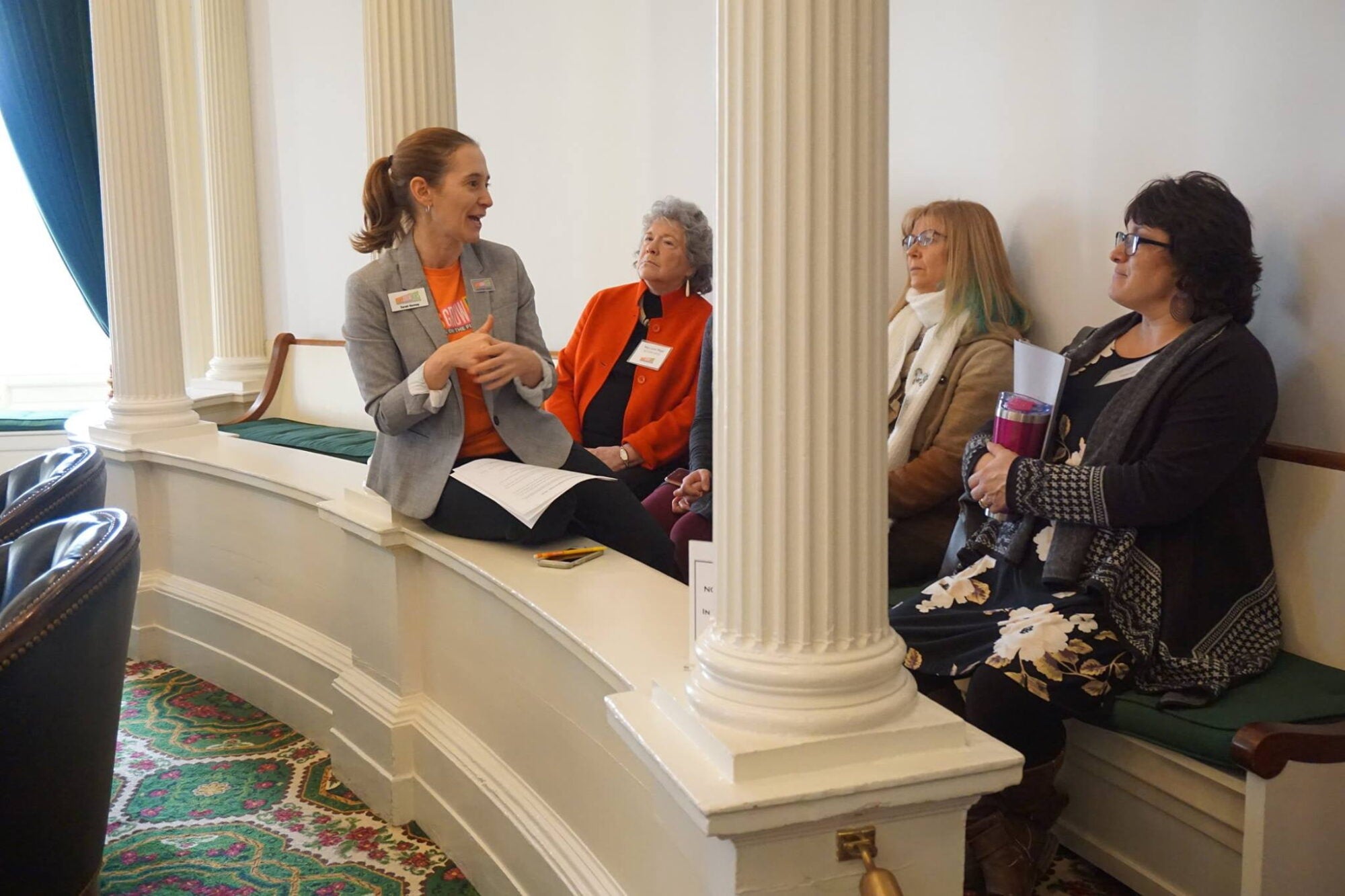
In addition to a legislative strategy, they wanted to explore all angles that could build child care infrastructure. One idea that was floated and researched, but quickly ruled out, was a judicial strategy. The policy team envisioned a scenario in which a state lawsuit could be filed about equal access to education from birth to age five.17
“We talked to some attorneys about what it would take, had a pile of research about this strategy, but it wasn’t going to work,” said Kenney. Even if such a lawsuit would win, the state would still lack financial resources to implement any meaningful infrastructure, or if they did it would come at the cost of some other important expense. And though Vermont had changed its K–12 system after a lawsuit, there was no judicial precedent in the country for child care or early education.
A second idea was to fund a child care program using money from the health sector, likely Medicaid funds. This took on a more sustained, researched approach, spanning five years. They contracted with several consultants with backgrounds in health care and early childhood education to explore how the model could work.
Vermont is unique in that it has a Global Commitment Waiver for Medicaid dollars, which allows the state to use federal Medicaid funds more broadly, including for prevention services.18 The argument could be made, the team reasoned, that quality early child care could fall into that category of prevention services, especially against adverse childhood outcomes.
Let’s Grow Kids hired a full-time staff member, Beverly Boget, to look into this option and set up pilot projects through the University of Vermont College of Medicine, exploring ways to leverage the state’s children’s health care system to provide funding for early childhood education. The team also convened a group of pediatricians to weigh in on how child care could fit into the Medicaid payments system.
“We eventually decided it was too logistically complicated and too politically complicated,” said Kenney. At the time, no state had used Medicaid for early education, and further exploration showed that Medicaid or any sort of tax or deferred payment from the health care industry wouldn’t provide the reliable income stream a universal child care system would need. Vermont already had some of the highest health care costs in the country, driven by a variety of factors, including an aging population. The legislative team made the decision to not entwine child care and health care. “We already have so many Vermont politicians trying to solve the health care crisis,” said Kenney. Boget pivoted to work with the health care industry to find child care champions among health care professionals, and the champions in that early pediatrician working group would later become some of the most vocal supporters in favor of the legislative work Let’s Grow Kids was doing.
The third approach was finding a way for the state to pass legislation to create child care infrastructure, but that required funding. Successful infrastructure change would require consistent, stable funding, and that meant identifying a revenue source.
At the time, there was no legislative precedent for child care funding on the universal scale that Vermont was seeking. It wouldn’t be until 2018 that the District of Columbia would launch the first birth-to-three initiative targeting child care for infants and toddlers, with the goal of moving toward universal access. And the team, recalls Kenney, wasn’t ready to say they wanted to raise taxes.
“We didn’t even know how much we needed,” said Kenney, though they were confident it would be a large number. Child care, with its low teacher-to-student ratios, is expensive—and quality child care includes paying teachers livable wages commensurate with experience and professional training. They didn’t need a shot in the arm of funding; they would need a revenue stream that would keep replenishing itself. Before they could even begin to brainstorm effective revenue sources, they’d need to know how much this child care system would cost.
But how much does one even ask for? Kenney remembered thinking. They didn’t want Let’s Grow Kids to be the ones to come up with the number. The advocacy group coming hat in hand to the state legislature with an outlandish ask would undermine their credibility. The number, they knew, would need to come from a respected entity that would be able to focus exclusively on Vermont’s needs, population, and demographics.
So, in 2015, Let’s Grow Kids knew what its first legislative initiative would be: finding out just how much universal child care in Vermont would cost.
Necrason had lobbied the state legislature for almost two decades before he began working with Let’s Grow Kids, and he knew that child care was a topic that hadn’t seen a lot of legislative momentum previously. He envisioned small, incremental wins each legislative session to transform legislators who had no strong opinions on child care into “child care champions” who would then have buy-in to creating a robust system. While the actual cost of funding a child care system was murky, it was crystal clear to all involved that it would be a large number. They would need time, Necrason knew, to build that support and desensitize lawmakers to what was going to be a big ask.
Ramos knew many of the leadership staff at the state legislature personally. She had worked as an assistant to the president pro tempore of the state Senate and as a legal counsel to Gov. Howard Dean. While most state legislators in Vermont operate without staff, the House and Senate leadership each have a handful of staff members, and Ramos had been one of them. Ramos knew from her experience that commissioning a study was something legislators could support without much opposition. It would come in at a relatively low price point, which Ramos estimated to be $300,000 that could be folded into the larger state budget.
“I knew that if we could get a study that legislators were on and invested in,” Ramos said, “then we could use that study to bring back to them: ‘So you guys said this in this legislative study.’ It becomes a tool and sets up some key things in it.”
Ramos looked at language from previous legislative studies to decide how to model the Blue Ribbon Commission. “We just made it up,” she said. A staff member in the legislature’s Joint Fiscal Office came up with the idea that Let’s Grow Kids would split the cost of the Blue Ribbon Commission with the state.19
But the chair of the House Appropriations Committee rejected the study immediately. “I’m not doing this,” Ramos recalled being told. So Ramos approached House Speaker Shap Smith to intervene, and Smith overruled the chair in favor of the study moving forward.
She took the same ask to the Senate, where the chair of Senate Appropriations, Jane Kitchel, turned her down. “[Kitchel] looks at me and says, ‘I am not going to give you this study. If you get this study, you are going to be back here waving it around, asking for more money.’”
This was exactly the plan, and yet Ramos knew this first step would be the only way it could happen.
“A study is really a booby prize, a way of giving you something and giving you nothing,” explained Kitchel in an interview. Given the financial and budgetary constraints Vermont was facing at the time and the need for a balanced budget, Kitchel said she wanted to avoid offering studies that would “bring expectations and dashed hopes.”
It took significant pressure from other senators and leaders to overrule Kitchel. The “Blue Ribbon Commission on Financing High Quality, Affordable Child Care” passed as part of the state budget in 2015 with little to no fanfare, marking what Necrason called “the beginning of when we became real.” Calling it a “Blue Ribbon” report, he said, gave it a semblance of seriousness and impartiality.
The commission was convened in September 2015 and was composed of 17 members, five of whom were statutorily designated and 12 of whom were appointed by the governor in line with requirements outlined in the commission’s authorizing language. The state hired a temporary employee, Jessica Blackman, to serve as the administrator for the commission. Fifteen months later, in December 2016, the report came out.20 This time, it attracted media attention. The report determined it would cost $206 million a year, an “eye-popping” number according to Kenney, for Vermont to provide child care for every child in the state.21
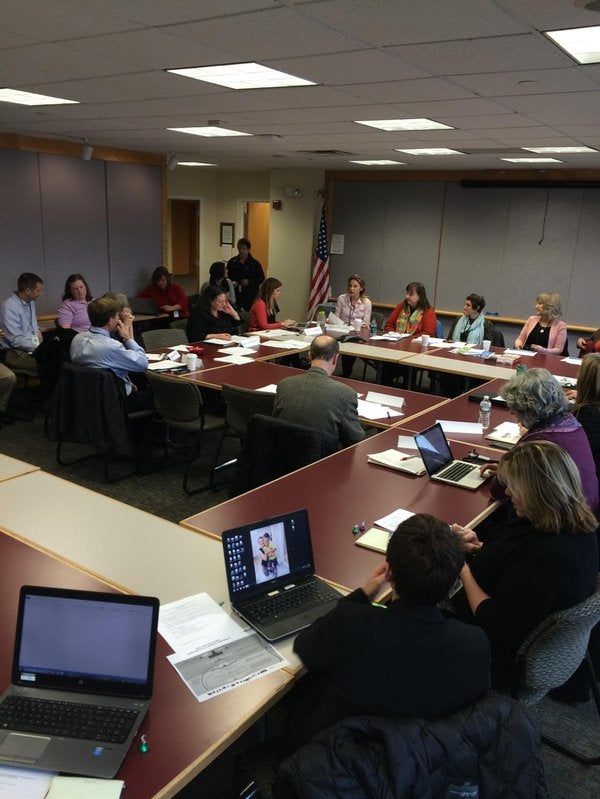
The report was issued directly to the state legislature. In addition to setting a $206 million estimate, it defined the elements of what constituted a high-quality child care program and recommended that families contribute no more than 10 percent of their income to child care costs. The report never expressly stated that the state would need to raise taxes. This was important, explained Kenney, because they wanted to build support for child care before introducing ways to generate revenue.
“It was really important to sensitize people,” Kenney said. “We needed to let policymakers know that to solve the child care crisis we weren’t just talking about a couple of million dollars here or there, it will need major investment. Not to the tune of $2 or $3 million, but to the tune of $200 or $300 million. It gave us a platform to start having conversations.”
“If we had started in year three with the big number, then that is all people would be thinking about,” said Necrason. What he and the Let’s Grow Kids’ legislative team wanted was to establish child care as an agreed-upon problem. Then, by the time they started discussing the cost, they’d have built a coalition so deep and so invested that they’d hunt together to find a workable solution. “Revenue would need to be a solution they decide to solve. We hadn’t planned on talking about the cost until year seven or eight.”
People would say that “a study is for losers,” Ramos explained, as often what happens in state government is that when legislators don’t want to do something, they send it to a study. “No,” she would correct them, “there are winner studies and loser studies, and ours was a winner study.” The Blue Ribbon Commission was intentional and purposeful. “We knew that if we could get a really good study that it would be a good step forward.”
Let’s Grow Kids had a legislative team and an initial legislative win, but the group would also need a strong legislative agenda going forward with distinct priorities. An issue like “child care” or “early education” is vague with no identifying concrete goals or specifics on what requires improvement: Would access to care be the issue or should the focus be on the quality of care? What about teacher compensation? Where would that factor in? Do you build a system that is centered on the most vulnerable populations or one that aims to be universal? And what did Vermont, specifically, need to help families?
Jen Horwitz, the policy and research director, was tasked with finding out what people in Vermont wanted—or needed—from a robust early education system. This included talking to hundreds of Vermonters about what their priorities were—and crisscrossing the state offering spaghetti dinners in town halls and Lions Clubs to have such conversations.
“We did an infographic place mat,” recalled Horwitz, one that she designed herself. “It had pie charts and bar graphs in the early Let’s Grow Kids’ hot pink and baby blue colors.” The goal had been to educate people about the brain science and the importance of the early years, and to solicit what the needs were for child care at a local level.
“At the time, not that many Vermonters thought early childhood was as important,” said Horwitz, “and we were doing public education on why the early years matter.”
They also created a program called “Small Talk,” driving a branded van complete with a mobile recording studio, stopping at town and county fairs, giving Vermonters a chance to talk about their own experiences with child care and early education.22
In 2016, Let’s Grow Kids published Stalled at the Start, a report that examined the supply and demand of child care in the state. The 2016 report was the first, though it would be updated every two years. It detailed the number of kids with all available parents in the labor force and defined them as “children likely to need care.” It also, for the first time, shared the three key components they’d developed with input from early childhood education stakeholders, partner organizations, and Vermont’s citizens, which included (1) improving access for child care in Vermont, (2) capping the cost for a family to 10 percent of their income, and (3) living wages for early childhood educators.
“This coalesced into the framework that we used for the following years,” said Horwitz.
Up until this point, much of the Let’s Grow Kids fieldwork was done in smaller, local events: county fairs, town meeting days, Dairy Days, Touch-a-Truck Fundraisers, and the Quechee Hot Air Balloon Festival. The field team came with toys, like LEGOs or crafts, for kids to play with and information for parents, or just chairs for families to sit and hang out. The goal was to grow the base of supporters for a child care system, one family at a time. Each family was asked to sign a petition about child care. “Wherever we went we had a clipboard and petitions,” said Shayla Zammuto, former senior field manager for Let’s Grow Kids.
At first they were simply asking people to sign a pledge to support child care, but otherwise there was no specific request, explained Zammuto. “As the campaign grew and we got more policy chops, we got more specific and asked for public investment in child care.” In 2015, Zammuto estimated they had only a few thousand signatures. In only three years, by December 2018, the field team had done such expansive work that numbers of signatures had grown to 30,000.
In spring of 2017, an idea came up: What if they did a flash mob? And what if they had a song written to go with it? Anna Gebhardt, the field director at Let’s Grow Kids, had a personal connection to the recording studio that shared an office building with Let’s Grow Kids—her husband ran it. With in-kind donations of time and creative energy, they commissioned an original song created by two local artists, Kat Wright and Chris Dorman, which would serve as their child care campaign anthem. (Dorman was best known as Mister Chris on Vermont PBS, who sang songs to kids.) Gebhardt hired a choreographer to come up with a dance that could go along with the music and be easy for children to learn. Then the field team went to child care programs around the Burlington area and taught the dance moves to the children, encouraging kids and families alike to come out and perform alongside Kat Wright and “Mister Chris.”

The event, Kids Out Loud, became Let’s Grow Kids’ first major public event, dominating the streets of downtown Burlington. On what was a beautiful October day, the Kids Out Loud event featured a thousand people, marching up Church Street wearing colorful Let’s Grow Kids superhero capes and holding signs. On stage, Kat and Chris sang their song, “Something Beautiful,” with children in colorful Let’s Grow Kids T-shirts and capes standing behind them, hands moving through the choreography that went along with the words.
It takes a village
To grow a great person
The fruits of great gardens grow
When we nurture soul
We all have a role to play
We’ve got to light the way.
Take care of the kids today
Someday they will join us and say
I hear something beautiful
To give it life and help it grow.
Open up my heart, open up my mind, to something beautiful.
Open up my heart, open up my mind, to help it grow.
Gebhardt had been organizing phone banks, emailing volunteers, and meeting with child care providers to build the event, but even then, having over a thousand people show up that day “blew her away,” she said. The Kids Out Loud event featured prominently in the music video for “Something Beautiful” and was shared widely with supporters. The costs remained modest: Aside from pizza and snacks for volunteers and paying the musicians who performed on stage, the rest of the video and music production was powered by in-kind donations.

“The musicians who wrote the song were really invested in the mission and being part of something bigger,” said Gebhardt. “It wasn’t about making money for them, it was about changing the state.”
The music assets became part of their communications and social media strategy for the following years. The capes, too, had staying power. At future events, the Let’s Grow Kids field team always had some on hand. And for the child care programs too far from Burlington to attend the Kids Out Loud event, the Let’s Grow Kids team made sure to go and visit, connecting with the kids and providers to teach them the song and choreography. And wherever they went, the clipboards and capes came along.
In October 2017, Let’s Grow Kids co-facilitated the “Building Vermont’s Future from the Child Up Summit” at the Sugarbush ski resort in Warren, Vermont. They relied on an “appreciative inquiry” model, which uses structured interviews to discover strengths and uncover areas of improvement, and worked to come up with a collective vision on how to address the three areas of their legislative plan. Over 250 stakeholders from across the state turned out, and they began, in essence, to plan what the rest of the 10-year campaign might look like.
By this time, Let’s Grow Kids had a rough estimate of how much a fully funded, high-quality child care system could cost, but still no idea as to how the state would afford it.
Sen. Jane Kitchel was right—the Blue Ribbon Commission was only the first step. The Let’s Grow Kids’ legislative team would be back soon to ask for more.
A campaign to build child care infrastructure in the state would cost money. And though the Stillers had generously seeded the group with funds to get off the ground, they would need more to continue the longer effort ahead.
So Let’s Grow Kids began to do what any advocacy group would do to be successful: build a budget and get aggressive with fundraising.
Lucia Campriello had no connection to Vermont until her husband’s job changed and they moved their young family to the state. She started working in development at an arts nonprofit in Burlington and found herself struggling with an issue familiar to most parents of young children—finding child care.
“I had a three-year-old and a four-month-old,” she said. “I was trying to do what every parent does at that age.”
In the summer of 2017, Campriello saw an advertisement for a chief development officer for Let’s Grow Kids. “It was the first professional fundraiser on the team, which signaled to me it was a ‘build it’ role.” She wasn’t sure she had the relevant experience, but she felt “drawn to the mission” and applied.
She connected with Janet McLaughlin, the executive director of Vermont Birth to Five, who explained how Rick Davis and Let’s Grow Kids had recently brought the programmatic work into a single organization. They were now embarking on an effort to bring high-quality, affordable child care to the state. Campriello and McLaughlin had children in the same child care center. They pushed their strollers together while having this conversation, both keenly aware of how much reliable child care impacted their own ability to go to work each day.
Campriello was hooked. Several interviews later, she came in to meet with Aly Richards for one of the final rounds. Richards handed her a napkin with numbers scrawled on it. “It said we would need $56 million for a 10-year campaign,” Campriello recalled with disbelief. “I thought she was crazy. Where would we find that?”
But as soon as they began fundraising work in earnest, the “crazy” idea became attainable. The $56 million goal became $60 million, and then $70 million. By the time Let’s Grow Kids sunset in 2025, it had raised over $73 million.
Campriello’s one regret? “I wish I’d kept that napkin.”
Before Campriello came on board in 2017, the organization had largely relied on the pluck and energy of Davis to fundraise. Davis had cultivated a dozen loyal donors, and he had raised the seed money from the Stillers. On occasion, Let’s Grow Kids would bring in fundraising consultants to support solicitation work and engage new major donors, but they had no formal development team. At this point, they still weren’t sure what that would even look like.
In 2018, Let’s Grow Kids commissioned a yearlong planning study with two local Vermont fundraising consultants: Tere Gade and Scott McArdle. The goal was to lay groundwork for what their fundraising prospects looked like within the state. It was Gade and McArdle who had come up with the $56 million number and helped Let’s Grow Kids envision what sort of fundraising team they wanted to build, including drafting the job description and helping to hire Campriello.23
They also worked with Let’s Grow Kids to draft a case for support: a document that could be shared with potential donors with persuasive, motivating language and tell the story of what Let’s Grow Kids wanted to do. It laid out the goals for the Let’s Grow Kids’ campaign: defining the mission as “ensur[ing] affordable access to high-quality child care for all Vermont families by 2025,” and the vision that “Vermont is the BEST place to raise a family.”
It also formalized the plan that Let’s Grow Kids would, win or lose, sunset by 2025. And that the campaign would need to raise an additional $37 million above their initial multiyear fundraising commitments to hit their $56 million goal.
“It was the first time we consolidated the complex message of Let’s Grow Kids into the most basic points with the head and the heart,” said Richards.
Gade and McArdle then conducted interviews with Let’s Grow Kids’ closest fundraising partners, seeking feedback on the case for support and delving into the philanthropic landscape in Vermont writ large. Among the things Let’s Grow Kids wanted to learn: How did donors feel about supporting child care, would they respond to the 10-year timeline, and did they have a compelling case for seeking national support?
The planning study found the following: First, child care as an issue resonated widely. Donors in Vermont cared about this as an issue impacting the state and could be persuaded that an investment in child care was a worthwhile return on their investment. Second, the 10-year timeline was appealing to donors, who would be interested in making a time-limited contribution without having to donate in perpetuity. Third, there existed a pool of high-net-worth individuals connected to Vermont who cared about the outcome of children in the state.
With all of the feedback, Let’s Grow Kids worked with Gade and McArdle to create a stylized fundraising pitch deck. “It was the first time we had that,” said Richards. Davis had been having fundraising conversations for almost two decades, but it wasn’t until 2018 that they had a streamlined, mission-focused pitch.
They had a new point person for development, a clean and concise case for support, a wide network of early childhood providers and advocates, and several small legislative wins.
They were ready to swing big and start hunting for the $56 million they would need.
Since its inception in 2000, the Permanent Fund for Vermont’s Children had largely been a grantmaker, offering funds to child care providers across the state to help them achieve better quality. By 2018, the Permanent Fund was still doing that work, but now it lived under the umbrella of Let’s Grow Kids. It was a pivot, Campriello knew, to go from being the organization that gave money to providers to becoming an organization actively seeking funds from donors.
In early 2019, Hannah Burnett joined the fundraising team. Burnett had worked in national grantmaking for global health groups, and the team needed to attract national donors. But the national organizations weren’t ready to take a chance on what was then an unknown group, and Burnett found herself explaining to prospective donors and supporters that the programmatic work of Let’s Grow Kids was what set it apart from other advocacy campaigns. The programmatic work could show progress; the organizations within Let’s Grow Kids had over a decade of working with early childhood educators as part of the Permanent Fund for Vermont’s Children. They could show success on their ability to improve the quality metrics for providers in the state. And the work to improve quality statewide was what made it possible, in a matter of years, for the legislature and supporters to envision a state-funded system. “This direct service also built relationships and trust among the child care and early childhood education community so that they became the base of Let’s Grow Kids’ child care campaign supporters,” said Erin Roche, who worked on the program team. “We couldn’t have gotten even the unfunded early wins without them.”
“A lot of our funders started regionally,” said Burnett. A funder might want to strengthen the early childhood programs in a particular section of the state, and then “they could see the impact of that work,” she said. Building on that success, the fundraising team would shift their ask to unrestricted giving, the kind of money that Let’s Grow Kids could use for any purposes.
The local funders, Burnett explained, actually saw the evidence in their programming work success and became convinced that the Let’s Grow Kids work would result in systems change. “They had a lot of trust in us,” she said. “You can’t do transformational philanthropy without trust on the local levels. National funders just don’t have the same relationship.”
Let’s Grow Kids began shifting the way it viewed philanthropy. “Less transactional,” said Burnett. The team needed donors to be bought into the idea of systems change, which can be harder to understand than direct services. For instance, a funder might be willing to donate to help a child care provider meet a one-time shortfall, since they can see how readily their dollars are being put to use. It’s different to ask a funder to donate to a 10-year campaign to change policy. Riskier, too, explained Burnett, because “what if this policy never passes and you keep doing the same thing over and over again?”
Tere Gade, who’d led the fundraising study for Let’s Grow Kids, explained that part of her work was changing the perspective on philanthropy within the organization by articulating the vision of what the organization intended to do and how much it would cost to do so.24 “The donors are not transactions,” Gade said. “When you are asking people to invest in your dreams, you have to show what the dreams are, including the ones you have pursued in the past that have been successful. Past behavior predicts future performance. You can use the past behavior to show that.”
Let’s Grow Kids would need deep relationships with long-standing business groups to develop allies and—more importantly—to get buy-in to what the work of systems change would entail. The Vermont Business Roundtable, a nonprofit public interest group of business leaders in the state, had taken a particular interest in the education of very young children, dating back to the year 2000 when they created the initiative Born to Read, an early literacy promotion effort that (1) gave every baby born in the state a kit with books and learning materials, and (2) conducted public information and media campaigns to emphasize the importance of reading to young children. In 2003, the national Business Roundtable published a report on the return on investment in spending for young children, followed by policy briefs. Davis had connected with the Vermont chapter in 2007, forming a strong working relationship with the executive director, Lisa Ventriss; Richards and team continued to pursue a strong partnership with the group.
“The beauty of fundraising is that it’s all relationships,” Richards said. In addition to raising funds, “we were raising volunteers and ambassadors and getting feedback, and also getting amalgamation with the business community as well.” The business community would later prove to be one of their most stalwart allies in advancing their goals for child care infrastructure.
“By the end we had sophisticated funders,” said Burnett. “They knew that systems change was going to get the return on investment.”
Though the early years of Let’s Grow Kids’ fundraising success focused on individuals connected to Vermont, in 2018 they got their first bite of national interest. Campriello and Richards flew to Chicago to meet with the Ounce of Prevention Fund (now Start Early), as well as the Pritzker Children’s Initiative and Irving Harris Foundation, both of which were members of the Early Childhood Funders Collaborative (ECFC). Let’s Grow Kids was then invited to join the Collaborative; ECFC prided itself on having projects across all states, and at the time they didn’t have a presence in Vermont.
From the Collaborative, they were able to connect with the Alliance for Early Success, led by Lisa Klein, who would later become a pivotal connection for them when Let’s Grow Kids became interested in flexing political muscle to advance legislative work. At the time, the Alliance didn’t invest in political work that would sway legislators, but Klein was interested in making that shift. Over the next few years she kept tabs on the work Let’s Grow Kids was trying to do. In 2021, she came to Vermont and spent a day on Stave Island in Lake Champlain, where Let’s Grow Kids conducted its annual retreat with leadership and advisors, and became a significant investor in their political efforts.
But at this early stage, the Alliance gave Let’s Grow Kids a modest annual gift of $25,000. It was enough that Campriello knew they could tell Vermont’s philanthropic community that Let’s Grow Kids was being taken seriously on a national level, but it was nowhere close to what they would need to run a 10-year campaign. The major fundraising push would have to take place in Vermont.
From the beginning, the legislative team had a goal of producing a tangible win each legislative session. It would help engage the philanthropic community, they knew, and also build a wider tent of child care champions. “Success breeds commitment and is a stepping stone to doing more,” said Adam Necrason, one of the hired lobbyists.
In the summer of 2018, the legislative team knew they needed to identify their child care champions, the group they could call on to advance more sophisticated child care legislation. They’d won the Blue Ribbon Commission, largely on the basis of Rebecca Ramos’s connections, and they knew they would need deeper commitments to advance something more ambitious. They invited four Democratic state representatives to a meeting at the Let’s Grow Kids’ Burlington Office in the hope of creating a “legislative brain trust.” The group included Rep. Ann Pugh, chair of the House Committee on Human Services, and Reps. Jessica Brumsted and Theresa Wood, members of the committee; Reps. Diane Lanpher and David Yacovone, both members of the House Committee on Appropriations; and Rep. Kathryn (“Kate”) Webb, the ranking member of the House Committee on Education. The group gathered around a conference table, eating cookies from the bakery next door and fiddling with LEGO pieces left behind from children’s visits, as they discussed next legislative steps.
“We said, ‘We know that you are child care champions and we would love to work with you,’” Kenney recalled. Let’s Grow Kids wanted their next legislative win to be something more substantial than a study, but they felt that the legislature might not be ready to tackle the full child care infrastructure needs given the hefty price tag connected to it.
“We asked, ‘What are your ideas on how to solve this problem?’ And we hatched a plan on how to introduce a bill in January and try to make some much bigger steps than they had before.”
Kenney recalled her nervousness at this meeting. This was the first time Let’s Grow Kids had formally invited legislators in to be part of the strategic process, and they’d only targeted Democrats because they hadn’t yet built a bipartisan coalition—that would come later.
“It was risky,” Kenney said. “Whenever you pull in legislators to have a candid conversation you risk them being, like, ‘it’s a terrible strategy,’ or having a different idea that you know is a bad one. You want to bring in the people that you think are going to be most likely to work together and most committed to the issue and the most likely to listen to the voices that you are bringing to the table as well.”
In 2019, the legislative brain trust introduced multiple bills to take bigger steps to stabilize and improve Vermont’s child care system, aspects of which were included in the 2019 budget bill.
“Something felt feasible then,” Kenney said. “It wasn’t ‘we are going to do huge things,’ but it felt like a turning point.”
The provisions that passed included higher reimbursement levels paid to child care providers through the state’s Child Care Financial Assistance Program (CCFAP). Vermont, like most states, relies on CCFAP as the primary resource to support families with incomes low enough to qualify for child care assistance.25 At the time, most states paid providers at the “market rate” for service, which is the price charged to families. For most child care providers, the market rate of what they charge families isn’t enough money to cover the true cost of care; many providers, particularly those in lower-income communities, run their child care programs at a slim profit margin or a deficit.
In addition to raising the amount of money providers receive for caring for children, the 2019 budget bill also expanded eligibility for child care subsidies so more families had access to them, and the eligibility cap was raised from 200 percent of the federal poverty level to up to 300 percent.26 This meant that a family of four making close to $80,000 annually could now qualify for child care assistance.27 The legislation also included funds to begin exploring what information technology upgrades would be needed if the child care system was further expanded, a crucial step that would later become pivotal when looking to create a much more comprehensive child care system.
It was a victory for the legislative brain trust and for the broader child care agenda. Child care reimbursement rates and income eligibility levels went up significantly; for some providers, it was the first time in years that the rates had been raised.28
The team was on a roll. Or so they thought.
By early 2020, Let’s Grow Kids had upped the fundraising goal to $10 million for the year. They were beginning to attract more national attention. That February, Burnett and Campriello went to Park City, Utah, for the Winter Innovation Summit (now the Sorenson Impact Summit), where they spoke to social-impact founders and funders interested in making mission-driven investments. The funders were particularly interested in the success Let’s Grow Kids had with child care providers—all of the years of work that Davis had done with his Vermont Community Preschool Collaborative were examples of their success in the field they could build on. “We could show progress with the programmatic work,” said Burnett.
They felt some momentum leaving the summit; there was energy around the work, recalled Burnett, and also the potential for collaboration. They were continuing to shift from being seen as a group focused on programmatic work to one that did advocacy work, and they finally felt they had a foothold for such collaboration. Looking around the Salt Lake City airport, Burnett recalled many people were wearing ski buffs (neck gaiters) and medical masks over their faces, something she hadn’t seen much of before.
In March 2020, Richards got what she assumed would be Let’s Grow Kids’ first major national fundraising breakthrough. She was invited to the Philanthropy Workshop Global Summit in Napa Valley, California. To prepare for the summit, she met with a storyteller and toy developer; they devised a complex plan to engage national funders with games and toys to illustrate the joy and benefits of play. The success from Utah had been validating. Richards was certain they would finally be taken seriously as a contender for national funds.
The day she was supposed to leave, she had a fever. Still determined, she insisted on going, over the objection of her family. “I didn’t want to give up the opportunity,” she said.
On the way to the airport, Richards changed her mind. She turned around and went straight home; her fever persisted, and she lost her sense of taste and smell. She was devastated about losing the opportunity to participate in the workshop; she didn’t think much of her illness. It would be weeks before testing for such COVID-19 symptoms was a readily available option. But at that moment, she just knew she’d lost this opportunity and would need to work twice as hard to get another one.
By mid-March, the state’s pre-K system was back up for discussion in the state legislature. Let’s Grow Kids had believed strongly in a mixed delivery system—a network of child care providers that included traditional centers and schools as well as in-home or family child care—rather than a system that relied exclusively on school districts. On Thursday, March 12, Kenney was at the State House, testifying about why the mixed delivery model was necessary. But there were signs posted all around the capitol that people with fever or coughs should stay home. Like Burnett, she didn’t think much of it at the time. She left her overnight oats in the staff refrigerator and shoes under her desk, intending to return the next day and continue. When she felt ill the following day, she called her team and explained she’d sit this one out. I’ll be back in a few days, she assumed.
Except she wasn’t. The next day, March 13, the legislature voted to suspend the legislative session and close the doors of the State House. A state of emergency was declared. The COVID-19 pandemic threatened to upend all their work and push their fragile child care system to the breaking point.
“All of that momentum stopped,” Burnett said.
Like the rest of the world, COVID-19 brought the operations of Let’s Grow Kids to a halt.
But people still needed child care. Even with a shutdown, people would need to work, and kids would need a place to go.
They would have to pivot. Again.
Initially, the Let’s Grow Kids team wondered if they should take a hiatus during the COVID-19 pandemic and stop working on their plans for child care infrastructure, given the uncertainty and enormity of what they were facing.
But, almost immediately, they began hearing from child care providers who needed their help. And they realized that Let’s Grow Kids was in the best position to respond and take action.
Well before the pandemic shut down the country, Let’s Grow Kids had a strong presence in the lives of early educators. Much of this traces back to the original initiatives: Vermont Birth to Three, Vermont Birth to Five, and the Permanent Fund for Vermont’s Children. These groups had worked with child care providers to improve quality. Their work had been so successful in bringing more child care providers into the Quality Rating and Improvement System, which the state used as a quality metric, that Vermont’s state government contracted with Vermont Birth to Five to run the entire statewide professional development system for child care from January 2017 to February 2018. Let’s Grow Kids had also seen significant success with its Make Way for Kids grants, which gave child care providers access to capital to expand their programs and create new slots. The Make Way for Kids grants were funded by philanthropy for the first year, but when Vermont’s Child Development Division, the state agency overseeing child care, saw that the program was effective, funding was appropriated by the state legislature to continue the program.
So when COVID-19 hit, Let’s Grow Kids had over a decade of experience working with child care providers and had spent years building a field team of nine organizers across the state.
Vermont is the sixth smallest state in the country by geographic size. Most locations within the state are only a few hours away from each other by car. Yet having nine program staff working in the field was the right number. Because when the pandemic shut down the state, Vermont—like every other state in the country—was about to learn just how vital child care is to the economy and to family stability. They would need each and every member of the Let’s Grow Kids field team to make sure child care providers and the families they served had what they needed.
“We knew what was needed,” said Sherry Carlson, who served as Let’s Grow Kids’ chief program officer. Carlson had extensive experience as an early educator; for two decades she was the director of early childhood programs for the Greater Burlington YMCA. When Rick Davis brought her on board as a consultant in 2008 for what was then the Permanent Fund for Vermont’s Children, Carlson hadn’t expected to stay long, let alone eventually step into a full-time role.
As the programmatic work began to take on an even bigger role, so did Carlson. Her experience as a leader in early childhood education gave her insight into what providers would need in the time of a crisis, even one as unprecedented as COVID-19.
Let’s Grow Kids partnered with Vermont’s Child Development Division to make sure essential workers had access to child care. Erin Roche, who worked on Carlson’s team, set up a database using a Google form that essential workers could fill out if they needed child care. Each day, Roche and her team downloaded requests, reported them to the state, and helped match people with available spaces. They also created a partnership with Vermont Community Foundation and New England Federal Credit Union (now EastRise) to offer low-cost or no-cost loans, if child care providers needed access to immediate funding. This was crucial in the early days of the pandemic emergency, when many providers paused collecting tuition from families but still had rent and salaries to pay.
“Thirty percent of the child care programs in Vermont never closed at all,” said Carlson. Within a handful of days, Republican Gov. Phil Scott provided an outline for what constituted essential workers, and child care programs pivoted to providing care only for children of essential workers.
“We pivoted right away to focus on the 30 percent,” said Carlson. Let’s Grow Kids had strong business and philanthropic connections and was able to help with sourcing materials like toilet paper, cleaning supplies, and gloves, which fell into short supply in the immediate weeks following the shutdown. Child care providers would fill out a form, detailing the supplies they needed. Let’s Grow Kids would find the supplies, and a program staffer would deliver them to their doorsteps, at no cost to the providers. One of their business connections had access to a fleet of trucks and was able to help move supplies around the state.
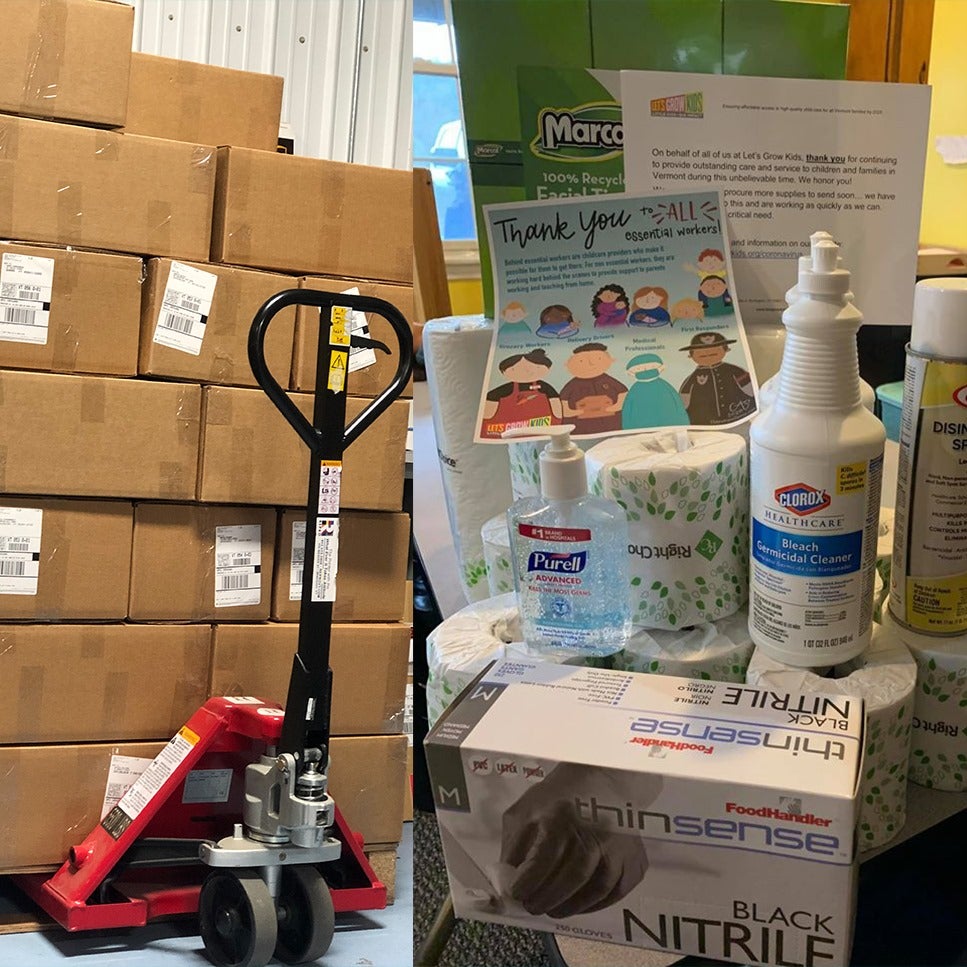
Delivering much-needed supplies to child care providers did more than just keep child care programs open. It deepened the relationships between Let’s Grow Kids and the providers, some of whom had been skeptical of the group’s efforts to overhaul a system they saw as intractable. Providers had good reason to be skeptical: Despite polling numbers that showed support for child care, at the time there was no statewide precedent in the country for significant investment in child care infrastructure, and historically, federal efforts to invest in child care had been shunted, vetoed, or dismissed.
By August 2020, 76 percent of Vermont’s child care programs were back open, according to CDD data. Sourcing supplies became easier, and Let’s Grow Kids phased out doorstep delivery programs. They could see that their work had served its purpose. Child care programs would remain open, and the connections forged during the early months of the pandemic had “exponentially expanded our network of supporters,” said Carlson.
Vermont, like all states, began to see federal money from pandemic relief. First, the Coronavirus Aid, Relief, and Economic Security (CARES) Act of 2020 provided supplemental Child Care and Development Block Grant funding for states. Then, in 2021, substantial funds came from the American Rescue Plan Act (ARPA), which had both supplemental Child Care and Development Block Grant funds and, the first of its kind, child care stabilization grants. Let’s Grow Kids, utilizing its network, acted as advisors to the state CDD to create an application process for child care programs to access the grants.
The Let’s Grow Kids team soon realized that many providers needed their encouragement and support to apply, recalled Carlson. Child care providers were not used to receiving government funds in such an unfettered way. The CDD gave Let’s Grow Kids a list of the programs that hadn’t yet been applied for. The team would reach out, explaining the unusual nature of ARPA and why child care programs that intended to stay open should apply for funding.
“We would help people apply, we put on webinars, and sent it through our large distribution list to get the information out,” said Carlson. Some providers weren’t accustomed to using email or video services like Zoom, so they spent time helping early childhood programs access technology. This was particularly crucial for providers that relied on a system of receiving paper checks from parents. Shifting to electronic payments, which didn’t require a check drop-off, was a game changer. They were able to convince all but one to apply for the funds. Vermont had allocated $47.6 million for child care funding through the ARPA grants on child care programs and stabilization (approximately $29 million in stabilization grants and $18 million in child care block grants), helping about 965 programs and reaching close to 30,000 children.
As the emergency phase of the pandemic subsided and life began to resume a cadence more similar to pre-pandemic times, not all child care programs resumed the same operations they had prior to March 2020. Many lost staff, Carlson noted, and while most reopened, they did so at reduced hours, such as closing at 3 p.m. or 4 p.m. instead of 5 p.m. or 6 p.m., or with capacity for fewer children if they didn’t have enough staff to keep all their classrooms open.29 The reduced hours were a particular equity issue, said Carlson. “The people who can get their kids at 4 p.m. are the ones with easy, white-collar jobs. It’s people in the service industry who get locked out.”
COVID-19 had also helped create a new cadre of business champions who were able to witness firsthand how the lack of child care hobbled their employees, and thus their own businesses. Let’s Grow Kids had made the determination to continue with the planned legislative strategy even during the shutdown and emerged with stronger relationships with both the business community and the provider community heading into the 2021 legislative session.
By 2021, Let’s Grow Kids had six years of relationships with providers and legislators, strengthened by their work during the pandemic as organizers of personal protective equipment and federal pandemic-relief funding. The team was ready to approach the legislature with what would be an ambitious stage-setting ask: legislation that would begin to build the foundation for robust child care infrastructure.
“COVID became about how do we get people to work? You have to have child care,” said Adam Necrason, Let’s Grow Kids’ lobbyist. “Child care is essential, and ‘essential’ became the one word [we used].”
It had been over a year since Kenney, Ramos, and Necrason had pivoted to Zoom meetings and texting with legislators about what could be done to ameliorate the ongoing child care crisis. Legislators had been hearing from child care programs in their area and from parents—some had their own child care crises to contend with—and wanted to do something. This was when they came up with a three-year mini campaign to pass transformative legislation with big investments, as Kenney described it.
“We didn’t know why the system didn’t work,” said Ramos. Legislators understood there was a problem in child care, but there wasn’t official state documentation of how many kids were involved or how many needed care but couldn’t access it. “What needs to happen in the system so that it’s strong and can handle these investments?”
In 2021, Let’s Grow Kids had six legislative priorities: expand child care subsidies, increase compensation for early educators, expand access to care, modernize the technology required to run such a system, streamline early childhood administrative oversight, and identify a long-term funding plan.
Expanding the subsidies was part of the larger plan to continue to widen the eligibility so that more families qualified for state assistance.30 The legislature agreed to provide an additional $5.5 million for the state’s child care subsidy system. That money allowed for increases in eligibility, the reimbursement rate, and the number of families who could access child care without co-pays. Eligibility for child care subsidies was raised from 300 percent of the poverty level to 350 percent (it would later move up to 575 percent under Act 76). Providers would be paid at a higher rate, more in line with the most recent market rate survey data, conducted annually by the state. They also changed how family co-pays are calculated by the Child Care Financial Assistance Program. Now, family co-pays would be calculated solely on the youngest child, meaning that families with multiple children in care would have no co-pays for older children and see significant cost savings.31 In addition, more lower-income families would receive full payment for child care, with no co-pays at all.
Second, the legislators agreed to spend $4.5 million to modernize IT systems. The IT infrastructure that the state used to administer the child care subsidies had been built on Microsoft Access and was unable to do the calculations necessary to increase eligibility or make other changes to the program. An audit report later described the state’s child care information system as “an outdated system that lacks modern functionality.” Any major changes would need a serious overhaul of the existing IT systems to be successful. The legislature had added $1 million in funding for an IT systems upgrade in 2019, but that had primarily been used for a systems survey by the state CDD—which learned it would cost more than $4 million to do a proper system update.
Third, the bill included $2.5 million in workforce stabilization initiatives, including scholarships for current and prospective early educators and a new student loan repayment support program.
Finally, the legislators provided $200,000 for a systems analysis of Vermont’s early childhood education system and granted authorization to hire a contractor for a financing study. Though the reimbursements were the immediate shot in the arm that child care providers and families needed, it was the studies that the legislative team knew would be necessary for the way forward. They would produce critical information for the state to help shape a child care program, such as the economic impacts, overall potential costs, and potential financing mechanisms.
But the biggest outcome of H.171, according to Kenney, was that it set goals for the state: no family spending more than 10 percent of their income on child care, child care providers receiving compensation that is commensurate with peers in other fields, and a true cost of care model instead of one based on lower market rates.
Nationally, attitudes on child care were beginning to shift. The pandemic pulled child care out of the shadows and gave it new attention as a major economic issue that impacts employees, businesses, and communities. Attitudes and understanding were changing: National polls showed 80 percent of voters viewed support for child care as a good investment, including over 60 percent of Republicans.
State lawmakers described their own challenges affording child care and the toll taken on staff who worked in the field. On the floor of the state Senate, Sen. Christopher Pearson of the Vermont Progressive Party spoke of bumping into one of his children’s former preschool teachers, only to discover she had left the profession.
“She left working at preschool—a job she loved—to bus tables. She could make more money busing tables than looking after my kid. That’s criminal,” Pearson said.
“Everyone had a front-row seat to the crisis in child care and it was impacting their constituents and some legislators so directly that they had to do something,” said Kenney. “It was a relatively low price tag,” Kenney said of H.171. “It helped that there was a lot of federal pandemic funding coming into the state so the state budget was flush and the bill didn’t involve any additional taxes.”
H.171 had little to no opposition: It passed unanimously in the Senate and with only a single no vote in the House. The words “freaking idiot” can be heard when the no vote was cast, in what appeared to be an unintentional slip on a live microphone (it was still the early days of Zoom).32 But the offhand insult was meaningful to the Let’s Grow Kids team. “It was becoming obvious to so many legislators that the smart thing to do was to vote for child care, regardless of party,” said Kenney.
On June 1, 2021, Republican Gov. Phil Scott signed H.171 into law.
Passing child care bills like H.171—measures that didn’t require additional taxes—was one thing. Building a system with a dedicated funding source was something else entirely. Let’s Grow Kids continued to publish its Stalled at the Start report every other year, but had so far avoided proposing options for revenue generation, specifically raising taxes.
Raising taxes was a political nonstarter. Gov. Phil Scott had vowed to veto any tax increase, and the business community was unlikely to support one. While goodwill toward child care had surged during the emergency phase of the pandemic, it was unclear whether that support would endure. Would business leaders continue to see child care as an economic necessity once the crisis faded?
There was only one way to find out.
To pass anything that resembled a tax increase, Let’s Grow Kids would need more than kind words and token support for child care providers. They would need more than laments about people leaving the field to bus tables or tales of parents stressed by children at home interrupting Zoom calls. They would need the business community to come fully on board as outspoken advocates ready to testify that this investment made economic sense.
In the aftermath of the COVID-19 pandemic, they set out to organize the business community and build that case.
Michele Asch had a problem.
Business was growing: Twincraft Skincare, a soap and lotion manufacturer located in Winooski, Vermont, just outside of Burlington, had seen a surge in demand during the COVID-19 pandemic. But Asch, who was the chief people officer, was struggling to hire and retain staff. With more than 400 employees, Twincraft was one of the top employers in the state, yet she couldn’t find enough people to work. She would hear from would-be employees that one of their chief concerns with coming to work was the lack of child care, and Vermont didn’t have enough options.
One standout employee, Asch recalls, spent an hour driving each morning to drop her kids off in two different towns before driving to work, though she lived only 15 minutes away. Asch began doing her own research and couldn’t find a child care option in Winooski. She went to the city of Winooski and learned they had been forced to return half of a $200,000 state-administered Promise Community Grant intended to expand local child care because no operator could be secured to open and run the program.33
“Usually you have such high demand that the free market takes care of things. That is when I learned, no way.” Twincraft, Asch knew, had recently hired two former child care workers who didn’t make enough money. They’d make more working in manufacturing, but Asch also realized she was contributing to the labor shortage that was causing child care providers to close or, in the case of Winooski, never open.
Asch decided she would look into opening her own child care center—how hard could it be? A colleague recommended she connect with Richards, who came to her conference room with one of Let’s Grow Kids’ program staff. Did she know how hard it was to open a child care center without any experience? Did she know who the experts were she needed to contact?
“Aly, we make skincare. Can’t I just pay into a system so we can get this child care fixed?” Asch asked.
By this point, Richards knew that the team’s existing strategy for bringing business leaders on board to become champions for child care wasn’t working sufficiently. Business leaders, like the early child care providers, would be more likely to listen and respect one of their own. Asch was someone who experienced the problem of a broken child care system and saw this as a workforce issue that needed a solution. If businesses like Twincraft wanted to stay, grow, and manufacture products in the state, they needed to find a way to retain young employees and bring new ones in.
On the spot, Richards made the decision to bring Asch into the inner circle of Let’s Grow Kids. A week later, Richards, Asch, and Davis met for lunch. They offered her a seat on the board and started brainstorming ways to bring business leaders into the conversation. The goal was for business leaders to view child care as an investment, and the pitch would be more effective coming from a fellow businessperson, not an advocate, philanthropist, or child care provider.
“She’s a badass,” Richards said of Asch, and the moniker stuck. Michele Asch, Rick Davis, Aly Richards, and Tom MacLeay, a longtime confidant of Davis’ and a Let’s Grow Kids board member, became the “Badass Task Force.” From then on, until Let’s Grow Kids sunsetted in 2025, they would meet every few weeks, 90 minutes at a time, for strategy check-in sessions.
If they were going to raise revenue or create a new tax, they wouldn’t just need the business community on board, they’d need the business community to own the idea. They would need groups like the Vermont Business Roundtable to shift from thinking about child care as a business need to advocating for policy changes on the state level. And they would need business leaders, like Asch, to be the ones to sell it.
Thus began the CEO Sprint.
Dimitri Garder had already seen the types of failures possible when state governments tried to do too much. He had previously been appointed to Gov. Peter Shumlin’s health care business advisory team in an effort to get single-payer health care up and running in Vermont. The idea had been that the state could build its own health care exchange, but in the end they couldn’t craft legislation in such a way to control rising health care costs without significant tax increases. “It was a dismal failure,” Garder said. “The economics didn’t hold together, and the governor lacked significant business support for the initiative.”
So he was reluctant to tackle another state government project when, in 2021, he was approached by Let’s Grow Kids to join the CEO Task Force and come up with ideas for how Vermont could fund child care infrastructure. He’d joined the board of the Vermont Business Roundtable and went on a mission to make Vermont a better place to live and do business. Garder understood deeply how hard it was to start a business in Vermont—he was CEO of a data quality company but relied on a largely remote team.
“It is much riskier to move to Burlington than to move to Austin for your tech job,” he said. If the job didn’t work out in Vermont, there would be fewer opportunities to find a new one, and he wanted to change that.
Richards approached Garder with a message similar to her pitch to Asch: Vermont had the second-oldest population in the country and was aging rapidly. They had a declining workforce population and needed to change that. Some of this demographic crisis wasn’t unique to Vermont: Baby Boomers were retiring and the birth rate nationwide was declining, and this was compounded in rural places with out-migration and young people clustering in major cities for better economic and social opportunities. Child care in Vermont, Richards argued, was a workforce issue. Building out the child care infrastructure could help kids and create more productive workers—getting moms and dads back into the workforce and stabilizing family budgets when the lack of child care options may have kept one parent at home.
“You have two generations of workforce,” said Garder, referring to the parents who are able to go to work and the children getting the early education to prepare them for the labor force as adults. “I always add a third cadre of workers—the child care providers themselves.” He was convinced that this was a worthy investment, but he wasn’t sure how to pay for it or what would be most impactful for his business colleagues to hear.
He could get the Vermont Business Roundtable on board with the workforce premise, but there wasn’t a consensus on what the revenue source should be. Most business leaders would be against it, and he was sympathetic to their concerns.
But Richards knew that Garder would be instrumental in getting the Vermont Business Roundtable to support whatever revenue increase would be needed. There seemed to be enough consensus that Vermont needed a major investment in child care to shore up its workforce. But they still didn’t have a way of discussing and thinking through the different revenue models to get there.
Richards assembled six C-Suite level executives, Garder and Asch among them, and hired Mary Peterson, a former state tax commissioner, to facilitate a conversation, nicknamed the CEO Sprint. The six executives represented a diverse group of business leaders from different sectors and parts of the state, including manufacturing, banking, and technology. Richards ensured they had small and large businesses and gender diversity. But she had no idea what to expect.
From the beginning, the idea of implementing a payroll tax to pay for child care was extremely unpopular among the CEOs.
“The concern was it was a camel’s nose under the tent,” said Garder. Vermont didn’t have a payroll tax, and creating one just for child care might mean that other causes would seek to jump aboard, hiking that tax up further and further.34 It would make more sense, the CEO team reasoned, to leverage an existing tax source to pay for child care.
Peterson brought data to the meetings with a matrix of funding sources and the pros and cons of each. The CEO Sprint took place over Zoom in the early days of the pandemic. “We took the broadest lens we possibly could,” said Garder. Income tax and property tax were debated as reasonable alternatives to the payroll tax.
Michael Seaver, the Vermont president of People’s United Bank, was also in the discussion. Seaver had begun his career as a bank teller before working his way up to the top position. He and his wife prided themselves on sending their three boys to public school and were deeply committed to the future of the state. As Seaver explained, he knew investing in early education made sense, but he was adamant against raising taxes to do so. “Take existing funds for K–12 education and reallocate it for early childhood,” he said. But through the conversations, he understood that the K–12 system struggled to get enough funds, and no matter how many times the CEO Sprint had come up with creative ways to slice up the pie for funding to make room for child care, there wasn’t a workable solution to allow for two robust systems.
“If we wanted to not completely miss supporting another generation of children in Vermont, we were going to have to swallow hard and raise more revenues to support the effort,” Seaver said. He was beginning to realize that this would be the only way forward.
Property taxes, already high in Vermont, were discussed but ultimately dismissed. A broad income tax with a very low rate, split between individual and corporate taxes, was considered as an option. The CEO Sprint team shared the idea with the state legislature’s Joint Fiscal Office to see if it might be feasible and model how it might look. The response gave them the impression that an effort like this would require reforming the entire tax code.
And so “the payroll tax came up again,” said Garder. “It pegged child care investments as a workforce issue,” one that would be paid for by those already in the workforce.
“We wanted a way to connect the raising of revenue with the purpose,” said Seaver. He explained that they’d come up with a payroll tax plan that was a shared burden—one split between the businesses that needed more employees and the individuals who needed better access to child care in order to work.
“I felt strongly about this,” said Seaver of the shared burden. “It’s always easy to pass a tax when you are putting it on someone else and not sharing the burden. It needed to be that shared responsibility.”
Garder recalls the concern that child care could be pigeonholed as a workforce issue and lose the message that this infrastructure would be good for kids, families, and Vermonters.
Then the circular logic took over. If not the payroll tax, then what? No to property taxes, no to income taxes. Health care, an early idea for Let’s Grow Kids, also couldn’t handle additional taxes (and the group couldn’t create a system to funnel health care funds to child care that could be justified).
The payroll tax continued to emerge as the “most elegant solution that checked every box,” said Asch. There were more arguments in its favor: A payroll tax allowed the payment burden of the child care program to be placed on workers, not retirees. As more people took advantage of the program and went to work, the revenue stream would grow. It would be a dedicated tax just for child care, meaning no one would have to worry about going back and getting more money from the legislature at a later date. And unlike property taxes, it wouldn’t target people who were retirees or on fixed incomes.
By the end of the six-month sprint period, all six CEOs were on board with the idea of raising revenue and recommended the creation of a brand-new payroll tax.
But raising taxes was never going to be a popular idea with the business community.
They’d need to find a way to sell it to their peers.
In October 2021, Let’s Grow Kids gathered over 100 business leaders and investors at a popular new coworking space in Burlington. Known as Hula, it skewed toward younger employees in the tech-forward industry—more start-up entrepreneurial workspace and less traditional office park.
The event, “Child Care: How Businesses Lead the Way,” required guests be vaccinated, given lingering COVID-19 sensitivities. Richards moderated a panel. Jim Crook, who as one of the state’s top venture capitalists had invested in a number of local business start-ups in Vermont, stood up and said, “I put my skin in the game and you should too.”

Let’s Grow Kids unveiled the option for corporate sponsorships so that interested business partners could publicly share their support and invest in the campaign. Corporate sponsors came in at the $2,500–$10,000 level, with several larger, six-figure gifts as well. “It was symbolic of engagement,” said Lucia Campriello, the chief development officer. “We slapped their logos all over the van that drove around the state for organizing events,” said Campriello. “It was largely a participation tactic and way for Let’s Grow Kids to showcase business support for the campaign.”
The meeting marked the turning point, said Campriello, for both Let’s Grow Kids’ fundraising campaign and business organizing. Instead of raising money as part of an annual appeal, the team began asking for money with a focus on their limited 10-year campaign timeline. Business leaders and philanthropists could fund Let’s Grow Kids like a capital campaign that would sunset in 2025. It allowed them to make bigger asks, explained Campriello, and bringing the business community closer to the advocacy process also gave them a bigger stake in Let’s Grow Kids’ success.
“We no longer had to make the case for why child care was important,” said Campriello. The pandemic had made that clear. Following the Hula event, the business coalition had crystallized, cementing child care as an issue that would need their support and advocacy efforts.
That didn’t mean they had everyone’s support. Not all businesses would support a revenue increase, and those who saw child care as valuable still worried that a payroll tax would make Vermont less affordable to families when the goal was to do the opposite.
It was one thing to believe in the value of child care and another to advocate for raising taxes to fund it.
Let’s Grow Kids would have to find a way to create more champions and neutralize the opposition. The team already had learned that the business community was more likely to listen to one of its own than to an advocate, expert, or fundraiser.
So the child care champions of the business community got to work.
Let’s Grow Kids soon learned that the most effective business advocacy was done one-to-one with business leaders talking directly to one another. So the team deployed their business champions to persuade those on the fence or those who hadn’t yet formed an opinion.
Asch personally invited other manufacturers in the state to meet with Richards, vet the proposal, and ask any and all pointed questions. The Twincraft conference room was filled with business leaders of Vermont’s most recognizable brands: Bag Balm, Runamok Maple, Birnn Chocolates, Vermont Creamery, Lake Champlain Chocolates, Burton Snowboard, and Mamava. Down the hall was Twincraft’s manufacturing plant that produced high-end soaps and lotions for the country; Asch made sure everyone who attended the meeting went home with a gift bag of samples. Discussing child care needs was top of the agenda, but it was just as powerful to convene this group of Vermont’s business leaders in the same room and show that they were willing to go to bat for this issue as a necessary investment and smart business decision.
Those peer-to-peer conversations were critically important, explained Richards, because “you have a trusted business partner running a successful business. They can literally say, ‘I’ve studied this deeply with my values and my prowess, and I’m here to tell you [this] is the deal with child care in summary form.’” The business leaders who had been skeptical of the payroll tax were more inclined to hear that their counterparts at other Vermont companies were supportive and saw the economics of the policy to be a sound investment in the workforce.
Asch said her biggest challenge wasn’t that other leaders disagreed with the need for child care but that they didn’t fully understand why this state-organized effort funded by the payroll tax was the proposed solution. Manufacturers, in particular, said Richards, wound up being one of the strongest supporters of the child care policy. “The minute it clicks for someone as a manufacturer is [when they realize] ‘I don’t have a functioning business if I don’t have someone on the line,’” she said.
“We spent a lot of time educating business leaders on the problem and why it was necessary for public investment and what the ROI [return on investment] was going to be,” said Asch. “Everyone wants the solution that doesn’t add the additional tax—I certainly did,” she said.
“Once they understood [the child care plan], they would enthusiastically or reluctantly support it,” Asch said. “I don’t pay individually to have our roads done. I pay into a system to have the trucks come in to pick up the [Twincraft] soap. [Child care] is necessary infrastructure for doing business.”
Asch would also explain why the CEO Sprint had decided on the payroll tax as the optimal funding solution. With the payroll tax, there would be less opposition from retirees, but it did mean that businesses would be shouldering the burden of paying for this infrastructure. If they wanted child care infrastructure in Vermont, business leaders in the state would have to either support a tax increase or, at a minimum, not launch a vociferous opposition.
Small and large business leaders were called for the conversations. “It really benefits small businesses,” said Asch. “They have to pay the payroll tax but they could never afford to take care of child care on their own.”
One business leader, Asch recalled, had said he was for the child care provisions but not the payroll tax. “OK, what are your ideas?” Asch recalls asking him. He got quiet, and then admitted that the payroll tax was what they needed.
The opposition, Asch noted in her conversations, wasn’t about child care. It was about how much and how fast we needed to fix it. “Once we got people to sit down and see the structure of the system, there was support. The challenge was getting people to sit down.”
By 2022, Let’s Grow Kids had 330 businesses in the state willing to pledge their support.
“I don’t think there was a business in Vermont that hadn’t heard of Let’s Grow Kids,” Asch said.
In April 2022, Let’s Grow Kids brought the business champions to the steps of the State House for a press conference called “Child Care is Everyone’s Business” and featured over 50 business leaders touting the economic impact of public investment in child care. By then, the business community was more prepared to own the payroll tax as their idea. “We had a group of super champs who had done the exploration themselves,” said Hannah Burnett, part of the Let’s Grow Kids development team.
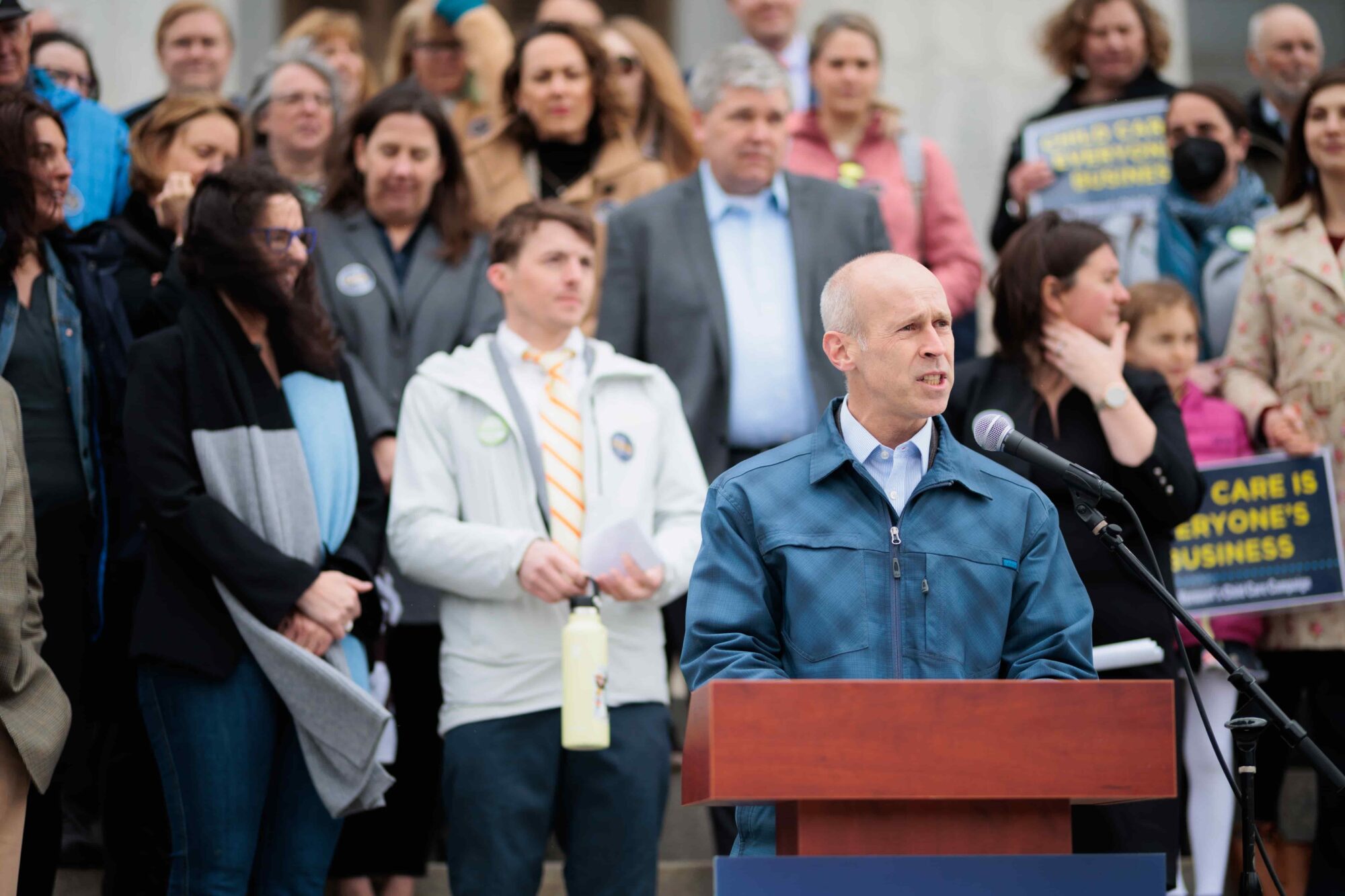
One year later, in 2023, as legislation was being considered in the state legislature, that same list of business leaders signed a letter to lawmakers asking that they pass a transformational child care bill and offering their support.
Up until then, a lot of the messaging to build public support had focused on the brain science of young children, said Burnett. But with the business community taking on a larger advocacy role, the messaging began to shift toward building the state’s workforce—with greater access to child care, more parents would have the opportunity to go to work. “Until we got to the ‘what’s in it for me’ for the employers, we didn’t have the firepower to move legislation forward to get the public investment piece,” she said.
Let’s Grow Kids now had a list of two dozen business leaders from all parts of the state willing to testify before the House and Senate. They had raised money effectively, surpassing the fundraising goals that Tere Gade and Scott McArdle had laid out for them back in 2018. They’d maintained strong relationships with the early childhood educators, both those who had worked with Rick Davis on the Permanent Fund for Vermont’s Children and those who had come into the fold when they’d worked with Let’s Grow Kids to stay open during the emergency phase of the pandemic.
What Let’s Grow Kids had, said Phil Baruth, the president pro tempore of the state Senate, was an “avalanche moving forward.” There was support for child care in the state, but it would be up to the legislature to move a bill forward. What they needed now was the political muscle to make that happen.
Emilie Tenenbaum had worked on campaigns for over a decade and had started a family in New Orleans, a city she loved. But she had long felt a pull to return to Vermont, where she grew up, and raise her own kids there. She was contemplating the move and began asking her friends from back home about the two things she would need to relocate: a job and child care.
What she didn’t expect was to find the two things were linked.
The emergency phase of the COVID-19 pandemic was beginning to subside, child care programs were fully reopening, and Let’s Grow Kids was gearing up for its next phase of advancing its legislative agenda. Aly Richards had spoken with the board of Let’s Grow Kids, and they’d all agreed it was time to use the connections they’d forged during the pandemic with providers and elected officials to add political pressure as they brought a more ambitious agenda to the State House.
A friend of Tenenbaum’s put her in touch with Richards. Here’s a group that is doing cool work, Tenenbaum recalls thinking. Richards was looking to bring on a political person who could work with legislators—not as lawmakers, the way Sarah Kenney and Rebecca Ramos did, but as candidates. They would raise money, show up for campaign events, and even consider an endorsement process. It seemed like the next logical step, Richards said, and one they would need someone with sufficient campaign experience to organize.
In 2021, Tenenbaum accepted the newly created position of campaign director with Let’s Grow Kids Action Network, the political offshoot of Let’s Grow Kids, and moved to Vermont. Within a year, she had a third baby, found child care, and created the first endorsement process for child care champions in the state. Child care was about to get political.
The post-pandemic period marked the time that Let’s Grow Kids Action Network began its political work, and it was at this same time the business community was coalescing around a payroll tax as the funding stream for child care. The two had to go hand in hand, explained Tenenbaum.
“Once you know you are going to have to raise taxes you have to have a political apparatus,” Tenenbaum said. “My role was to come in and help them raise the political and public will to pass a big bill with revenue.”
Setting up an endorsement process would allow child care to be positioned as a winning issue, and one that lawmakers and candidates would want to put in their platforms and talk about on the campaign trail. From the outset, Tenenbaum was clear that the action network would be transparent: They wouldn’t limit endorsements by party affiliation or extract promises for anything other than child care.
“We wanted to create a big tent,” said Tenenbaum. Anyone who took the Let’s Grow Kids Action Network questionnaire would have to agree that public investment was needed and child care would be one of the issues they championed on the campaign trail. The questionnaire was deliberate about saying “public investment” without specifying what the revenue source should be.
The 2022 election cycle was the first year of the endorsement process; the 133 post-primary endorsements came out in September.35 They also decided in 2022 not to oppose any incumbents, though they did offer dual endorsements (more than one candidate) for open seats. They endorsed candidates from both parties: Most of the 133 endorsements went to Democrats, but at least eight went to Republicans and two to Independents.
Tenenbaum said that over 150 candidates filled out the survey, and a large majority of the candidates who filled out the survey were endorsed. She recalls being surprised at how many Republicans were seeking the endorsement as child care champions, many of whom would later become critical votes.
One Republican legislator, the day after the endorsements were released, called Tenenbaum and demanded he, too, be included as a champion.
Fill out the survey, was her response.
He did, and joined the action network list.
There was one endorsement that came with complications: Republican Gov. Phil Scott. He had largely avoided campaigning during the 2020 election during the pandemic, but he was on the ballot again in 2022.36 And through each of Scott’s campaign cycles he had been vocal and consistent that he would not raise any taxes in Vermont.
“He was willing to talk about child care and show up at Let’s Grow Kids events,” said Tenenbaum. Scott had a record of supporting incremental expansions to child care assistance in Vermont, and he’d been willing to use general funds for child care. In his 2020 budget address, he cited child care as a major economic driver, saying, “We know the benefits of accessible, affordable child care for parents, kids, and our economy,” and allocated another $3 million for the state child care assistance program (CCFAP). Scott had been an ally to child care providers when American Rescue Plan funding became available (even as Republican governors in other states had initially delayed doing so). And in the 2022 budget, he added an additional $12 million in funding to the CCFAP.
“The first endorsement process was really about bringing everyone into the fold,” said Tenenbaum. They didn’t want to alienate the governor, and they wanted to presume good intent and foresee a need to work together. He wasn’t required to fill out a questionnaire; Tenenbaum and her team had a verbal conversation with his campaign team instead.
“We always knew that in the end, if it was a revenue raise, he would be against it,” said Tenenbaum. But offering the endorsement and labeling Gov. Scott a “child care champion” was the right decision, Tenenbaum maintained. It created enough goodwill that Let’s Grow Kids could continue having productive conversations with his staff, many of whom were parents experiencing their own care challenges.
“It put him on defense,” she said. Though Scott wouldn’t back any child care legislation that contained a tax increase, the team thought it was more worthwhile to endorse him in the hopes that he might later. “And it kept the door open to a conversation and kept the relationship.”
Up until 2021, Let’s Grow Kids had largely operated as a 501(c)(3)—meaning it could do some lobbying and advocacy work, but only in a very limited capacity. The rules for 501(c)(3) organizations are that lobbying cannot be a substantial part of the work, and political work is prohibited. A 501(c)(4) is allowed unrestricted lobbying and substantial political work, with fewer rules about disclosing donors and funding sources (earning them the nickname of “dark money” groups, since donors aren’t disclosed to the public).37 When Let’s Grow Kids Action Network was created in 2021, it was incorporated as a 501(c)(4), allowing Tenenbaum and her team to do unrestricted political work.
“People would ask us why an issue like child care would need a ‘c4,’” Tenenbaum said, referring to the group’s 501(c)(4) status. “Because we need to have child care champions in the decision-making seats and you need to have the ability to elect them, support them, and hold them accountable.”
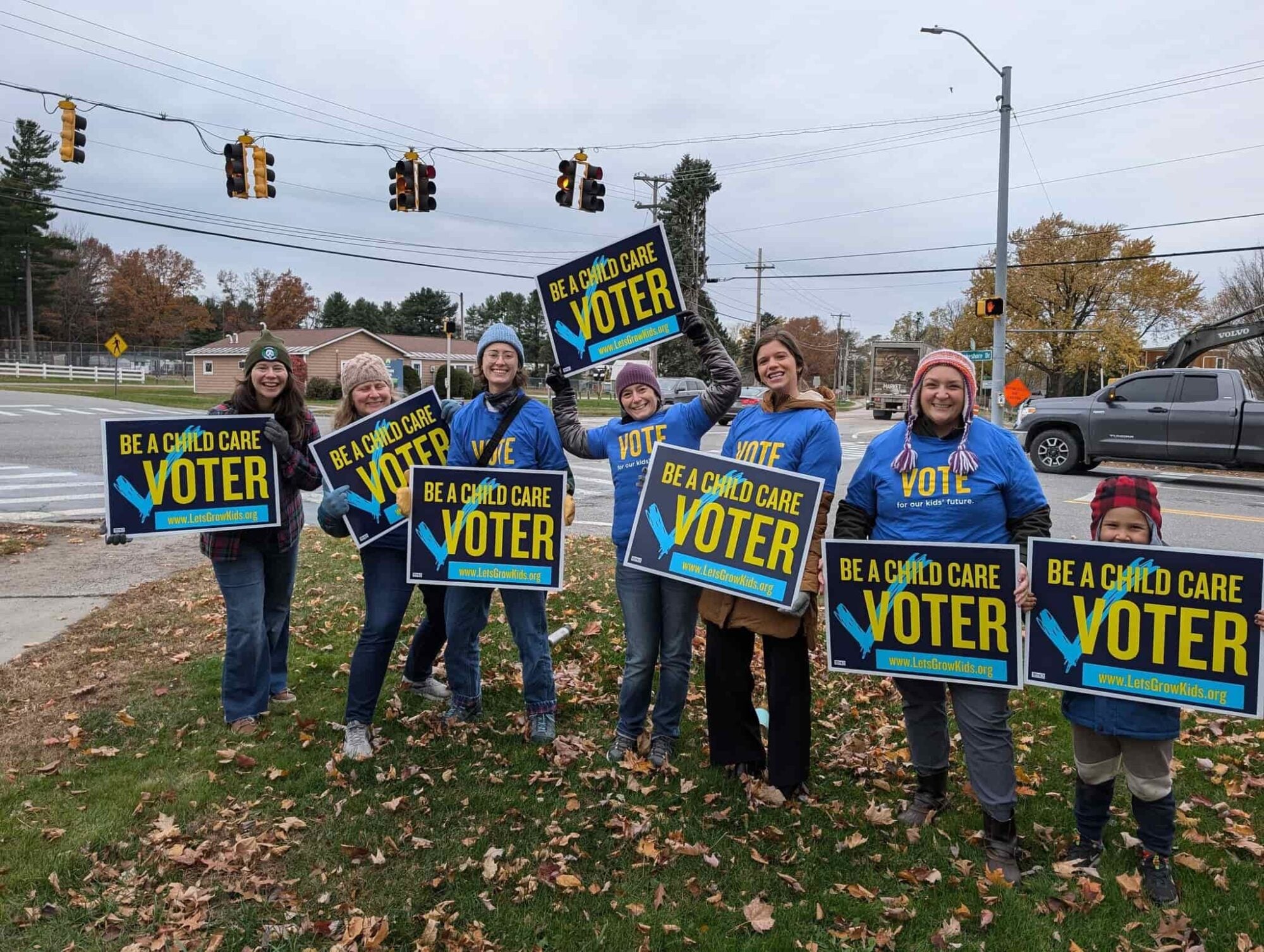
Under Tenenbaum’s leadership, Let’s Grow Kids Action Network ran two statewide political action committees, or PACs, both impacting State House races, beginning with the 2022 election.38 One coordinated PAC, the Vote Child Care Fund, allowed them to work directly with campaigns. This included everything from collaborating on a direct mail piece, knocking on doors and talking to voters, and making campaign contributions. The second PAC was for independent expenditures (IE). Activities conducted with funds from this PAC would be prohibited from coordinating with campaigns. IE PACs, sometimes called Super PACs, don’t have contribution limits; they grew in prominence following the Supreme Court’s Citizens United v. FEC decision in 2010. Communication and messaging from IE PACs are allowed to expressly advocate for or against individual candidates.
Vermont has rules about disclosing donors above a certain threshold, and the Let’s Grow Kids Action Network maintained transparency with its PAC funding, listing donors with Vermont’s secretary of state each year, and hiring legal counsel to ensure compliance. “We needed to be Eagle Scouts when it came to compliance,” said Richards. “The last thing we needed was any sort of distraction that we were blurring the line.”
This money was necessary if they were going to make political endorsements and then have the muscle to make an impact for candidates as they ran for reelection. “Child care couldn’t afford to be a cause that didn’t play in the ‘dark money’ arena, the way other blockbuster lobbying efforts did,” explained Jerusa Contee, who came on as managing director for Let’s Grow Kids Action Network in 2024.
Every year, going back to the year 2000 when the Permanent Fund for Vermont’s Children began, Rick Davis would organize a two-day retreat on Stave Island, a private island on Lake Champlain accessible only by boat. It was largely no-frills; Davis would borrow a friend’s porch and pack a cooler of sandwiches and drinks. The group was capped at 23 people, and they’d sit on the porch, rotating spots between the sun and the shade, discussing strategy for child care in Vermont.
In the summer of 2021, Richards invited Lisa Klein to join them. Klein had run the Alliance for Early Success and been one of the earliest national backers of Let’s Grow Kids. But Klein had long felt that while early education had tremendous value, there still didn’t exist enough political muscle or infrastructure to sway legislators. And it was the legislators, she felt, who could create the kind of sustainable infrastructure that would really change early education outcomes.
In 2020, Klein left the Alliance for Early Success to create a political action fund focused on early education. The Impact Fellows Action Fund is a 501(c)(4) that provides early childhood advocates across the country with political action funding at the state level. Richards knew that if Klein understood the work Let’s Grow Kids was doing, and the inroads they had already made with legislative success and a grassroots network of early child care providers, she might see Vermont as a worthwhile state to invest in. And Vermont, in turn, would have the opportunity to learn from the other states that had set up 501(c)(4)s for child care and share political and election targets.
At Stave Island, Klein recalls being impressed by the convergence of lots of business leaders, community leaders, and funders. “The people that you would need to be in the room where it happens to make it happen” is how she described it. She offered Campriello and Richards a deal—whatever initial funds they came up with, the Impact Fellows Action Fund would match. Klein thought they’d get $75,000, but she got a call that fall saying they’d raised $200,000.
As promised, Impact Fellows agreed to double it.
On election night, November 8, 2022, Tenenbaum pulled up to vote with her three-year-old daughter. Standing outside the polling location was a House candidate, one of their child care champions, looking freezing and exhausted and still holding a campaign sign. “Here,” Tenenbaum offered. “I will stand here with your sign while you warm up and go get dinner.” Her daughter waited with her. It was cold and dark, but Tenenbaum and her daughter were bundled up and prepared for it.
For the previous two months, Let’s Grow Kids Action Network had been showing up in all weather to stand with their child care supporters: knocking on doors in rural counties, standing on the side of the road in freezing rain holding signs and encouraging cars to honk (“Honk as LOUD as you can, child care voters!” was the subject line of an email calling for volunteers), and attending rallies and events when bodies were needed to fill the crowd.
They’d done a lot to show up for their preferred candidates, but was it enough to win?
In Vermont, it was.
In 2022, the GOP gained control of the U.S. House of Representatives, but the Democrats gained a seat in the U.S. Senate and retained control. In state legislatures, Democrats saw significant gains—Vermont included. The Vermont state legislature had a turnover of one-third of its members, and now it held a supermajority of child care champions. Of the over 130 endorsements Let’s Grow Kids Action Network had given, 117 were elected.
All of a sudden, they had all the pieces to support a child care bill with a revenue increase. If the governor decided to veto the legislation, a supermajority could override him.
“Everything was very tight and very focused, and we didn’t get distracted,” said Tenenbaum. “We were ready to make the advocacy ask now. We cleared out the noise.”
It began almost immediately. Tenenbaum and her team went to election night parties, offering their congratulations. “It’s great that you’re a child care champion,” Tenenbaum recalls saying.
Richards would follow up with a call, echoing that same support for the winners as child care champions. She’d ask, “What do you need from me? How can I support you?”
“What was incredible is that everyone, to a person, said, ‘Thank you for your support, I can’t wait to get into Montpelier and get this done,’” Richards said.
Let’s Grow Kids had the political apparatus and a legislature full of child care champions. They had less than two months to get to work on what a comprehensive child care bill could look like.
Kenney and Ramos went back to their new legislators to start drafting something, with the goal of having a bill introduced at the start of the legislative session in January.
They just needed to make it happen in a matter of weeks.
It was January 2023, and before the bill to create their child care infrastructure could be introduced, it was about to fall apart.
Sarah Kenney, Aly Richards, and Rebecca Ramos came to the Senate Health and Welfare Committee room to hear from their champion legislators—Sens. Virginia “Ginny” Lyons and Ruth Hardy and Reps. Theresa Wood and Jessica Brumsted—all Democrats serving in the state legislature. Voters had just elected a Democratic supermajority to the state legislature, and all parties involved felt that the time was right, politically, to introduce the most ambitious legislation yet: a measure that would create a public funding mechanism to build child care infrastructure in the state of Vermont. No other state had been able to do so thus far.
But Kenney felt uneasy, not jubilant. Ahead of the meeting, the legislators clarified that the Let’s Grow Kids team was invited, but that the purpose of the meeting was to brief them on lawmakers’ intentions, not to solicit their feedback. Whatever changes Let’s Grow Kids wanted, whatever their opinions were, the team was to keep it to themselves.
This is what you do, Kenney recalled, “you hand over what you want to have in the bill, but then you totally lose control of it. We had been waiting and waiting to see about introducing the bill.” The election in 2022 had been the turning point of bringing in a legislature that could sustain a veto-override, but Kenney had been waiting for eight years to be this close to having legislation ready to go.
And then here the legislators were, ready to unveil what they had put together.
Much of the proposed bill was recognizable: Affordability, access, and higher subsidy payments for child care providers were all part of what Let’s Grow Kids had advocated for and prepared to support.
The bill also included language that would move all four-year-olds in the state to a universal pre-K program through Vermont’s public schools. This was something that legislators who felt strongly committed to public schools perceived as a better arrangement that kept more money in the education system.
But for Vermont, where so many child care centers, particularly in rural areas, were home-based, losing the option to care for four-year-olds would be a financial disaster. Home-based providers who accepted kids that age could already receive additional funds from the school district, provided they offered an age-appropriate preschool curriculum with a licensed teacher.39 Four-year-olds also required lower staff-to-student ratios, requiring fewer teachers and therefore lower costs than caring for infants and toddlers. Staffing tends to be the highest cost (between 60–70 percent) that child care providers face; a policy that caused them to lose four-year-olds and only care for children that required much more staff would be ruinous, especially for small providers or those in at-home settings. Support for the mixed delivery system (relying on different types of child care settings) also came from RAND’s Vermont Early Care and Education Financing Study, identifying revenue streams and creating economic models to make child care a more stable and affordable industry in Vermont available to all families.40
It had taken years for Let’s Grow Kids to gain the trust of the child care providers as the group tried to advance ambitious legislation. And it had taken years to get legislators willing to introduce an ambitious bill. And now they were at a point where they’d have to turn back to the providers and say, Sorry, as it stands now, this legislation could be a disaster.
Instead, Kenney, Richards, and Ramos all stayed true to their professionalism. “We’d had a huddle beforehand and agreed that no matter what was [in the bill], we would thank them and not give feedback in the moment,” said Kenney. And so they did, remaining agreeable, gracious, and affable, before leaving the room.
As soon as the door closed behind them, they had their “moment of WTF,” as Kenney described it, before getting right back to work.
Part of the machine of Let’s Grow Kids was having enough supporters who could be called upon to persuade the legislators of the importance of supporting child care. Let’s Grow Kids had a list of over 38,000 people by January 2023, which the team had been growing since 2015.
Following the legislative meeting, supporters got an email communication from Richards, saying this was “an important moment” but that the bill was “by no means a finished product,” specifically citing the concerns of maintaining a mixed delivery system.
The job of the supporters would be to bring their concerns to the legislature in a loud, clear, and unambiguous way. The people who would be most impacted by the proposed change for four-year-olds needed to speak the loudest.
“This bill was complicated from the moment it was introduced,” said Kenney.
Senate President Pro Tempore Phil Baruth felt differently. Sure, there were complications, but Baruth had surveyed the Senate Democratic Caucus after the November election: By his count, of the 23 senators that caucused with Democrats, 22 had described child care as a top issue, and all were prepared to vote in favor of it, even with a possible tax increase. He had done the same temperature-taking on passing paid family leave and came up short, with only 17 or 18 senators in favor, he said. It was a profound time to act, he explained. The pandemic had given the state senators a new appreciation for child care, and it had also created a worker shortage. Child care, Baruth felt, was the issue to pursue at this exact moment in the legislature. But they had to act now, while their veto-proof majority was in lockstep.
Baruth also knew that Speaker of the House Jill Krowinski had declared paid family leave to be a top priority. In January 2020, when Krowinski was the Democratic majority leader in the House, Vermont had passed a paid family leave bill, only to face a veto from Gov. Phil Scott. (Scott had vetoed a paid family leave bill in 2018, too.) In February 2020, the House fell one vote short of overriding the governor’s veto. Krowinski had said she was disappointed and vowed to continue fighting, but in a matter of weeks, the pandemic had shut down the State House and legislative priorities shifted to responding to the pandemic. But now it was 2023, the legislature was convening in person, they had a Democratic supermajority, and Krowinski was ready to forge ahead with paid family leave at the top of her agenda.
So when Baruth saw the child care bill, the same one that caused the Let’s Grow Kids team to blanch, he knew he had his work cut out for him: a flawed bill, competing legislative priorities, and a tight timeline. He insisted the Senate be the first to take it up—and to do so with sufficient time before the “crossover deadline,” the date in mid-March by which one chamber has to send a bill to the other to ensure passage during the legislative session.
Baruth referred the bill to the Senate Health and Welfare Committee, stripped out the language with the pre-K provisions that would have redirected four-year-olds to the public school system, and sent that to the Senate Education Committee, where he asked that it be turned into a study, effectively killing the measure until they could try again next year. If a senator balked, he called in his allies, including Sen. Jane Kitchel, now chair of the Senate Appropriations Committee, to help hammer in the point that these provisions wouldn’t be included at this point in time, and certainly not in a way that wouldn’t support a mixed delivery system where pre-K services could be accessed by private child care providers in addition to public schools.
Then, Baruth assigned himself as the first witness to testify in support of the legislation—a highly unusual move for the Senate Pro Tem. “They don’t typically put their thumb on the scale,” said Baruth. “But this was so clearly the number one priority, I wanted to emphasize by showing up.”
“He set the tone,” said Kenney. For weeks they had expert witnesses, including 10 of Vermont’s business leaders, testify in support of the child care legislation in front of the state’s Senate Committee on Economic Development, Housing, and General Affairs. They spoke of the need for child care to support and recruit employees and showed their willingness to shoulder the payroll tax. Cara Tobin, a chef and mother of two who had opened the restaurant Honey Road in Burlington and become a James Beard finalist, testified that it was “easier to open a restaurant than find child care.”
Baruth argued that with a costly expansion to child care on the agenda, now was not the time to tackle paid leave. The Senate also agreed with the CEO Sprint team that the payroll tax would be the most effective funding mechanism. It was the Senate Finance Committee, said Kitchel, that decided the employer’s and employee’s contributions to the payroll tax should be split 75 percent to 25 percent, with the employers paying the larger share. And Kitchel, knowing that paid parental leave could help ease the first year of child care needs, when infant care is the most expensive and difficult to find kind of child care, included 12 weeks of paid parental leave in the legislation. The proposal fell short of the more comprehensive paid family leave available to all people needing time off work to provide care, not only parents, that the House had wanted, but Kitchel figured “it was a provision that made sense.”
The House disagreed on all of those points. Krowinski felt the House was prepared to support both paid family leave and child care, together, in a package. She didn’t want paid family leave to be limited to new parents only, as Kitchel had offered, and wanted other revenue options than the payroll tax.
Paid family leave had come very close to legislative success twice before—in 2018 and 2020—only to face the governor’s veto, and Scott proposed his own voluntary paid leave system, which businesses and later individuals could pay into. Public polling had indicated that Vermonters wanted a broader paid family leave bill, recalled Michelle Fay, the executive director of Voices for Vermont’s Children, an advocacy group that promotes public policies that enhance the lives of children. Fay acknowledged that the advocacy efforts by the paid family leave coalition were not an equal match for what Let’s Grow Kids had amassed, and Let’s Grow Kids remained laser-focused on child care.
“We didn’t have the same funding, organizing, or sense of urgency,” said Fay of the paid family leave moment. Even Fay’s own leadership had come out of necessity; she’d been the one to step in, out of obligation, as she described it, to head the paid leave movement for the 2023 legislative session when no one else had done so.
If child care had bipartisan and bicameral momentum, Fay hoped that paid family leave would be able to be included as well. “We were watching what was happening in Minnesota, where the advocates were working together to pass a slate of family-friendly policies, and we had hoped to be able to do that in Vermont,” she said. Even within child care advocacy, there is abundant evidence to show that a robust paid family leave program decreases the need for infant care, which can be the costliest to provide and the hardest to find.
In the end, there would only be room for one of the priorities to move forward.
Mid-March came and so did the crossover deadline, with Baruth’s bill being sent to the House. But the House was unwilling to move on the Senate bill. Krowinski proposed a compromise: What if they did a monthlong conference committee to try and take up both paid leave and child care together?
“We are not ever doing that,” Baruth recalled saying. “I don’t care how long you wait, you are not ever doing that.” Baruth argued that refusing to budge on paid family leave would doom both pieces of legislation, or water them down so much as to lose effectiveness. Baruth and Kitchel took a bill on workers compensation that had been awaiting action in the Senate, copied the entire child care bill onto that, passed it out of committee, and then sent it back to the House, which created enough of a dramatic push that they’d notice.41
“Everyone got the message that we aren’t going to be satisfied,” Baruth said. The House, he felt strongly, would have to take up the Senate’s version of the bill. Or they’d be “the ones responsible for killing child care,” he said.
Baruth had such confidence in the process because, as he described it, he’d seen the “machine” that Let’s Grow Kids had built to garner constituent support. Baruth had worked with Richards when she handled education projects for Gov. Peter Shumlin; he’d also been in government for over a dozen years. He knew when they had sufficient electoral support for issues; he’d surveyed his own caucus and knew the appetite existed for child care at that moment. Baruth believed in paid family leave, and he felt it to be good policy, but he also believed the timing wasn’t right for action. The paid family leave coalition hadn’t built the groundswell of support that Let’s Grow Kids had for child care. If paid family leave were to fail, Baruth reasoned, Krowinski and some Democrats would be disappointed. But if child care were to fail—after all the organizing and campaigning that had motivated thousands of people to contact their representatives—there would be outrage. “It was an avalanche moving forward” is how he described the child care movement.
Krowinski, too, acknowledged that Let’s Grow Kids had built such a supportive machine, from all corners of the state, that far outpaced what the paid family leave movement had. “The case was being made in every corner of the state, which is not typical,” Krowinski said. Let’s Grow Kids had a presence in member districts with families and early childhood educators calling their representatives, and with businesses that argued they couldn’t find workers because of a lack of child care. But her hope remained that even though child care had such strong bipartisan support, paid family leave would also be part of this larger package to help families.
She wasn’t ready to give up on that goal just yet.
On a windy day in April 2023, in the middle of the legislative session still hashing out changes to their child care bill, Let’s Grow Kids organized over a thousand supporters who came to the State House lawn for a “Courage to Care” rally, demanding action on the child care agenda. It was crucial that the voices they uplifted that day weren’t just those heavily involved in the legislative process. Those who were doing the day-to-day work of caring for young children needed to be heard, and so too those who stood to benefit if the legislation passed and created more stable teacher pay.
Caitlin D’Onofrio had spent over a decade working in early childhood education, beginning in summers while she was still in college. After graduation, she opted to go into early childhood education instead of elementary education because that was her true passion—even though elementary education provided better pay and benefits. Her employer, Robin’s Nest Children’s Center, had been providing child care and preschool education in Burlington since 1985.
In the weeks leading up to the rally, D’Onofrio received an email from the founder of Robin’s Nest and longtime member of the Let’s Grow Kids team, LouAnn Beninati, asking if she’d like to be a speaker. “I laughed to myself and put it in the trash,” D’Onofrio recalled. Then Beninati caught up with her in person and asked, “Did you get my email?”
“Oh, that was a real request?” D’Onofrio responded.
It was. Qualified early educators like D’Onofrio would be needed if Vermont were to have a robust child care program, and her story was one the Let’s Grow Kids team wanted to share.
D’Onofrio’s coworkers at Robin’s Nest convinced her to do it. “Do it scared,” she remembered being told. The communications team from Let’s Grow Kids helped her craft a speech. “I spoke to my experience as an early educator,” she said, “and the impact I knew the bill would have if passed.”
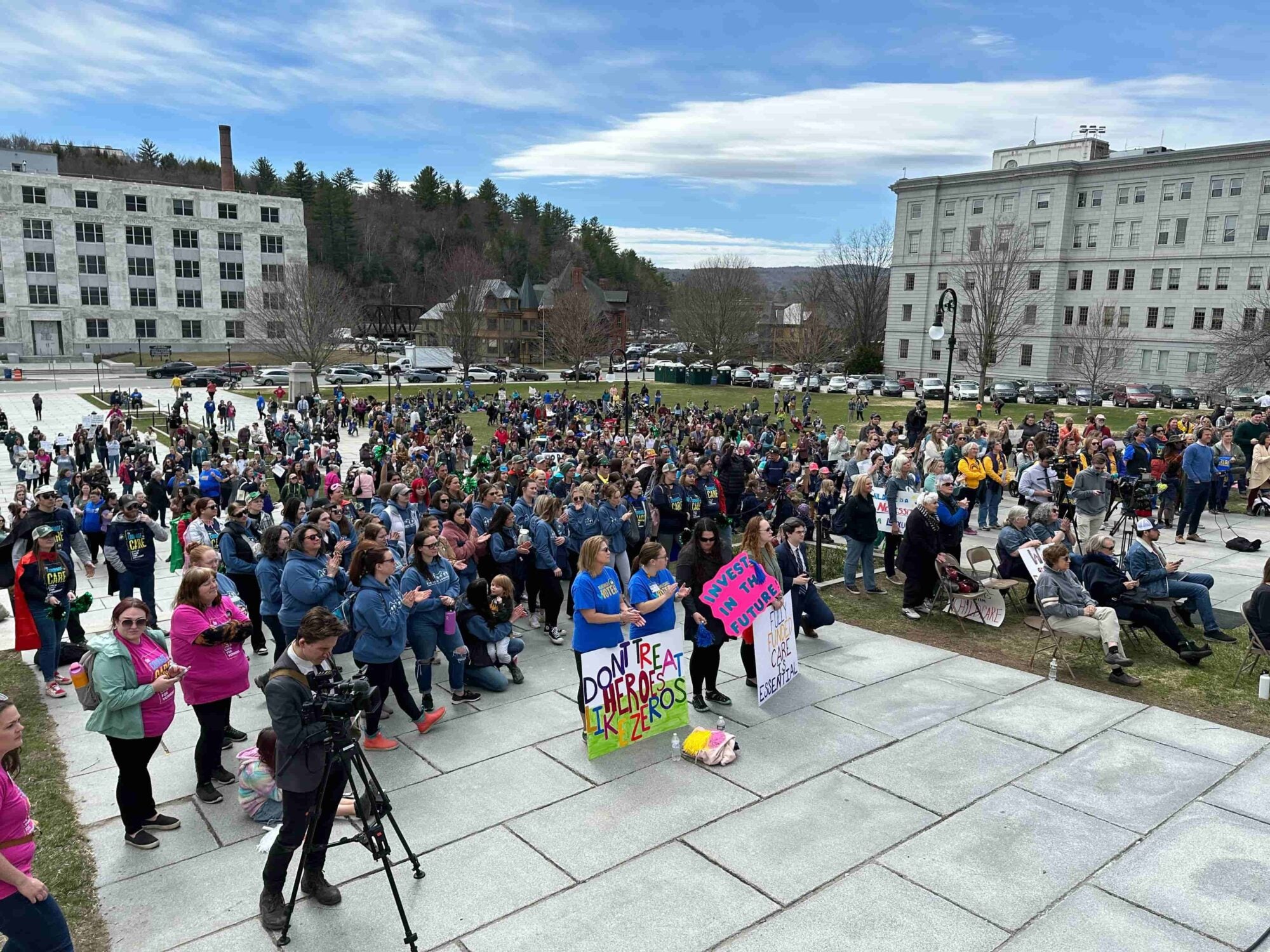
On the day of the rally, dozens of child care programs across the state closed early and came to Montpelier. Let’s Grow Kids hired several buses to help with transportation. Across the lawn, a sea of people stood in support, many with young children in tow, wearing blue T-shirts with the phrases “Be a Child Care Voter” or “Courage to Care” imprinted on an outline of the state of Vermont. They held handmade signs emblazoned with slogans like “Child Care Is Everyone’s Business” and “We ALL Benefit from Quality Child Care” and shook green pompoms.
“Shaking in my boots” was how D’Onofrio recalled feeling when she was called to the stage. Except once she got to the podium, she saw familiar faces, as well as strollers, kids, and toys all across the lawn. So many of her early education colleagues were there, and she felt a keen sense of recognition and belonging. Even with people she had not met personally, she knew they had that same shared professional experience. “It was oddly comforting,” she said.
“As early childhood educators, courage is part of our job, but so is sacrifice. My family has had to sacrifice a lot so that I can do what I love,” she said in her speech at the podium. “I just got married. We want to buy a house and start a family. And even though my center pays on the higher end, it is still not a living wage. If it weren’t for the discount I get at my center, we couldn’t consider having kids because we wouldn’t be able to afford our own child care!”
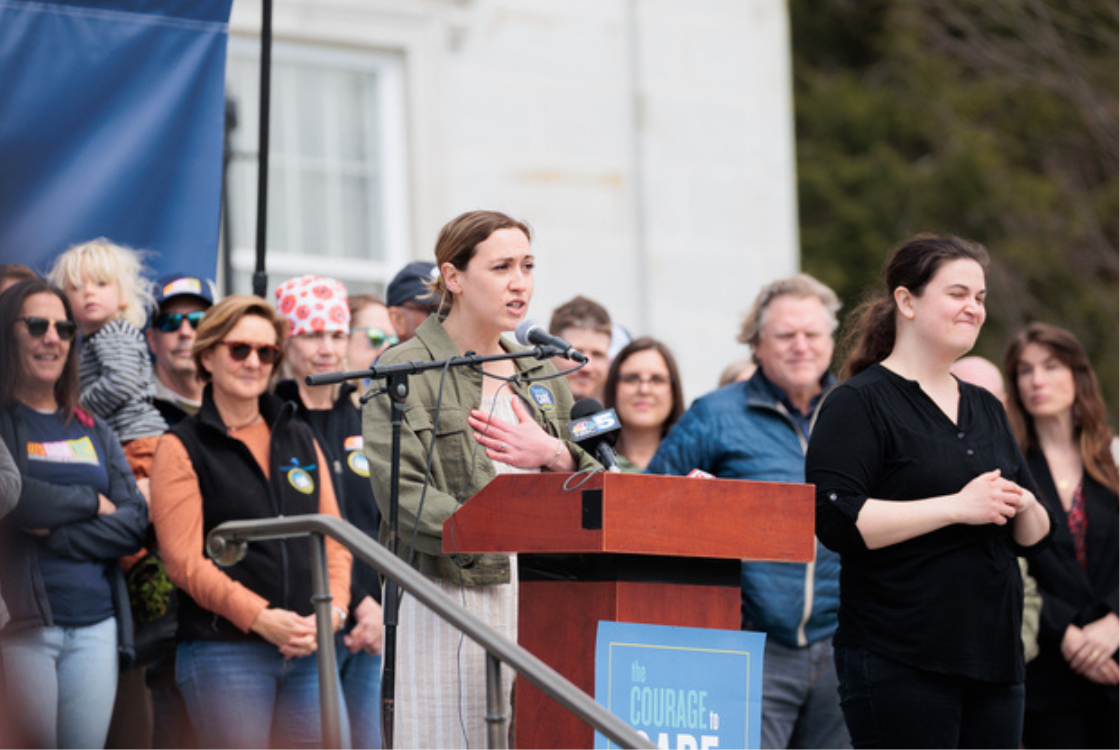
“You have this idea of what people in advocacy would look like, but I realize it’s all of us,” she said later, recalling her experience. “It’s just everybody doing this work.”
Speaking up for child care workers at the rally, D’Onofrio said, remains “one of the coolest things she has ever done.”
The momentum within the advocacy effort was high, but behind closed doors, the state legislature leaders of both chambers were gathered for what Baruth called a “do or die” meeting. It was late April and the legislature was set to adjourn in May; time was running out for the House to take up the child care bill. House leadership sought a commitment from Baruth to take up paid family leave in a future session, but Baruth balked, refusing to sign a document or issue a formal promise. The best he could offer, he said, was to take a fresh look at the next legislative session in January, poll his caucus, and see if attitudes had shifted.
“Run a Let’s Grow Kids-style campaign,” he recalled saying. “Build that same level of support.”
In early May, Krowinski relented on paid family leave. “With the Senate, we don’t agree on the funding source. We don’t agree on how it’s administered. We don’t agree on who’s covered with it,” Krowinski said in an interview with a local newspaper. “And so at this time, I think it’s best that we continue to work on this over the summer and fall and come back to it in January.” The House opted to forgo the 12 weeks parental leave offered by Kitchel in the original Senate version of the child care bill in the hope that there would be a chance in the future to go after a robust paid family leave policy for more than just new parents.42
But the House still did not have a clear path forward on child care. The House Ways and Means Committee wanted to explore using an income tax or a corporate tax rather than just relying on the payroll tax as the financing mechanism.
“We refused,” said Baruth.
The payroll tax wasn’t the hill Let’s Grow Kids was willing to die on. “We were agnostic about the funding source,” Kenney said, as the legislature had to pass something lawmakers could defend. But they were keenly aware that the payroll tax had been recommended out of the CEO Sprint and sold to the business community, and passing the bill would need strong business support. The Let’s Grow Kids team was less confident businesses would back an income tax, and they’d possibly face other opposition from retirees, who were entirely exempt from the payroll tax.
Whatever funding source would be selected, both the House and Senate would need to be on board.43 And as the days dragged on, they were down to the last two days before the legislature planned to adjourn with no legislation on child care yet to show for it.
“This was the moment we began to panic,” said Adam Necrason, the lobbyist who had been with Let’s Grow Kids since the beginning.
“I didn’t sleep that entire week,” said Kenney. “We could walk away with nothing. They could run out the clock if they didn’t figure this out.”
They were running out of compromises and out of time. It was Wednesday, May 10. They would need 48 hours to pass the bill before adjournment, as each chamber would need 24 hours with the bill before moving to vote.44 If the House wasn’t willing to agree to the Senate version of the bill, they’d wind up with nothing.
Richards, Rebecca Ramos, and the Let’s Grow Kids legislative team huddled for an emergency meeting. They had developed a strong relationship with Speaker Krowinski—she’d been one of their child care champions—and many within the team were sympathetic to her efforts to advance paid family leave. But they would need immediate, decisive action on the child care bill for it to move forward this legislative session.
Ramos had a strong relationship with Conor Kennedy, Krowinski’s chief of staff, from years earlier when he had interned in the Senate Pro Tempore office where Ramos had worked. Ramos reached out to set up a meeting between the Speaker and Richards.
Instead of bringing the legislative team, Let’s Grow Kids decided that Richards should take Emilie Tenenbaum, who’d been heading up the political work and had run the endorsement process. It was Tenenbaum and her team who had been showing up at campaign events and putting in the legwork to get the child care champions reelected.
The message would need to be gentle but direct: Let’s Grow Kids had amassed significant constituent support for this work and we are expecting action on it this legislative session. The legislature could not—should not—adjourn without passing something.
The morning of May 10, Tenenbaum was in her son’s pre-K class as part of a ceremony to prepare him to visit the kindergarten class he’d begin that fall. She received a text from Richards: We need you to come to Montpelier today.
Tenenbaum was planning to come later. Could she finish up the preschool morning?
Just don’t linger was the timeline she was given.
Tenenbaum was ready for this inflection moment when the Let’s Grow Kids Action Network would summon its political muscle. The endorsement cycles had positioned Let’s Grow Kids and child care as very visible to legislators. And the mood in the State House reflected this so far. “That whole week we were getting so many amazing nods from rank-and-file [members] saying, ‘We can’t wait to vote on child care.’” said Tenenbaum. “We knew we had pressure.”
Tenenbaum had a good relationship with the Speaker; they’d crossed paths before on the campaign cycle in 2006. But as soon as Tenenbaum walked into the Speaker’s office, it was clear that managing competing priorities with a looming deadline was taking a toll on her former colleague.
“How are you doing? Are you surviving?” Tenenbaum asked Krowinski. It was hard, she knew. Legislators in Vermont are paid little, and most have other jobs and come to this work as citizen-servants, with few or no staff members to help share the workload.
Krowinski explained she didn’t see a way forward on passing the child care bill in its current form, without paid family leave and with the payroll tax as the funding source. But she fundamentally agreed with the legislation; she knew that this would be beneficial for families, and she knew it was needed in the state.
Tenenbaum reminded her of the Speaker’s role in the process. There are other child care champions out there who want you to do this, and you need to be a leader and lead them there.
“What does that look like?” Krowinski had asked.
The group laid out the options, recalled Tenenbaum. None of us here want to go back to Vermonters with the session ending and having delivered nothing for child care—or anything else. Paid family leave wasn’t a viable option in this session. We could walk away with nothing.
Richards and Tenenbaum also pointed out a discrepancy: The rank-and-file members of Krowinski’s caucus wanted the child care bill to pass and fully expected the Speaker to allow for a vote on it.45 But they didn’t know that the bill was languishing and would need immediate movement to pass this session. “You should talk to them,” Richards recalled, urging Krowinski to connect with her caucus. “More than anything, they want the child care bill to pass.”
Members of the media, who by now were expecting news of when they could report on this big win for child care, were congregated in the cafeteria outside the Speaker’s office. Reporters who had for years received press releases and pitches from Richards and her team, many of which had been ignored until very recently, were now the ones pressing her for details about when child care would come for a vote in the House. They watched as Richards and Tenenbaum went into the Speaker’s office, and they would likely be waiting to ask, when they came out, about the expected timeline.
We will tell them there is trouble with the bill, Tenenbaum said. We have the media and your members asking us what is going to happen. We are going to tell them something by the end of the day. We have been deferring to you.
They left the blame part unstated.
Krowinski said she understood. She’d make a decision at the end of the day.
Baruth, too, felt the time pressure keenly and knew the session would wrap that week. He recalled walking down to the first floor of the State House to speak with Kitchel, whose Senate Committee on Appropriations’ room doubled as her office space, to see what could be done about the House’s unwillingness to compromise about the funding source. He opened the door, and there was Kitchel, at the long oval table. Sitting across from Kitchel, her back toward him, was Rep. Emilie Kornheiser, chair of the House Committee on Ways and Means—the same committee that hadn’t been willing to agree to the payroll tax earlier in the legislative session.
The meeting could only mean one thing. Kitchel raised her eyebrows with a meaningful look. Don’t ruin this, she seemed to tell him. Baruth backed away quickly and ran upstairs to send his aide downstairs to join the meeting in his stead.
He’d come far enough on child care to see that he didn’t need to be in the meeting to have the funding source worked out. It was probably better that way, he admitted, knowing that his own bullish actions both helped the child care bill through but also had rankled House leadership. He was too happy at that moment to care.
After the meeting with the Speaker, Richards and Tenenbaum walked across the street, where Let’s Grow Kids had their office in a converted white brick house on Court Street, catty-corner to the State House. “I felt we had done the best we could. We didn’t leave anything on the table,” said Tenenbaum. But neither was confident, and they began working on their plan B: going to the press with the news that the child care bill was falling apart in the House of Representatives.
They would activate their constituency and launch a pressure campaign to urge the Speaker to take action. They began drafting the email and considering who in the press they would pull aside to tell the news.
Richards, Tenenbaum, and the team walked to a nearby restaurant to grab lunch. In the cafeteria at the State House, Kenney huddled with the government relations director and Ramos.
Then a text came in. First to Richards, then to Kenney.
We found a way forward. Come to the State House now.
Conor Kennedy, the Speaker’s chief of staff, waited for Richards and the Let’s Grow Kids team on the steps. He and Richards shook hands and then hugged. It was happening. The payroll tax was in. They had a veto-proof majority. Paid leave would have to wait, but child care would get its vote.
The bill passed 118–27 in the House at 6:09 p.m., mere hours before the legislative session adjourned that evening.
When Republican Phil Scott ran for governor in Vermont in 2016, he had made a rule: No tax increases.
Since taking office in 2017, Scott commemorated his first 100 days with the declaration that he had “followed through on his commitment not to propose, or sign, a budget or bill that adds new taxes and fees or increases spending faster than growth in the economy or average wages, whichever is lower,” according to Vermont’s Business Magazine. And in his 2023 inaugural address, aware of the forthcoming child care legislation that session, he reiterated again that this was not the time to increase the tax burden: “We certainly can’t ask lower- and middle-income families to cover the costs for their wealthier neighbors. We must find ways to achieve our shared goals without adding taxes and fees because this only increases the cost of living.”
In May 2023, when the bill for child care infrastructure passed 118–27 in the House and 24–6 in the Senate (largely along party lines but with close to a dozen Republicans46 supporting it), Vermont was on the precipice of making child care nearly universal in the state. This legislation included significant updates to the Child Care Financial Assistance Program to expand the subsidies to families with incomes up to 575 percent of the federal poverty level (which is a family of four making close to $180,000 a year). It also increased the amount of money that each child care provider could receive for a child on state subsidy, which would lead to higher teacher pay and higher, more stable profit margins for providers. These changes were expected to cost an additional $125 million per year,47 and would be paid for by a new 0.44 percent payroll tax in the state, split between employers (75 percent) and employees (25 percent). For a salaried employee making $50,000 per year, the new payroll tax meant paying an additional $55 each year.
For Gov. Scott, even if he had agreed with each and every improvement to child care, there was one nonstarter for him: the new payroll tax.
There are three ways a bill becomes a law in the state of Vermont: (1) the governor can sign it, (2) the governor can veto it and then the state legislature can override it, or (3) the governor can take no action and allow the bill to become law without the governor’s signature.48 The Let’s Grow Kids team had hoped for Scott’s signature but also held out hope that he’d allow the bill to become law by taking no action. Either way, it would demonstrate that some public goods, like access to quality child care, were worth the tax increase.
Aly Richards continued to meet with Scott’s staff, particularly the policy team. Earlier in 2023, Scott had hired Janet McLaughlin, who’d previously worked at Let’s Grow Kids, to head up the Child and Development Division of the Department for Children and Families. McLaughlin had been with the Permanent Fund for Vermont’s Children and stayed on when the group transitioned to Let’s Grow Kids. When Richards took maternity leave in the fall of 2018, McLaughlin had stepped in as interim CEO. Now that the child care legislation had passed the state legislature, having someone like McLaughlin in such a prominent role would allow for a robust and comprehensive implementation.
Both possibilities could be true: The governor could support the child care bill and want it to succeed, but he also could readily veto it.
Still, the team held out hope. They had endorsed Gov. Scott in 2022 and held him up as a child care champion. Was there a chance that the bill could become law without a veto?
On Monday, June 5, 2023, an email notice came with the governor’s intent to veto the legislation, which he did the next day. “I know some headlines will probably read ‘Scott vetoes child care,’ but I’m not vetoing child care. I’m vetoing the payroll tax,” Scott said at a press conference that same afternoon. “No governor in state history has been as committed to funding child care, and I’m very proud of that record.” Scott pointed to his proposal of a one-time infusion of $56 million from the general fund to expand child care subsidies, which would allow an additional 4,700 families to receive support, and was included in Act 76. This had happened in January 2023, before the legislation passed.
Let’s Grow Kids released a statement expressing disappointment. They couldn’t celebrate until Act 76 was signed into law. “It was a tough decision and the messaging around it was difficult,” Richards said. The governor had been supportive of child care, but the veto stung.
Senate Pro Tempore Phil Baruth wasn’t deterred. He hadn’t expected the governor to sign the legislation, but he still felt that the child care champions should be audacious in their celebration and push back against Scott’s narrative. He enlisted Let’s Grow Kids to organize a bill-signing featuring kids and a cardboard version of the bill right in front of the State House. The kids were given markers to scribble all over the bill, thereby “signing” it into law. “If the governor won’t sign the bill, we are going to have kids sign it instead,” he said.

Baruth presented the cardboard, scribbled-over copy of the bill to Richards on the steps of the Capitol. “Here, your bill is signed into law now,” he said.
It was a beautiful day outside, Richards recalled. “Beautiful words spoken by everyone.” Kids held signs saying thank you. Her own twins signed the cardboard bill. “We were relieved,” she said. “But it was more a final check than a big emotion.”
Let’s Grow Kids still held on to its ambitious agenda. They were in year eight of that 10-year timeline and had to keep running.

The veto override vote took place on June 20, 2023, and Act 76 officially became law. The child care bill was set to be implemented at the start of the fiscal year, which falls on July 1.
Ten days later, ready or not, implementation would begin.
For years, Let’s Grow Kids had struggled to attract national attention, especially from funders and media. It had an audacious goal, but there was no precedent for achieving it anywhere in the United States—no state had a revenue stream dedicated to child care. Even states that were considered more generous with their child care funding provided support only through budget surpluses or discretionary spending—not with a dedicated tax.
By June 2023, when the bill was passed and Gov. Scott’s veto had been overridden, national funders could see the success of Let’s Grow Kids, and fundraising expanded. The goal had been to raise $56 million by June 2023. When they surpassed that goal and hit $60 million, Lucia Campriello, Hannah Burnett, and the development team put together a forecast expense budget that would last until 2025 when Let’s Grow Kids would sunset.
“Once we proved it could be done, the national money came in,” said Burnett. Until 2023, there was no clear path forward or established playbook—or even an idea of what it might look like to achieve success. “There was no clarity on how to do it until we did it.”
Externally, Let’s Grow Kids was more prominent than ever with a big legislative win, national attention, and fundraising goals surpassed. Yet a quiet, behind-the-scenes effort to sunset the organization began in earnest. The plan had always been to have Let’s Grow Kids come to an end in 2025—limit the work to a 10-year campaign, as Buzz Schmidt had outlined for Rick Davis a decade prior. And now a plan was coming together on how the baton would be passed and the organization dismantled.
For Sherry Carlson, who served as Let’s Grow Kids’ chief program officer, finding the right home for the organization’s programmatic work was the only way to ensure that it could continue. Carlson’s leadership during the pandemic was critical to keeping so many child care providers afloat and winning the support of early educators for Let’s Grow Kids’ grassroots campaign.
But finding the right partnership wouldn’t be easy. For years, she had explored partnering with existing organizations in Vermont to see if one might want to absorb some of their work when Let’s Grow Kids began to sunset. While she was able to find potential partners who were aligned with Let’s Grow Kids’ mission, they did not necessarily have the capacity or focus to do the same type of work.
In early 2021, Carlson had connected with First Children’s Finance, a national group that provides business support to child care providers who want to expand. Expansion was a key component of the broader child care infrastructure: More spaces would need to be created to meet demand. Let’s Grow Kids supported the transition of its child care business and technical assistance programs to First Children’s Finance, including Make Way for Kids grants, the Shared Services VT resource platform, and the Child Care Business Administration course developed in partnership with Vermont Higher Education Collaborative. These programs were funded by the state of Vermont through its Early Childhood Capacity Building grants and Business Technical Assistance Program.
In February 2023, First Children’s Finance opened its first Vermont office and hired Erin Roche, another Let’s Grow Kids staffer, to be the state director. Roche had been at Let’s Grow Kids long enough to know the programs well and could take the baton and continue. “I couldn’t have thought of anyone else more perfect,” said Carlson. And with that, one aspect of Let’s Grow Kids could now continue on without them.
But the mentorship and professionalization of early childhood educators still needed a home. The child care workforce needed to be robust and would require new people to enter the field if Vermont’s new child care infrastructure were to work. The National Association for the Education of Young Children had a Vermont chapter, but only one part-time staffer as of 2021. Let’s Grow Kids saw the organization as a potential partner for their provider work and helped the Vermont chapter secure a full-time executive director. They paid the position’s salary for the first three years to help the organization get up and running. By the time Let’s Grow Kids completed its sunset in 2025, the chapter had expanded to almost 30 staffers.
Finally, Let’s Grow Kids wanted to sustain its effort to collect data on Vermont’s child care programs and provide periodic reports to the state.49 Building Bright Futures had served as an advisory board for the governor and the state’s Child Development Division, and through a multiyear grant from Let’s Grow Kids, they would take on the role of collecting data and publishing reports on the state of child care in Vermont.
“We wanted to build credibility and strength,” said Carlson. Data-keepers would be needed to show if the legislation was working, and to cite which parts needed improvements long after Let’s Grow Kids had disbanded.
Legislatively, Let’s Grow Kids had a big win, but politically the pressure was still on to make sure the child care champions continued to win seats in the state legislature. They would be needed not only to protect Act 76’s funding streams but to find ways to improve the law’s implementation and to ward off any attempts to dismantle or undo the law. Constituents would also need to be reminded that their increased tax burden was a good investment. While some employers, like Michele Asch’s Twincraft, covered the entire cost of the payroll tax for their employees, most employees saw their take-home pay shrink, if only slightly.”
Let’s Grow Kids Action Network would be the vehicle for making this happen after Let’s Grow Kids had sunsetted. Its role would be to protect the child care bill in each new legislative session—in part by maintaining support for existing child care champions keeping them accountable, and enlisting new ones.
In October 2023, only four months after the Act 76 legislation was passed, Tenenbaum and her political team at Let’s Grow Kids Action Network launched the “Courage in Action Child Care Tour.” For several weeks, the Let’s Grow Kids Action Network team visited child care programs throughout the state, focusing on those that had already seen significant progress under Act 76 in the form of increases in teacher wages, expansion in construction, or more options for families to utilize free child care.
“It was a little risky because it was so early,” said Tenenbaum. “I wanted to do this mostly for our candidates, but also to make sure people were understanding the impact.” It was one thing, she reasoned, to send out emails, but it was more beneficial to gather in public and give the legislators who supported the bill a chance to take credit.
“It’s human nature to forget what you did and immediately have an attitude about it,” said Richards of passing Act 76. “People think, ‘Oh, it didn’t immediately change my life and it’s not going to work.’” They had to show what success they had achieved in only four months, both to the public and to the child care champions in the legislature who had brought this about, and ensure their long-term support for protecting the statute.
“We’d done this big public investment,” Tenenbaum recalled. “You have to make sure people know it’s working.”
Tennenbaum and her team braced themselves for the chance that they might hear that the bill wasn’t working and that people were dissatisfied. But that was OK, she reasoned; people could be inspired by whatever progress they had made. Already, in 2024, more providers were opening their doors than closing—the first time this had happened in Vermont since 2018.
And it was during one of those visits—in the southern part of the state where a vacant high school had been turned into a community center, part of which would be designated for child care—that they were joined by members of Connecticut’s legislature. They had heard about Act 76 and were thinking about improving child care in their state. Shortly thereafter, at another stop, a delegation from Massachusetts also came to hear more. “We started getting people coming up and visiting, asking to join this webinar or take this meeting, [from] all over the country,” said Richards.
Since then, Richards has been contacted by people working on child care policy in several states, including Arkansas, Colorado, Connecticut, Massachusetts, and Nebraska, wanting to learn how Let’s Grow Kids helped the state pass its landmark child care law. In these conversations, Richards points to the trove of data Vermont has gathered about how increasing access to child care has impacted the state’s workforce participation and increased tax revenue, and how quality child care has contributed to improving education factors like kindergarten preparedness.
In June 2024, Richards and Davis traveled to Washington, DC, with members of the Vermont Business Roundtable to attend the first-ever National Child Care Innovation Summit, hosted by the U.S. Chamber of Commerce and the Chamber Foundation. Of all the “innovations” she heard discussed, Richards noticed that none of them addressed how to pay for child care. In her remarks to the panel on state actions, Richards challenged the prevailing wisdom in the room that fixing child care required private solutions. Richards asked, “What about public investment? No matter what state you are in, child care is a broken business model and you have to find capital. Until we all agree that public investment is key, we are not going to move forward on child care.”
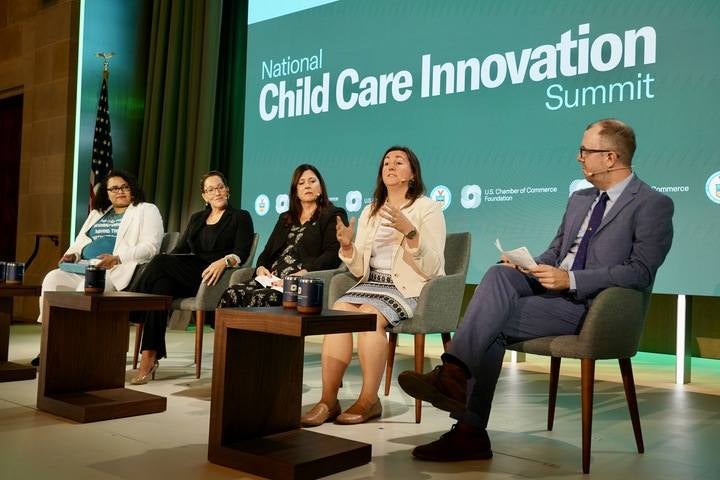
She described the moment as a “mic drop.” All the ideas surrounding child care—technological innovations, resource-sharing, employer-supported child care—could yield some progress, but none addressed the core problem of what made child care a broken system: the lack of public investment.
One state had done it. Within a year of implementation, Richards knew they had data to show it was promising.
Passing near-universal child care in Vermont was one thing, but selling it to the general public elsewhere was another. Would any other state be willing to take this on?
Since Act 76 passed, more than 100 new child care programs have opened in Vermont, creating over 1,700 new spaces for children and nearly 400 new early childhood educator jobs—and close to 8,000 additional children in Vermont are now receiving tuition assistance. First Children’s Finance has a permanent Vermont office. The Vermont Association for the Education of Young Children is one of the champions of legislation to professionalize the early childhood profession that is still pending in the state legislature; if it passes, Vermont will be the first state to do so. Building Bright Futures maintains Vermont’s Early Childhood Strategic Plan and provides legislators and the state with data on how the early childhood system is faring.
In 2024, a red wave overtook Vermont and much of the country. Many of the child care champions who made up the state legislature’s supermajority lost their seats. “I don’t think Act 76 would be passed today,” said Dmitri Garder, one of the business champions who’d testified in support of the law. Unlike in 2022, when the child care champions had faced little to no liability for their support, during the 2024 election, Americans for Prosperity, a national 501(c)(4), ran ads in the state targeting some of the members who’d voted for the child care bill for raising taxes.
But the Let’s Grow Kids Action Network has stayed involved in each legislative session. They issued a slew of endorsements in 2024 and plan to do so again in 2026. They maintain an office in Montpelier, and Sarah Kenney serves as chair of the board.
In the 2024 legislative session, the legislature modified the state’s Child Care Financial Assistance Program to make it an entitlement program. Lawmakers struck out the six words “to the extent that funds permit” from the existing law, meaning that anyone who qualified could access the program and it would be up to the state to find the funds.50
They’d secured a complete transformation in child care funding: access to child care was no longer dependent on the availability of state funds or one-time infusions like the American Rescue Plan. Instead, they made child care an entitlement and set it down in statute.
It is one of the only states in the country to have done so.
In September 2025, Let’s Grow Kids held its final public event at Hula in Burlington—the same location where they’d kicked off their business community support in 2021. National experts spoke about the impact that Act 76 has had on child care advocacy efforts across the country and how it could serve as a model to other states interested in building child care infrastructure. Rick Davis was there too, easily appearing as spry and energetic as he had been when the group launched. Buzz Schmidt’s prediction that he might slow down at age 80 was not readily apparent.
As part of the planned sunset, Let’s Grow Kids made a commitment to share what had worked for it so that other states and localities could learn from the team’s experience, and to document what they and other child care advocates hoped could be the beginning of a much broader movement.
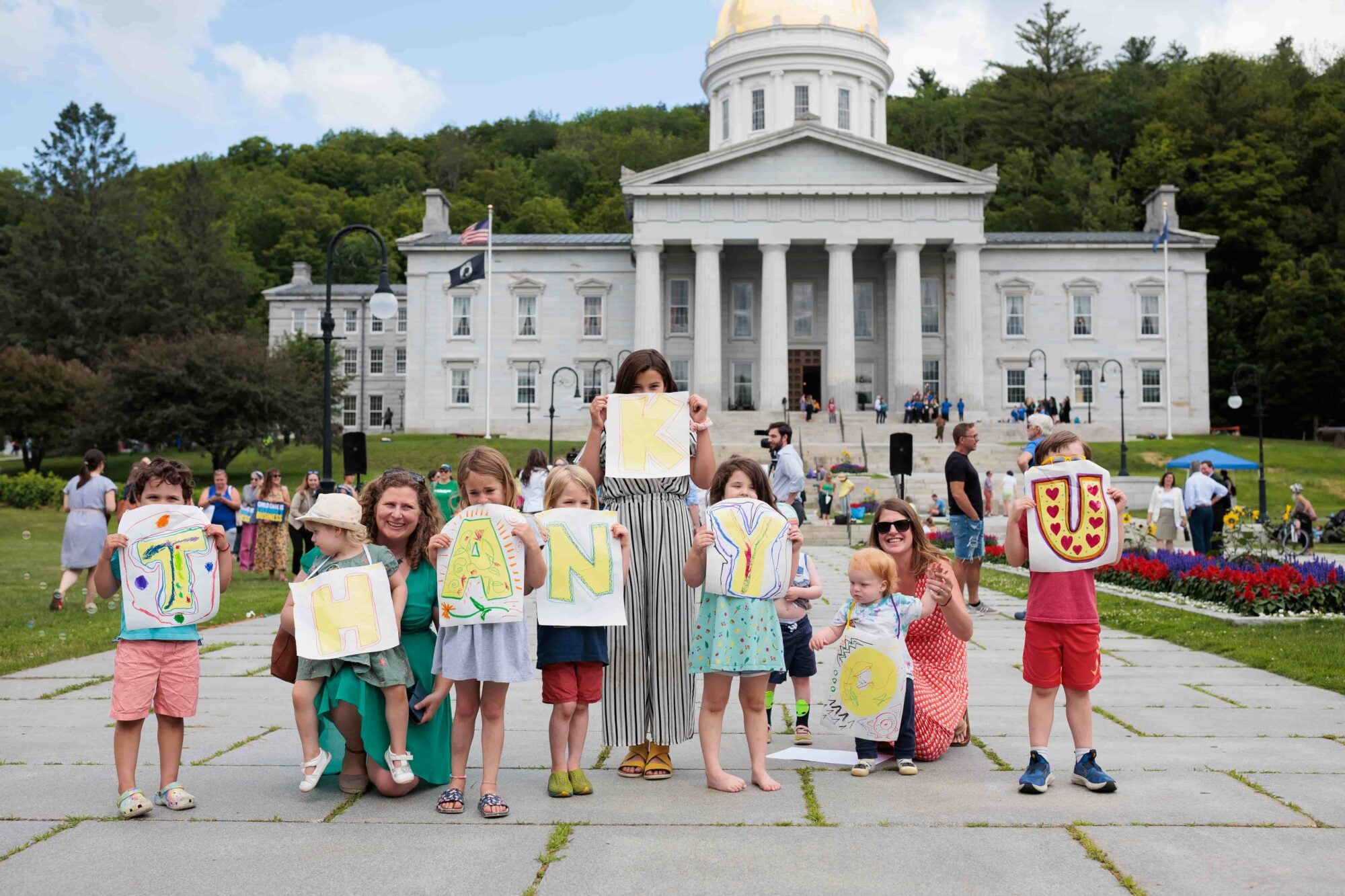
Tere Gade, who produced the original fundraising document for Let’s Grow Kids back in 2018, conducted a follow up in 2025 with donors to see how they felt about their investment. Her takeaway: They were pleased with their investment and considered it worthwhile. “Their dream for the organization was realized,” she said.
Child care, as an issue, continues to have robust bipartisan support. Most American children are raised in households where all parents work, and even parents who do not rely on formal child care systems still have child care needs that arise and would like access to options.
And yet the United States still does not have a federal system in place to build and support such infrastructure. Absent federal action, it will be up to the states to chart a way forward. States like Vermont, advocacy groups like Let’s Grow Kids, and persistent visionaries like Davis and Richards will be the ones to bring about these changes. Richards’ own leadership on this issue has given her enough statewide recognition that she has announced a run for governor against Phil Scott in 2026.
“I like to think about what is the one thing a human can do to make the biggest positive impact in the world,” said Richards, speaking about her gubernatorial campaign and how her child care work at Let’s Grow Kids has impacted it. “When I realized early childhood education was that lever just sitting there—where our inaction is causing all this detrimental harm to our society and the action [needed] is very clear and concrete—it felt obvious. It’s within our power to [change]. And when you do, it has this immeasurable impact downstream on all these things that we care about.”
New Mexico announced in September 2025 that it would be the first state to offer universal child care to all of its children, regardless of income.51 On March 10, 2026, it was codified into law. In November 2025, Zohran Mamdani was elected mayor of New York City, with public support for child care as one of his signature issues. Other states and localities have begun to explore child care as a major driver of economic opportunity worthy of public investment, although in many cases, the lack of concrete legislative action or a dedicated funding source means that change remains more aspirational than real.52
And yet, as a former staffer of Let’s Grow Kids mused, “I’m still surprised by the level at which New Mexico and New York are getting more attention than Vermont.” She pointed out that U.S. Sen. Bernie Sanders posted on X about New Mexico’s free child care for all initiative, “The rest of the country should follow New Mexico’s lead,” making no mention of the progress that had happened in his home state with Act 76.
Vermont may continue to struggle to get attention for its progress—possibly because of its size, its liberal leanings, its predominantly rural population, or its relative homogeneity. But what Vermont accomplished is the most effective example to date of a movement to build child care infrastructure in this country. The lessons and playbook exist here for others who want to see this change.
Could this happen elsewhere? The blueprint now exists—it’s up to the changemakers to make it happen.
One does not compile a report spanning 10 years and crisscrossing a mountainous state without immense help and input from others. I am incredibly grateful to the people connected to Vermont and Let’s Grow Kids for sharing their experiences and time with me: Michele Asch, Senate Pro Tem Phil Baruth, LouAnn Beninati, Hannah Burnett, Lucia Campriello, Sherry Carlson, Jerusa Contee, Jesse Coutrayer, Rick Davis, Cailtin D’Onofrio, Michelle Fay, Noah Futterman, Tere Gade, Dimitri Garder, Anna Gebhardt, Jen Horwitz, Sarah Kenney, Sen. Jane Kitchel, Lisa Klein, Speaker Jill Krowinski, Tom MacLeay, Janet McLaughlin, Adam Necrason, Rebecca Ramos, Aly Richards, Erin Roche, Buzz Schmidt, Michael Seaver, Emilie Tenenbaum, Lisa Ventriss, and Shayla Zammuto.
I would like to thank the three external readers who provided thoughtful commentary and feedback on earlier drafts: Julie Kashen, who recently served as senior fellow and director for women’s economic justice at The Century Foundation; Erin Roche, Vermont director of First Children’s Finance; and Aaron Loewenberg, senior policy analyst with the Education Policy program at New America. Thank you to Natalie Graham for her fact-checking and Christina Bellantoni for her editing. Thank you to Lisa Rab for her work on the corresponding toolkits. Thank you to my team at Better Life Lab for their edits, guidance, and assistance: Brigid Schulte, Elliot Haspel, Haley Swenson, Haley Farley, and Eve Tahmincioglu. Thank you to the communications and graphics team at New America for their time and care with this report. And a final thank you to WeVision EarlyEd and Let’s Grow Kids Action Network for their support for this report.
This story was reported over several months, based on interviews with over two dozen people involved in the passage of Act 76. I began reporting on Vermont’s child care campaign in 2021 and conducted three on-the-ground reporting trips to have a firsthand view of how the changes from Act 76 were impacting the state’s child care system. Unless specifically noted, the interviewees confirmed their stories, and in several cases, multiple sources verified the information and scenes that took place. In some instances, reporting for this publication was initially published under my byline in Fast Company, Early Learning Nation, The 74, and EdSurge.
Staff Writer, Better Life Lab