Alexis Coe
Fellow, Us@250
How communities across the United States are navigating pride, reckoning, and aspiration.


This digital collection brings together essays by Us@250 Fellows, the local journalists covering American civic life in the lead-up to the nation’s 250th anniversary. The volume captures how communities across America are grappling with questions of pride, reckoning, and aspiration at this milestone moment. Each essay takes readers to a specific place and time to explore a pressing civic issue; together they tell a collective story of “us” at the 250th. Drawing on the Us@250 framework, this collection reflects the program’s broader mission of supporting independent journalism that illuminates American civic life at the nation’s semiquincentennial.
This collection was co-edited by Ted Johnson and Nick Mainieri. Contributors include Natalia Alamdari, Alexis Coe, Zaid Jilani, Tina Kelley, Calvin Krippner, Olivia Lewis, Aisha Sultan, and Natasha Varner.
This volume from New America’s Us@250 initiative was made possible with support from The Hearthland Foundation and MacArthur Foundation. Marilyn Tal advised on editorial and content design.
Editorial disclosure: The views expressed in this report are solely those of the authors and do not reflect the views of New America, its staff, fellows, funders, or board of directors.
What America’s 250th can—and cannot—tell us about the American experiment.
Fellow, Us@250
For much of my career, America’s 250th felt like a fixture of the imagined future—somewhere between hoverboards and constitutional amendments. The crucial difference was that the semiquincentennial was a calendrical reality, one that almost no one outside my professional world seemed to care about.
That national indifference persisted as the future arrived in increasingly surreal installments: the first Black president, a reality television star who incited an insurrection during a global pandemic, the first woman vice president, and on and on.
For better or worse, the commander in chief is also the historian in chief. As the semiquincentennial drew nearer and the country lurched from one unprecedented moment to the next, I began fretting over the same question: Who would preside over America’s big birthday?
Just as I was beginning to despair, New America announced the first year of its Us@250 Fellowship. I somehow managed to come along for all three, and the work of my fellow fellows—represented here by the second cohort—became a talisman.
In the essays that follow, the authors explore Us@250’s three themes: pride in the nation’s founding and progress, reckoning with its failures, and shared aspirations for a shared future. Each drops the reader into a specific place, at a specific moment, confronting a specific civic problem: a Nebraska town where teenagers work the graveyard shift to keep their families afloat; a New Orleans courtyard where young DJs interview adults about what it means to be “loud”; a New Jersey suburb trying to turn slogans about integration into actual friendships; Atlanta’s suburbs, where demography is outpacing political imagination; the West Side of Chicago, where a closed school becomes a test case for what a neighborhood will tolerate and what it refuses to accept; Washington, DC, on the eve of the bicentennial, when home rule was both an abstraction and a demand; a former concentration camp on the Colorado plains where survivors spent decades simply asking to be remembered.
Individually, these are features, dispatches, and essays. Taken together, they insist that America at 250 cannot be understood from a podium or a capital, nor represented by any single person. The writers go where the work is being done and let the people doing it set the terms: a sixth grader in New Orleans selling hand-thrown ceramics; a Black couple in Forsyth County opening a bakery in a place that once drove out every Black resident; a school district in New Jersey trying, and sometimes failing, to make good on a decades-old promise of integration; Japanese American families who spent their childhoods behind barbed wire pressing a tiny Colorado town to acknowledge that the camp at its edge was a prison, not a “relocation center.”
Aspiration is thankfully everywhere. It is in the Quality of Life Plan drawn up by Austin Coming Together on Chicago’s West Side, in DC’s Bicentennial Assembly voting to make home rule its first priority, and in a Nebraska teacher who quietly lets a student sleep through part of class because she knows he has been in a factory all night and believes his future is worth the accommodation.
As the semiquincentennial arrives wrapped in the usual July 4th vagueness, these essays refuse it. They name names—who redlined and who resisted, who closed the schools and who campaigned to reopen them as something else, who built coalitions and who tried to break them. They also name the people who do the unglamorous work of democratic maintenance: the assistant principal who keeps correcting outsiders’ assumptions about her students, the pastor who connects an after-school program with a parenting class across town, the history teacher who abandons the textbook for a living history project that outlasts his own career.
A tidy, cathartic semiquincentennial isn’t going to happen—and wouldn’t, no matter who was president. An individual or single group, however well intentioned, simply can’t deliver the kind of national reckoning I once fantasized about. What this collection offers instead is something smaller, harder, and ultimately more useful: people in very different places, facing very different constraints, insisting that their communities are capable of more than they have been offered and acting accordingly.
For a long time, I thought America’s 250th might reveal what this great experiment had amounted to, but these essays suggest a more useful possibility: that the answer depends on what we do next.
The question at the quarter-millennium is one of national identity: Who does America think it is?
Editor’s note: This essay is adapted from If We Are Brave: Essays from Black Americana by Theodore R. Johnson. It has been lightly edited to adhere to house style.
Senior Fellow, Democratic Futures
In a bicentennial day essay a half century ago, Toni Morrison told a story of her grandparents at odds over progress in America. Her grandmother compared it to the slow-walk of trees, suggesting it often arrives gradually, like a canopy of oaks that climbs the landscape generation after generation. Her grandfather saw things differently, believing that growth doesn’t mean the nation’s nature has changed, or that it ever will. The two elders were realists: Neither papered over the places where the country had fallen short. But for one of them, there were signs of promise; for the other, the project seemed hopeless.
The United States marks its semiquincentennial anniversary this year. To commemorate these 250 years, the White House is planning a traveling state fair, a garden for national heroes, and a mixed martial arts fight on the South Lawn. There’ll be fireworks and parades and odes to our founding stories. If you want to get a sense of a nation, watch how it celebrates its birthday. But if you want to know the character of a country, consider it over larger chunks of time. Benchmark anniversaries offer a window into both—and a way to measure the journey. The question at the quarter-millennium is one of national identity: Who does America think it is?
The earliest believers in America’s providence received a sign on July 4, 1826, its 50th anniversary. Two iconic founders and former presidents—Thomas Jefferson and John Adams—died on that date, and a presidential executive order proclaimed the coincidence proved that “the patriotic efforts of these illustrious men were Heaven directed” and took it as evidence of the nation’s divine protection. A Presbyterian minister tempered the praise in an Independence Day sermon, noting that the same American newspaper championing rights and democracy also “advertises a whole village of human beings for sale.”
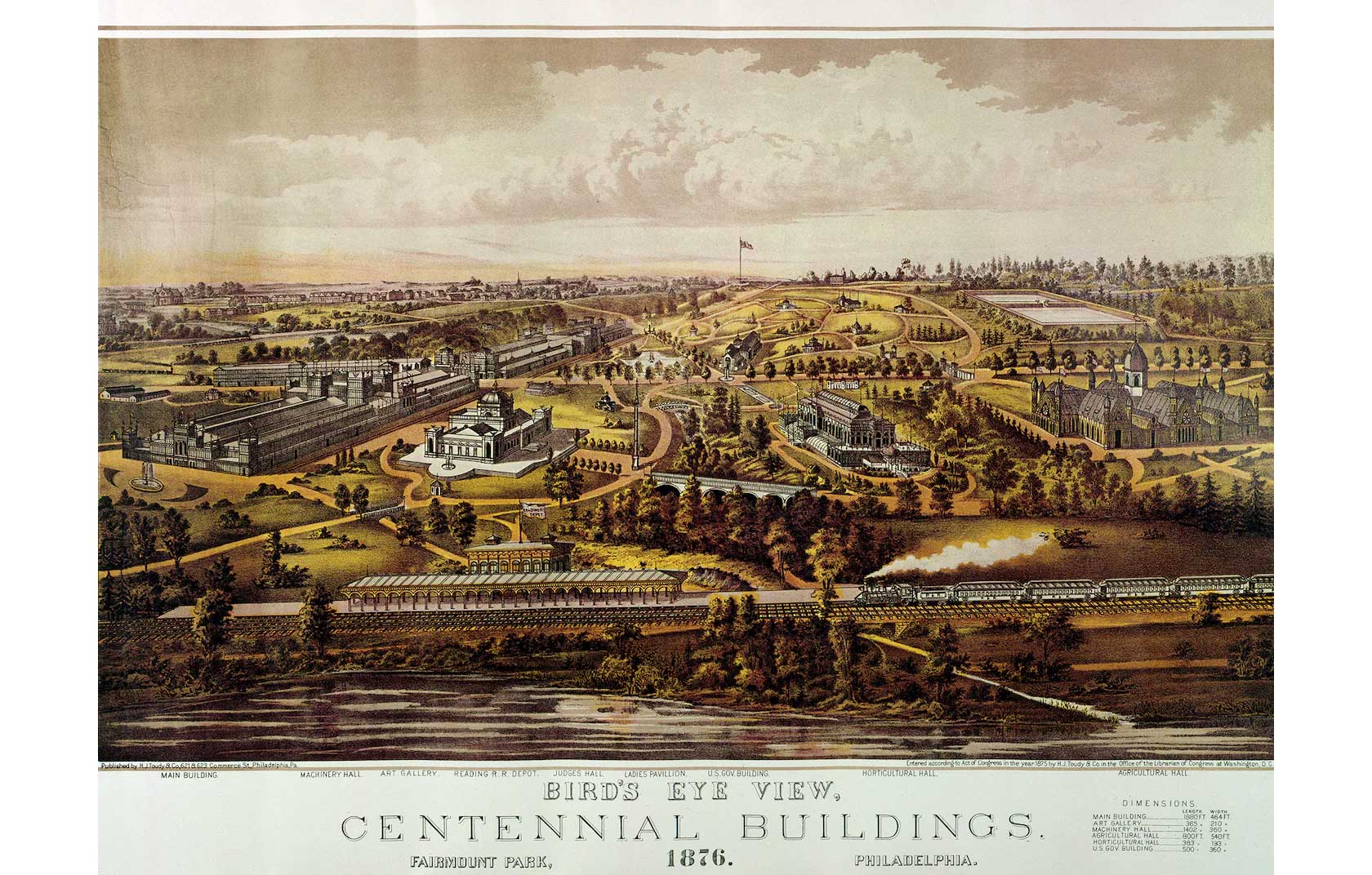
Reaching the century mark in 1876 sparked a commercialized celebration and the occasion for the first World’s Fair held in the United States, the Centennial Exposition. It retold the founding story and debuted innovations including the telephone, electric lighting, the Remington typewriter, and a monorail. Editorials lamented the people’s lagging civic spirit, saying the birthday had been reduced to hangovers and boys with firecrackers. But at the fair in Philadelphia, suffragists interrupted a ceremonial reading of the Declaration of Independence to remind attendees that women still could not vote. And Southerners were upset to see murals of Civil War victory, insisting that bygones should be bygones.
President Ulysses S. Grant’s proclamation asked Americans to attend religious services and thank “Almighty God” for blessing the nation. But the White House that year was decided in a backroom deal in which Republicans got the presidency and the South got the end of Reconstruction; that election remains the nation’s most undemocratic. And on centennial day in South Carolina, a patriotic parade of Black soldiers was interrupted by white nationalists looking for a fight. When all was said and done, seven freedmen were lynched in the massacre at Hamburg.
A theme is revealed in the United States’ first hundred years that continues to shape it: The country might be imperfect, but it is ordained and favored by fate; not even a civil war could stop its ascendance on the world’s stage. It emerged from World War I as a global power, and success was a measure of all America had done.
But its stature was diminished by its politics at home—on race and gender, on class and immigration. And as much as prosperity has been the nation’s blessing, without equality, success for the few comes at the expense of the many. That’s bad for business and for a republic.
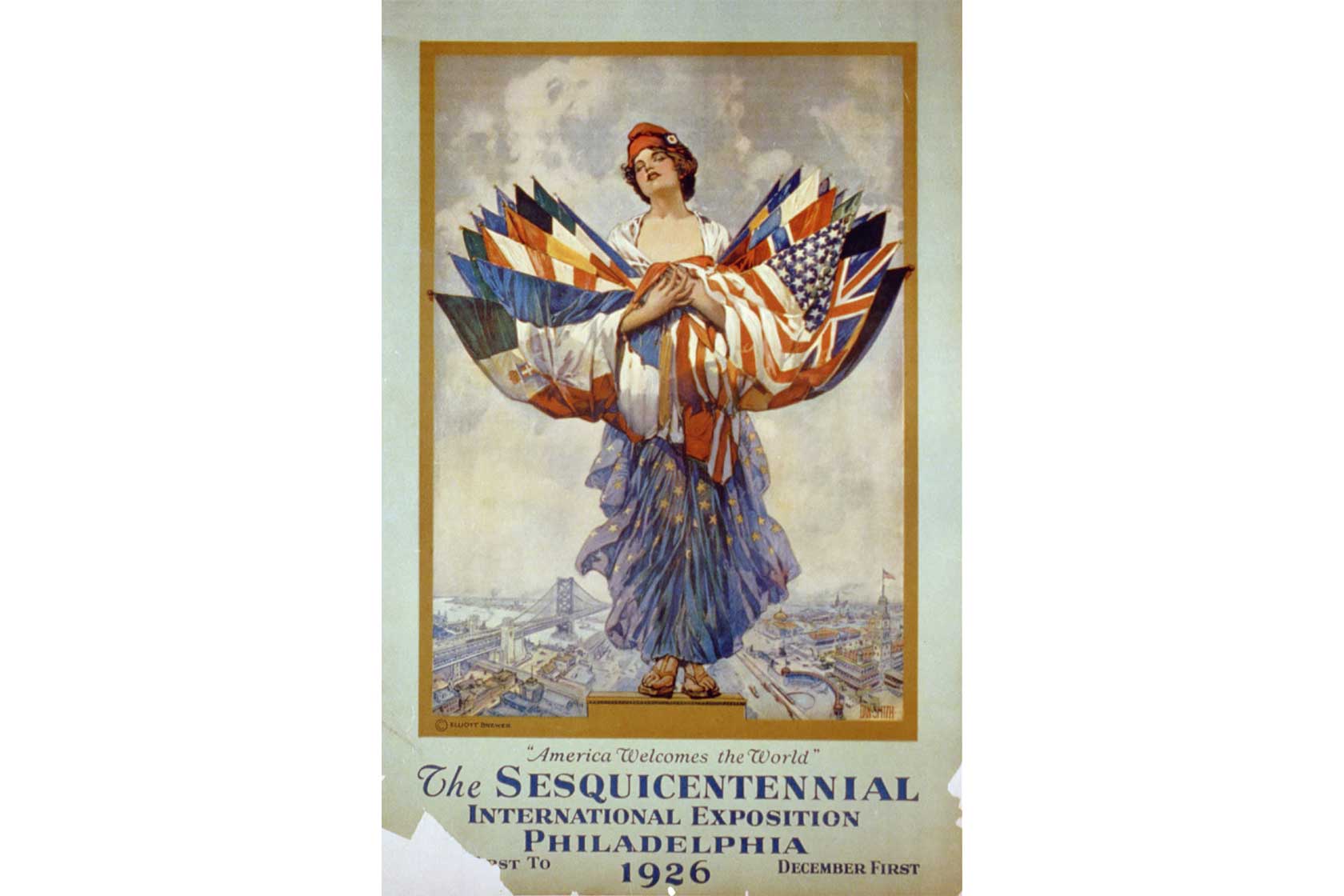
The nation’s 150th anniversary in 1926 was labeled “America’s Greatest Flop” in one publication. The official fair was so unpopular and poorly managed that it fell into receivership. It recouped money by hosting a heavyweight boxing match: Champion Jack Dempsey lost the title to Gene Tunney, a U.S. Marine. President Calvin Coolidge shared the country’s July Fourth birthday and used his sesquicentennial address to recite the nation’s story, extol the founders’ virtues, and cast slavery’s “ultimate extinction on American soil” as the hard problem that the country had proudly solved. “Lift Every Voice and Sing” was sung at the opening ceremonies, and the first observance of what has become Black History Month was held.
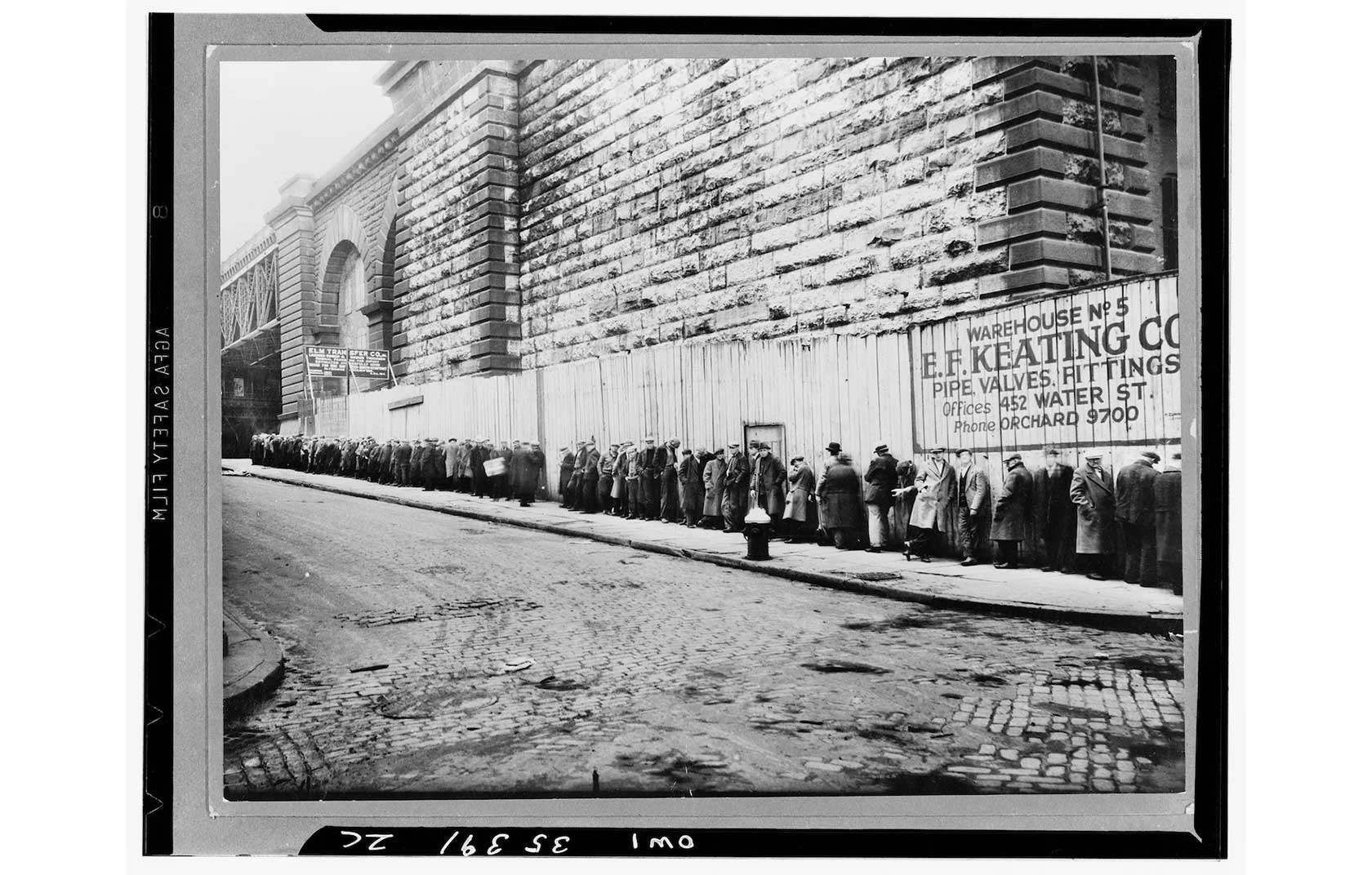
The Roaring Twenties’ laissez-faire approach to capitalism and democracy, though, prioritized business interests over social reforms, leaving just as much room for progress as for decline. The Great Depression and the Great Migration, on the heels of the Great War, contributed to a national identity crisis, a changing economy, and a democracy broken by state-sanctioned discrimination and violence.
By the time Toni Morrison’s grandparents debated the nation’s journey in 1976, the Watergate scandal had put Gerald Ford in the White House, making him the only person to become president without being on the ballot. On bicentennial day, the government-appointed president spoke at the National Archives, where he commended the founders, the genius of democracy, and an America changing for the better.
Holiday sales that are common today sprang up then, rebranding the bicentennial to “buy-centennial.” Noting the country’s persistent economic and racial inequality, Rep. Charles B. Rangel (D-New York) labeled the anniversary meaningless if it was only a “self-congratulatory celebration” rather than a “rededication to full equality.”
Fittingly, the final report from the official bicentennial commission captures the grandparents’ disagreement as well as the competing narratives for America today, in its 250th year: “After a decade of racial tensions, assassinations, scandal, rising inflation, embattled campuses and eroding public trust, what was there left to celebrate? There was plenty.”
This benchmark anniversary will look similar to those of the past. The White House has already demonstrated its preference for uncomplicated histories that paint America as mythical and predestined. Our republic routinely bends to business interests, but the nation has improved on every score since its birth. There is work left undone, and we are still arguing about it: civil rights and immigration and a fair economy. Morrison’s forebears are a reminder that progress is a matter of perspective—and depends on the measure.
The topic of the country’s anniversary came up recently at a reunion in North Carolina. Five generations of my family tree were present, from Georgia and New Jersey, from rural areas and military bases and big cities, trading stories about how things used to be and how they’re going today. We reminisced about those who came before us: “If only they could see us now…” They would be so proud. And unsurprised, too, by the ways that America today feels like an America of a bygone era.
We are a people of faith, so there was a group prayer to start each day. My auntie reverend delivered a short but moving sermon to conclude the reunion. We left hopeful and feeling a renewed sense of duty to one another and to the past: In the end, a tree is known by its fruits.
During World War II, the federal government imprisoned thousands of Japanese Americans in a camp on the Colorado plains—the fight to tell their story continues to this day.
Editor’s note: This essay originally appeared in 5280 Magazine on July 2, 2026. It has been lightly edited to adhere to house style.

Fellow, Us@250
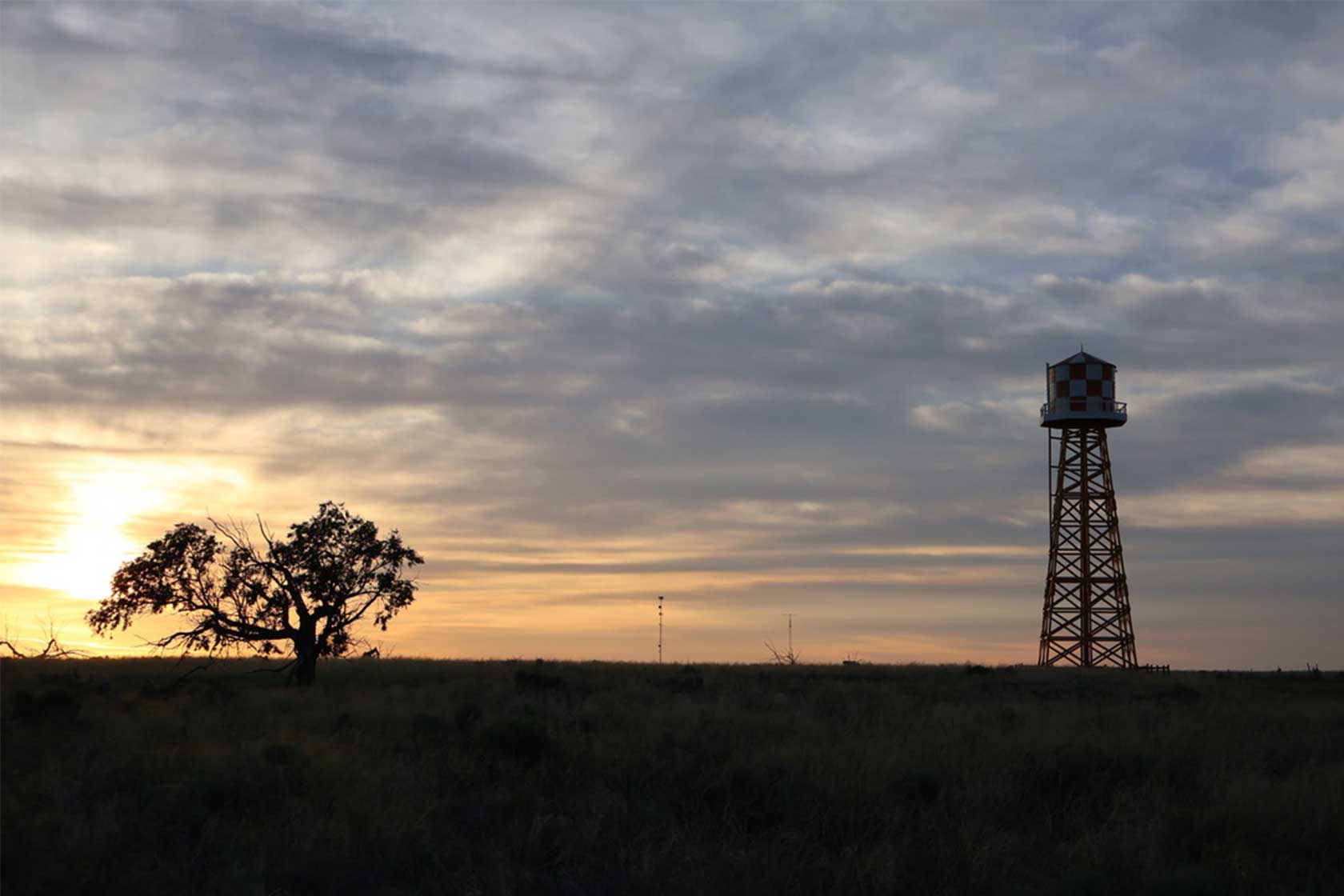
On a Saturday morning this past May, some 150 people gathered in a quiet corner of Colorado, just minutes shy of the Kansas border. Some had traveled for days to be there; others had arrived by way of a four-hour bus ride from Denver. As the temperature pitched toward the 90s, they clustered in what shade they could find and talked in hushed voices. Though it’s hard to see it through the sagebrush that now blankets the land, Colorado’s tenth-largest city once stood here. That city was also a prison, and the lives of more than 7,000 Japanese Americans became tied to this place during World War II. Survivors returned years later with one simple request: Can we remember what happened here? For decades, the answer to that question was no.
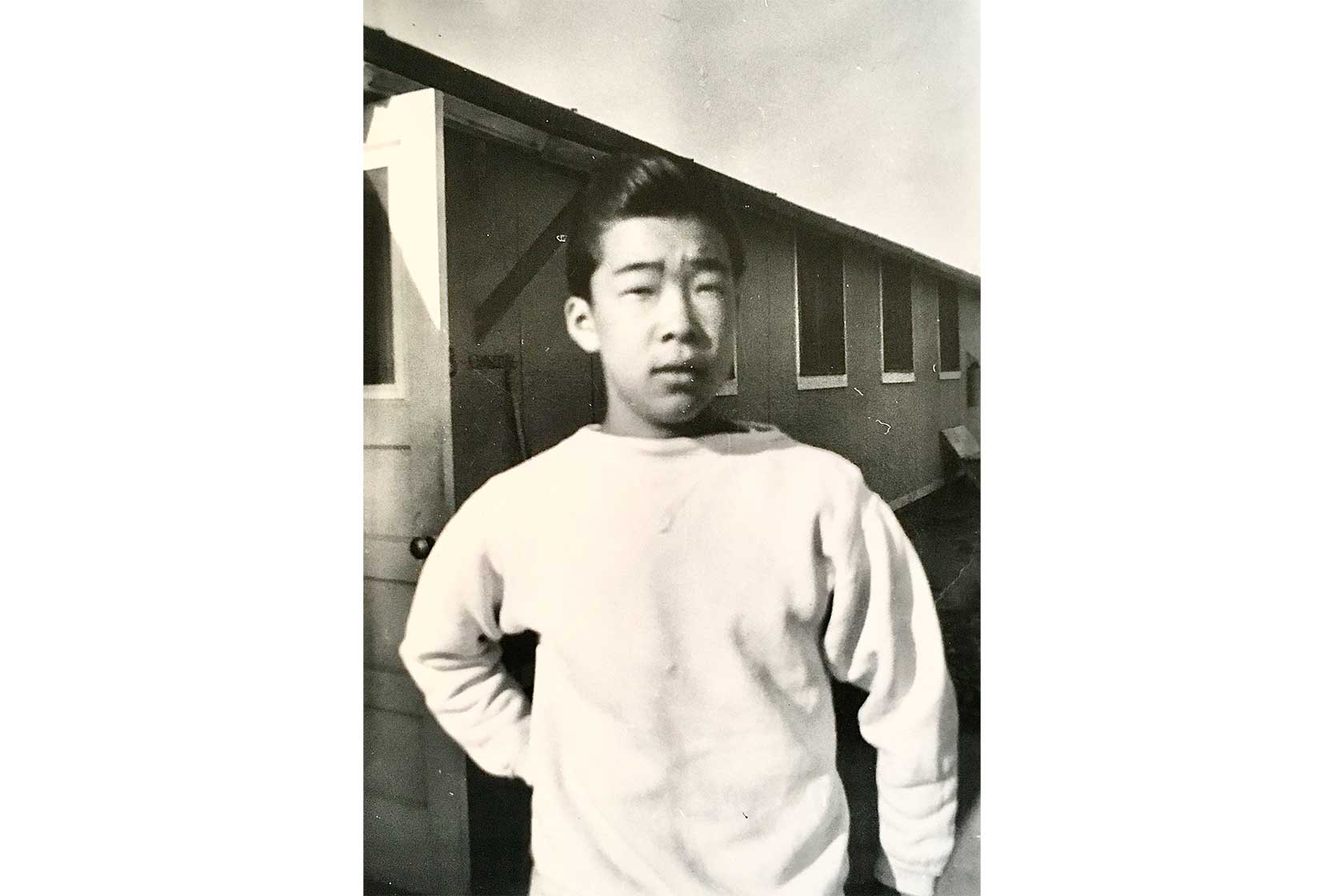
When 12-year-old Thomas Shigekuni first laid eyes on the denuded grassland that would become his home, all he could think was: “What is this? Is this it? This is in the middle of nowhere.” Shigekuni had spent the preceding months witnessing the sudden loss of all that was familiar to him. His family, which included Thomas’s parents and two older brothers, lived in South Los Angeles and ran a chain of successful plant nurseries that kept them financially secure throughout the Great Depression. He had a simple life, taking judo and Japanese language classes after school. But the Japanese attack on Pearl Harbor on December 7, 1941, set off a chain of events that would change all of that. The FBI quickly mobilized to arrest citizens and resident immigrants they had been surveilling for “suspicious” activities like practicing the Shinto religion and membership in Japanese flower arranging societies.
Paranoia and propaganda soon enveloped the nation. Suddenly anyone of Japanese descent was perceived as a potential enemy. Seventy years later, Shigekuni still remembered how a classmate accosted him at school, saying: “You guys attacked Pearl Harbor!” Caving to pressure from military leaders who claimed that Japanese Americans were “an enemy race” and that mass incarceration was necessary, President Franklin Roosevelt signed Executive Order 9066 into law on February 19, 1942. The order paved the way for more than 120,000 Japanese Americans from coastal Washington through Southern Arizona—two-thirds of whom were U.S. citizens—to be stripped of their constitutional rights and forcibly removed from the area. Military police posted civil exclusion orders neighborhood-by-neighborhood over the next few months, giving Japanese Americans one week to make arrangements for their possessions and report for removal. They were issued a date of departure but not one indicating when, or even if, they would be permitted to return home.
The Shigekunis sold their nurseries at a loss and packed up their belongings. They were first imprisoned at Santa Anita Park, a racetrack northeast of LA, where some detainees slept in recently vacated horse stalls and the stench of manure permeated the makeshift prison. Meanwhile, the federal War Relocation Authority set about hastily building 10 residential prison facilities—alternately called “relocation centers” and “concentration camps” in official communications of the era—in remote parts of the country. Located on the far western edge of the Great Plains, Colorado’s Granada War Relocation Center, better known as Amache, was the smallest.
Hailing largely from central and southern California, many in the camp’s population had never seen snow nor dealt with the punishingly dry heat characteristic of High Plains summers. The barracks that awaited them lacked insulation and did little to keep the outside from coming in. Atop land that had been scrubbed of all vegetation to make way for the camp and in a region still freshly haunted by the Dust Bowl, the slightest gust of wind could conjure a sandstorm. “If we’re caught outside in it we’re nearly blinded,” Henry Fuijita wrote in a letter to friends back home soon after arriving in October 1942.
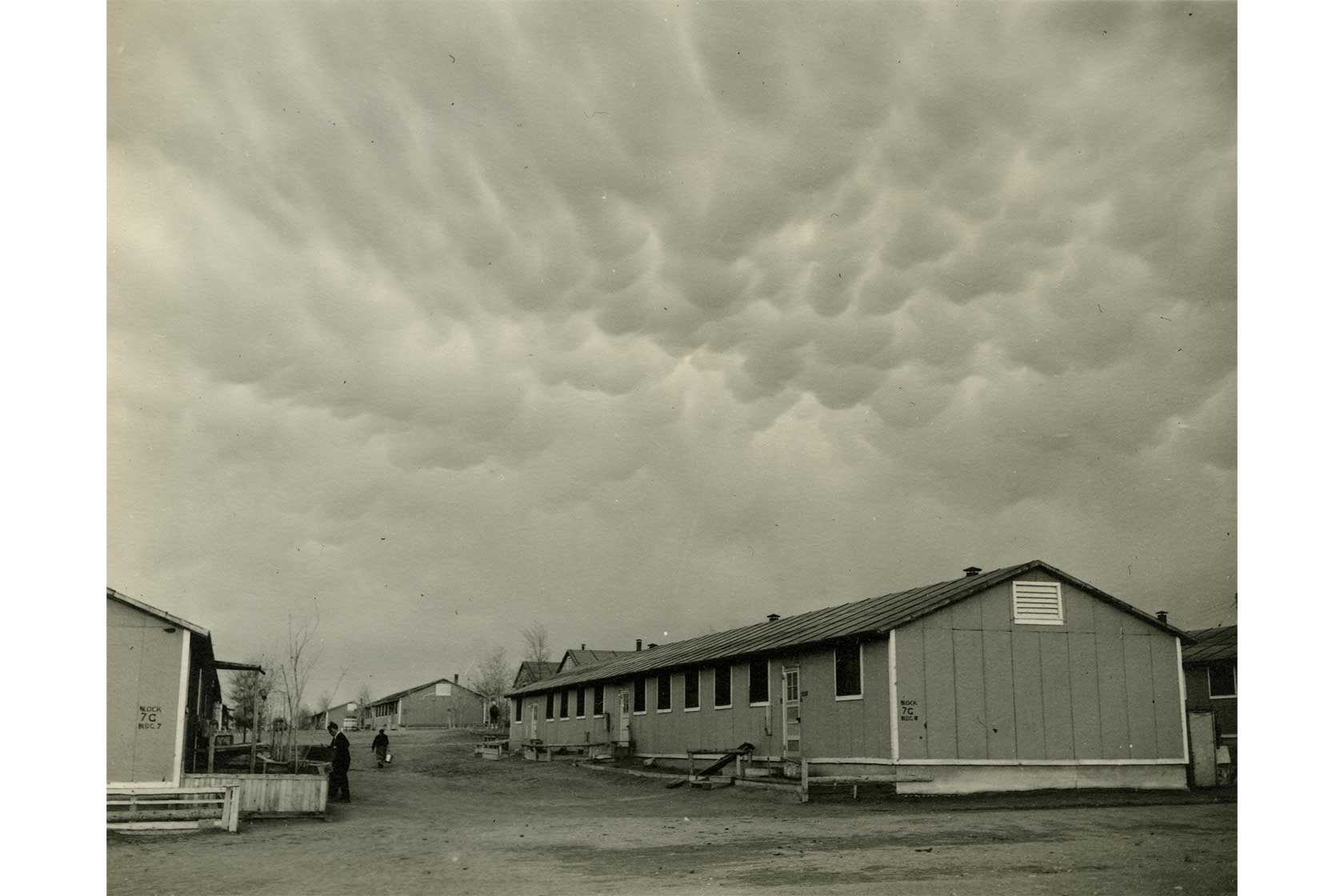
Indignities became the new normal. Entire families had to live in single-room residences; open shower and toilet facilities meant people had to share even their most private moments with others. In the early days, guards staffed the towers around the clock with their guns trained inward.
The typically verbose Shigekuni had just one word for the food: “Bad.” A reviled dish called “weenie royale” made regular appearances on mess hall menus. Poor refrigeration and untrained chefs led to mass outbreaks of food-borne illnesses. Some, including Kyushiro Homma, refused to eat. Before the war, Homma had been a popular Hollywood dental surgeon whose oeuvre included correcting Shirley Temple’s overbite. While his smiles were winning the hearts of America, Homma lost weight so rapidly that he suffered a stroke and cardiac arrest. He died at 44, leaving behind his wife and three young children.
Still, Japanese Americans did what they could to make Amache home. Shigekuni remembers incarcerees collecting money to buy fast-growing Siberian elm saplings from a nearby nursery, then planting them for shade and as wind breaks alongside the barracks. Amache’s population included talented agrarians from California’s Central Valley who transformed tired beet and melon fields into a high-yield agricultural enterprise. Within little more than a year, they harvested some four million pounds of vegetables, generating enough surplus that they were able to send produce to other WRA camps as well as to the U.S. Army. Incarcerees built ornamental gardens and cultivated a variety of rose so tough that it still blooms untended more than 80 years later. They ordered hair dye, sake, eye drops for hay fever, and condoms from the Japanese-owned T.K. Pharmacy in Denver. (One of Shigekuni’s formative camp memories is of seeing a friend working to clear a sewer system that had become clogged with the prophylactics.) Amacheans started a screen-printing shop, a co-op, and an art school. Many carried on because they had no other choice, but “there was a fine line between hope and despair on a daily basis,” Amache survivor Henry Okubo would later tell his son.
Shigekuni and his family were assigned to a single room in a barrack on the far southern edge of camp, adjacent to a guard tower and the camp’s makeshift Buddhist church. He recalled regularly being kept up at night by funerary chants coming from the church. Shigekuni was a pensive kid and, in a photo taken with his family just after their arrival, stylish in a leather bomber jacket and slicked-back black hair. Despite his young age, he was keenly aware of the injustice his community had been subjected to and dedicated himself to committing small acts of resistance. In school essays, he railed against the actions of the U.S. government and the Japanese American Citizens League, a civil rights organization he felt was “pandering to the whites” due to their controversial wartime tactics to prove Japanese American loyalty. During the daily recital of the pledge of allegiance at school, he muttered his own ending under his breath: “…with liberty and justice for all except us Japanese Americans.”
Outside the camp, the narrative about the incarceration was being revised even while it happened. A spread in an October 1942 edition of Newsday used a racial slur to proclaim that the Japanese had “invade[d] Colorado.” The newspaper juxtaposed the incendiary accusation against photos of smiling Japanese Americans and claims that “few showed any disposition to grumble.” A sample mess hall menu included with the article suggested that Amacheans were feasting on roast beef with gravy, fresh fruit, and bacon with their eggs every morning.
Media coverage like this did not land well with locals who were curbing their own diets due to wartime rations. The camp was particularly unpopular in the Arkansas River Valley, where many already resented the U.S. government for abandoning them during the Dust Bowl and Great Depression. The federal government added to their grievances by using the power of eminent domain to condemn and then claim much of the land upon which Amache was built. Landowners received pennies on the dollar for their property, and the tenant-farming families who rented the land, many of whom were themselves poor immigrants from Eastern Europe and Mexico, lost homes and livelihoods without compensation. With its new high school and rumors of rich foods, life inside the concentration camp looked like luxury to some.
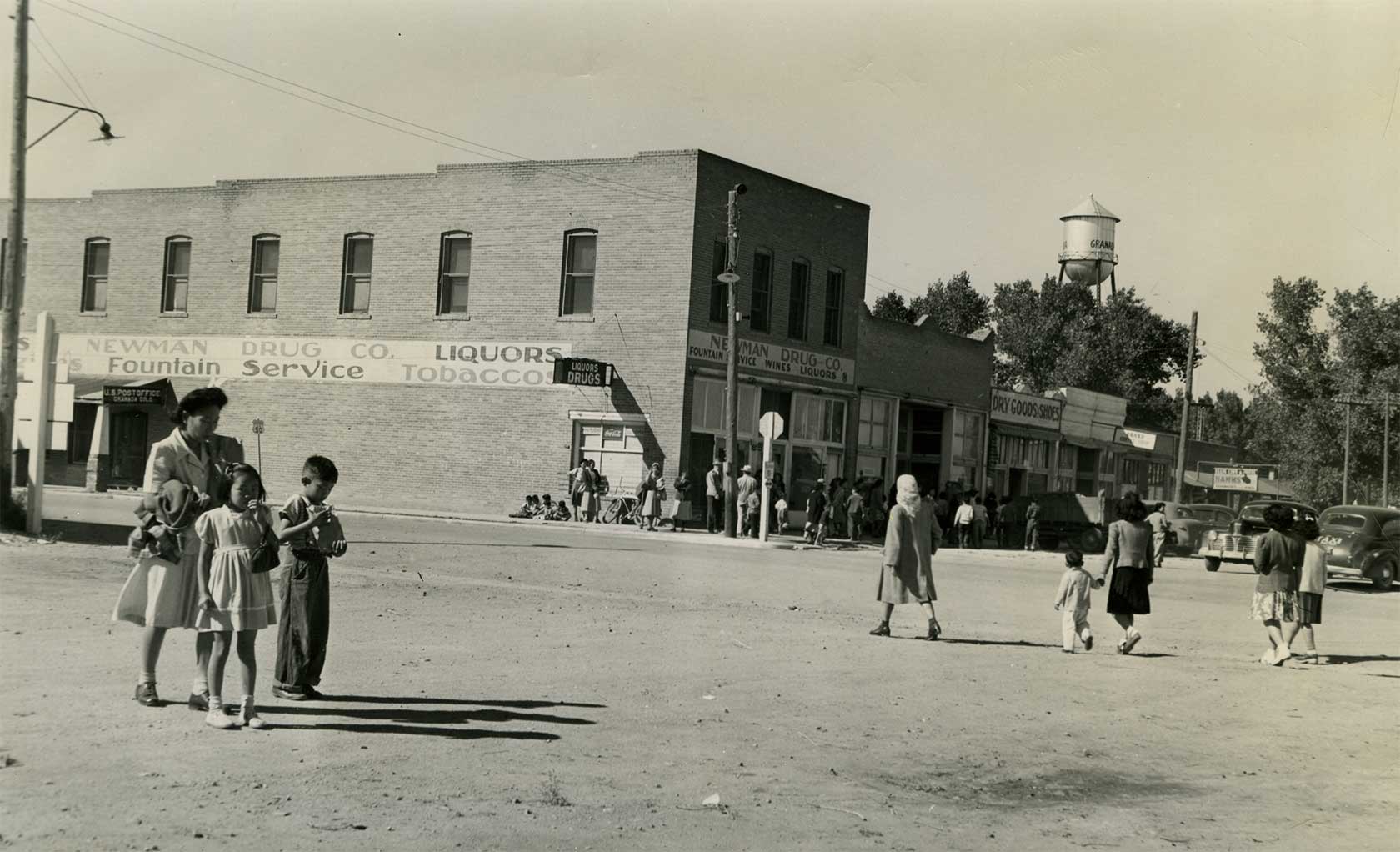
Still, the town of Granada, less than a mile from the camp, had little choice but to settle into what Shigekuni called “a gigantic marriage of unwilling participants” with the prison that shared its name. (The informal “Amache,” the most common moniker used by the survivor community, is taken from a Cheyenne woman, Amaeohtse’e Ochinee Prowers, who was a direct descendent of the Sand Creek Massacre and a prominent figure in the Arkansas River Valley during the late nineteenth century.) As the war plodded on, the boundaries between Granada and Amache grew thinner. Realizing their wards posed no threat, administrators started granting Japanese Americans farmwork releases and day passes to travel to Granada and nearby Lamar for goods not available inside the camp. Granada did not have a movie theater so residents would attend film screenings—including one particularly on-the-nose feature, Love Thy Neighbor—in Amache’s recreation hall.
This modicum of freedom helped buoy morale for some incarcerees, and local businesses benefited from the sudden influx of new customers. But Shigekuni recalled the relationship as being “strained, to say the least.” Japanese Americans had to contend with higher prices at stores, local park bans, and other forms of discrimination. At one point, Shigekuni was stranded 17 miles away from the camp when a bus driver in Lamar refused to let him board. “Those things I remember, and they are seared in my memory,” he said in a 2001 interview with Westword.
When the war ended in 1945, Japanese Americans yet again faced the loss of home and community. They were given $25 and a bus ticket to start their lives anew. Many had nothing to return to and dispersed to places like Chicago and Salt Lake City. Around 2,000 Amacheans stayed in Colorado, at least temporarily. Before they left the camp, a group of incarcerees built the site’s first memorial: a small brick shrine next to the cemetery. Inside, they placed a granite monument inscribed with kanji script and a wooden honor roll bearing the names of Amache servicemen who had been killed while fighting for the country that had imprisoned them.
Amache was left to dust and ruin. Barracks were lifted off their foundations and sold by the War Assets Administration for use across the region. The city of Granada purchased the land from the federal government; wells dug to supply water for the camp became, and remain, the town’s primary water source. Sand prairie scrub slowly reclaimed the landscape. Compelled by trauma, shame, and government-led assimilation efforts, a cloak of silence fell upon many Amache survivors too.
After leaving Colorado, Shigekuni eventually found his way back to southern California, where he attended Pepperdine University, started a family, and opened a nursery like the one his parents had before the war. Seeing a need for greater legal support in the industry, he went to law school and opened a practice in Torrance, California. He moved on with his life, but his time at Amache stayed with him—and he wanted others to remember it, too.
In photos and old video recordings, Shigekuni is a slight and serious man, his mouth a short, straight line inclined to turn downward into a frown, especially when recalling memories of his youth. “It’s just like it’s in concrete….He can’t get over it,” said his wife, Ruth, who was incarcerated as a child in Idaho’s Minidoka camp. He returned to Granada in 1970 to begin plotting out a location for a historical marker to memorialize the camp. Shigekuni later partnered with his former Amache schoolmate Minoru Tonai and other California-based survivors to form the Amache Historical Society, with the twin goals of “perpetuating the memory” of the camp and preventing similar injustices. “He was the very first person I know to talk of resurrecting Amache,” Tonai said in a video tribute to Shigekuni, and “his ulterior motive [was] to make sure that no one else suffered the way we did.”
Momentum was building in Colorado, too. In 1968, Japanese Americans started a Denver chapter of the civic group Optimist International to organize grassroots preservation at Amache. Five years later, Russel Endo, the child of Arkansas’ Jerome concentration camp survivors, moved to the state for a faculty position in the University of Colorado Boulder’s newly minted Ethnic Studies Program. The first time he visited Amache, “I felt this real rush of emotions,” he says. “People talk about this, about the power of place. Standing there, you sort of feel this energy radiating into your body from the surroundings.”
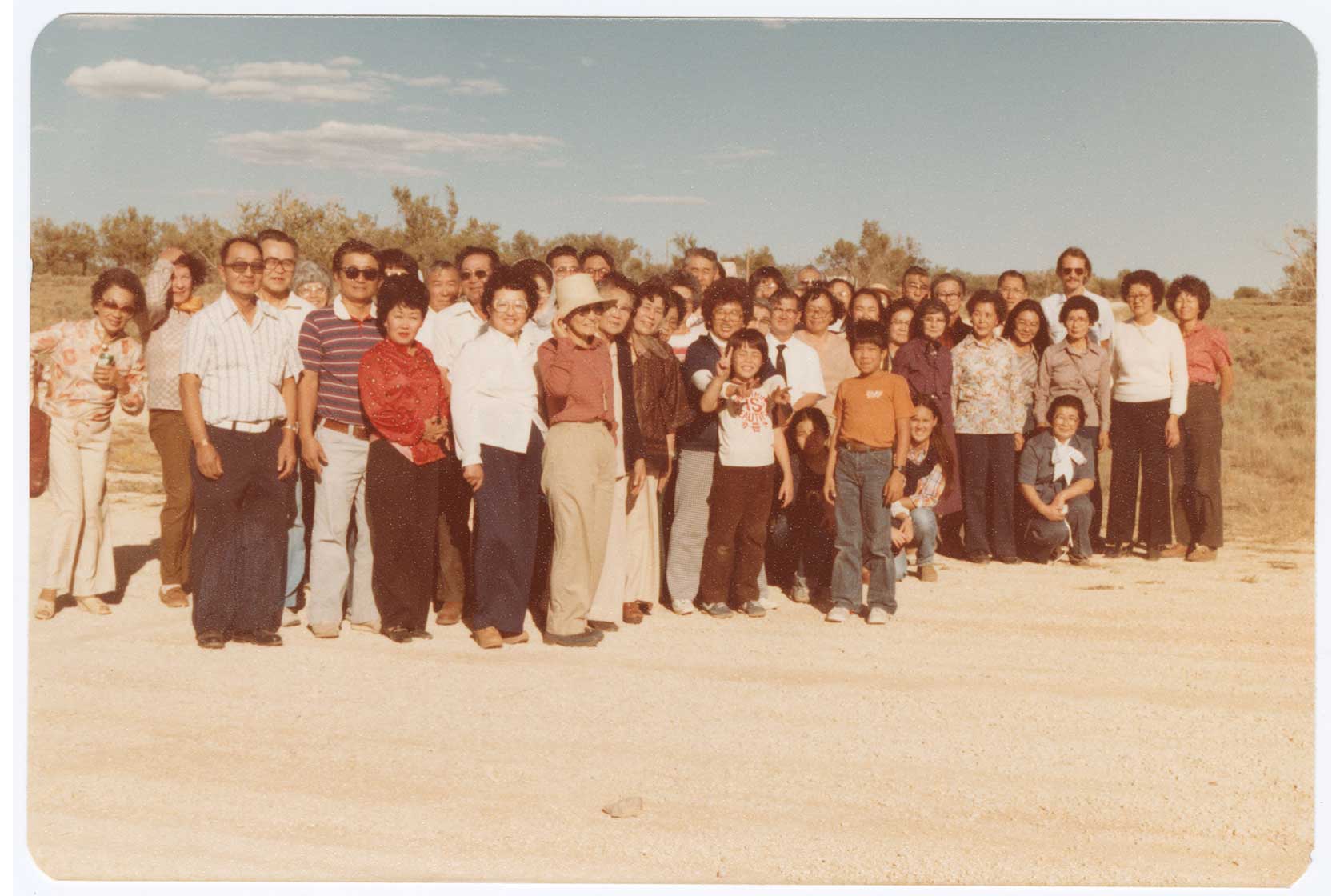
Endo was so moved by the experience that he took his students back, then set about organizing the first community pilgrimage to the site in 1976. He secured a $1,000 grant from Colorado’s Centennial-Bicentennial Commission and began planning what would become the state’s only official Asian American event during that anniversary year. Endo had the support of Denver-based civil rights advocate Minoru Yasui as well as Marge Taniwaki, a community organizer and Manzanar concentration camp survivor. Like Endo, Taniwaki was deeply moved by the experience of visiting Amache but also troubled by what she saw. The monument that incarcerees had erected before they left was pocked with bullet marks, and the honor roll had been stripped from the wall and burned. Endo and Taniwaki helped former incarcerees locate the foundations of the barracks they had once called home. Both recalled survivors’ shock at how big the elm saplings they’d planted had grown.
While Japanese Americans were beginning to grapple with their past, no such reckoning was underway in Granada. On the contrary, residents seemed determined to bury—or at least rewrite—the story of the place that local maps still referred to as the “J– Camp.” A commemorative book published in honor of the town’s centennial anniversary in 1973 cast such a sunny light on Amache that, Shigekuni wrote, “one would wonder why anybody would ever want to leave that place.”
Still harboring resentment over the government land seizure and rumors that incarcerees were coddled in the camp, Granada leadership grew increasingly vocal in their opposition to Amache preservation efforts throughout the 1980s. A particular flashpoint centered around a new monument that survivors wanted to erect at the Amache cemetery. The proposed marker referred to the site as a concentration camp. For Shigekuni and some of his compatriots, this wording was not only historically accurate but also a critical move away from widely used euphemisms like “relocation,” “evacuation,” and “internment,” which refers to the detention of foreign nationals and obscures the reality that the United States had violated its own constitution when it detained citizens en masse.
Henry Okubo, an Amache survivor and founding member of the Denver Central Optimist Club, recalled that the first meeting with the Granada town council about the monument “ended in a shouting match.” Granada’s mayor at the time, Lawrence McMillian, was nine years old when he and his tenant-farming family were evicted from their homes to make way for Amache. Bitterness over that loss reverberates throughout a 1983 letter that McMillian addressed to Shigekuni. “Let us not be deluded into believing that Japanese Americans were the only Americans to endure suffering, pain, and loss as a result of this war,” McMillian wrote. “Certainly, the Committee can describe the circumstances of the evacuation and relocation of the Japanese Americans in words not designed to keep their country in perpetual humiliation.” The letter, which the entire Granada town council endorsed, closed by asking: “Is not forgiveness one of the highest principles of Americanism?”
The conflict that played out over the proposed monument did not exist in a vacuum. Just a decade earlier, survivors of the Manzanar concentration camp had waged a similar battle over terminology with the state of California. Lillian Baker, a Gardena, California, widow, became a prominent detractor in that conflict and later in the nationwide movement for Japanese American redress by aggressively denying the realities of WWII incarceration. She took particular issue with the use of the term “concentration camp,” which she called “insidiously politically motivated.” In 1976, she founded the group Americans for Historical Accuracy and took her misinformation campaign to the national stage. She testified during congressional hearings on Japanese American reparations in the early 1980s, and at one point physically assaulted Amache survivor and WWII veteran James Kawaminami by attempting to wrench the written testimony of his incarceration experience out of his hands.
Baker had more than just an abstract influence on Granada-Amache relations. Thelma Jean Schibbelhut served as Granada’s town clerk for most of the 1980s, and documents found in Shigekuni’s and Henry Okubo’s personal collections identify her as “the apparent local leader in the fight to prevent any use of the Amache site for over 48 years” and as a “good friend” and “vociferous supporter” of Baker.
The Denver Central Optimists were eventually able to negotiate a compromise with the town council and place a granite tribute to Amache’s fallen WWII vets in the camp cemetery in 1983. Shigekuni celebrated the victory but also wanted a monument that told a more complete story of the incarceration and knew the town wasn’t ready for that. He instead proposed a “monument in exile” to be placed in Denver’s Sakura Square for “as long as the Granada people insist on suppressing our story.” Six years later, the needle hadn’t moved. When the Denver Central Optimists attempted to secure a place for Amache on the National Register of Historic Sites, Schibbelhut informed the organization that “the Council rejected the idea of nominating the Amache Site for inclusion in the U.S. National Register of Historic Sites, and will strongly oppose any effort by anyone to do so.”
Today, Granada is a dwindling town split in two by Highway 50. A towering concrete grain elevator looms over a modest cluster of single-story homes and streets that sit wide and empty in the swell of the noonday sun. The local high school has an average graduating class of 15, and a shortage of teachers in recent years has led the district to hire seasonal educators from the Philippines, housing them in a building once used for Amache’s administrative staff. A mostly windowless building serves as the combined police station, city hall, and community center. The town has two retail spaces: a liquor store and the Stop 2 Shop convenience store, where the Fourth of July is not a day but a season, stretching in all its red, white, and blue-tassled glory from sometime in mid-May until after the kids go back to school in September.
John Hopper has lived in Granada for most of his adult life. He’s an avuncular man with a slightly guarded demeanor that might read as standoffish if not for the mischievous smirk that, fleetingly but often, reveals his dimples. Hopper grew up about 60 miles west in Las Animas but chanced into a job as the Granada High School history teacher the day before classes started in 1990. He’d known about Amache because his mother worked with a former incarceree, Emory Namura, at the Las Animas hospital, but he had never been there. When he moved to town, his students couldn’t tell him where the camp was. He soon discovered why: The site had been tucked away behind locked gates and the town dump, marked only by a rusty sign posted to a tree.
Hopper recounts all this with the rote meter of a man who has had to tell the same story many times over. A year into the job at Granada High School, he worried that he was boring his students by teaching textbook history and saw an opportunity in the remarkable piece of history in the town’s backyard. He had students build a scale model of Amache and interview Namura, who connected them to other Amache survivors. In 1993, Hopper and his students formally organized the Amache Preservation Society (APS), recording oral histories, giving public talks about Amache, and tending to the site. Camp artifacts—scrapbooks, stuffed animals, a wedding dress—started pouring in from survivors who could finally trust that someone in Granada was ready to hold their history. So many items arrived that the group eventually started a small museum in Granada that remains open to this day.
Attitudes about Japanese American incarceration had begun to shift on the national level following the Civil Liberties Act of 1988, which granted $20,000 and a presidential apology to every citizen and legal resident incarcerated in the camps. The legislation, signed by President Ronald Reagan, admitted that the detention of Japanese Americans was not an act of military necessity but instead a result of “racial prejudice, wartime hysteria, and a lack of political leadership.” And in Granada, two major obstacles were out of the picture: McMillian had retired as mayor and gone back to working full time as the town barber, and Schibbelhut had lost standing when, in 1992, she was convicted of embezzling more than $83,000 from the municipality. Demographic shift helped too. Over the years, the population became less white and less anchored in bitterness over the government’s land seizure.
Still, Hopper’s work drew the ire of the town’s old guard. “My name was mud in this community,” he told me. People accosted him on the streets and sent him hate mail, demanding that he stop teaching Amache history. Hopper was undeterred. After he realized that arguing wasn’t making a difference, he learned to hear people out and then respond, “So you’ve said your piece. Bye. Have a nice day. I’ll have a beer with you later.”
For Amache survivors, Hopper and his students were the local advocates they had been waiting for. With the town’s support, they successfully won the bid for a spot on the National Register of Historic Places in 1994. And in June 1998, the Amache Historical Society and the Denver Central Optimists organized a reunion in Colorado Springs and the largest pilgrimage yet to the site. More than 400 survivors and their families participated, and this time Granada welcomed them. Thomas Grasmick was mayor at the time, and his eldest son had been an early APS student. In a letter to Shigekuni, Mayor Grasmick extended “our welcome and offer any assistance to make your visit to Amache and the Town of Granada memorable.”
Thomas Shigekuni passed away seven years ago at the age of 90, but his daughter, Vicki Shigekuni Wong, visited Amache for the first time during the May 2023 annual pilgrimage. She gave the elegant affect of old Hollywood in an oversize black woven visor and darkly tinted shades. For so long, her father’s dedication to preserving the site seemed to her like an unhealthy fixation. “He was crazy about Amache,” Shigekuni Wong told me. “That was his number one topic.” His obsession made sense to her after she experienced the place herself. At the threshold of a model barrack that now sits on the site, she felt a rush of emotion. “I mean, I almost didn’t want to go in. But when I went in, I was shocked….I was outraged.”
Later that day, Shigekuni Wong listened closely as Mitch Homma, the grandson of the famous dentist who had died at Amache, addressed a small crowd of pilgrimage attendees. He stood on the foundation of the barrack where his father’s family lived during the war. The wind whipped flurries of dust up from the ground, and wildfire smoke that had drifted unfathomably far south from Canada stretched across the sky like a curtain drawn too tightly from one horizon to the other. As he spoke, Homma grasped a family portrait taken at that exact spot in 1944. His eyes were wet from dust or tears, perhaps both, and his voice frequently pitched higher with emotion. He recalled his first visit to Amache in 2008. He had convinced his father to come back for the first time too. “When we got off the bus…I saw the look on dad’s face. And I thought I was the worst son in the whole world. You could just see all the memories. Whenever dad talked about Amache…he would always say, ‘Amache took my father away.’”
Though his first trip to Amache was a challenging one for Homma, it inspired him to get involved in helping to preserve the site. He joined the Amache Alliance, a California-based organization for descendants of the camp, and now serves as the president of its board of directors. By that time, years of grassroots advocacy and relationship-building had won the site National Historic Landmark status in 2006; six years later, Granada signed a 99-year preservation easement to protect the property. In 2019, Tracy Coppola of the National Parks Conservation Alliance, a national parks advocacy group, suggested to Homma that the time was right to go for National Historic Site status, the highest level of federal protection.
From there, Homma says, things “kind of just snowballed.” With a groundswell of support from Amache survivors and descendants, Granada locals and APS graduates, and Coppola, Colorado Senators John Bennet and Michael Hickenlooper co-sponsored the Amache National Historic Site Act, which President Joe Biden signed into law on March 18, 2022. Even though Shigekuni wasn’t alive to witness this moment, his daughter, Vicki, thanked the president for him: “He pledged to make certain that this dark period in history would not be forgotten. He always warned that ‘it could happen again.’”
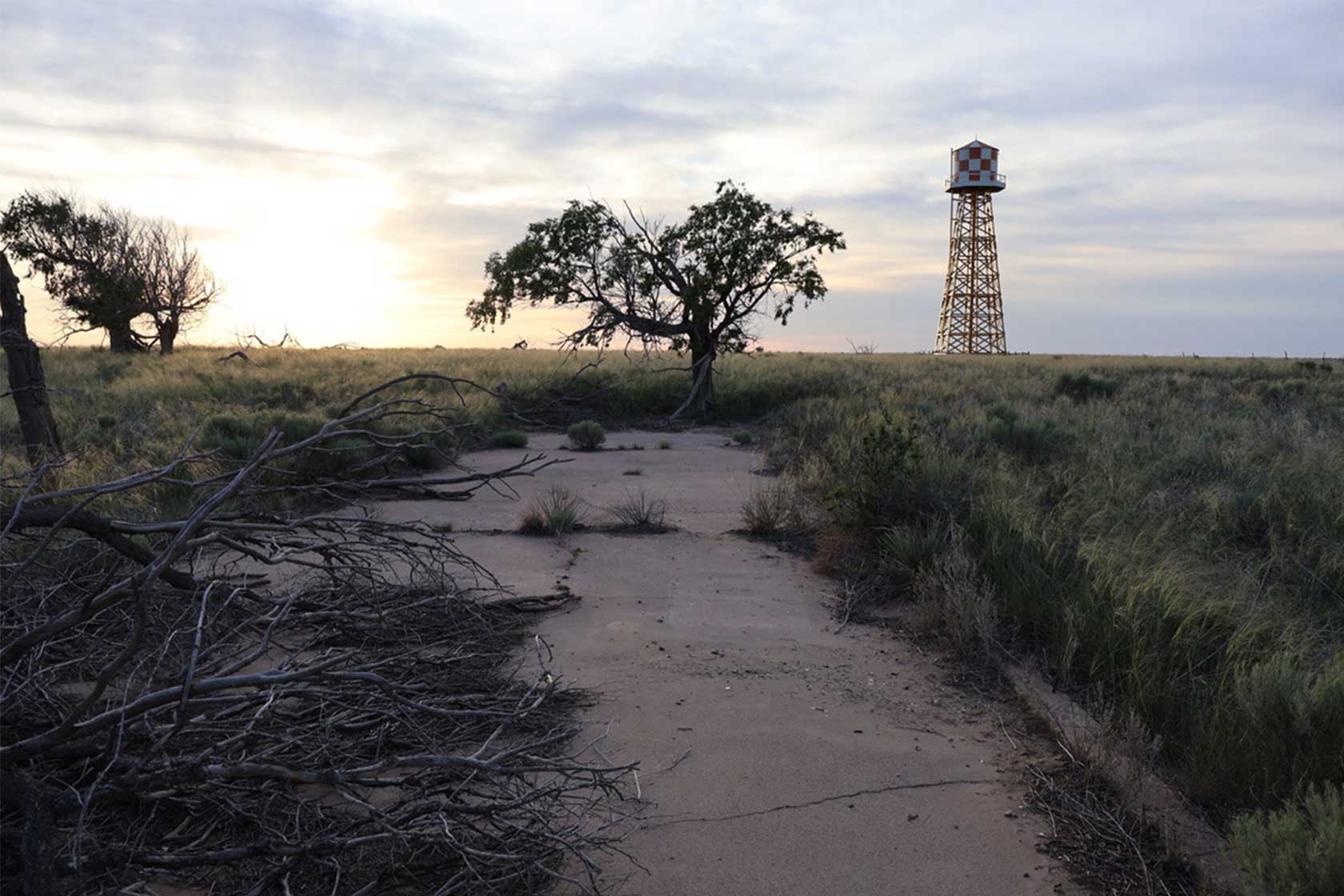
Where the prison city of Amache once stood, a partial blueprint remains. Native bunchgrasses thrive in water that pools in the cracked concrete foundations of barracks. The original roadways still form a neat grid of loose white dirt that plumes behind cars as they nose their way across the site’s single square mile. The Siberian elms that incarcerees planted are nearing the end of their lives now and fallen limbs prostrate themselves dramatically atop the ruins.
**
When I first spoke to Eric Leonard in September 2023, he was just four months into his position as the superintendent of the High Plains Group of national park units, which includes Bent’s Old Fort, the Sand Creek Massacre, and, now, the Amache national historic site. Although he was still mired in the logistics of starting up the new park, Leonard was optimistic about its potential impact. To him, national parks, especially the ones that preserve the darker chapters of our collective history, are “America’s greatest classroom.” He went on: “When we start to represent underrepresented groups in the National Park System, often, but not always, we’re preserving sites of violence or controversy, or both. And these places are not good or bad. They’re American places. It’s not our job to give people answers. It’s our job to give them enough information that they can start to think about it on their own, because that’s what a free society is.”
By the following summer, the National Park Service (NPS) had a growing presence at Amache. Uniformed rangers greeted visitors who had come out to see a University of Denver Amache Community Archaeology Project dig. Bruce Smith, a member of the Kansas chapter of the Sons of the American Revolution, had driven seven and a half hours to see the new national historic site. He was most taken with the gardens the incarcerees built and how they “didn’t complain” about what happened to them. He admitted he had more to learn.
Victoria Matsuko Wigal was there, too. A willowy college student from upstate New York, she was serving her second stint as a volunteer with the DU archaeology program. Her friends back home didn’t understand why she liked to spend summers in the heat and dust of the place where her grandfather had been incarcerated during WWII. “For me, personally, it’s really healing to be out here,” she says. As we stood on a barrack foundation, she gazed out at a rolling carpet of sand sage and shortgrass that bent toward the earth with each gust of wind. “It’s beautiful…the landscape, and also being able to connect with people who care so much about this and preserving the history and not letting it be forgotten.”
But the fight to tell the true story of what happened at Amache isn’t over yet. Just two years after achieving status as a National Historic Site, advocates faced another chapter in that decades-long battle. In March 2025, President Donald Trump’s Executive Order 14253, “Restoring Truth and Sanity to American History,” channeled the rhetoric of the Lillian Baker era, declaring, “It is the policy of my Administration to restore Federal sites dedicated to history, including parks and museums, to solemn and uplifting public monuments that remind Americans of our extraordinary heritage, consistent progress toward becoming a more perfect Union, and unmatched record of advancing liberty, prosperity, and human flourishing.”
That May, the secretary of the interior outlined the steps managers of public lands, including all national parks, had to take in accordance with the order. This included identifying any language that “inappropriately disparages Americans past or living” and replacing it with “content that focuses on the greatness of the achievements and progress of the American people.” The public has been conscripted to participate in the government’s surveillance through the use of QR codes installed at the sites to report any “signs or other information that are negative about either past or living Americans.”
Shortly after the QR codes were posted at the entrance to Amache, an anonymous visitor taped a satirical response next to them. Mimicking the kind of history the Trump administration seemed to be looking for, the note read: “It was the Spring of 1942 and President Roosevelt decided to treat people of Japanese descent [to] a fabulous free vacation at one of ten fantastic luxury resorts built just for the occasion.” It went on, twisting the wartime incarceration story into a sugarcoated dreamscape before concluding, “it was most certainly a once in a lifetime experience that none would ever forget.”
For now, none of the actual interpretative signage at Amache has been changed. Its materials passed the Department of the Interior’s review because the law that created the Amache National Historic Site explicitly names its purpose as being to preserve, protect, and interpret its history as it relates to the “incarceration of civilians of Japanese ancestry during World War II.” Secretarial and executive orders do not supersede law, so NPS staff is legally obliged to tell the story of the mass civilian incarceration that happened at Amache—a narrative that doesn’t easily lend itself to celebrating the advancement of “liberty, prosperity, and human flourishing.”
Still, as the NPS and its grassroots partners head into the multiyear process of developing the General Management Plan for Amache, many worry about funding cuts and the current administration’s pattern of acting extrajudicially. But the Amache community has a playbook for challenges like this. They will do what they did when the U.S. government first stripped them of their rights and property; what they did when forced to rebuild their lives within the camp and then again after; and what they did in the face of earlier attempts to whitewash their history: they’ll keep going. Speaking from his home in Littleton, Amache Alliance member Derek Okubo underscored the fact that, like his late father, Henry, and Thomas Shigekuni, he just wants the right to speak truthfully about what had happened to their community. “We’re going forward no matter what,” Okubo said. Then, his voice catching, “That was my dad speaking.”
A live storytelling event in the Mountain West puts the themes of pride, reckoning, and aspiration on stage.
Editor’s note: This essay was originally published by New America on October 9, 2025.
Fellow, Us@250
In the green room of the historic Holiday Theater in Denver, Colorado, George Sumner shows me his silver storyteller’s bracelet. It is about an inch wide and wraps closely around his wrist, depicting the story of his life in small, etched images. The bracelet is a Navajo art form, a gift from the Diné artist Rosabelle Shepherd, though Sumner is not Native himself. From left to right, it traces his journey from childhood in a Utah farm valley, to the helicopters he flew over Vietnam, to the return home, to a nation at odds about the war and his service. How the gift came to be is beautiful in its own right, but tonight we are here for the story it holds.
Sumner is one of three storytellers to be featured in an event hosted by The Moth in partnership with New America’s Us@250 initiative. The Moth, an organization that’s synonymous with live storytelling, invites speakers to stand alone on stage—no notes allowed—in order to share something deeply personal and true and affecting with total strangers. I’ve listened to The Moth on public radio for years, but this is my first time in the room.
The theater is an intimate space, the stage right on top of the seats. Iron-trimmed lanterns hang in the rafters, and chipped-away masonry reveals the red brick of the structure beneath. It has lived many lives over the last century—a cinema, a restaurant, a church—but today it is a long-term hub for the arts and community events. It is the sort of place where history feels alive.
As it does in the home of featured storyteller Amena Brown’s grandmother, where her family bonded over meals and shared secrets, too, both comical and not. As a storyteller, Amena is nervous until the moment she’s at the microphone, but “once I get there and take that first breath, it feels like home. The stage is one of the few places where I’m not stuck in my head. I’m in my body. I’m as present as I can be.” And we are with her now, seeing in her kitchen how generational acts of love can be born out of exceptionally cruel and unjust times, how these acts become shared traditions passed down through the years, as we aspire for a better future.
Storyteller Alistair Bane is shy in most aspects of his life, yet he finds comfort and safety on stage. “I kind of picture just speaking to a friend,” he explains. That is where his story begins, too: a conversation with a friend that leads, eventually, to the friend’s grandmother coercing him into attending church. Alistair grew up between Shawnee and Irish-Catholic cultures, but was woefully unprepared for the embarrassing situation that followed, when he’s put on the spot in front of an entire congregation. We all laugh at the same moments during Alistair’s story and, I imagine, reflect on times when we, too, have had to stand tall in uncomfortable situations—or remain true to ourselves while simultaneously honoring the values of another.
George Sumner, 79, says he’s always been “an adrenaline junkie.” He flew helicopters, became a career firefighter, and skied “recklessly and dangerously.” Today, live storytelling is a way for him to still feel that rush—an experience, he theorizes, that allows one to “own” the things that have happened to him. But, as George and his colleagues were quick to point out, stories have another, higher purpose as well. The alchemy, the magic, is not within either the teller or the audience alone, but somewhere in between. “The Moth,” Sumner says, “is in the business of increasing the total amount of empathy that exists in the world.”
Kate Tellers—a director at The Moth’s program and the evening’s show producer—says that she hopes The Moth audience “feels in community with the others in the room, that they feel like they’ve uncovered a new piece of the human experience, and that when they leave, they feel more inspired to connect with people they don’t already know.”
In a politically polarized United States, it can sometimes feel like we live amidst nothing but accelerating chaos and dread and terror. We see it on our phone screens and our news channels, and we hear it from elected officials, when those in power use those tensions to increase our fear of one another and leverage our despair for political expedience.
Good stories are not cures for all of that, but the nature of a story allows us to feel our way through contradiction and complexity, the sorts of paradoxes that are inherent to the human and American experiences. Stories do not ignore difficult or regrettable realities, but instead provide pathways for connection across those challenges. Stories require vulnerability, for both the storyteller and the audience, and in their thrills, they can be invitations to healing.
George is the night’s final storyteller, and his voice is no less strong as the evening’s eldest. His story is about service and commitment and confusion and purpose. We learn how the phrase “welcome home” can cut in multiple directions. We listen to his reckoning with the ways that opposing ideas coexist within us, how life is not and can never be simple, and how it is beautiful nonetheless. By the time George finishes his tale—a warrior’s peace depicted at the end of his storyteller’s bracelet—audience members are wiping their eyes.
To conclude, the show’s host Angelica Lindsey-Ali asks the audience to remain for a few moments and to speak with someone else sitting near them, someone they don’t know. To ask questions. To reflect on tonight’s stories. As the house lights come up, conversation fills the room.
On my way out of the theater—before I walk back to my hotel across a bustling Friday night where people laugh outside bars and restaurants and walk the sidewalks arm in arm—I spy a friend of mine, Elizabeth, who now lives in Denver and who’d brought her aunt to the show. Elizabeth used to attend Moth events in New York, all of the StorySLAM variety (essentially name-out-of-a-hat story competitions). Tonight was a little different than that, she says, how the purpose of the show, though always present at The Moth, was more explicitly distilled.
“I felt like,” my friend says, “I had permission to just be a human being for an hour. I don’t think I’ve been able to take a breath like that in a long time.”
As others sleep, a Nebraska high schooler survives the graveyard shift.
Editor’s note: This essay was originally published by The Flatwater Free Press on December 13, 2024, and is the winner of the 2024 Education Writers Association National Award, Features (Small Newsroom). It has been lightly edited to adhere to house style.

Fellow, Us@250
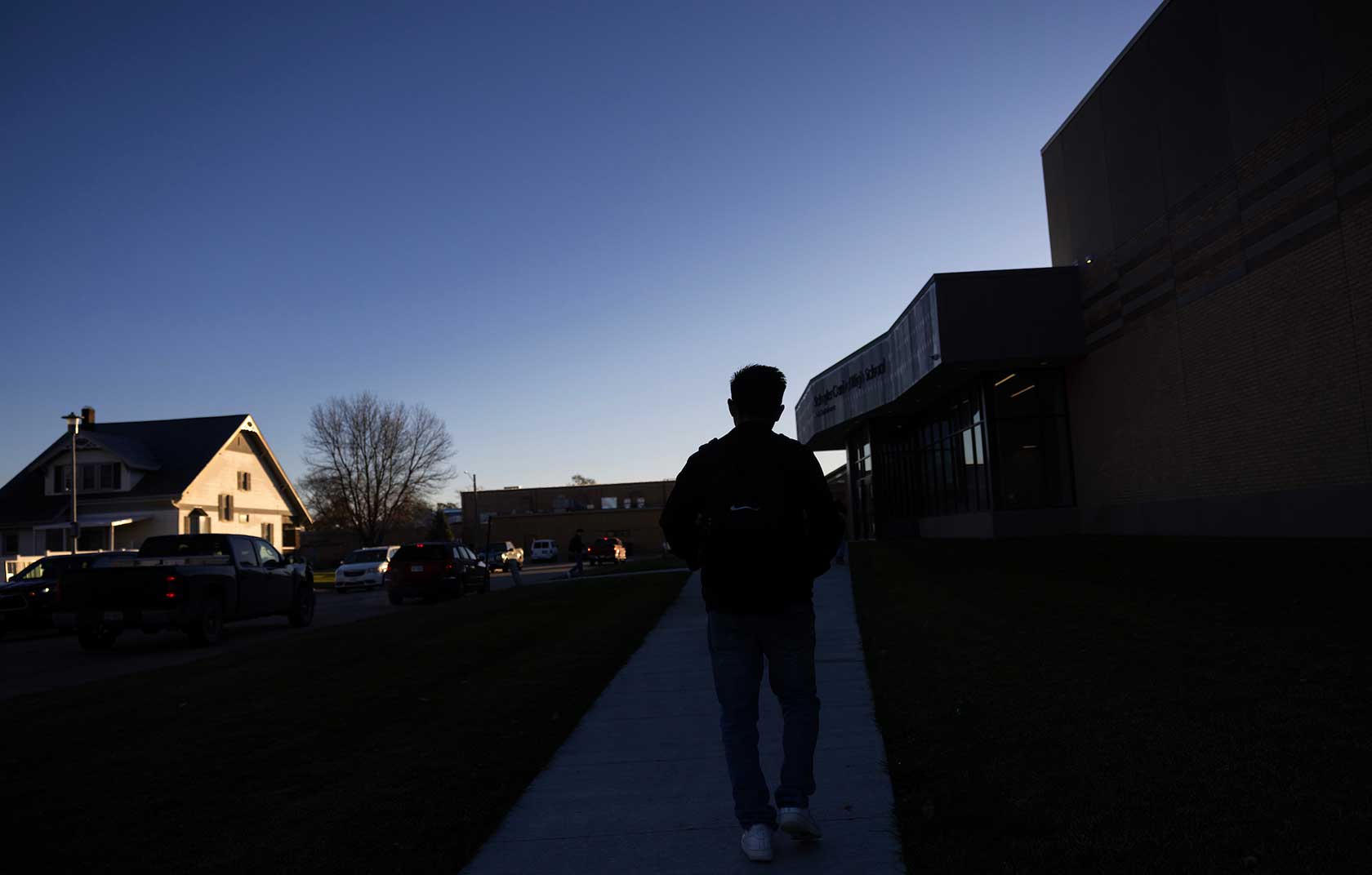
His eyes are tired from scanning the conveyor belt. His feet and back are sore after hours of standing in his steel-toed boots. His brain is fried from searching for faulty welding and chipped paint on the more than 1,000 metal pieces that whiz past him on the belt during the graveyard shift.
Marco Gutiérrez has spent the past eight hours inspecting tiny parts that will become car seats in Ford F-150s and Chevy Malibus.
Before that, he put in a shift at Panda Express, cooking huge batches of fried rice and crispy orange chicken.
It’s now 7 a.m. on a Wednesday. The sun is starting to peek out over the Camaco manufacturing plant on the outskirts of Columbus.
Marco has been working for nearly 15 hours. Now it’s time to go to school.
A senior at Schuyler Central High School, Marco is one of the dozens—maybe hundreds—of Schuyler students who work long, demanding full-time jobs when most Nebraska teenagers are sleeping.
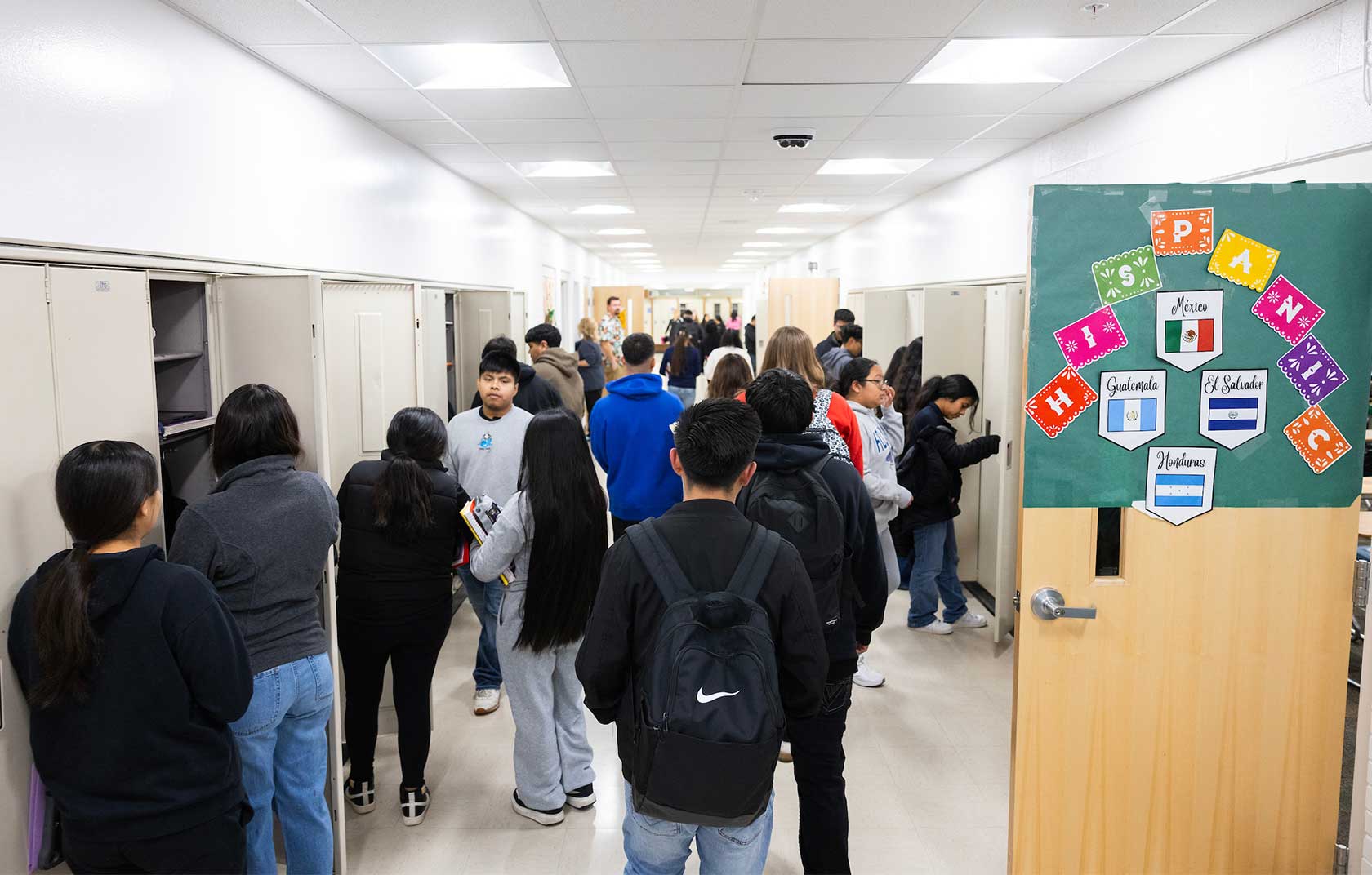
In communities across the state and country, in places where meatpacking or manufacturing are an economic backbone, immigrant teenagers do this middle-of-the night work, jobs often unknown to their teachers and principals.
They work to send money back home to their families—20-year-old Marco sends paychecks back to his parents in Guatemala. They work to pay back whoever helped them journey to the border. They work to cover legal fees, rent, food for themselves and their younger siblings, to survive.
Marco and many others here are stuck in immigration limbo, waiting for judges to decide whether to grant them asylum or refugee status. With the election of Donald Trump, who has promised mass deportations, their future in Nebraska, and this country, feels to them like it could vanish any instant.
No one at Schuyler Central has a good count of how many students work full-time. A former principal estimates at least 40. Teachers whose classrooms are filled with students new to the country guess as high as 200—roughly a third of the student body in this school of 623.
It’s obvious when they haven’t had much rest, teachers say. The teenagers start to look like old men, droopy with exhaustion.
Jazmyn Flores has watched her students sleep through first period, their bodies aching from working all night in a factory or bone weary from after-school construction jobs.
She wakes them up and wonders, “How are they going to learn?”
**
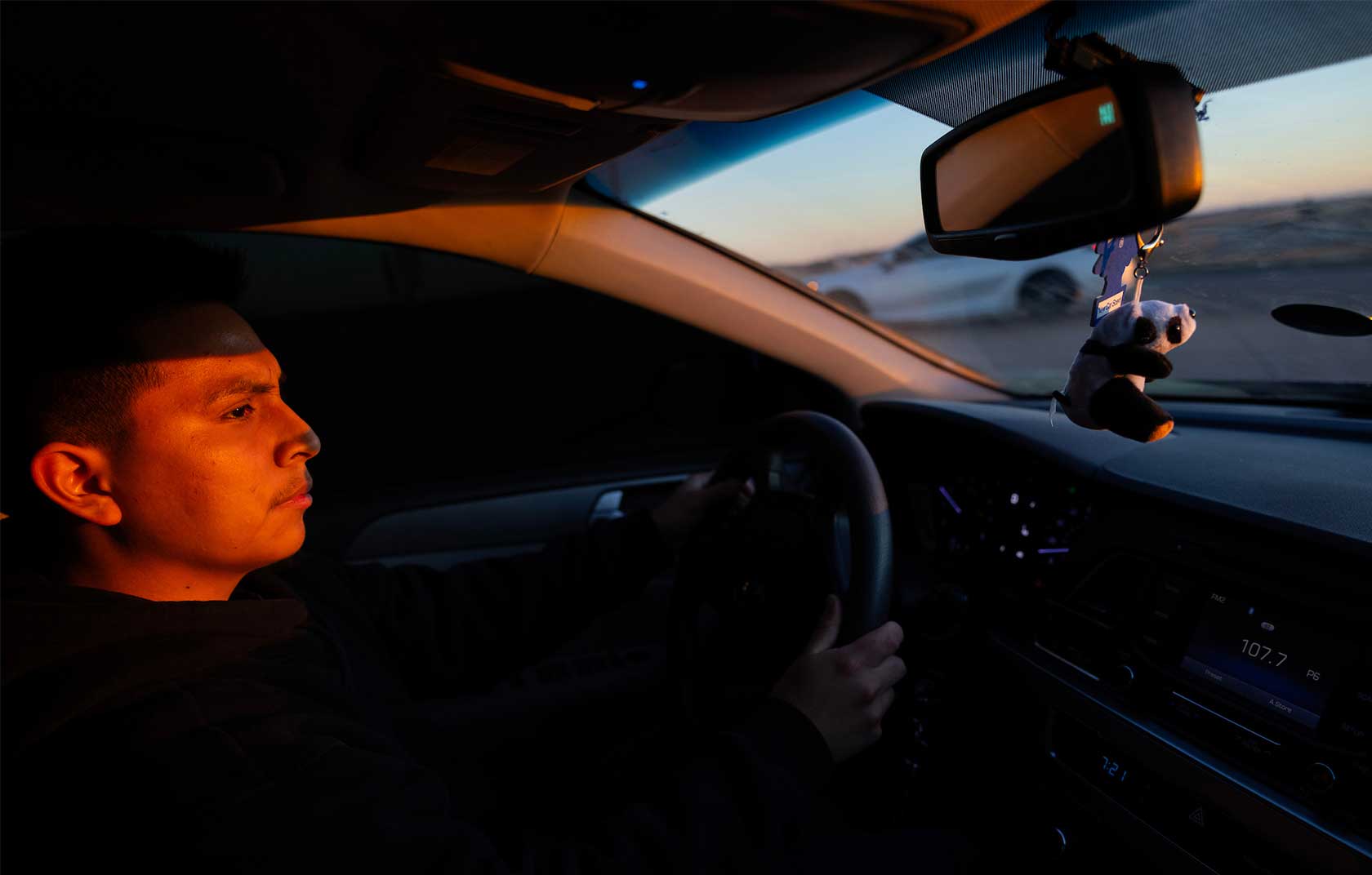
Marco has one hour between work and the first school bell.
On his car dashboard, a picture of his girlfriend looks back at him as he turns the key and starts the 20-minute commute back to Schuyler. A stuffed panda keychain dangles from the rearview mirror of his dark blue sedan—a gift from Panda Express when he took on the second job a few months ago.
Marco steers toward a light blue house on a tree-lined street, where his older sister, her husband, and their three children live together on the second floor. Marco shares a room with his 18-year-old nephew.
He creeps through the quiet house, his footsteps creaking on the old floorboards, as he tries not to wake his baby nephew. His sister, too, slumbers before the afternoon shift slicing raw meat at Cargill.
He pulls on his black jacket, grabs his backpack, tiptoes down to the front door and, just before 8 a.m., hitches a ride to school with his girlfriend.
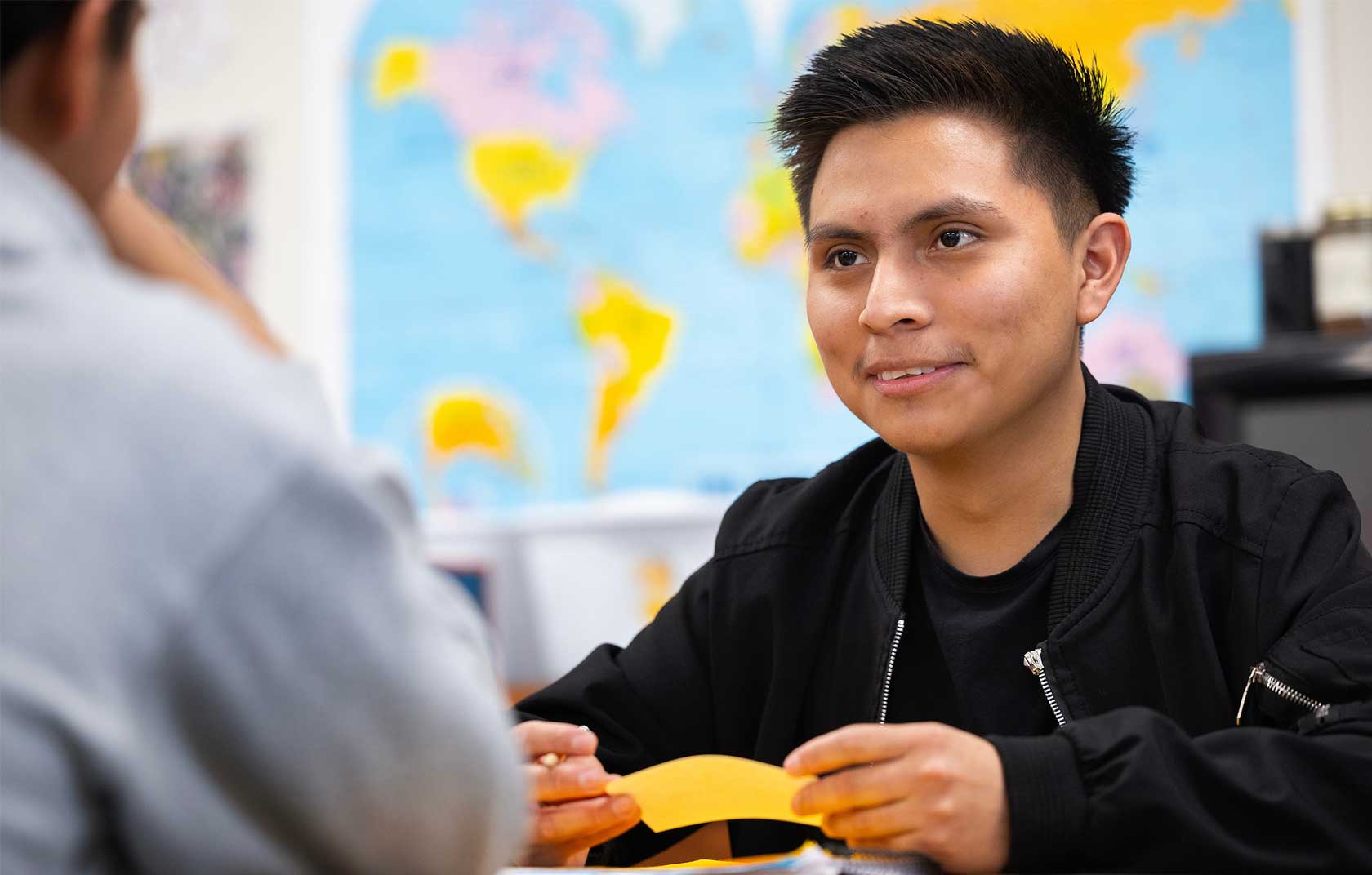
Schuyler has transformed since 1980, morphing from a mostly white town of roughly 4,000 people to a mostly immigrant community of 6,547. Drawn by jobs at the Cargill meatpacking plant on the western edge of town, immigrants have reshaped Schuyler into a city that’s nearly three-quarters Latino. Downtown is a mix of Mexican, Central American, and African grocery stores and restaurants sharing the same streets as old dive bars and a Knights of Columbus hall.
Nearly a third of Colfax County residents are foreign born, the highest percentage in the state.
Cargill and plants in nearby Columbus and Madison have changed the school district, too. Schuyler’s schools have grown by about 500 kids since 2006, reaching 1,984 last year. Of those, 45 percent of students are learning English as a second language, the highest in the state.
Samantha Ladwig, the school’s assistant principal, graduated from Schuyler Central, as did her husband, all their siblings, and their parents. Her two kids are now in the district, too.
When classmates at Wayne State College heard where she’d grown up, they’d ask: “How was that?” They’d never been in a classroom of people who looked different from them. They figured the blond-haired, blue-eyed white girl must have stood out and hated it.
They were wrong. Ladwig felt drawn back to her hometown, where she’s still pushing back against misconceptions people have about her students—like that none speak English, or that a sleeping student like Marco is lazy when he’s actually exhausted from an overnight shift.
Growing up in the melting pot of Schuyler made her a better educator, she thinks, and a better person.
“I didn’t look at my classmates any different because of where they came from,” Ladwig said. “It wasn’t anything that was shocking to me. This is home. It’s what I’ve always known.”
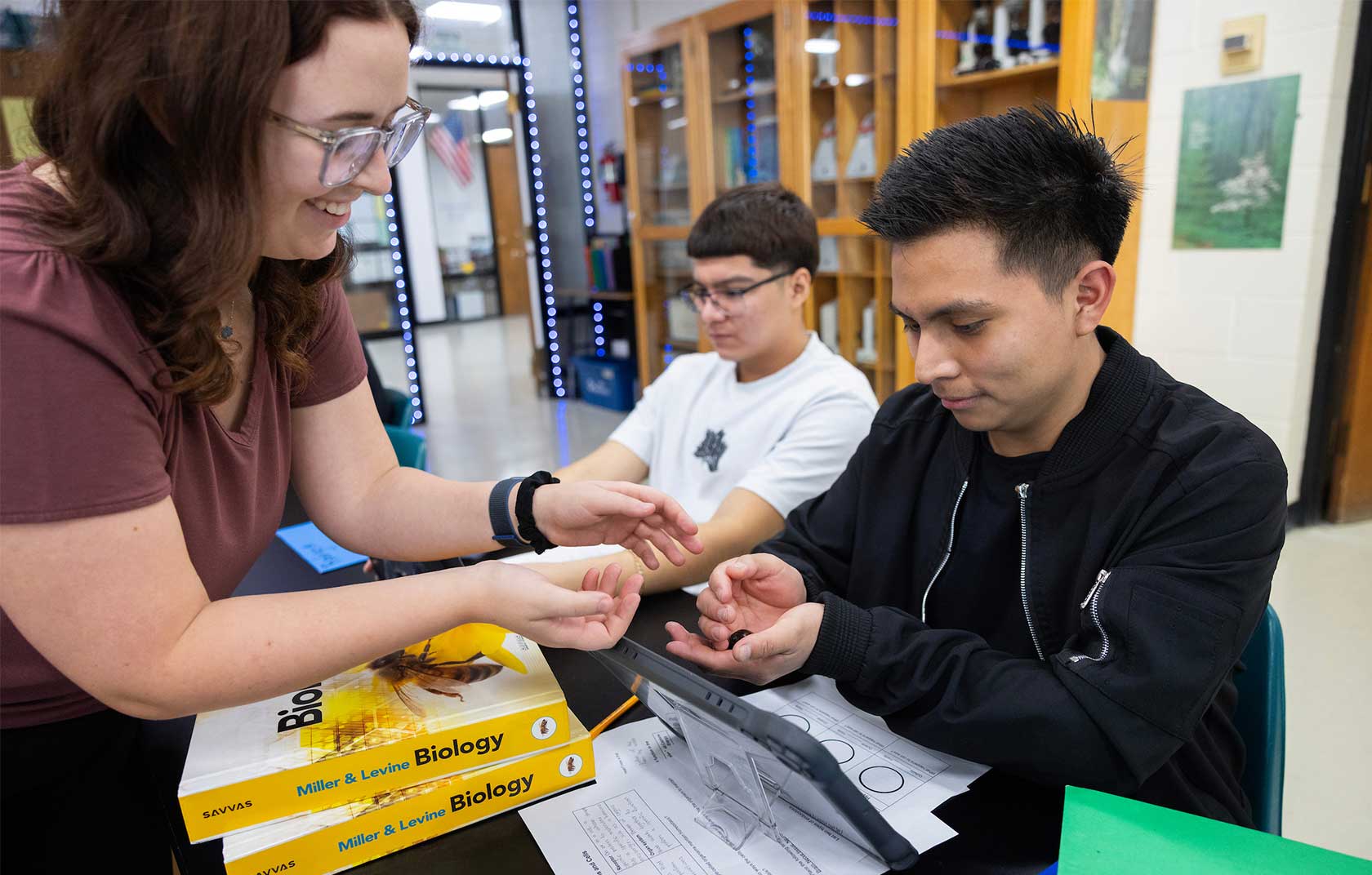
Marco gets to school and takes his classroom seat in the back row under bright fluorescent lights. It’s first period. Biology.
Marco’s eyelids start drooping 15 minutes in. His head bobs up and down, as he drifts to sleep and blinks back awake while the teacher talks about membranes and molecules, diffusion and osmosis.
His teacher, Katelyn Wiegand, does not know that Marco works two jobs, because he’s never told her.
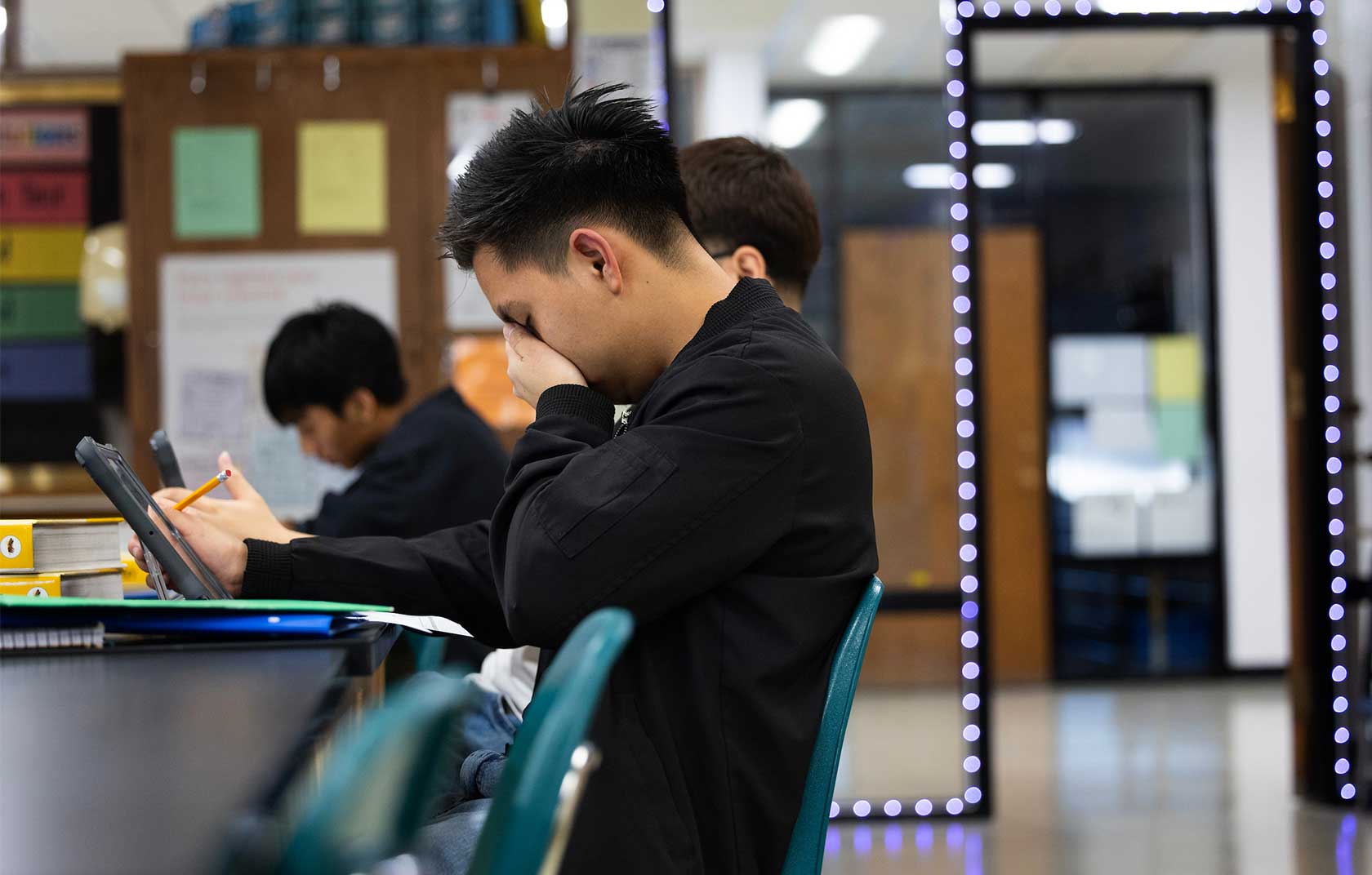
Wiegand’s second-period class is made up entirely of immigrant students learning English. She and her students trade words and phrases in English and Spanish. They’ll pull out Google Translate when they run into a complicated scientific word they can’t translate themselves. The first-year teacher has to remember to speak clearly and slowly. But her students still learn the same material as her English-speaking classes.
“They’re outperforming my gen ed students,” she said. “They come here wanting a better life, and they have the desire to work hard for it.”
**
Marco boarded a bus alone to get to Nebraska. It took him from his home country of Guatemala, north through Mexico, to the border where he crossed from Ciudad Juárez into El Paso.
The journey took two weeks. He was 17.
He didn’t attend school for two years before that. Instead, he worked construction jobs in his hometown of Joyabaj to help keep his family afloat.
He could find a job in Guatemala but made only enough money to cover food. His parents are old, he says, no longer able to work.
“I decided to come here to make a better life for me and my family,” he said in Spanish through a translator. “They need my money to survive.”
After two weeks riding the bus through Mexico, he presented himself to Border Patrol agents and became one of the hundreds of thousands of unaccompanied migrant children who enter the United States every year seeking asylum.
He lived two more weeks at an El Paso shelter where unaccompanied minors go until they can be placed with a family member or sponsor in the United States. There, he was stuck in a warehouse-type room packed with 500 cots and teenagers.
Then, the U.S. government put him on a plane to Nebraska. His sister in Schuyler would be his guardian.
The United States allows children from Central America to live and work in the country as they await immigration decisions—a 2008 move meant to protect vulnerable kids from dangerous border crossings or getting stranded in Mexican border towns like Juárez. But the red tape is so tangled that even Marco doesn’t fully understand his path to staying in the country.
When he moved to Nebraska, Marco joined the ranks of the 553,322 minors placed with a sponsor or guardian in the United States from 2015 to 2023.
He became one of the 223 placed in Schuyler.

He enrolled in school, a requirement for minors entering the country. Barely speaking any English, he started as a sophomore, surrounded by classmates who spoke Spanish, Arabic, French, Burmese, and indigenous Central American dialects.
Marco is now 20, older than the typical senior. In Nebraska, students can be enrolled in school until they’re 21. He’s improved his English so much that he’s now in class with native English speakers. He’s on track to graduate in the spring.
“When I got him two years ago, he knew nothing….And he began pushing himself,” Flores said. “He said, ‘I want to learn.’ He got his driver’s license, practiced his English. Marco is a clear example that if you put your mind into it, you will do it. You will achieve it.”
He secured his work papers, allowing him to work legally in the United States. His future in the country now lies in the hands of the Omaha immigration court, which during a recent 9-month period granted only 3 percent of applicants asylum—the lowest approval rate in the country.
“It’s not a happy statistic,” for asylum seekers like Marco, said Kevin Ruser, who heads the immigration clinic at the Nebraska College of Law.
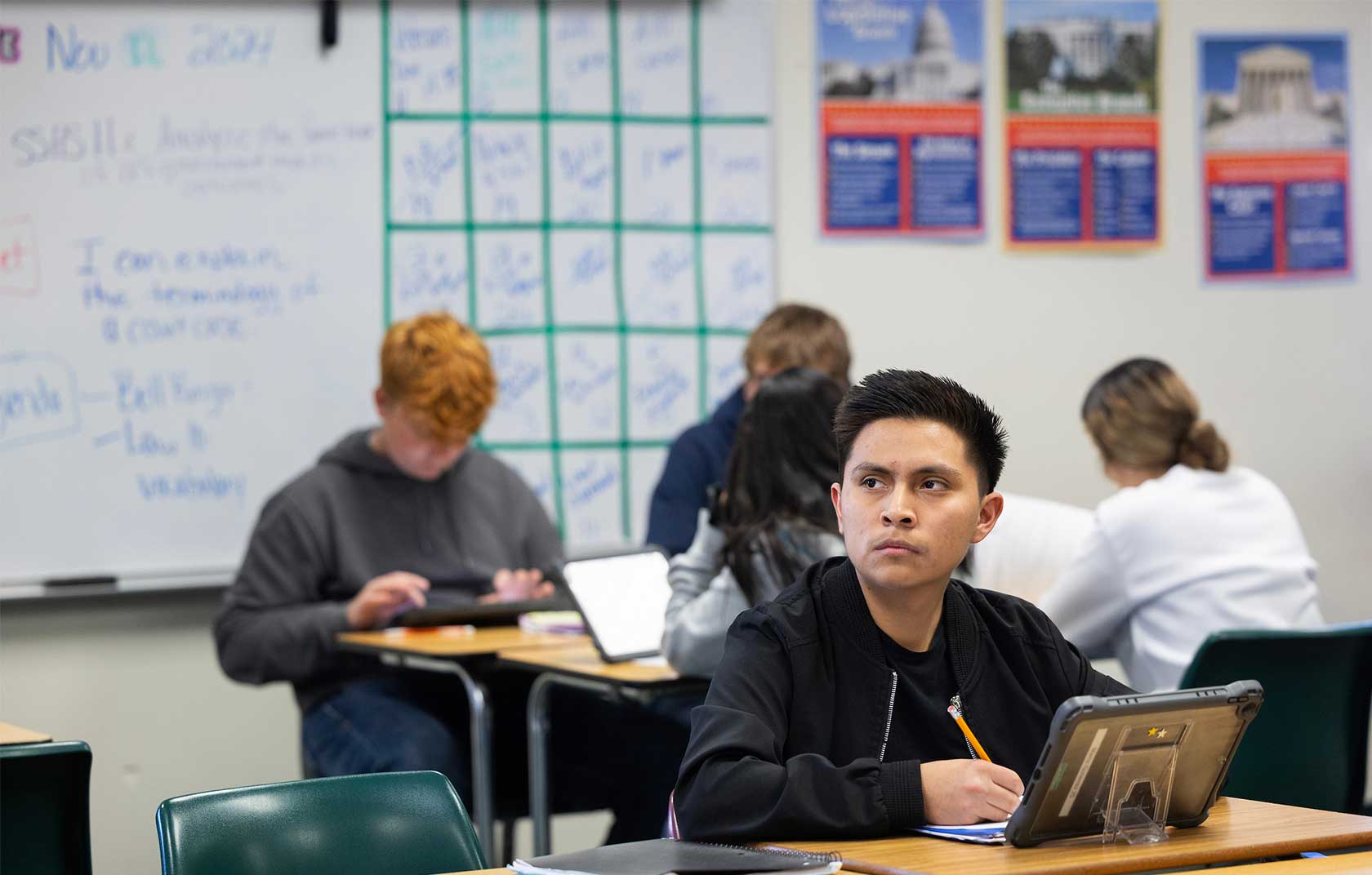
By second period, Marco stands before his U.S. government class and recites a presentation in English about Barack Obama, hands shoved into his jacket pockets. His teacher, Mrs. Blaser, helps him along as he stumbles on tricky-to-pronounce words, like “subsequently” or “finance regulation.”
He walks hallways papered with posters celebrating Hispanic Heritage Month. Fliers pasted on the walls announce the theater department’s bilingual play and one-on-one appointments offered by Ruser’s immigration law students. Decades-old photos of entirely white football teams hang over display cases of trophies, a reminder of how things have changed.
Marco’s third-period teacher, Mrs. Lickai, spends the class corralling missing assignments before they start their next unit on a novel about the Wild West.
Marco, like many of the school’s seniors, is on a half-day schedule, which lets seniors go to their core classes and still have time to work.
He’s been working full-time for two years—juggling these things feels normal now. But he wishes he could be on the soccer team. Or that he could play saxophone in the band.
Last year, his class went on a college visit to Wayne State. In a building lobby, there was a grand piano. Marco sat down and started playing a flowing ballad from memory.
Clarissa Eloge, his teacher, watched, amazed.
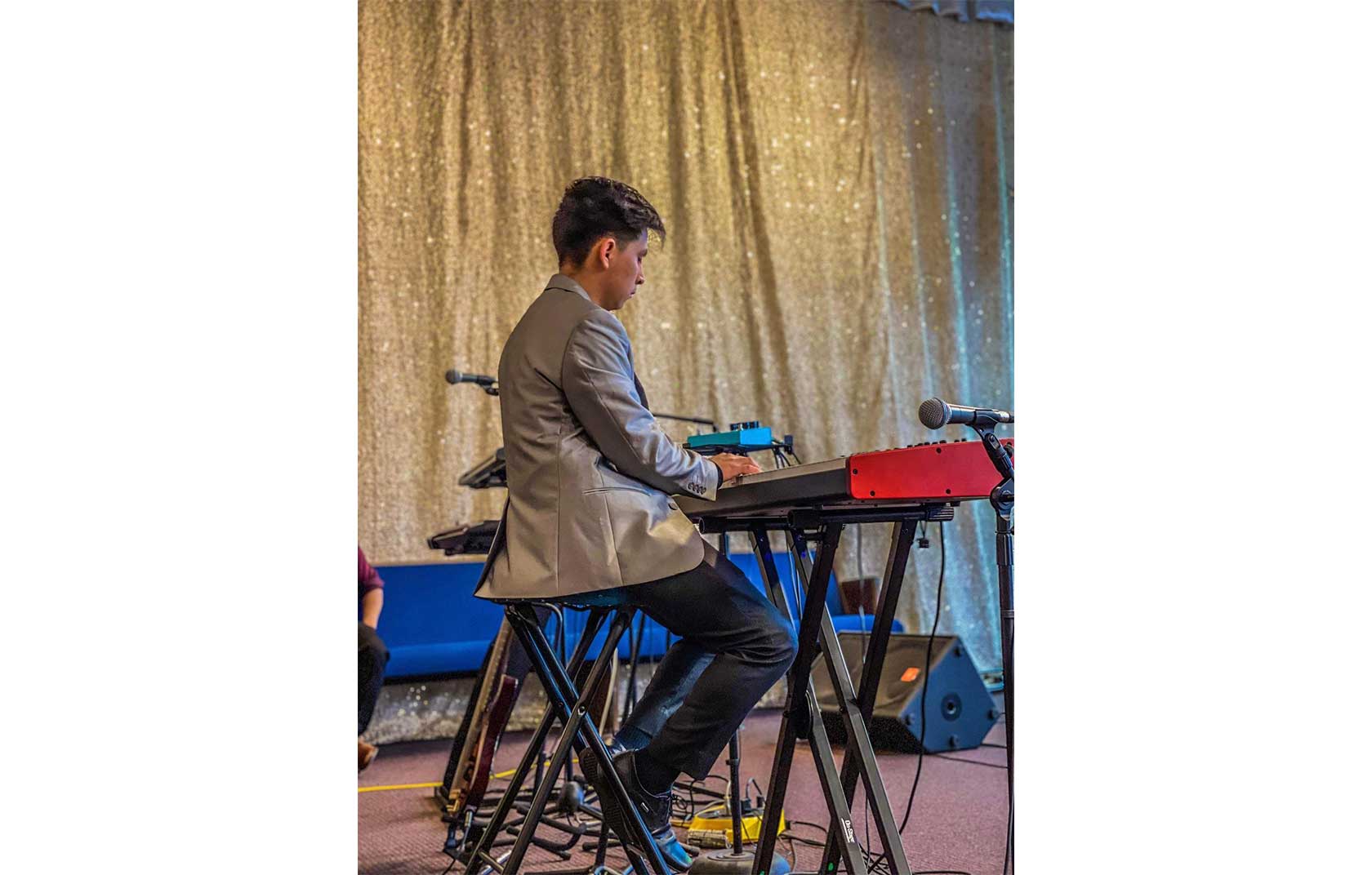
She had Marco in two back-to-back classes that year. Sometimes he’d fall asleep, exhausted by his night of work. She’d let him nap—Marco is a smart kid, and he always caught up easily.
But she had no idea he plays piano. Or that he plays five other instruments—saxophone, trumpet, drums, bass guitar, and the güira, a percussion instrument used in merengue. Or that in his brief moments of free time between sleep, work, and homework, he practices piano in the bedroom shared with his nephew.
That on weekends when he’s not working, he dons a collared shirt and suit jacket and plays piano in his Pentecostal church’s merengue band.
When Marco finished playing the ballad that day at Wayne State, Eloge started to ask him about all this, and he started to answer.
My dream, he told her, is to share what I love with other people.
My dream is to be a music teacher at a school like Schuyler.
**
Marco stands before his last class of the day, giving a presentation on global warming. Behind him, the Mexican and Guatemalan flags hang above the chalkboard.
His public speaking class of Spanish speakers practices English in speeches and writes thank you cards to teachers as Thanksgiving approaches.
His teacher in this class, Flores, noticed him when he first arrived at school in the fall of 2022.
He was in a foreign place, surrounded by strangers and an unfamiliar language.
She helped him feel comfortable. She also helped him, this year, get his second job at Panda Express. She works there, too, as a manager on the weekends.
As he goes through his slides, she helps him along with hard-to-pronounce words.
“The use of…pesticides?” he says, looking in her direction. She nods at him as the word comes out right. “…are destroying our environment,” he finishes.
“A week late,” she says. “But you did it.”
Flores sees herself in students like Marco. Sixteen years ago, she was Marco.
Flores came to Schuyler alone as a 19-year-old, at a time when the school was still adjusting to an influx of immigrant students.
She spent her nights working in factories like Tyson and Camaco. After eight years, she saved enough money to go to college. She worked as a teacher aide in Columbus, the first time she realized just how many students were working late-night shifts in factories.
Flores has taught in Schuyler for four years. She knows these students’ reality.
“You’re going to be in pain. Your hands are going to hurt. Your feet are going to hurt. Your back is going to be killing you the next day. And teachers don’t know that,” she said.
New students arrive every month, Eloge said. Some will leave at the end of the year, finding a job in a faraway city, or moving 20 minutes away to Columbus where housing is easier to find, or returning to their home country because life in Nebraska wasn’t what they imagined.
Her goal is to help students feel comfortable speaking English by the time they graduate, but four years isn’t enough time to get someone fully proficient, she said.
In the days after the election, a student told Flores he was giving up on everything. With Donald Trump promising to send people like him away, he said, what’s the point of trying?
“We’re going to be deported,” he told her.
Teachers, administrations, and advocacy groups are already starting to plan for this potential reality. What happens if there’s an ICE raid? What’s the plan if one day, students return home from school and their parents are gone?
Flores tries to keep kids like Marco focused on the future. Graduate, she says. Go to college. Get off the overnight shift.
“I keep telling them, guys, you don’t want to do this for the rest of your life.”
**
The last bell of Marco’s day rings—he has five hours between school and his next shift at Panda Express.
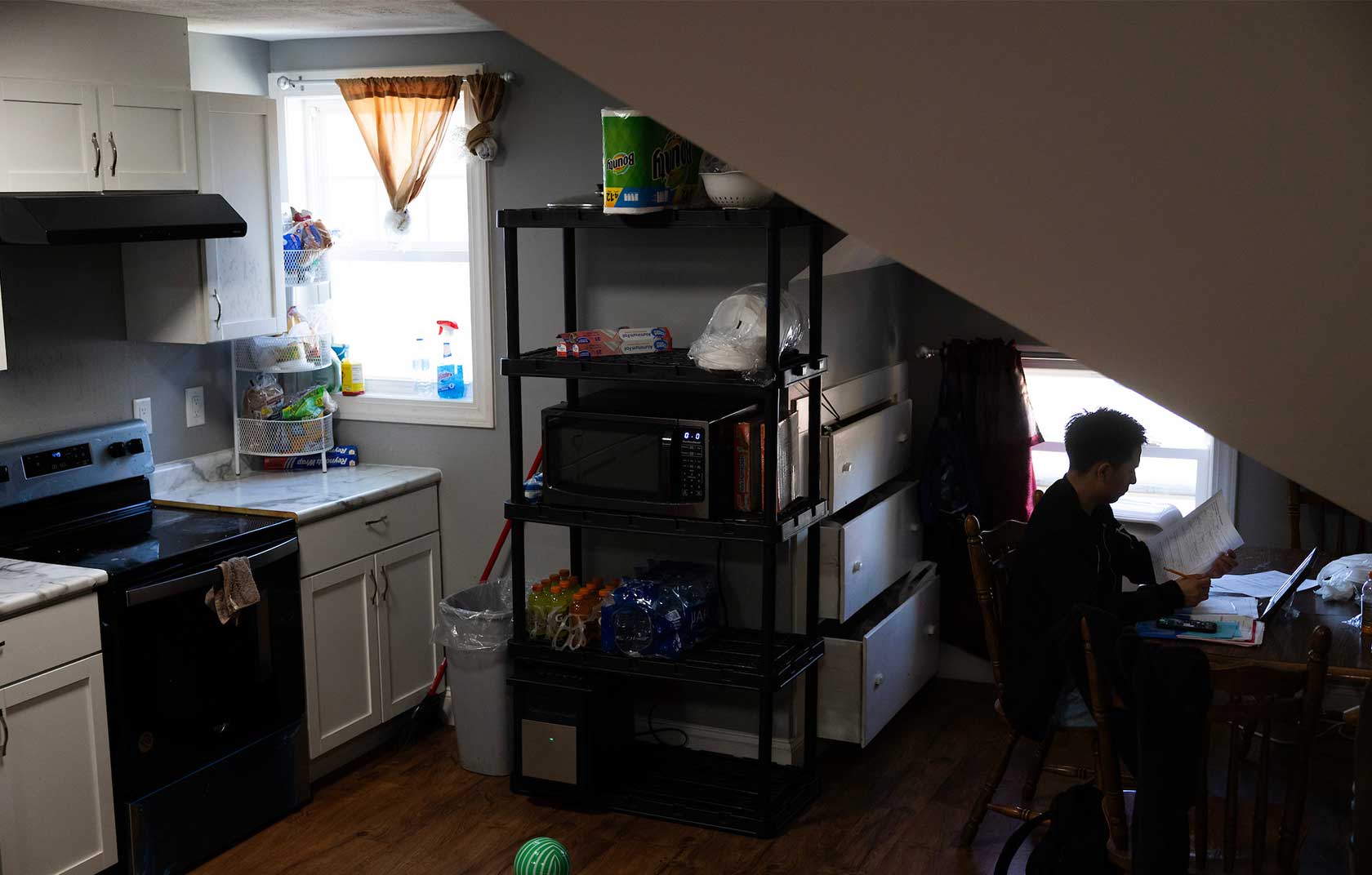
He will sleep for as many of those five hours as he can. No time for homework.
He will awaken, drive back to Columbus, spend another six hours cooking at Panda.
He’ll clock out, change his work uniform in his car, drive two miles toward his graveyard shift.
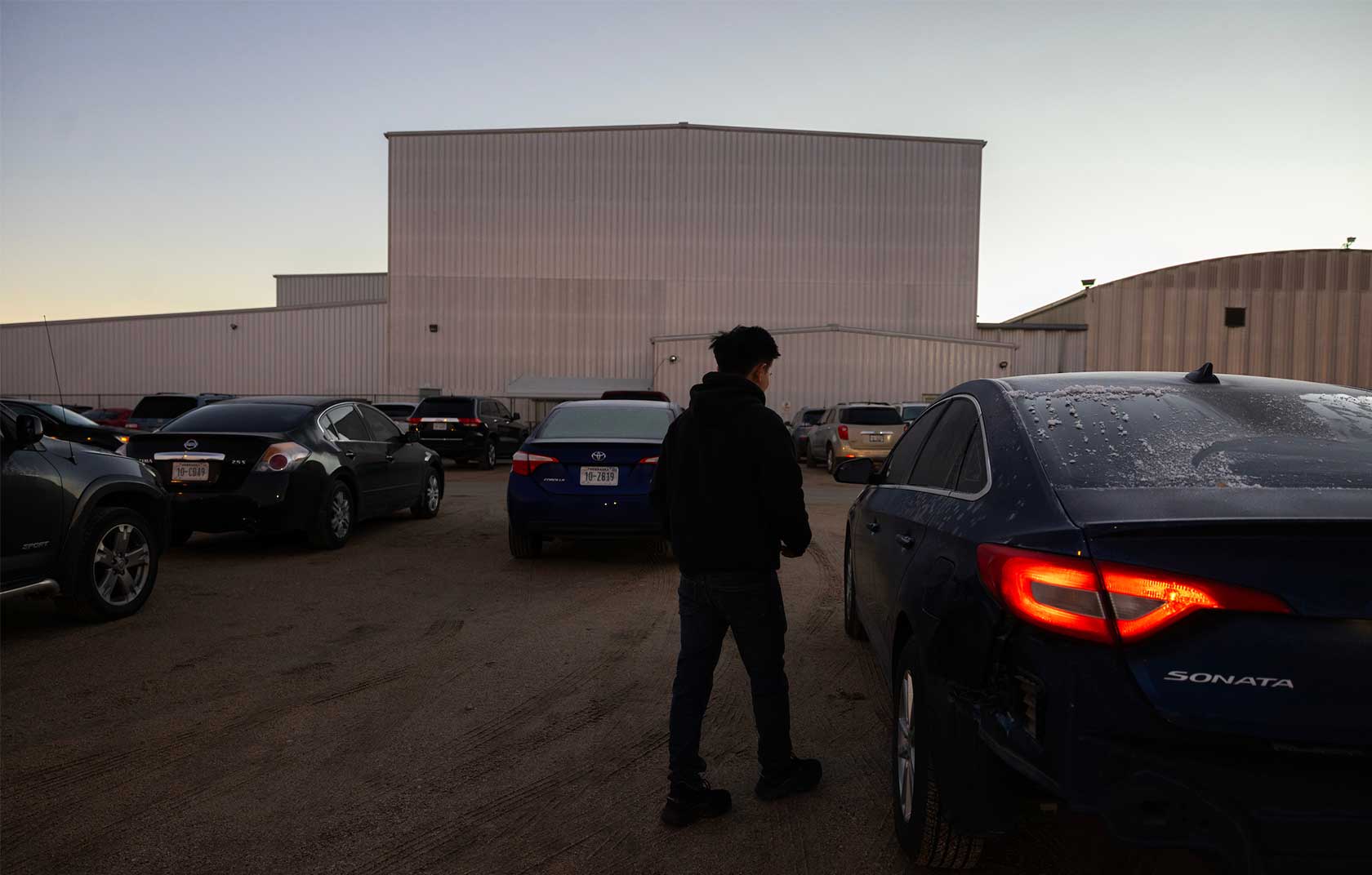
In the gravel Camaco parking lot, he grabs his steel-toed boots and long-sleeved shirt, his ear plugs to protect his hearing, and the goggles to shield his eyes in the factory.
It’s nearly 11 p.m. now. The start of another night standing at a conveyor belt, inspecting the thousand pieces of metal that will become car seats.
All over Schuyler and Columbus and Madison, his classmates are heading to their jobs at Cargill, Camaco, Tyson.
In the morning, they’ll go back to school.
These St. Louis Muslim women are changing the region and beyond.
Editor’s note: This essay was originally published in the St. Louis Post-Dispatch on May 29, 2025. The reprint below carries approved copyright (or ©) (2025), STLtoday.com.

Fellow, Us@250
As Dr. Ghazala Hayat watched the news coverage of the Oct. 7 attacks in Israel, she thought about her closest Jewish friends.
Hayat, a professor of neuromuscular diseases at St. Louis University School of Medicine, called Rabbi Susan Talve, the founding rabbi of Central Reform Congregation, that evening. Her call went to voicemail, so she sent a text: Thinking about you and praying for you.
They spoke a few days later. Hayat expressed her sorrow and asked if any of Talve’s family or friends had been directly affected.
“It’s all just one person removed,” Talve, 72, said.
“It’s so sad,” Hayat, 70, said. “When people are hurt, they can do something so inhumane.”
“No, Ghazala,” Talve responded. “There’s no justification.”
Hayat was taken aback by the implication that she had tried to justify the attack, which was not her intent. She agreed with Talve and said she understood. She knew Talve was hurting.
Hayat, a trailblazing figure in the St. Louis Muslim community, has been at the forefront of building interfaith relationships and speaking on behalf of the area’s growing Muslim population. The next year and a half of the ongoing war would test relationships Hayat has cultivated for more than two decades.
She and Talve had started the local chapter of the Sisterhood of Salaam Shalom together 20 years ago. She has volunteered on Christmas Day, at an event known as the Muslim-Jewish Day of Service. She has initiated and hosted difficult conversations about the Middle East conflict. She even traveled to Israel and the West Bank as part of an interfaith group of Christians, Muslims, Jews and Bahais.
Hayat is one of several Muslim women in St. Louis breaking barriers within her own community while facing challenges from the outside. Here are four women, native born and immigrants, who have relied on building alliances to create change: Jaime Dodd, a longtime Montessori school leader, is constructing an Islamic-based Montessori curriculum, along with teacher training and an accreditation program. Dr. Maimuna Baig launched two clinics serving uninsured patients in St. Charles County and west St. Louis County. Lubabah Abdullah, an attorney raised in St. Louis, has led nonprofit and advocacy groups across the country, with a private practice in Houston. She is focusing on building legal knowledge and resources for women.
Their efforts — spanning educational, medical, civic, legal and nonprofit sectors — are shaping the region’s future, institutions and personal relationships in ways that push boundaries and have created a Muslim community and culture unlike many places in America.
Over the past year and a half, Hayat’s legacy of interfaith work is being tested like never before
St. Louis roots
Among the earliest Muslims in America arrived as part of the trans-Atlantic slave trade, as early as the 15th century. An estimated 10 to 30 percent of enslaved Africans brought by Europeans were Muslim. Hundreds of years later, Hayat, born in Pakistan, arrived as part of another large wave of Muslim immigrants who arrived in America in the 1970s and ’80s because of easier immigration policies for certain skilled groups. She arrived in Virginia in 1980 with her medical degree. She completed a residency in neurology and moved to St. Louis in 1986. Subsequent waves of immigrants — from the Bosnians in the 1990s to the more recent Syrian and Afghani refugees — have led to an exceptionally diverse Muslim population estimated by the Islamic Foundation of Greater St. Louis to be around 100,000 in the region.
The history of pioneering American Muslim women has deep roots in St. Louis.
Former Representative Yaphett El-Amin became the first Muslim American woman elected to serve in a state legislature after winning 56% of the vote in St. Louis, Missouri’s 57th District in 2002. Jamilah Nasheed won back-to-back state house elections beginning in 2006. She then served as a state senator from District 5 from 2013 until she was term-limited in 2020.
Contrary to stereotypes of oppression and subservience, Muslim American women report higher support of feminism than several other American faith groups. They are more likely than white Evangelical or Protestant Christians to have favorable views of feminism — on par with American Catholics, according to research from the Institute for Social Policy and Understanding.
However, in America, most mosques and Islamic organization boardrooms have been dominated by men. That’s been slowly changing. Several of the largest Muslim groups, such as the Islamic Society of North America and the U.S. Council of Muslim Organizations, have had women leaders at the helm.
One of the earliest ground-breaking voices came from St. Louis.
Leading through crisis
Members on the governing board of the Islamic Foundation in St. Louis asked Hayat to run for a board election in the mid 1990s after she had served on various committees for years. At first, she declined. She didn’t want to get involved in the politics of running a mosque.
But, as the mother of two young children, she decided she wanted to play a role in how their generation would perceive and practice their faith. She had grown up in Pakistan with a father who worked as an architect for the military, so she had changed schools 13 times by 10th grade. Her mother was an outspoken progressive who pushed her daughters and son equally to succeed and serve.
Hayat won the election and joined the board in 1995. She became vice chair in 2000. That year the chair of the board was planning to be out of town during Eid ul Fitr, the festival after the end of Ramadan, when the entire community gathers to pray and celebrate. Typically, the chair of the board welcomes thousands of congregants to the congregational prayer on this religious holiday.
The prospect of Hayat delivering the welcome in the absence of the chair kicked off a firestorm. Her critics questioned how a woman would stand in front of so many men to speak before prayer. The imam at the time tried to strike a compromise by saying she would stand in the middle of the prayer hall in the space separating the men and women.
“The community was up in arms,” Hayat said. “Eventually, we didn’t do it.” She figured it wasn’t worth the strife. There was no welcome address from the board that year. People would tell her she was “outspoken,” and they didn’t mean it as a compliment, she remembers.
But she had more supporters than detractors. The next year, she was elected chair of the board. She was among the first women in America to lead a mosque.
A few months later, hijackers flew planes into the Twin Towers and Pentagon, in the deadliest terrorist attack on American soil. Hayat was drinking a cup of coffee in the hospital lounge when the news came on television.
She barely had a moment to register her shock.
The school at the Islamic Foundation started getting threatening phone calls and wanted to close down temporarily. She called law enforcement and told the school to close. She contacted the rest of the board and said they needed to put out a statement immediately condemning the attacks. They agreed, so she wrote it and sent it out.
By the afternoon, all the local television new crews showed up at her clinic wanting her to comment on camera.
“When something tragic happens in your country, you grieve over that,” she said. “Muslims here did not get that time.” She had to immediately defend her faith and try to protect the community she was entrusted to lead.
After work, she went to hours-long emergency meetings at the mosque. She wondered how her own children were dealing with the aftermath at home. Law enforcement officials showed up to protect the mosque. In the following days, Hayat, who became the public face for the community, began receiving threatening calls at home.
Two days later, she received a call from the Interfaith Partnership of Greater St. Louis. They wanted to hold an interfaith prayer vigil.
“We want to stand with Muslims and tell the world this is not Islam,” she remembers them saying to her. They met in a church and publicly stood with leaders from the Muslim community.
Talve was by her side.
That Friday, when Muslims had their congregation prayers at the mosque, hundreds of St. Louisans showed up in solidarity with the worshippers.
Members from the interfaith group, whom Hayat had just met months earlier, offered to stay to protect the mosque and community.
That moment changed the way Hayat thought about the power of interfaith relationships forever.
From the political to the personal
During the years that Hayat pushed to build those relationships, Jaime Dodd lived with the personal fallout of religious differences. Dodd, 63, grew up in Troy, Missouri, with a Jewish father and Christian mother. She and her siblings were raised Jewish, and the family drove 50 miles every week to attend Temple Israel on Ladue Road.
When she was a young girl, she considered becoming a rabbi. She taught herself some Hebrew, but her aspirations were dismissed as unserious.
“I didn’t feel connected to Judaism,” she said. As she made her way through marriage, divorce, motherhood and a long road of higher education, she found her purpose in the Montessori way of education, a child-driven approach to learning. She was working as an administrator for a school in west St. Louis County and living in the far western suburb of Lake Saint Louis when she met Drs. Sajjad and Maimuna Baig. The physicians lived near her and had a daughter who attended the same private school as Dodd’s daughter.
Their daughters became friends. When Dodd’s daughter began studying different religions in college, Dodd would read her papers.
“I was very ignorant about Islam for most of my life,” she said. She began reading books on Islam on her own. The faith resonated deeply with her.
She reached out to Dr. Maimuna Baig and asked if she would take her to the mosque. Ten years ago, Dodd converted at age 52.
She didn’t tell her family for years. As a lifelong educator, she became more interested in how Islamic education was taught in America. In 2016, she met Marah Zabibi, the director of Al Salam Day School’s Early Childhood Center, at a friend’s house. When Dodd mentioned that she was the director for one of the largest Montessori school systems in the state, Zabibi felt a joyful connection.
She asked if Dodd could help transform the early childhood center into a Montessori one.
“Without hesitation, she said yes,” Zabibi said. Dodd wrote a proposal for the school board and donated her time to help the teachers become certified. She saw an opportunity for Islamic schools around the country to integrate the Montessori model. She began writing a curriculum rooted in Islamic values of respect, integrity, perseverance and integrity.
She helped found the American Islamic Montessori Association, which she hopes will become an accrediting body for the schools.
While her work to transform Islamic education in America was flourishing, her relationship with one of her conservative Jewish siblings grew more distant.
“It’s a real flashpoint in my nuclear family,” she said. “We never talk about it.”
Talking about hard things
When Hayat, Talve and a group of Muslim and Jewish women first began their small group conversations as part of the Sisterhood of Salaam Shalom, the discussions focused on lessons from the Quran and Torah, their respective religious texts.
Hayat started another interfaith dialogue group with Batya Abramson-Goldstein, past executive director St. Louis Jewish Community Relations Council. She said they had to talk about the hard things, too.
“I know it’s off limits, but let’s talk about Palestine,” she said. It was during a previous period of heightened tension in the Middle East, and Abramson-Goldstein was nervous.
“It was not something we had done before,” she said. They set some ground rules. The conversation was difficult, with moments of great tension. Hayat asked how the Jewish community taught its young people about how Israel was created. Do they ever learn about the Nakba, the forced displacement and exile of hundreds of thousands of Palestinians from their homes in what is now Israel during the 1948 Arab-Israeli war?
Neither expected to change anyone’s mind or find a solution to a 77-year-long geopolitical conflict. But, it gave them a better understanding of where the other was coming from. Abramson-Goldstein said it was the foundation of years of dialogue that allowed them to broach such difficult topics. She knows the recent war has changed things.
“In all my years, there has never been as fraught a period as the current one,” she said.
That tension began rising immediately. In 2023, the annual gala for the Interfaith Partnership had been scheduled for two weeks after the Oct. 7 Hamas attack on Israel. It was the Muslim community’s turn to host.
Within their respective communities, people wondered: Was it even appropriate to gather like this during this time of escalating violence and destruction? Would people show up? Should they cancel?
The theme of the gala, “We stand together — always,” was going to be tested.
Hayat began speaking out at dinners and private gatherings, imploring the Muslim community to buy tickets and show up. She had said for years that if she criticized the leadership of Muslim countries abroad, it did not mean she was against Islam. Similarly, if she criticized the actions of Israel, it did not mean she was against Jewish people or the faith.
“I called every possible person that I could,” she said. The night of the dinner, the vibe felt tense — different from previous years. Members of the Muslim and Jewish community both showed up.
The pain was palpable from all sides. Then, the speeches started in which faith leaders thanked their Muslim hosts and acknowledged their decades of friendship. A Turkish group recited from the Quran. People started to relax.
By the time dinner was served, people were talking and laughing again.
Focus on hospitals and schools
Dr. Maimuna Baig, 71, shares Hayat’s commitment to working with various faith communities, which is precisely what has enabled her to launch and sustain two Volunteers in Medicine clinics in the St. Louis area. More than 25 years ago, she noticed patients in her private practice would stop coming if they lost their insurance coverage after a job loss.
Determined to do something about it, she asked the president of St. Joseph Hospital in Lake Saint Louis to help her start a volunteer-run clinic that would offer free services to uninsured patients. They have operated on donations and a volunteer staff on Tuesdays and Thursdays for 25 years. In 2011, she persuaded the Muslim community to financially support opening a second clinic in West County. It is staffed by volunteers from across faith backgrounds.
Even though she’s the medical director and co-founder, Baig is quick to credit others for the clinics’ successes.
“These volunteers have given their days and nights,” she said. One of the nurse volunteers, Cheryl Moellenhoff, worked with Baig in the hospital for 20-plus years before joining her at the clinic. She watches how Baig asks patients about their home and personal lives and how that impacts their health. She’s made sure her patients have access to dental care, lab work, follow-up care with specialists. She and the staff will leave brochures about the clinic at local food pantries and apply for grants to keep funding for the space and supplies.
Patients who come in for a simple problem have been diagnosed with underlying cancers, and she’s made sure they receive treatment for it.
“Dr. Baig sets the tone and the example for other doctors,” Moellenhoff said. And when she hears a former colleague may be retiring soon, she approaches them directly about volunteering at one of the clinics.
Sharon Pivin, a retired receptionist who has volunteered at the clinic, said that Baig has spent her life wanting to care for people who could not afford to see a doctor.
“I think that’s coming from her faith,” she said. “I think that’s her foundation.”
What does legacy look like?
Lubabah Abdullah, 44, grew up in St. Louis as the Sudanese-American daughter of immigrants. Her father served as the imam in St. Louis and the president of the largest national Islamic organization. She graduated from Parkway West High School when there were just a handful of Black students there, and she was one of two Muslim girls who wore hijab in her grade.
Abdullah graduated from the University of Missouri and earned a scholarship to law school. She’s served in a variety of leadership roles in nonprofits in the Midwest and in Texas. It made her realize how unique her experience in St. Louis was. She grew up attending Sunday school at the mosque with Hayat’s daughter.
“With Ghazala as an example, it was normal for me that women were involved in the mosque, worshipping in the mosque and running the mosque,” she said. That hasn’t been the case in other cities, even those much larger than St. Louis, she said. Numerous women have served on the mosque’s governing board in St. Louis. She recalls her father hosting Islamic studies groups specifically for women.
She’s also seen how difficult it’s been to maintain work in interfaith spaces over the past two years. When a Quaker member resigned from the board of an interfaith organization in Houston after being criticized for his support for Palestine and concern for Palestinians, she resigned, as well.
Hayat has run up against those limits, as well. Earlier this year, she wrote a letter on behalf of the Islamic Foundation calling out comments made by a prominent St. Louis Rabbi Jeffrey Abraham on his Facebook that there are no “innocent civilians” in Gaza. He liked a post comparing Palestinians to animals. Not a single mainstream Jewish organization she had worked with for decades denounced his remarks; only the Progressive Jews of St. Louis called out the dehumanizing comments.
The silence stung.
But she refused to close the door on conversation or withdraw into spaces that felt more comfortable and safe. During Ramadan, Karen Aroesty, the former regional director of the Anti Defamation League in St. Louis, hosted Hayat and another longtime member of their sisterhood group to her home for regularly monthly conversations. She knows things have changed, including her views, which have been influenced by years of conversation with these Muslim women.
“In the end, when it comes to talking to Ghazala, nobody has to win an argument,” she said. “When it gets really, really hard, she never walked away. We kept talking.”
Even the closest relationships have felt the most tested.
Talve reached out to Hayat last month to ask for advice about resettling a refugee family in St. Louis. After Talve’s adult daughter died from an illness nearly eight years ago, she had pulled back from the interfaith sisterhood group she and Hayat had started.
During this call, she asked if she could rejoin.
Of course, Hayat said.
She’s been waiting for her friend to come back.
Humor creates space for both praise and critique—and sometimes it helps us figure things out along the way.
Editor’s note: This essay was originally published by New America on October 23, 2025.
Fellow, Us@250
James Madison raised an imaginary pint to his fellow Founding Fathers on stage, toasting a successfully completed U.S. Constitution. But then he paused with sudden alarm, palm to forehead: “I just remembered! The Bill of Rights is due tomorrow!”
“Bah,” Thomas Jefferson interjected. “We can just write something down.” He gestured to the audience, breaking the fourth wall: “Surely, they’ll change it in a few years.”
We all laughed as the founders carried on, fudging their way through the first ten amendments like college students working on a term paper at the last minute.
These Founding Fathers were cast members from legendary comedy troupe The Second City, and on a recent autumn evening in Chicago’s Old Town, they aimed for the absurdities of the Great Experiment. The performance, entitled America’s Big Beautiful Birthday, included a mix of best-of sketches and improv skits, reminding us that “one of the pillars of American society is the freedom to laugh at ourselves,” as audience member Rengin Altay told me. Altay, an actor herself and longtime Chicago resident with a quick sardonic wit, added, “Or at least to grin and bear it.”
Earlier that day, I’d scanned the news while taking the South Shore Line commuter rail over from my home in Indiana. In Chicago, the afternoon before, masked federal agents in an unmarked vehicle tear-gassed a neighborhood block on the city’s East Side following a high-speed car chase and crash on a residential street. This was just the latest terrifying episode among dozens that had taken place in the city since immigration police operations had surged in September. I read about how, just the night before, hundreds in Chicago’s Northwest Side had volunteered to participate in “Whistlemania,” where emergency whistles and instruction manuals were packaged for distribution to community members, items that could be used to warn others of dubious federal activities.
Outside of Millennium Station, Lake Michigan was a frothy seafoam green beneath the gray sky, and the day was damp and drizzling. After dark, the marquee lights at the UP Comedy Club felt welcoming. Inside, I sat beside Rengin and her husband, the author Miles Harvey. “I could use a laugh tonight,” Miles said before the show.
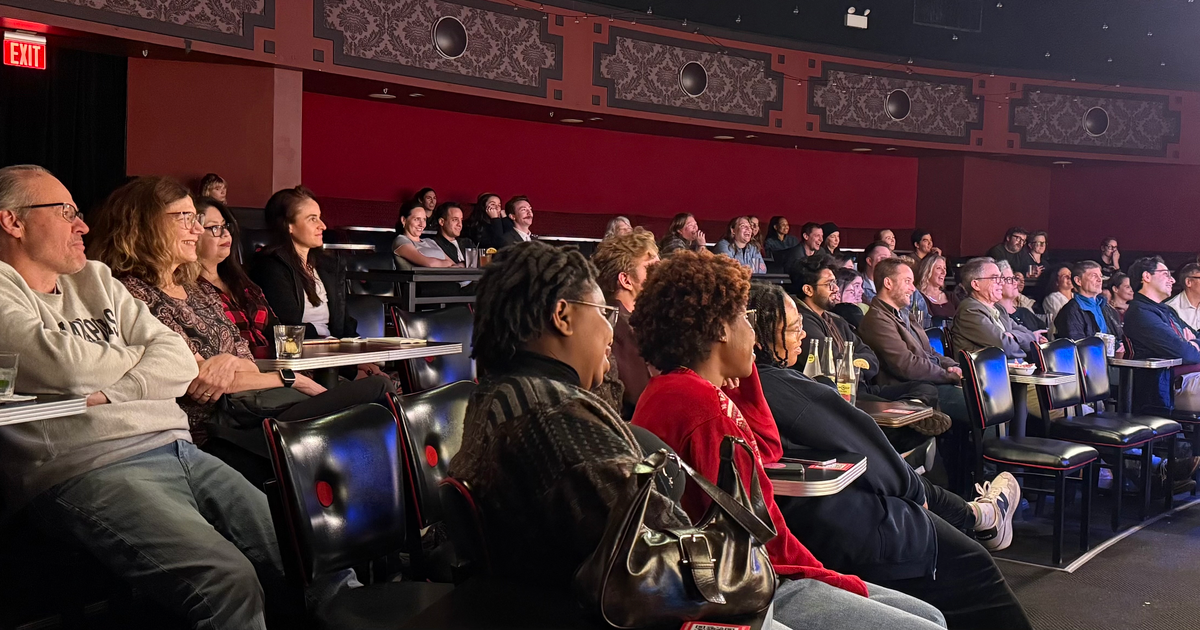
And we did laugh, at ourselves and at our country’s ability to argue about everything—such as estate sale shopping, a topic suggested by an audience member in one of the night’s best sketches. The weekend hobby became a political football across a set of improvised scenes that zigzagged from adoring MSNBC news desks and TikTok videos to disapproving Fox News hosts and a critical song sung by fictional country music star “Keith Toby.” But once reporters caught the singer estate sale shopping himself, he sang a patriotic ballad in favor of it. And suddenly, the cable news hosts changed their tune—MSNBC denigrated the hobby while the Fox News crowd praised it. By the end of the sketch, the audience member who’d suggested estate sale shopping in the first place—coincidentally, New America staff member Angela Moorman—received some playful scolding by Second City cast member Lexi Alioto: “We asked you for a simple hobby and you gave us something so political it tore this country to shreds!”
We laughed when Cuban American performer Eddie Mujica, during a send-up of the U.S. citizenship exam, referred to the Millennium Park sculpture commonly known as “The Bean” as the “big frijole.”
We laughed during a particularly poignant sketch about generational divides, when a father asked his Gen Z son, “Do you like me?”
The son replied, “I love you.”
“I know you love me—that’s an obligation. Do you like me?”
This sketch felt like an of-the-moment echo of that famous father-son scene in August Wilson’s great American play Fences, and it seemed to me that all of us there were able to share in a kind of meaningful regard for a very human moment, for the attempt to bridge the gulf between individual experiences. After a wild scene of teen jargon and dad jokes and awkward vulnerability, the father offered, “I love you, son.” And the son responded, “I like you, too, Dad.”
During intermission Rengin and Miles and I continued to chat. “The obvious thing,” Miles suggested, “is that improv and democracy are about making it up as you go along.”
Rengin pointed out that what the performers were doing was play, but it also had rules. “How well you listen to each other is the most important thing,” she said. The game works best when an actor’s response to another’s offering is with the generative, “Yes, and…”
“You have to be willing to make something happen with others,” Miles said.
“Without self-aggrandizement,” Rengin added.
In the final sketch of the night, the Second City actors improvised an absurdist day-in-the-life of audience member Ben, a Chicago bartender, wherein the cast stretched Ben’s responses to their interview questions to comedic extremes. His “fun and energetic” friends became insufferably exuberant, for instance. Ben’s life philosophy became the very last line of the sketch: “I’m just figuring things out as I go.”
Afterwards, the audience milled about in the lobby, discussing their favorite moments of the performance. But there were also conversations about the masked federal agents showing up to individuals’ workplaces or hassling their students at school. One attendee described hearing the three-note blasts of emergency whistles that had rung out in their neighborhood.
While walking back to my hotel, the show’s last line reminded me of Katherine Anne Porter’s classic essay from 1950, “The Future Is Now.” In it, she wrestles with despair over the ominous promise of nuclear proliferation, but she ends with a sort of grimly stubborn optimism: “And yet it may be that what we have is a world not on the verge of flying apart, but an uncreated one—still in shapeless fragments waiting to be put together properly. I imagine that when we want something better, we may have it: at perhaps no greater price than we have already paid for the worse.”
I took the train downtown in the morning. The day was beautiful and bright. A steep concrete stairwell leads into the Millennium Station underground. At the bottom, an elderly woman was struggling to get her luggage over the very first step. By the time I’d descended the stairs, a young stranger had already offered her a hand. She thanked him, gripped his forearm. “I got you,” he said, and they climbed the stairs together.
How one community hopes the national pastime and a grassroots effort to build a unique ballpark can lead us to a more just future.
Fellow, Us@250
The infield clay is soggy with the thaw, but green creeps into the right-field grass where I stand opposite Donovan Hutchen, a lanky, smiley sixth grader who rifles the baseball back to me with his easy, loose left-handed motion. It’s one of the first nice days of spring in South Bend, Indiana, and we’re catching up (and playing catch) at Foundry Field, the new public ballpark and art project near Donovan’s home. His mother, Philice, snaps a photo while he spins and whips a strike and then executes a celebratory shuffle.
At home, Donovan often entertains his family during televised football games by pretending to be a sideline reporter and then, as the player, answering his own questions in an improvised one-man show. He’s a pretty good athlete himself, playing on multiple basketball and football teams, but his real strengths are in track and field. At the Junior Olympics last summer he finished sixth, nationally, in his age group’s high jump. This winter, he qualified for the Nike Indoor Nationals in New York, but the family couldn’t swing the trip, Philice explains. They should have at least registered, Donovan adds, so he could have gotten the Nike swag.
He likes baseball, too, thanks primarily to YouTube highlights of his favorite player, the Dodgers’ Mookie Betts, but here in the outfield grass Donovan’s smooth actions belie the fact that, until Foundry Field opened last summer, he’d never touched a baseball.
In part, Foundry Field is meant to do exactly this: offer the chance to play baseball in a locale where the once-ubiquitous game has largely faded from everyday life. But the ballpark’s ambitions go even further, as illustrated by the murals taking shape along the concrete left field wall. In neon greens and blues, purples and oranges, ballplayers from earlier eras slide in clouds of dirt, go into their windups, and cross home plate, extending their arms. Safe!
What might as well be Foundry Field’s thesis appears in quotation marks across the upper third of muralist Ashley Nora’s depiction of Uncle Bill’s Team, a group of Black women from South Bend who barnstormed throughout the Midwest during the 1930s and 1940s and, at home, often featured as the opening act when the Negro League’s Kansas City Monarchs, Chicago American Giants, or Detroit Stars came to town. The quote comes from something written by Renelda Robinson, who before becoming a local civic leader had played first base for Uncle Bill’s: “A future with no hope is no future at all.”
And now, ready for its first full season of play, the ballpark means to do nothing less than connect generations across time and space, all while keeping an eye on the future.
Donovan dashes, his basketball sneakers sliding in the grass, as he scoops a grounder and slings it back to me. His signature, too, is scrawled out there on the outfield wall’s artwork.
**
Foundry Field occupies a trapezoidal corner of a public park in a demographically diverse and proudly working-class corridor of South Bend known as the Southeast Neighborhood. The field’s backstop—a wide half-hexagon of horizontal wood slats and netting lashed to 30-foot-tall steel beams—stands in the park’s southwest corner, which means the diamond orients exactly as a ballpark should: A lefty on the mound is, directionally, a southpaw. But beyond this (and the standards of 90 feet and 60-feet-6-inches) idiosyncrasy is the rule, as has been true of urban ballparks since they first appeared during the mid-nineteenth century. Foundry Field—jimmied between neighborhood homes, the brick headquarters of industrial manufacturers, and the retaining wall of the Norfolk Southern Railway—evokes the often romanticized era of baseball long before our time of suburban youth sport complexes, when in its most idealized interpretations the game offered a pastoral refuge from the numbing haste of city life. “The intrinsic and self-evident goodness of baseball is best [recognized] when it occurs within the confines of an enclosed park in the city,” wrote the architect and South Bend resident Philip Bess in his 1989 polemic City Baseball Magic, where he argues that ballpark design should invigorate rather than detract from its urban surroundings. (Two years before, Bess had designed an elegant city ballpark for the Chicago White Sox, which the team rejected in favor of the neighborhood-destroying stadium they’ve inhabited ever since.)
As with most Rust Belt cities, it’s important to know what used to be in South Bend, a small city on the rail lines between Chicago and Detroit. For decades the city’s economy revolved around the Studebaker company, which built upon its wagon contracts with the Union Army to become one of the dominant automakers of the early twentieth century. Other manufacturing companies also called this small city home—Singer and Westinghouse, for example—but it was Studebaker, and the company’s mid-twentieth-century demise, that largely defined South Bend.
Baseball has often followed labor, and during the paradigm-shifting years between the World Wars, so-called industrial leagues proliferated across the smoke-bellowing Midwest. Foundry Field’s core inspiration was a club called the Foundry Giants, a team of Black foundry workers that competed in Studebaker’s mostly white athletic league while also barnstorming through the region under various monikers—the South Bend Colored Giants, the Argos Athletics, the Classy Browns—and competing against anybody who would play against them.
Donovan Hutchen first learned about the Foundry Giants during an arts workshop at a Boys & Girls Club after-school program, while crews put shovel to dirt for the new baseball field just around the corner. The Boys & Girls Club had become one of the field project’s earliest and most essential partners, and the workshop was led by Clinton Carlson, a design professor from nearby Notre Dame and self-described “baseball spiritualist.” With rollers and paintbrushes the kids stenciled posters of nearly life-sized Foundry Giants, designing unique uniforms for each, and they listened while Carlson shared some of the anecdotes he and the new Foundry Field research team had encountered. But many of the names stenciled along the bottom of the posters were total mysteries, surnames gathered from century-old box scores in newspaper archives, where not much more could readily be found. This would be a part of the field’s future, too: What stories would be remembered?
Donovan stenciled the uniform of a man identified only as “Dandridge” in shades of green, and when he was finished, he signed his name beside Dandridge’s spikes.
The kids’ posters were wheatpasted onto the outfield wall, creating a shoulder-to-shoulder row of ballplayers next to the larger Foundry Giants mural. Among the mural’s figures is a 1920s Giant, Alonzo Poindexter, who slides safely into second base against a silhouette of smokestacks, engine parts, and ghostly men pouring molten iron. To paint the mural, Carlson had recruited artist Thomas “Detour” Evans, whose portfolio includes the two-story Jackie Robinson that overlooks the Tulsa Drillers’ ballpark in Tulsa’s Greenwood district, the area that had thrived as “Black Wall Street” before the racist massacre that took place there in 1921.
When Evans’s Giants mural was revealed at Foundry Field’s groundbreaking ceremony in May of 2023, nearly two dozen descendants of Alonzo Poindexter were in attendance. They were familiar with much about their ancestor’s exemplary life, but until one of them had heard his name in a local news brief about the field, few had known that Alonzo had been a great ballplayer. At the groundbreaking the Poindexters met undergraduate student Marc Barnes, who had researched Alonzo for a history course taught by Katherine Walden, a Notre Dame professor who studies baseball and labor histories and who is also part of the field’s research team. In remarks at the ceremony, Alonzo’s great-great-granddaughter Lenisha Lipsey completed the picture for the gathered crowd: Alonzo Poindexter worked in Kentucky coal mines and fought in World War I before migrating north to labor in the Studebaker foundry. He and his brother, Thomas, were both Foundry Giants. After his playing career concluded, Alonzo became the county’s first Black sheriff’s deputy, serving for more than 20 years. Foundry Field, Lipsey said, “has the potential to bridge gaps of past, present, and future,” teaching not only about baseball history but about under-remembered community pillars like her ancestor. After the ceremony, the Poindexters and Barnes gathered for a photo with Detour Evans in front of Alonzo’s portrait. It was an overdue moment of recognition and appreciation, and a poignant glimpse of pride shared across generations.
**
It has taken a broad, grassroots effort to build Foundry Field, but the ballpark originated as the dream of a single individual. Matthew Insley—mid-40s, gray in his beard, perpetually sunbaked neck and arms—is the chief sustainable farmer at nearby St. Mary’s College and a deeply philosophical guy. In the early 2010s, he was fairly new to South Bend, living in the local Catholic Worker house, part of the communitarian movement founded by Dorothy Day nearly a century ago that focuses on voluntary poverty, nonviolence, and service to society’s most marginalized. Insley’s regular bicycle route took him through the Southeast Neighborhood, past the grassy plot cradled between the porches of homes and the railroad’s retaining wall. As others might daydream of magical abilities or future rewards, Matthew Insley daydreams about baseball, and to him this spot looked destined to be a ballpark. The full vision emerged almost immediately: the geometry of clay and grass beneath railroad backdrop, neighbors watching from their porches, children at play in the pavilion behind third.
Insley grew up near Hays, Kansas, among people who taught him how to care for both the land and for people, and how these are often one and the same. His grandfather operated a farm, and his father led the youth group at the family’s Mennonite congregation. “From my dad I learned that if you want to help people and connect with others, you just have to jump in and get involved,” Insley told me. His baseball obsession began in childhood, when teenage youth-group members threw him pop flies in the yard. Next came the symphonic quality of Kirby Puckett of the Minnesota Twins legging out a triple on TV and the feel of tearing open a new pack of Topps cards.
When Insley settled in South Bend as an adult, he made fast friends with Michael Hebbeler, a community organizer and artist who works at Notre Dame’s Institute for Social Concerns. In 2013, they organized a pickup baseball game for grown-ups, real baseball with overhand pitching and wooden bats, for which they commandeered a rocky city field. The game was so much fun that it grew into a DIY recreational league, the Sappy Moffitt Baseball League (SMBL), named after a local professional pitcher from the early 1900s. Today, the league comprises 13 teams, involving approximately 160 men and women each summer, when—like the industrial leagues of the past—they play ball on Sundays. Particularly good skill is not a prerequisite for joining the league; it strives to be less about competition and more about having that beer together in the grass after the game, or maybe the memory of a line drive belted in the sunshine—anything to sustain you through the inevitable dark of the Midwestern winter. SMBL teams are managed by teachers, farmers, nonprofit administrators, construction workers, and graduate students, and you’ll often find newly arrived immigrants, international scholars, and recently welcomed refugees dressing out for league games, where they’re introduced to their new communities through the national pastime.
Over the years, Insley shared his ballpark vision with Hebbeler and other SMBL compatriots, and the dream of building a vintage ballpark of their very own became the SMBL’s primary civic focus. In 2019, they drafted bylaws for a 501(c)(3) organization, the Sappy Moffitt Field Foundation, and sought a meeting with Southeast Organized Area Residents (SOAR), the neighborhood association, to present the idea.
**
The Southeast Neighborhood’s mid-to-late twentieth-century history is like that of many other blue-collar American neighborhoods: blockbusting, redlining, the dual scourges of poverty and the War on Drugs, and throughout it all, community action and self-advocacy in the face of negative stereotypes and underinformed perceptions from outsiders. SOAR had earned its right to be skeptical of groups who came to them with ideas; its members had seen their share of fly-by-night do-gooders and had spent years fending off speculators and gentrification.
“We’re determined to be a working-class neighborhood that remains diverse,” neighborhood leader Conrad Damian told me, “and I think we’ve convinced the city that our future rests in being that kind of neighborhood.” Damian, 80 years old, has lived in the Southeast Neighborhood since 1969, when he arrived as a young United Methodist volunteer and fell in love with the community and the diverse families who had made it their home.
In 1965, when Damian was a junior at Southern Methodist University in Texas, he was one of two undergraduate students there who joined the contingent that bused to Alabama and marched with Martin Luther King Jr. in Montgomery. Damian recalls how, in suits and ties, they joined the procession at a muddy school playground on Montgomery’s outskirts, how they marched into the city holding hands, and how the people lining the streets had sneered, some of them children with family members who waved pistols and Confederate battle flags and shouted foul language. “I can just see the faces still,” he told me, “and I couldn’t understand how people could feel like that about people they didn’t know.” He remembers, too, the high school senior from Montgomery who held his hand on the march—“Oh, how I wish I could remember her name,” he said—and described her kindness and strength as they entered downtown and people threw sandwich wrappers at them from restaurant windows overhead.
In South Bend, Damian became a longtime English teacher in the city schools. In the neighborhood, where he’s lived in the same house since 1969, his advocacy and penchant for local care took the form of letters to the editor in The South Bend Tribune and leadership roles at neighborhood organizations, often representing them in discussions with the city and others. In 2019, when Insley and the field foundation first presented their idea for a brand new baseball field, Damian was the president of SOAR.
Damian knows little about baseball, aside from what he hears from nieces and nephews about the high costs of modern-day travel ball. It was essential to SOAR that the proposed ballpark commit to remaining open, unfenced, and publicly accessible to local children—that intentions for the field would not be co-opted by what, for example, the Regional Chamber of Commerce has defined in its 2025 master plan as priority “investment in youth sports tourism.” Beyond this and a few other details, the thought of having the ballpark in the neighborhood was exciting. Most important, Damian told me, was that the field would become simply “a place that looks like it fits,” where stories could be collected and created, where kids are at play, and where folks from all different walks of life “are working together to take care of the thing.”
After receiving the neighborhood’s blessing, Insley and the field foundation met with leaders of South Bend’s public school district, the Boys & Girls Club, and other area athletics nonprofits to discuss future uses and creative partnerships. Conversations with the city’s history museum and the Civil Rights Heritage Center at Indiana University South Bend led them to underexplored histories, like that of the Foundry Giants and Uncle Bill’s Team. As each new local stakeholder joined the project, the field continued evolving into something that was far more than a place for aging dreamers to play a fading child’s game.
With their expanded vision, the project won support from the city’s parks department, which owned the property, though the eventual memorandum of understanding made it clear that the ballpark depended on the foundation’s ability to raise the construction funds. Clinton Carlson, who plays in the SMBL, worked on grant proposals and devised a plan for residencies that would welcome artists to paint the outfield murals in dialogue with the community, including local youth. Funding for the public arts initiatives became available through Michael Hebbeler’s work in the Institute for Social Concerns. Other faculty and postdocs joined the research team. History curricula took shape and individual research projects were undertaken, including an oral history with Doris Grady, who at 100 years old was the last living member of Uncle Bill’s Team. She features prominently in the field mural. (Disclosure: I also work at Notre Dame, in a capacity that is not formally affiliated with the field project.)
The project launched its funding campaign at a cooperative arts venue in the Southeast Neighborhood in the fall of 2022. There I met Philip Bess, designer of the unbuilt White Sox ballpark and now professor emeritus at Notre Dame’s School of Architecture. I referenced his book City Baseball Magic and the ballpark, and Bess grinned good-naturedly, wryly. A few moments later, he became one of the earliest South Bend community members to make a financial donation to the Foundry Field project.
By the end of 2022, the foundation had raised more than $50,000, primarily through individual contributions, earning a matching grant from the Indiana Housing & Community Development Authority’s CreatINg Places program. Detour Evans’s mural and the groundbreaking the following spring gave way to a year-plus of digging, leveling, grass growing, clay mixing, community engagement, historical research, and fundraising—as well as another two outfield-wall murals and additional posters painted by Boys & Girls Club kids. Much of the physical labor was done by SMBL players and their friends around South Bend.
Foundry Field was finally ready for play by the end of the summer of 2024, and the foundation and its partners planned opening day festivities. The schedule would include a free youth clinic and skills competition, community tours, restorative-justice circles, ballpark concessions, and a three-inning exhibition between South Bend kids and ballplayers visiting from inner-city Chicago, not unlike the barnstorming clubs of a century ago. The game would be called the inaugural South Shore Classic, named after the interurban railway that has connected the two cities since the early twentieth century.
**
In 1924, the Ku Klux Klan organized a parade in downtown South Bend. At the time, the Klan counted about 13 percent of Indiana’s population among its registered members, including high-level government officials, though the Klan had little influence in South Bend, which comprised largely ethnic European and Catholic enclaves and thus drew the group’s ire. The parade was a dud, ending in a running brawl with South Bend residents and Notre Dame students. All the same, this was a period of extraordinary change as thousands of Black families migrated from the South to resettle throughout the industrial Midwest. Those who came to South Bend found work in the foundries and factories, but the city was not free from racism’s irrational contours.
It was still fairly commonplace to read slurs in the city newspapers, for instance, and when South Bend’s first public indoor swimming pool opened in 1922—a taxpayer-funded effort meant to reduce river drownings—it barred Black people from entry. After the Rev. Buford F. Gordon, a scholar and World War I veteran who served as pastor to one of the city’s first Black churches, broke ground on a new building to accommodate his booming flock, the Klan resorted to such intimidation and vandalism that the young preacher began carrying a pistol to and from work. In his writing, Gordon reflected that his congregation had fled “the [Southern] institutions of lynching and wide-spread race hatred,” only to wonder, “Did they escape?”
Baseball was extremely popular during this time, though the professional game had been forcibly segregated since the 1880s, when an owners’ “gentleman’s agreement” banned contracts for people of color and made Moses Fleetwood Walker of the Toledo Blue Stockings the last Black player to appear in the white major leagues. But “the real outcome of segregation,” Gordon wrote in 1922, “is that it says to human nature, black or white, ‘You cannot do this or that,’ and human nature says, ‘I am going to do it anyway.’”
While the Negro National League had been organized in Kansas City two years earlier, Black semipro teams had been traversing the Midwest for decades. By Gordon’s time, a legendary Black club from Chicago called the Union Giants was visiting South Bend five or six times a year to play the Independents, a local white club, bringing together crowds of several thousand people who otherwise would rarely interact. The South Bend Tribune frequently covered the games with racial overtones—the Union Giants were a “colorful club,” and the players were described as “dusky,” for example—but the paper nevertheless acknowledged that the team was “a great draw wherever they play,” exhibiting “a fast article of the national pastime.” The public record contains little with regard to the tenor of the crowds at these games, though a knife fight did break out in the grandstand during a Labor Day game in 1925 when an umpire’s ruling nullified what should have been a late-inning, go-ahead home run for the Union Giants.
Still, the Union Giants kept coming to town, and against this backdrop several of their players joined a fairly new local outfit also called the Giants, founded within the Studebaker foundry. They began to barnstorm on Sundays, advertising in newspapers that they sought “games with first-class clubs,” and the slugfest between the angels of our better nature and the demons of our worst played on throughout the city ballparks of the old Midwest.
**
On a clear Saturday in September 2024, the pregame tasks of Foundry Field’s opening day unfolded like ritual—the thudding of the tamp on the mound, the dust unspooling from rakes in the infield clay. Whenever the freight train bellowed past, the field felt like it had always been there.
Still, there was no permanent grandstand nor were there dugouts, so the city had delivered metal bleachers and wooden benches, wrapping them around the backstop. Volunteers from the SMBL and other organizations erected collapsible shelters and a portable public-address system, as well as merchandise tables and a griddle and concession stand. At the city park’s far end, 100 yards or so from third base, music pumped from a car stereo where a family was preparing a weekend barbecue at the pavilion. Nearer to home plate, children played in a new public splash pad, dashing through the geysers and squealing; over the past year, the city had found the money to rebuild the water feature, which Aaron Perri, then director of the parks department, had described as a direct result of the cross-community commitment to Foundry Field, “an impressive gathering in a part of the community that sometimes doesn’t see a lot of investment.”
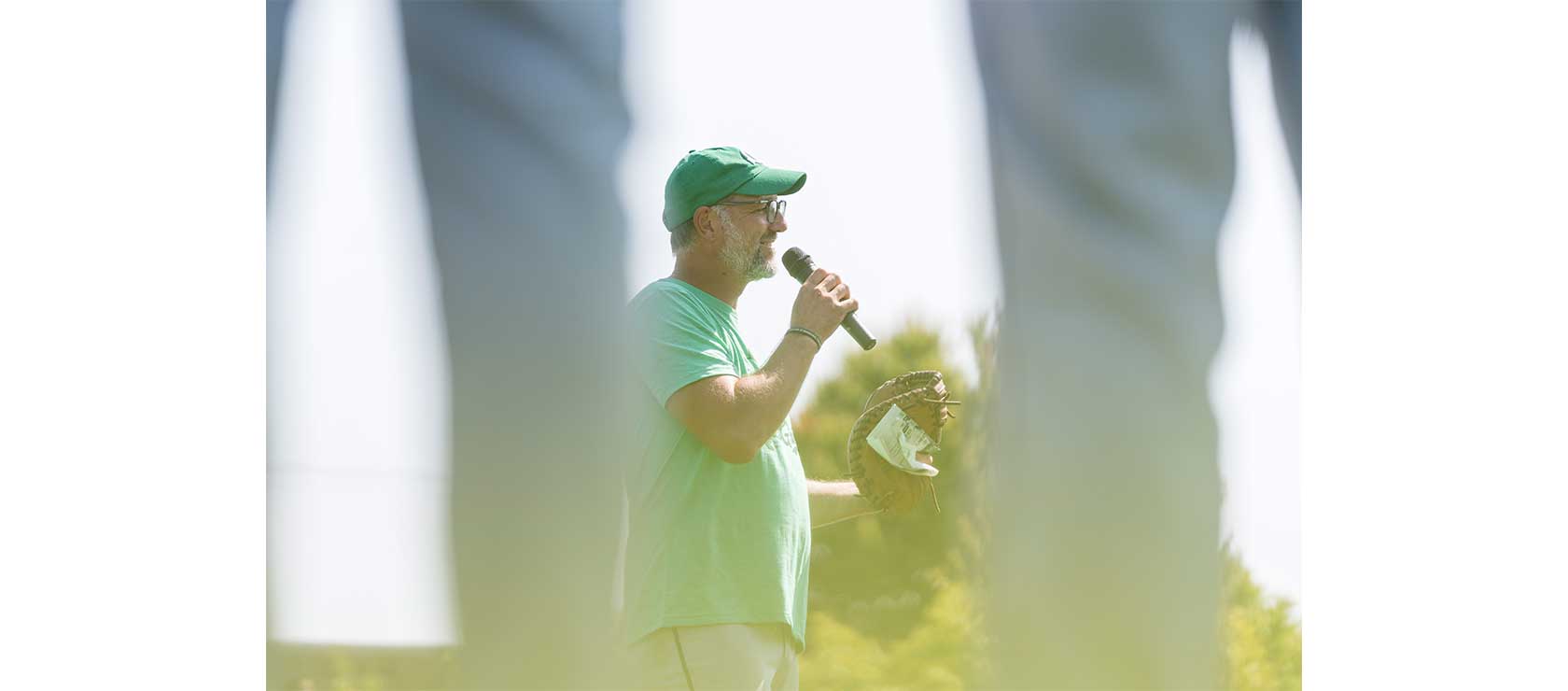
I caught Matthew Insley, the farmer and president of the field foundation, for a moment during a break near the watercooler. He and other SMBL members had been leading a children’s Wiffle ball game in the outfield, within home-run distance of the Foundry Giants mural, where they could teach Donovan Hutchen and the other kids the rules of baseball. Insley wore a green Foundry Field T-shirt and ball cap as well as baseball pants, turf shoes, and a catcher’s mitt. He was sweating and grass-stained and in his element; all morning I’d listened while he’d simultaneously played in and offered commentary on the kids’ game: “Here comes Kennedy to score! Here comes Albarran ’round second; he’ll hold there. It’s an RBI single for One-Way Waymel, the lead now three to one!”
From the watercooler, we could see the children playing and laughing in the outfield. Local middle schoolers had begun warming up along the foul lines, and the Chicago kids were disembarking from their yellow school bus. Neighborhood folk had come out, too, and an elder named Mr. Owensby watched from his porch across the street from home plate. This all seemed to match Insley’s vision from more than a decade before. How did it feel to see it in reality?
“It’s just fun to watch kids enjoy the game. Little by little, it doesn’t take long.”
Out in left-center, Donovan was tossing Wiffle balls to himself, trying to launch them.
“They just want to keep hitting,” Insley continued. “‘Give me one more!’ It’s cool to see the way baseball can be perennially addictive, to every generation.”
I clarified: Did Insley feel any personal accomplishment today? Michael Hebbeler, the foundation’s vice president, had asserted that if not for Insley’s energy and commitment, none of this would have ever come to be. But Insley squirmed; he doesn’t like it when the lens focuses on him.
Just then, 13-year-old Clare Kennedy arrived at the watercooler and saved him. Her father, Sean, is an SMBL manager as well as the marketing and finance director for the field foundation, and Clare had been around the field project for much of her life. Insley deflected: “What do you think, Clare? Do we feel a sense of accomplishment?”
“Yeah,” she answered, duh-like. “What? It’s taken you, like, a million years.”
Now Donovan skipped over to the water station, too. He wore basketball sneakers, sweats, and a T-shirt that read, Due to video games home work is canceled.
He announced, as a dare: “It’s easy to hit home runs on a Wiffle ball field.”
“Oh yeah?” Insley replied. “Show me.”
And they jogged away, escaping further questions for the solace of the game.
**
Beginning with the first Gallup polls in the 1930s, baseball was the most popular spectator sport in America straight through until 1972, when football claimed the top spot and never looked back. Nowadays, according to Gallup, somebody who is 65 or older is more than three times as likely to enjoy watching the game as somebody between 18 and 34. With almost annual regularity, newspapers, magazines, and websites run postmortems for the national pastime, cause of death variable: the technocratic takeover of Major League Baseball (MLB) front offices; the boring nature of the professional game; the allegiance to greed and corporate efficiency at the expense of beloved teams; the skyrocketing costs of youth baseball participation; the game’s increasingly exclusive nature top to bottom; MLB’s unrepresentative demographics. Around Jackie Robinson Day, articles remind us of the dwindling proportion of American-born Black ballplayers on big league teams: In 2025, only 6.2 percent of MLB players on Opening Day rosters were Black Americans.
Still, playing the game continues to be very popular among all age groups. In 2024, the Sport & Fitness Industry Association’s (SFIA) exhaustive U.S. Trends in Team Sports Report found that 16.7 million Americans participated in casual baseball activities, defined as 12 or fewer instances per year. That’s more than for any other sport except basketball, which far outpaces everything else. “Baseball participation nationwide highest since 2008,” proclaimed the headline of one MLB.com article that went on to tout the league’s Play Ball Initiative, which promotes casual engagement with the game at younger ages. Indeed, Chad Hershberger, the athletic director at South Bend’s Boys & Girls Club, held a free “Pitch, Hit & Run!” event at Foundry Field through this initiative.
MLB has sponsored other national efforts, including its long-standing Reviving Baseball in Inner Cities program and the Youth Development Foundation (YDF), the latter a joint project with the Major League Baseball Players Association. According to its website, the YDF has, in its history, awarded more than $31.2 million to community projects around the country; indeed, the Sappy Moffitt Field Foundation had preliminary conversations with YDF leadership about a proposal for a grant that could complete the field’s last bells and whistles— lights, grandstand, vintage scoreboard, pavilion for housing educational materials. (It never materialized.)All of that is well and good, but as others have pointed out, these sorts of top-down efforts tend to be limited by nonlocal organizational structures and an ethos that “tends to be heavy on photo ops,” as John W. Miller put it in an America Magazine piece about Little League’s struggles.
In SFIA’s baseball-specific 2024 report, “core” baseball participation—defined as 13 or more instances per year—fell by 3.3 percent across the previous five years for all age groups. And while 7.7 million Americans were core baseball players in 2023, 70.6 percent of them were white, and only 8.3 percent were Black or African American. Further, someone from a family with an annual household income greater than $100,000 was more than twice as likely to regularly play baseball as someone whose family makes less than that, and more than four times as likely as someone from a household subsisting on less than $25,000.
Over the last 30 years, youth sport has evolved into an industry worth more than $40 billion, according to recent estimates. After all, we want our kids to have access to the best versions of their sports (or at least the most effectively marketed). A couple of weeks before Foundry Field’s opening day, journalist Ira Boudway wrote for Bloomberg News about private equity’s youth-baseball takeover through the lens of the Cooperstown All Star Village, just one of the properties within the youth-athletics portfolio of a pair of billionaires. The complex, as Boudway describes it, hosts more than a dozen tournaments each summer, collectively bringing in more than 12,000 12-year-olds and their families from far and wide to play ball at $1,300 a pop in registration fees. Boudway also highlights the complex’s comfortable lodges where families pay to stay, as well as the restaurant-and-bar where they hang out after hours. The costs would likely exclude many kids from communities like those near Foundry Field, where U.S. Census Bureau data puts the median household income of the ballpark’s zip code at $30,789.
Not all travel-ball circuits are equal, and not every ballplayer of Donovan’s age engages in the type of “youth-sports tourism” experience this upstate New York property represents, but, as others have pointed out, more and more U.S. families seem willing to accept the belief that quality engagement with organized sport can occur only through the privatized and nonlocal milieu of the venture capitalist’s creation. One consequence of this professionalized youth-sports marketplace is an accelerating expectation that children specialize from young ages. Donovan is statistically rare by virtue of the simple fact he’s still playing multiple sports, when—as the Aspen Institute’s 2024 State of Play report points out—kids his age who play sports now participate on average in fewer than two.
Baseball’s issues probably have less to do with the nature of the game itself, and more to do with the social and economic structures we’ve created around it. Given the right circumstances, Insley’s belief that baseball can be “perennially addictive” just might be correct. The discussions Foundry Field invites regarding both history and justice can’t be separated from explorations of the ways in which the national pastime’s reach falls short. In baseball, as with our other bedrock institutions, the fundamental contradictions within the American soul become personified—and whether baseball or anything else realizes the full measure of its promises becomes primarily a function of the values we choose to privilege.
**
For decades, the traditional home for young baseball players in Donovan’s community was Southside Little League, founded in 1958 on property that had once been the site of Studebaker’s Lippincott Park, a 5,000-seat baseball stadium. Much of the region’s baseball took place there for a time, including 16 official games between barnstorming Negro League teams as well as the contests for clubs like Uncle Bill’s Team and the Foundry Giants. Today, if you stand in the entrance to Southside Little League’s gravel parking lot and face north, you’ll see the hulks of the empty factory buildings where many of those ballplayers worked looming in the mile-distant haze over downtown rooftops.
Southside’s complex, three modest diamonds and several cinderblock structures enclosed by a sagging chain-link fence, sits about 1.5 miles from Foundry Field. Mike Genert, a warehouse manager for a local office-supply company, has volunteered as Southside’s chief of baseball operations for 10 years. Now in his late 50s, Genert grew up in South Bend, playing Little League until he aged out as a late teen. “Baseball kept me out of trouble,” he told me with a chuckle. “Without Little League I probably would have taken a visit or two to jail.”
Bare-bones and volunteer-run, Southside needs to make just enough to break even after buying baseballs and mowing the grass. T-ball is free; for each older age division, registration is capped at about $100. Still, Genert estimates that only about 100 kids participate at Southside each summer. This allows just one team at each division in baseball, and some years they don’t have softball at all, meaning that Southside can no longer function as a traditional Little League that hosts regular-season games among their own teams. Instead, they visit or host teams from neighboring leagues dealing with similar dynamics. Sometimes they travel as far as Elkhart, 20 miles to the east. This presents a challenge for Southside’s working families; some parents help carpool, Genert explained, and the rest is up to “Coach Mike’s taxi.” A decade ago, he said, Southside had at least three teams within each age division. Go back further, and the league was even more robust.
Genert told me that Southside Little League competes for attention with travel soccer and basketball organizations, in addition to the several travel-baseball entities around town. But chartered Little Leagues—affiliated with the national nonprofit association founded in 1939 in Pennsylvania—function according to geographical boundaries, drawing their players from the communities immediately surrounding them, and he noted that at least one South Bend Babe Ruth league, which does not depend on geographical districts, seemed to be thriving. That league recently received city approval for a controversial real estate expansion that drew protests from many of its residential neighbors. “Nothing’s neighborhood-oriented anymore,” Genert said, describing the plight of Little Leagues. The word-of-mouth networks and local relationships that would bring families to Southside no longer exist.
Still, Genert was careful to stress that his outlook is not all doom and gloom. He’s able to share the joy of the game with the kids who do come out, and he enjoys seeing them come back time and again. He’s hired several of those kids at his company once they’ve gotten older—if you learned to be a good teammate in Little League, he reasons, then you’ll be a good employee.
Perhaps Foundry Field can be a good thing for Southside: If more kids in the district are introduced to the game through fun, low-stakes play at the new public diamond within walking distance, maybe this could renew interest in the nearby, accessible Little League?
“That would be nice,” Genert said. “It definitely would be.” He paused, reflective. “You know all that Foundry Field history? That’s our history, too.”
**
Back at Foundry Field’s opening day, the PA played ballpark standards while people mingled or listened to the stories of the murals along the warning track, hot dogs in hand. The visitors from Chicago belonged to the two-year-old baseball program at the downtown campus of Intrinsic High School. The team’s founding coach, Paul Julión, had grown up on Chicago’s South Side, every bit as baseball-obsessed as Matthew Insley and the other field foundation members. Julión moonlights with the Society for American Baseball Research, investigating Negro League history. Last summer he presented at a conference in Cooperstown, and he told me that when he heard about Foundry Field, he knew he needed to see it for himself and involve his young team.
Many of Julión’s players were baseball novices themselves, and for the South Shore Classic they formed teams by mixing together with the South Bend middle-schoolers and younger kids like Donovan. The teams stood along the foul lines for the first-pitch ceremony, while dozens of onlookers fanned out in the bleachers behind the backstop or sat on picnic blankets and in folding chairs beneath the shade of the flowering lilacs down the first-base side.
Insley, still wearing his catcher’s mitt, spoke to the crowd about an age when ballparks had been built “wherever the people were.” He thanked the parks department for sanctioning this “crazy idea” and reminded everyone present that they had built something beautiful together. He finished by quoting one of his own heroes, Dorothy Day, who had been quoting one of her own heroes, Dostoyevsky, when she said, “Beauty will save the world.”
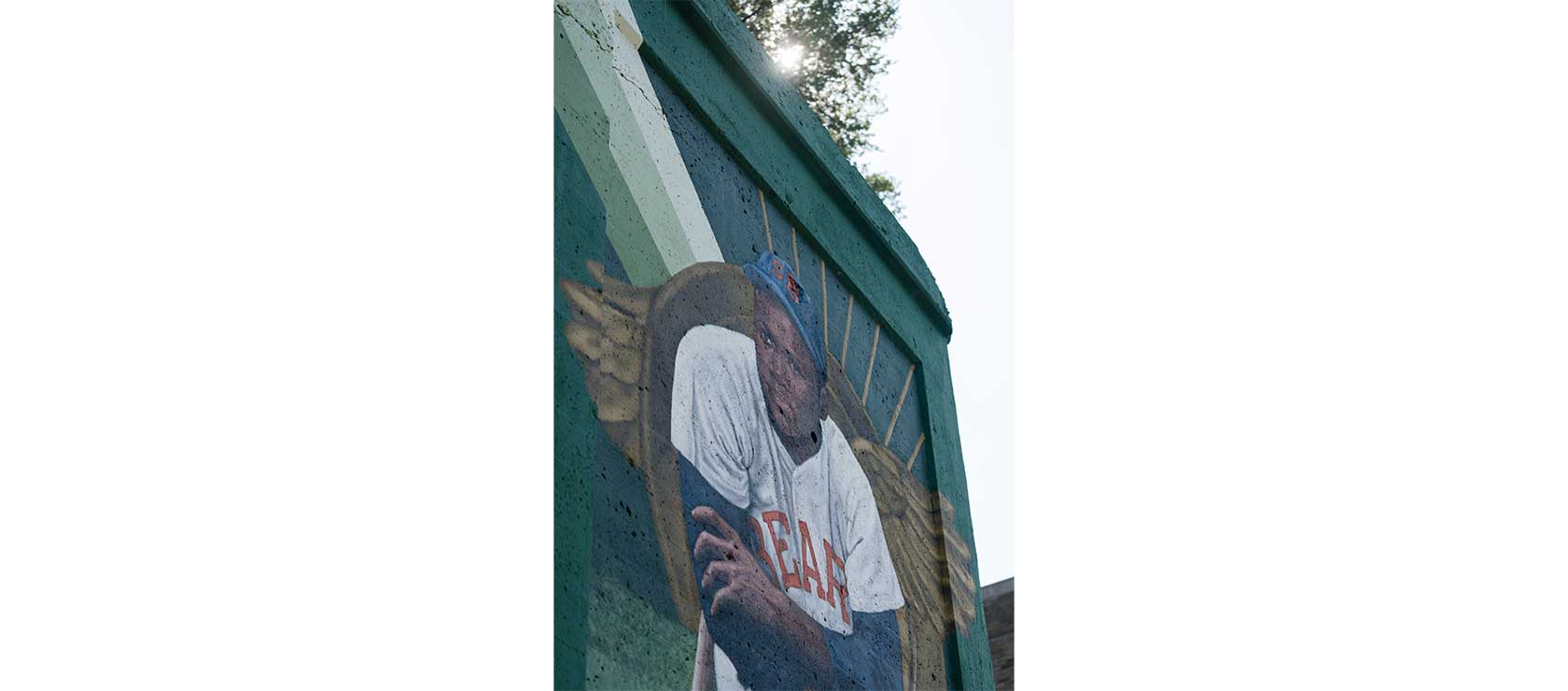
The crowd also heard from Seabe Gavin Jr., the athletic director of a public high school in the Southeast Neighborhood. Over his shoulder, in center field, a mural by artist Waleed Johnson showed Gavin’s father kneeling with his bat. He was a standout player on an integrated South Bend high school team during the 1930s and later a Foundry Giant himself.
Melvenea Hodges, SOAR’s current president, said she’s lived across from the park for 15 years and considers it “an extension of my front yard.” Her young nephew Waymel—whom she raises and who, like Donovan, had never touched a baseball before the project came to life—was now coming out to the field daily. “I’m grateful,” she said, “for all the hands and hearts that have made this possible.”
Hodges, Gavin, Waymel, and Donovan threw simultaneous first pitches to catchers including Insley and Carlson as well as one kid each from Chicago and South Bend.
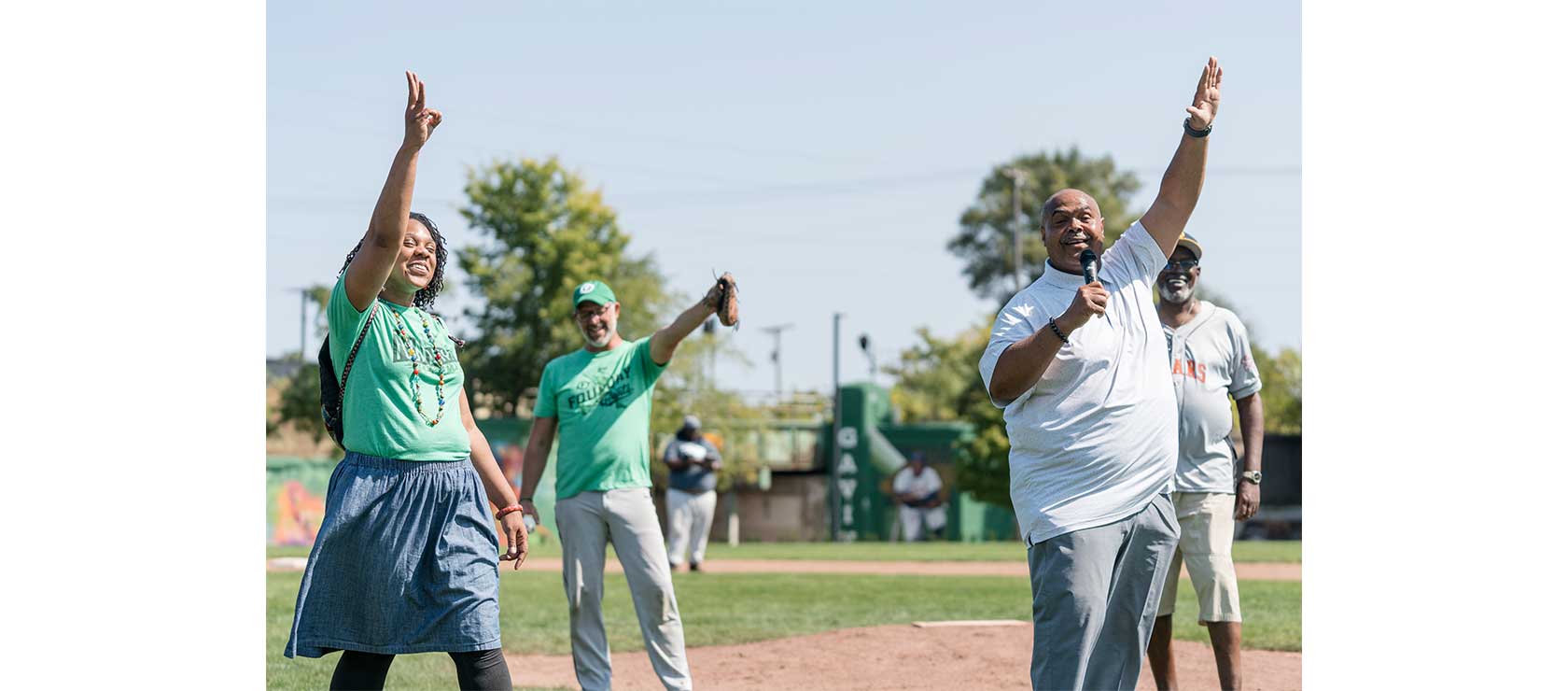
On the microphone, Rickardo Taylor, the pastor from the neighborhood’s Baptist church, led the assembly in “Take Me Out to the Ballgame,” and then shouted, “Let’s play!”
Someone tapped soundbites of ballpark organ music from a smartphone app while Insley called the game on the PA. “The first pitch from Rodriguez is a good one, right down the pike!”
We were into the third and final inning of a tie game when one of the coaches inserted Donovan as a pinch runner. He pulled on a batting helmet and jogged out to first.
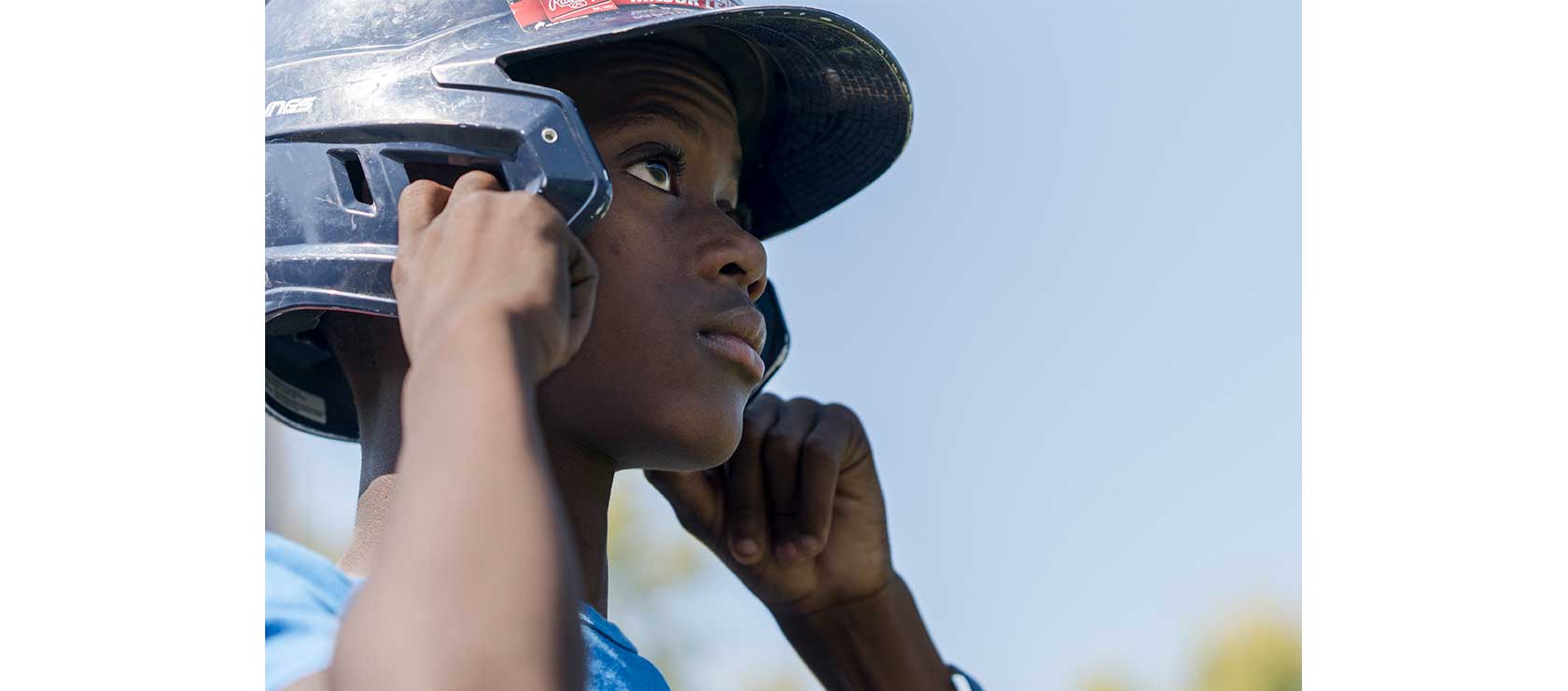
He went on the first pitch, stealing, flying toward second in his basketball sneakers, and from our field-level vantage, Donovan’s feet-first slide, for a moment, left him circumscribed within the frame of Foundry Giant Alonzo Poindexter’s slide on the outfield wall.
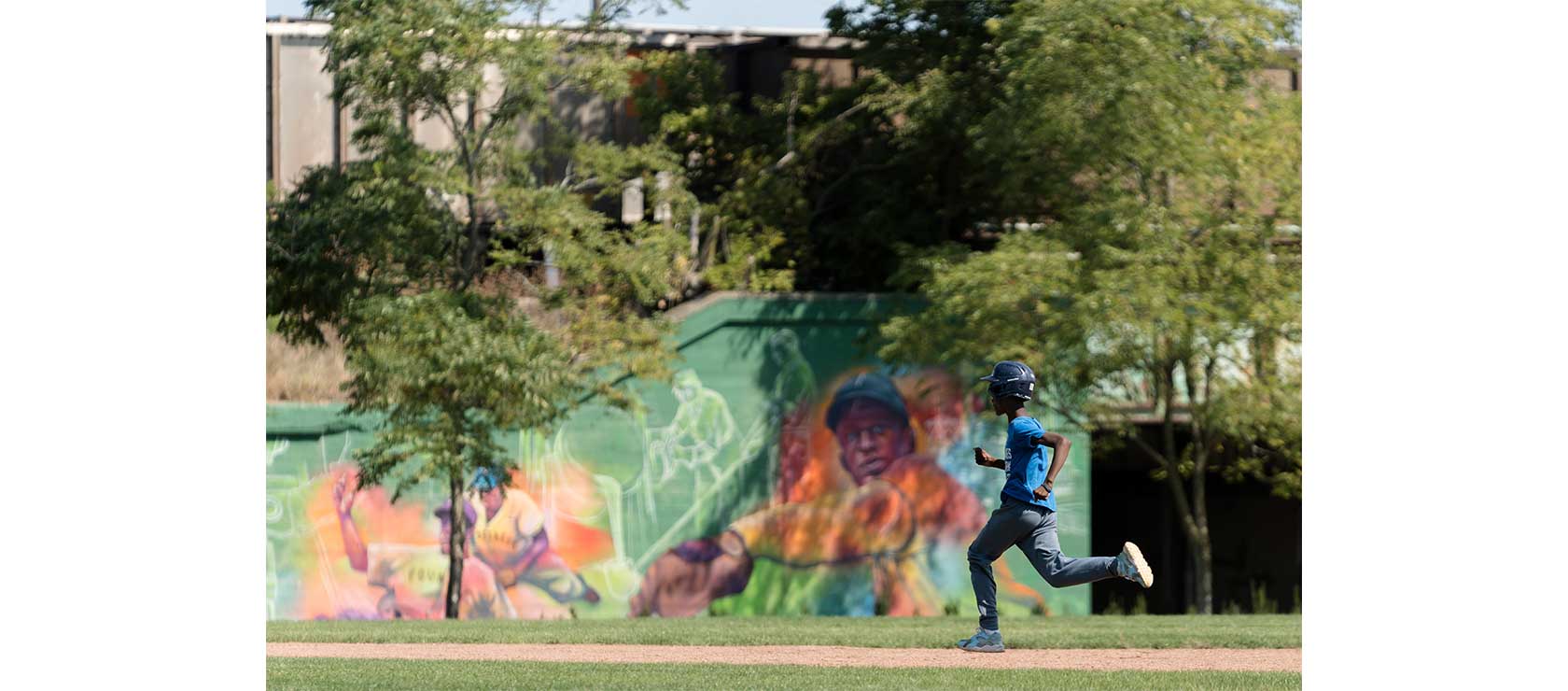
Then, as the catcher’s throw went into center, Donovan popped to his feet and dashed toward third, where he became stuck in a pickle, a strong throw coming in behind him. Voices rose around the backstop and Insley shouted over the PA as Donovan darted back and forth, then somehow evaded the tag and dived into third, a mere 90 feet away from scoring the winning run.
“Ssswing and a miss, a great cut there by Josiah, he was just in front of it,” Insley called a pitch later, the South Bend catcher up to bat. “This guy is lookin’ to do damage and win this baby.”
The ballpark organ music tiptoed through a few anxious notes, and—ping!—Josiah punched one through the infield for a single.
“Donovan Hutchen comes into score,” Insley cried, “and the game is over!”
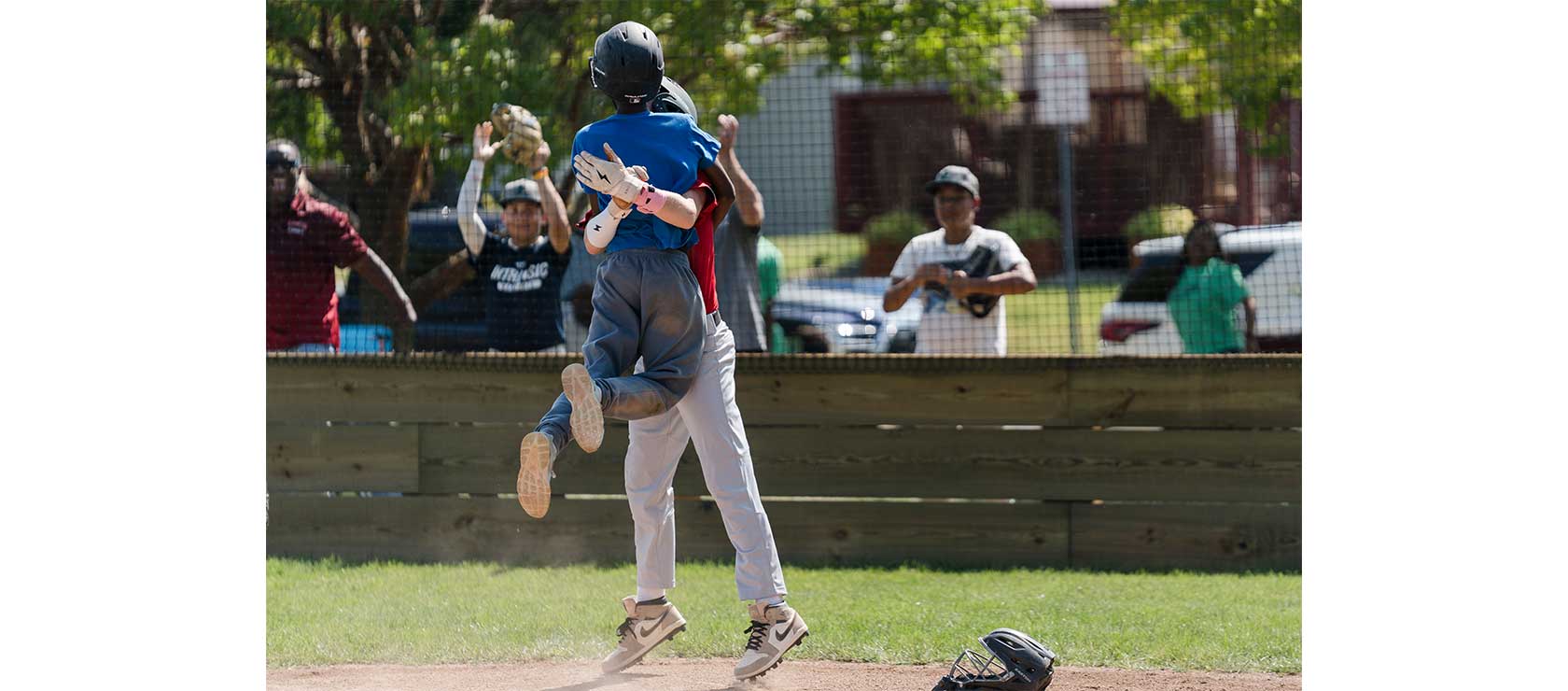
Cheers went up, and Donovan leapt into the on-deck hitter’s arms.
I got to Donovan while he was still breathing heavily and I held my recorder in front of his face, just like he’d seen on TV, just as he’d acted out at home countless times before.
He knew just what to do.
**
In a 1922 sermon entitled “The Quest of Restless Souls,” the Rev. Buford F. Gordon told his South Bend congregation that civilization’s journey “from a less perfect to a more perfect order” was not a direct line but rather “a spiral course around the mountain of opposition.” It moves ever upward and forward, while also alternating between the mountain’s sunny and shady slopes.
Consider: In 2024, about two weeks after the presidential election and a century after the Ku Klux Klan had paraded in downtown South Bend, thousands of families across 11 northern Indiana cities, including South Bend, woke to find the Klan’s anti-immigrant propaganda scattered across lawns, porches, and car windshields. The fliers depicted an Uncle Sam figure kicking a family in the backside, threatening them with the deportations to come.
In May 2025, Foundry Field revealed its fourth mural, a celebration of local Latino baseball history, including that of a Mexican-American semipro league founded in the mid-twentieth century by teenage migrant farmworkers who labored six days a week on South Bend’s outskirts and then played ball on Sundays. One of the league’s pioneers, Chico Rodriguez, described how he and his friends learned about local government by first discovering they needed a permit to use the city fields and subsequently learning that permits were only granted to organized leagues. After his baseball career, Chico went to Vietnam and then, in 1972, he was sworn in as South Bend’s first Latino firefighter. The local artist who painted the mural, Freddy Rodriguez, is Chico’s son. Freddy’s design took shape in dialogue with an after-school program at the local Latino community center, La Casa de Amistad.
South Bend schools hope to reintroduce elementary school baseball through a weekly open baseball clinic, in partnership with local Little Leagues, though how this comes together remains to be seen. In the meantime, the Boys & Girls Club and SMBL volunteers have begun a Friday afternoon Wiffle ball club at Foundry Field. The SMBL games will take place there most summer Sundays, and I wouldn’t be surprised if a few neighborhood kids wander out, only to find themselves invited into lineups. And conversation has begun about the field’s fifth mural, which will tell the story of a nineteenthth-century ball club of the Pokagon Potawatomi, a tribe of Indiana and Michigan.
Insley and the other field foundation members still have big designs for the ballpark’s final flourishes. A local businessman has pledged $125,000 toward completion of the field project, which the foundation hopes to match. One frequently expressed concern is long-term field maintenance, and whether the project’s adherence to beauty is sustainable when city baseball fields are notorious for falling into disrepair. But so far, Foundry Field seems to be evidence for the notion that if you work together to build something nice and invite a wide cross section of citizens to take pride in it with you, then people will want to take care of it.
I think of something said to me by Darrell Pargo, a gregarious group maintenance leader from the parks department, when I met him last fall at the field. Originally from Benton Harbor, Michigan, Pargo was elected in the early 2000s as a city commissioner, but he came away from the experience frustrated with politics, and later moved to South Bend. Now, in his 60s, he’s on the other side of some hard times and has made a new life for himself, caring for South Bend’s parks. He lives near Foundry Field, and he told me it’s the park everybody wants to work on. To him, the field is built to last because of how the people involved listen to each other. He said he’d never seen anything like it.
We were standing in the grass near Foundry Field’s home plate. He held an aluminum frame and pushed a little cart that would dispense the chalk for the lines. “Me right now? I’m gonna go put in this batter’s box, and I’m gonna feel good about it.”
We keep climbing and hoping the sun shines again, just around the next bend.
Stories help us along the way. Here’s a last one, for now:
On a Sunday in August 1925, the Foundry Giants and about 700 of their fans and followers board a special train from South Bend to Benton Harbor, where they’re scheduled to play the vaunted House of David ball club. Among the Giant players on the train that day is their captain, a lithe and 21-year-old shortstop named Troy Dandridge.
Dandridge first came to South Bend as a member of the Chicago Union Giants, but he was born in Memphis, Tennessee, and his family was among the many that had migrated north. The Dandridges settled in Chicago’s Lincoln Park, and Troy married young, to Rose Lee Mitchell. By the time he is playing for the Foundry club in South Bend, they have two children.
This August afternoon the Foundry Giants emerge victorious in an 11-inning battle, beating the House of David team 8 to 7. Dandridge was even required to pitch in the game, where he kept the score close in the late innings. Oh, imagine this train trip home: the team, their hundreds of fans, safe together in triumph.
The following year, Troy Dandridge signs with the Dayton Marcos of the Negro National League. The Marcos, however, plagued by the economic difficulties many Negro League clubs faced, fold before the conclusion of the 1926 season. Dandridge appears in only one game for the Marcos, starting at shortstop in his home city in a loss to no less than the Chicago American Giants. As far as big-league cups of coffee go, his lone box score is especially painful: 0-for-3 at the plate, with two errors in the field. He never appears in another major league game.
He stays close to home. He and Rose have three more children. He plays sparingly for future iterations of the Union Giants. He works in a steam laundry and as a watchman for a steel company. He organizes a baseball league for his church, and he runs the children’s games at parish picnics. In the 1960s, The Chicago Defender describes him as “the genial desk man” at Cascade Lanes, a west Chicago bowling alley that no longer exists. The newspaper credits him as the primary motivator behind the integration of Chicago’s bowling league, resulting in the first integrated state championship of bowling in Illinois. Details are scant, but it’s not a stretch to suppose that the time Troy Dandridge spent in the ballparks of the postwar, industrial Midwest—where our American paradoxes were present on the field of play, in the crowds, and in the streets and the train cars beyond—helped to prepare him for the quietly heroic life he seems to have led after his playing career had ended.
I reached out to several of Dandridge’s probable descendants via Ancestry.com and social media. Those who replied did not know him in life nor know that he had once been a major-league-level ballplayer. While by no means exhaustive, my search underscored a sense that American history is an endless, unruly house, one that has been assembled out of arcane or conflicting or often outright hostile blueprints, its foundation bowing beneath the tangled roots of family trees.
Late in life Troy Dandridge moved to Los Angeles, where he died in 1993.
**
It’s one of the first nice days of spring, and Donovan Hutchen and I are playing catch at Foundry Field. I want to know: Have the Hutchens found a way to incorporate his newfound love of playing ball into his busy athletic schedule? He’d transferred to a new school this year, one that offers a sixth-grade team. He tells me his track season is also about to start, and he doesn’t think he’ll be able to do both. He’s also beginning to play with a new basketball team at the Boys & Girls Club, and he’s excited about that. He loves playing point guard. Still, he says, he now owns a baseball glove and can come down to Foundry Field from time to time with friends.
We take a break and walk with his mother, Philice, to the outfield train wall to look at the poster Donovan had made of the ballplayer previously identified only as “Dandridge.” I tell them everything I can remember about Troy Dandridge, which is not nearly enough to do the man justice, except for the essential facts that he’d been a talented ballplayer and had done good work for others in the places where he lived, and now that we knew this about him we could remember him for it, and this was a good thing, too.
“Cool,” Donovan says. Then he spins toward right field and takes off. “I’m going deep!”
He extends his glove, calling for the ball out in front of him, so I cut loose, heaving it. And there Donovan goes, his legs flashing and a wide smile on his face. Let’s see him there, for a breath—he’s at play, in the sun, in a place that many had built for him and for a moment just like this. He’s flying now, in the way that is his gift, his arm outstretched and reaching forward.
With I-375 redesign, Detroiters could have a chance to right past community wrongs.
Editor’s note: This essay was originally published by BridgeDetroit on June 26, 2025, and is a finalist for the National Association of Black Journalists Salute to Excellence Award for Digital Media (Single Story, Feature). It has been lightly edited to adhere to house style.

Fellow, Us@250
In June, guided by her four-wheel walker, Celeste Buxton traveled more than a mile from her home in Lafayette Park to a Michigan Department of Transportation (MDOT) meeting in Eastern Market. The 95-year-old heard about the public meeting on the restructuring of I-375 from a leaflet she received in the mail as a residential stakeholder in the area.
She wanted to know what MDOT had planned for replacing the freeway, six decades after its construction led to her family leaving her childhood home.
Buxton arrived late, and the meeting abruptly ended 30 minutes early after participants began voicing questions; MDOT only addressed written queries.
“I think it’s a nice idea [to redevelop I-375] because I remember when they built that expressway, when I was growing up,” Buxton said. “Now they’re getting ready to take parts of it away.”
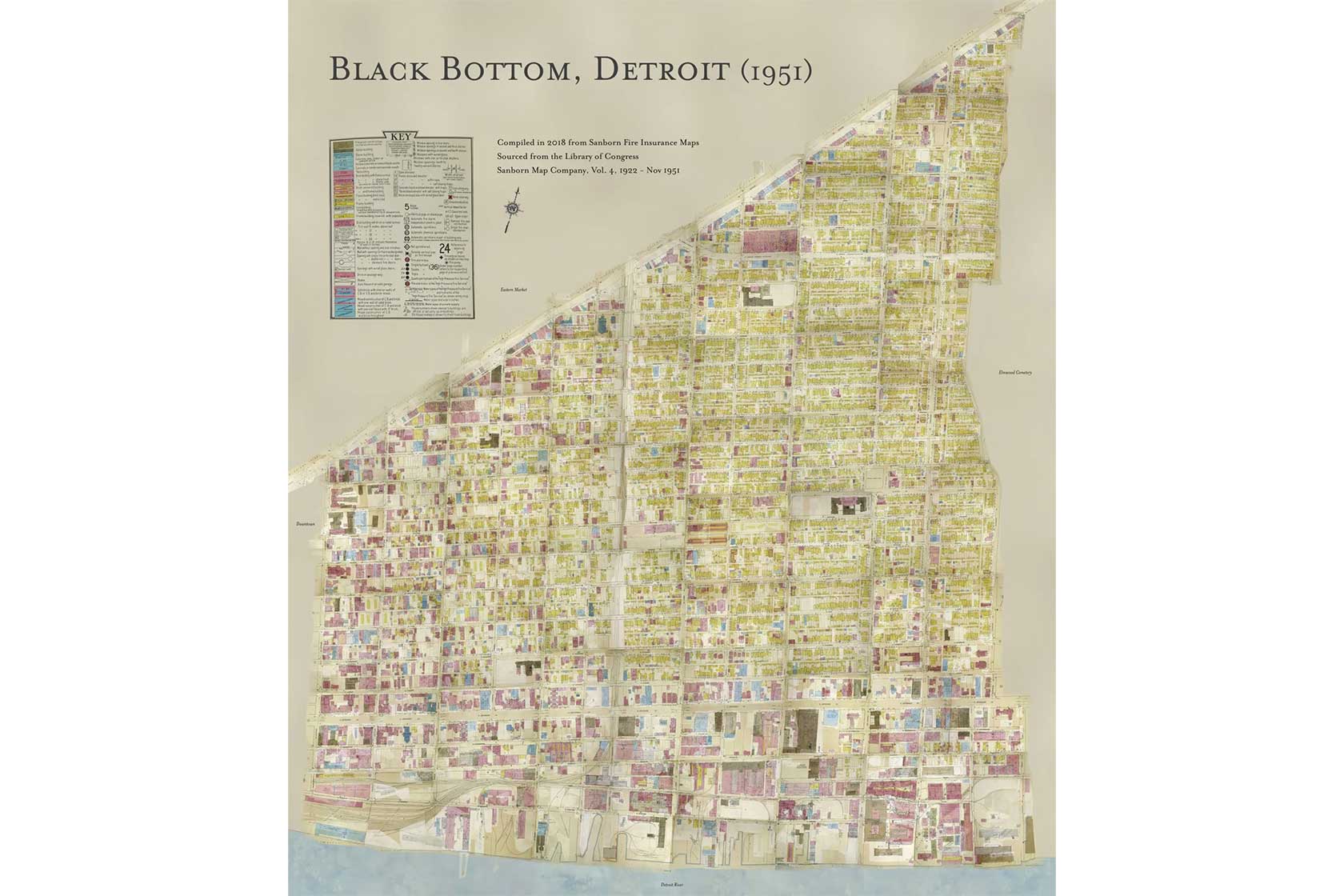
Buxton moved back to the neighborhood after she retired. She relies on accessible walkways and the public bus system for transportation. She is one of the few people whose life will be directly affected by the freeway plans twice in one lifetime.
Buxton grew up in the Black Bottom neighborhood, or what is now known as Lafayette Park. The historical neighborhood and adjoining Paradise Valley were decimated in the 1950s along with the numerous Black-owned businesses along the popular Hastings Street. Through the Federal Housing Act and under eminent domain, the city forced residents of the two neighborhoods to vacate, leaving their homes and businesses behind. Many were renting property, and some never received financial support for lost businesses and homes.
New, architecturally world-renowned condos with predominantly white residents and a federally funded freeway took their place. Known today as I-375, the urban renewal project yielded one of the shortest freeways in the nation. At a time when Detroit was beginning to lose white residents to a sprawling suburban lifestyle, the local government spent millions on infrastructure to accommodate their access to downtown, depleting local Black wealth in the process.
Now, MDOT will redevelop the area once again—this time with an estimated half a billion dollars to spend to create a safer, more walkable and multimodal area.
In rare, parallel circumstances, Detroit has a second chance to redevelop infrastructure and historic grounds—this time with the community in mind. The 70-year wait for someone to correct what happened when these communities were destroyed is nearing some sort of conclusion. However, to fulfill the hopes and dreams of the surviving members of that community, MDOT— a state agency primarily responsible for building and maintaining roads—must deliver on community renewal and change. The question remains whether that task is within the scope of the agency. In the process of reimagining I-375 so far, that tension has taken center stage. Many residents have said the current plans don’t satisfy the community’s needs to address the wrongs that happened and create a future that includes everyone who was displaced.
At the core is the question: Is it even possible to recreate a community, once a stronghold for Black families and businesses, so many years after it was destroyed?
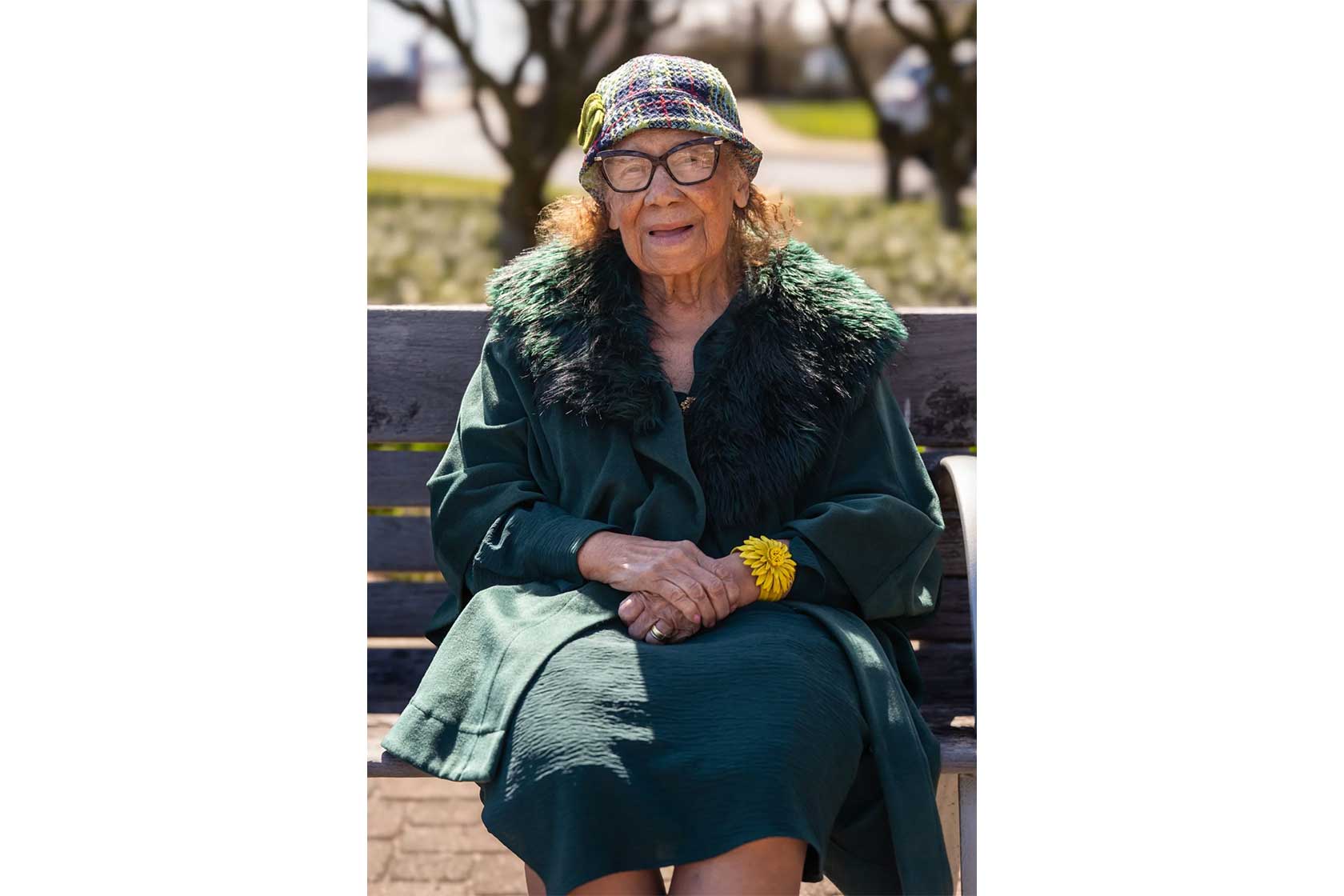
Establishing the stakes
In the 61 years since the freeway opened, Detroit’s population dwindled from white flight and urban sprawl—just like most major U.S. cities at the time. Since then, Detroit’s mayoral leadership stumbled through race relations, economic downturn, and the city’s overall safety and security. Voters across southeast Michigan prioritized suburban residents for transportation infrastructure to maintain easy access on freeways north of Detroit into the downtown core. Other local decisions fostered doubt and skepticism for an inclusive Detroit future.
Within the last few years, Detroit’s debt burden has significantly decreased and public-private partnerships have supported new business and housing resources both downtown and in strategic neighborhoods. The I-375 freeway touches half a dozen neighborhoods and serves a melting pot of culturally and ethnically diverse people across socioeconomic thresholds. Millions of dollars have been invested in downtown developments and, in 2023, the city’s population increased for the first time since 1958.
MDOT officials say the current state of the freeway is outdated and unsafe. The department has spent the last 11 years analyzing the area and has proposed shifting the freeway into a level boulevard to increase safety, walkability and alternative methods of mobility. Early concept videos and design maps suggested eliminating a driving lane in either direction and building new streets and pathways into a connected grid system.
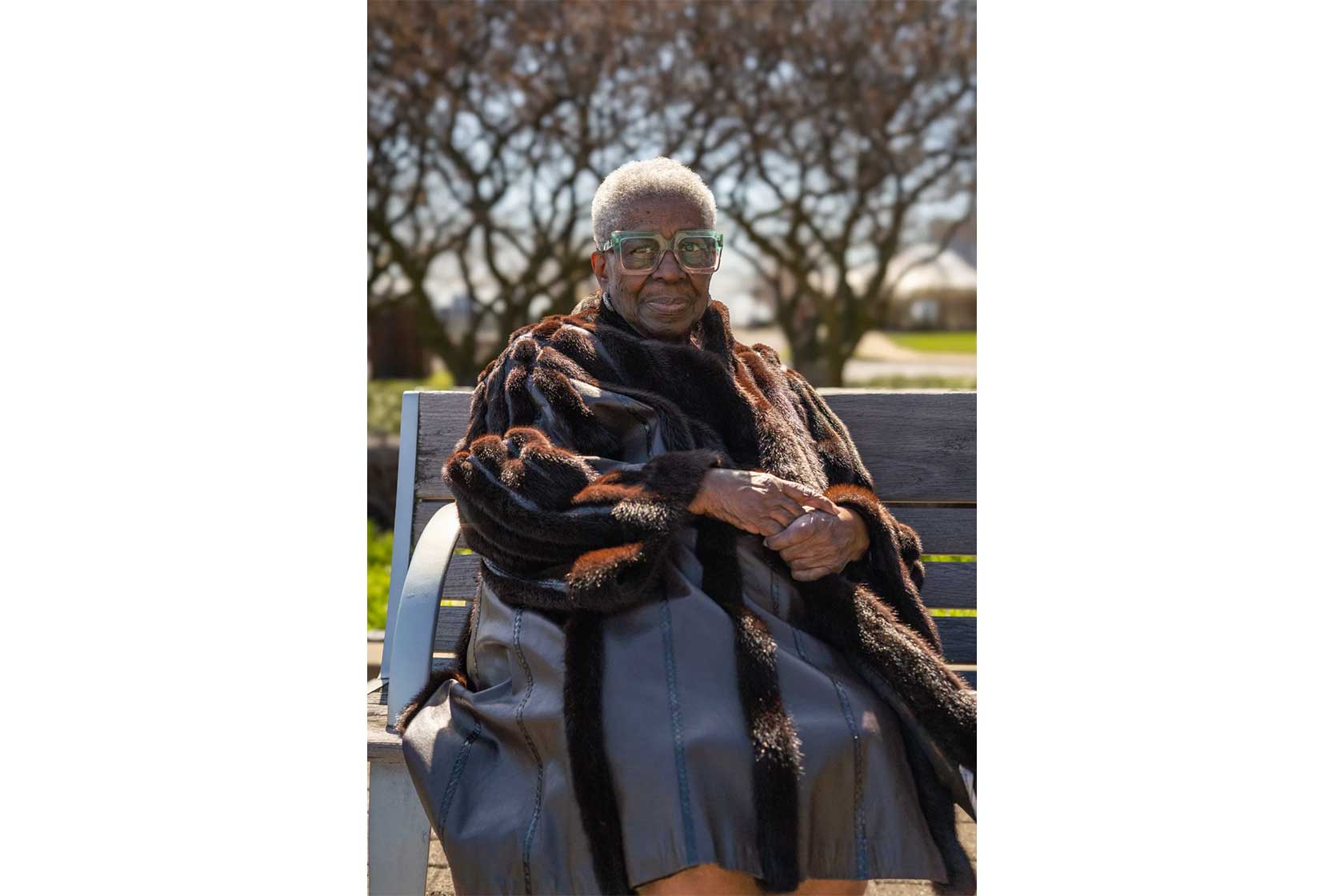
MDOT says it estimates the project cost to be in the neighborhood of $500 million, with $104 million coming from a federal INFRA grant and the remainder coming from state-allocated funds.
Unlike six decades ago, city and state project managers are asking for community input on the massive project before construction begins this fall. MDOT and the city of Detroit partnered with architecture and design firms HNTB and Interboro Partners and continue to host an ambitious number of community stakeholder meetings.
Government entities began modest stakeholder meetings, or discussions with people who live or work in the immediate affected area, in 2016. Some have criticized that effort for making decisions before engaging the broader public. Those conversations expanded in 2024 to the general public to gather feedback and make changes to the evolving plans.
The city of Detroit is expected to acquire 30 acres of excess land in the process. This year, the city will also elect a new mayor for the first time in over a decade. While the land transfer process for the excess land has yet to be confirmed, it is subject to the state’s Limited Liability Company Act, which governs how LLCs are run and organized.
Once elected, one of the nine mayoral candidates will be expected to appoint a committee to determine the excess land’s development process.
The public meetings are usually held on weeknight evenings and dinner is provided. Widely attended by stakeholders over the age of 30, there are posters, printouts and PowerPoint presentations that share information about the process and the proposed project. Updated information is also available online after each meeting.
So far, MDOT has removed additional lanes from the original project plan following community feedback in March. But the lengthy, tedious, and oftentimes confusing process has left Detroiters split on what it means to have an inclusive process and how residents will benefit from the changes in the future.
The city will host the next Neighborhood Framework meeting on June 26 at 5:30 p.m. at Detroit Edison Public School Academy. The roadway will be designed and built in segments, and drainage work will begin south of Jefferson Avenue in September, according to MDOT. The project will be finalized in 2027 and construction is anticipated to end in 2029, the department says. The city will continue public Neighborhood Framework meetings into 2026.
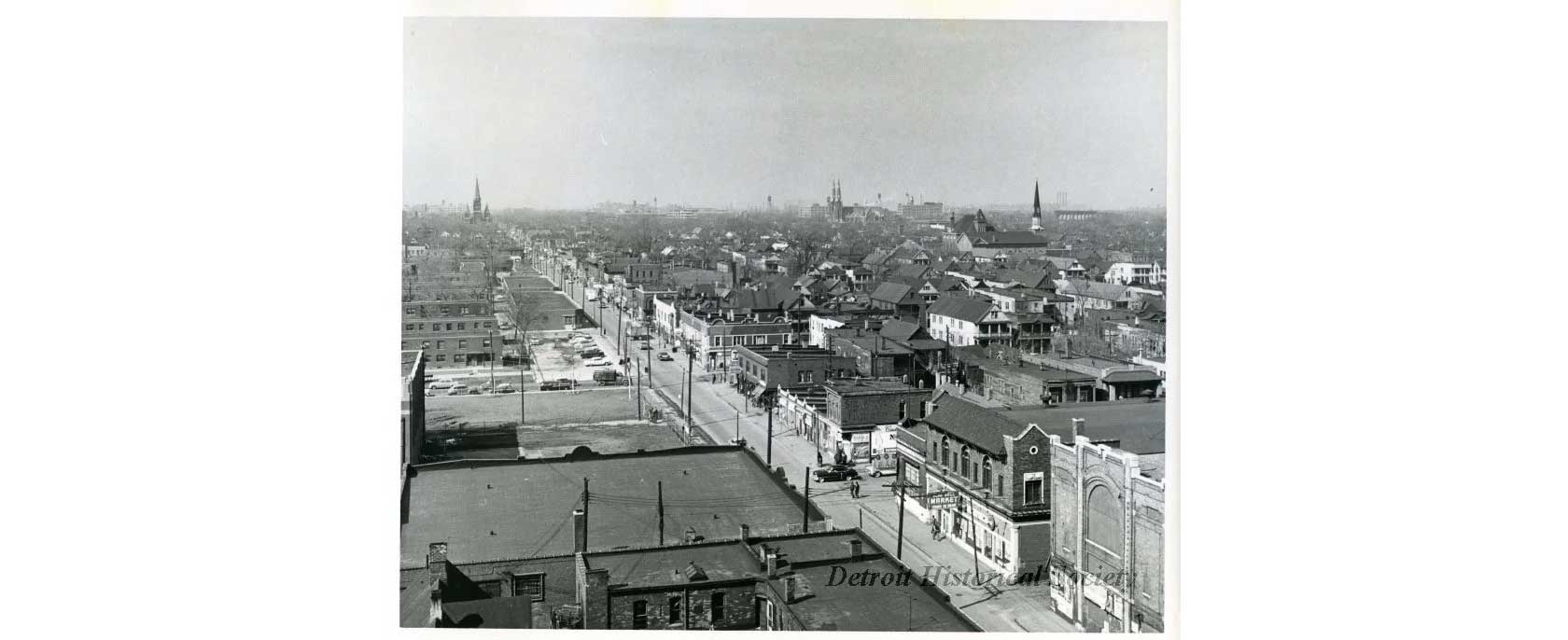
From housing crisis to suburban sprawl
From 1920 to 1970, most of the U.S. population lived in urban cities. By 1949, Detroit was experiencing a housing crisis due to an influx of residents. The Detroit Free Press reported the city had become a “megalopolis”—people of every ethnicity were moving to Southeast Michigan for jobs. Three years later, the census counted 1.8 million people living in Detroit.
In 1951, the Free Press reported that the city had acquired the land within the boundary from Gratiot to Lafayette, and Hastings to Dequindre streets—what is known today as Lafayette Park. That same year, Wallace Hushen wrote in the Free Press that merchants in the area “complained that the removal of 1,953 families and nearly 1,000 single persons from the area has hurt their business.”
Ten years later, the newspaper reported in its “Suburban Closeup Series” that after the openings of Northland Mall in 1954 and Eastgate Shopping Center in 1957, the impending threat to Detroit was urban sprawl. Megachurches, shopping malls, and the “countryside” of Oakland County became appealing to Detroit’s white residents.
Industrial businesses moved operations outside the city, citing higher taxes, a lack of parking, and space for increased operations within city boundaries, according to letters sent to Mayor Louis C. Miriani in the 1950s. Within those same archival letters, the neighborhood east of downtown from Gratiot Avenue to the Riverfront and Brush Street to St. Aubin, the predominantly Black neighborhood of Black Bottom, was considered “the slums.”
Black residents at the time didn’t see it that way.
“You get me talking about Black Bottom, that’s my heart,” said Shirley Beeler. “I was too little to understand exactly what was going on until it was done.”
Beeler spent her childhood in Black Bottom. She moved to Southfield, a predominantly Black suburb of Detroit, with her husband years ago. But as a child, she lived with her parents and 13 siblings until they were forced to leave. She remembers when their church, Bethlehem Temple, was demolished and Black Bottom was erased.
“It makes me want to cry…they tore down all of those homes and stores,” Beeler said. “And they won’t bring it back…I don’t mind improvement, but include us.”
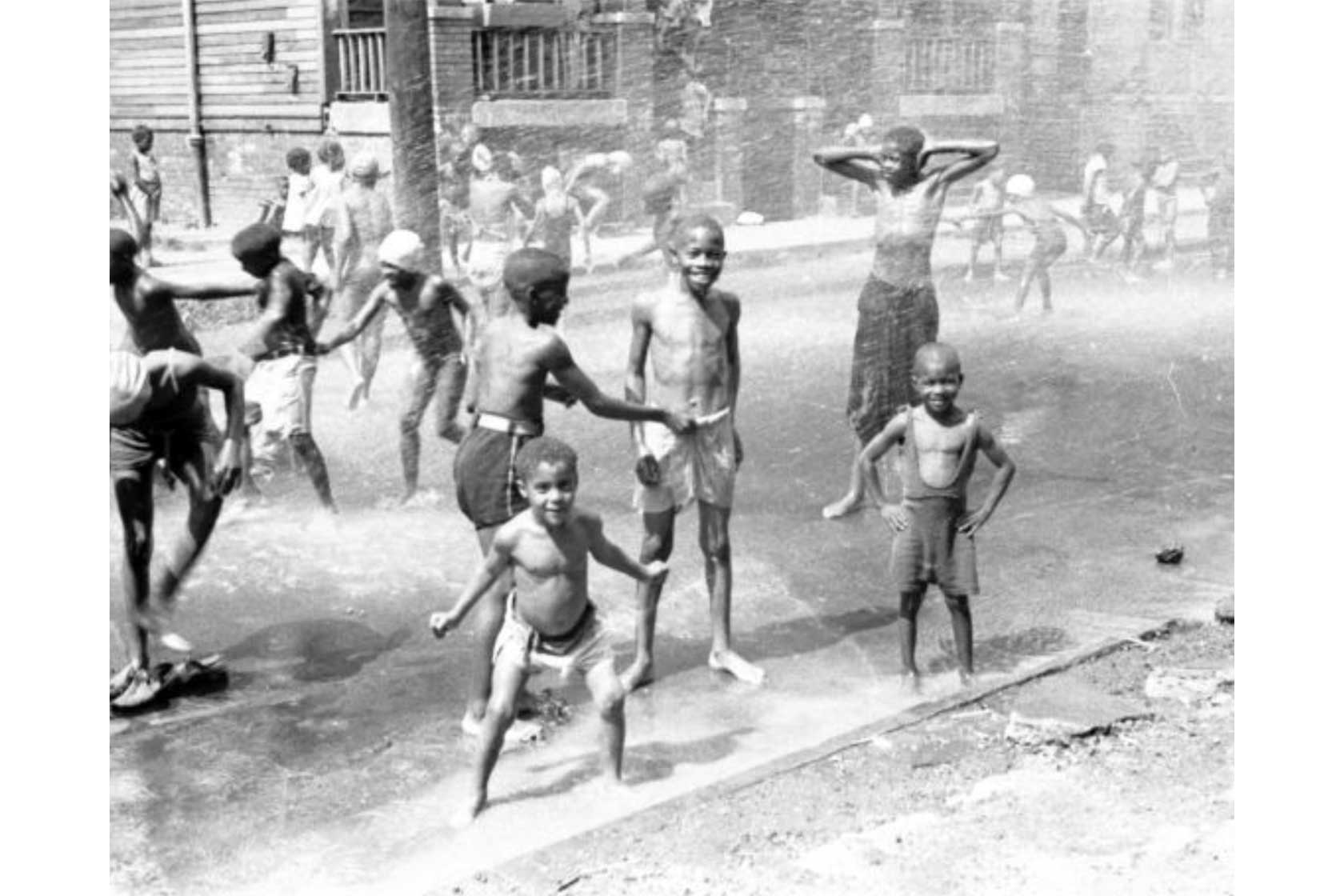
Long before Black Bottom was a predominantly Black neighborhood, it was occupied by French, Italian, and Jewish residents. When new, bigger properties became available north of downtown, the Europeans moved and rented their downtown homes to Black people.
On Sunday afternoons after church, Beeler lined up at the corner of Clinton and Chene for pieces of candy, grab bags of goodies, and ice cream for “three cents a dip.”
“If Daddy gave you some money, you waited to spend it at [the] confectionery store,” said Beeler.
It’s one of many fond memories the 95-year-old has of her childhood in Black Bottom. Nearly a lifetime later, Beeler said she fears the impending construction will have similar consequences to Detroiters that I-375 had to the Black community years ago.
“It was built so that [suburban residents could] go to work; it wasn’t for us,” Beeler said. “What did we need a freeway for? We were already home.”
At a February MDOT community engagement meeting on the I-375 project, local historian Jamon Jordan and former Detroit planning consultant Rod Arroyo said that over 36,000 Black residents lived in Black Bottom over time, moving to Detroit for the economic opportunities from the South during the Great Migration following the end of World War I.
The housing stock at the time was not ideal. There were rats and bed bugs. Some used newspapers to cover the walls because they couldn’t afford to paint the wooden homes.
“It [Black Bottom] was always on the news,” Beeler said. “[They said] we are the cause of the situation. But [we] didn’t make enough money to buy a shovel. I remember my mother saying that. How can they talk about [us] not having grass and we had no way to cut it? So, there was just dirt.”
And yet the children spent their days joyously running through the streets, playing baseball, singing, and dancing. There were Black doctors, pharmacists, artists and entrepreneurs. There was a community.
“Maybe I was too young to realize it was bad, I don’t know,” she said.
Celeste Buxton said she also remembers the confectionery store in Black Bottom. She attended elementary school on Congress. She said the racial tension at the time was palpable.
Buxton was one of eight children in her parents’ Black Bottom home. Unlike the many renters in the neighborhood, Buxton said her family rented a home, then purchased a property and was paid to relocate when I-375 was constructed. They moved into a property on Detroit’s east side. Buxton became friends with Beeler at the largest public high school in Michigan, Cass Technical High School, where both women graduated. They said they formed Club 48—a social club for Black students at Cass Tech in 1948.
Local grocers, shops and clubs dominated the former Hastings Street in Paradise Valley. Arroyo found a copy of Booker T. Washington’s 1952 Black Business Directory at Burton Historical Library. Over 2,500 Black-owned businesses were listed in the area at the time—more than anywhere else in the country.
Detroit’s first Black mayor, Coleman A. Young, who served the city from 1974 to 1994, grew up in Black Bottom. He detailed witnessing the neighborhood and his father’s tailoring shop being demolished in his memoir, Hard Stuff: The Autobiography of Coleman Young.
Racism steeped within the Federal Housing Act and the Federal Freeway Act, fueled redlining and urban renewal programs that disproportionately damaged the city’s Black residents.
The remaining housing options were limited for Black residents; they could purchase a home from a Jewish family that was leaving the city or cohabitate with other families in rented homes.
“The combination of urban renewal to freeway construction…there was very little land left,” Arroyo said. “It was like the government planned to remove as many Black residents and Black businesses as possible.”
An evolving plan
After a decade of working toward the redevelopment of I-375, minimal construction is expected to begin along Jefferson Avenue before the end of the year.
MDOT officials say the project plan will continue to fluctuate as public engagement continues.
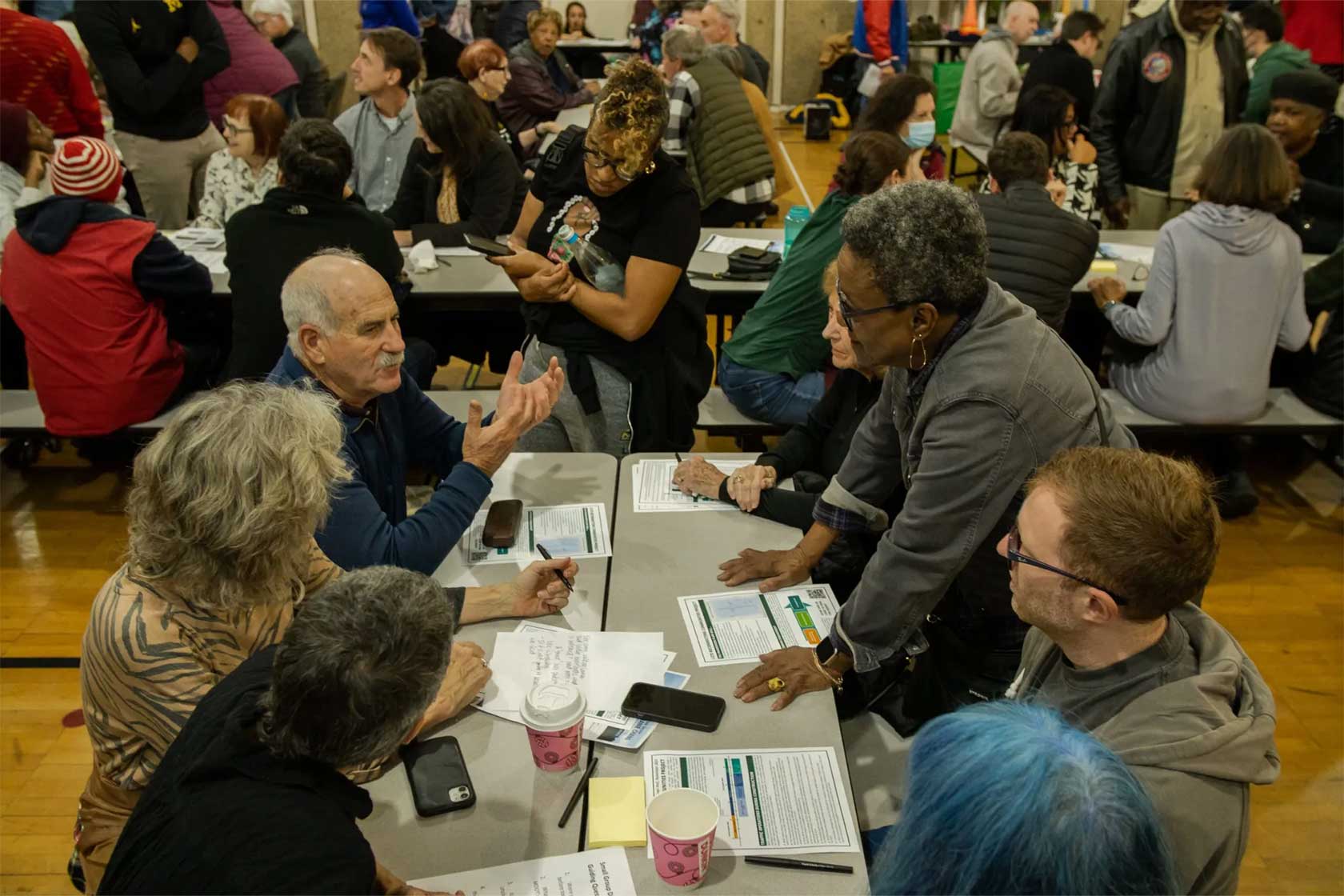
Jonathan Loree, MDOT project manager, said the department has struggled to maintain the bridges and pavement due to costly and unpredictable maintenance while relying on “short-term fixes.”
“It creates a really challenging interchange with some really dangerous curbs, some significant safety issues there,” said Loree.
From 2014 to 2016, the department conducted a feasibility study, and it spent the following three years conducting an environmental assessment.
The assessments determined an opportunity for future growth and development in the area with the proposed roadway changes: a raised boulevard with more connections to the river, downtown, and neighborhoods on the east side.
The freeway will be filled in with dirt and held in place with retaining walls to meet the existing corridor.
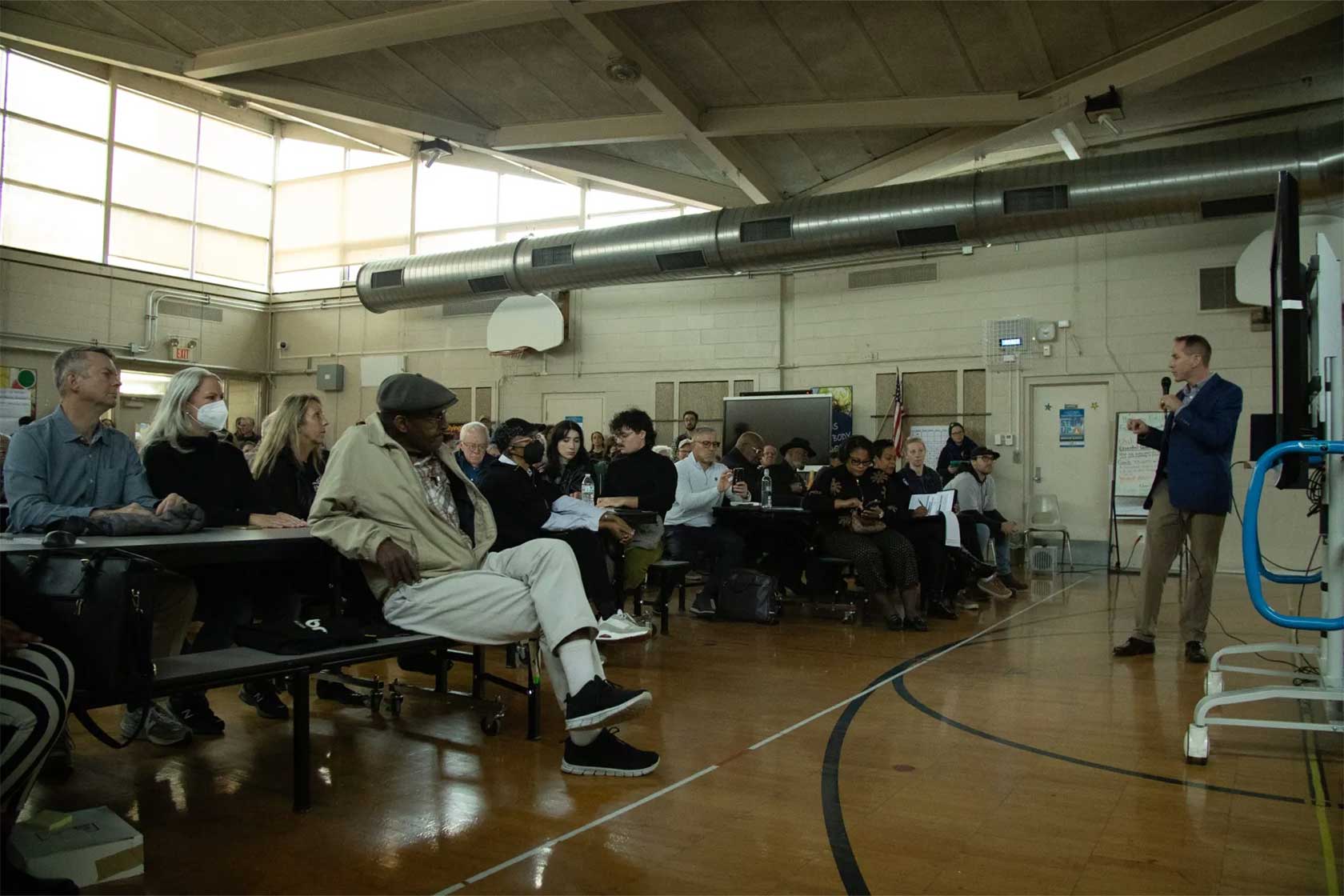
“It’s [I-375] for cars only,” said Loree. “It’s not a pleasant place for any other sorts of activities. Being right downtown and the purpose that it serves, it just makes sense to look at some different types of roadway options.”
The evolving project plans highlight a desire for green space and potential development opportunities. There will be bike lanes, walking paths, and reduced traffic lanes that would lessen car traffic in the area. The roadway is MDOT’s responsibility, but city streets may be developed as the plan progresses, and the city is expected to control the use and zoning of the excess land where the Gratiot connector exists today.
The state of Michigan owns the freeway and the city will have first refusal rights to land unoccupied by the smaller boulevard. MDOT officials say the department has never had excess property at this magnitude and has the option to sell the land to the city, developers, public auction or a land trust.
“The intent is that however that happens, we will support what comes out of the framework,” said Lorre.
However, state and city appointees will make the final decision on the implementation, details, and contracts regarding the excess land.
Those appointees have not yet been determined, but will report to Detroit’s next elected mayor.
MDOT created a Local Advisory Council to engage stakeholders during the feasibility study. The group is made up of neighborhood representatives, nongovernmental organizations, academic institutions, entertainment venues, private businesses, faith-based organizations, and city departments.
The meetings have received mixed reviews.
Olga Stella, a Lafayette Park resident and member of the Local Advisory Committee, is also an advocate for the Re-Think I-375 Community Coalition. The coalition, which includes residents, business owners, and local stakeholders, amassed over 600 signatures in 2024 in a letter to Gov. Gretchen Whitmer and the Department of Transportation asking for clarity and better planning regarding the I-375 project. The project has progressed, and coalition members continue to show up to meetings and push for proposal changes.
In May, the coalition met to discuss the potential for reparative investment for the area through affordable housing, increased access to opportunities for Black developers, and jobs for residents.
In April, Stella described the Local Advisory Committee meetings as tedious—hours were spent discussing potential sidewalk widths with MDOT. Two weeks later, the city used that information and hosted a public framework meeting with MDOT. The city asked residents to break into small groups and provide feedback on construction plans with sticky notes and colorful dot stickers to represent open spaces, mixed-use developments, businesses, and entertainment and residential areas.
“I’m still worried about the timeline,” Stella said at the meeting.
The mother of two said the conversations at the April meeting were what residents have asked for all along, but she remains unconvinced that their feedback will make it into the final project plans before construction begins.
Alexa Bush left the Kresge Foundation earlier this year when she was appointed by Detroit Mayor Mike Duggan to be the city’s planning director. Bush said the city will host the remaining community framework meetings. According to Bush, the group discussion–style meetings are a response to complaints about the lack of inclusive planning conversations with the city in the past.
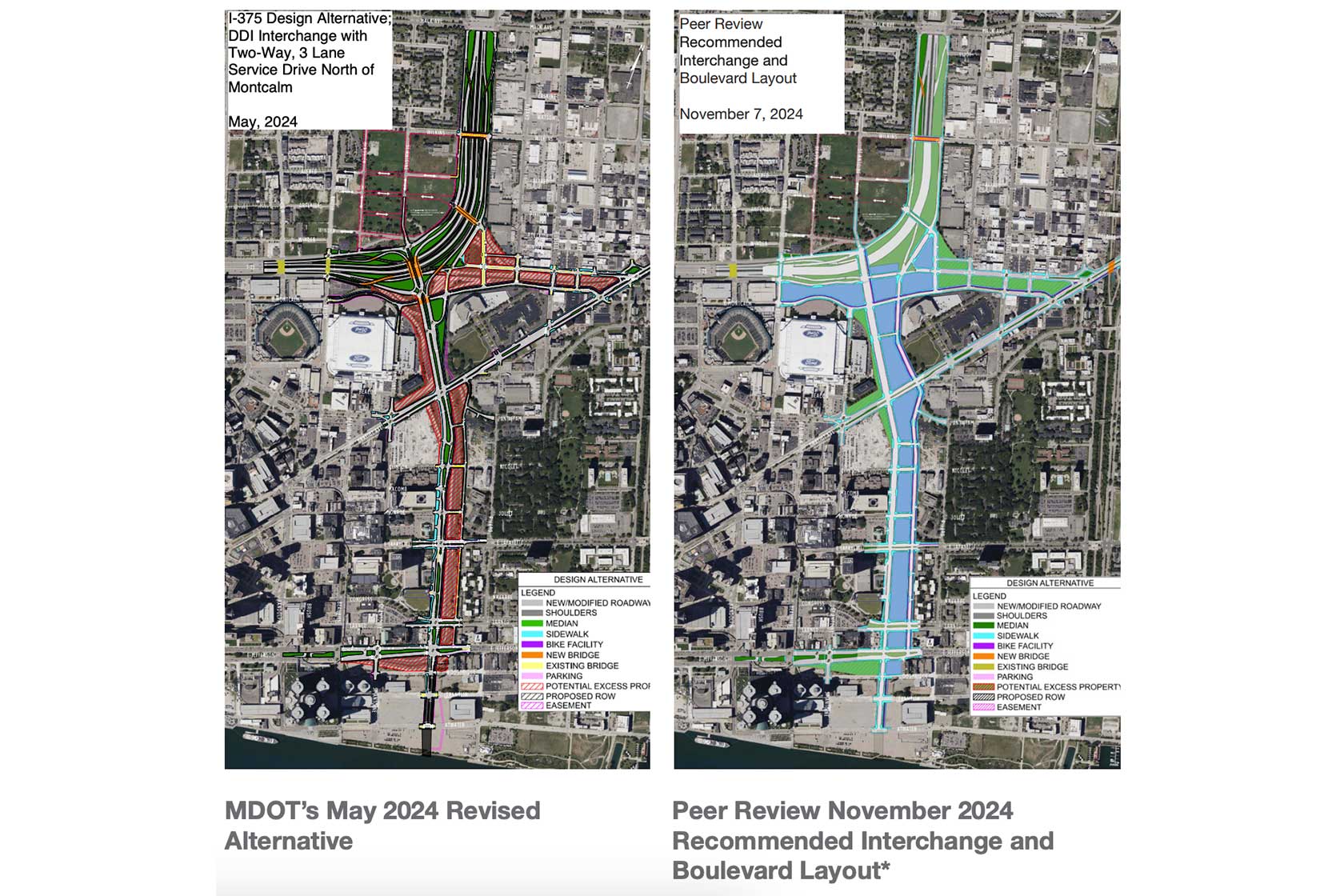
“How can you provide feedback for sidewalk seating at a café when you don’t know where the café is?” she said.
Jesse Love, who works downtown, and Sharon Floyd, a lifelong Detroiter, sat at a table together during the April meeting. The pair brainstormed ideas for the best places for residential housing and mixed-use development along the proposed corridor. Both heard about the meetings through work, their main connection to Downtown Detroit.
“The energy here, I love being a part of it,” said Love, a Detroit transplant who moved to the city five years ago after graduating from the University of Michigan.
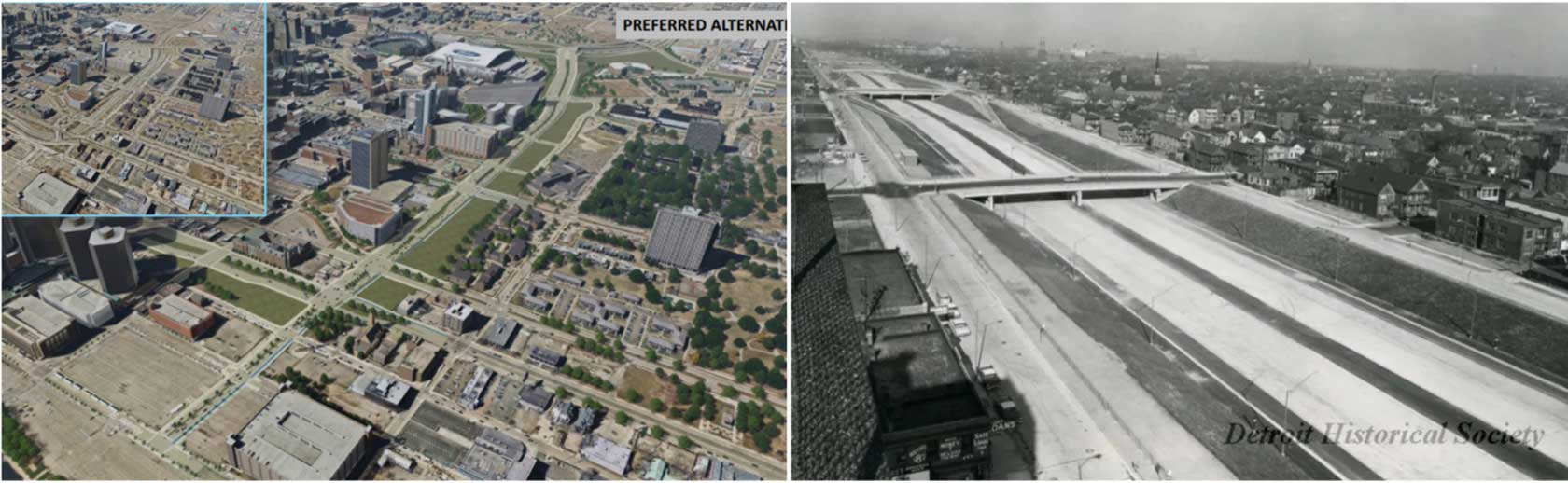
Love and Floyd shared desires for a future tribute to Black Bottom along the corridor through a library or community center. They also talked about issues that longtime Detroiters have voiced for years: affordable housing, educational centers, innovative job training, and support for local businesses.
“I do think there’s a future here,” he said. “And the mayor’s a big part of that [change]. But it’s the people who never left who are what make me want to stay, to see the history, to understand the value of the city and try to be more connected.”
The state has allocated $300 million to the project.
Private entities have not contributed to the project’s budget. However, the Kresge Foundation is listed as a project partner on the I-375 website. The philanthropic institution supported the Downtown Detroit Partnership and the organization’s work with MDOT to gain community feedback. They released a three-part peer review on opportunities to increase walkability, evaluate proposed MDOT plans, and identify potential strategies to minimize the environmental and economic impact of construction in the area.
In an email to BridgeDetroit in June, Wendy Lewis-Jackson, managing director of Kresge’s Detroit program, said that Kresge’s role has been to provide targeted grant funding for the peer review and other grantee partners for “place keeping and collaboration initiatives and hosting reparative roundtables…”
“The Foundation is committed to the long-term vibrancy of Detroit as well as helping ensure residents and families have the input to determine what that looks like in their community,” she wrote.
MDOT reported an additional three public meetings and 12 workshops with the city of Detroit from 2017 to 2022 regarding the plans and a total of 119 engagements with local stakeholders through 2022.
Since then, the department has hosted six advisory council meetings, five public meetings, and two webinars. The city’s first public neighborhood framework meeting was held in Eastern Market in December 2024. Public neighborhood framework meetings are tentatively planned each month through September.
Loree said MDOT uses collected data from the meetings to ensure the boulevard corridor meets the needs of all users.
“[It will] meet the needs of the traffic that’s commuting or coming down to all the great destinations in the city,” said Loree. “But also, it truly meets that reconnective goal of having that really strong pedestrian connectivity and the multimodal aspect has always been there.”
Connecting to the past
While MDOT has touted widespread engagement, Loree admitted that a specific group has proven difficult to reach. Former residents and the descendants of former residents of Black Bottom and Paradise Valley are missing from the conversation.
“It’s definitely been our most challenging group,” he said.
Loree said that because the neighborhoods were “completely cleared and destroyed,” and many of the former residents are no longer actively engaged with the area. However, Loree said he believes that connecting the past into the future will help MDOT determine how to best support Detroit’s neighborhoods moving forward.
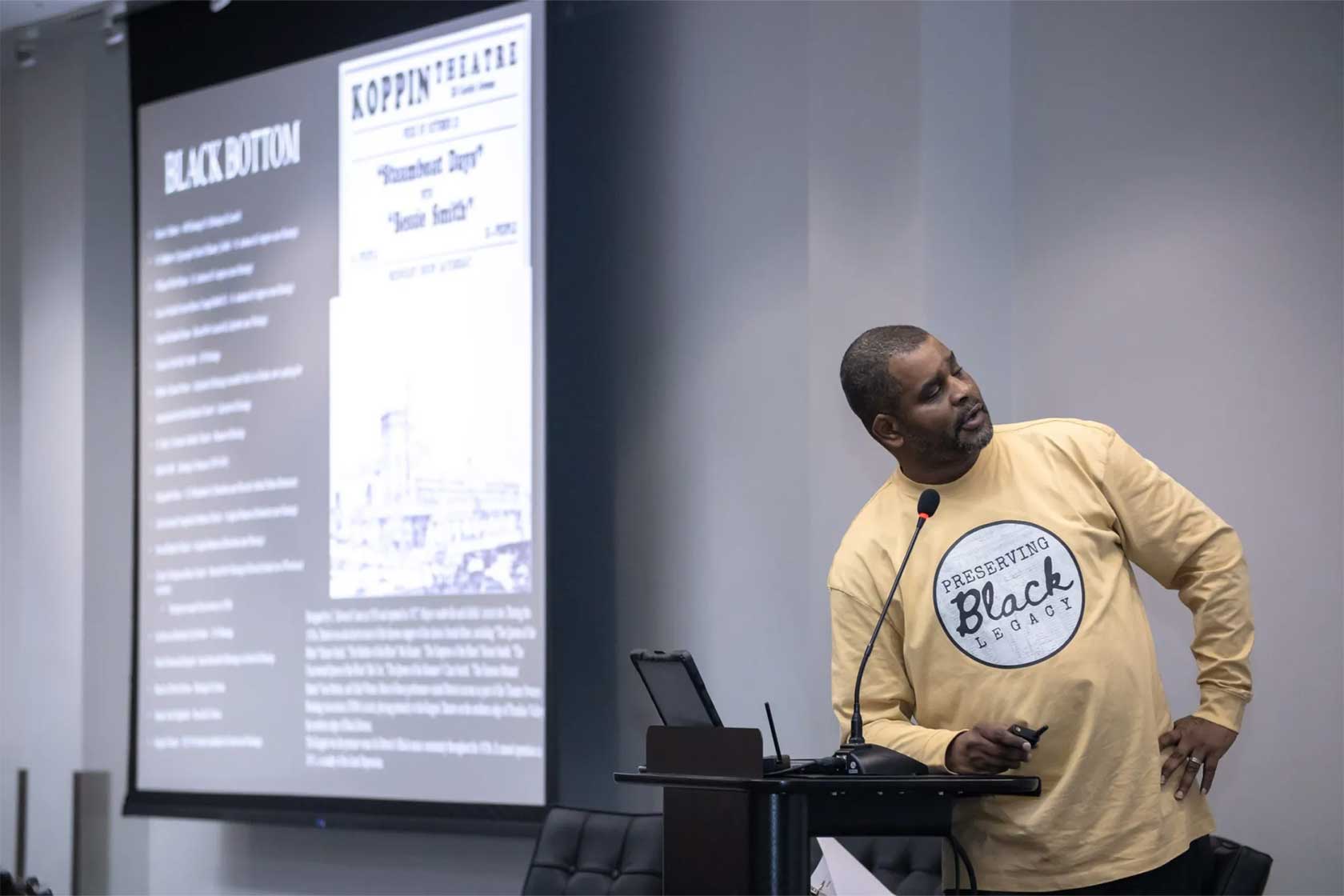
MDOT hosted a public event in late February at the Charles H. Wright Museum of African American History to engage more residents on the history of the area and to encourage them to participate in upcoming meetings.
Marcia Black, executive director of Black Bottom Archives, said it’s “not surprising” to her that MDOT has struggled to reach the Black Bottom and Paradise Valley communities. She said it’s a challenging idea for the department to be the main facilitator within a reparative process.
“Learning on relationships and trust is really hard,” said Black.
Black Bottom Archives (BBA), a grassroots organization, is dedicated to verbal storytelling of the displaced residents of Black Bottom. BBA uses family photos and records stories from former Black Bottom residents and their descendants. They aim to tell stories to acknowledge the impact of what happened and to ensure the stories aren’t erased or forgotten.
They have worked with MDOT, the city, and the Kresge Foundation to understand the history of the area and to encourage public conversation about the proposed changes. The executive director has attended MDOT and Kresge-led stakeholder meetings on behalf of BBA since 2022 and said there is an “openness around making space for folks to be a part of the conversation.”
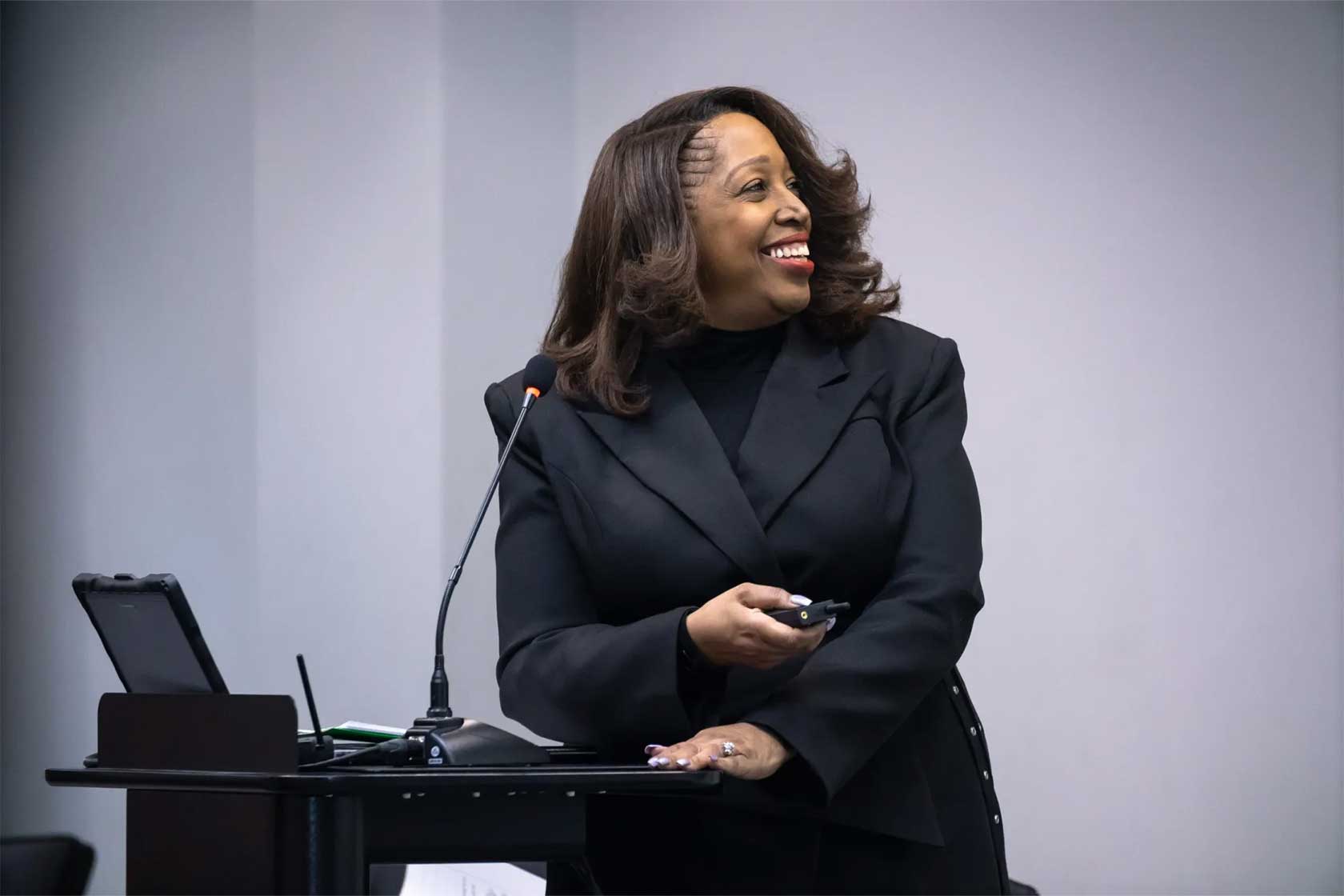
Black said not a lot of Black Detroiters feel included in newer Detroit developments. She said she’s heard requests for the boulevard to include affordable housing, places to celebrate Black storytelling and history, as well as space for Black-owned businesses and cultural engagements.
Buxton agreed, she’d like to see Black Bottom recognized in the future development.
“It would be alright with me, whatever they do to honor Black Bottom,” Buxton said. “Because that’s where I went to school, where I was born, and where I joined the Girl Scouts.”
However, said that she likes where she lives and wants to see accessibility improved.
“I like [Lafayette Park] because it’s pretty down here and it’s convenient for getting around,” she said. “I don’t have a driver’s license, so I ride the bus for 50 cents.”
Some Detroiters have been pessimistic about change, as people feel unheard, marginalized, and ignored in decision-making processes.
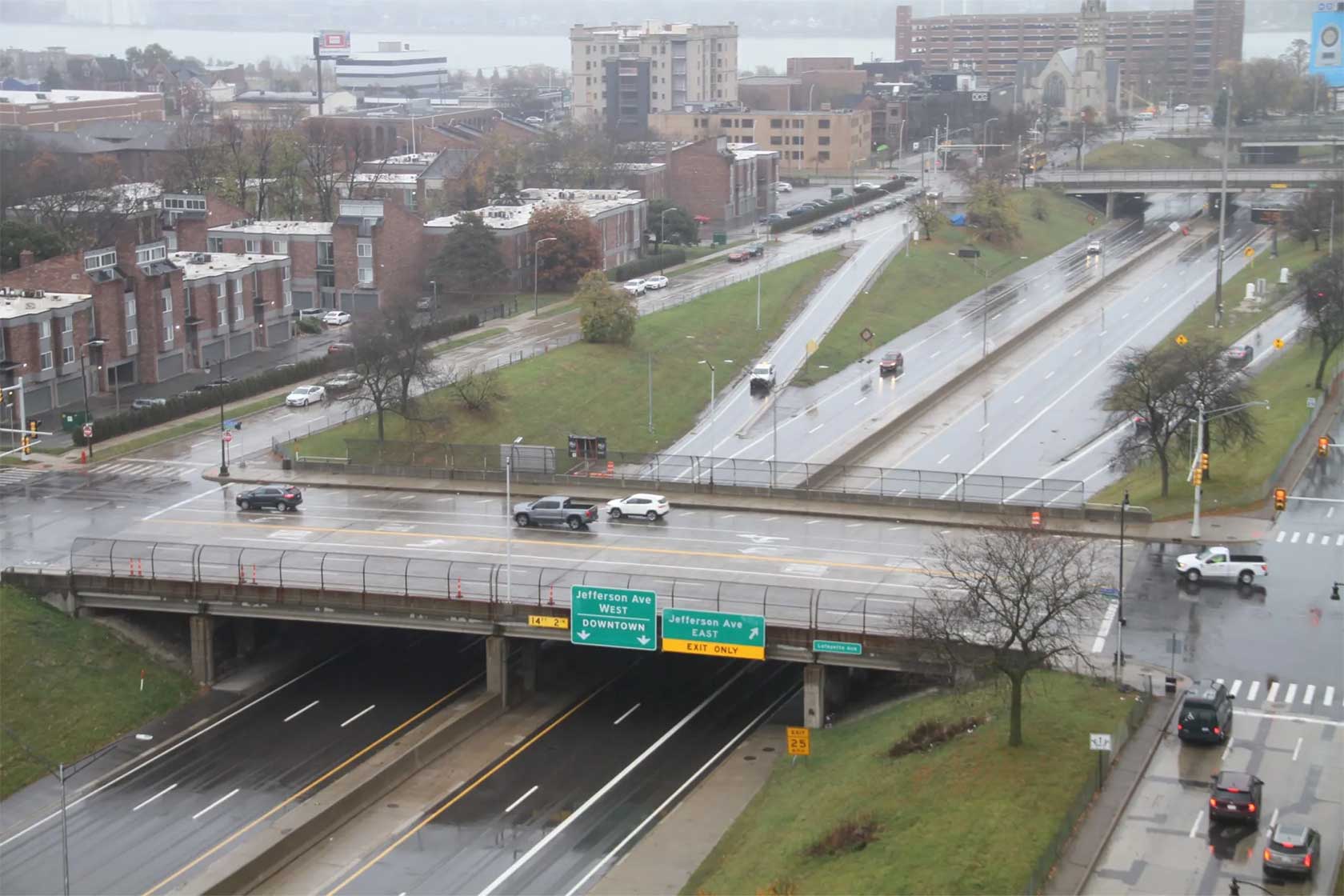
In the past, city plans were made before or without community engagement, and having a plan while asking for feedback comes across as performative to some residents, said Black.
Detroit City Council President Mary Sheffield represents District 5, which includes Lafayette Park. Her office did not respond to requests for comment from BridgeDetroit. However, during the Mackinac Policy Conference on Mackinac Island, the mayoral candidate was asked about what the project should look like and whether she supports the effort.
“Historically, we know what the freeway did to strip away generational wealth from Black communities,” she said. “What I’ve heard overwhelmingly is there’s a lack of trust and there’s been a lack of engagement to address that issue.”
Sheffield noted that there are questions over who will have access to the excess land and how much businesses will be impacted, with owners worried that construction will devastate their livelihood.
“I do have several concerns, and I think more conversations need to take place around 375 and real conversations about how we repair the harm that was caused by the freeway that displaced Black Bottom and Paradise Valley,” Sheffield said.
The weight of urban renewal
In 1960, Detroit’s Housing Commission received several letters from women asking for housing assistance for their families.
That same year, resignation letters were submitted to Housing Commission leadership, citing the ongoing effects of urban renewal projects in the city.
The construction of I-375, the removal of families, and the destruction of Black wealth was never forgotten. It took years, but the Michigan Historical Commission erected an historical designation for the Black Bottom neighborhood in 2021. The long-awaited placard is a reminder to all Detroiters and its visitors that the community existed.
“Black Bottom is the most culturally significant neighborhood in Michigan,” Jamon Jordan, the city’s historian, said at a Black Bottom Archives event in February.
The weight of the long-term effects of urban renewal and the sting of prioritizing white flight over Detroit residents lingers throughout the imperative discussions on the complex I-375 Reconnecting Communities Project. There’s massive interest from current residents, former residents, and descendants of the Black Bottom and Paradise Valley communities, and pushback from current community stakeholders who demand accountability from decision makers as the community engagement process continues.
The need for a safer, more walkable, and multimodal roadway is pertinent. MDOT and state and Detroit police have closed portions of the short freeway dozens of times for roadwork and motor vehicle accidents.
While the tedious work of sidewalk lengths, the number of rain basins, and the curvature of a roadway has sparked meeting fatigue for some, the ongoing discussions about I-375 and potential developments moving forward are Detroiters’ opportunity to contribute to the city’s changing landscape and to hold officials accountable if they falter.
How a decades-long effort to promote interracial friendship is playing out in one New York City suburb.
Editor’s note: This article originally appeared in The Progressive, Vol. 90. No. 1, February/March 2026. It has been lightly edited to adhere to house style.

Fellow, Us@250
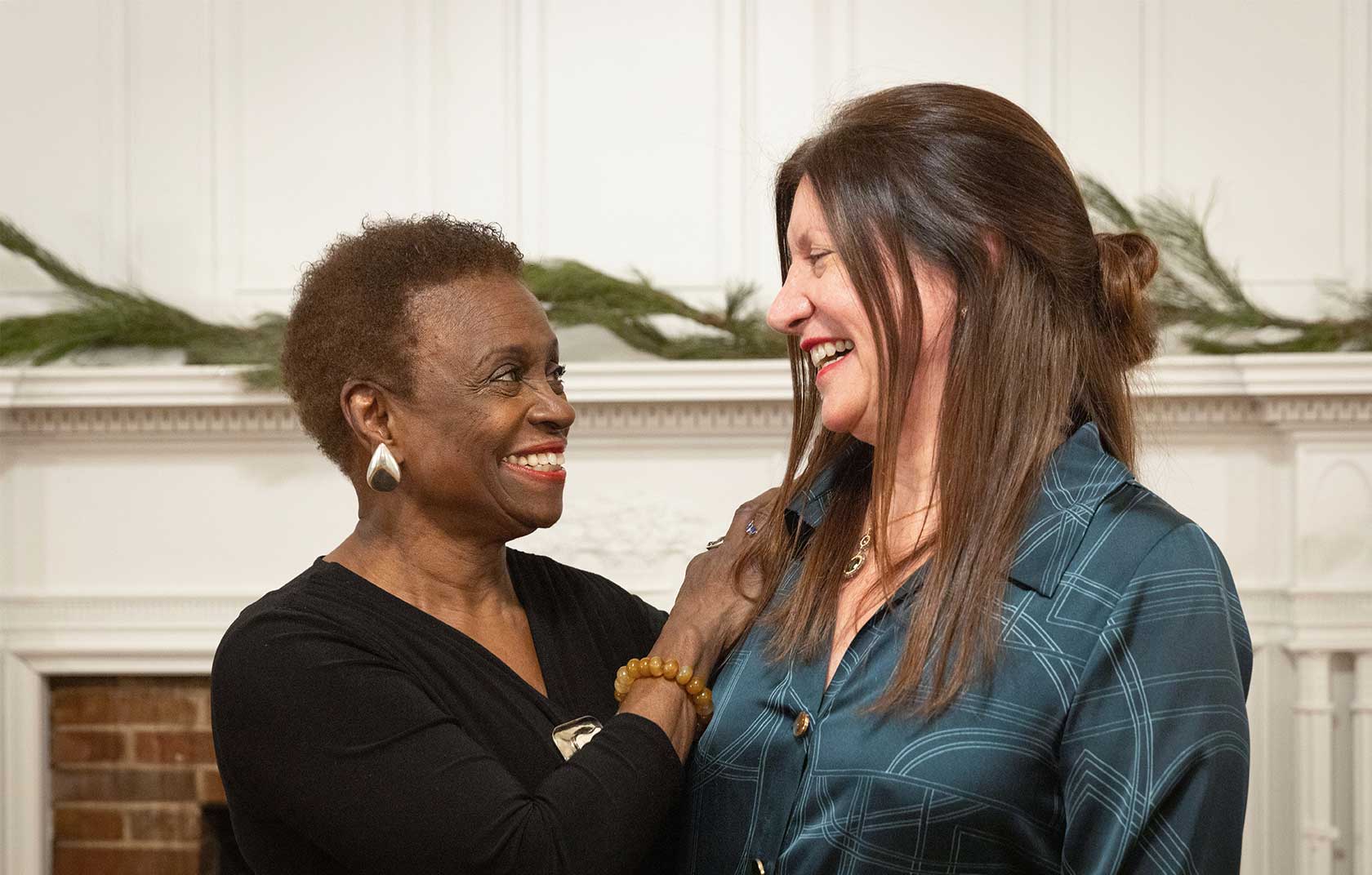
South Orange and Maplewood, New Jersey, two neighboring suburbs about a half hour west of New York City by train, have capitalized on their reputation for being diverse and welcoming. The crosswalks in front of Maplewood’s town hall, a block from my house, have been painted in rainbow stripes to honor LGBTQ+ residents, the asphalt on a street connecting the two towns has proclaimed “Black Lives Matter,” and a quiet area is set aside during the annual Pride festival for neurodivergent people to decompress. If one were to poke fun at the place, they might point out that teachers refer to the “tug-of-peace” during an elementary school field day, because war is wrong and disturbing.
In 1996, in response to concerns about white flight and a perceived decline of the school district the towns share, the local governments created the South Orange/Maplewood Community Coalition on Race to bolster not just the towns’ demographic mix but also to encourage and support meaningful integration. The coalition refined its vision statement in 2016, working to create a community where people of different backgrounds can “interact, form friendships, and participate fully” in the towns.
That sounds straightforward enough. But in the United States today, two-thirds of white people have no friends who are Black, Hispanic, or Asian, according to a 2022 study by the Public Religion Research Institute (PRRI). As Natalie Jackson, PRRI’s research director at the time, observed, “If you wonder why we have groups in this country who just don’t understand each other, this is it. There’s no mixing.”
So, in my progressive northeastern community, how possible, practical, and even advisable is the promotion of boundary-busting friendships? Do residents go beyond slogans and get to know each other so well they can find the forks in each other’s kitchens?
Note: I am writing as a well-meaning white woman, which is often considered the most problematic kind. I learned much of what I know about race and ethnicity from friends of color. I think such connections are crucial, yet too often elusive.
With the recent removal of affirmative action and diversity, equity, and inclusion initiatives, colleges and workplaces may become more segregated, worsening the nation’s current levels of social disconnection. But social scientists tell us people develop concern about racial inequity and become more open, curious, understanding, and empathetic if they nurture diverse friendships. Perhaps these two towns, known collectively by the acronym SOMA, could provide answers on how to do that.
“We sometimes call social integration the last bastion or barrier,” says Audrey Rowe, the coalition’s recently retired, long-time program director, as she and Executive Director Nancy Gagnier chatted with me recently at a local restaurant. “People seem to expect that they’ll form relationships at work or school, but when it comes to who you’re going to invite to your house for dinner, that gets really personal. People on both sides, of all races, are a little bit more resistant.”
Even in New Jersey, which ties New York as the sixth-most-diverse state, South Orange and Maplewood are rare in having such diversity. Their combined population of 44,168 is 54 percent white, 26 percent Black, 9 percent Hispanic, 6 percent two or more races, and 5 percent Asian. And SOMA is even more rare in consciously taking steps to promote meaningful interactions among residents.
“We are a community that has committed to progressive values of racial equity and integration for 25-plus years in a sea of racially isolated communities,” Gagnier said in 2022.
Rowe, who is Black, organized the coalition’s small-group discussions, titled “Conversations on Race.”
The coalition also runs Integration through the Arts, a program in which local artists lead regular meetings, inviting residents to study opera, learn juggling, practice theatrical improv, or dance together.
“We can provide the opportunity to be in the room with someone you have a lot in common with, but you’d never know it because you may not ever meet,” says Rowe, who noted that members of a mural-painting class were still getting together a year later. “Things that are organized seem to be the things that ignite and sustain the relationship organically.”
She and Gagnier, who is white, developed a strong bond after Rowe helped Gagnier learn to lead the organization. “We were tied at the hip; we did everything together,” Gagnier says. Rowe compared their friendship to a marriage. “Without even going to her, I’d say, ‘What would Nancy do?’”
But while friendships like theirs are what their organization envisions, Rowe admitted that it can take her and her friends of color a lot of effort to live in a white-dominated world, and she craves relaxation in spaces where she doesn’t have to represent her race.
“If I’m exerting energy at work and school, when I come home I want to just be, with nothing to prove, no stereotypes I have to counter, no worrying what it means if I’m late to something,” she says. There are times, she concedes, when interacting with people who are very different “comes across as work.”
Some argue that the current dearth of interracial and interethnic friendships is a white-people problem, caused in part by self-segregation and reinforced by historically racist policies like redlining and the shutting out of people of color from the G.I. Bill and other opportunities for amassing generational wealth.
To learn more, I reached out to Rhea Mokund-Beck, who is deeply involved in local racial justice organizing. Before the COVID-19 pandemic, she had run a seminar led by women of color called “Allyship in the Racial Justice Movement.” Mokund-Beck, a former trustee of the coalition who describes herself as Black and mixed race, told the assembled white women that people of color can be wary of having white friends, because they tend to step on their toes, then ask why it hurts.
Mokund-Beck is also a co-moderator of a consciously inclusive, 9,500-member Facebook group for local parents, where many interactions have racial undertones. Despite the frequent arguments she referees online, she thinks many of the women in town have cross-racial friendships that are quite intimate.
“It’s not just about reunions and parties and good times,” she says. “To be rich and real and lasting, [the friendships] have to be quilted together by transition and trouble and illness. For people who are in interracial relationships, that also means dealing with race. There’s no ignoring that.”
Janelle Gera and Kim Takács call each other best friends, and four years ago, when Takács had her second child, she asked Gera to be his godmother. The two met at a baby sign language class. Takács, a neurodiversity-affirming speech therapist, was teaching at Little Bee Learning Studio in Maplewood. Gera’s daughter, Theo, who doesn’t give away smiles easily, went over to Takács and plunked into her lap.
“Theo chose our friendship, I always say,” says Takács, who is white. Their bond grew via texts and voice messages during the pandemic.
Gera, who is Black, had signed up for all sorts of mom and baby activities, but she saw the white parents mostly sticking together, even at playdates billed as integrated.
“My impression was that white moms saw other white moms as a safe extension of their space, and I was less safe,” says Gera. “I was less familiar, and just different.”
The women say their friendship took root because, even though Takács came from what she calls a sheltered, private-school background, Gera is not her first Black friend.
“A lot of that work was done before me,” says Gera, who feels if people haven’t made diverse friends by their thirties, they have chosen to live in a kind of bubble. “I’m looking to talk to somebody who’s made different kinds of decisions.”
Takács has tried to educate herself by listening to audiobooks, following people she can learn from on social media, and joining a book club of white residents learning about white supremacy.
While Gera has had to explain to Takács some aspects of her experience as a Black person in the United States, “I don’t think there’s ever been a time it felt like I can’t have this conversation with Kim because she’s a white woman.”
And when their group chat, with three Black women and two white women, discusses racist incidents—like when a Black mom was mistaken for a nanny at school—Takács says she feels comfortable offering support, but not advice.
When the women get together with their husbands and children, “we speak of it as a chosen family,” Gera says.
Demographic trends suggest that younger white people are more likely than older ones to build friendships across racial and ethnic lines. The PRRI study showed that while about a quarter of white Americans aged 65 and older have friend groups with some racial or ethnic diversity, almost a third of those ages 50 to 64 do, as do 46 percent of white 18-to-29-year-olds.
“One in two Zoomers is not white, and that has a really profound impact on their politics and outlook,” says Melissa Deckman, the chief executive officer of PRRI, in an interview.
Two graduates of SOMA’s Columbia High School say their friendship has given them insights they would not have had in segregated friend groups. Avi Ramer and Anthony Agu, both 25, met in a math class where they were two tenth graders among a class of accelerated eighth graders.
In their conversations they noticed many ways they were treated differently. When each wanted to move to more demanding classes, school counselors encouraged Ramer, who is white, but made Agu, who is Black, prove himself first. At traffic stops, police were more likely to give Ramer a pass. When Ramer posted about such an incident on social media, Black friends left comments saying “MBN”—Must Be Nice to be treated so leniently.
Agu, a first-generation Nigerian American, has learned in his cross-racial relationships how to navigate uncomfortable situations, such as a friend’s grandfather or uncle coming off as a little standoffish or even racist.
“Being able to confront it head-on—the acknowledgement of the wrongdoings and taking the lessons from that situation—it’s not an easy thing to do,” he says.
The two friends had one of their longest conversations about race in 2020, after police officer Derek Chauvin murdered George Floyd in Minneapolis, Minnesota, by kneeling on his neck for more than nine minutes.
Agu had always known that parts of the world didn’t accept people who look like him, but his social media feed left no doubt.
“It was a constant reminder, day after day, of a new killing and a new life lost,” he says. “I was forced to ask myself certain questions and understand certain realities of the world I’m living in. And it sucked.”
Ramer, Agu says, did “a great job” helping him to process the tragedy. “Obviously, I have Black friends, but it’s a different dynamic,” he says. He needed his Black friends to mourn with, and Ramer to vent at.
Ramer says the Floyd murder hit him very hard, having close friends of color: “If you’re only friends with one specific community, you’re never going to feel pain unless that community is affected.”
As in many suburbs, some of the most contentious conflicts in SOMA center around schools. The school district is trying, via an intentional integration initiative, to address racial segregation in the towns’ six elementary schools, where one was more than 70 percent students of color and two were almost 70 percent white. The district was also sued in federal court over discriminatory practices in class assignment methods and discipline policies.
“Right now there are still too many Black students who don’t get support…and don’t feel welcome in their [Advanced Placement] classes,” says T. J. Whitaker, who has taught Literature of the African Diaspora and AP African American Studies at Columbia High School. “Oftentimes after the first quarter, Black students or students of color will opt out, having a footprint on their back, almost like ‘you don’t belong here.’”
Whitaker, who is Black, sees friendships across race and ethnicity starting early in SOMA, some lasting through high school, even though the groupings of students in Columbia’s cafeteria look pretty homogeneous.
“At some point in middle school, if not early high school, those childhood relationships begin to either fracture or spread thin,” he says. “I think those who have the wherewithal to think differently through difficult concepts can see themselves through the racism, the white supremacy, the patriarchy. And if they don’t outright reject it, they question it as teenagers. But I think far too many drink the Kool-Aid.”
I wanted to hear from one of the founders of SOMA’s Community Coalition on Race, Robert Marchman, a former Wall Street executive who is Black. He remembers being steered to less prestigious parts of Maplewood by his first real estate agent in 1991, then overhearing one white man on the train tell another that he was selling his house because the community was in “an irreversible downward spiral” due to Black people moving in.
Over the years the coalition trained real estate agents on equitable practices, created an integrated choir for adults, and advertised in 14 different Brooklyn, New York, newspapers, encouraging white families, artists, and others seeking an integrated community to move to town. The coalition also helped people open their homes to events and create neighborhood associations “so people not only lived on the same block but engaged,” Marchman says.
“We focused on getting people together to meet, talk, dialogue, have candid conversations, to counter head-on the irrational fears people were having,” he says. “Those have been the building blocks.”
While there’s of course no central local database of friendships across demographic lines, Gagnier has seen such relationships become more prevalent among younger residents.
“They have much more integrated friendships than I’ve ever seen,” she says. “Their families are friends, their kids are friends, they vacation together, and they work on projects together in the community.”
After two decades of celebrating SOMA’s diversity and stopping white flight, the coalition in 2016 published a report on population trends suggesting it may have been almost too successful in its mission.
From 2000 to 2010, SOMA’s demographic mix was stable, and in the early 2010s, overall diversity and integration by neighborhood increased. But starting in 2007, the proportion of Black homebuyers started to decline. As average home values rose steeply—up 78 percent in South Orange to $1.1 million in the last eight years—more people moving into the towns were white, Hispanic, or Asian. Between 2010 and 2020, the towns lost 10 percent of their Black population.
While the coalition started off advertising the towns to white people to preserve SOMA’s diversity, it is now marketing the towns to Black and Hispanic potential residents and offering $7,500 Wealth Gap Equalizer Loans for families of color who are first-time homebuyers.
Mokund-Beck worries that as wealthier white families buy into formerly affordable neighborhoods, the towns’ devotion to diversity may fade.
“I think we’re in that swing away from our reckoning with race,” Mokund-Beck says. “I think for the most part, white America thinks it’s done that already, and there are more pressing things to be reckoned with now.”
“Maybe we outlasted our time here in SOMA,” she says. “The SOMA we bought into is harder and harder to find.”
Scholars, artists, and activists explore renewing American democracy through local storytelling and curiosity.
Editor’s note: This essay was originally published by New America on December 4, 2025.
Fellow, Us@250
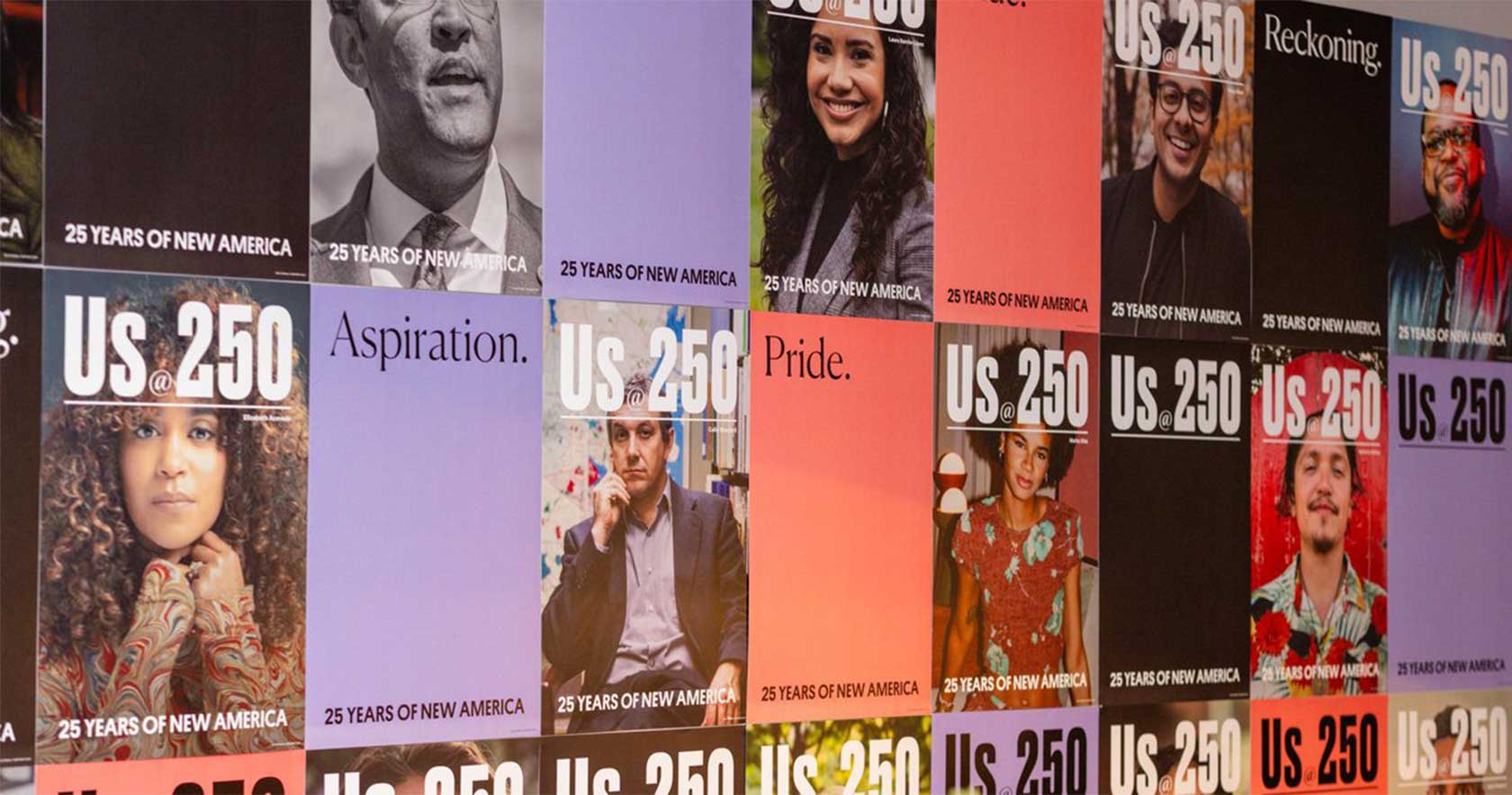
“We are in a time,” New America CEO Anne-Marie Slaughter says, “when it can be hard to maintain faith in America as an ever-renewing nation.” For all those gathered at New America’s offices and streaming online, her opening remarks help frame the day, serving as a call to be honest with ourselves and the country. How can we ground our aspirations for the future in both pride and reckoning?
We are in the nation’s capital for the Us@250 Experience, a day-long signature event marking the nation’s upcoming semiquincentennial anniversary. The panels and performances feature a diverse array of scholars, writers, artists, policymakers, and historians, all of it meant to help us reflect on who we are as a people and where we might be going. And to undertake the hard but necessary work of building upon the victories of our better angels and learning from those times when we’ve fallen short of our founding, “self-evident” ideals.
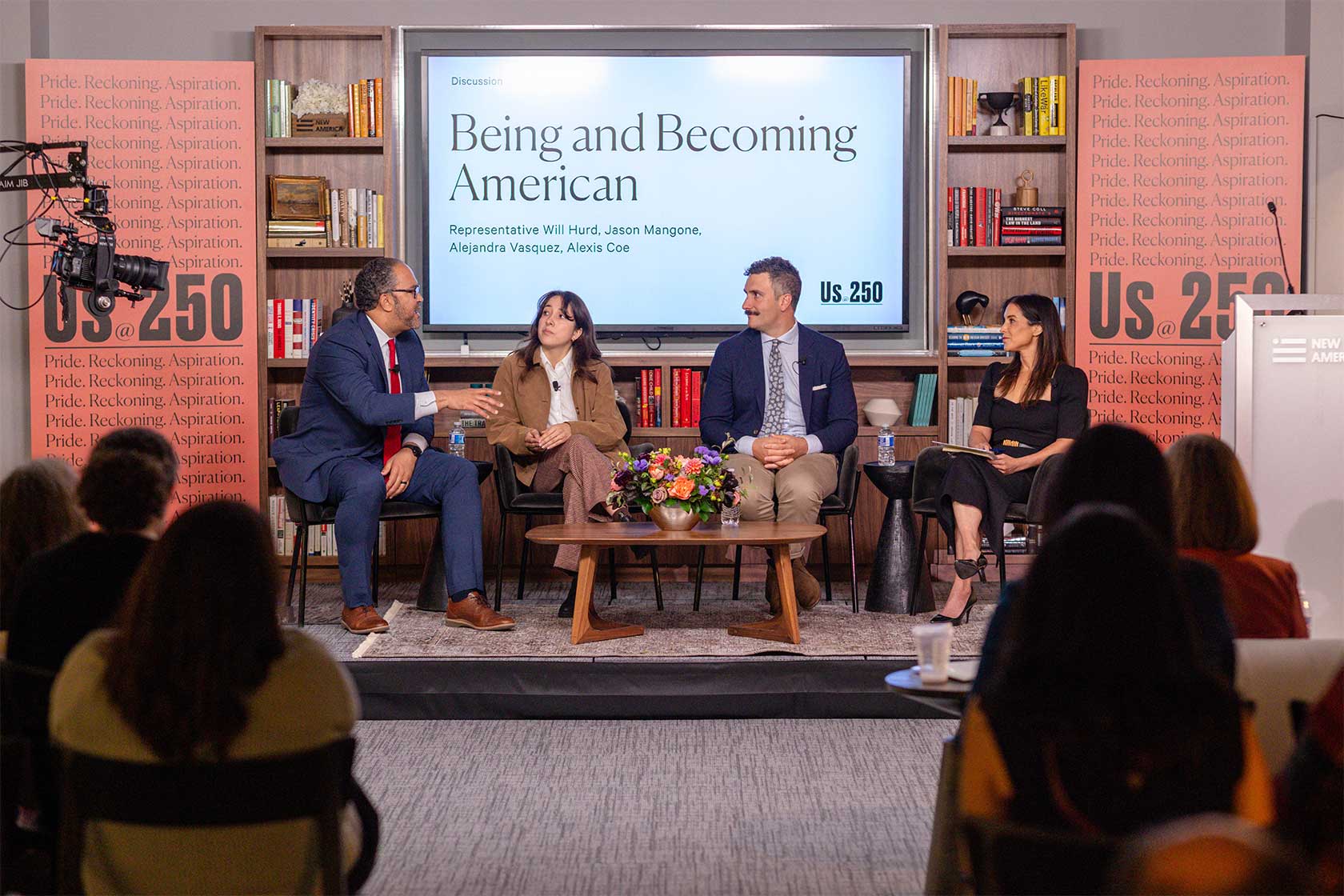
“There is always tension in the gap between ideals and practice,” presidential historian and senior fellow Alexis Coe observes during the event’s first panel conversation, which also features a congressman, a documentary filmmaker, and the executive director of a civic-minded nonprofit. “The work of democracy is closing that gap without pretending the gap doesn’t exist.”
Will Hurd, the former U.S. representative from Texas’s 23rd congressional district, declares that democracy is “rare and fragile.” He shares a moving story about carrying a little girl in Kashmir onto a Chinook helicopter following 2005’s apocalyptic earthquake. “On that day, America was the only country with the resources and will to help people 7,000 miles away.” It was “we, the people,” he says, who decided that this was work worth doing—that this represented who we were, who we can believe ourselves to be.
Notions of faith are central to American life—the religious sort, sure, but also civic and social faiths, too. We are, at least in our national mythos, an endlessly optimistic people, and optimism requires both belief in a better future (though who that future is for has been a defining question) and a willingness to strive for it. The nation’s traditional motto E pluribus unum—out of many, one—is invoked more than once today. But who is the “we,” these “many?” Are we actually “one,” and do we even want to be? Upon whom or what shall we place our faith?
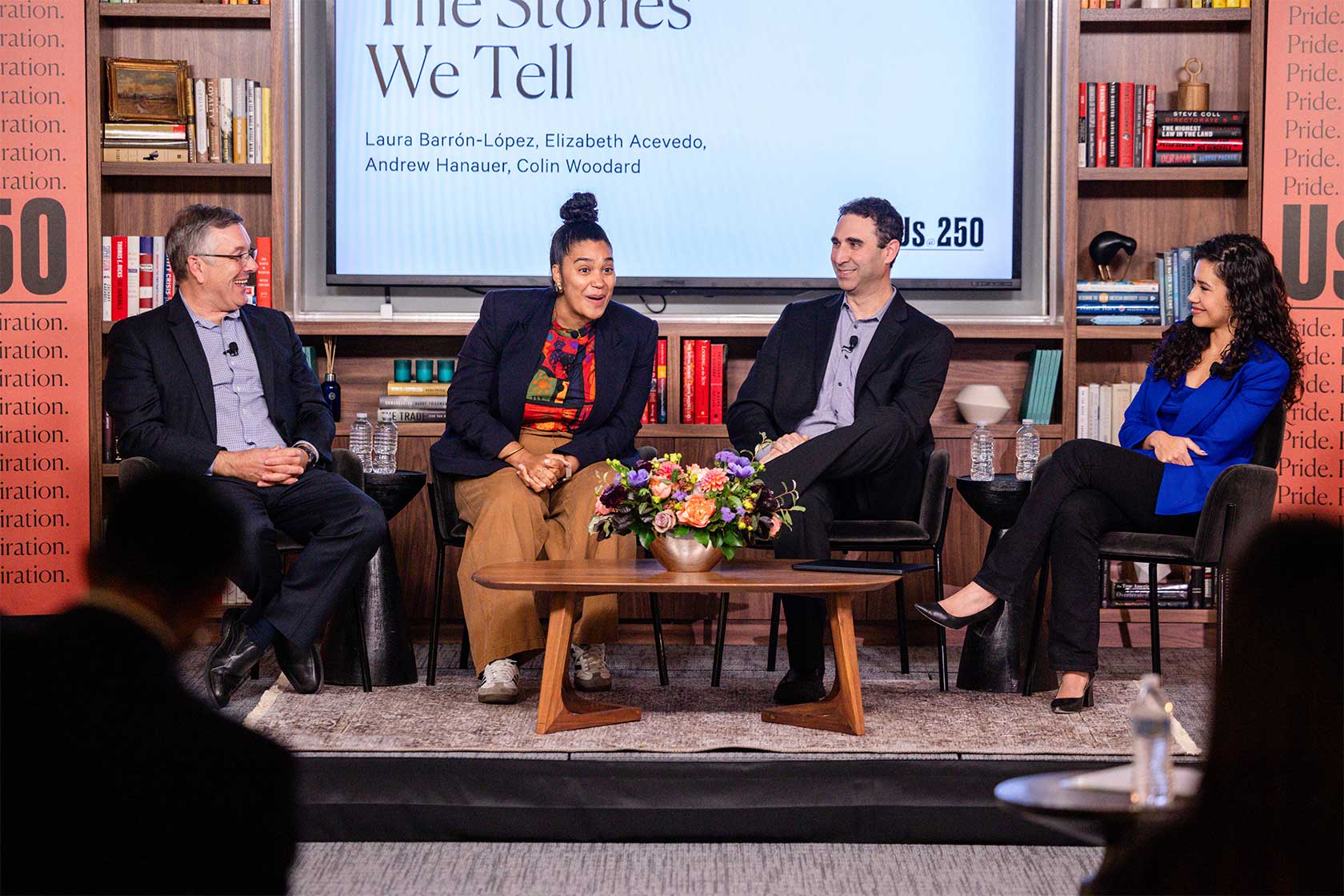
“Politics makes a terrible god,” says Andrew Hanauer, a nonprofit leader who works with faith leaders from across religions to address toxic polarization. His argument is that when we organize our behaviors around political identities, we privilege conflict and rejection of others. He is joined on the second panel by author and historian Colin Woodard, who shares that the nation’s story had to be “made up ex post facto,” and we’ve been fighting over it ever since. Despite today’s political tribalism, his research finds that Americans believe in defending inalienable rights for themselves and others, but that the solidarity falls way off “once party identity is invoked.” MSNBC White House correspondent Laura Barrón-López and author/poet Elizabeth Acevedo round out the conversation, both stressing the importance of language and hyper-specific stories to making America more inclusive, more honest with itself and its people, and more instructive for posterity.
Part of the allure of political identities is that they offer belonging. Though this may address some of the loneliness that seems widespread today, it often comes at the expense of community and multiracial democracy. Elizabeth makes the case that a more constructive way to foster belonging is to share stories true to individuals’ experiences, which are “invitations” to connect person to person. Listening to another’s story is one way to demonstrate that despite differences, you matter to one another.
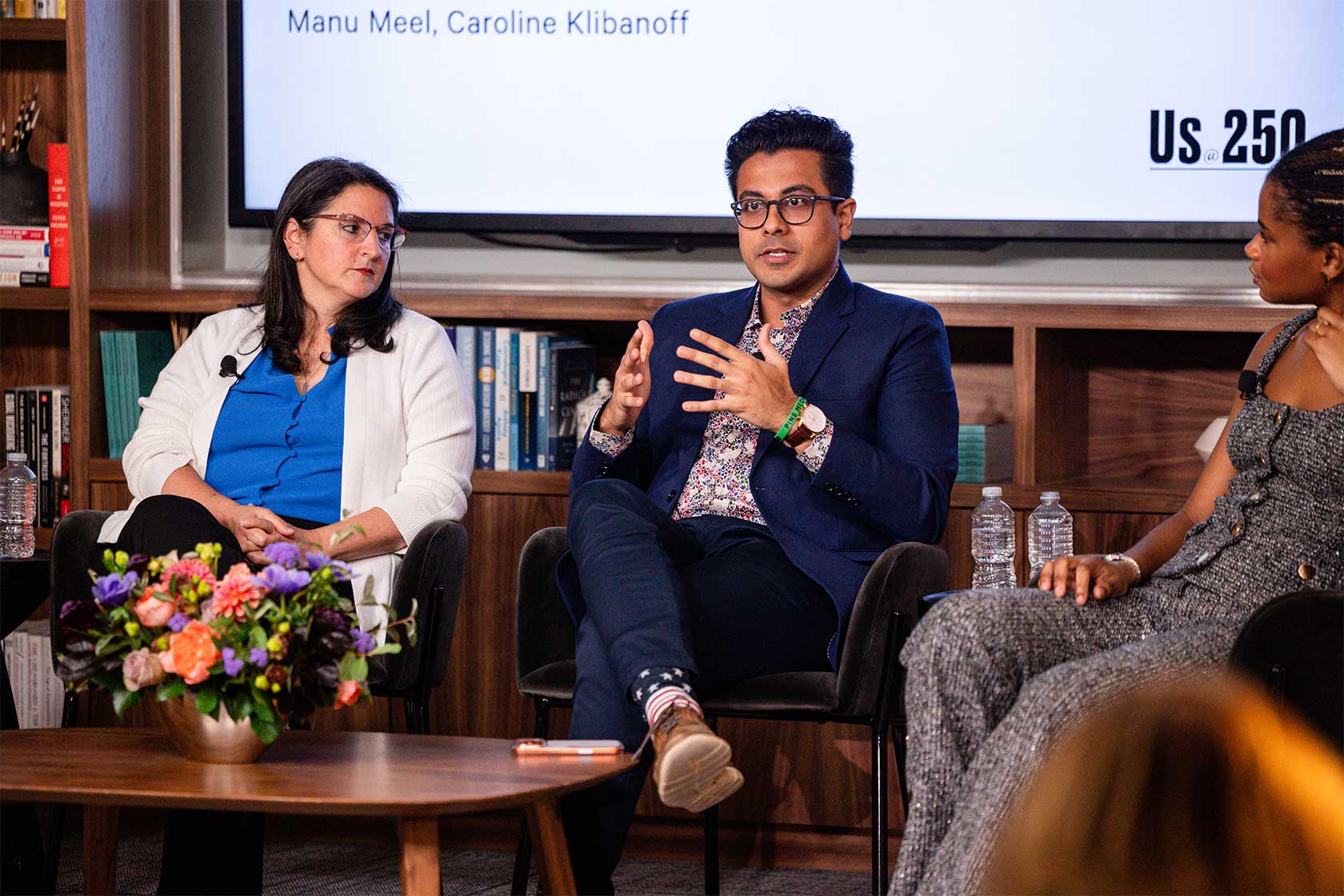
And really listening to another person in real and active ways is becoming more important than ever, as Marley Dias—a Gen Z civic activist and college senior—points out during her keynote before the third panel. She reminds us of the way the nation’s mythos has marginalized some of its people, and how the rapid proliferation of AI complicates which stories and videos and information we can believe.
Many of the day’s ideas encourage a reorienting of priorities. They ask us to resist the crisis of faith that Anne-Marie rightly cited, and instead, rejuvenate ourselves through local connections, communal care and affection, and the power of stories and shared experiences.
From poetry to film to music, from a thoughtfully curated lunch to comedy to good-faith discussions, the Us@250 Experience offers its namesake—an aesthetic and intellectual experience of American perspectives and reflections. At one point, Alexis sums up a central takeaway: You miss so much when you aren’t curious about others.
And we see this in a beautiful short documentary by fellow Alejandra Vasquez, “When It’s Good, It’s Good,” about her hometown of Denver City, Texas, an oilfield town in the Permian Basin where the truths of life and family resist easy political categorization. “‘American’ is a diverse identity,” she says during her remarks. The closer you look, the more complex we become. Jason Mangone of More in Common US agrees, during his remarks, detailing research that finds Americans love where they live “but are confused by their country.” Connection, he says, has to be community-focused and pre-political, because “politics is zero sum, but life is not.”
This is a truth that is easy to forget—or to willfully reject—when the allure of political identity is too great a temptation. As the writer George Packer puts it during the last conversation of the day, somewhere along the way it just became too politically and financially valuable for party elites to operate by inflaming the rest of us.
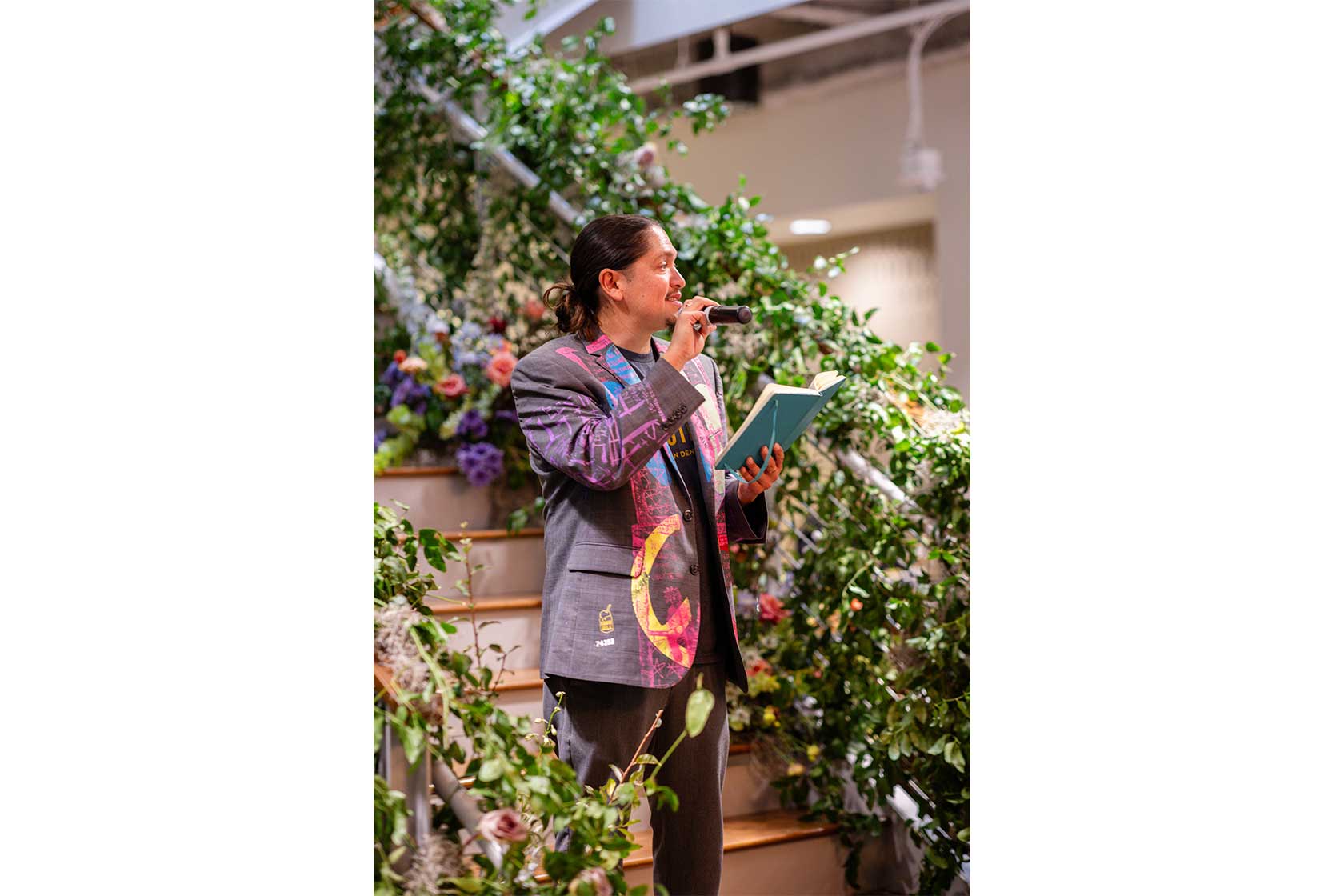
The poet and artist Adrian H. Molina, an inaugural Us@250 fellow, proclaimed during a rousing call-and-response poem that kickstarted the Us@250 Experience that “democracy is a spirit” as much as it is a set of systems.
It strikes me that the best path forward may be a sort of Pascal’s Wager, the philosophical conceit that argues belief in the divine without proof is a safer bet than a denial of it. A winning wager stands to inherit everything, in other words, at no greater price than the loss of a few temporal pleasures.
If we apply a version of this to ourselves—call it a new American Wager, perhaps—we might deny ourselves the short-term solace of political belonging that excludes others, and instead go all-in on the renewing promise of our founding principles and ourselves as a people. Stake our fortunes on the hope that we matter to one another, that what we want to be true exists within each of us. Believe that good leaders emerge from local engagement and civic participation. Count on our better angels.
If the stakes seem too high, then maybe we were never who we claimed to be. But I think that if we take the time to look and listen and be curious, we’ll find in each other all the proof we need.
Atlanta’s rapidly diversifying suburbs might provide a road map for coexistence in the rest of the country.
This essay was originally published in New Lines Magazine on July 14, 2025. It has been lightly edited to adhere to house style.

Fellow, Us@250

East of Atlanta sits the largest Confederate memorial ever built. On the side of Georgia’s Stone Mountain is a massive bas-relief sculpture of Jefferson Davis, Robert E. Lee, and Thomas “Stonewall” Jackson, three of the Confederacy’s most important officers. The carving was the work of a trio of sculptors, including Gutzon Borglum, who had also worked on Mount Rushmore.
The monument was long planned as a tribute to the “Lost Cause”—the narrative that the South had been deeply wronged by the federal government during and after the Civil War. The Ku Klux Klan picked the location as the site of its 1915 refounding or revival; in November of that year, a group of white supremacists lit a burning cross atop the mountain.
When the sculpture was finally completed in 1972, it served as a humiliating reminder for many Georgians, especially Black Georgians, of how many in the state had continued to resist civil rights for several decades after the end of the Reconstruction era, which lasted from 1865 until 1877.
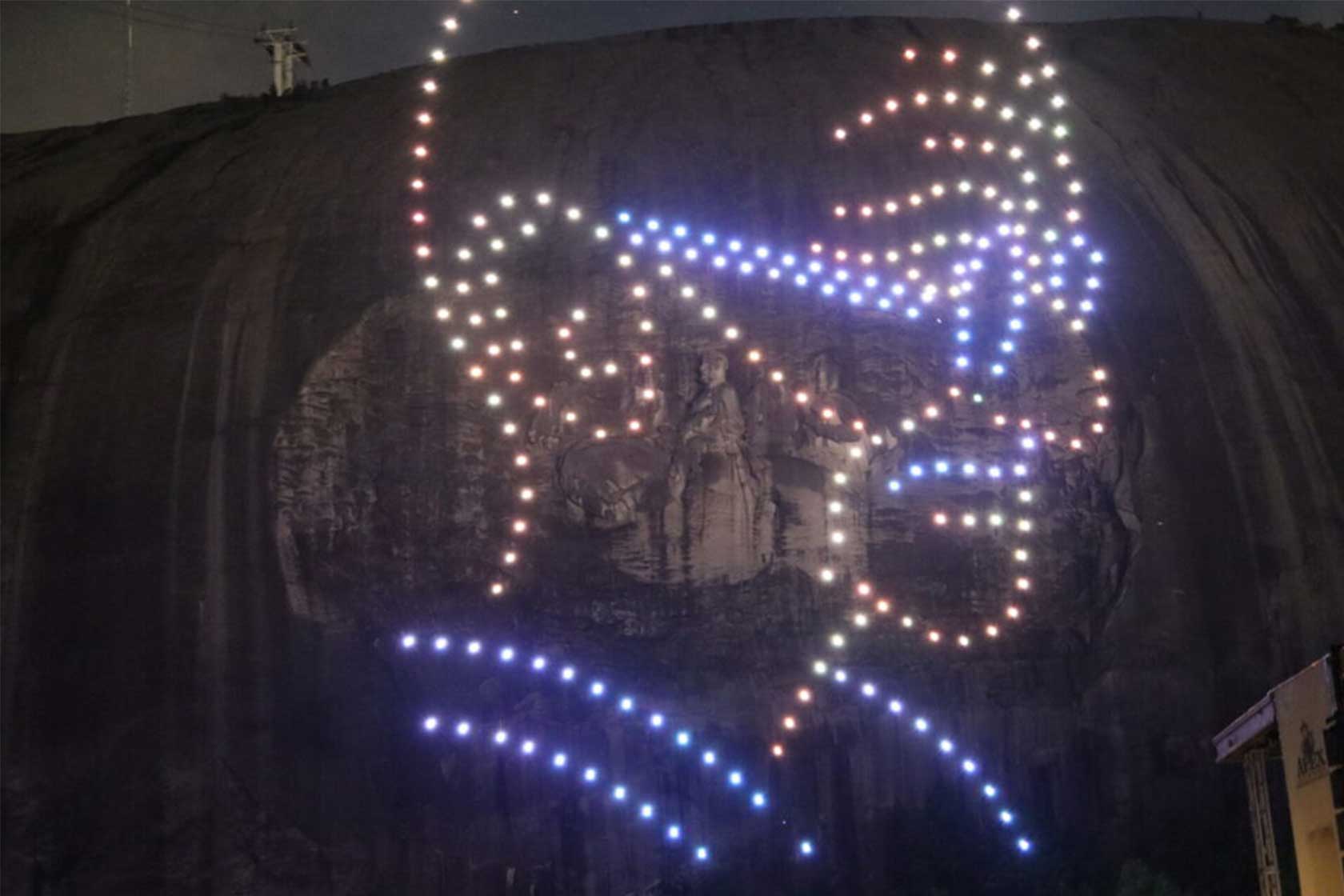
But during one humid August night in 2024, the mountain served a different purpose: bringing people together. As part of an Indian American festival dubbed “Colors of India,” an armada of drones took to the sky as regional music regaled hundreds of onlookers. The drones arranged themselves into cultural icons from India, including Mahatma Gandhi, whose visage was projected over that of Davis, Lee, and Jackson.
At one point, the drones darted from corner to corner to form the images of a Christian cross, an Islamic crescent moon, and the Hindu trishula, representing three of the great world religions that are found in India.
The idea of using the largest Confederate memorial in the United States to bring the local Indian community together came from Sunil Savili, the founder of Indian Friends of Atlanta (IFA), which hosted the festival. Savili came to the United States from India more than two decades ago. After establishing himself by working in the convenience store business, he eventually found enough financial success to start thinking about more than himself. He looked out at the population of Indian Americans in Georgia—which IFA then estimated to be about a quarter-million strong—and noticed that many of them had segregated themselves by caste or religion. He founded IFA to unite those groups and hold events like this one.
When I asked him how he felt about holding the event at a place the KKK had once made their rallying point, he spoke with pride about the racial progress he had seen over the years. “The world is changing. You know, it’s no longer people can say, ‘Hey, this is my place, this is my country, this is my city,’” he told New Lines.
Far from seeing Georgia as a place held back by its Confederate and Jim Crow past, Savili said that he doesn’t regularly experience racism, although he acknowledged that incidents of racial discrimination do persist. But he emphasized that coming here had allowed immigrants like him to find relative tolerance and coexistence, compared to what he left at home in India. “You compare with India, Pakistan, any other country you see, hardly there is anything [happening] to anybody,” he said.
The thousands of Indian Americans who gathered at the base of Stone Mountain to celebrate diversity rather than supremacy represented the paradox that sits at the heart of modern Georgia.
It’s a state where it’s not unusual to see a Confederate flag on a pickup truck parked next to an electric car with a Kamala Harris bumper sticker. The governor is an anti-abortion Christian Republican, while both senators are liberal Democrats—one a Jewish millennial and the other a Black preacher who serves as senior pastor at the Rev. Martin Luther King Jr.’s historic Ebenezer Baptist Church.
The fulcrum of the social and political change that brought these men to power is metro Atlanta, the rapidly diversifying suburbs that border the state’s capital city, where white people and minorities, conservatives and liberals, retired suburbanites and young urbanists, transplants and natives are learning to build new types of communities together.
The evolving metro Atlanta area is not only helping to create a new Georgia, but its demographics increasingly resemble national trend lines—suggesting that if one wanted a road map for what the country might look like in the future, a close look at the Peach State might offer some clues.
One of the suburban Atlanta counties that has seen the most dramatic political and cultural transformations is Cobb. Located northwest of the city, Cobb was once one of the epicenters for the so-called Republican Revolution of the 1990s, in which the GOP regained control of both the U.S. House of Representatives and the Senate for the first time in 40 years.
The leader of that “revolution,” former U.S. House Speaker Newt Gingrich, hailed from Cobb County. Other powerful Republicans, like President Donald Trump’s former Health and Human Services Secretary Tom Price, represented parts of the county while they served in Congress. In 2004, when President George W. Bush sought reelection, Cobb was a pushover for the GOP. He won almost 62 percent of the vote there. Mitt Romney, the Republican nominee in 2012, won comfortably with almost 56 percent of the vote.
One woman who needed no reminder of just how conservative the county could be was Lisa Cupid. In 2015, she was the sole Democrat and African American serving on the five-member Cobb County Board of Commissioners. Late one night, as she was out studying for an exam, Cupid was tailed by an unmarked car. Fearing for her life, she ended up calling the police.
It turned out the car she called the police on was itself driven by a police officer. She had been tailed in what was likely an act of racial profiling. But her fellow commissioners—all white Republicans—expressed no sympathy when she recalled the tale. “I don’t call it profiling,” one commissioner said. “I call it good police work.”
While much of the country was finally taking a look at police brutality and mistreatment of African Americans by law enforcement, Cobb appeared to be stuck in a time warp. “Backing the blue” at any cost was more important than making sure a colleague was not mistreated.
But a year later, in 2016, a sign arrived that Cobb would not always be such a conservative county. Hillary Clinton narrowly carried the county over Trump, winning 48.8 percent of the vote. Two years later, Democratic gubernatorial candidate Stacey Abrams won just over 54 percent of the vote in the county. While Clinton and Abrams still went on to lose their respective elections in the state, Joe Biden won Cobb with just over 56 percent of the vote and carried the state’s electoral votes in the 2020 election.
While the nation’s eyes turned to Biden’s shocking win in Georgia, back home in Cobb, the county government saw its own transformation. Cupid, who was once the lone Democrat and minority on the county commission, was elevated to the position of board chair after her party won a majority of seats in the body.
Cobb’s transformation from conservative bastion to Democratic beachhead was powered by changing demographics. Throughout the early 2000s, Cobb County was seen as the quintessential white, suburban, upper-middle-class area. In 2010, almost 58 percent of the population was non-Hispanic white, while the Black population was 24 percent, the Latino population around 12 percent and the Asian population just over 4 percent. But by 2024, Georgians who identified as non-Hispanic whites made up just 48 percent of the county, while just under one-third were Black, 15 percent Hispanic, and 6 percent Asian.
In an interview with New Lines, Cupid credited the quality of life in Cobb for the booming population.
“I think people in general have an interest in the things that attract all people to strong communities like Cobb. We have good schools, we have well-paying jobs. We have beautiful communities, natural amenities,” she explained, adding that the county has also become a destination for people who want proximity to Atlanta, which is a quick commute from the area.
Cupid moved to the Cobb area herself from Michigan in the 1990s, first arriving in East Cobb and later buying a home in South Cobb, the poorer part of the county. She represented constituents who lacked access to transportation compared with prosperous residents in other parts of the county.
One incident that deeply impacted her occurred before she joined the board of commissioners. A Cobb County woman was struck by a car while crossing the street, only to be hit with a jaywalking charge afterward. “In Cobb, traditionally, the car is king. And we think about how we can move cars rapidly through as quickly as possible, but we don’t think how people who depend on their own two feet are moving through,” she said. “So…there’s a shift to me to think about the people in Cobb who only had their two feet to get through the county.”
Cupid and the other Democrats on the board have pushed hard for increased support for transit and walkability, as well as for zoning for multifamily and affordable housing so that more people of modest means can come to live in Cobb.
But in doing so, they’ve found themselves facing considerable opposition from the county’s more conservative residents, who have argued that Cupid and the Democrats are trying to transform this once-quiet suburb into something else entirely. When Cupid and her allies on the county commission proposed a 1 percent increase in the sales tax to finance an expansion in public transit, those residents leaped into action. They packed town halls, handed out oppositional yard signs, and voiced their outrage throughout the local media.
One of the leading opponents of the proposal was Lance Lamberton, who serves as the chair and founder of the Cobb Taxpayers Association. “Cobb is not New York City,” read the headline in a local newspaper opinion piece he wrote, denouncing proposals to expand transit.
And if anyone would know what New York City is like, it would be him—he grew up in Manhattan. In an interview with New Lines, he explained why his childhood in the Big Apple didn’t mean he wanted the same for his home in Cobb. “That was great growing up in [my] 20s. The girls, the clubs, the nightlife—that was great,” he said.
But that’s not the life he and other traditionalists want to live in Cobb today. He arrived in Georgia over two decades ago and came to like the laid-back life in the Atlanta suburbs. After the Democrats took over the county, he started to wonder if that life was under attack. And he had the political skills to fight back — in his younger years, he had worked as a staffer in President Ronald Reagan’s White House.
In his view, Cupid is promoting the urbanization of Cobb County, something he thinks would fundamentally disrupt life there. “The single detached home is the predominant residential model for the county, and I hate to see that being taken over by dense apartments all over the place. [That] brings in less stable elements to the community,” he told me. “More transients. Transients are not necessarily bad people, but they don’t have the same investment in the community for its long-term well-being. And so we want to preserve what’s good.”
When it came to mass transit, he was even more adamant in his opposition, proposing that it was a political scheme. “I personally think the hidden political agenda behind this [transit proposal] is to increase urbanization [and] therefore solidify the Democratic base,” he said.
Lamberton and the conservatives won the argument against higher transit taxes. When Cobb voters went to the polls in November, they defeated the tax hike.
What was most telling about the vote was the margin. Only 42 percent of Cobb County voted for Trump in November’s election, but over 62 percent voted against the transit measure. That demonstrates that Lamberton’s views are not only held by conservative Republicans or white baby boomers; plenty of minority residents have moved into the county, bought spacious suburban homes and nice cars, and adapted to the same lifestyle that the Gingrich Republicans once revered.
Yet there are signs of a progressive insurgency beneath the moderation on the surface of Georgia politics. While Georgia’s population is growing as people from across the country flock here for affordable housing, a robust job market, and a moderate political climate, some Georgians continue to be left behind.
Child poverty remains above the national average. The percentage of its population with health insurance ranks near last in the country. Although metro Atlanta’s homes are affordable to newcomers from the coasts, many longtime Georgians are being squeezed by higher housing costs as more people move in.
That’s something that Gabriel Sanchez wants to change. He was elected to the Georgia House of Representatives as a Democrat from Cobb County in 2024 while still in his 20s. The son of Colombian immigrants, he unseated a Democratic incumbent named Teri Anulewicz by, among other things, organizing disaffected Latino voters in the district.
While Cupid and many state Democrats are touting a moderate message, seeking to court Republicans, Sanchez is more unabashedly progressive. A self-proclaimed democratic socialist, he wants to repeal Georgia’s ban on rent control, guarantee paid time off and parental leave for workers, establish a minimum $20 hourly wage, and increase taxes on the superrich.
He sees Cobb’s political transformation as part of a bigger class struggle. “There’s an old guard of wealthy, mostly white people, a lot of old money, who are used to doing whatever they want and getting away with it, but now suddenly they have to start sharing those resources with others who are less fortunate,” he told New Lines. “And they don’t like that.”
Another Democratic Georgia state representative, Ruwa Romman, the only Palestinian American in the legislature, argued in an interview that Democrats don’t sufficiently lean into the type of argument Sanchez is making. Romman came to national prominence last August when national party leaders blocked her from speaking at the Democratic National Convention in Chicago.
“I think too many people get too timid about what [Democratic] values are, [and] we have crappy people that run as Democrats that aren’t really Democrats, and then it makes all of us, the rest of us, look bad,” she told New Lines, arguing that Democrats failed to reach their base turnout targets in the 2024 election.
Sanchez’s advice for the Democratic Party is that the way to win is to push harder on core values. “A lot of people see Democrats as elitist or bad on the economy, stuff like that. When in reality we could be different if we just fought for the issues that we truly believe in…like housing, like health care, like an economy for all,” he said, adding that the party should be championing things like legalizing marijuana, which is increasingly popular.
But whether or not the party listens to his advice, his election to the legislature was already a win for him. During his campaign for public office, he was working at a local restaurant. His victory granted him access to health insurance, thanks to the public benefits offered to state lawmakers.
In many ways, Cobb is a bellwether for the rest of the state, which is similarly diversifying.
Demographic shifts in Forsyth, a Republican county northeast of Atlanta, are in some ways even more dramatic. Forsyth had historically been known as one of Georgia’s most racist counties. That reputation took root in 1912, when a series of events led to the expulsion of the county’s more than 1,000 Black residents.
It all started when a white woman named Ellen Grice claimed that she had awoken to the sight of a Black man in her bedroom. A few days later, a white woman named Mae Crow was found brutally beaten; a month later she died.
African American men were collectively held responsible for these crimes, and one of them was lynched by a mob while two more were executed by the state. Many white Georgians felt uneasy living among African Americans. The “night riders,” a white supremacist gang, helped drive the entire Black population out of the county by attacking African American homes and burning their churches. They left their property behind, which was expropriated by various white families. It wasn’t the first expulsion in the county; the area was also one of the launching points of the Trail of Tears, the forced relocation in the 1830s of Native American tribes from their ancestral lands in the southeastern United States to Indian Territory (present-day Oklahoma)—a process that resulted in the deaths of an estimated 15,000 Indigenous people.
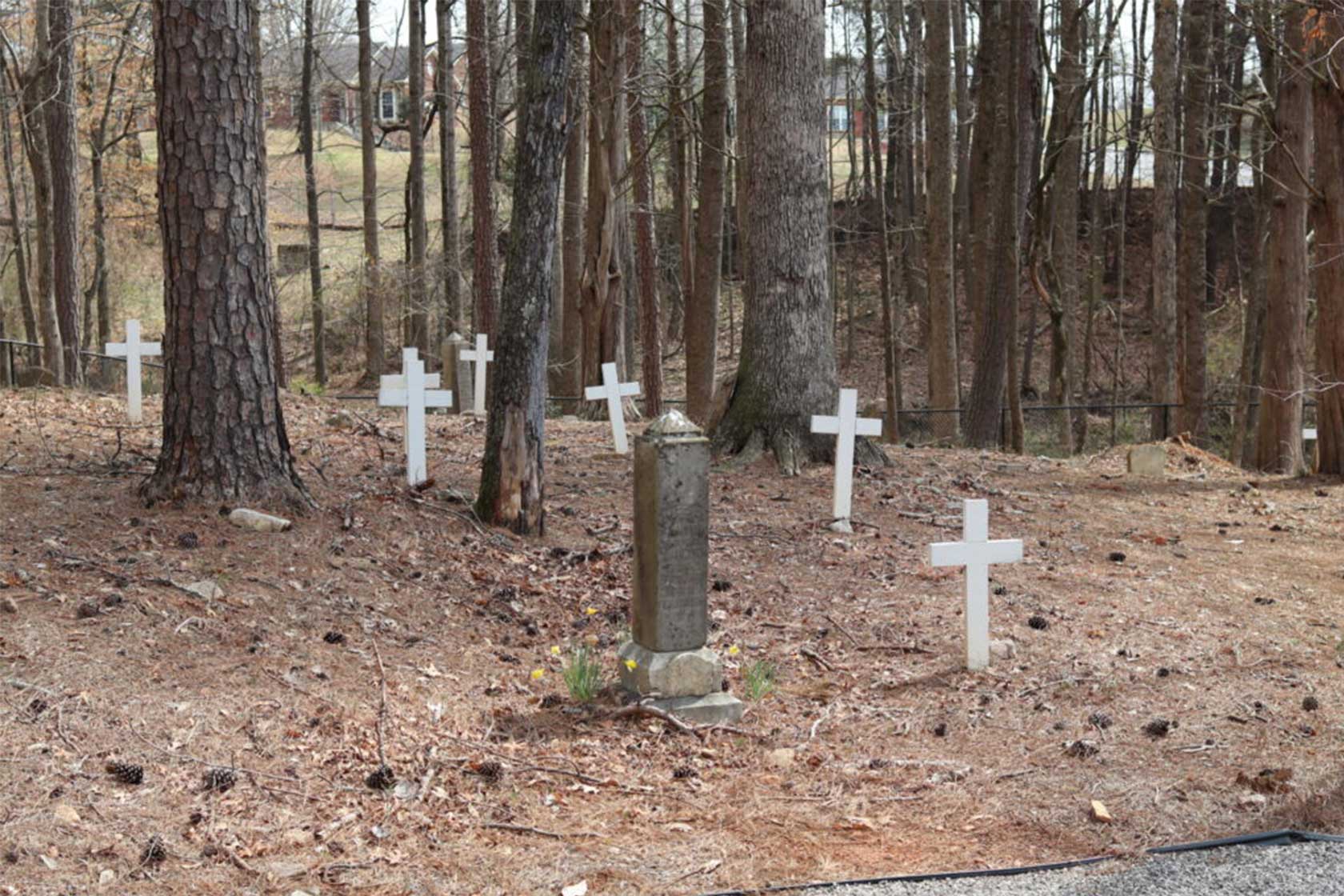
For decades after, almost no non-white people came to live in the county. Even after the passage in 1964 of the Civil Rights Act, which made segregation illegal, few minorities wanted to risk setting foot in Forsyth County. This was true even after the establishment of Lake Lanier, a man-made body that accelerated development and made the county prosperous.
But in 1987, the television host Oprah Winfrey brought her show down to the county to cover growing civil rights protests in the area. The civil rights activist Hosea Williams had marched through Forsyth to celebrate the relatively new Martin Luther King Jr. holiday. His roughly 75 supporters were met by a crowd of hundreds of Klansmen and their backers, many of whom pelted his march with rocks and bottles. Undeterred, Williams came back with 20,000 marchers for a second demonstration.
Winfrey wanted to know what life was like in a county that hadn’t settled a single Black resident in dozens of years, and was resisting a minority presence for decades after the Civil Rights Movement. She found herself shocked as she interviewed white residents who said they simply didn’t want Black residents in their county. It was as if Forsyth was still living in a bygone era.
Yet driving through Forsyth today, you would be hard-pressed to believe that it was ever a hub of white nationalism. While over 60 percent of the population is white, the rest is a mix of Asians (over 20 percent) and Hispanics (10 percent).
Indian Americans are an especially large group; they started migrating into the county in the past decade as the technology industry took root. The exact number of Indian Americans in the county is unknown, but they represent the majority of the more than 50,000 Asians the census reports now live there. The current head of the Forsyth County commission is also an Indian American.
Kannan Udayarajan, the chair of the Forsyth County Democrats and an Indian American himself, has his own measure of how the population has grown. When he moved to the area from India in 2007, there was only one Indian restaurant.
Now, he told New Lines, “there’s 45-plus!”
Udayarajan said that the preponderance of tech jobs, as well as affordable homes and strong schools, helped attract the Indian population to Forsyth.
His experience has been nothing like what one might expect, given the county’s history. “Professionally, interactions in the communities, everything has been positive for me,” he said.
That isn’t to say that flashes of the old Forsyth County don’t appear from time to time. He recalled that a proposed Hindu temple was protested with signs that appeared all over the county emblazoned with the phrase “No red dots.”
Sometimes, lingering prejudices can be even more direct. Richard Rabindran, an Indian American student who attends the University of Georgia and lives in Forsyth with his family, told me that his parents experienced a road rage incident in which a white man hurled racial invective at them. “He kept making gestures, like he would go out onto the street, kept making gestures like he was defecating on the street,” he said.
Rabindran, whose family is Christian, has also faced discrimination from within, as local Indian Americans from different religious affiliations have sometimes ostracized them.
None of this, however, has kept the Indian American population from booming within the area. Driving through South Forsyth County, one sees the landscape littered with shops, eateries, and other small businesses owned by South Asians.
Compared to Cobb, however, there is one important difference. When you step into an Indian restaurant in cities there, like Marietta or Smyrna, you notice a diverse clientele. Sometimes, white people outnumber Indian customers. In Forsyth, the Indian restaurants are notably segregated. White customers are rare. “I don’t think we’ve gotten to that level yet, where we’re all going to be eating at the same place,” Rabindran said.
While the Indian population is booming and Latino numbers remain sizable, there’s one minority group you still won’t find many of in Forsyth County. Less than 5 percent of the county’s population is Black. That’s unusual for a county that is a short drive from Atlanta.
Virtually all of the multiple Black residents I spoke with in the county told me they love living there, but they were also quick to say that their Black friends and family were shocked they’d ever consider a home in Forsyth because of its historic reputation.
“The people have been very nice, for the most part,” said Jonathan Hall, a Black man originally from Oklahoma City who works as a consultant in the county.
Like many current Black residents, his family was drawn to the county because of its reputation for good schools and beautiful landscapes.
He’s also one of the founders of Brothers of Forsyth, a social group for Black men in the county who come together to support each other and build relationships with county leaders.
One of their challenges is to convince more Black people to take the plunge and move to the area. “So you say to somebody who lives in Atlanta, African American, and say, ‘Why don’t you live in Forsyth County?’ They’re like, ‘Why would I add a layer of racism to my life?’” he explained.
Many of the county’s white residents, however, resist this perception. Cindy Mills, a former Forsyth County commissioner, was one of the residents in the audience when Oprah did her show from the region decades ago. “I was more on the defensive side, when people would say bad things about the county, I was more protective of the county because I had never had any ill will towards anyone of color,” she told New Lines.
Thomas Russell, a white resident who was born in the county in 1947, had also attended the Oprah event in 1987 and had a similar takeaway. “She called us bigots, and that’s the farthest from Forsyth County you can get, is being a bigot,” he said.
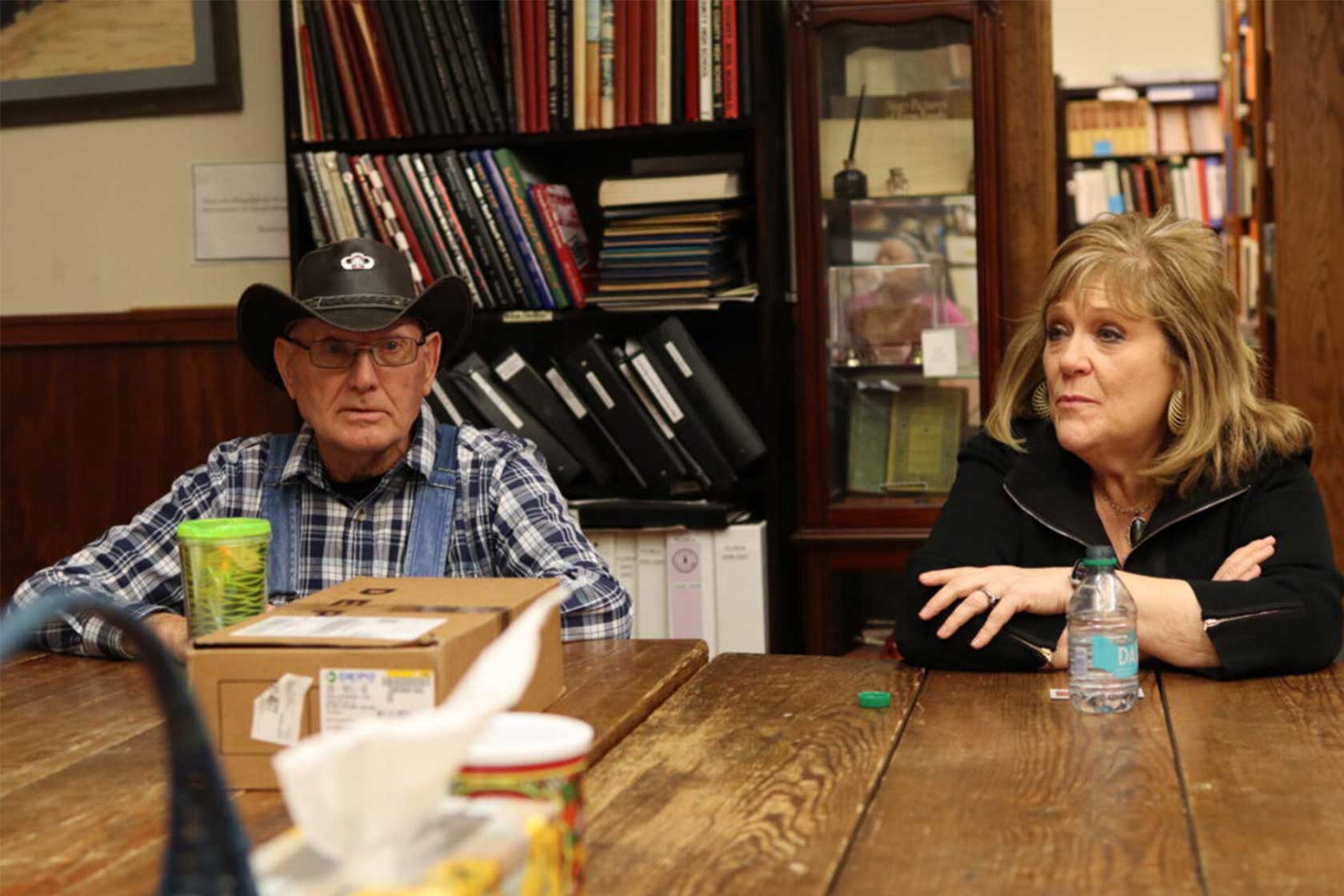
I met Mills and Russell in a room at the Historical Society of Cumming/Forsyth County, which had assembled a diverse group of residents to come speak with me. All of the Black residents who attended the meeting said they loved living in Forsyth, but their praise came with an asterisk.
Mark and Kimberly Boyd, a Black couple, moved into the county in 2007. When they made the decision to move, they had no idea about the racist history—they just wanted to live in a place with low taxes and good schools.
But the night they moved in, they happened to watch the Oprah episode about Forsyth. For Mark, in particular, this caused anxiety. He had grown up in Illinois in the 1960s and had personally been through the process of racial integration in schools. He had experienced vulgar racism firsthand early in his life. After coming to live in Forsyth, he occasionally had to relive his trauma because of things his kids encountered.
Mark and his wife told the group that after moving into the county, their kids had been called the N-word and ugly names in school and on the bus. This prompted them to alert school officials and work with counselors to get their children help.
But the Boyds have also had positive experiences in the county. They opened up a bakery together, not knowing what sort of reception they would get from the locals. “We didn’t know if we were going to be embraced or if folks would come and just burn our store down,” Kimberly said. “And every fear that we had as [business owners] not only got demolished—we have been loved on.”
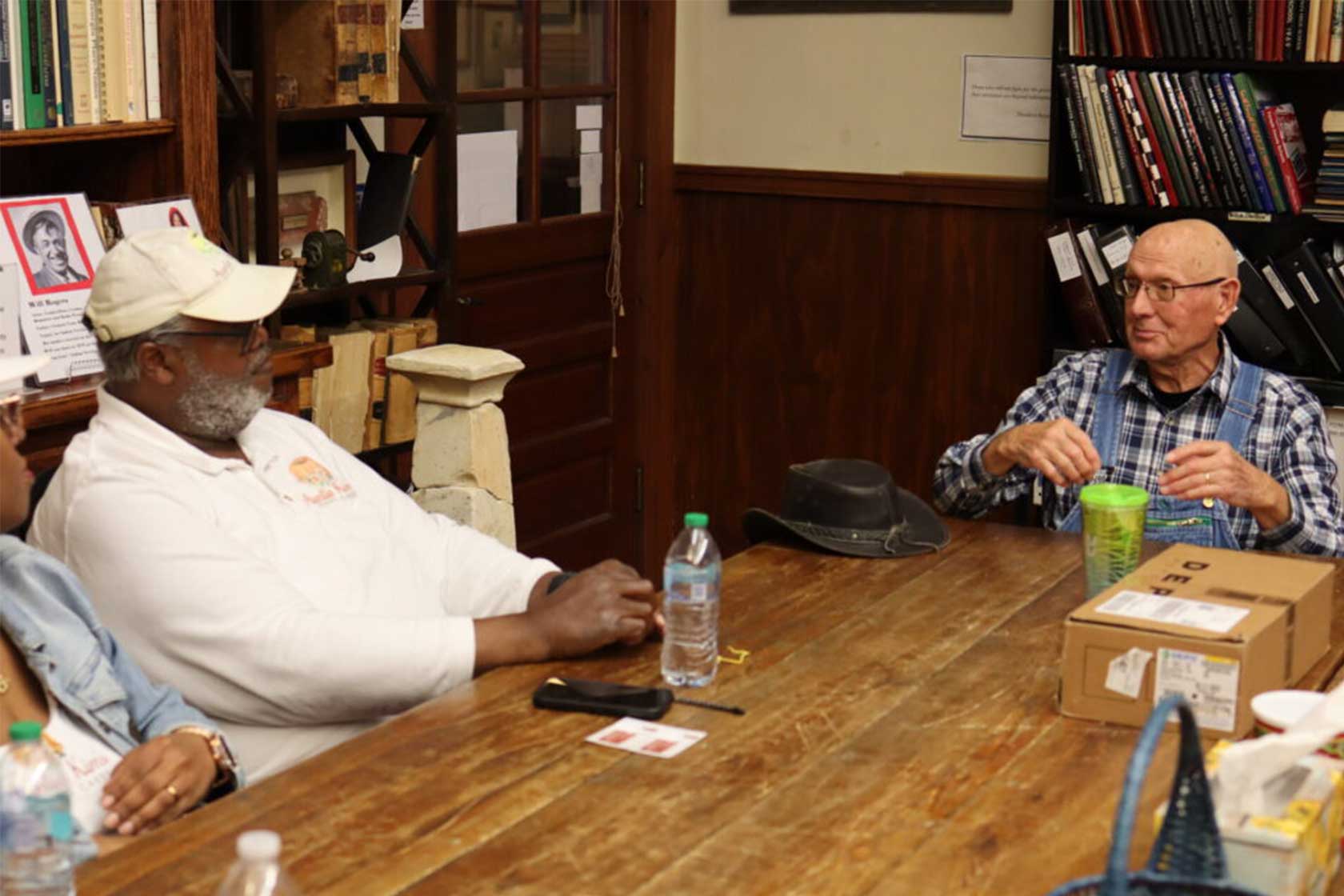
She even positively contrasted her experience growing up in California with how life is now in Forsyth County. “I’m coming from California. We don’t even talk to our neighbors, right? And here in Forsyth, not only do they come talk to us, they check on us, love on us,” she said.
Their experience is an example of the contradictions of the state that Georgia is today. On the one hand, their children still encounter 1950s-style racial attitudes at times; on the other, it’s the most welcoming place they’ve ever lived, in many ways.
One reason for optimism that the latter might overcome the former was how congenial and understanding everyone at the meeting was. In a room packed full of white and Black residents discussing Forsyth’s racial history and current issues, nobody raised their voice. Nobody insulted anyone else. And everyone took pains to understand the other person’s point of view.
Russell, the elderly white man who described the pre–civil rights Forsyth he grew up in as idyllic, explained that later in his life he started working in Atlanta alongside diverse coworkers; sometimes he was the only white person in the room. “I know how the cream filling in an Oreo feels now,” he recalled saying one time at a work meeting, drawing laughs from the room.
After a number of the Black residents had spoken, Mills offered a memory to explain how she understood their point of view. She mentioned that she once knew a Black man in the county who ran a nonprofit helping the poor. She had wanted to write a check to support his organization, so she told him she would leave it under her porch. When he refused, she was curious as to why he didn’t want it. “He said, ‘Whoa, no no no no no. I can’t come to your house and get that check….You don’t know what it is to be a Black man and to come to your house and somebody see it,” he told her.
The experience humbled her. “I never thought about it. Like I never thought a thing….It made me feel so bad. It did because I would’ve never even thought about that at all,” she said.
Georgia’s political and social destinies are beyond our ability to predict, but it’s clear that the fulcrum of the state will be the ring of counties around Atlanta. As the metro Atlanta area continues to grow and diversify, the state will continue to have to work through the growing pains that have been witnessed in places like Cobb and Forsyth.
But back in Cobb, Cupid argued that, whatever comes next, Georgia’s evolution doesn’t have to be a zero-sum game between traditionalist white conservatives and the growing minority population. “We really want the same things you want. We want good schools. We want a good economy. We want a place that’s safe to raise our family in,” she said.
It’s hard not to see the debates roiling the metro Atlanta area as a reflection of the debates going on in the country writ large. How do we balance the interests of longtime natives and newcomers? Can a culturally and ideologically diverse polity work together toward shared goals?
If places like Stone Mountain, Cobb, and Forsyth—all of which were once bastions of explicit white supremacy—can diversify and thrive, it suggests that America can do the same.
Katrina didn’t just devastate a region—it exposed a nation.
Editor’s note: This essay was originally published in C.K. Weekly on July 18, 2025. It has been lightly edited to adhere to house style.

Fellow, Us@250
I was five years old when Hurricane Katrina struck the Gulf Coast in August 2005. I don’t remember much—mainly, just the news headlines, the prayers for victims, and the overwhelming joy of Saints fans when the team won the Super Bowl several years later. The victory seemed larger than sports, but I didn’t understand why. It was only recently that I began to grasp what the storm showed about who we are and who we have been.
Two decades after Katrina struck, New America brought together journalists, artists, and thinkers in an event called “Katrina’s America: 20 Years Since the Storm.” It illustrated how Katrina didn’t just devastate a region—it exposed a nation.
The Category 5 hurricane that ravaged New Orleans and much of the southern coast did not discriminate in its destruction, but when the winds calmed and the water receded, we could see who was left behind. Differences in preparedness, evacuation, infrastructure failures, and relief and recovery efforts meant the suffering left by Katrina was far from equal.
City evacuation plans stranded people who relied on public transportation. Decades of disinvestment in public infrastructure in lower-income neighborhoods like the Lower Ninth Ward led to the collapse of the underfunded and poorly maintained levee system, flooding predominantly Black communities. An uncoordinated, underfunded response by the Federal Emergency Management Agency left many residents trapped for days or even weeks. As people struggled to obtain food, some news narratives painted Black residents, but not white residents, as looters.
Wealthier, whiter communities were also advantaged in programs designed to help homeowners rebuild, such as the Road Home program, which provided grants of up to $150,000 to eligible homeowners. But those grants were largely tied to the properties’ pre-storm value, which were higher in predominantly white communities, and not to the cost of rebuilding. Moreover, many Black residents lacked property titles and got tied up in red tape.
The failures surrounding storm preparation and response revealed not only inequality, but a broader, structural rot in which the people who are already struggling are most likely to bear the brunt of our action and inaction.
In a 2015 article in The Atlantic, John McQuaid discussed the lessons still unlearned 10 years after Hurricane Katrina. He wrote: “America is an optimistic nation. It has a short memory. Our political system and media don’t really learn very obvious lessons that unspool right in front of everyone’s faces. And so we end up repeating our errors—at least, some of them—to great sorrow.”
Optimism is not the problem—the problem is shortsightedness that prevents us from addressing long-term challenges until they’re already at our doorstep. The failures of Katrina were decades in the making, rooted in past injustices and policies of redlining, Jim Crow segregation, and environmental and infrastructure neglect.
The systems that failed in Katrina and its aftermath still exist. In some ways, we’ve incentivized them, making disaster big business. There is profit to be made from storm response. Today, private equity firms are buying up small storm response and restoration companies. For example, one firm, Trivest Partners, invested in 14 of these companies between 2020 and 2024, according to the Private Equity Stakeholder Project, a watchdog organization. That group also published a 2024 Private Equity Climate Risks Scorecard, finding that the top 21 private equity firms have “an outsized role in accelerating the climate crisis,” with their energy portfolios generating 1.17 billion metric tons of greenhouse gases per year. This means that a growing number of companies engaged in storm response may be simultaneously contributing to the greater number and power of these storms.
At the New America event, Nikole Hannah-Jones, lead creator and author of The 1619 Project, which placed slavery and its legacy at the center of our national story, delivered a sobering message. She asserted that the nation is moving into darker and more unforgiving systemic terrain, with Black people being “disappeared from mainstream institutions.” She recalled times in American history when social progress was reversed—and said it can happen again.
Since that day of reflection, I have been struggling to find optimism. Artificial intelligence, growing inequality, systemic injustice, the continuing corporate capture of our politics and economy: These are difficult things to ponder. Cynicism can feel more appropriate than hope.
But perhaps we can learn something from another speaker at the event: Chief Xian aTunde Adjuah, a visionary musician, composer, and cultural leader in New Orleans. He articulated the artistic expression of the people of his city, where resistance is found in art, culture, and moments of joy. The people of New Orleans resist by creating art and celebrating life and community.
That’s a lesson from Katrina. When big solutions seem out of reach and hope is hard to find, we can still remember our humanity and respond personally. We can express ourselves and find joy, community, and fellowship. We can connect beyond the political divide and work to know each other as fellow human beings.
And there’s power in that.
From radio and podcasts to live performances, a Louisiana nonprofit provides American art forms for everybody.
Fellow, Us@250
Young artisans set up their wares around the edge of the courtyard while, on the stage, volunteers arrange the last pieces of sound equipment and the house DJ spins beats. The air is rich with the good scent of the lilac that climbs the walls. Guests arrive by the dozens.
Be Loud Studios’ annual Youth Voices Festival begins in a few minutes. This is the courtyard of Baldwin & Co., a Black-owned independent bookshop, coffeehouse, and event space on Elysian Fields Avenue in New Orleans. We’re mere blocks from the spot where, in 1892, Homer Plessy’s courageous civil disobedience found him forcibly removed from a “whites only” train car.
As I pass through, a young man named Marlón (aka DJ Mar) asks to interview me at his video booth, an iPhone on a stand. A high school student, Marlón has worked with Be Loud Studios for about a year. He wears glasses, a smile, and a peace sign pendant. He’s got good questions (“How are you loud?” and “What do you want our community to know?”), but he laughs, slightly nervous, when he initially forgets to hand me the microphone.
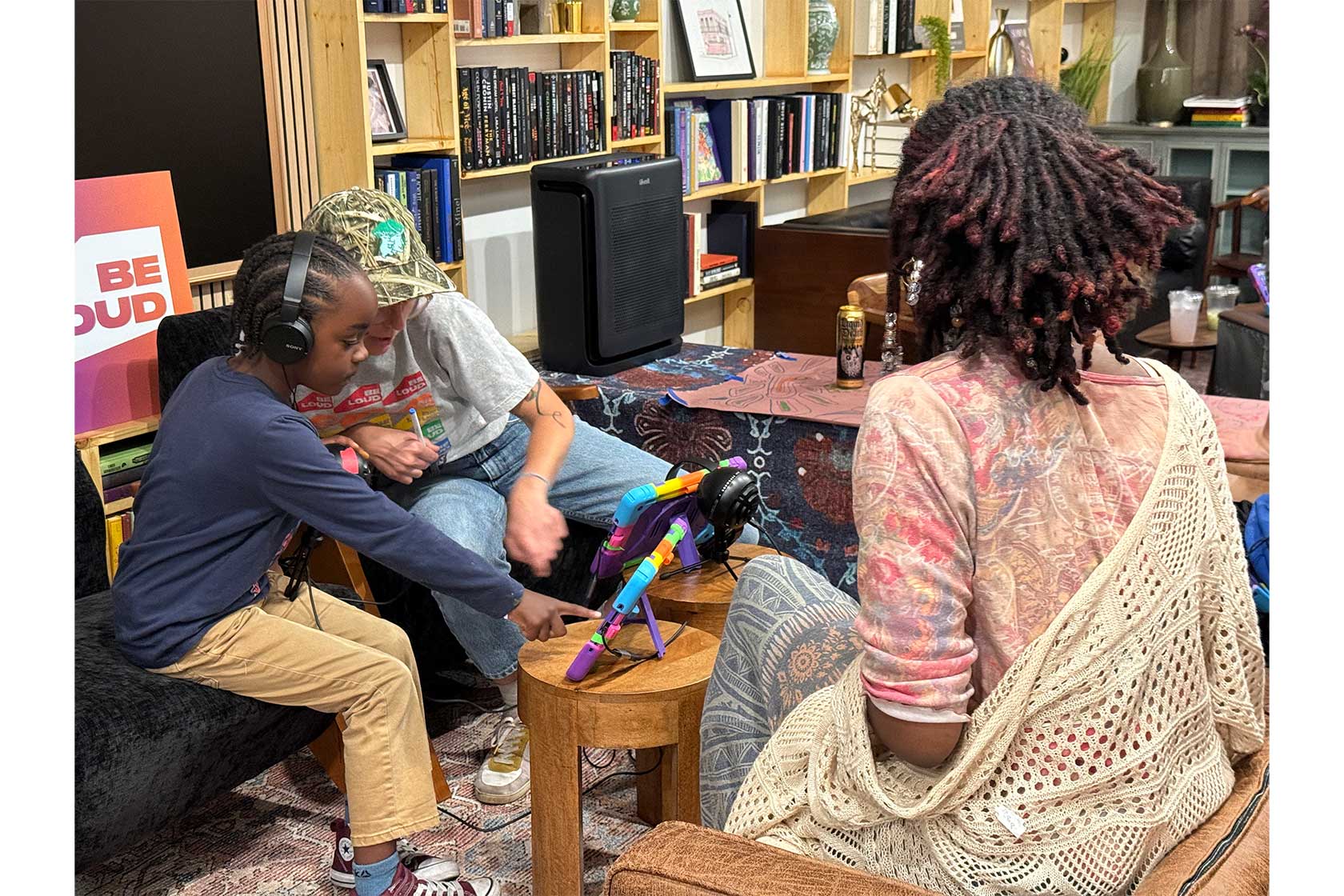
Be Loud Studios, a local nonprofit that uses radio production to foster self-efficacy among the city’s schoolchildren, founded the Youth Voices Festival five years ago as a way to share audio projects made by teachers; over time the event has evolved into a showcase of both youth accomplishment and the wide array of equity work being done with the young people of New Orleans. Alex Owens, Be Loud’s co-founder, was a fellow with New America, which funded this year’s festival in part.
I met Owens and the rest of the Be Loud staff yesterday at their Seventh Ward headquarters. I watched their final prep as they organized auxiliary cables, microphones, iPads, and headphones into piles labeled “Street Interview,” “Listening Lounge,” “Podcast Studio.” They debated whether the planned layout would promote enough interaction between attendees and young people.
Be Loud tries to give kids the space to translate the experience of being young for the rest of us, as Owens told me, “so we can connect to them.”
The festival’s recording stations would be run by kids, and young people would emcee the afternoon show. After all, the festival is about “celebrating youth leadership,” explained Diana Turner, Be Loud’s other co-founder.
I liked watching them work. The Be Loud adults have all been schoolteachers, and they have a roll-up-your-sleeves-and-jump-in ethos about them.
Be Loud’s efforts began about a decade ago when Owens and Turner, teachers in the same school, were trying to reach a second grader named Byron who refused to write. They suggested radio to him, Owens recalled: “If you make a script, we’ll turn it into a radio show.” Energized, Byron got off the bus the next morning with a full script, a story about homemade slime.
“One thing I love about radio,” Owens said, “is that they don’t have to get it right [from the start]. They just need a sense of where they’re going.”
Turner remembers the early days as a pirate radio affair, with second through fourth graders holding antennas outside the school, broadcasting their stories to the carpool line. “We’re not playing at ‘radio station,’” Turner said, describing the kids’ feelings. “We are a radio station.”
Be Loud, organized as a nonprofit in 2019, runs several initiatives now, including after-school programs, summer camps, public radio shows, and a Pass the Mic fellowship for teachers. Last year, their work reached 1,100 schoolchildren, with more than 800 recording something original.
While their work often provides kids the opportunity to be advocates for change, Be Loud doesn’t lead with this. “Part of equity work for us,” Owens said, “is leaving space for joy, leaving space for [students] to talk about things that they truly want to talk about.”
As Turner described it, kids first recognize that they have something to say and, second, realize that people will listen to them.
Be Loud also produces occasional larger projects, including Born After the Storm, a public radio narrative in which teenagers recorded personal stories about the impact of Hurricane Katrina.
In that story, you can hear Marlón, my festival interviewer, consider the startling reality that his parents had been his age when the storm robbed them of the prosaic things that now occupy his life: prom, friends, adolescent anxieties. He offers recognition of how life too easily becomes solipsistic, and how the act of reflecting aloud through public storytelling ties us to a greater thread of human experience, increasing self-awareness and empathy.
And Marlón tells me now, at the festival, how he’s discovered that he loves talking to people. That you can never really know someone until you ask them good questions. He can’t see himself doing anything in the future other than telling stories on screen or radio.
At a vendor table, I talk with Lucas, a sixth grader known as DJ Chalky, who’s selling his beautiful, whimsical ceramics. He participates in the Be Loud summer camps, and after recording a story, he tells me, “I feel very happy, and sometimes proud.”
I speak with Byron, aka DJ Gossip, who is now a high school senior committed to Columbia College in Chicago, where he intends to study comedy and performance. Today, he’ll appear in the festival show as Byroncé, a persona he’s developed through school productions that includes wigs, costumes, and backup dancers. His time with Be Loud has taught him the importance of expressing himself; he enjoys inspiring others to do the same.
In the Listening Lounge, I wear headphones and listen to this year’s Pass the Mic fellowship projects. My favorite is “KINDergarten,” by Savannah Nichols’s class. In the podcast, kindergarteners interview the “kindest people in school,” and at the end remind us to remain kind even after kindergarten.
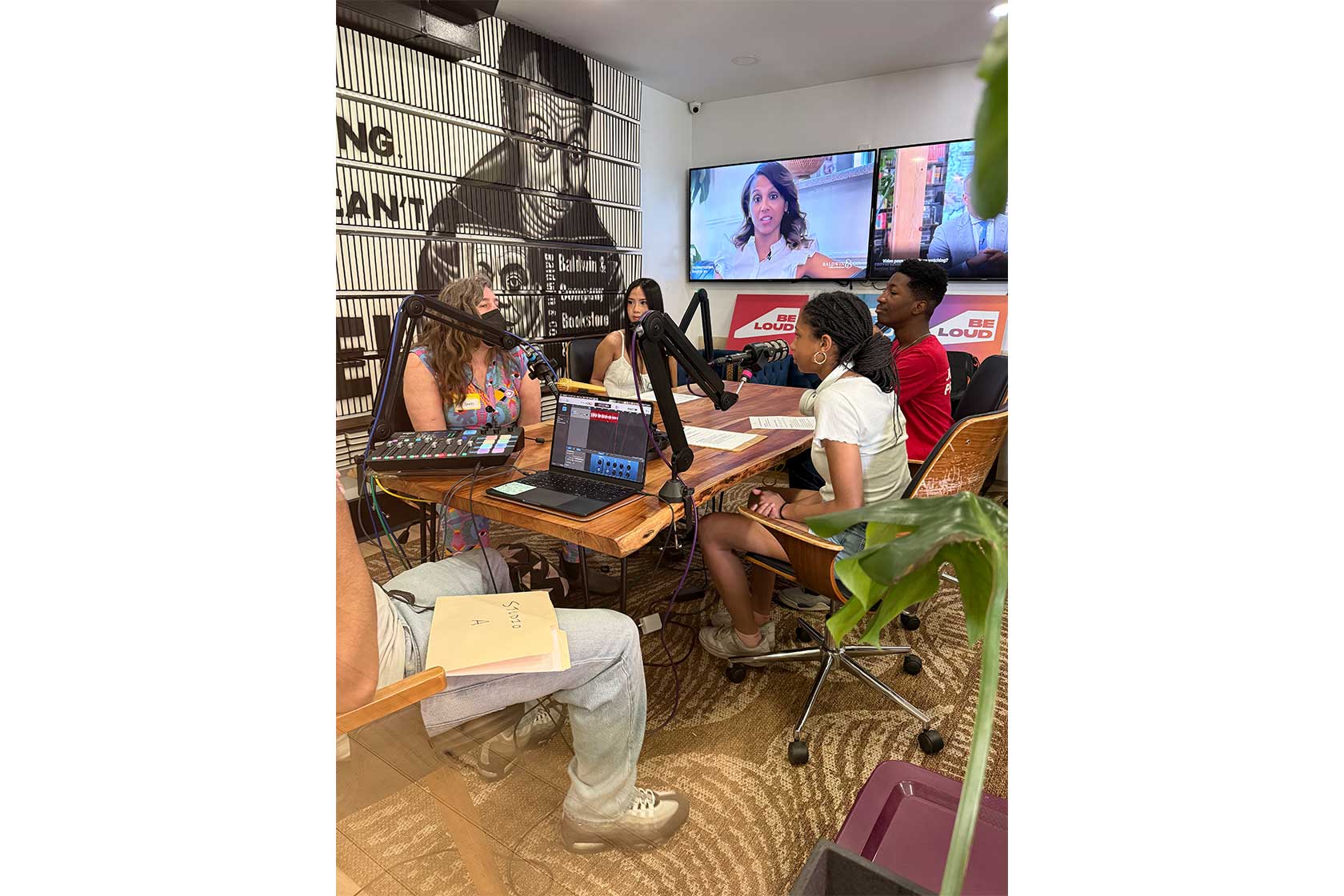
Inside the bookshop, other Be Loud DJs record a live podcast. I listen in as they discuss the paradox of pressuring themselves to complete homework on devices such as iPads that are designed to distract us.
When the performance begins, a couple hundred adult attendees are gathered around the stage. We watch a performance by Dancing Grounds, a youth troupe that builds connection through dance.
We hear from Kai Davis, a young woman on a community reporting fellowship with Lede New Orleans, an organization that supports journalism by young Black and Brown writers and “fosters trusted spaces for civic discussion.” Through a moving personal essay, Davis transports us to the Lower Ninth Ward, where her family’s memories are held.
We float with the New Voices New Orleans choir, made up of third through sixth graders, as they belt out “Be Who You Are,” Jon Batiste’s recent hit: You can only be who you are!
A stunning performance by Girls Play Trumpets Too closes the show. The group is “a program of empowerment,” according to band director and jazz musician Troy Sawyer, whose family’s musical roots stretch back to the advent of the genre in New Orleans.
The girls sit in rows with their trumpets, making jazz standbys their own, reminding us that this American art form is for everybody. By the end of their set, the girls swing with a classic New Orleans groove. The crowd chants along—“Ho na nae…ho na nae!”—a Mardi Gras Indian anthem that ascends straight from this city’s, this country’s, musical DNA. Adults dance, cheer, and clap, honoring the girls, even when they trip over songs they’re still learning.
The youngest members of the band, grade-schoolers, step one-by-one to a microphone out front for solos. The word for it is courage. And as their fearless notes rise through the flowering lilac that climbs these courtyard walls, our feet stomp and our hearts beat in time, beating with hope.
Senior Fellow, Democratic Futures
Fellow, Us@250