In-Depth
Extracting Success in Pre-K Teaching: Approaches to Effective Professional Learning Across Five States | New America
Strategies for effective training on social and emotional learning, dual language learning, and trauma-responsive care.


For ten years, New America followed three communities in California: East San Jose, Fresno, and Oakland as they worked to reform their early childhood systems and how teachers are trained. The goal of this work was to help the public and policymakers better understand how to improve teaching and learning so young children have a solid foundation for growth and development.
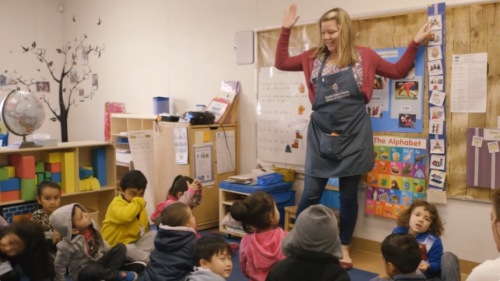
Social and emotional learning is associated with better academic and social outcomes, yet teachers lack effective professional development on how to effectively implement it. Educators have little input into content or program structure for professional development, and training is too often given in only one session, with limited or no follow-up or support. In East San Jose, California, the Franklin-McKinley School District partnered with Educare California at Silicon Valley to train teachers and paraprofessionals alongside Head Start teachers on social emotional learning. As a result, teachers were 20 percent more likely to teach social skills, emotional competencies, and problem-solving in their classrooms. Evaluation results show that professional development improved kindergarten readiness scores. Children scored higher if their teachers had participated in the training and did better the more training their teachers had.
Gave teachers choices. A key part of the work’s success was that teachers and child care providers were trained as leaders who co-designed the professional development, which included an average of 45 hours of one-on-one or teaching-team coaching support and ongoing professional learning communities. Educators made decisions about the professional development model’s design and evolution. They chose whether and what kind of follow-up or coaching they wanted and the focus of professional learning communities. Teachers could choose whether they wanted to participate in follow-up coaching, for example, and they could choose what they wanted to focus on in their professional learning communities.
Increased teacher buy-in on data collection. The training focused on the strategic use of data to inform practice and included ongoing efforts to ensure teachers understood the goals of data collection. Principals and directors presented data collection as a classroom enrichment tool rather than an evaluation tool. Although some teachers still felt that collecting this information was a waste of time, there was a growing recognition from teachers that data is important to collect and that they are partners in the process. Facilitators also tried to integrate discussions of overall systems change into every session, so teachers understood what it is they are a part of and why they were taking part in this learning. They also tried to build on and emphasize teachers’ existing expertise and ability to validate or dispute data about their own classroom.
Adapted schedules to professional development needs. The district changed schedules to better align release time across its system to create more opportunities for teachers to connect on a regular basis and to open up aligned time during the workday for professional development.
Provided broader opportunities for training. The program enabled teachers who had become proficient in new models of teaching to attend national conferences on early learning and to help train and assess other teachers in the district, building the capacity of the district’s expert teaching force over time.
Iterated the program based on feedback. The district has maintained a focus on social-emotional learning over multiple years but changes the program design with each new cycle based on evaluation data and teacher feedback.
Key insight: East San Jose’s success required trust that teachers knew best about their classroom needs. Training had buy-in from teachers and was embedded in their jobs. Educators had decision-making power about content and program structure.
This video spotlights work by the Franklin-McKinley School District to train Pre-K and kindergarten teachers to better support children’s social emotional learning.
When you let communities decide what they want to focus on and give them the resources to do that well, innovate, and understand how it’s working, they will take that and do incredible things
About one-third of U.S. children birth to age five speak a language other than English at home, yet most teachers and care providers lack training in the kind of supports children learning two languages need to succeed. Research shows that bilingualism has enormous benefits and that a strong foundation in children’s home language in the early years can help them develop English proficiency. But without specialized support, young dual language learners are likely to fall behind in school and lose their home language.
Fresno leaders took part in a unique collaboration that brought together its educators with others from Head Start and the local child care community. The goal of this effort, called the Language Learning Project, was to see how national models of best practices could be adapted in Fresno to improve outcomes for young dual language learners across the community. The training program supported teachers and caregivers of young dual language learners and helped ensure children were ready for kindergarten. It combined professional development sessions and ongoing coaching.
Collaborated across the community. The school district, along with Head Start, Early Head Start, the Fresno County Superintendent of Schools, and the Central Valley Children’s Services Network, all collaborated on the training program’s development in 2015. The professional development sessions were created and driven by the local teachers and caregivers.
Welcomed providers across the mixed-delivery system. Educare California at Silicon Valley hosted regular professional development sessions on Saturday mornings that included family home care providers, teachers, and those who work at child care centers. The training focused on language instruction and helped ensure these caregivers prioritized language development, cultural responsiveness, and school readiness.
Offered free online courses with stipends and college credit. With additional state investments, Head Start providers took online courses at no cost, designed by a local university to support young dual language learners. The training helped teachers integrate children’s home language into classroom practice even when the teachers themselves did not speak that language. The online courses were provided at no cost to teachers and caregivers across the state thanks to state funding. Participants also received undergraduate college credit and a $600 stipend.
Trained the trainers to scale up success. A grant from the California Department of Education allowed the program to expand to other counties and offer train the trainer institutes statewide. The institutes helped disseminate a Dual Language Learner Toolkit to agencies who wanted to do this work in their own communities.
Key insight: By collaborating with educators and caregivers across the community, Fresno built a series of resources that are accessible and useful for building capacity to support dual language learners.
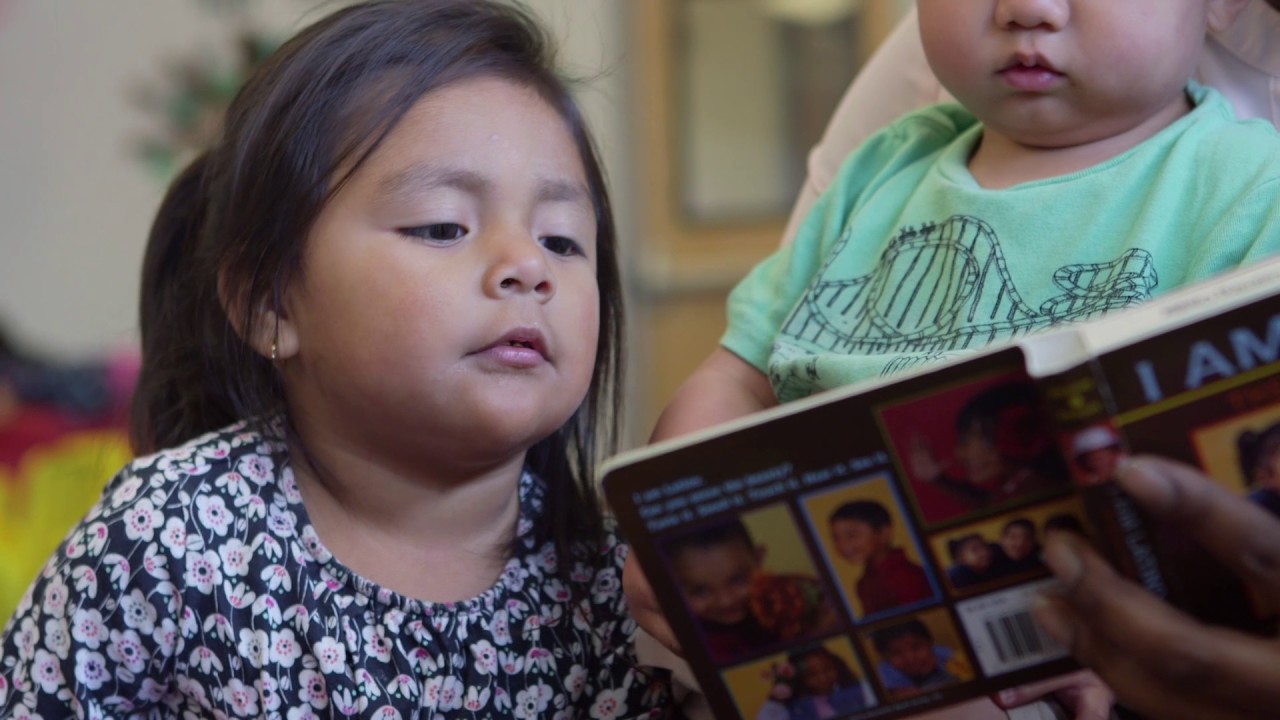
This video spotlights work in Fresno to better support dual language learners.
Children exposed to violence, hunger, and other traumas need special attention if they are to thrive in school and heal. Trauma-informed practice trains teachers to respond to these conditions in the classroom—which often means learning new ways of coping with children who exhibit challenging classroom behavior and understanding when these behaviors may be related to traumatic experiences.
A community-wide coalition called Oakland Starting Smart and Strong has been working to reform how early childhood systems work and how teachers are trained. The goal is to make sure teachers of young children are well prepared to set children on a course for future success. Several years ago, as part of this work, they began a pilot program in trauma-informed classroom practices for pre-K teachers, which aimed to strengthen the ability of educators to both understand the traumatic experiences of the young children in their care and better support affected children. The coalition’s Resilient Oakland Communities and Kids (ROCK) initiative teaches early childhood educators about resilience, the impact of trauma on children’s health and learning, and classroom-based trauma-informed practices. Adults build self-awareness about their own experiences with trauma and learn self-care strategies. By the 2018–19 school year, 78 percent of children in the district’s early learning program were in classrooms where teachers were getting support from the program. Evaluations of ROCK show that children in Oakland Unified School District have performed better on assessments of development since 2016. A 2020 evaluation showed improvements in teachers’ belief in their own capacity to make a difference in the lives of even the most challenging children.
The group training sessions focused on the emotional development of children experiencing trauma, how to create a healing environment, and how to support families. The training also included information about race, systemic oppression, implicit bias, and the importance of culturally responsive teaching practice. The sessions built awareness in adults about their own experiences with trauma and identified self-care strategies they could use to better nurture the children in their care. Some participants could also participate in follow-up professional learning communities at their school sites.
Included community stakeholders. The pilot program was a partnership between Oakland Unified School District and the City of Oakland Head Start, the two largest early childhood providers in the city. It was developed by local educators and experts, from coaches, school district administrators, and Head Start and preschool teachers to yoga instructors and mental health consultants. The inclusive structure, leaders said, was a key part of the initiative’s success.
Made content locally relevant. Facilitators and teachers worked together to tailor training to the experiences of children and teachers in Oakland. The program used a strength-based approach that focused on community resilience and used a non-judgmental approach.
Invested in high-quality facilitation. The secret sauce was in how the training was carried out, according to Sarah Nadiv, who was evaluating the program when she was with WestEd. “When it’s done by someone who is caring and thoughtful and sets the tone right from the beginning, that’s really transformational.” Nadiv said that she thinks this is why the training was so successful in Oakland.
Created communities of practice. The ROCK program takes place in tandem with other initiatives tailored to the community, guided by Oakland Starting Smart and Strong. The Boys of Color Workgroup’s initiative connects educators, policymakers, and community members to support strength-based, equity-centered strategies for improving early learning experiences for young boys of color. The Oakland Early Learning Symposium convenes early childhood education professionals from a variety of program settings to learn about innovative early learning approaches and foster connection. Three early childhood educators lead Let’s Talk Early Learning, an informal peer space facilitated in English and Spanish that meets monthly throughout the school year to give early learning professionals an opportunity to support one another and build community.
Key insight: Oakland’s inclusion of a wide array of stakeholders and tailoring the training’s content to the lived experiences of adults and children in the community helped the program achieve success.
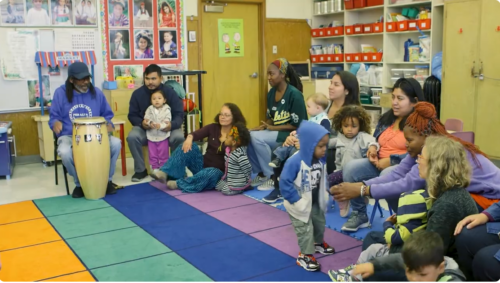
This video highlights the school district’s work to partner with those who care for children before they enter school: families, friends and neighbors.
This video examines ten years of work in three communities in California to build local training programs for teachers and child care providers and the ingredients that led to their success.
Principal at SJackson LLC
Director, Early & Elementary Education
Project Director, Early Development & Disability