Senate and House Appropriations Committees – Solid Numbers Revealed
Blog Post
July 13, 2008
Last week, the Senate and House of Representatives Appropriations Committees published their respective versions of the fiscal year 2009 Labor-HHS-Education appropriations bill, which sets funding levels for most federal education programs for the upcoming year. The Senate bill is ready for consideration by the full chamber, while the House bill still awaits full committee approval.
In total, the House bill would provide $63.0 billion for all Department of Education programs funded through the appropriations process. That's an increase of $3.8 billion, or about 6 percent, from fiscal year 2008. The Senate bill would provide $61.8 billion, $2.6 billion (or 4 percent) more than in 2008. Both bills would increase funding more than the president's budget request, which proposed a $28.6 million (or 0.05 percent) increase for the Department of Education.
Of course, these aggregate numbers don't tell us much about funding levels for individual programs, or how the two houses differ in their education priorities. The table below should help shed some light on that matter.
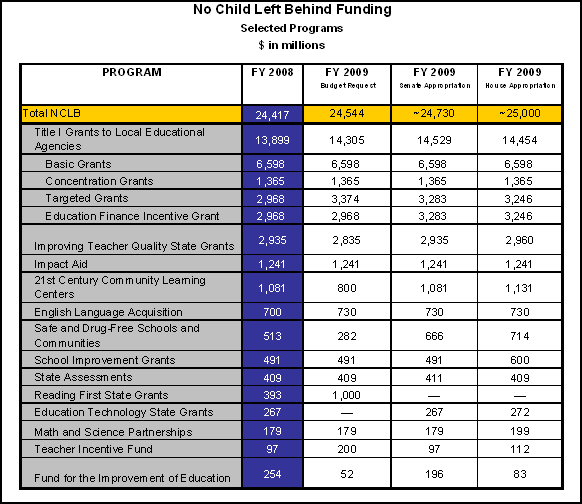
Although President George W. Bush proposed reducing funding for or eliminating numerous education programs, both the House and Senate bills reject most of those cuts. Congress would fund nearly all of these programs - Career and Technical Education, Education Technology State Grants, and 21st Century Community Learning Centers - at roughly their 2008 levels. There are, however, a few exceptions. For example, the Senate committee followed the president's lead and cut all funding for the Smaller Learning Communities program.
In other instances, the committees' bills rejected new programs or funding increases included in the president's budget request. These unfunded programs include Math Now, Adjunct Teacher Corps, and Pell Grants for Kids (which the Senate committee notes is "virtually identical to previous voucher plans that were proposed by the administration but rejected by the Congress."). Both committee bills also cut all funding for the controversial Reading First program, for which the president requested a $600 million increase above fiscal year 2008 levels.
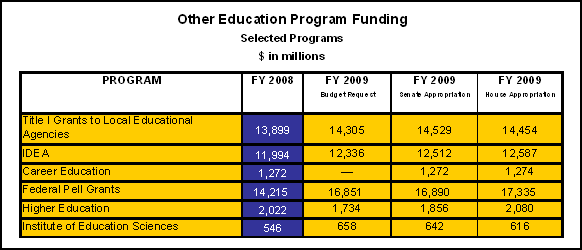
For the biggest education programs, however, both committee bills found some common ground with the president's request. Bush proposed modest funding increases for Title I, IDEA special education, and Pell Grants. Both the House and Senate committee bills would increase funding levels for these programs only slightly more than the president's request. However, Congress' proposed funding levels aren't that far from the president's.
Overall, both the House and Senate committee bills appear to follow a similar strategy: Reject most of the president's proposed cuts, and fund the majority of programs at about the same level as the past year, with modest increases for key initiatives.
The next step (once the House bill is voted out of committee) is a full floor vote in both the House and the Senate and then a conference committee between the two chambers to negotiate the final numbers. Keep checking back with Ed Money Watch as the appropriations wrangling continues...