What’s in the President’s FY 2022 Budget Request for Workers and Workforce Development
Blog Post

June 11, 2021
The Biden Administration released its FY 2022 budget request at the end of May, giving the Administration an opportunity to lay out its priorities for the country and create a starting point for the FY 2022 budget and appropriations process. Below is an overview of the budget’s worker and workforce development provisions.
The Administration’s budget proposal for the U.S. Department of Labor (USDOL) includes a boost in resources for our workforce development system, which had been underfunded for years before the pandemic. The proposal includes an increase of $203 million for Workforce Innovation and Opportunity Act state grants, which would go toward providing career services and training to more dislocated workers, low-income adults, and youth who have been marginalized. This is a welcome investment in our workforce system, but these increases would only translate into a modest impact on jobseekers; the Department estimates that these funds would allow the workforce system to serve an additional 41,332 adults, dislocated workers, and youth.
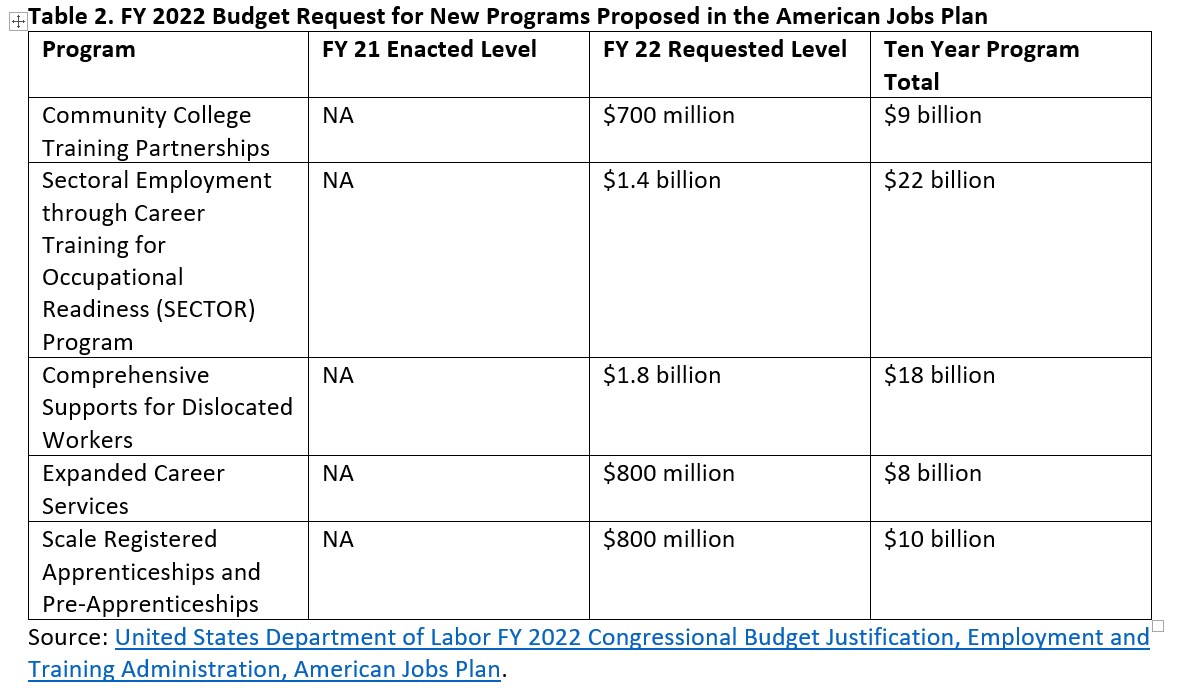
The Biden Administration’s budget proposal would, however, make significant investments in new workforce programs as part of its American Jobs Plan. These include the Sectoral Employment through Career Training for Occupational Readiness (SECTOR) Program, Comprehensive Supports for Dislocated Workers (CSDW), and wider access to intensive, one-on-one career services—the kind of services that have been shown to effectively assist jobseekers in finding employment. CSDW would provide wraparound supports to dislocated workers enrolled in federally-funded training programs, making it easier for them to focus on and complete their training. These include key supports like income support, child care, and transportation assistance. The SECTOR Program would aim to create more training programs oriented around target sectors, such as clean energy, manufacturing, and caregiving. On top of these investments, policymakers should strive to build a workforce development system that connects jobseekers with high-quality employment—that is, jobs that pay a living wage, offer benefits, and give workers a voice.
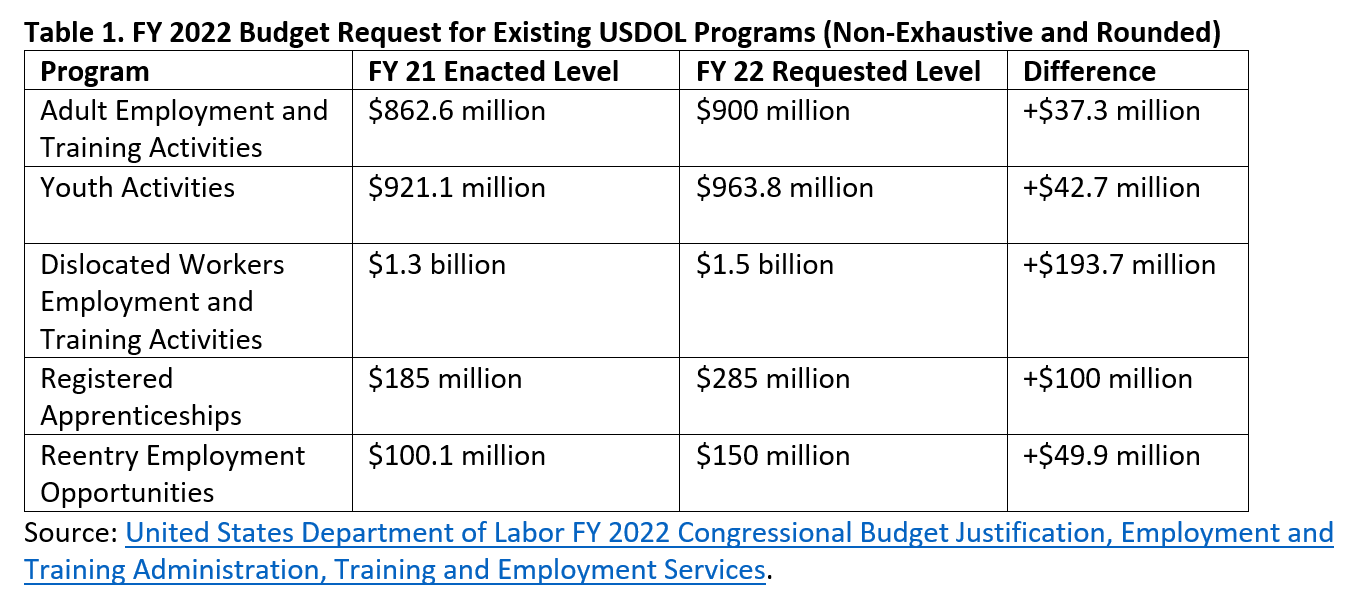
The Biden Administration’s budget proposal places significant emphasis on registered apprenticeships, with a $100 million boost for the Department of Labor’s existing registered apprenticeship program, bringing funding to $285 million. These funds would go toward expanding access to apprenticeships among historically underrepresented groups, such as women and people of color, and creating more apprenticeships in diverse and emerging industries, such as financial services, health care, and IT. The American Jobs Plan would build on this and dramatically expand funding for registered apprenticeships and pre-apprenticeships. Specifically, the American Jobs Plan would invest $10 billion over ten years to create one to two million new registered apprenticeship slots and ensure more women and people of color can access these opportunities.
Apprenticeships are a proven way for people to earn a paycheck while learning skills employers need. They’ve had a long and successful history in industries like construction and manufacturing (and much of this success is due to the role unions have played in administering apprenticeship programs). In expanding apprenticeships, we should ensure apprentices earn a living wage and have access to benefits. The Biden Administration should also continue to pursue the PRO Act so workers across diverse industries have the opportunity to join a union and have a voice in their workplaces.
Worker protection also features prominently in the budget. The Administration requested an increase of nearly $300 million for worker protection agencies like the Occupational Safety and Health Administration and the Mine Safety and Health Administration. These increases are crucial, because the pandemic has shown us how dangerous it is for workers when we fail to provide these agencies with sufficient resources and staffing to do this necessary and important work. Disinvestment translates directly into fewer inspections, fewer employers being held accountable, and more workers lives’ being put at risk. The American Jobs Plan would further bolster labor enforcement with an additional investment of $10 billion in funding over ten years, including $7.5 billion for worker protection agencies within the Department of Labor, $1.5 billion for the Equal Employment Opportunity Commission, and $1 billion for the National Labor Relations Board.
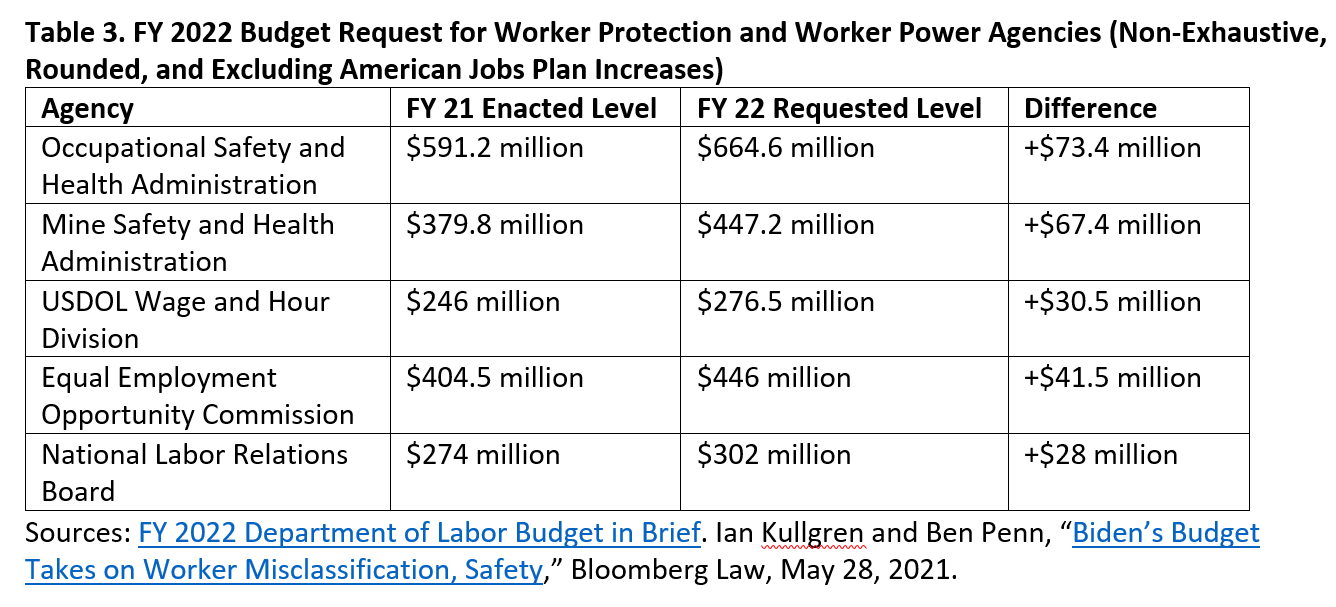
These proposed funding increases would allow worker protection agencies to hire and train more staff to carry out stronger labor enforcement, including ensuring workers are properly classified as employees rather than independent contractors. This further signals the Department’s willingness to take on misclassification; in April, Labor Secretary Marty Walsh said many gig workers should be classified as employees, and in May the Department withdrew a Trump-era independent contractor rule.
It now falls to lawmakers in Congress to develop their own budget legislation in the coming weeks. With a narrow majority in Congress, the Administration will have to make the case for why significant investments in our country are both smart and necessary. In doing so, it will be important to connect these budget proposals to the real world impact they would have on workers and their families, ensuring everyone can recover from the pandemic and participate fully in our economy moving forward.
Enjoy what you read? Subscribe to our newsletter to receive updates on what’s new in Education Policy!