Voters Increase Worker Pay and Power in Multiple Parts of the Country
The midterm elections showed bipartisan support for increasing worker pay.
Blog Post
Nov. 9, 2022
It’s been a good few years for the labor movement. The Biden Administration has advanced a set of pro-worker policies, workers have successfully unionized in some of the country’s largest employers, and now, voters in the midterm elections chose to increase the minimum wage and advance worker power in multiple parts of the country.
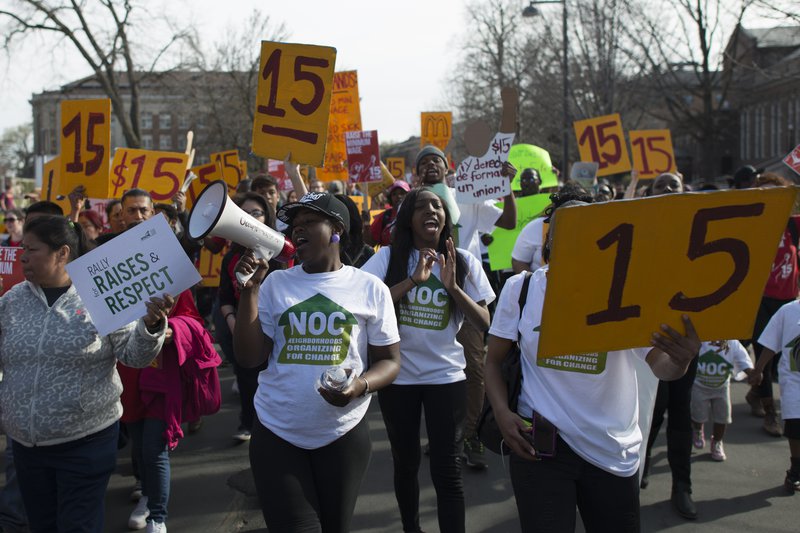
In Nebraska, Nevada, and Washington D.C., three places with drastically different political landscapes, voters supported initiatives to increase workers’ wages. In Nebraska–a deeply conservative state–nearly 60 percent of voters supported an initiative to increase the state’s minimum wage to $15 per hour by 2026. In Nevada–a purple state–an initiative to increase the minimum wage to $12 per hour passed with greater support than what any statewide Democratic or Republican candidate received. In Washington D.C., voters overwhelmingly supported an initiative to increase the minimum wage for tipped workers. These results demonstrate broad bipartisan support to increase wages for low-paid workers, and offer valuable insight into the popularity of pro-worker policies. Put simply, increasing worker pay is more popular than the Democratic or Republican brands. This should create room for bipartisan actions to increase worker power in the next Congress.
But the wins for workers did not stop there. In Illinois, a ballot measure that would amend the state constitution to guarantee workers the right to collective bargaining passed with a higher share of the vote than any statewide candidate received. Governor J.B. Pritzker, for example, won reelection with 54 percent of the vote, while this pro-worker power ballot initiative passed with nearly 60 percent support. This shows that even in Democratic-leaning states, pro-worker policies still outperform Democratic candidates. This creates opportunities for Democrats to lean even deeper into pro-labor, pro-worker policies that can meaningfully increase the economic security of under-paid workers.
While it’s too early to know whether Democrats or Republicans will control the next Congress, both parties can learn from the pro-worker outcomes of this election. Specifically, Democrats should seize the opportunity to become the pro-worker party. If the Democratic party, from the Biden Administration through local policymakers, leans into their pro-worker, pro-minimum wage platform, they could make important gains with voters that support a pro-worker agenda. This could provide the Democratic party with an opportunity to advance popular economic policies that enhance economic mobility and security.
Republicans should also learn that there is political value in advancing solutions that increase worker pay and power, even with voters in their own party. Republicans should see this as an opportunity to support pro-worker policies that are predominantly associated with Democratic policymakers.
Regardless of the final party breakdown of the next Congress, these midterm elections should inspire members of Congress from both parties to pass pro-worker legislation like the PRO Act and legislation that would increase the federal minimum wage to $15 per hour. Midterm voters demonstrated a clear public appetite to support pro-worker policies, which makes sense given that 71 percent of Americans now approve of labor unions, the highest level of union support since 1965. A majority of Americans–and a significant number of economists–also support increasing the federal minimum wage to $15 per hour. This suggests that it is both politically and economically wise for Congress to pass legislation that bolsters union protections and increases the minimum wage. In doing so, Congress has the rare opportunity to initiate bipartisan legislation that can improve the material circumstances for millions of Americans nationwide.
If the next Congress does not support pro-worker legislation, the Biden Administration can continue to utilize the power of the executive branch to develop additional pro-worker policies. As one next step to advance worker pay and protections, the Biden Administration is expected to release a new rule that will significantly increase the number of workers who are eligible for overtime pay. This would be a positive step toward continuing to increase worker pay and power. The Biden Administration should also issue regulations to better protect workers from heat stress, increase protections for whistleblowers, and offset the number of workers who are incorrectly classified as independent contractors, per the recommendations of the National Employment Law Project. These actions would help more Americans access economic security, and would continue the Biden Administration’s successes advancing pro-worker policies.
Regardless of what’s politically possible with the next Congress, the midterm elections made one thing clear: the American people support increasing worker pay and protections. Both Democrats and Republicans should seize on this moment to build a base of worker support. In doing so, both parties have a rare opportunity to advance bipartisan solutions that can increase economic mobility for previously low-paid workers. Either way, the Biden Administration should capitalize on pro-worker momentum to advance crucial components of their economic agenda.
Enjoy what you read? Subscribe to our newsletter to receive updates on what’s new in Education Policy!