How to Redraw the Lines: Achieving District Boundary Change
Lessons from a School System Leader
Blog Post
Natalya Brill/New America
Jan. 7, 2026
Scott Menzel, PhD, is the superintendent of Scottsdale Unified School District in Arizona and the former superintendent of the Washtenaw Intermediate School District in Michigan.
This post originally appeared as a chapter of the report Redrawing the Lines: How Purposeful School System Redistricting Can Increase Funding Fairness and Decrease Segregation.
Leading one successful consolidation of two Michigan school districts and working on another, failed district annexation in the same county offered me firsthand experience in the ways in which state policy, local context, and community values intersect in border-change conversations.
A Tale of Two Consolidation Efforts
Willow Run Community Schools and Ypsilanti Public Schools were neighboring districts on the east side of Washtenaw County. Both dealt with financial deficits and long-term enrollment declines. They also struggled academically and faced the threat of state takeover or dissolution. Beginning in 2011, the Washtenaw Intermediate School District (an educational service agency serving all school districts in the county) agreed to work with the two districts and their communities on a potential new beginning via consolidation. Numerous meetings over an 18-month span surfaced both hopes and fears.
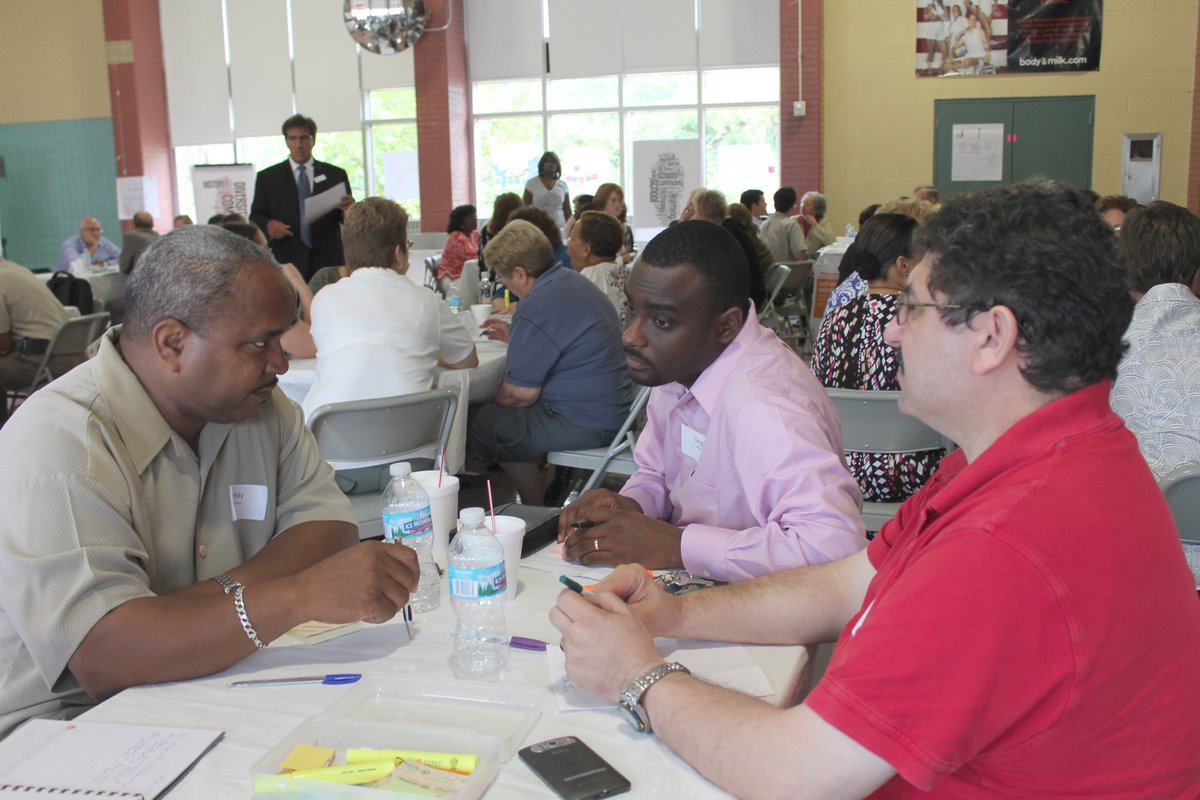
Participants in a community forum discuss the potential district consolidation.
Source: Photo courtesy of Scott Menzel, used with permission.
Some wondered how it could improve anything to combine two failing districts. Others wondered why we weren’t looking to merge with Ann Arbor, which was large, high-performing, and well-funded. Still, 61 percent of the voters in both school districts ultimately approved the consolidation in November 2012.
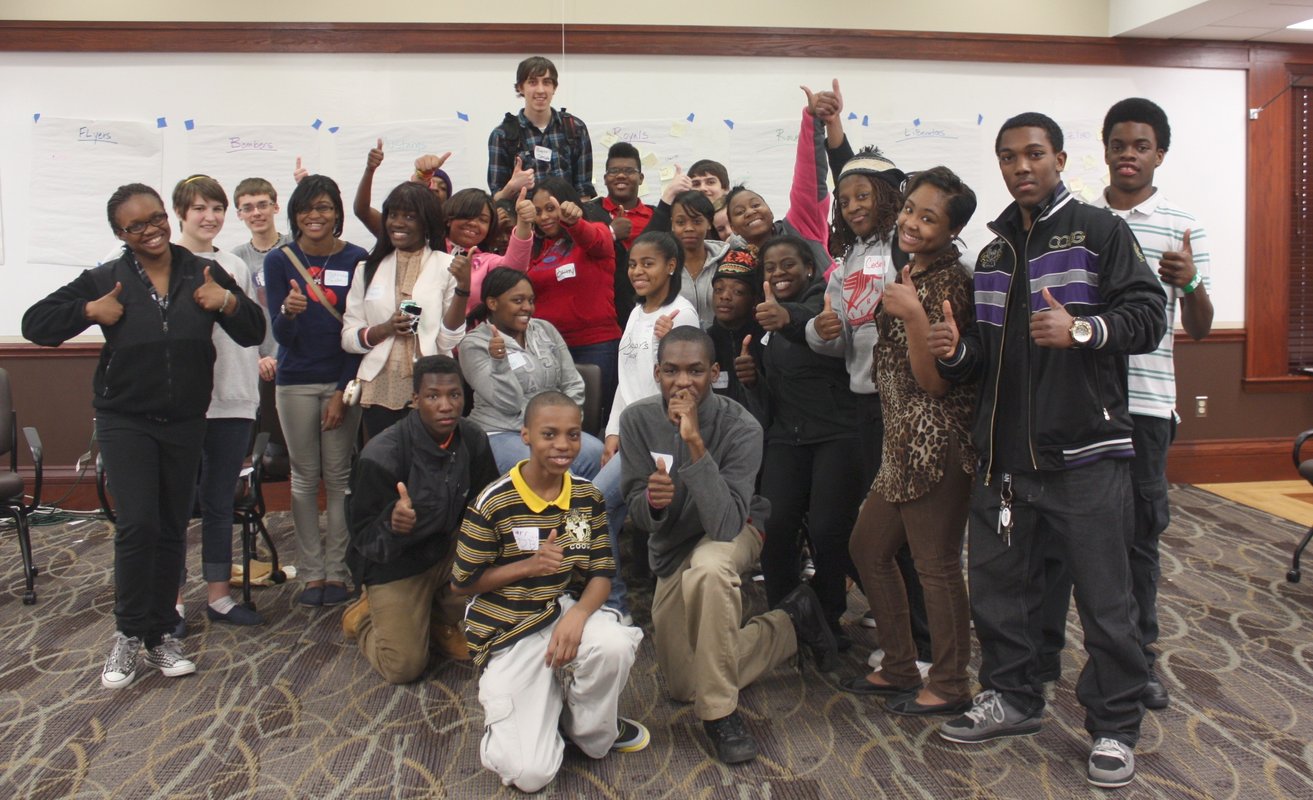
Student leaders from the combined districts come together as one.
Source: Photo courtesy of Scott Menzel, used with permission.
A few years later, Ann Arbor Public Schools (AAPS) and the much smaller Whitmore Lake Public Schools (WLPS) considered an annexation. AAPS would take over WLPS’s area and students. While the Whitmore Lake community would lose “local control,” it would gain higher per-pupil funding and greater system capacity and would hopefully arrest its enrollment declines. AAPS would get school building space and, because of the specifics of Michigan’s funding policy, increased revenue. This effort was overwhelmingly approved by Whitmore Lake residents but failed when it was rejected by 57 percent of voters in Ann Arbor.
Local Politics and District Boundary Change
In Michigan, like in most states, district border changes usually have to be proposed and approved locally, by school boards and district voters. This makes local politics decisive in whether redistricting happens.
Over the course of multiple administrations in Michigan, specific funds were designated to support district consolidations, but most still didn’t move forward, even when they would have benefited students. State aid might be enough to seal the merger of two distressed districts, like Ypsilanti and Willow Run, but it probably won’t overcome the resistance of voters in a more prosperous district to merging with a struggling one.
It is important for local leaders pursuing consolidation to have clarity on the “why.” Often, discussions are simply about perceived economic inefficiencies. These arguments rarely motivate communities to act. But when financial challenges and academic performance are combined and the focus is on creating high-quality options for all students, conversations can move from protecting what was to creating what should be for the next generation of students.
It is also necessary to be honest about voters’ priorities: Demographics matter. In the case of Ypsilanti and Willow Run, the student populations were similar demographically. Both districts were high-poverty, with students of color making up nearly 80 percent of enrollment (quite different than demographics in the wider area). Conversely, Ann Arbor contains the vast majority of property wealth in Washtenaw County, is highly educated, and is demographically diverse. Whitmore Lake, a predominantly White, higher-poverty community, wasn’t seen as a desirable acquisition. Whitmore Lake had a compelling reason to merge; it was a shrinking district that needed help to give the best possible education to its students. Ann Arbor did not face a similar existential threat, and it ultimately rejected the annexation proposal.
State Policy to Support District Boundary Change
State elected officials are often reluctant to wade into the messy politics of district consolidation, given how community identity is linked to local schools. But states can create the conditions that encourage border-change conversation, especially the threat of state takeover for failing or insolvent districts. State policy can also provide incentive funding for consolidation.
There are four more specific ways states can mitigate the political and practical challenges of consolidation:
- Mandatory reorganization conversations can create the space for tackling the hard questions. Leveraging educational service agencies (also known as intermediate school districts, intermediate units, or other, state-specific terms) can be a way to have third-party facilitation with an understanding of the relevant local considerations and context. In 1964, Michigan Public Act 289 required each intermediate school district to convene a committee on school system reorganization. At the time, numerous communities did not provide education through high school completion. As a result of this effort, many smaller K–5 and K–8 districts were absorbed into K–12 districts.
- It is very challenging to navigate debt obligations from the districts where boundary changes are being considered. Taxpayers are reluctant to assume someone else’s debt, and failure to address this at the beginning can lead to stalled processes. State solutions for legacy debt obligations are needed to remove an impediment to redistricting. The state could provide aid to equalize local tax levies or take on part of the debt obligation. This did not happen at the beginning of the Willow Run-Ypsilanti merger, but 10 years later, the state provided funding to erase the legacy debt, leveling the playing field.
- Facility utilization after consolidation is important. To ensure demographically diverse districts (not segregated, which is what we’ve seen happen as a result of existing school choice policies in Michigan), it is imperative to make the options compelling not only in terms of quality teachers and curricula, but also in terms of the facilities and infrastructure and proximity to where students live. Before consolidation, Ypsilanti schools were in better shape due to more recent bond initiatives that provided funding for capital improvements. However, it was also important to keep some schools in the former Willow Run district open to honor the community’s history and to educate students in neighborhoods where they lived. States should support districts in making plans for facility usage and in upgrading buildings where needed.
- Schools of choice and open enrollment policies complicate district boundary discussions. At a time when students can choose to attend a school that is not in their neighborhood, traditional district public schools are tasked with being prepared to serve all who live within their boundaries. This can result in inadequate support for public system, dollars shift to alternative options (often without a commitment to transparency and accountability for how taxpayer resources are spent). Because these policies affect both revenue and enrollment in traditional school districts, they can become reasons that districts may be pushed to consider consolidation. States should help school systems navigate that transition.
If redrawing educational boundaries aims to ensure students have access to high-quality, well-funded public education, regardless of background or zip code, then state legislatures must engage on this issue, creating the policy framework for productive border-change discussions and providing the funding and support necessary to implement these changes.