After the LA Wildfires: Labor Organizer Saket Soni on the Climate Disaster Economy
Article In The Thread
Mario Tama via Getty Images
Feb. 3, 2026
In January of 2025, the Los Angeles area experienced a series of wildfires that led to the evacuation of thousands, the destruction of many homes and businesses, and the deaths of an estimated 440 people—31 found to be the result of direct contact with the fires. A year later, recovery in LA—while resilient—has been uncertain and uneven.
New America ASU Future Security Fellow Saket Soni takes a peek behind the curtain of the growing climate disaster in the forthcoming book Hurricane Hustlers, which follows his 2023 book The Great Escape chronicling human trafficking on the post–Hurricane Katrina Gulf Coast. In this interview, the Fellows Program chats with Soni about the state of disaster recovery and readiness in the United States, and the lessons that we’ve learned a year after the fires devastated LA.
Your forthcoming book, Hurricane Hustlers, examines the booming—and often hidden—economy behind climate disaster recovery. What convinced you this book needed to be written?
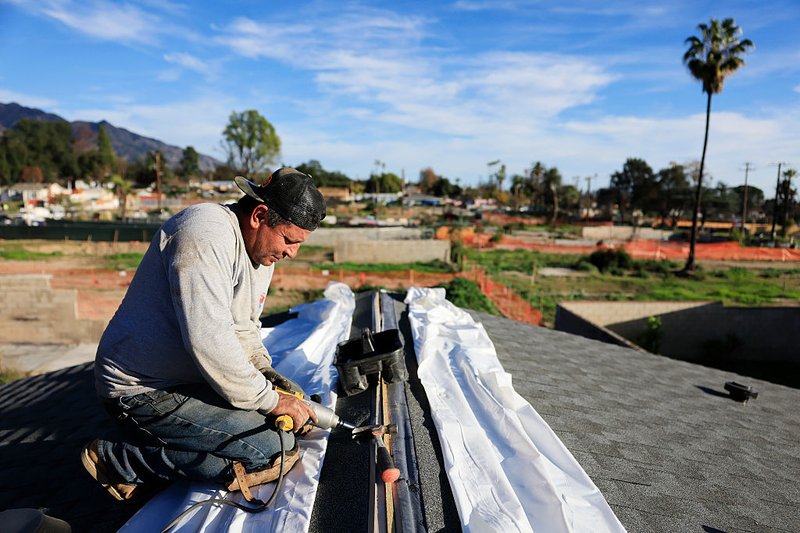
Behind the tale of an economy is the story about morality. When hurricanes and other climate disasters strike, many people dive in, and everybody’s hustling, from teenagers hawking bottled water to undocumented roofers hammering at shattered homes to the CEOs of multinational restoration companies snapping up contracts. Everyone is grabbing for their piece of the $100 billion-plus the U.S. spends on disaster repairs every year. But you get to the point when the hustle undoes you—personally, emotionally, even spiritually. That brings us to the question of whether we can build something better than an endless hustle in the aftermath: a more resilient future. I’ve gone deep with many people who’ve lived out this journey, many of whom I’ve known for 20 years, since Hurricane Katrina. Their stories are the heart of this book.
Disaster recovery is often discussed as emergency spending, leaving this resilience work as an afterthought. What would be a better way for America to understand disaster recovery, especially as climate disasters accelerate?
As I wrote in a New York Times op-ed last month, we’ve been locked in a cycle of wait, repair, repeat for too long. The crisis is even more acute now that the Trump administration has thrown federal emergency response—often inadequate in the best of times—into chaos. But there’s a hidden opportunity right now for states to get right what the federal government has long gotten wrong. States can shift to a model of preparing and adapting before disasters hit, which is vastly more cost-effective than only repairing after. And as we make this shift, we need to focus on building up a skilled, scaled resilience workforce that can prepare and adapt year-round.
As executive director of Resilience Force, the voice of the rising workforce rebuilding America after climate disasters, you’ve often become the person workers turn to in moments of fear and struggle. What has writing this book allowed you to see differently about the work you do day to day? Has it changed how you understand your own role—as an activist, an ally, a witness, a reporter?
As a rule, in the day-to-day work of organizing, it’s almost never about you—and shouldn’t be. But as an author you have to find ways to be the audience’s guide through a world that is strange to them, that they never would have experienced without you. What I learned through the writing of my first book, The Great Escape: A True Story of Forced Labor and Immigrant Dreams in America, I’ve learned again with Hurricane Hustlers: Putting myself in the story is an important part of what helps readers connect to it.
It’s been one year since wildfires devastated Los Angeles, and the community is still working towards recovery. What have we learned about America’s readiness to respond to climate disasters?
I’ve had incredible and heartbreaking conversations with survivors of the LA fires in the past few weeks. One told me his house had burned to the ground, and he’d received no federal aid beyond a one-time $770 check for emergency supplies. The headlines from recent disasters are almost all bad. But I also want to point to signs of hope—places where people are making a shift toward resilience. Resilience Force is partnering with the City of Los Angeles and counties in Northern California on wildfire preparation and adaptation work. And even in places like Louisiana and Alabama, lawmakers are providing grants to homeowners to make their roofs more storm-resistant. These are small-scale efforts, but they’re going in the right direction. We need a push to scale them up.
In the aftermath of these wildfires, government failures only worsened the disasters and compounded frustrations of an already devastated community. For readers who care about how taxpayer dollars are spent on climate adaptation, what’s a fact you think everyone should be aware of?
One of the best-established facts in the global disaster risk reduction field is that every dollar invested in disaster preparation—flood-proofing homes, restoring watersheds, improving drains, and updating building codes—saves up to $15 in disaster repair costs.
As climate disasters become more common and public spending on recovery ramps up, how decisive is this moment and what can we do to protect our own communities now and in the future?
Climate disasters are inevitable. Catastrophic destruction is not. Thoughtful people are looking around the corner and finding ways to rebuild our homes and communities, not just back to what they were, but more resilient for the future. They’re building new social cohesion, too. I’ve seen for myself how building resilience can bring together people who might think they’re on opposing sides of American politics. I think about the Republican mayor who ran on an anti-immigrant platform, but after a hurricane started bringing immigrant resilience workers water and asking what else they needed. More people are also coming to understand that building resilience is an issue of American security. Disasters lay bare the way we all share a common fate. Facing them together is a way to build a common future.
You May Also Like
America’s Next Migration: How Midwest Housing Will Shape Our Climate Future (The Thread, 2025): America’s climate migration is coming, Yuliya Panfil and Tim Robustelli say the Midwest’s ability to build affordable housing will shape where people move next.
In Katrina’s America, the Storm Still Echoes 20 Years Later (The Thread, 2025): Us@250 Fellow Calvin Krippner reflects on Katrina’s legacy—and how the storm exposed systemic racism, government failure, and lasting distrust.
The Future of Our Climate: How Political Complacency is Fueling Catastrophe (The Thread, 2024): Riley Rogerson explores how climate complacency and inaction are worsening disasters, urging immediate action to confront the crisis.
Follow The Thread! Subscribe to The Thread monthly newsletter to get the latest in policy, equity, and culture in your inbox.