2020 Census: A Tech Revolution or Risk?
An NYC Event Recap
Blog Post
David Paul
July 16, 2018
What will be the impact of the 2020 census on local communities marginalized by a technology gap, poverty, and race and immigration status?
That was the inquiry animating the convening hosted by New America NYC and the NYU McSilver Institute for Poverty Policy and Research on June 18th on NYU’s campus. 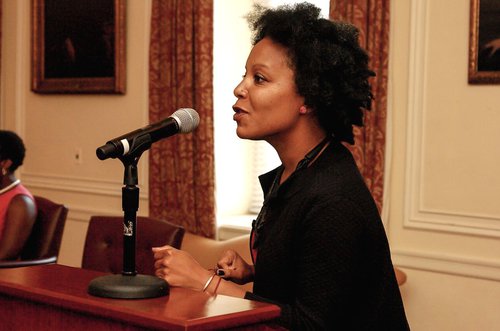
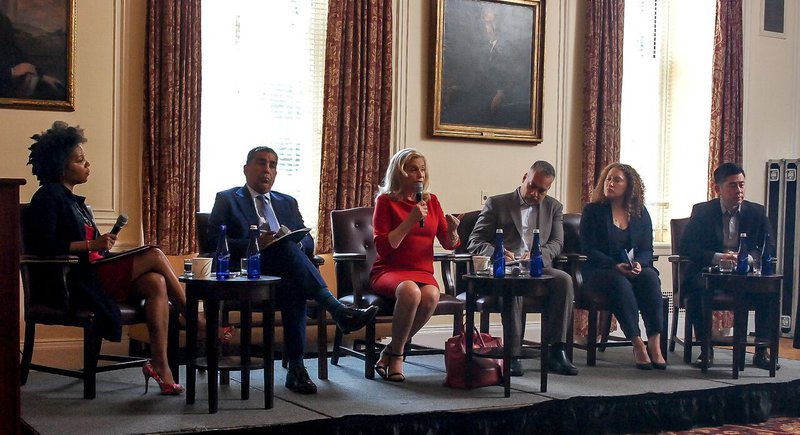
The event’s prevailing theme was the importance of ensuring an accurate headcount of all of New York’s communities. Joseph Salvo, Director of the NYC Department of City Planning’s Population Division and long-time census veteran, emphasized why providing census canvassers with a comprehensive address list of all New York residents is foundational to achieving this accuracy, as people who “don’t have a recognized address won’t be counted.” Salvo highlighted that his office has identified approximately 100,000 New York City housing units currently missing from the Census Bureau address list – “the culmination of over two years of fieldwork.” New York will submit these findings to the Census Bureau on August 6, 2018.
Elected officials present pledged to commit to a fair count. “We’re going to make sure that all of our people are counted,” said Congresswoman Carolyn Maloney, “because our democracy depends on having an accurate count – for accurate representation, and for accurate distribution of funding to families and communities.”
Meanwhile, panelists expressed concern that new features of the coming census could undermine its accuracy. Executive Director of the New York Immigrant Coalition Steve Choi lamented plans to reduce the number of census enumerators deployed (the census employees going door to door to get people to respond) as “insufficient to begin with, by more than half,” due to funding cuts.
To achieve savings, the new census will be online, prompting concern identified by Choi that low-income populations “on the other side of the digital divide, who don’t have access to safe and secure internet,” will be undercounted. Moreover, speakers highlighted the as-of-yet untested nature of the “information technology programs and systems” as an area of concern.

Afua Bruce, New America’s Director of Engineering for Public Interest Technology (PIT), cited a Government Accountability Office (GAO) report indicating that several of these IT systems are currently “non-functional. . . or still need to undergo authorization to be used.” To combat this problem, PIT has scoped a project for the 2020 Census in partnership with the Census Counts Campaign, a collaborative effort led by the Leadership Conference on Civil and Human Rights. PIT will work with the Census Counts Campaign and the Leadership Conference to translate between the government, tech, and civil rights organizations landscape to ensure the IT readiness of the 2020 Census.
Panel speakers also criticized the inclusion of a question on citizenship status on Census 2020. Citing the expertise of “five former Census bureau heads,” Congresswoman Maloney argued that the citizenship question would “result in an undercount” of vulnerable immigrant communities.
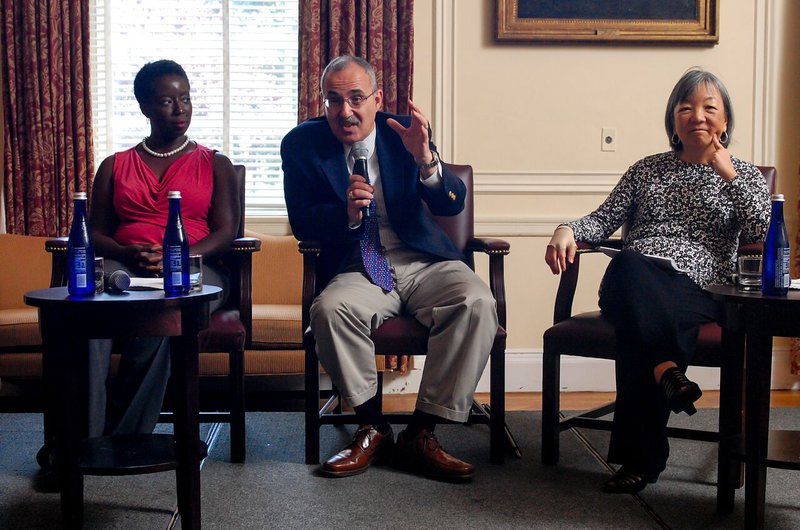
Speakers balanced their concern at these developments with optimism at prospects for change. Congresswoman Maloney assured the crowd that, through legislation in Congress, “we intend to get the citizenship question off the census” before Census Day. Manhattan Borough President Gale Brewer, while acknowledging the danger of deploying an untested online census, asserted that “the risk to the census is not inherent to the technology revolution.” In fact, she highlighted the potential for “well-designed, well-tested, and secure” technology to improve census accuracy and reduce undercounting of marginalized communities. “It’s not all doom and gloom,” seconded Choi:
“We can use technology for us, rather than having it used against us. By equipping street outreach teams with tablets,” he noted, "we can make conducting the census more efficient and effective.”
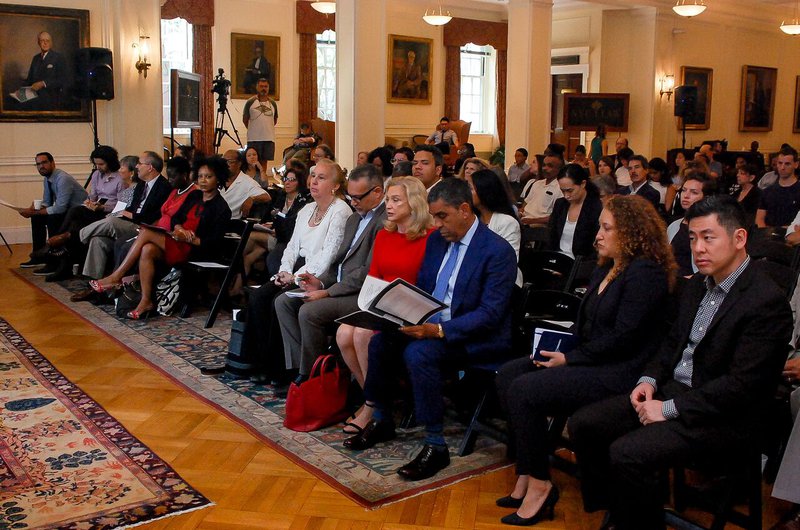
The importance of cooperation – between citizens, corporations, city agencies, and the census bureau – was emphasized throughout the event. Congressman Adriano Espaillat advocated for “mobilization at different levels across the city of New York,” connecting local government, non-profit organizations, activists and faith-based groups to equip communities with the information and technology they need to be counted on Census Day. Likewise, audience members were challenged by Leah Alden, Senior Council of the NAACP Legal Defense and Educational Fund, to “take the information you learn here… back to your networks and communities.” Ultimately, “there’s one lesson we can’t forget when it comes to the census,” said Steve Choi “organizing works – particularly in hard-to-count areas.”
Find a podcast of the full conversation here.
Gabriel Voorhis-Allen is the summer Research Intern for New America NYC.