Boldness in the Time of Budget Constraint
Localities continue to invest in early childhood education amongst federal cuts to the social safety net.
Blog Post
Dec. 18, 2025
This blog continues our series of publications on the work of the Early Care and Education (ECE) Implementation Working Group. For more information on the group’s origin and activities, please see our first blog Implementation is Everything, and Early Care and Education is No Exception and a recent update Meet the Early Care and Education Implementation Working Group. For a deep dive into some of the findings from the initial working group cohort, see our briefs Family Outreach, Centralized Enrollment, Participatory Planning, Local Governance, and Mixed Delivery.
Making America Work Better for Families
The United States has underinvested in early childhood as a percentage of GDP compared to peer nations for years. Families with young children help drive the economy and stabilize communities, but our policies don’t recognize these contributions and relatively few supports exist to help families with the costs of raising children, especially in the early years. Amid the many economic pressures that families are facing, the cost of child care is one of the most acute stressors, with the cost of care outpacing rent in most major cities. Paying for child care is a non-negotiable for many parents — without it, they could not remain in the workforce— but the costs push 134,000 families into poverty every year. Helpful programs are often limited to households with very low income. If you even qualify for help, wait lists for child care subsidies, housing subsidies, Early Intervention, Head Start are the norm. The few near-universal benefits, like child tax credits, are welcome but small in comparison to what families are investing in the country’s future.
While the sweeping federal cuts to the social safety net in the One Big Beautiful Act initially left early care and education mostly untouched, programs are frequently subject to funding lapses like the recent 45-day government shutdown that left Head Start classrooms in limbo. It appears that, at best, federal funding for early childhood programs is likely to remain relatively flat over the next few years.
Local Initiatives Prioritize Families with Young Children
It is in this absence of a national strategy for children that state and local leaders across America have moved to support kids and families in their own communities and on their own terms.
Some states have increased their early childhood spending — most notably, New Mexico has doubled down on its commitments to early care and education. Many states, however, are now facing budget gaps, with potentially more looming as they wait to see how Medicaid and SNAP cuts their budgets. The childcare ecosystem is paying the price: a growing number of states have put families on waitlists for child care vouchers, increased the co-pay that families must pay for child care support, or reduced reimbursement rates to child care providers as spending gets tighter.
The budget crunch has left local governments to fill in the gaps, with many communities doubling down on their investments in young children and families. The past few months have brought a flurry of activity and proposed investment from across the country:
- In its five-year strategic plan released in May, Atlanta Public Schools proposed a universal pre-kindergarten program for all three- and four-year olds. While most four-year-olds in Atlanta can access Georgia Pre-K, this proposal represents the first major locally-funded early childhood initiative and the first universal program specifically for a younger population.
- Voters in Alameda County, California approved a tax in 2020 to generate $150 million annually for early care and education. After multiple years of legal delays, the County Board of Supervisors approved a five-year plan in June 2025; the next day, applications opened for providers in the county to review grant funding. (Read our blog post about the implementation of Alameda County’s Measure C.)
- San Antonio’s Pre-K 4 SA welcomed children to a brand-new campus for the first day of school in August; the new facility is the result of a public-private partnership between Pre-K 4 SA and the Holt Group, an industrial company that donated the lot and supported construction. This new building will create meaningful equity for the publicly-funded program and will allow Pre-K 4 SA to serve infants and toddlers for the first time.
- In New York City, the Mayor and City Council committed $10 million this summer to launch city-funded infant and toddler child care slots. Many view this investment as the first step on the path to universal child care in New York state. In subsequent months, child care became one of the defining issues of New York’s Mayoral election; Zohran Mamdani was elected and promised universal child care as a signature of his campaign.
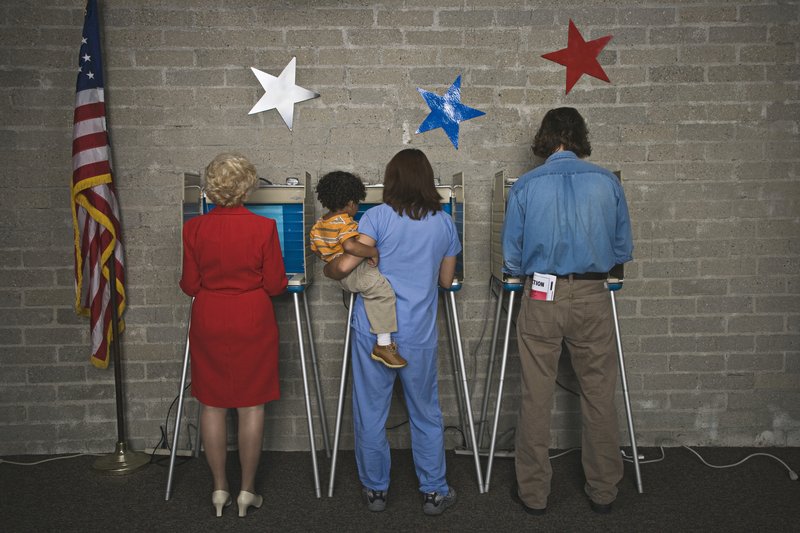
While New York City gained national attention for the energy around child care affordability, it was hardly the only place to test the viability of local early childhood funding this Election Day. Local communities mounted efforts from coast to coast:
- Multiple mountain towns in Colorado sought to establish a new taxing district to address child care costs, while a separate county in the north of the state voted on a new sales tax to support families with childcare costs.
- Cincinnati voted on the renewal of its 10-year-old Cincinnati Preschool Promise initiative
- Seattle sought to expand its preschool investment and put new funds toward child care.
All four of the ballot measures passed. Cincinnati and Seattle voters renewed their preschool programs with an overwhelming majority – 72.9 percent and 76.7 percent, respectively. But the story does not end when funding is allocated. As the experiences of the ECE Implementation Working Group communities have demonstrated, effective implementation is critical and an ongoing process. Particularly for programs that are accountable to voters, government leaders must pay ongoing attention to the nuance of policy design and adjust implementation plans as circumstances evolve.
Effective implementation and the ongoing work to maintain and expand coalitions to support early childhood investments are especially critical when the budget and political climate turn. In Oregon, state legislators threatened the popular Multnomah County Preschool for All program over the Summer, proposing legislation that would have preempted the county from collecting the dedicated tax that was overwhelmingly supported by voters. Families, child care providers, and local elected officials rallied to squash the attempt and the program will continue its planned expansion this school year. As one parent who had been involved in the program’s formation said at a rally, “This is a program that was created for the people by the people. Leave it alone.’”
(Read our brief about participatory planning, which highlights the work done in Multnomah County to build such a strong support base among families and providers)
For those in the early childhood community, threats like these to Preschool for All serve as a warning of what is at stake, particularly as state and local budgets face greater strain. Local government budgets may be at a breaking point, but so are families. For many local leaders, there has never been a more critical moment to invest in early care and education.
About the ECE Implementation Working Group
The ECE Implementation Working Group is a group of early childhood education leaders from cities and counties across the country. These leaders gather to share best practices from their experience working with families and local communities, and their work aligns with the New Practice Lab’s theory of change: that implementation lessons should inform policy design from the start. More information about the Working Group can be found here. You can reach out to us with questions about the group and its work at npl_work@newamerica.org.