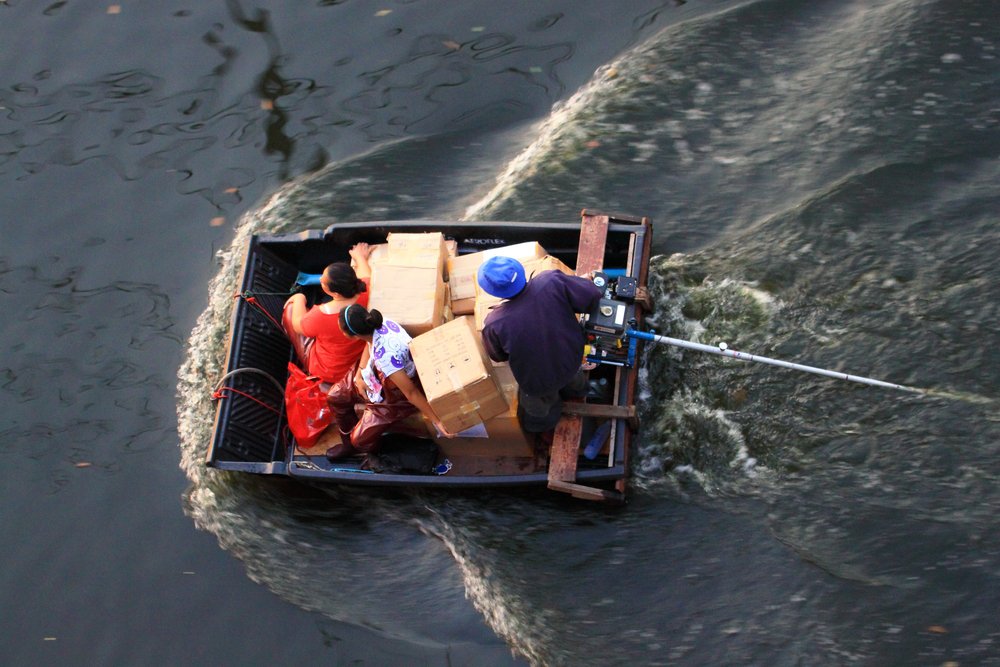
What Are We Going to Do With More Than 200 Million Climate Refugees?
Tim Robustelli and Yuliya Panfil discuss the current plight of climate refugees in response to Matt Bell's fictional short story, “Empathy Hour.”
A collaboration between New America’s Future of Land and Housing program and Future Tense reimagines our climate future, from flooded coasts to inland “climate havens.”
Over 100 million Americans live on the U.S. coasts, and people are moving there at a faster pace than ever before. At the same time, risks to communities, economies, and infrastructure in coastal regions are growing due to climate change. Sea-level rise and more frequent and severe storms are no longer a future threat, but a current reality.
In response, local governments are struggling to implement “managed retreat,” a process in which homeowners are paid the market value of their house to move away from vulnerable coastal areas and floodplains. It's a politically-divisive policy, and any planned relocation at scale looks increasingly unfeasible: the average U.S. home costs $308,000 and 15 million homes are at risk of repeat flooding. Relocating just ten percent of flood-prone residents would cost the government nearly half a trillion dollars, to say nothing of exponentially more expensive propositions, like relocating airports, ports, and hospitals. Not only that, but where will millions of displaced Americans move to? And is there any chance these processes can be implemented equitably?
To adapt to the increasing threat of climate change, we need to reimagine life in the United States—both on the coasts and in “climate havens” such as the Midwest. Future Tense at Slate and the Future of Land and Housing program at New America are collaborating to explore our climate future, from embracing a Venice-like approach in coastal cities to re-arranging life in the Great Lakes region, which will likely see an influx of “climate refugees.”
Tim Robustelli and Yuliya Panfil discuss the current plight of climate refugees in response to Matt Bell's fictional short story, “Empathy Hour.”
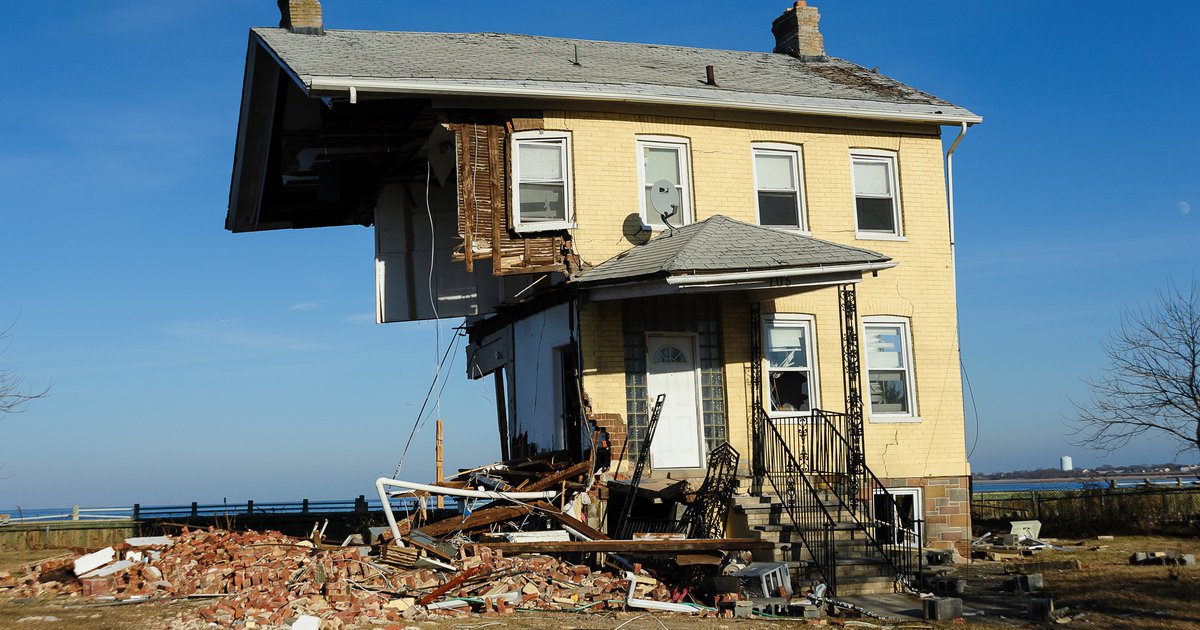
Future of Land and Housing fellow Fanilla Cheng and program director Yuliya Panfil explore why the U.S. government’s incremental approach to sea-level rise, largely through the process of “managed retreat,” is increasingly unfeasible.
Helen Bromhead, a research fellow in linguistics at Griffith University, Australia, wrote about the need for better public communication surrounding the climate adaptation policy of “managed retreat.”
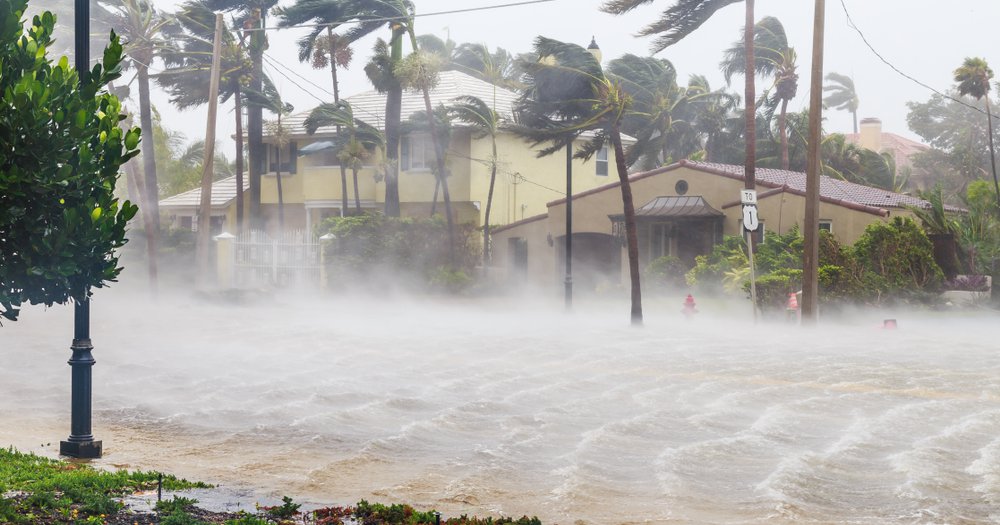
Future of Land and Housing’s Tim Robustelli and Shahin Vassigh, an architecture professor at Florida International University, examine the well-established—if ambitious—climate adaptation policies that Miami can adopt to better live with rising seas and extreme heat in the coming decades.
Researcher Molly Brind'Amour reviews the frustrated history of “managed retreat” policies in response to Brenda Cooper's fictional short story, “Out of Ash.”

Molly Mowery and Kelly Johnston from the Community Wildfire Planning Center, along with Katie Oran, a fellow with Philanthropy California, reimagine how Americans can build and live in the face of more frequent and severe wildfires.

Sharon E. Burke, president of Ecospherics and former Assistant Secretary of Defense for Operational Energy, considers the U.S. government’s difficult decisions on closing military installations due to climate impacts.

Lora Phillips and Melissa Guardaro, with the Knowledge Exchange for Resilience at Arizona State University, spotlight the climate vulnerability of U.S. mobile homes, which are often touted as a potential solution to the nationwide housing shortage.