Tackling Displacement, Eviction Data, and More: FLH’s Year in Review
Blog Post

Dec. 19, 2025
It’s been a busy year for the Future of Land and Housing Program at New America, and a challenging year for the housing and land space, but we’re forging ahead in the fight to cut displacement. We’re grateful to our partners and looking forward to continuing the fight for housing stability with you all in 2026.

Zander Shaw / Lawless Forge
Here’s a rundown of our top moments of 2025, celebrating the impact we’ve had with our collaborators and previewing some of our key projects for next year.

#1: Our big idea of a Housing Loss Rate catalyzed the FIND Housing Loss Act of 2025.
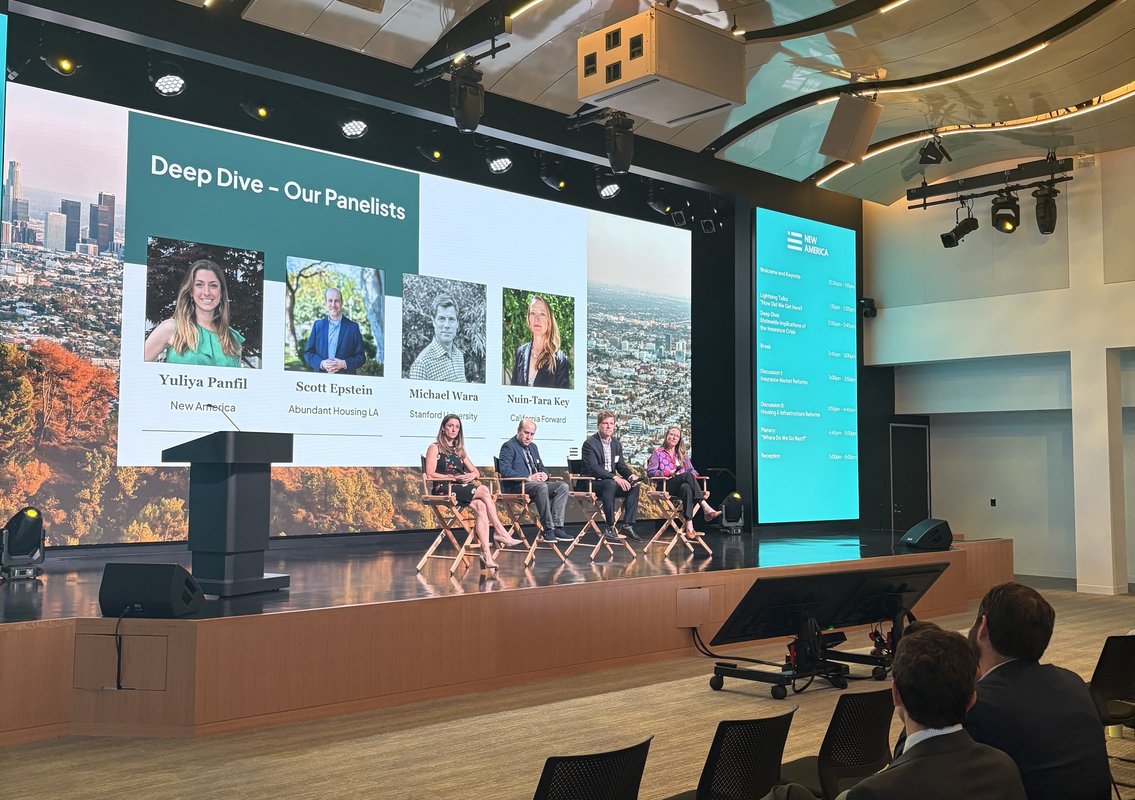
We brought together a cross-sector coalition to push for the development of a National Housing Loss Rate to track how many families are displaced from their homes each year. The coalition’s sustained efforts led to a Congressionally mandated report and the introduction of the Federal Inquiry into the Nature and Documentation (FIND) of Housing Loss Act of 2025, which directs the Department of Housing and Urban Development (HUD) and the Census Bureau to study how federal agencies identify and track housing loss.
Tim Robustelli / New America
#2: We convened Los Angeles innovators to help solve California’s insurance crisis.
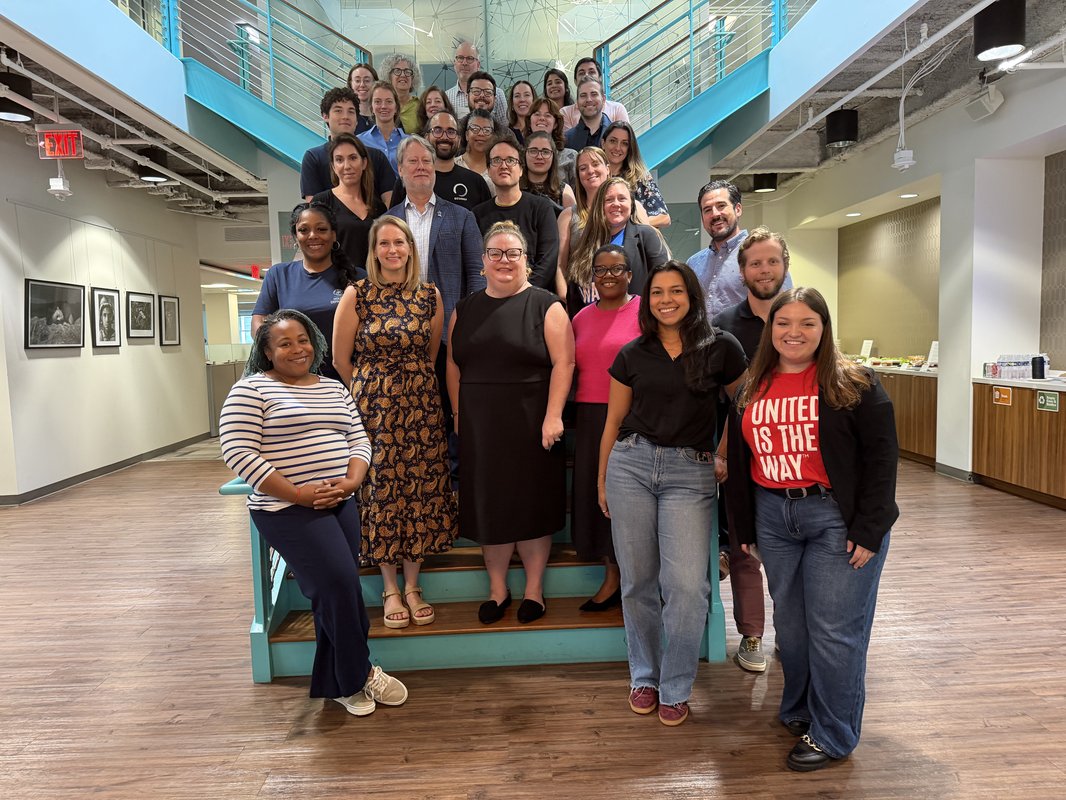
Increased insurance costs are exacerbating California’s housing affordability crisis, in large part because climate-fueled megafires are pushing major insurance providers to exit the market. As the Pacific Palisades and Altadena communities recovered from the January 2025 fires, we co-hosted an event with Bank of America and the Department of Angels on housing, insurance, and fires in California, to advance the conversation on a future in which insurance is not a major challenge to living and working in the state.
Source: Emily Winchester/New America
#3: Our Eviction Data Response Network (EDRN) supported nine city, county, and state partners to advance data-driven housing stability.
Through one-on-one coaching, cohort meetings, site visits, and an in-person capstone convening in Washington, DC, we supported our EDRN partners to collect, analyze, and deploy eviction data in novel ways in order to improve housing stability in their communities.
#4: Our HUD-supported study proposed novel approaches to understand the racial homeownership gap and make small dollar homeownership more accessible.
There are millions of low-cost homes across the country, yet low- and moderate-income families are often shut out from accessing them. Through a research grant from HUD, we examined how declines in access to mortgage financing for low-cost homes shape the racial homeownership gap, and identified a host of solutions to make it easier to buy, repair, and build affordable homes in the U.S.
#5: We launched The Rooftop, a contributor-driven outlet for innovative solutions to the housing crisis.
The Rooftop showcases a range of housing solutions from leaders in the field—ideas big and small, public and private, well-trodden and novel. Since launch, The Rooftop has published 24 articles and 5 Q&As on everything from building trauma-informed affordable housing to protecting student parents from eviction to explaining why housing funders should stop obsessing over scale. Fill out this form to pitch us your idea for The Rooftop.
#6: We put Chicago’s South Side residents at the center of climate migration scenario planning.
Alongside New America Chicago, we brought together more than 60 residents, policymakers, researchers, and nonprofit leaders for a first-of-its-kind community-centered scenario planning event on domestic climate migration and housing affordability in South Side Chicago. Together we envisioned what climate-driven population growth could mean for residents, to inform an actionable set of recommendations for Chicago and other anticipated receiving cities.
#7: We launched a 10-state EDRN scale-up with support from the Ballmer Group.
A $3.1 million dollar investment from the Ballmer Group is allowing us to launch EDRN with up to 10 states under our newly-hired EDRN Initiative Director, Ian Fletcher.

Source: Eddie J. Rodriquez via Shutterstock
#8: We convened Chicago home and building owners on challenges and opportunities for staying in place.
With our colleagues at New America Chicago, we hosted two community design sessions—one with older homeowners on the South Side, and one with small building owners in the Pilsen neighborhood. Residents shared the hurdles they face in maintaining their homes, staying rooted in their neighborhoods, and building generational wealth, to help guide Chicago-area nonprofits deliver effective support to low- and moderate-income residents.
#9: We secured philanthropic support for our climate migration and housing network in the Great Lakes.
FLH received grant funding from the U.S. Bank Foundation and the Walder Foundation to work with local partners in Minneapolis, Cincinnati, and Chicago to plan for the potential arrival of climate migrants in Great Lakes cities and their impact on housing supply, affordability, and displacement.
#10: We released the first public analysis of DC eviction filings since 2020.
With our partners at January Advisors, we released the first public analysis of Washington, DC eviction filings since before the pandemic, establishing an important baseline as the District undergoes major economic, policing, and housing policy changes.
Bilanol / Shutterstock.com
#11: We sounded the alarm on FEMA with Jesse M. Keenan in Scientific American.
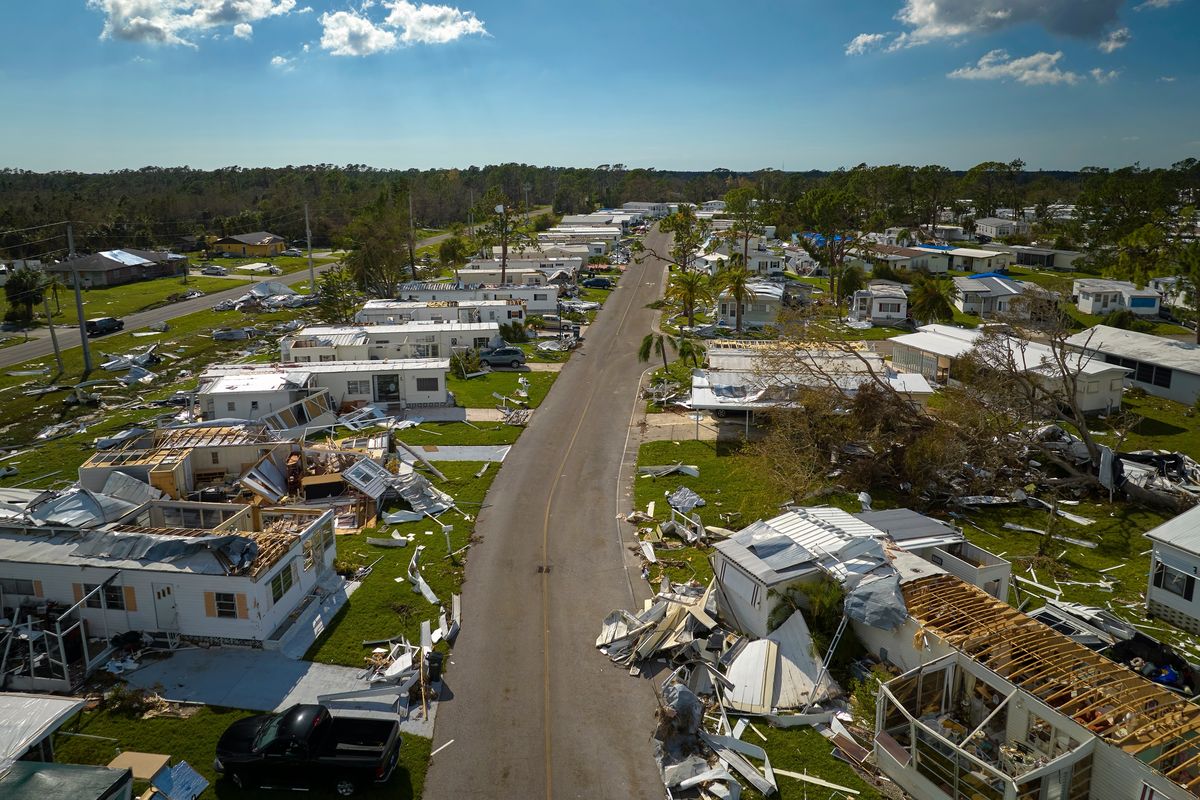
Yuliya Panfil and leading climate migration expert Jesse M. Keenan warned of the dire consequences for small-town America if the Trump administration eliminates the Federal Emergency Management Agency (FEMA). Without the agency’s recovery assistance, many small towns and rural communities will likely go bankrupt post-disaster. Panfil and Keenan call to mend, not end, FEMA and help preserve the communities that define the American experience.
#12: We salvaged and published a USAID-funded report on thinking and working politically on land.
The Trump administration’s dismantling of the United States Agency for International Development (USAID) in 2025 put a sudden end to thousands of lifesaving programs and destroyed a trove of research, evaluations, and resources used by millions of people globally. We salvaged and published one such product, which had been in development as part of USAID’s Integrated Natural Resources Management Activity. Our report Thinking and Working Politically on Land Tenure draws on decades of experience from experts in the field on strengthening and securing land and property rights globally.