Editorial credit: Phil Pasquini / Shutterstock.com
April 15, 2019
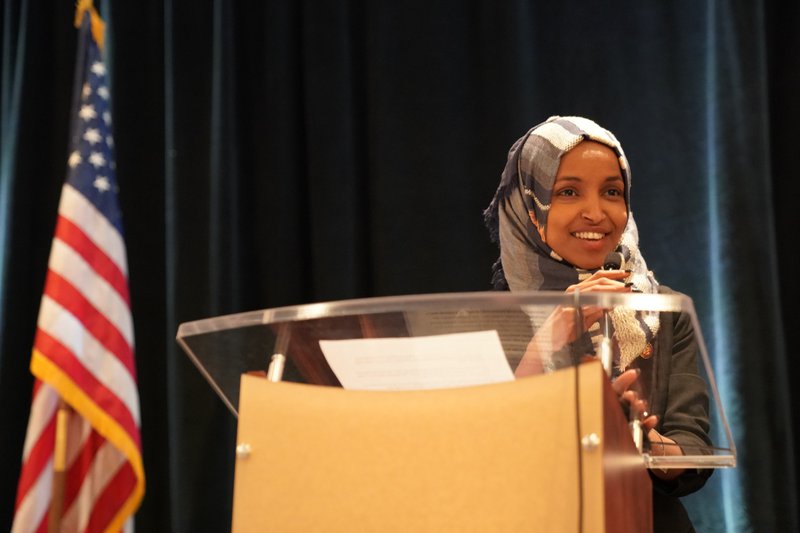
Masha Gessen wrote for the New Yorker about the political bullying of Rep. Ilhan Omar.
You know how bullying works. The victim is marked long before the bullying begins: it’s the kid no one really likes, the weirdo who is barely tolerated by the larger group. The defenseless, isolated kid. And when the bullying starts to happen, the rest of the children look the other way. Even the ones the victim thought were his friends go silent. Especially the ones he thought were his friends.
Political violence can work the same way. In modern states ruled by autocrats, or aspiring autocrats, political violence is dispersed and delegated. Its first weapons are ridicule and ostracism. Once a person has been marginalized and discredited among allies, physical violence becomes a likely option. In Russia, I witnessed this several times among people I knew, who stood alone and embattled before they were killed. The Parliament member Galina Starovoitova, who had once been a prominent member of Boris Yeltsin’s Cabinet, was, by the late nineteen-nineties, portrayed by the Russian media as someone whose ideas were outdated and irrelevant. She was shot dead in the stairwell of her apartment building, in November of 1998. The journalist Anna Politkovskaya was an often short-tempered person whose reporting was viewed as partisan and unreliable by many of her more mainstream colleagues. She was shot dead in the elevator of her apartment building, in October of 2006. The politician Boris Nemtsov, once viewed as Yeltsin’s most likely successor, was by the twenty-tens seen as an old-timer who, even as he protested the regime, didn’t quite grasp the new language of protest. He was shot dead on a bridge in central Moscow, in February of 2015. In all three cases, the people convicted or accused of the murder did not have a direct relationship to the Kremlin but were seemingly moved by a desire to act on their loyalty to it.