
Anne-Marie Slaughter
Senior Advisor, Executive Office
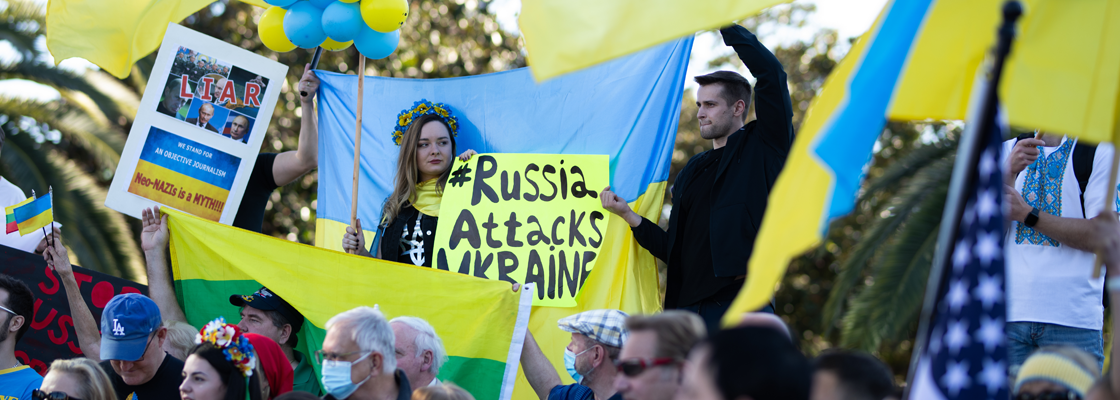




Russia’s invasion of Ukraine will be fought online as well as on the battlefield. New America’s experts are closely tracking the information war in Russia, Ukraine, and here at home.
Stay up to date: sign up to receive periodic updates, reactions, and analysis from New America’s experts on Russia’s war in Ukraine here.
Anne-Marie Slaughter, CEO, New America @SlaughterAM:
"Even the most hard-boiled geopolitical analyses of Russia's invasion of Ukraine recognize the critical impact of global players such as businesses, diaspora groups, and civic organizations. Any assessment of the forces arrayed on both sides must take account of groups like Anonymous and companies like Microsoft as well as looking at Russian-backed hackers and troll farms."
Candace Rondeaux, Director, Future Frontlines, New America @CandaceRondeaux:
"From Telegram to Twitter, champions of Russia’s invasion of Ukraine have expressly named information as the war’s second front. The assault on truth and disinformation has already had tangible effects inside and outside Russia. The Kremlin has shown that it intends to raze Ukraine’s communications infrastructure. Wagner Group contingents have been abuzz for months about their intent to press into the psychological warfare space. But no one should make the mistake of thinking Russia’s aggression will stop at Ukraine’s border. Russia’s invasion will haunt U.S. politics for years to come. The question tech leaders around the world now need to ask themselves is which side they want to be on and how they will ensure that not only their businesses but their countries continue to survive and thrive.”
Peter W. Singer, Strategist and Senior Fellow, New America @peterwsinger:
Why has Ukraine been so successful at information warfare/propaganda vs. the supposed Russian masters of it? Peter Singer provided a multi-part tweet thread, explaining why Ukraine has been so successful against the supposed Russian masters of information warfare and its 10 key messaging themes.
This Twitter thread from Peter Singer explains three reasons why Russia's info ops aren’t resonating.
Ben Dalton, Fellow, Future Frontlines, New America @wbend:
"Russian mercenary groups, including the infamous Wagner Group, are on the move, reportedly hunting President Zelenskyy in Kyiv, fighting on the battlefield, and recruiting on their own widely read social media channels. While attention has understandably shifted to Russia's formal military operations, we can expect that these groups will continue to form an integral part of Putin's wartime strategy."
This Twitter thread from Future Frontlines highlights the moves of the Wagner Group.
ICYMI: Watch New America’s event “Russia Invades Ukraine” with Ben Dalton, Beatrice Godefroy, and Aric Toler in conversation with Candace Rondeaux with additional comments from the ground by Liza Baran.
Senior Advisor, Executive Office
Senior Fellow, Future Security
Strategist & Senior Fellow, New America
Fellow, Future Security
Director, New Models of Policy Change


