


Amy Laitinen
Senior Director, Higher Education
This year, Secretary DeVos and the Department of Education will attempt to alter the higher education landscape through a regulatory process known as negotiated rulemaking. This negotiated rulemaking will likely have significant implications as the Department seeks to promote innovation by strippingregulations related to quality assurance and accountability. This website is devoted to providing information about the Department's 2019 neg reg, including background papers on the key issues, data, and more.
While Congress passes laws, it is up to the executive branch (usually in the form of federal agencies) to implement the laws. In order to implement the law, the Department needs to resolve ambiguity or clarify the meaning around certain terms in order to make implementation possible. It does this by creating “rules,” through a process known as regulation.
While other federal agencies are allowed to issue regulations without going through a “negotiated rulemaking” process, the Department of Education is different. The Higher Education Act requires that the Department obtain “the advice of and recommendations from individuals and representatives of the groups involved in student financial assistance programs” before issuing regulations on federal financial aid programs (e.g. grants, loans, work-study). The Department must convene a group of stakeholders to provide input on the proposed set of issues, topics, and regulatory language the Department is considering for regulation. According to the law, these representatives, or negotiators, may include “students, legal assistance organizations that represent students, institutions of higher education, State student grant agencies,” and more. If the stakeholders and the Department negotiate and reach agreement, or consensus, on what the proposed regulatory language should look like, the Department is required to propose that language when developing its regulations. If an agreement is not reached, the Department is provided wide latitude in developing its regulations. This process is known as negotiated rulemaking, or “neg-reg.”
The current negotiated rulemaking covers an incredibly disparate group of topics. To try and manage the process, the Department has broken the rulemaking bodies into one full committee with voting rights (Accreditation and Innovation Committee) and three subcommittees that will debate the content of the proposed changes and make recommendations to the full committee (Distance Learning and Educational Innovation Subcommittee; TEACH Grants Subcommittee; Faith-Based Entities Subcommittee). The agenda for both the full committee and the subcommittees, as well as a list of topics each committee will review, is available from the Department in an October 2018 notice. An agenda for the first session of the rulemaking is available here.
The subcommittees, which may include negotiators from the full committee as well as individuals not on that committee, will each make recommendations to the full committee, but only the full committee will get to vote on consensus or what the final regulatory language should look like. Breaking from the long precedent of previous negotiations, the Department has indicated it does not plan to require negotiators to reach consensus in all areas, but instead will “bucket” the votes into multiple consensus votes. It has not yet specified the buckets it will use. Both the subcommittee structure–in which outsiders not on the full committee can apply and participate in such a non-public meeting–and the consensus structure are significant deviations from past procedures and processes.
For more information about the negotiated rulemaking process as a whole, please click here. To learn more about the specific issues in the Department’s 2019 negotiated rulemaking, please read “The Fight for the Future of Higher Education: Neg Reg 101.” The Department's proposed protocols for the rulemaking are published here.
At the end of negotiations, the Department and negotiators reached consensus. However, since then, the Department has sometimes diverged from the agreement (see this statement from a negotiator for more). The proposed accreditation and state authorization rules were published in June 2019; check out our comments here and the final rules (published in October 2019) here. The proposed rules relaxing rules for faith-based institutions and entities, and rules updating the TEACH Grant program, were published in December 2020; final rules have not yet been published. The proposed rules for distance-education programs were published in April 2020; our comments are here.
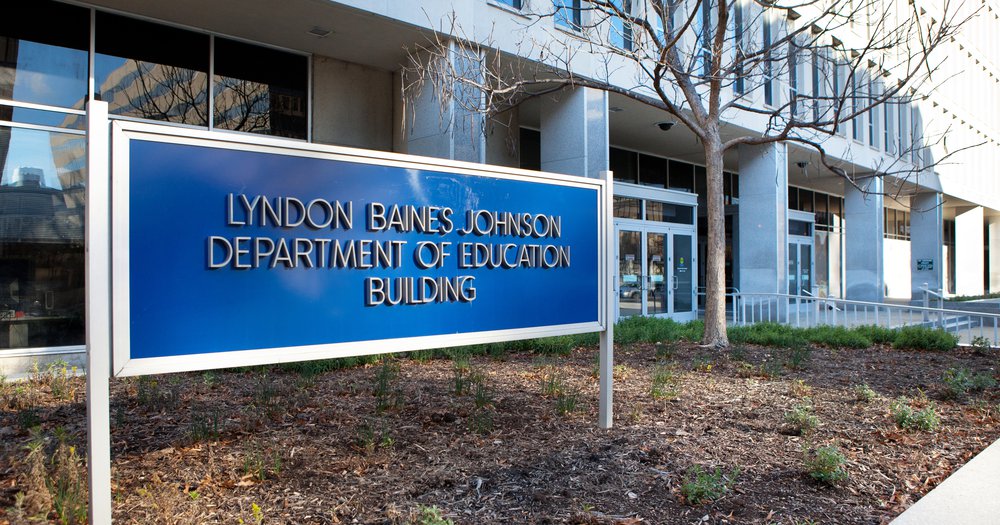
The full committee and subcommittees will each meet during three separate sessions. All full committee meetings are open to the public. The January and March sessions of the Accreditation and Innovation Committee will be held at the U.S. Department of Education’s LBJ Building, Barnard Auditorium, 400 Maryland Ave., SW. The February session of the Accreditation and Innovation Committee will be held at the U.S. Department of Education’s Potomac Center Plaza Auditorium, 550 12th St., SW. Note: The subcommittee meetings will all be held at the same time and will not be open to the public.
The January 14, 2019 session of negotiated rulemaking is cancelled due to severe weather. The Accreditation and Innovation Committee will meet on January 15 beginning at 12 PM and January 16 at 9 AM instead.
The February 20, 2019 session of negotiated rulemaking is cancelled due to severe weather. The Accreditation and Innovation Committee will reconvene on February 21, 2019.
The third and fourth Accreditation and Innovation Committee sessions will run 8 AM to 6 PM (instead of 9 AM to 5 PM), except on the final day of each session, when the meetings will end by 4 or 5 PM.
A full list of negotiators is available here.
| Accreditation and Innovation Committee | Distance Learning and Educational Innovation Subcommittee | TEACH Grants Subcommittee | Faith-Based Entities Subcommittee | |
| Session 1 | January 14-16, 2019 | January 17-18, 2019 | January 17-18, 2019 | January 17-18, 2019 |
| Session 2 | February 19-22, 2019 | February 12-13, 2019 | February 12-13, 2019 | February 12-13, 2019 |
| Session 3 | March 25-28, 2019 | March 11-12, 2019 | March 11-12, 2019 | March 11-12, 2019 |
| Session 4 | April 1-3, 2019 | N/A | N/A | N/A |
Negotiated rulemaking meetings for both the full committee and the subcommittees will be livestreamed by the Education Department. The livestream for the full committee will be available here.
For Session Two:
For Session Three:
The Department published its initial announcement of plans to rewrite these regulations in July 2018, and requested nominations from negotiators in October 2018. Its website for the rulemaking is here.
While the Department typically provides issue papers that contain background information on each topic it will consider for regulation, it did not do so for the 2019 rulemaking. The background papers below, authored by New America except where noted otherwise, provide context on the history and context of these rules. Check back for updates and new issue papers in the coming weeks.
More background information on the regulations that Secretary DeVos plans to rewrite or eliminate–and the implications of those changes–is available in a memo here and in this infographic from Third Way. New America also published some thoughts on the key changes in “The Department of Deregulation” here, New America’s Clare McCann and Spiros Protopsaltis, a professor at George Mason University, published an op-ed on the deregulatory agenda here, in Inside Higher Ed.
The Department published proposed regulatory language on January 7, 2019, that it will bring to the committees for consideration. The proposed language is available here:
The Department provided revised proposed regulatory language before the February session of negotiated rulemaking. The proposed language is available here:
The subcommittees each reported out to the full committee on the content of their discussions and highlighted areas of agreement and disagreement.
Members of the subcommittees also submitted several proposals during the February session of the subcommittee meetings and/or to the full committee.
The Department provided new redlines prior to the start of the third and final subcommittee meetings.
Some subcommittee members also circulated proposals prior to the third meeting.
The Department provided new redlines prior to the start of the third full committee meetings.
The Department provided new redlines prior to the start of the fourth and final committee meetings.
On April 3rd, negotiated rulemaking concluded. Final language, as agreed to by the committee and sent out by the Department on April 4th, below.
Throughout the neg-reg process, our team provided public comments and analysis of ED’s proposals neg-reg notices and proposals. Check out New America’s comments to the Education Department related to this rulemaking here, and all public comments here. And click here to read New America's May 2019 analysis of what happened during the rulemaking.
Distance education issues are central to the Department’s rulemaking agenda. Read up on the long history of abuses in the correspondence education sector that gave rise to a requirement that distance-education programs have regular and substantive interaction between students and their instructor. And review this report from Spiros Protopsaltis and Sandy Baum regarding the available research on distance education.
Learn more about the definition of a credit hour in this New America report, Cracking the Credit Hour, and from this 2010 hearing by the House Committee on Education and Labor. Following audits of several accrediting agencies’ policies on reviewing credit hour assignments at institutions, the Inspector General issued an alert memorandum to the Department regarding a particularly egregious abuse of that definition by American InterContinental University, and inadequate oversight by its accrediting agency. A FOIA response from the Education Department shows that only two colleges have been found in violation of the credit hour rule since it took effect in 2011.
Brush up on accreditation issues with this fact sheet from Antoinette Flores at the Center for American Progress, describing accreditors’ historical role in higher education. She also explains accreditors’ shortcomings in considering students’ outcomes here, and explores what happens when an accrediting agency sanctions a college here. For more on the Department’s role in accreditation, check out this report from the Inspector General and this GAO report that explores ways in which the Department needs to strengthen its oversight of accreditors.
One subcommittee will focus on the TEACH Grant program — a program that offers grants to college students, but converts the grant to an interest-bearing loan if the student doesn’t meet an obligation to serve as a teacher in a high-need school after leaving college. A report by the Education Department found huge rates of conversions among TEACH Grant recipients, including many erroneous conversions. A separate report by Public Citizen compiles data and information obtained through a FOIA request, painting a picture of poor management and frequent servicing errors in the program. Read the Department of Education's response to Rep. Bobby Scott's TEACH Grant inquiry.
While important issues will be debated on the subcommittee on faith-based entities, New America’s higher education program will not follow those issues as comprehensively.