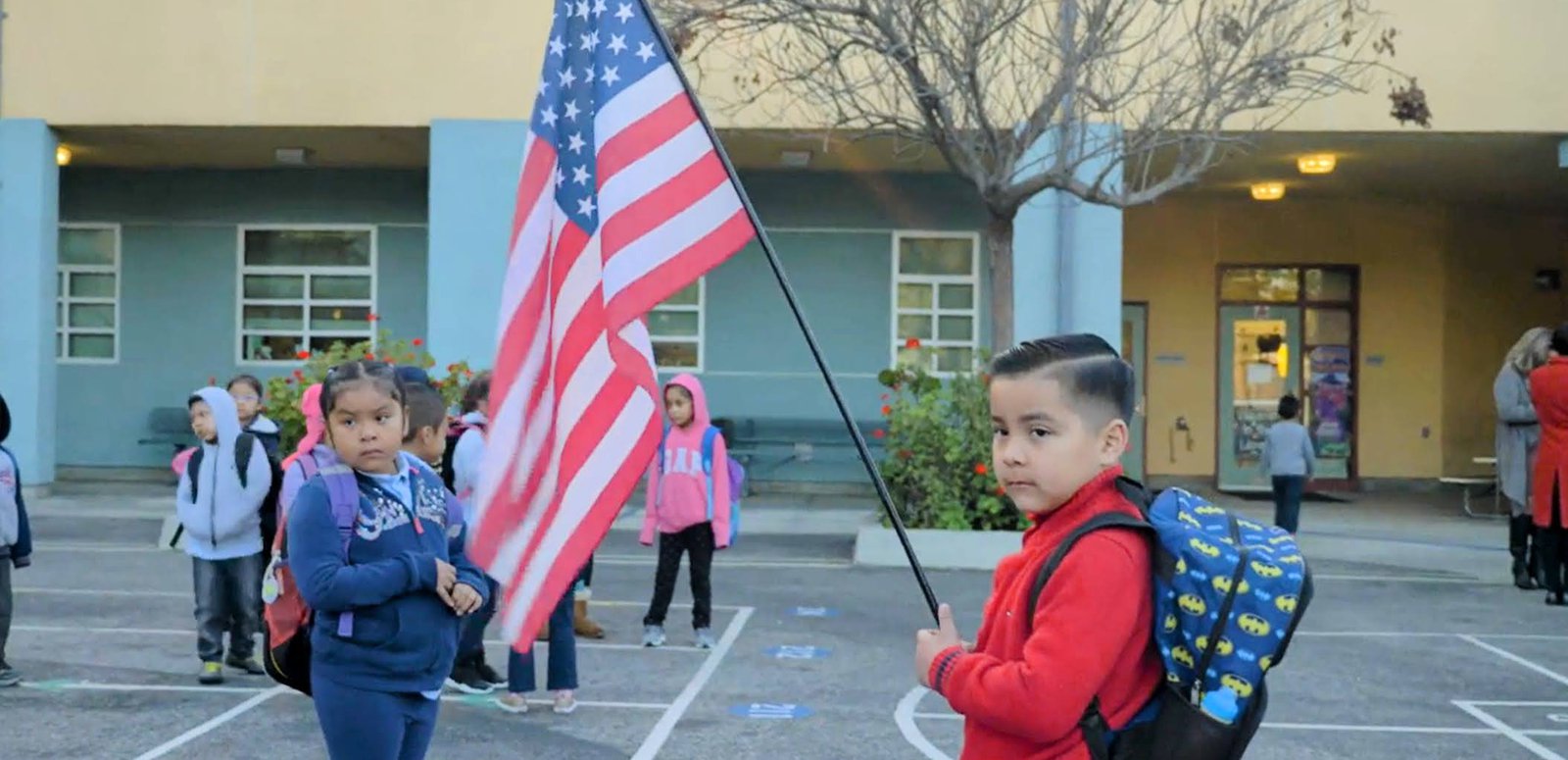
A Federal Policy Agenda for English Learner Education
Abstract
English learners (ELs) represent a growing share of the student population in the United States, yet are often sidelined in federal education policy discussions. At present, an uneven approach has yielded sharp differences in ELs’ educational experiences, with some states prioritizing bilingual education models and others emphasizing English-dominant models. A new presidential administration brings the opportunity to reassess the condition of federal EL education policy and identify areas of prioritization and improvement. This paper takes stock of key areas in need of improvement in federal policy impacting ELs and dual language learners (DLLs), and offers recommendations aimed at improving their access to an equitable education throughout the early education and PreK-12 continuum.
Acknowledgments
We would like to thank the experts who participated in our federal policy roundtable and provided guidance and feedback on this policy paper (see Appendix for the full list of participants). We are grateful to our New America colleagues Elena Silva, Jazmyne Owens, Melissa Tooley, Cara Sklar, and Sabrina Detlef for their expertise and editorial insight. Thank you to Fabio Murgia, Riker Pasterkiewicz, Julie Brosnan and Joe Wilkes for communications and production support. Our work would not be possible without the generous support of the Heising-Simons Foundation, Bill and Melinda Gates Foundation, Chan Zuckerberg Initiative, William and Flora Hewlett Foundation, Carnegie Corporation of New York, McKnight Foundation, and Walton Family Foundation. The views expressed in this paper do not necessarily reflect the views of our funders.
Downloads
Introduction
English learners1 (ELs) represent a growing share of the student population in the United States, now making up 10 percent2 of K–12 students and over 30 percent of the youngest children (birth to age eight).3 Historically, ELs have been sidelined in federal education policy discussions, which has resulted in an inconsistent approach to supporting their language development and academic achievement.
Prior to 1968, the federal role in EL education was minimal. That changed with the passing of the Bilingual Education Act (Title VII), which outlined the U.S. government’s responsibility to ensure that EL students had equitable access to public education and programs designed to support their English language development.4 Since that time we have seen policies across the country range from English-only policies focused on remedial and deficit-oriented approaches to bilingual/multilingual policies focused on strengthening and highlighting ELs’ considerable assets.
To be sure, these tensions are evident in the federal policies that govern EL education today. While the last two reauthorizations of the federal Elementary and Secondary Education Act (ESEA) pushed for increased standards and accountability—bringing increased attention to the needs of ELs and elevating the need for more robust EL policies—these laws have also focused on the perceived deficits of ELs, most notably through an imbalanced emphasis on English language acquisition at the expense of academic and home language development.
This year poses an important opportunity for our nation’s approach to English learners. With a new presidential administration comes the possibility to reassess the condition of federal EL education policy and identify areas of prioritization and improvement. The COVID-19 pandemic has amplified and exacerbated existing education inequities. Recent studies suggest that ELs have been disproportionately impacted by the shift to distance learning, with school districts reporting lower attendance rates, a higher proportion of failing grades, and significant academic regression among EL students.5 These negative impacts have been heightened by a lack of consistent access to the technology needed to engage in remote learning.6 This paper takes stock of key areas in need of improvement in federal policy impacting ELs and dual language learners (DLLs), including data and accountability, assessment, teacher preparation and professional learning, and funding. It draws on expertise from EL experts across the country to offer recommendations aimed at improving their access to education services throughout the early education and PreK–12 continuum.
Citations
- A note on terms: We use the term English learners (EL) throughout the paper as it is the term used in federal policy. We recognize that there are many other terms used in the field, including emergent bilinguals, multilingual language learners, culturally and linguistically diverse students, and students who are classified as English learners. We use the term dual language learners (DLL) to mean children between the ages of birth to eight who are learning English in addition to their home language.
- National Center for Education Statistics (website), “The Condition of Education: English Language Learners in Public Schools,” updated May 2020, https://nces.ed.gov/programs/coe/indicator_cgf.asp
- Maki Park, Anna O’Toole, and Caitlin Katsiaficas, Dual Language Learners: A National Demographic and Policy Profile (Washington, DC: Migration Policy Institute, 2017), https://www.migrationpolicy.org/research/dual-language-learners-national-demographic-and-policy-profile
- For more on the early history of bilingual education at the federal level see James Crawford, “Bilingual Policy Has Taken Shape Along Two Federal Tracks,” Education Week, April 1, 1987, https://www.edweek.org/teaching-learning/bilingual-policy-has-taken-shape-along-two-federal-tracks/1987/04
- Laura Meckler and Hannah Natanson, “New Data Finds Unequal Gaps in Learning during Remote School,” Washington Post, December 7, 2020, https://www.washingtonpost.com/education/students-falling-behind/2020/12/06/88d7157a-3665-11eb-8d38-6aea1adb3839_story.html; and Julie Sugarman and Melissa Lazarín, Educating English Learners during the COVID-19 Pandemic: Policy Ideas for States and School Districts (Washington, DC: Migration Policy Institute, 2020), https://www.migrationpolicy.org/sites/default/files/publications/mpi-english-learners-covid-19-final.pdf
- Distance Learning: Challenges Providing Services to K–12 English Learners and Students with Disabilities during COVID-19 (Washington, DC: United States Government Accountability Office, November 2020), https://www.gao.gov/assets/720/710779.pdf
Data Collection and Reporting
Between the passage of the No Child Left Behind Act (NCLB) in 2002 and the Every Student Succeeds Act (ESSA) in late 2015, local, state, and federal data collection and reporting requirements evolved significantly. Today, schools collect a variety of background information on individual students, including ELs, such as eligibility and enrollment in special education and free and reduced-price lunch services, country of birth, and language spoken at home.7 In addition, schools collect data on how current and former ELs perform on academic standardized tests, and whether ELs are making progress in achieving English proficiency. Thanks to this student-level data, we are able to see how ELs are performing across a variety of important indicators. Other aggregate data are often used to measure and compare the quality of opportunities provided to students across schools.8 Some of these data are used for accountability, while others are simply reported, but they all provide invaluable insight into ELs and their educational opportunities.
Despite the proliferation of data, the image presented of ELs is still heavily framed from a deficit perspective. For example, ELs’ academic achievement scores are frequently used to compare the EL subgroup to their non-EL peers. However, there is growing acknowledgement that comparing EL and non-EL achievement may not be the most appropriate comparison, as it views ELs through a deficit lens defining their capabilities by a lack of proficiency.9 In addition, while the federal government collects statewide data on an annual basis, data hubs and sources maintained by the federal government often lag years behind the current reporting period. This means that the public is unable to access the plethora of data and information that currently exists in a timely and user-friendly manner.
To ensure data are not outdated by the time they are released to the public and that they represent the full range of ELs’ potential, we offer the following data collection and reporting policy recommendations:
1) Improve federal data collection and reporting practices by:
Releasing data collected from states more frequently and in a timely manner.
- For example, the last Consolidated State Performance Reports (CSPR) represents data from the 2015–16 school year.10 Likewise, the last Title III Biennial Report to Congress released was for school years 2014–16 and it was published four years after the reporting period ended.11
- Outdated accountability measures linked to NCLB are still reflected in EL state profiles published by the National Clearinghouse for English Language Acquisition (NCELA) and the data sources used are from 2014.12 These sources should be updated to reflect accountability changes under ESSA.
Expanding and updating EDFacts Data Files that are publicly available for ELs.
- The education field would benefit from having access to downloadable files for the wide range of EL data collected from states on an annual basis. Currently, the only file available for ELs on the EDFacts website is enrollment data from the 2012–13 school year.13
Developing state capacity around how to complete the CSPR to improve data reliability and efficacy.
Re-designing EL data stories and fact sheets published by the Office of English Language Acquisition (OELA) to reflect a more asset-based approach.14
- Currently, OELA focuses on the growing gap between ELs and non-ELs as represented by NAEP data, which does not offer a complete picture of ELs’ academic abilities, especially after they achieve English proficiency. These data stories and fact sheets could be complemented by information on how ELs perform once they reach English proficiency (i.e., former EL achievement).
2) Collect and report data on the types of programs ELs and DLLs in preschool to 12th grade have access to/are enrolled in (i.e., English as a second language, dual language, etc.) through Civil Rights Data Collection (CRDC) general school and district reports, as well as their English learner reports.
The terminology used to describe this population throughout CRDC should also be updated to reflect current law (i.e., English learners, not limited English proficient (LEP)).
3) Increase transparency of data currently collected on former and long-term ELs by making these data publicly available across various data hubs and resources.
Title III of ESSA requires states to report on the academic achievement of former ELs each year up to four years after they exit EL services, as well as on the number and percentage of long-term ELs.15 ESSA also requires that data be collected on ELs’ progress in reaching English proficiency, former ELs, and ELs who also are students with disabilities. To date, these data are not publicly available on NCELA’s demographic and state data, EDFacts Data Files, or NCES.
ED Data Express Title III data hub presents former EL performance in math and ELA, as well as EL proficiency and progress rates. This could serve as a starting point to disaggregate data for the various subcategories (long-term EL, dual-identified ELs, etc.) represented in the EL subgroup.16
Data Considerations and Recommendations for Dual Language Learners
While substantial resources have been devoted to developing data systems to track ELs’ enrollment, access, progress, and achievement in K–12 education, the opposite is true in early education.17 Dual language learners (DLLs), defined as children between the ages of birth to eight who are learning English in addition to their home language, are dispersed across a range of settings including Head Start, state pre-K, center-based child care, family child care, and family friend and neighbor care—all of which collect and report data in disparate ways, if at all. Combined with the lack of cohesion and investment in early education as a unified system, we currently lack accurate information on the number of DLLs being served across all early childhood settings, the services they receive and their learning outcomes.
At the federal level, Head Start requires grantees to report on the number of DLLs served, which has helped to shape the policies that guide the program. DLLs make up nearly 30 percent of children in Head Start and in 2016, Head Start’s Performance Standards were updated to include a stronger focus on supporting DLLs’ bilingualism and biliteracy. These standards emphasize the use of home language in instruction and assessment, elevate bilingualism and biliteracy as a strength, and outline the need for teachers to possess the requisite competencies and skills to support DLLs and their families.
By contrast, the Child Care Development Block Grant (CCDBG) program, which provides funding to states for child care subsidies for low-income working families, currently fails to capture the extent to which DLLs and their families are being served and to provide strong standards related to DLLs, beyond having linguistically accessible websites for consumer information. States are required to report on the demographics of children being served, including the primary language spoken at home; however, these data are significantly lagged and of low quality due to the number of states reporting insufficient/invalid data.18 These shortcomings, paired with the almost complete lack of standards specific to DLLs in CCDBG and in state child care systems, create a system that is inadequate in its services to DLLs.
These gaps in data reporting make it challenging for policymakers to focus the necessary resources towards ensuring that DLLs have access to early childhood education programs that support their linguistic, academic, and socioemotional development. To help close these data gaps and early education systems better serve DLLs, we recommend the following:
- Ensure all early childhood programs that receive federal funding conduct home language surveys at program entry to better understand the number of DLLs in the ECE system and target resources and professional development requirements more effectively.
- Provide guidance on best practices for identifying DLLs across all early childhood systems19 and how to align those systems with K–12 to facilitate smoother transitions.
- Strengthen CCDBG by amending data reporting requirements to ask about all of the languages spoken in the home, rather than only the primary language, and specifying that states develop standards for effectively serving DLLs.
- Task the Government Accountability Office (GAO) with conducting a study on bilingual support and instruction in Head Start to better understand the implementation of the HS Performance Standards. This report would help increase transparency about federal monitoring of these standards and the support available to programs if they fall short of meeting expectations.
Citations
- Julie Sugarman, A Guide to Finding and Understanding English Learner Data (Washington, DC: Migration Policy Institute, 2018), https://www.migrationpolicy.org/sites/default/files/publications/EL-Data-Guide_Final.pdf
- To learn more about the spectrum of school quality and student success indicators that were included in states’ ESSA plans, see Samantha Batel, Measuring Success: An Overview of New School Classification Indicators Under ESSA (Washington, DC: Center for American Progress, August 2017), https://www.americanprogress.org/issues/education-k-12/reports/2017/08/04/436965/measuring-success-overview-new-school-classification-indicators-essa/
- Debbie Zacarian and Diane S. Fenner, “From Deficit-Based to Assets-Based: Breaking Down the Wall One Essential Shift at a Time,” Language Magazine, January 22, 2020, https://www.languagemagazine.com/2020/01/22/from-deficit-based-to-assets-based-breaking-down-the-wall-one-essential-shift-at-a-time/
- To view previous CSPR reports, see the U.S. Department of Education’s Office of Elementary and Secondary Education website, https://oese.ed.gov/offices/office-of-administration/about-us/consolidated-state-performance-reports/
- To view previous Title III Biennial Reports, see the NCELA website, https://ncela.ed.gov/biennial-reports-0#:~:text=The%20biennial%20report%20to%20Congress,students%2C%20or%20LEPs)%20attain%20English
- To view these state EL profiles, see the NCELA website, https://ncela.ed.gov/t3sis/index.php
- To view the EDFacts Data Files, see the U.S. Department of Education website, https://www2.ed.gov/about/inits/ed/edfacts/data-files/school-status-data.html#ss
- For an example of these EL data stories and fact sheets, see “Academic Performance and Outcomes for English Learners,” https://www2.ed.gov/datastory/el-outcomes/index.html; and “English Learner Trends from the Nation’s Report Card,” https://ncela.ed.gov/files/fast_facts/ELs-NAEP_Card.pdf
- It should be noted that while there is no federal definition for what constitutes a long-term EL, Title III does require states to report the number and percentage of ELs who have not been reclassified after five years. For more information, see Non-Regulatory Guidance: English Learners and Title III of the Elementary and Secondary Education Act (ESEA), as Amended by the Every Student Succeeds Act (ESSA) (Washington, DC: U.S. Department of Education, 2016), https://www2.ed.gov/policy/elsec/leg/essa/essatitleiiiguidenglishlearners92016.pdf
- To view ED Data Express Title III data, see its website at https://eddataexpress.ed.gov/dashboard/title-iii
- For more, see Janie T. Carnock, Dual Language Learner Data Gaps: The Need for Better Policies in the Early Years (Washington, DC: New America, 2018), https://files.eric.ed.gov/fulltext/ED590792.pdf
- For more, see Administration for Children & Families, Office of Child Care (website), “FY 2017 Final Data Table 20—Average Monthly Percentages of Primary Language Spoken at Home,” December 4, 2019, https://www.acf.hhs.gov/occ/data/fy-2017-final-data-table-20-average-monthly-percentages-primary-language-spoken-home-new
- These systems go beyond traditional education structures to also include programs housed in health agencies and human service agencies, such as home visiting and Head Start.
Accountability through Data
ELs have historically been excluded from state, district, and school accountability measures, and until NCLB there was minimal oversight for how ELs were performing academically.20 NCLB raised the bar slightly by requiring that ELs take the same state academic tests as their non-EL counterparts, and requiring states receiving Title III funding to track whether ELs were making progress/attaining English language proficiency (ELP), among other changes.21 However, as these measures were housed separately from the law’s accountability provisions, ELs’ academic and language progress were still not being considered in school quality evaluations. ESSA closed this loophole by requiring states to include not only their academic achievement, but also their progress towards attaining ELP in their systems used to rate and/or differentiate between schools.22 Though the move to include these requirements in Title I of ESSA may seem minor, doing so holds a lot of promise for increasing transparency around the quality of education ELs are provided.
In March 2017 Congress revoked the federal regulations intended to assist states with the implementation of ESSA’s accountability, school improvement, and reporting provisions.23 As a result, EL accountability policies adopted pursuant to ESSA have been inconsistent and have varied in terms of depth and rigor. A comprehensive review of state ESSA education plans found that although all states were held to the same federal policy framework, EL accountability differed greatly from state to state.24 This means that today, many ELs are not represented in accountability measures and are often held to different academic standards. The most underrepresented in accountability are ELs attending schools with low EL enrollment, former ELs, and other EL subcategories (e.g., students with limited or interrupted formal education (SLIFE), long-term ELs, ELs with disabilities, and newcomer ELs). Though changes to ESSA’s accountability requirements must go through Congress, ESEA reauthorization efforts have been significantly delayed in the past,25 often at the expense of generations of students.
Absent a comprehensive overhaul of the federal accountability framework, the federal government should, to the extent possible, work to address some of the EL accountability gaps by:
1) Issuing non-regulatory guidance to improve Title I state accountability systems and make reporting pursuant to ESSA more consistent and transparent across states. Matters to address include:
Ensuring state compliance with ESSA’s requirement that the EL subgroup be included in state systems of annual meaningful differentiation used to compare school performance. At present, eight states fully incorporate ELs’ academic performance in their accountability systems.26
Increasing accountability for EL students enrolled in schools/districts with small EL populations. Currently, the minimum number of students required to trigger ESSA’s school-level accountability provisions (e.g. n size) range from 10 to 30, and schools that do not enroll enough ELs are often not supported by local and state education agencies, which means ELs’ needs may go unmet. The guidance should call for an investigation of states’ ELs included/excluded rates from due to their n size.
2) Improving transparency and accountability for the heterogeneity of EL subgroup by:
Requiring states to disaggregate the EL group to account for students with intersectional identities, including those with disabilities, students with limited or interrupted formal education (SLIFE), recently arrived ELs/newcomers, and long-term ELs.
Defining and incorporating a long-term EL subgroup into Title I reporting requirements, and requiring states to create early detection mechanisms to identify ELs at risk of becoming long-term ELs.
- For example, California defines a long-term EL as well as those at-risk of falling into that category.27 This means that the state now collects data for both of these EL subcategories which can be used to target services to those in need.28
3) Increase state, district, and school accountability for former ELs. This can be done by:
Expanding the number of years former ELs are monitored from the current four years through the duration of their K-12 education, shifting former EL reporting requirements from Title III to Title I, and requiring states to include a separate former EL subgroup in their accountability systems.
- States already collect key former EL metrics, including how many former ELs are enrolled in school and how these students are performing. As it currently stands, however, 25 states combine former and current EL performance data in the EL subgroup, which masks the performance of both groups of students.29 If these data are not visible, they cannot be used to evaluate how schools are serving ELs after they are reclassified.
- Currently, Illinois is the only state that includes former ELs as its own subgroup in its accountability system. The state could provide useful information about how to craft a national requirement to collect data on former ELs and the implications for accountability.30
Citations
- For a brief historical overview of ELs’ integration into federal education policy, see Patricia Gándara, "Charting the Relationship of English Learners and the ESEA: One Step Forward, Two Steps Back," RSF: The Russell Sage Foundation Journal of the Social Sciences 1, no. 3 (2015): 112–128, https://muse.jhu.edu/article/605403
- Isabella Sanchez, “The Effects of NCLB Accountability on ELLs,” EdCentral (blog), New America, June 24, 2015, https://www.newamerica.org/education-policy/edcentral/title-iii-accountability-ells/; and ¡Colorín Colorado! (website), “No Child Left Behind and English Language Learners,” https://www.colorincolorado.org/article/no-child-left-behind-and-english-language-learners
- Janie T. Carnock, “After AMAOs: Defining What Progress for English Learners Means Under ESSA,” EdCentral (blog), New America, February 22, 2016, https://www.newamerica.org/education-policy/edcentral/ells-essa/For more background information about ESSA’s ELP requirement, see Students Can’t Wait (website), “English-Language Proficiency,” https://studentscantwait.edtrust.org/resource/english-language-proficiency/
- To review the accountability regulations that were revoked see Federal Register (website), “Elementary and Secondary Education Act of 1965, as Amended by the Every Student Succeeds Act-Accountability and State Plans,” https://www.federalregister.gov/documents/2016/11/29/2016-27985/elementary-and-secondary-education-act-of-1965-as-amended-by-the-every-student-succeeds
- Leslie Villegas and Delia Pompa, The Patchy Landscape of State English Learner Policies under ESSA (Washington, DC: Migration Policy Institute, February 2020), https://www.migrationpolicy.org/sites/default/files/publications/ESSA-Compendium-Final.pdf
- Andrew Ujifusa, Evie Blad, and Daarel Burnette II, “ESSA Voices: The Every Student Succeeds Act, Four Years Later,” Education Week, December 9, 2019, https://www.edweek.org/policy-politics/essa-voices-the-every-student-succeeds-act-four-years-later/2019/12
- Villegas and Pompa, The Patchy Landscape. Those eight states are Colorado, the District of Columbia, Illinois, Michigan, Minnesota, New Jersey, Tennessee, and Wyoming.
- Claudia Vizcarra, “California Is the First State in the Nation to Define and Identify English Learners Who After Many Years Are Struggling to Succeed,” Californians Together (website), press release, December 17, 2014, https://www.californianstogether.org/california-is-the-first-state-in-the-nation-to-define-and-identify-english-learners-who-after-many-years-are-struggling-to-succeed-2/
- To view data on long-term ELs (LTELs) and those at risk of becoming LTELs, see California Department of Education, “Enrollment by ELAS, LTEL, and At-Risk by Grade,” https://www.cde.ca.gov/ds/sd/sd/filesltel.asp
- Villegas and Pompa, The Patchy Landscape.
- For more information about Illinois’ former EL data collection and accountability policies, see Marisa de la Torre, Alyssa Blanchard, Elaine Allensworth, and Silvana Freire, English Learners in Chicago Public Schools: A New Perspective (Chicago, IL: University of Chicago Consortium on School Research, December 2019), https://consortium.uchicago.edu/publications/English-learners-in-Chicago-public-schools
Assessment
Two types of assessments are typically associated with ELs: (1) academic achievement assessments that test content areas such as math, English language arts (ELA), and science; and (2) language assessments that measure proficiency in reading, writing, speaking, and listening. In both categories, states must administer assessments aligned with content and language development standards.31 States can develop these assessments on their own or with other states as part of a consortium.32 ESSA created a sense of uniformity in how students are assessed within states by requiring that the same ELA and math tests be administered to all students in grades 3–8 and once in high school for purposes of the academic achievement indicator. Also, while each state can use the English language proficiency (ELP) assessment of its choice, each state is required to assess its ELs using the same test in each grade until they are reclassified as fluent in English.33
Progress has been made in ensuring ELs’ language proficiency is assessed using valid and reliable tools, but the monolingual approach to assessments in the U.S. often prevents us from truly grasping how ELs are doing academically.34 For example, content assessments given in English can end up being assessments of EL language proficiency rather than a measure of academic knowledge and skills. To bridge this gap between language and content, federal law allows states to assess ELs using tests in their home language—often referred to as native language assessments—using tools that range from full assessments in a language other than English to more targeted accommodations.35 While some states offer native language assessments and accommodations, their use is often limited and not always appropriate.36
Standardized tests play an important role in ELs’ education, but they do not necessarily tell us everything we need to know about ELs’ capabilities and needs, both academically and linguistically. Moving forward, efforts to improve how ELs are assessed should focus on making academic assessments more accessible and responsive to their full range of knowledge and ensuring other measurement tools and methods are being used during the normal course of instruction.
Our recommendations focus on how to ensure consistency and standardization, to the extent possible, in how ELs’ language growth is assessed when traditional methods are not available.37 Recognizing the inherent link between language proficiency and the ability to access content assessments, our recommendations also focus on ensuring that schools and teachers are well equipped to assess ELs both academically and linguistically through authentic assessments embedded throughout the school year. To these aims, we offer the following assessment policy recommendations:
1) Invest in the development of alternative tools that can provide a summative understanding of ELs’ progress in attaining ELP in cases when the annual ELP assessment cannot be administered.
2) Provide guidance to states on how to proceed without multiple years of ELP and/or academic growth assessment data, pulling from existing knowledge and best practices.38
3) Develop best practices and tools that can be scaled up and used to build educator capacity to measure ELs’ academic and language needs throughout the school year. These tools should be available for teachers who work in English-dominant programs and those who work in bilingual programs. Tools, such as formative and interim assessments, should be aligned to the appropriate language development standards, and designed to assess ELs’ academic and language strengths and areas in need of improvement.
- This can be done by leveraging Regional Educational Laboratories (RELs) to develop and widely disseminate assessment practice guides tailored to ELs’ needs through the Institute of Education Sciences (IES) What Works Clearinghouse. The last EL practice guide was published in 2014 and incorporates formative assessments under “Recommendation 4.”39 Future work can focus on updating this guide and providing ready-to-use tools for teachers to implement in the classroom.
- Local education agencies should be provided more tools that can be embedded in the normal course of instruction to help teachers assess ELs’ progress, both language and content, throughout the year. Tools and best practices should be designed to support teachers’ ability to assess students for diagnostic and student growth purposes.
4) Support states that want to develop native language assessments and accommodations for ELs, including standardized tests in a language other than English, when appropriate.40
Assessment Considerations and Recommendations for DLLs
In early childhood, assessments provide teachers with information to guide instruction and to develop and implement appropriate interventions and supports. Screening tools help identify potential developmental delays and are a first step in linking families with appropriate services. States use a variety of approaches and tools to gauge DLLs’ academic learning and language development. Head Start mandates both screening and assessment to help individualize instruction, including that DLLs be assessed in both their home language and English.41 However, while these regulations are strong, little guidance is offered on how to meet the requirements and ensure effective implementation.
Indeed, this directive highlights a central challenge in assessing young dual language learners: ensuring that the full scope of their skills and knowledge can be captured. Consider: a teacher might ask a child if they can count to 10. The child replies by counting to 10 in their home language. The teacher marks that the child is not able to count to 10 because they did not count to 10 in English. As prominent DLL expert Linda Espinosa writes, “as children acquire a second language, one language may be more dominant because they use that language more often than the other at a particular point in time. If children are assessed only in their least-proficient language, their abilities will be underestimated.”42 Currently, we often lack sufficient assessment tools in the home languages of DLLs which means educators are left with an incomplete picture of these children’s capabilities and strengths.
In addition, while some early childhood assessments are available in multiple languages, there are many assessments that are not. That leaves little choice but to translate English assessments into other languages, which is rife with challenges. Some early literacy skills such as phonological awareness are not relevant in other languages. For example, Mandarin and Cantonese are character based and not connected to phonemes.43 Other issues to consider are cultural relevance and context and regional variations in languages.44 Without a consideration of these differences, translated assessments may produce inaccurate results.
To help strengthen the assessment of dual language learners, we recommend the following:
- Provide guidance on assessment of DLLs, including a focus on methods for assessing knowledge and skills in the home language(s) and English, and linguistically competent methods for determining eligibility for special education and related services.
- Fund the development of valid and age-appropriate bilingual assessment tools in home languages for children ages birth to five.
- Encourage states to use child care quality dollars to offer teachers professional development and training on how to effectively assess DLLs and use that information to guide instruction. Consider allowing set-asides for the hiring of trained bilingual assessors to increase the capacity of early childhood education programs in assessing DLLs.
Citations
- “Standards and Assessments” in American Federation of Teachers, “Every Student Succeeds Act: A New Day in Public Education,” https://www.aft.org/sites/default/files/essa_standards-assessments.pdf
- For more information about the different ELP assessments used across the country, see page 12 in Villegas and Pompa, The Patchy Landscape.
- Villegas and Pompa, The Patchy Landscape.
- Elana Shohamy and Kate Menken, “The Handbook of Bilingual and Multilingual Education,” in The Handbook of Bilingual and Multilingual Education, ed. Wayne E. Wright, Sovicheth Boun, and Ofelia García (Hoboken, NJ: John Wiley & Sons, 2015), 259, https://doi.org/10.1002/9781118533406
- Julie Sugarman and Leslie Villegas, Native Language Assessments for K–12 English Learners: Policy Considerations and State Practices (Washington, DC: Migration Policy Institute, 2020), https://www.migrationpolicy.org/research/native-language-assessments-english-learners
- Sugarman and Villegas, Native Language Assessments.
- Despite a recent directive from ED indicating that assessments must move forward for the 2020–21 school year despite COVID-related school closures, whether, how many, and how well ELs will be assessed remains to be seen. To view the directive from ED, see U.S. Department of Education, “Letter to Chief State School Officers on Assessment, Accountability, and Reporting Requirements for the 2020–21 School Year,” February 22, 2021, https://www2.ed.gov/policy/elsec/guid/stateletters/dcl-assessments-and-acct-022221.pdf?utm_content=&utm_medium=email&utm_name=&utm_source=govdelivery&utm_term=For an overview of why ELs may not end up being assessed this year, see Leslie Villegas, “Assessing English Learners During Remote Learning”, EdCentral (blog), New America, March 19, 2021, https://www.newamerica.org/education-policy/edcentral/assessing-english-learners-during-remote-learning/
- For an example of how to begin to think about dealing with data gaps, see The Hunt Institute’s webinar series on skip-year growth, “Thinking Creatively to Evaluate Student Learning During COVID-19: Policymaker Insights on Skip-Year Growth”, https://hunt-institute.org/resources/2021/03/policymaker-insights-on-skip-year-growth/
- To view this practice guide see page 59 in Scott Baker, et al., Teaching Academic Content and Literacy to English Learners in Elementary and Middle School, NCEE 2014-4012 (Washington, DC: Institute of Education Sciences, 2014), https://ies.ed.gov/ncee/wwc/Docs/PracticeGuide/english_learners_pg_040114.pdf
- Research has shown that native language assessments are not appropriate for all ELs, especially if they are not receiving instruction in their home language. Efforts to develop and implement assessments in a language other than English must not only be tailored to the language(s) present to a significant extent among local EL populations, but they must also carefully consider the language of instruction the students are receiving. For more information about state considerations in developing these assessments, see Sugarman and Villegas, Native Language Assessments.
- U.S. Department of Health and Human Services, Head Start Policy and Regulations, 1302.33 Child Screenings and Assessments, https://eclkc.ohs.acf.hhs.gov/policy/45-cfr-chap-xiii/1302-33-child-screenings-assessments
- Linda M. Espinosa, “Perspectives on Assessment of DLLs Development and Learning, Prek–Third Grade” (paper prepared for the National Research Summit on the Early Care and Education of Dual Language Learners, Washington, DC, October 14–15, 2014), https://www.cal.org/content/download/3373/41810/version/1/file/NRSECEDLL2014-Espinosa.pdf
- Elise Franchino, “Uncovering Challenges with Assessment in the California Dual Language Learner Pilot Study,” EdCentral (blog), New America, March 1, 2021, https://www.newamerica.org/education-policy/edcentral/challenges-with-assessing-young-dual-language-learners-in-the-california-dll-pilot-study/
- Franchino, “Uncovering Challenges with Assessment in the California Dual Language Learner Pilot Study.”
Teacher Workforce
As a nation, we are facing a shortage of educators who are prepared to effectively tailor their instruction and assessment practices to the English learners in their classrooms. In 2019, 32 states and the District of Columbia reported shortages of English as a second language and/or bilingual teachers.45 While these data present an overall picture of shortages, they do little to illuminate whether practicing teachers have the requisite competencies and knowledge needed to help ELs thrive. According to Patricia Gándara and Julie Maxwell-Jolly, “teachers must understand the challenges that EL students face in adapting to a new culture, learning a new language, and integrating both the linguistic and cognitive demands of schooling simultaneously. Teachers must also have the pedagogical skills and strategies to address these challenges. And…the skill to organize their instruction in a way that meets the needs of both English learners and English speakers at the same time.”46 Just as we need for all teachers to receive EL-specific training, bilingual teachers must also receive specialized preparation and ongoing professional development focused on bilingual teaching methods that promote students’ bilingualism and biliteracy.
A handful of states have developed programs, created policies, and amended existing regulations to increase EL students’ access to qualified teachers. New York State, for example, updated its regulations in 2014 to specify that English language development strategies be integrated into content area instruction through the use of co-teaching models that pair general education teachers with EL specialists.47 Likewise, in Washington State, the legislature has made investments in both the development of high school teacher academies focused on recruiting bilingual students into the teaching profession and in pathways for bilingual paraeducators to earn a teaching credential.48 These pathways include job-embedded learning where bilingual teacher candidates are able to work closely with experienced bilingual teachers.
To be sure, these state-level efforts will help boost the supply of bilingual teachers and enhance the skills of all teachers. Complementary investments and initiatives will be needed at the federal level focused on recruiting and preparing teachers who will support EL students from early education through high school.
Current federal investments in teaching include Title II of the ESSA, which is dedicated to enhancing teacher quality, and Title II of the Higher Education Act (HEA), which aims to strengthen teacher recruitment and preparation. Both lack a specific focus on preparing and supporting teachers to effectively serve ELs. The National Professional Development (NPD) grant program is the only federally funded program geared towards teachers of ELs. Part of Title III of ESSA, the NPD program provides competitive grants to institutions of higher education (IHE) to partner with local school districts and community-based organizations to train teachers to better support English learners. The grant competition is run every five years on back-to-back cycles. For example, past competitions were run in 2016 and 2017 and in 2011 and 2012. Many of the programs funded under NPD are working to help general education teachers earn an additional certification in the area of EL instruction, provide certification in dual language education, or help bilingual paraeducators become licensed teachers.
The federal government should do more to support the development of a teacher workforce prepared to meet the needs of English learners. We propose the following actions:
1) Expand the National Professional Development grant program to serve more IHE and school district partnerships and to reach teachers in every state. The last round of the NPD competition, in 2017, served only 42 grantees out of thousands of teacher preparation programs and school districts across the country who are in need of teachers prepared to effectively serve ELs.
2) Promote and fund community-based Grow Your Own programs for bilingual educators across early education and K–12; promote related ways to train teachers including community college baccalaureate programs.49
3) Amend Title II of HEA to include a grant program that would support partnerships to improve teacher preparation for working with English learners.
4) Expand the National Teacher and Principal Survey to include items related to the bilingual education workforce. The current survey should be modified to disaggregate whether teachers work in bilingual education (versus English as a second language). Questions should be added to ask if they hold a bilingual credential and/or speak a language in addition to English, to provide a better understanding of the linguistic diversity of the workforce.
5) Provide guidance and resources to states and districts on how to leverage federal funding including Title I, Title II, and Title III of ESSA to provide general education teachers with professional development geared towards strategies for supporting ELs. These strategies should include integrating language development and academic content, increasing their knowledge of second language acquisition, and supporting students’ home languages.
Teacher Workforce Considerations and Recommendations for Dual Language Learners
Early childhood programs have an advantage over the K–12 education system in that they employ staff who are more racially and linguistically diverse, thus offering greater capacity to support DLLs’ home languages. Yet the early childhood workforce is highly stratified, with immigrant and racially and linguistically diverse providers taking on lower-paid and lower-skilled (e.g., teacher assistant) roles.50 Coupled with the academic, bureaucratic, and linguistic barriers to obtaining academic degrees, these educators face challenges in earning the credentials needed to advance in the profession.51
Beyond the need to assist bilingual staff members in earning additional credentials, there is also a need to ensure that early educators receive ongoing professional development geared towards working effectively with DLLs and their families. States such as California have invested in evidence-based professional development and training to help teachers learn strategies and skills for supporting DLLs’ development, with a focus on how to support the home language.52 Federal efforts like the Early Head Start-Child Care Partnership grant program have been leveraged to offer family child care providers professional development on how to be an effective bilingual teacher and target DLLs’ bilingualism.53
We recommend the following actions to support the early childhood educator workforce in meeting the needs of DLLs:
- Expand the National Teacher and Principal Survey (NTPS) to include teachers who work in pre-K and preschool programs that serve three- and-four-year-old children and to include information on the linguistic diversity of the workforce.
- Encourage states to use child care quality dollars (e.g., Child Care and Development Fund (CCDF)) to incorporate DLL content in their professional development systems and to develop Grow Your Own programs that support bilingual teacher assistants in attaining credentials to become lead teachers.
- Fund research to examine and highlight effective teacher preparation and professional development models focused on preparing early education teachers to work effectively with DLLs.
- Provide guidance on early educator preparation and development, strongly encouraging states and workforce preparation systems to meaningfully incorporate content, training, and coaching on DLL-specific content as a requirement, not an optional add-on.
Citations
- U.S. Department of Education (website), Teacher Shortage Areas, https://tsa.ed.gov/
- Patricia Gándara and Julie Maxwell-Jolly, “Critical Issues in Developing the Teacher Corps for English Learners,” in Preparing Quality Educators for English Learners, ed. Kip Téllez and Hersh C. Waxman (Mawah, NJ: Lawrence Erlbaum Associates, 2006), 114.
- Janie Tankard Carnock, From Blueprint to Building: Lifting the Torch for Multilingual Students in New York State (Washington, DC: New America, 2016), https://d1y8sb8igg2f8e.cloudfront.net/documents/From-Blueprint-to-Building-Final.pdf
- Amaya Garcia, Building a Bilingual Teacher Pipeline: Bilingual Teachers Fellows at Highline Public Schools (Washington, DC: New America, 2017), https://www.newamerica.org/education-policy/policy-papers/building-bilingual-teacher-pipeline/
- For more, see New America’s “Grow Your Own Educators” resource page, https://www.newamerica.org/education-policy/grow-your-own-educators/; “Grow Your Own Programs for Bilingual Educators: Essential Policies and Practices,” a two-pager, https://s3.amazonaws.com/newamericadotorg/documents/Grow_Your_Own_PP_FINAL.pdf; and “Our Work on Community College Baccalaureates,” a collection of writing, https://www.newamerica.org/education-policy/collections/our-work-community-college-baccalaureates/
- Maki Park, Margie McHugh, Jie Zong, and Maria Batalova, Immigrant and Refugee Workers in the Early Childhood Field: Taking a Closer Look (Washington, DC: Migration Policy Institute, 2015), https://www.migrationpolicy.org/sites/default/files/publications/ECEC-Workforce-Report.pdf; and Marcy Whitebook, Fran Kipnis, and Dan Bellm, Diversity and Stratification in California’s Early Care and Education Workforce (Berkeley, CA: Center for the Study of Childcare Employment, 2008), https://cscce.berkeley.edu/wp-content/uploads/2008/diversity_stratification08.pdf
- Kaylan Connally, Amaya Garcia, Shayna Cook, and Conor P. Williams, Teacher Talent Untapped: Multilingual Paraprofessionals Speak About the Barriers to Entering the Profession (Washington, DC: New America, 2017), https://www.newamerica.org/education-policy/policy-papers/teacher-talent-untapped/
- Sarah Jackson, “California Builds the Capacity of its Teachers to Better Serve DLLs,” EdCentral (blog), New America, March 16, 2020,https://www.newamerica.org/education-policy/edcentral/california-builds-capacity-its-teachers-better-serve-dlls/
- Amaya Garcia and Ryan Pontier, “A Conversation with Dr. Ryan Pontier: Supporting DLLs Bilingualism in Early Head Start,” EdCentral (blog), New America, October 24, 2019, https://www.newamerica.org/education-policy/edcentral/pontier-supporting-dlls-bilingualism-early-head-start/
Funding
English learner education is funded through a variety of federal programs, such as Title I and III of ESSA. The Biden administration has proposed tripling Title I funding in order to help close gaps between low-income and high-income school districts.54 An influx of funding would no doubt benefit ELs, but states and districts would require guidance to ensure funds were being used to support these students.
The only federal appropriation targeted at English learners is Title III, which provides supplementary funding for a variety of services with the goal of helping ELs acquire English proficiency and increase their academic achievement. Title III funding has long been inadequate to meet the need,55 and since 2008, has remained relatively flat despite increases in the EL student population.56 In truth, Title III is stretched thin, as it is intended to cover a large number of activities—from teacher preparation and professional development to improving instructional programs to family engagement and outreach efforts. Moreover, Title III does not cover the ongoing costs of monitoring former ELs.
While there is general consensus that the current Title III funding allocation is insufficient, the amount necessary to fully fund EL education remains understudied. A review in 2012 by Oscar Jimenez-Castellanos, a leading scholar on EL funding, and Amelia Topper revealed that only a handful of studies have examined the cost of providing ELs with an equitable education, and they offer limited insight, given differences in methodology.57 As highlighted by Irina Okhremtchouk, an expert in school finance for ELs, that the prescriptive nature of Title III and its focus on accountability has meant that “the programs serving ELs are often designed to compensate for perceived student deficits, inabilities or inadequacies (e.g., selecting curricula that focus on remedial education) as compared to offering adequate services that would, indeed, address students’ actual educational needs.”58 In addition, we lack information regarding the cost associated with different types of language instruction programs for ELs. More research is needed to determine both the cost of educating ELs and the cost of individual program models and school initiatives designed to meet their needs.
The federal government could help strengthen funding for English learners in the following ways:
1) Increase Title III funding to $2.5 billion. This funding level is based on an analysis of estimates from research and advocacy organizations and an additional calculation of the increased need for EL supports and services to address the educational impact of the COVID-19 pandemic.59
2) Issue guidance to clarify how Title I funding could and should be used to serve ELs. Guidance should include examples of how existing Title I and Title III funding streams can be directed to meet specific EL needs and services.60
3) Evaluate the Title III funding formula to assess whether states are receiving the resources necessary to meet ELs’ needs. Currently, a state’s Title III funding allocation is determined by data from the American Community Survey, state data on the number of students being assessed for English language proficiency, or a combination of both. The data source used can result in significant differences in EL counts, as well as funding allocations.
4) Offer guidance that clearly defines the supplemental scope of Title III and stipulates and identifies states’ funding responsibilities.
5) Invest in the development of a study to help policymakers at all levels better understand the cost of providing English learners with an adequate and equitable education. The cost study should examine funding frameworks for different EL instruction models. We currently do not have enough information to understand funding variables of different EL program models, and this information is needed to understand what “adequate funding” for ELs looks like in different contexts.
Funding Considerations and Recommendations for DLLs
Early childhood education is funded through a variety of federal and state sources and mechanisms. According to the 2018 report Transforming the Financing of Early Care and Education, “the financing for early care and education in the United States is a layering of separate programs, with different funding streams, constituencies, eligibility requirements, and quality standards.”61 As a result, families face disparate access to early childhood programs and they have to navigate costs based on where they live, the type of care, the level of subsidies provided, and other factors. Studies suggest that DLLs and children of immigrants have lower participation rates and that they must be targeted and prioritized in publicly funded early childhood programs.62
The Biden administration has signaled interest in supporting the expansion of public early education programs, including partnering with states to offer universal access for three- and four-year-old children.63 In order for DLLs to thrive, they must have access to early education programs, including two-generation models such as Head Start and home visiting, and dual language immersion programs.64 The federal government can play a key role in providing the funding necessary for these programs and the early education system as a whole:
- Ensure that existing funding to support early care and education expansion includes dollars allocated to support DLLs, including the expansion of dual language immersion programs that prioritize DLLs.
- Provide incentives for carving out classroom space at adult education facilities for on-site child care for enrolled students and employees, to help facilitate the development and expansion of two-generation models that support parents and children.
- Increase funding for home visiting programs. DLLs are underserved by home visiting; data indicate that overall, home visiting programs are not reaching enough of the eligible population. Home visiting screening and referrals can help immigrant and DLL families access and navigate social and mental health services, and learn strategies for promoting their child’s home language development.65
- Fully fund Head Start and Early Head Start to ensure that all eligible children have access to the program. At present, only 36 percent of eligible three-to-five-year-olds, 11 percent of children under age three, and 15 percent of migrant children under the age of five have access to Head Start.66
Citations
- Title I funding is provided to schools that serve high proportions of low-income students and recent research shows that ELs are overrepresented in high-poverty schools. For more information about this correlation, see Diana Quintero and Michael Hansen, “As We Tackle School Segregation: Don’t Forget About English Learner Students,” Brown Center Chalkboard (blog), Brookings Institution, January 14, 2021, https://www.brookings.edu/blog/brown-center-chalkboard/2021/01/14/as-we-tackle-school-segregation-dont-forget-about-english-learner-students/
- Courtney Tanenbaum, Andrea Boyle, Kay Soga, Kerstin Carlson Le Floch, Laura Golden, Megan Petroccia, Michele Toplitz, James Taylor, and Jennifer O’Day, National Evaluation of Title III Implementation: Report on State and Local Implementation (Washington, DC: U.S. Department of Education, 2012), xxiii, https://files.eric.ed.gov/fulltext/ED531982.pdf
- U.S. Department of Education, “Education Department Budget History Table: FY 1980–FY 2019 President's Budget,” October 26, 2018, https://www2.ed.gov/about/overview/budget/history/edhistory.pdf
- Oscar Jimenez-Castellanos and Amelia M. Topper, “The Cost of Providing an Adequate Education to English Language Learners: A Review of the Literature,” Review of Educational Research 82, no. 2 (2012): 179–232,https://journals.sagepub.com/doi/abs/10.3102/0034654312449872
- Irina S. Okhremtchouk, “The Politics of Schools and Money: Building Awareness about Channeling Practices for Supplemental Resource Allocations to Serve English Language Learners,” Education Policy Analysis Archives 25, no. 17 (2017): 1–25, 10, https://epaa.asu.edu/ojs/article/view/2819/1878
- The First 100 Days: Latino Inclusion in the Biden Administration’s First Steps (Washington, DC: UnidosUS, December 16, 2020), 6, http://publications.unidosus.org/bitstream/handle/123456789/2108/unidosus_100dayagenda_121620.pdf?sequence=6&isAllowed=y; and Conor P. Williams, “The Case for Expanding Federal Funding for English Learners,” The Century Foundation, March 31, 2020, https://tcf.org/content/commentary/case-expanding-federal-funding-english-learners/
- For an example of how individual states have done this, see page 63 in Rebecca Vonderlack-Navarro and Karen Garibay-Mulattieri, Illinois English Learner Handbook (Chicago, IL: Latino Policy Forum, June 2020), https://elhandbook.files.wordpress.com/2020/06/elhandbook_final.pdf
- La Rue Allen and Emily P. Backes, eds., Transforming the Financing of Early Care and Education (Washington, DC: The National Academies Press, 2018), 2, https://www.nap.edu/read/24984/chapter/2#2
- Hannah Matthews and Danielle Ewen, “Early Education Programs and Children of Immigrants:Learning Each Other’s Language” (paper prepared for Young Children in Immigrant Families and the Path to Educational Success roundtable meeting at the Urban Institute, June 28, 2010), https://www.urban.org/sites/default/files/publication/29116/412205-Early-Education-Programs-and-Children-of-Immigrants-Learning-Each-Other-s-Language.PDF; Milagros Nores, Allison Friedman Krauss, and Ellen Frede, Opportunities and Policies for Young Dual Language Learners (New Brunswick, NJ: National Institute for Early Education Research, 2018), https://nieer.org/wp-content/uploads/2018/07/Policy-facts-DLLs_July2018.pdf
- Aaron Loewenberg and Abbie Lieberman, “Universal Access to Pre-K Should Be Part of Our Economic Recovery,” Ed Central (blog), New America, January 14, 2021, https://www.newamerica.org/education-policy/edcentral/universal-pre-k-recovery/
- For more on these approaches, see “Promising and Effective Early Care and Education Practices and Home Visiting Programs for Dual Language Learners,” in Promoting the Educational Success of Children and Youth Learning English: Promising Futures, ed. Ruby Takanishi and Suzanne Le Menestrel (Washington, DC: The National Academies Press, 2017), https://www.nap.edu/read/24677/chapter/7; Ascend, The Aspen Institute (website), “What is 2Gen?” https://ascend.aspeninstitute.org/two-generation/what-is-2gen/; and Kelly Edyburn, Shantel Meek, Conor Williams, Eugene Garcia, Ruby Takanishi, Oscar Jiminez-Castellanos, and Ryan Pontier, “Inequitable Access to High-Quality Learning Opportunities for Dual Language and English Learners,” in Start with Equity: From the Early Years to the Early Grades (Tempe, AZ: Children’s Equity Project and Washington, DC: Bipartisan Policy Center, July 2020), pages 84-107, https://childandfamilysuccess.asu.edu/sites/default/files/2020-10/CEP-report-101320-FINAL_0.pdf#page=84
- Maki Park and Caitlin Kastsiaficas, Leveraging the Potential of Home Visiting to Serve Immigrant and Dual Language Learner Families (Washington, DC: Migration Policy Institute, 2019), https://www.migrationpolicy.org/sites/default/files/publications/NCIIP-HomeVisiting-Final.pdf
- National Head Start Association, “National Head Start Fact Sheets,” https://www.nhsa.org/national-head-start-fact-sheets/; and National Head Start Association, “2020 Migrant and Seasonal Head Start Profile,” https://www.nhsa.org/wp-content/uploads/2020/11/2020_fact_sheet_-_migrant_seasonal.pdf
Conclusion
The pandemic has disrupted the education of millions of students, with ELs and their families disproportionately exposed to the risk of being left behind. Because we have a history of exclusionary and deficit-based policies, we need to do more to ensure these students have access to equitable educational opportunities. Fortunately, incoming Secretary of Education Miguel Cardona is well versed in the challenges of going through the K–12 system as an EL—an experience that will undoubtedly aid in championing the issues set forth in this paper.67 We hope that the recommendations outlined here will help guide a robust and asset-oriented policy agenda for English learners.
Citations
- Kevin Carey, “The Potential Plus of Having a Former ‘English Learner’ as Education Secretary,” New York Times, January 18, 2021, https://www.nytimes.com/2021/01/18/upshot/cardona-education-secretary.html
Appendix
On January 14, 2021, New America convened a group of experts to discuss the state of federal English learner (EL) and dual language learner (DLL) education policy and develop a cohesive strategy and policy agenda to advance an asset/equity-based education platform.
We thank the following individuals for participating in the roundtable and for their contributions, knowledge, and commitment to DLLs/ELs:
● Cristina Alfaro, San Diego State University
● Elizabeth Burr, WestEd
● Kendall Evans, UnidosUS
● Alexandra Figueras-Daniel, Straus Center for Young Children and Families at Bank Street College of Education
● Karen Garibay-Mulattieri, Latino Policy Forum
● Roxanne Garza, UnidosUS
● Kenji Hakuta, Stanford University and Coalition for English Learner Equity
● Martha Hernandez, Californians Together
● Megan Hopkins, University of California-San Diego
● Shantel Meek, Children’s Equity Project, Arizona State University
● Jennifer Norton, DC Office of the State Superintendent of Education
● Delia Pompa, Migration Policy Institute
● Ryan Pontier, Florida International University
● Malia Ramler, Heising-Simons Foundation
● Shelly Spiegel-Coleman, Californians Together
● Julie Sugarman, Migration Policy Institute
● Karen Thompson, Oregon State University
● Rebecca Vonderlack-Navarro, Latino Policy Forum
● Terra Wallin, The Education Trust
●Matt Weyer, Education Commission of the States
More About the Authors
Leslie Villegas
Senior Policy Analyst, Education Policy
Amaya Garcia
Director, PreK–12 Research and Practice