Awista Ayub
Senior Director, New America Fellows Program

Since 1999, New America’s Fellows Program has supported nonfiction writers, journalists, filmmakers, and storytellers in bringing forward work that helps us make sense of the defining issues of our time. Each year, the program selects and brings together a diverse group of thinkers advancing ambitious projects that blend storytelling with research and lived experience.
With unrestricted funding to support their ambitious work and expanded visibility, New America Fellows bring big, bold ideas to life through books, films, longform articles, podcasts, and other works of creative nonfiction.
For over 25 years, more than 300 New America Fellows have illuminated the big issues shaping our future, from climate change to global security to criminal justice reform. New America Fellows have authored New York Times bestsellers, produced feature-length documentary films, and earned some of the world’s most prestigious honors, including Pulitzer Prizes, Emmy Awards, National Magazine Awards, MacArthur and Carnegie Fellowships, and an Oscar nomination.
Visit the Fellows Archive to browse over 200 groundbreaking works created by New America Fellows and read their stories of impact.
We selected 14 individuals to join the Class of 2027 New America Fellows. Learn more about this year’s Fellows and the program here.
Sign up for The Fifth Draft newsletter to receive special updates on the New America Fellows and their projects.
As part of their application process, candidates submit keywords or phrases that best describe their proposed project. The following word tree illustrates the most frequently used keywords and their relationships, highlighting the themes and patterns that emerged across the 538 applications submitted this year.
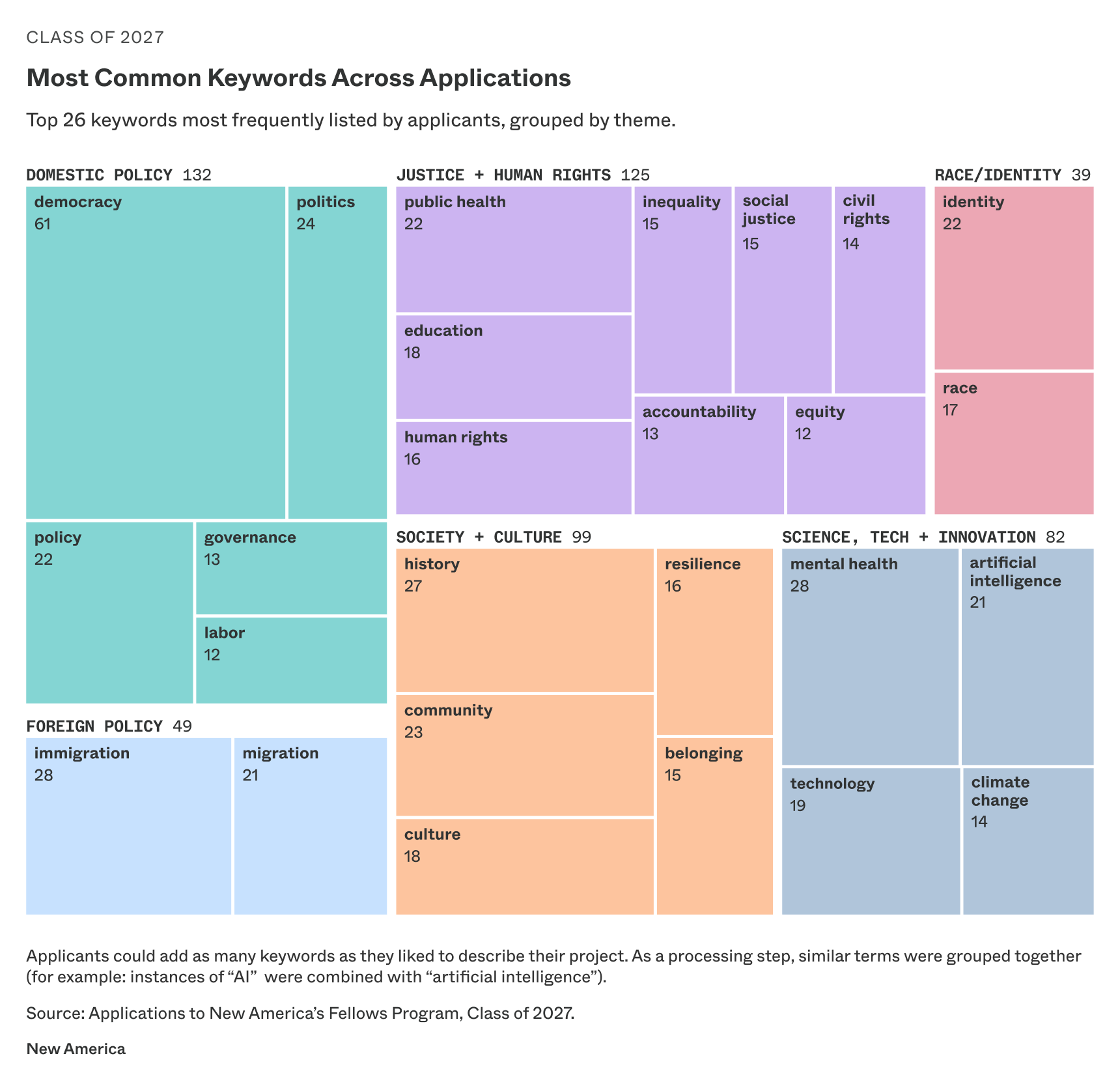
This year, the top five words and phrases most frequently cited in applications are democracy (61), immigration (28), mental health (28), history (27), and politics (24).
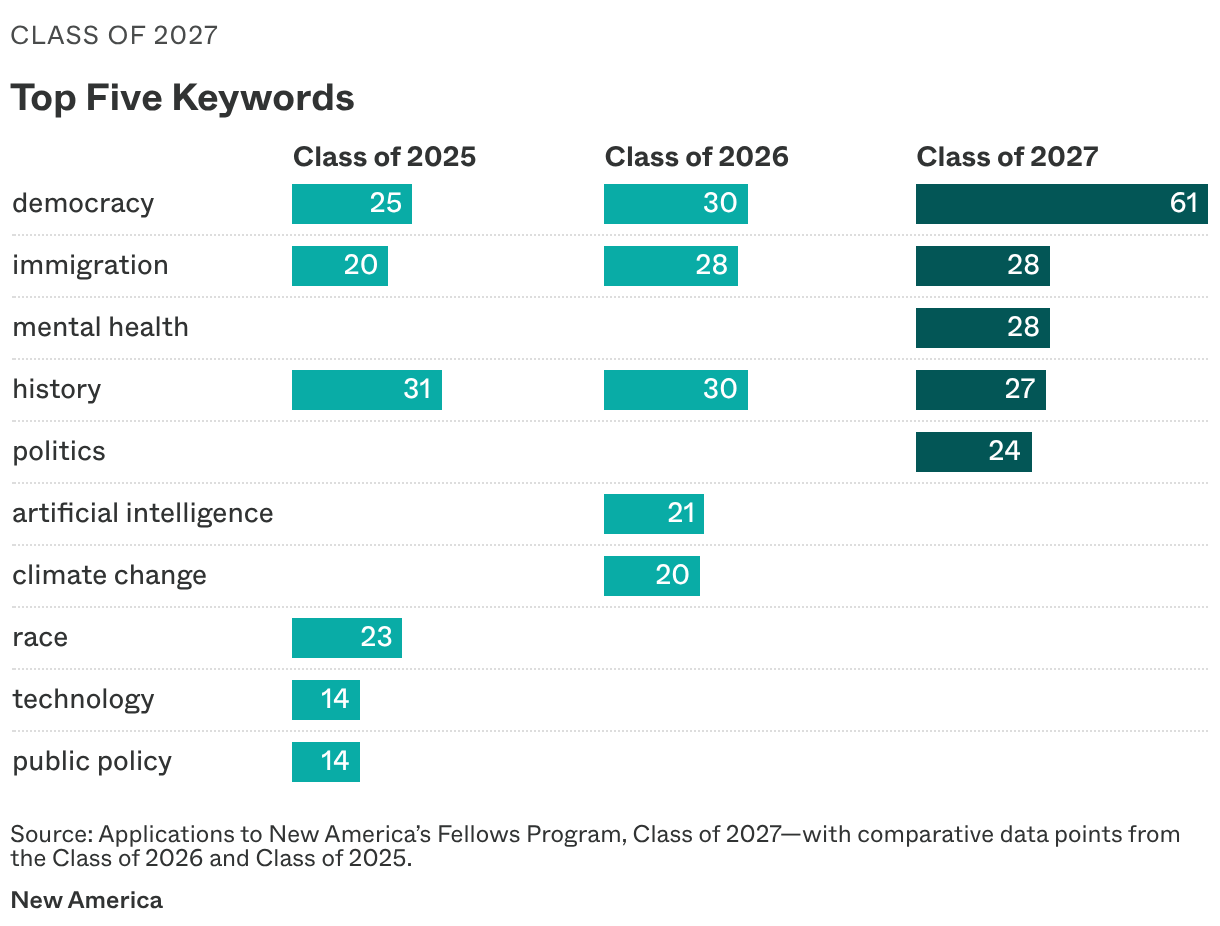
Most notably this year, democracy saw its keyword usage more than double among applicants, while mental health and politics entered the top five for the first time. While these trends don’t necessarily indicate a causal relationship among these three keywords, they may, however, suggest that rising concerns about democracy and our political systems are unfolding alongside increased attention to both individual and collective mental health.
Take a look at the Class of 2027’s top five keywords compared to the Classes of 2025 and 2026.
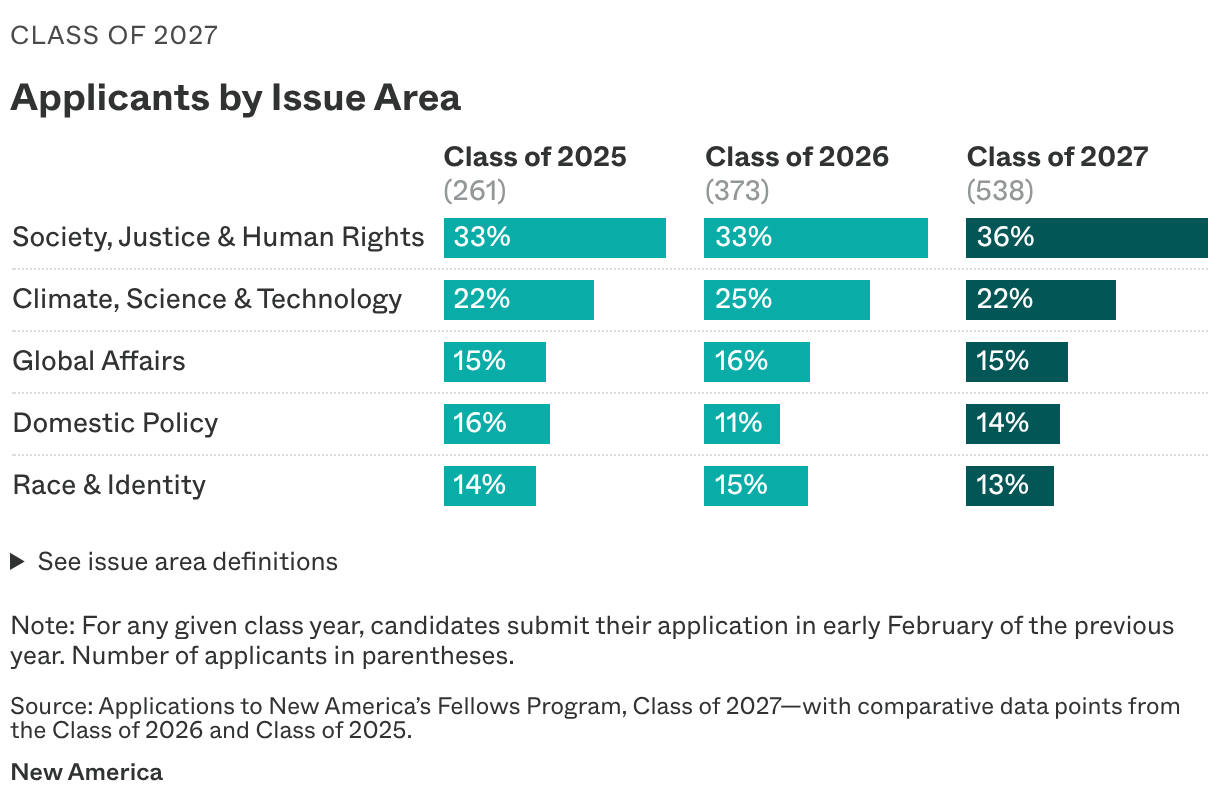
Each year, applicants to the Fellows Program submit project ideas that aim to tackle a wide range of public problems, offering a snapshot into the questions on the minds of today’s talented journalists, scholars, filmmakers, and public thinkers.
Across the past three fellowship cycles, Society, Justice & Human Rights has remained the most frequently selected issue area, accounting for roughly one-third or more of all applications (33 percent for both the Classes of 2025 and 2026, rising to 36 percent for the Class of 2027). The continued prominence of this cross-cutting category underscores sustained interest in topics such as education, criminal justice reform, inequality, social mobility, and democracy, all of which remain central in today’s national discourse.
The remaining issue areas are relatively stable across the most recent three fellowship cycles. Global Affairs consistently accounted for about 15 to 16 percent of applications, Domestic Policy rebounded modestly to 14 percent after last year’s slight decline, and Race & Identity represented 13 percent of applications, remaining an important area of inquiry despite a slight year-over-year decrease.
Overall, the three-year trend points to remarkable stability in the issues and topics fellowship applicants continue to explore. While the mix of topics has shifted modestly from year to year, candidates seem to continue to focus on the interconnected social, political, scientific, and global challenges shaping public life.
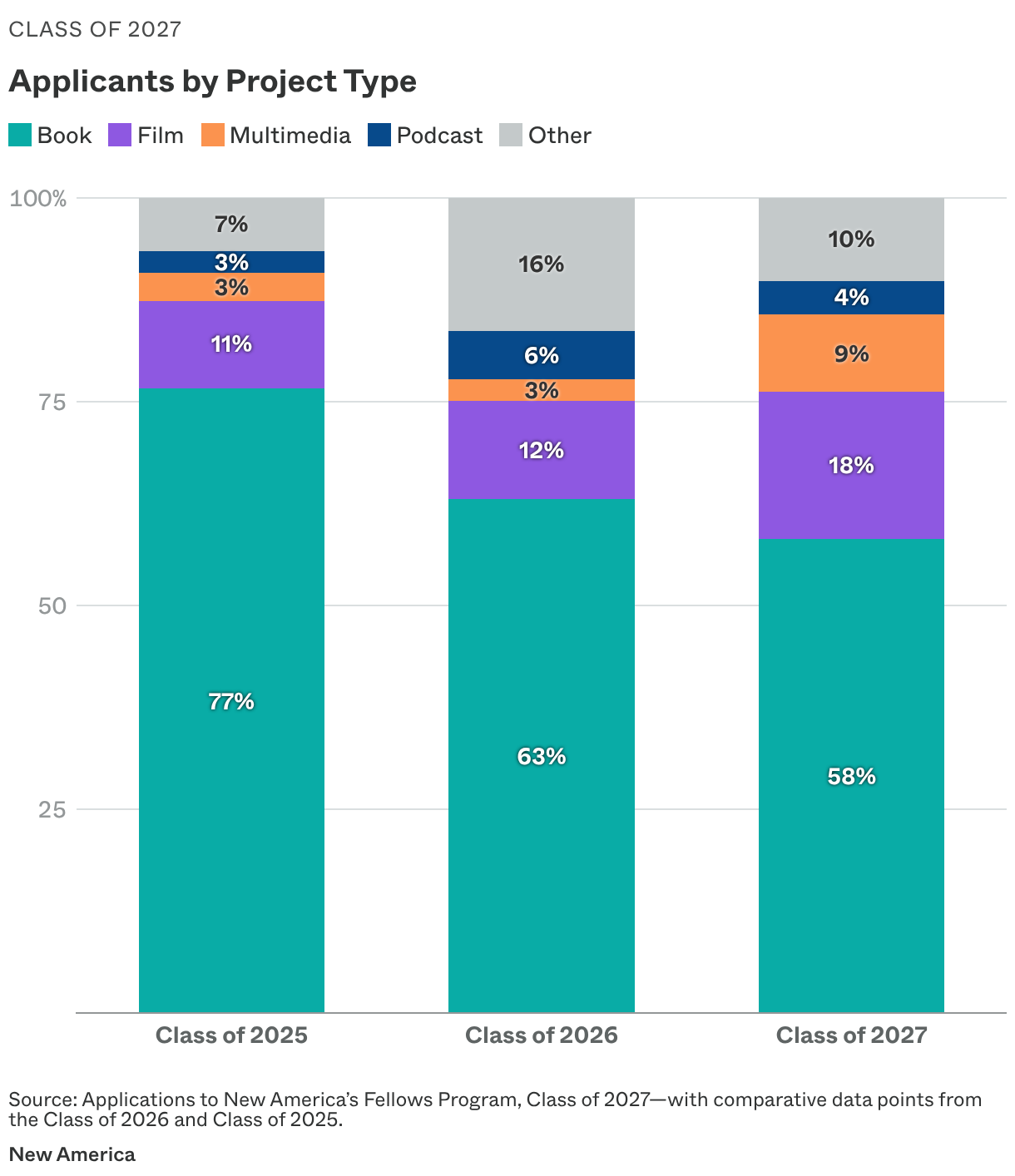
By the end of 2026, the New America Fellows Program will have supported the publication of 183 books, numerous award-winning longform reporting projects, and the production of 19 feature-length documentary films. Though widely recognized as a top fellowship for nonfiction book writers, the program continues to attract a diverse range of projects across film, podcast, multimedia, and other storytelling formats. The Class of 2027 Fellows, for example, are writing 10 books, directing three documentary films, and developing one narrative podcast.
This year, books again remained the most common project type, though they made up only 58 percent of applications for the Class of 2027 (down from 77 percent just two cycles ago). Increasingly, applicants are proposing projects in other formats; film projects accounted for 18 percent of applications this year (up from 12 percent the previous year), and multimedia projects grew from 3 percent to 9 percent over the past two cycles. Podcast submissions stayed relatively steady at 4 percent.
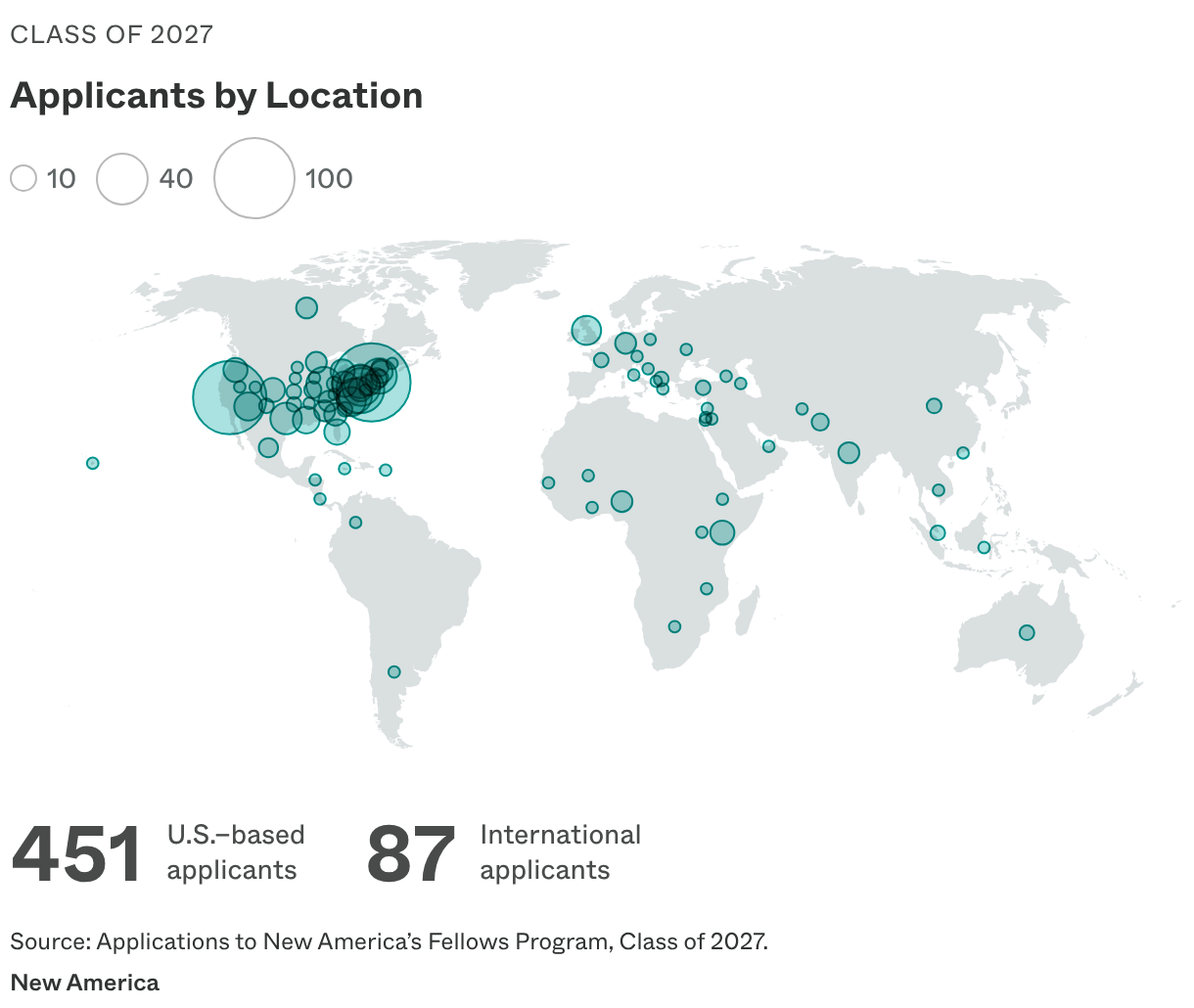
Of the broader candidate pool of 538 applicants, 451 are based in the United States across 45 states and the District of Columbia, while 87 applicants are based outside of the United States, representing 44 countries.
The majority of applications from U.S.-based candidates come from New York (95), California (83), the District of Columbia (33), and Maryland (20). The leading countries are the United Kingdom (11), Kenya (7), Germany (5), Canada (5), Nigeria (5), and India (5).
Hover over the map below to see the application count for the Class of 2027 distributed across states and countries.
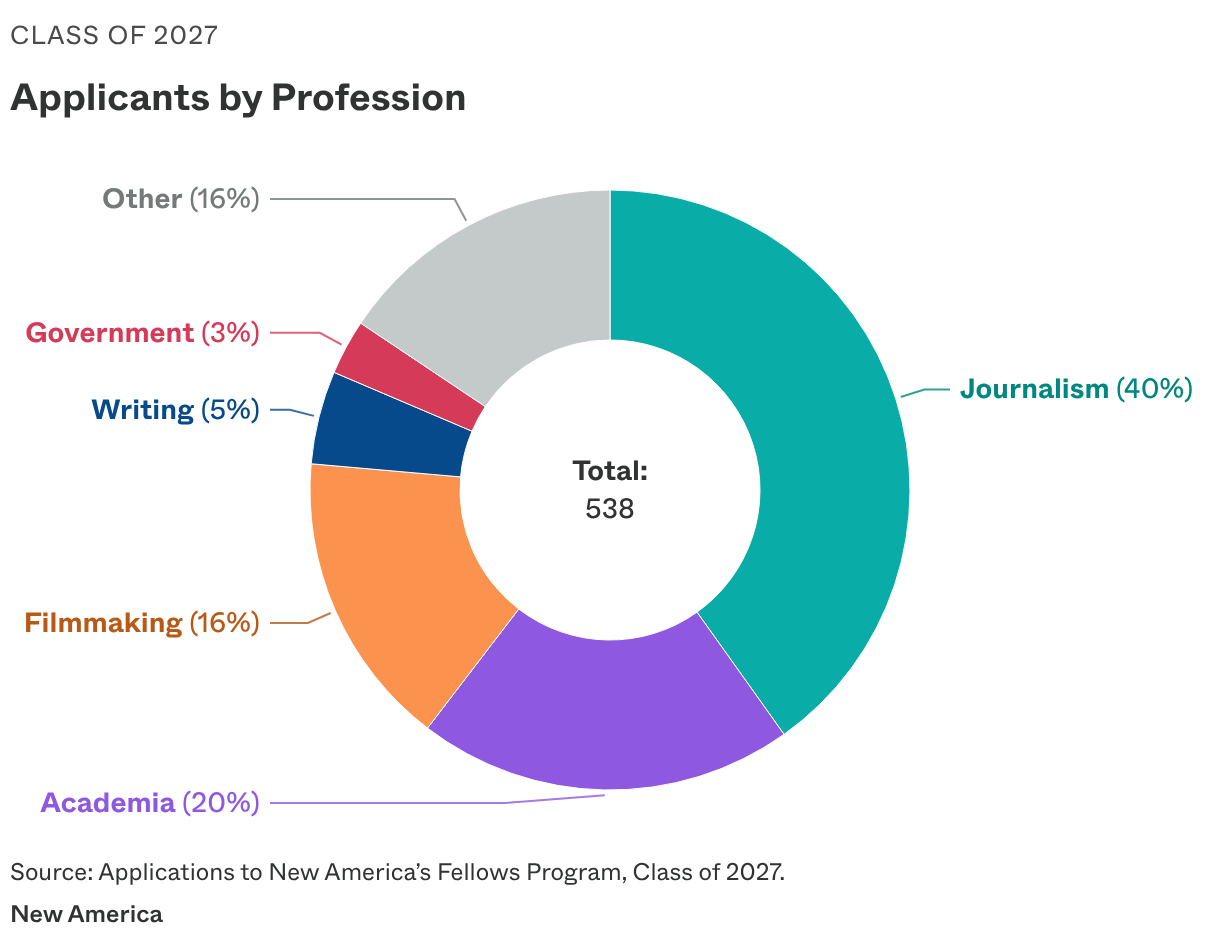
While the Fellows Program draws applicants from various fields and industries, most are journalists (40 percent), followed by those in academia (20 percent), and then film (16 percent).
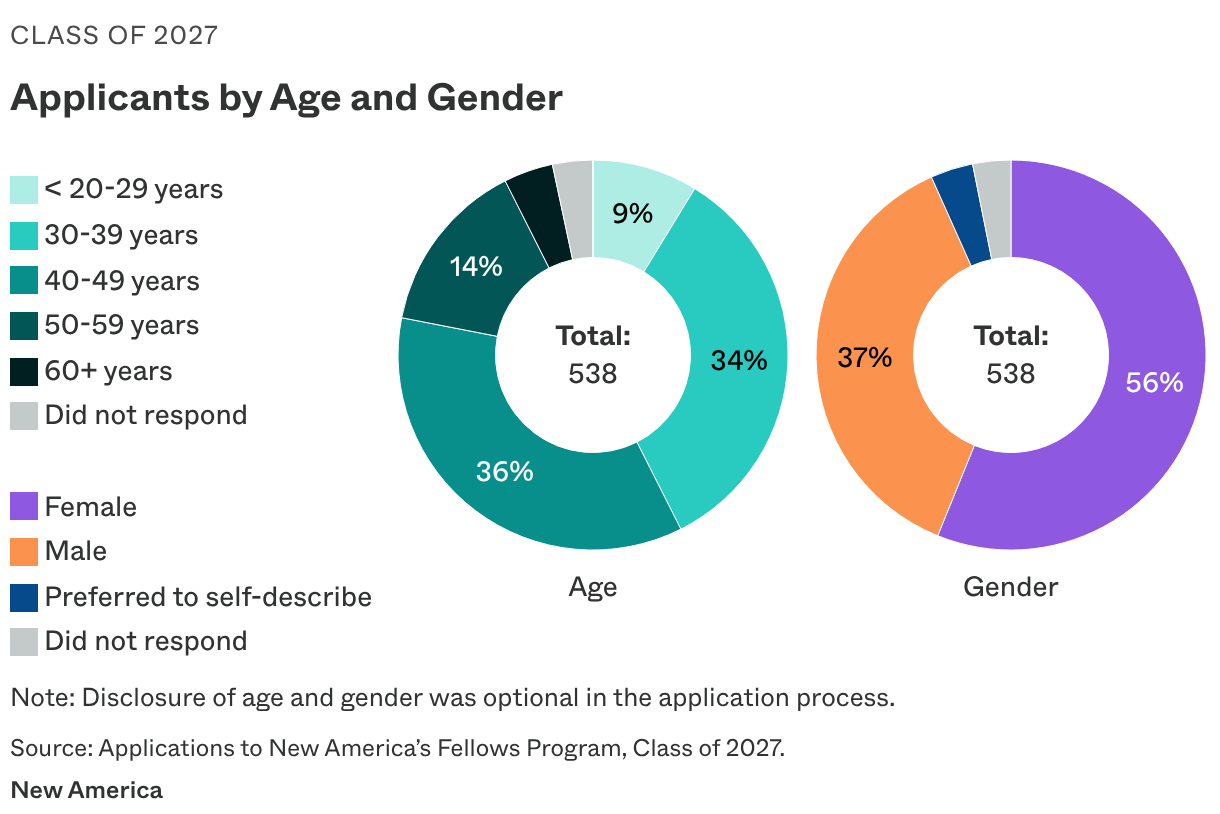
Applicants to the Class of 2027 span a broad age range, with the largest group aged 40–49 (36 percent), closely followed by those aged 30–39 (34 percent). Those aged 50–59 made up 14 percent of the total applicant pool, while applicants under 30 represented 9 percent, and applicants 60 and older accounted for just over 4 percent. About 3 percent of applicants did not report their age.
This year, the majority of applicants were female, making up 56 percent, with male accounting for 37 percent.
We’re excited to welcome the Class of 2027 New America Fellows to join our community. Over the next year, we’ll share Q&As and exclusive behind-the-scenes insights into their work. Subscribe and stay updated by receiving our monthly newsletter, The Fifth Draft.
New America’s Fellows Program thanks its board of directors and ASU’s Future Security Initiative for their support this year.
We would also like to thank Liz Cory, Kelley Gardner, and Jodi Narde for supporting the design and preparation of this year’s report.
Senior Director, New America Fellows Program