Sarah N. Kipkorir
Senior Policy Analyst, Center on Education & Labor
Defining what counts as work-based learning.

In July, New America’s Future of Work and the Innovation Economy initiative and the Association of Community College Trustees’ (ACCT) Center for Policy and Practice launched the Accelerator for Community Colleges in the Innovation Economy Work-Based Learning (WBL) Capacity-Building Cohort. The cohort’s goal is to help community colleges strengthen the quality, availability, and scale of work-based learning opportunities for students. But what exactly is work-based learning in the context of community colleges? Defining what counts as work-based learning and what does not, is essential for community colleges seeking to enhance their capacity to expand, improve, and measure these opportunities. Federal and state policy offer some useful definitions for institutions to build on.
The Strengthening Career and Technical Education for the 21st Century Act (Perkins V) defines work-based learning as “sustained interactions with industry or community professionals in real workplace settings, to the extent practicable, or simulated environments at an educational institution that foster in-depth, firsthand engagement with the tasks required in a given career field, that are aligned to curriculum and instruction.” The U.S. Department of Education’s Office of Career, Technical, and Adult Education encourages states to adapt this definition to their own policy contexts and provide guidance to local programs. As a result, work-based learning is defined and implemented differently across states, shaping how community colleges structure, administer, and get funding for their work-based learning programs.
In the North Carolina Community College System, work-based learning is defined as “the development of job skills and an opportunity for career exploration by providing the non-captive or non-special credit curriculum student with employment that is coordinated with the educational program. Credit of one semester hour is awarded for each 160 hours of work-based learning.” Thus, at community colleges in North Carolina, work-based learning refers specifically to one or more credit-bearing courses that require students to complete a minimum number of hours in a workplace.
For example, eligible students at Forsyth Technical Community College can enroll in courses such as WBL-111, earning one academic credit for every 160 hours worked at an employer site. Under this approach, work experiences that do not meet the required hour threshold or do not earn academic credit may not be formally recognized as work-based learning. For instance, if a student completes a voluntary, non-credit-bearing, semester-long internship related to their field of study, that experience may not count as work-based learning. As a result, a community college may have no formal mechanism to recognize, track, or assess students’ work-based learning experiences.
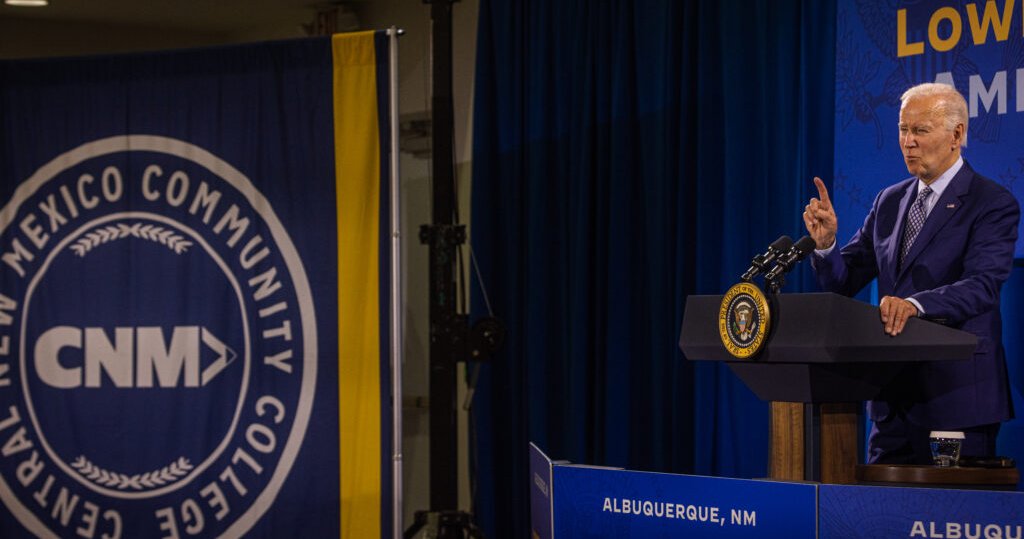
In New Mexico, work-based learning is defined as “instructional experience that occurs in connection with a workplace.” Work-based learning encompasses a broader range of structured experiences that integrate workplace engagement. Thus, Central New Mexico Community College uses work-based learning as an umbrella term encompassing 11 types of experiences that allow students to apply classroom learning in real-world settings, such as internships, apprenticeships, clinicals, and service learning. Depending on the experience, opportunities may be credit-bearing or noncredit, required for program completion, or offered as electives.
As we work with our cohort colleges to evaluate and strengthen institutional strategies for expanding work-based learning opportunities, establishing a shared understanding of what counts as work-based learning is an essential first step. Work-based learning is an umbrella term encompassing a wide range of experiences involving employers in the delivery of learning.
Defining work-based learning solely as a single credit-bearing course with required workplace hours overlooks many meaningful learning experiences that prepare students for careers. It also produces an incomplete picture of student participation and can limit institutional efforts to build the systems, partnerships, and infrastructure needed to expand access to high-quality work-based learning across the college.
In states where work-based learning is narrowly defined in statute or policy, for example, as a credit-bearing course with required workplace hours, colleges can use broader institutional terms, such as work experience education, experiential learning, work-integrated learning, or career-connected learning, to recognize and organize workplace learning experiences that fall outside the state’s formal definition of work-based learning. However, terminology varies by state. For example, in California, Work Experience Education refers to a specific type of work-based learning course that combines internships or other on-the-job experiences with related classroom instruction.
Thus, our guidance is not intended to prescribe the terminology that institutions or states should use. Rather, institutions should consider how work-based learning is defined within their state policy context and determine whether expanding their institutional terminology or conceptual framework would better encompass the full range of workplace learning experiences they currently offer, or aspire to offer.
Additionally, not all work-based learning experiences are created equal. Experiences such as job shadowing and unpaid employer projects embedded in the curriculum can expose students to real-world workplaces, but they are generally not intensive enough to meaningfully influence participants’ employment or earnings. Other experiences, such as unpaid internships and clinical placements, can create barriers for students who need income to support themselves. In contrast, longer, paid, career-relevant experiences are more closely linked to stronger employment outcomes and higher wages.
In defining what counts as work-based learning for students, community colleges will need to strike a balance. Colleges should not feel pressured to count every employer-related experience a student may have as work-based learning. At the same time, they should avoid defining work-based learning so rigidly that they exclude meaningful experiences students may have with employer partners.
As we work with our cohort, we will encourage colleges to adopt an inclusive view of work-based learning while remaining mindful of their state policy contexts. Our focus will be on building the systems, partnerships, and institutional structures needed to expand access to high-quality work-based learning experiences so that more students can participate in opportunities that meaningfully improve their career and economic outcomes.
Senior Policy Analyst, Center on Education & Labor