Breanna Betts
Former Program Manager at HCAP
This brief is part of a series from Good Jobs Collaborative authors exploring how workforce development can advance worker voice and power.
The Good Jobs Collaborative is a diverse coalition of labor, policy, and research organizations committed to building a good jobs economy in which the benefits of economic growth are fairly shared with workers. Healthcare Career Advancement Program (H-CAP), where the author worked, is a member.

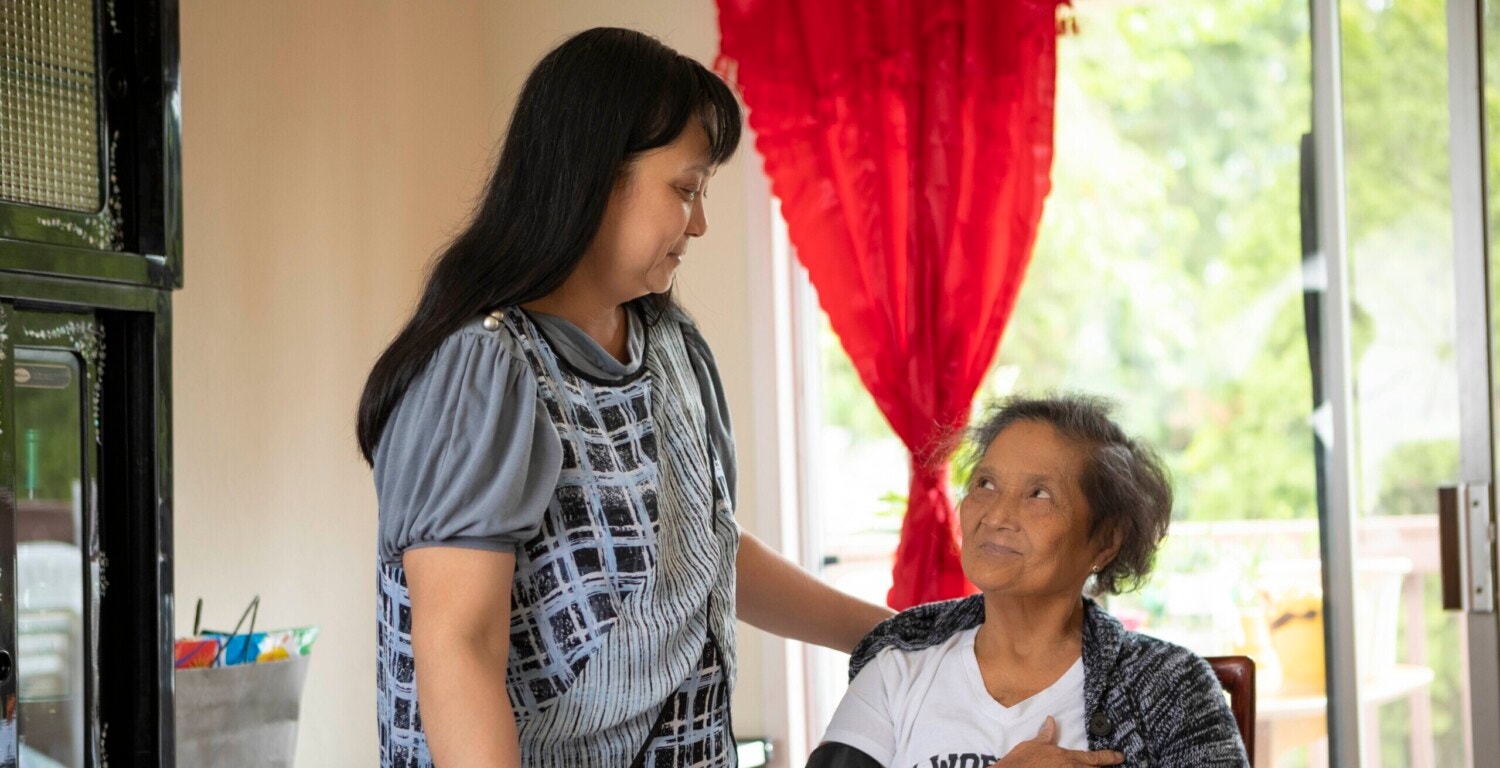
Juana Valva works in the housekeeping department at the Estates at Chateau, a skilled nursing facility in Minneapolis, Minnesota. Like most of her coworkers, she has long held more than one job to cover her household expenses. “Most of us have multiple jobs because the pay is so little,” she said after her wages rose on September 10, 2026. “This raise will allow me to not have to work double shifts or take extra shifts; it will give me a small break finally. We work so hard and have needed a significant increase for a long time.”
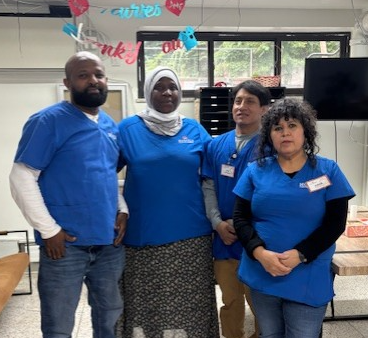
We work so hard and have needed a significant increase for a long time.
Juana’s raise did not come from a single contract at a single facility. It was set by the Minnesota Nursing Home Workforce Standards Board, a body of worker, employer, and government representatives with binding authority to set minimum wages and working conditions across every nursing home in the state. Created after a campaign led by SEIU (Service Employees International Union) Healthcare Minnesota & Iowa and American Federation of State, County and Municipal Employees (AFSCME) Council 65, the board has raised pay for nearly half of Minnesota’s nursing home workers who earned less than the board’s new wage standards at both union and nonunion facilities. Its standards cover the entire nursing home workforce, a largely low-wage group that provides care, housekeeping, dietary, and other services at nursing facilities.
The low pay that made Juana’s second job necessary is the product of decades of policy choices. Direct care (including home- and community-based care and the care delivered in institutions) remains one of the most occupationally segregated industries in the country. Black, Indigenous, and people of color (BIPOC), women, and immigrants are disproportionately concentrated in it: 84 percent of direct care workers are women, 64 percent are people of color, and 28 percent are immigrants.1
The composition of the workforce traces directly to the institution of chattel slavery and the foundational role of the extracted care and domestic labor of enslaved Black women on the U.S. economy.2 The subsequent exclusion of domestic workers, predominantly Black women, from the minimum wage and overtime protections established in 1938, together with decades of undervaluation, helped make direct care a field characterized by low wages, limited benefits, and few opportunities for career advancement.
Industry standards boards are one key policy lever for improving working conditions and job quality in industries where low-wage work is entrenched and workers struggle to advance in the face of decades of occupational segregation and structural inequity. This brief explains how these boards work and how they differ from conventional workforce development. It examines Minnesota’s board as a case study in worker-centered governance, covering its structure and accountability mechanisms, the political conditions that made it possible, and the legal challenges it has withstood, and draws lessons for advocates, policymakers, and funders. It closes with the next frontier for these boards: creating industry-wide training standards that connect the worker-centered, industry-responsive practices of labor-management training partnerships (LMTPs) to every worker in the care sector, so that good jobs in direct care include real career ladders.
Juana’s raise is what raising the floor looks like in practice. The sections that follow examine how Minnesota’s Nursing Home Workforce Standards Board made that raise possible and how industry-wide standards can help build the ladders that turn better jobs into lasting careers.
Industry standards boards (also known as sectoral standards boards, worker boards, or wage boards) are government entities that convene worker, employer, and government representatives to set minimum workplace standards—which may include wages, hours, training, and safety—for important areas of the economy.3
The industry standards board model differs from, and complements, other ways of setting workplace standards, such as bargaining through individual collective agreements or passing legislation. Through collaboration within the tripartite governance, boards develop standards that, once adopted, carry legal weight and are enforceable across the industry. Some advisory industry boards provide recommendations for workplace standards that are not binding; this brief focuses on boards with binding authority.4
Industry standards boards play a different role than conventional workforce development programs in several ways. Conventional workforce development programs typically train individual workers for jobs, often without workers’ input on job quality. Standards boards involve worker leaders in setting job quality across an industry. State and local workforce development boards are employer-led and often voluntary, connecting job seekers to services such as career counseling, skills training, and supportive services. Industry standards boards convene labor, employers, and government to jointly set standards to raise wages, increase benefits, and improve working conditions.
Their measures of success differ accordingly. Workforce development programs often measure success by job placement; standards boards measure it by whether wages, hours, and conditions across the industry meet a floor that workers helped set. The standards reach every worker in the industry, whether or not they take part in a training or placement program.
Industry standards boards also build worker power by engaging workers directly as board representatives with the authority to raise standards. Workers who participate express the power of workers across the industry and develop leadership skills and political know-how they can use to improve conditions in their workplaces and communities.5 Union leaders may also be appointed to boards, and unionized workers often drive the creation and adoption of these bodies.
Why do some industries need this model? Industry standards boards can help build worker power in areas of the economy where union density is low or nonexistent, giving workers without union representation a voice in shaping their working conditions.6 Decentralized, worksite-by-worksite bargaining can create obstacles to union growth and worker power, especially in industries such as direct care, where workers are spread across many small worksites or private homes, making traditional organizing and collective bargaining difficult. Setting standards at the industry level helps counter corporate power.7
Industry-wide standard-setting is especially important in industries such as the care sector, where the workforce is disproportionately made up of women, BIPOC, and immigrants. It offers a tool for confronting systemic racism, sexism, and xenophobia and the policy choices that have devalued and disenfranchised care workers.8 Frontline caregiving jobs are characterized by low quality, high turnover, and frequent vacancies, leading to rampant workforce shortages across the sector.
As the Center for Labor and a Just Economy notes, industry standards boards can help close racial and gender pay gaps in low-wage industries by implementing industry-wide, measurable standards, thus “reducing opportunities for discrimination both directly and indirectly by addressing other causes of pay gaps, such as inconsistent scheduling or a lack of medical or family leave.”9
Minnesota’s Nursing Home Workforce Standards Board was created to address long-standing problems affecting the nursing home workforce, starting with low pay. The 2025 median hourly wage for nursing assistants in nursing homes was $20.67, which is $7.23 lower than the median hourly wage ($27.90) for similar occupations formally requiring the same level of skills, knowledge, and experience.10 Low wages combined with a high rate of part-time work left many direct care workers in poverty or reliant on public assistance.11
Nursing home workers, particularly nursing assistants who provide 24-hour care in skilled nursing facilities, face challenging working conditions: The work is physically and emotionally demanding and often characterized by heavy workloads, scheduling challenges, inadequate supervision, and limited training and career advancement opportunities.12
As a result, turnover in nursing home jobs is extremely high. Median annual turnover for nursing assistants in nursing homes was nearly 100 percent in 2017–2018 (the most recent national estimate available).13 In response to this severe workforce shortage rooted in poor job quality, SEIU Healthcare Minnesota & Iowa and AFSCME Council 65 supported the law that created the Minnesota Nursing Home Workforce Standards Board (NHWSB).14
Created in 2023, the NHWSB is authorized to investigate working conditions in the nursing home industry and adopt binding minimum employment standards across the entire industry.15 It builds worker power by setting minimum wage rates and some benefits across both union and nonunion worksites. By raising the floor in nonunion worksites, the NHWSB helps take wages out of competition, helping prevent low-wage employers from undercutting union employers. Worker involvement in the standard-setting process demonstrates to both union and nonunion workers alike the value of collective action, strengthening the labor movement and workers’ collective power.
To date, the board has enacted holiday premium pay, effective January 1, 2025, which requires that nursing home workers who work on any of 11 state holidays be paid at least time and a half. The board has also raised hourly wages: By January 1, 2027, certified nursing assistants will earn at least $24, trained medication aides at least $25, licensed practical nurses at least $28.50, and all other workers—including subcontractors—at least $20.50. Nearly half of nursing home workers will see their wages rise.
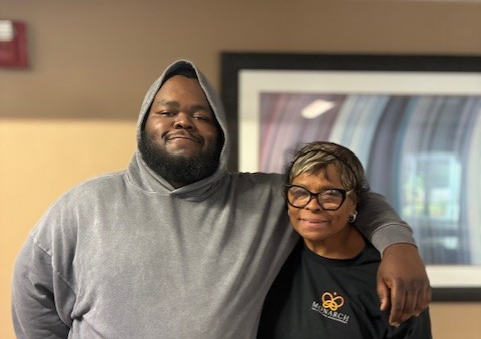
Jeremiah Stewart (left), pictured with his union steward, Bonita, is a dietary aide at The Villas at Bryn Mawr nursing home who received a helpful raise that allows him to handle responsibilities with more peace of mind, take care of important expenses, and feel more secure about his future.
Minnesota’s board gives workers real authority to make tangible changes in their working conditions. It can make recommendations on a wide range of employment standards that are “reasonably necessary and appropriate to protect the health and welfare of nursing home workers [and] to ensure that nursing home workers are properly trained about and fully informed of their rights,” as spelled out in Minnesota Statute 181.213.
The board’s recommendations become law through an expedited rulemaking process (except for safety standards), enabling it to bypass the lengthy legislative process.16 The NHWSB also establishes a worker-led compliance body to ensure that workers benefit from adopted standards and are protected against wage theft and other violations.
Minnesota law authorizes workers to bring civil actions to court to enforce board standards and requires the board to develop a worker rights training curriculum to be provided through certified worker organizations. These “know your rights” trainings are free for workers, and attendees are paid for training time.
The board’s capacity to set training standards could extend beyond “know your rights” trainings and into skills training. Minnesota’s home care workers offer one example. Independent providers (IPs) of home- and community-based services through Medicaid have collaborated with the state to establish a labor-management training partnership (LMTP) trust. Like an industry standards board, an LMTP is a shared governance model. It brings labor and employers together to solve the sector’s challenges in training, recruiting, and retaining the workforce needed to provide quality care and services, with positive outcomes for workers, employers, patients, and communities alike.
In July 2025, SEIU Healthcare Minnesota & Iowa and the state of Minnesota established the Minnesota Home Care Orientation Trust to provide orientation to the state’s 30,000 home care workers. The trust began delivering orientation training to new and incumbent home care workers in April 2026, who earn a stipend for attending the training. Starting in 2027, workers will earn a wage floor increase by successfully completing the orientation.
Building on its early success, the trust could strengthen and expand its offerings to include additional voluntary training. The model also suggests how jointly governed training could someday extend to nursing home workers if the NHWSB takes up training standards.
In 2023, when the law creating the NHWSB was adopted, the Minnesota Democratic-Farmer-Labor Party controlled the governorship and both chambers of the legislature, enabling its passage.17 The board’s governance structure has proven favorable to workers.
The Board has nine members: the commissioners of the Departments of Labor and Industry, Health, and Human Services (or their designees), plus six members appointed by the governor, three representing nursing home workers or worker organizations and three representing employers. At least five votes are required for action.18 Workers who participate in NHWSB board activities are protected from retaliation, as are workers who serve on most other boards.
The worker-centered board has faced tension and legal challenges from nursing home operators and lobby groups. Two nursing home trade groups, LeadingAge Minnesota and Care Providers of Minnesota, sued unsuccessfully in 2025 to block the pay increases adopted by the board, arguing that the board violated federal labor law by intervening in workers’ collective bargaining process and citing the financial burden to operators should they be forced to comply. A federal judge ruled that the wage increases did not violate federal law.19
A broader lawsuit filed in March 2026 sought to abolish the board entirely, arguing that it is overly influenced by union members, violates federal antitrust and due process laws, and is preempted by the National Labor Relations Act, among other contentions. A U.S. District Court judge dismissed the case in August.20
While industry standards boards and similar worker power-building structures will continue to face legal challenges along political lines, Minnesota’s board has withstood them so far, bolstering the case for expansion to other states.
Minnesota’s Nursing Home Workforce Standards Board is an early proof of concept, showing that industry standards boards can build worker power and raise the floor for an industry, regardless of whether or not individual worksites are unionized. The model can be replicated in other states and industries where political conditions allow and where a funding source for higher standards can be secured.
Minnesota had unified pro-labor control of state government and a sustained union-led campaign, but it experienced implementation delays in the board-mandated wage increases. Advocates should pair board authority with administrative and funding follow-through, such as dedicated appropriations, required Medicaid rate adjustments, firm expectations for state agency processes, and realistic timelines for federal approval, so that wage increases reach workers’ paychecks and workers can use new benefits promptly.
To that end, policymakers should build statutory deadlines and administrative backstops into legislation that establishes industry standards boards, so that delays in federal Medicaid approval cannot indefinitely stall the raises workers win. State agencies should submit any needed Medicaid state plan amendment within a set period after a standard is adopted and authorize bridge payments while federal approval is pending.
More broadly, state policymakers should establish tripartite boards in which workers have at least equal representation with employers. This would correct a long-standing practice in conventional workforce development in which workers and labor are vastly outnumbered on state and local workforce development boards, since federal law requires a business majority and as little as 20 percent workforce representation. It would help ensure that boards are established with binding authority and coverage that reaches nonunion and subcontracted workers.
At the federal level, policymakers should extend the Minnesota model across long-term services and supports, covering home- and community-based services and nursing home workers whose wages are funded with federally matched Medicaid dollars. They could strengthen Interested Parties Advisory Groups, which advise states on home- and community-based services payment rates and rate adequacy under the Medicaid Access Rule, and make their recommendations binding so that workers, employers, and the state set wages and training standards together.
In the absence of the favorable political conditions that made establishing the Minnesota NHWSB possible, policymakers may look to complementary innovative state models. In Washington state, a home care rate-setting board meets every two years to set the labor rate paid to the Consumer Directed Employer (the employer of record for independent home- and community-based service providers) that funds wages and benefits for home care workers. The rate-setting board includes workers, union representatives, the state, the agency acting as the employer of record, and advocates for older adults and people with disabilities. Agency rates are tied to the Washington board’s labor rate through a separate parity requirement, subject to binding arbitration. As a result, the economics of wages and benefits are largely settled before the next round of union contract bargaining, allowing bargaining to focus more on noneconomic provisions that affect working conditions.21
Federal policymakers could also revive the Medicaid home- and community-based services workforce provisions proposed in the Build Back Better Act, which would enable states to draw down a higher level of federal Medicaid reimbursement if they adopt processes to increase wages and benefits, develop training requirements, and build workforce infrastructure. The American Rescue Plan Act temporarily raised the federal Medicaid matching rate, known as the Federal Medical Assistance Percentage, by 10 percentage points for approved home- and community-based services activities, including workforce investments, offering a similar recent precedent for this approach.22
Finally, philanthropy should invest in the unions and advocacy organizations building the governance infrastructure that makes industry standards boards possible, including worker organizing, training, and support for worker board members. States should ensure stable funding streams for the infrastructure that supports the boards, including the outreach and enforcement capacity needed to ensure that standards are fully implemented.
The Minnesota NHWSB offers a successful model for raising the floor in the care sector. The board and others like it could also build the ladder by establishing industry-wide standards for training and career progression. In direct care, where jobs are low-paying and career ladders are short or nonexistent, workers have few opportunities to move up, and union density remains low.23 These industries are also marked by high turnover and workforce shortages, which correlate with poor job quality and a lack of educational opportunities for workers to advance into a family-sustaining career.24
Federal training requirements for direct care workers are minimal. Nursing assistants and home health aides must complete only 75 hours of training, a floor set in 1987, and no federal training standards apply to personal care aides, including IPs employed by consumers through Medicaid programs.25
Health care LMTPs confront occupational segregation by building pathways to good jobs within direct care by improving the quality of the roles that BIPOC, women, and immigrants already hold, rather than moving workers up and out of them. Traditional public workforce systems largely overlook these workers, leaving many in nonunion jobs with few opportunities for advancement.26 LMTPs, by contrast, center frontline workers and offer meaningful opportunities for them to build careers, as well as leadership, in their communities.27
The Healthcare Career Advancement Program (H-CAP) network of health care LMTPs, spanning 22 states plus Washington, DC, and Ontario, Canada, has the capacity to demonstrate and expand worker-centered programs and practices by embedding worker voice in training design, sharing lessons across the field, and advancing policy change.28 The practices developed through LMTPs offer insights into the kinds of training and advancement opportunities that industry-wide standards could support.
Many LMTPs offer “earn and learn” training programs in which workers are compensated for their time in training, a practice shown to advance equity and increase retention, yet rare in the health care sector.29 Across H-CAP’s network, LMTPs provide training and educational classes at no cost to participants. Participatory worker research conducted by H-CAP found that financial support for health care education, particularly stipends and tuition assistance for programs at external institutions, was a high priority for workers.30
Beyond financial support, several best practices make LMTP program participation accessible, including flexible scheduling and multiple learning formats, such as in-person, online, and asynchronous options. Language supports, such as translation and in-language instruction and materials, also improve accessibility by enabling full engagement for workers with limited English proficiency.
Whole-person wraparound supports provided by LMTPs include child care, dependent care, transportation, access to technology and tech training, ongoing coaching and peer mentorship, and case management. These practices have been shown to increase completion rates and decrease socio-demographic and economic inequalities in participation among adult learners.31
Today, these practices reach only workers whose employers participate in an LMTP. Industry standards boards would be a natural home for extending industry-wide training standards for direct care workers and other low-paid essential workers, who have long been underserved by conventional federal, state, and local workforce development systems. Industry-wide training and advancement standards could open credentialed, better-paid roles to the women, BIPOC, and immigrant workers whom the current system concentrates in its lowest-paid jobs, while improving the quality of high-demand frontline jobs.
By creating career pathways across an entire industry, these standards could complement the training that LMTPs and other worker-centered workforce development models deliver. Given the right statutory authority, an industry standards board could set training and workforce development standards in six areas:
States could amend their statutes to explicitly authorize binding standards boards to establish industry-wide approaches to training and workforce development, backed by the administrative and funding commitments needed to implement them. Minnesota’s NHWSB already requires that workers receive “know-your-rights” training; boards in Minnesota and elsewhere should build on that foundation by extending standards to training tied to wage progression and career advancement.
California’s recently passed Senate Bill 1203 (Chapter 1016, Statutes of 2026) offers one model. The law permits a wage board in the private security industry to set industry training standards and require that training be provided through worker-centered organizations rather than by employers, linking wage-setting and training.
At the federal level, policymakers should strengthen Interested Parties Advisory Groups under the Medicaid Access Rule to incorporate training costs into rate setting, tie enhanced Medicaid funding to the establishment of industry-wide standards, and lay the groundwork for a national direct care board.
Over the longer term, Congress should create a national industry board structure for direct care workers, including home- and community-based services and nursing home workers, as well as workers in other high-turnover industries with low-quality jobs, with federal authority to set standards for wages, benefits, and training. Industry-wide training standards can also help counter the Medicaid fraud narrative aimed at home care workers by framing training and credentialing as quality measures ensuring consistency across states, regions, or local geographies that workers, employers, and the public all share an interest in.
Funders, for their part, should invest in the organizing, governance, and training infrastructure that enables industry standards boards to function as intended and build worker power.
Finally, advocates and policymakers should design training authority to withstand preemption arguments like those brought against the Minnesota NHWSB. Workers will need to be meaningfully involved as boards take on more technical standard-setting across places with different demographics and needs.
The crisis facing the direct care workforce stems from policy choices. From the exclusion of domestic workers from the Fair Labor Standards Act in 1938 to the chronic underfunding of Medicaid-financed care at the state level, those choices concentrated Black women, other women of color, and immigrant women in some of the lowest-paid jobs in the U.S. economy. Minnesota’s Nursing Home Workforce Standards Board demonstrates a path forward for advancing equity and job quality in the care sector and beyond.
By bringing workers, employers, and government together to establish industry-wide standards, the NHWSB has set a minimum wage of $24 per hour for certified nursing assistants by 2027, raised pay for nearly half of the state’s nursing home workers, and extended those gains to union and nonunion worksites alike. Standards boards complement collective bargaining, setting a common floor across an entire industry that unions can build upon and giving workers without a union a voice in the standards that shape their working conditions.
H-CAP’s LMTP network, which serves 800,000 healthcare workers across 22 states, DC, and Ontario, Canada, provides a model for worker-centered training that is responsive to employer needs. Industry-wide training standards would extend these opportunities beyond individual partnerships to every worker in the industry.
Nursing home workers in Minnesota like Juana have shown what workers can win when they have a voice in shaping industry standards. Now, policymakers and advocates should build on those lessons to raise the floor and build the ladder in every state, strengthening worker power, advancing good jobs, and making training the next frontier for industry-wide standards.
Former Program Manager at HCAP