Health, Work, and Care in Rural America
Abstract
We thank Hannah Friedman, Yiqing Qian, and Erin Kent, PhD, for the data analysis included in this report.
People in rural America live an average of three to four times further from types of important hospital-based health care and skilled nursing facilities than people in urban communities. These long distances—combined demographic factors related to age, income, employment, and less access to paid and unpaid leave than people in metropolitan areas—create unique challenges for people in America’s rural communities. Without access to paid sick time and paid leave for serious family and medical needs, workers are often forced to manage taking care of themselves or loved ones without pay while struggling to make ends meet, potentially jeopardizing their health, job, or economic security.
Drawing on original research, this report offers a clear case for why guaranteed public paid leave policies should be considered a social determinant of health for rural people just as access to health care facilities and other economic stability indicators are. Paid leave could improve the health, wellbeing, and economic security of rural workers and families, and increase the economic competitiveness of America’s rural communities.
Acknowledgments
We thank Hannah Friedman, Yiqing Qian and Erin Kent, PhD, for the data analysis included in this report. Yiqing Qian is a doctoral candidate in the Department of Health Behavior, Gillings School of Global Public Health, University of North Carolina at Chapel Hill. Erin Kent holds positions with the Department of Health Policy and Management, Gillings School of Global Public Health, the Lineberger Comprehensive Cancer Center, and the Cecil G. Sheps Center for Health Services Research, University of North Carolina at Chapel Hill.
We hope this report will contribute to a growing field of work that seeks to foster collaborations across the health, labor, and community economic development sectors to improve health, reduce poverty, and advance opportunity and prosperity in rural America. We also hope it will inform public policy advocacy efforts to secure greater investments and standards in workers’ access to paid family and medical leave and paid sick time in the interest of expanding coverage in areas of the United States that currently do not benefit from state-level innovation.
We have been educated and inspired by the work of many organizations and collaborations in this space, including the work of the Federal Reserve Bank of St. Louis, the Federal Reserve of Richmond, the Thrive Rural project of the Robert Wood Johnson Foundation, and the Aspen Institute, Toward Rural Futures—a project of ChangeLab Solutions, the National Governors Association, and the Praxis Project—Center on Rural Innovation (CORI), Rural Organizing, the Center for Rural Strategies, and One America.
Funding for the Better Life Lab from the Rockefeller Family Fund, the Robert Wood Johnson and the W.K. Kellogg Foundation helped to support this project and report. Support from the Robert Wood Johnson Foundation allowed New America to provide funding to the Cecil G. Sheps Center for Health Services Research at the University of North Carolina at Chapel Hill for work on this project (contract award A22-1299-001). The views expressed in the report do not necessarily reflect the views of the Rockefeller Family Fund, the Robert Wood Johnson Foundation, or the W.K. Kellogg Foundation.
Additionally, Hannah Friedman’s work was supported by a National Research Service Award Pre-Doctoral Traineeship from the Agency for Healthcare Research and Quality sponsored by The Cecil G. Sheps Center for Health Services Research, The University of North Carolina at Chapel Hill, Grant No. T32-HS000032.
We are thankful for the guidance of Dr. Emily Hallgren, Assistant Professor at the University of Arkansas for Medical Sciences, and for access to Dr. Hallgren’s dissertation research. We are also grateful for guidance from Chris Estes, Co-Executive Director of the Community Strategies Group at the Aspen Institute, and Shauneequa Owusu, Chief Strategy Officer at ChangeLab Solutions, for providing helpful background materials and insights on this project, and Matt Hildreth, Executive Director at Rural Organizing, and Ann Lichter and Stephanie Tomlin of CORI for early reactions to the project’s scope and methods.
We thank Chris Estes, Emily Hallgren, Ann Lichter, Hollie Storie at ChangeLab Solutions, and Joe Sudbay and Annie Contractor at Rural Organizing for reviewing a draft of this report and providing invaluable comments and suggestions. We thank New America’s Rebecca Gale for comments and proofreading assistance, and the Editorial and Publications team, especially Jodi Narde, Joe Wilkes, Samantha Webster, and Naomi Morduch Tubman, for assistance with publication.
Any errors or omissions are the authors’ alone.
Downloads
Introduction
This report ties together two important threads of work with a focus on rural America: (1) access to paid family and medical leave and paid sick time in rural communities; and (2) the distances to particular types of important health services, specifically hospital-based maternity/obstetrics care, neonatal intensive care unit (NICU) and neonatal care, hospital-based pediatric care, hospital-based cardiology services, hospital-based cancer screenings and cancer treatment services, and skilled nursing facilities in rural areas of the United States.
We show that access to paid leave should be considered a social determinant of health just as access to health care and other economic stability indicators are. Like access to and affordability of health care, people's ability to affordably and securely take time away from work to receive and seek health services or care for ill loved ones is critical to healthy people, families and communities—and because of long distances to important types of health care services in rural America, the need for paid leave is greater yet access is lower.
Policy discussions about health, economics, community development, and job quality are often siloed. Yet workers’ expanded access to paid leave is deeply connected to improved community health and reduced health disparities, workforce retention, and economic growth and competitiveness. Paid family and medical leave for serious personal and family caregiving needs and access to paid sick time to recover from a routine illness or seek preventive health services contribute to better individual and population health, reduce health care costs, improve workforce retention and earnings, improve well-being, and boost the economy.
Rural communities are often excluded from discussions that tie together health, economics, and jobs. Paid leave and other policies that make it easier and more affordable for people to find care for children, loved ones with disabilities, and older adults have unique importance for people living in rural communities, who face longer distances to travel to seek health services for themselves or a loved one and are often concentrated in poorer-quality jobs that do not offer paid leave.
In this report, we show that rural America—which tends to be older and to have populations with more caregiving and health needs than people in other parts of the United States—has been left behind relative to metropolitan communities with respect both to access to paid family, medical, and sick leave and to hospital-based health care services; and, to a lesser extent, to skilled nursing facilities. Rural workers have less access to both paid leave for serious family and medical needs and paid sick time than people in metropolitan areas. And, as our data demonstrate, people in rural areas must typically travel three to four times further to critical hospital-based health care services than people in urban areas—and much, much further in isolated rural areas.
Communities in persistent poverty, many of which have concentrated populations of Black, Latine, Asian and Native American populations, face greater barriers on both fronts. People in rural areas with high concentrations of Latine populations are especially burdened with long travel distances to important types of hospital-based health care and reduced access to paid leave and paid sick time. This is likely to affect the health, economic security and well-being of rural populations and the economic competitiveness and attractiveness of rural areas, and it exacerbates existing disparities in economic opportunity between rural and non-rural areas of the United States.
Key Findings
Below, we summarize the key findings from our research. These findings make a clear and compelling case for policy interventions to guarantee access to paid family and medical leave and paid sick time as both health and economic development imperatives.
- Among U.S. states with more than 20 percent of the population living in rural areas, none guarantee workers access to paid family and medical leave and only two (Vermont and New Mexico) guarantee access to paid sick time.
- Fewer than half of prime-age workers in rural communities (47.9 percent) are estimated to have unpaid, job-protected leave through the federal Family and Medical Leave Act (FMLA) because rural businesses are more likely to be small and fall outside the FMLA’s coverage and because rural workers are more likely to work part-time and therefore not meet the FMLA’s hours-worked requirements.
- In the absence of legislative requirements or programs, just over half of workers in rural communities (55.7 percent) report having employer-provided paid sick time through their jobs, and both men and women in rural communities are seven percentage points less likely than metropolitan-area workers to have access to paid sick time. Fewer than half of rural workers with a recent cancer diagnosis reported access to paid sick days (49 percent).
- Only six-in-ten women in rural communities (61 percent) report having paid time off of any kind that they can use to care for a new child, an ill loved one, or their own serious health issue—and rural women are about six percentage points less likely than women in metropolitan areas to have access to paid time off to use for these serious family and personal medical needs. Women’s access to paid leave is significant because women continue to do more family caregiving than men. Through the pandemic, other data shows that rural mothers report being particularly stretched, and less likely to have access to paid leave or other types of workplace or caregiving supports.
- People in the rural census tracts that are closest to hospital-based health care services are still further away than people in urban census tracts are to the same kind of health care services.
- Residents of rural communities must travel, on average, far greater distances than people in metropolitan areas to access hospital-based health care services, including:
- Hospital-based obstetrics care (about three times as far, 24.7 miles for rural census tracts, compared with 8.4 miles for urban census tracts);
- Neonatal care (nearly five times as far, 50.6 miles for rural census tracts, compared with 10.8 miles for urban census tracts);
- Hospital-based pediatric care (three times as far, 32.5 miles in rural census tracts compared with 10.7 miles for urban census tracts);
- Hospital-based cardiology services (nearly four times as far, 30.6 miles for rural census tracts, compared with 8.0 miles for urban census tracts);
- Hospital-based cancer screenings (nearly three times as far, 20.4 miles for rural census tracts, compared with 7.4 miles for urban census tracts); and
- Hospital-based cancer treatments (more than three times as far, 26.8 miles for rural census tracts, compared with 7.9 for urban census tracts).
- Skilled nursing facilities are also further distances (three times as far, on average) from rural areas than metropolitan areas, though mileage is much more reasonable than from most hospital-based health care services (10.3 miles for rural census tracts compared to 3.8 miles for urban census tracts).
- People living in rural areas with a high percentage of Latine residents have even further to travel to hospital-based health services than rural residents overall—and rural Latine residents are among the least likely to have access to paid sick time or paid leave for serious family and medical needs.
- People living in areas of persistent poverty face greater challenges, as lack of access to paid leave, combined with longer distances to travel to health care may create greater burdens related to income loss and risks of job loss. We find that rural areas with persistent poverty are slightly further than other rural census tracts from hospital-based obstetrics care and cancer screening and moderately further from hospital-based cancer treatment.
National public paid family and medical leave and paid sick time policies would be the most efficient and fair way to create baseline access to paid leave for all working people in the United States, no matter where they live or their job. State policy interventions and private sector initiatives are also important building blocks to workers’ expanded access to paid leave. Private sector policy and culture changes are especially critical for creating workplaces that are more favorable to workers with caregiving responsibilities or needs.
Expanded access to paid sick time and paid family and medical leave should be a priority for rural policymakers and employers. Ensuring that policies are designed with the needs of diverse rural communities in mind—to cover workers in businesses of all sizes including in small businesses with paid, job-protected leave that replaces a substantial share of income and covers caregiving for extended family members—is essential.
In addition to individual-level reasons to expand workers’ access to paid leave, rural areas are seeking to attract new, younger residents and build vibrant communities with high-quality services. Access to paid leave may further these goals by helping to attract workers, boost labor force participation, and contribute to economic development.
A Snapshot of America’s Rural Communities
This first section of the report puts into context the factors in rural communities that make paid family and medical leave and paid sick time uniquely important. Paid family and medical leave is defined as a period of weeks or months a worker may need to care for a new child, a seriously ill, injured or disabled loved one, or their own serious health issue. Paid sick time is defined as hours or days away from work to address a routine personal or family health need—most commonly to stay home with an uncomplicated but contagious cold or flu or to seek preventive health services. These are two policies among several, including child care, home- and community-based care, higher wages and better job quality for paid care workers, and flexible and predictable work schedules, that can help working people manage paid work and unpaid caregiving responsibilities.
The factors we discuss below: (A) the demographics of rural communities, (B) the job and industry composition or rural communities, (C) the health status of rural populations, and (D) caregiving needs in rural communities, all heighten the need for expanded access to paid leave and paid sick time. These policies help ensure that rural workers can provide or receive care and seek health services that they or a loved one need without jeopardizing their jobs or harming their household’s financial stability or longer-term economic security. The implications of access to paid leave go beyond individuals and their families. Better access to paid leave boosts labor force participation and reduces gender, racial, and economic inequities and contributes to overall community economic opportunity and well-being.
Due to data limitations, our analysis relies on varying definitions of “rural”—national government surveys may use the U.S. Census Bureau definition or the Office of Management and Budget definition; some random sample surveys use respondents’ self-reported residential location. Other researchers in their analyses of rural demographic, labor, health, and economic conditions use a similar array of definitions according to their data availability and research purpose. We acknowledge that, if we had the ability to use a consistent definition, the analyses could look different. The Methodology section at the end of the report provides more detail and resources for more information.
A. Demographics
Rural counties account for nearly 63 percent of all counties in the United States, but they house a minority of the U.S. population. An estimated 46 million people lived in 1,969 rural counties in 2020, but they comprised just 14 percent of the United States’ population.1 We note that census-tract based definitions of rural communities, rather than counties, yield a higher estimate of 62.2 million rural residents by pulling in some “metro fringe” areas—non-densely populated areas on the edge of metro areas—that look more like suburbs and benefit from urban economies.2

Our analysis tends to focus more on counties and uses the metropolitan/non-metropolitan distinction most often because of the sources available for analysis; when we deviate, we specify the definition we are using. We take solace in guidance from the Center on Rural Innovation (CORI) that, “When forced to choose these two definitions, we believe the nonmetro definition best describes places that share common characteristics, better represents the diversity of rural America, and reflects the critical social and economic dynamics of smaller economies that link open land areas and small towns.”3
Residents who identify their own location as rural are more likely than people in urban and suburban areas to report living in their community for an extended period of time (54 percent) and to live near the community where they grew up (42 percent); a full quarter (26 percent) report they have always lived in their community. Family is a main reason to stay or return.4 Rural communities are far less densely populated than non-rural areas, with about one-tenth the number of people in a typical rural county as in a typical metropolitan county.5
1. Population Changes—and an Aging Population—Over Time
Prior to the pandemic, the share of the U.S. population living in rural counties was declining (14 percent in 2016 versus 16 percent in 2000), with half having fewer residents in 2016 than in 2000, and population growth in urban and suburban counties is many times that of rural counties.6 From 2010 to 2020, migration decreased and the number of births only slightly exceeded the number of deaths.7 Increased remote work opportunities for white collar workers during the pandemic and other factors led to a spike in non-metropolitan population growth, but it remains to be seen whether this is a blip or will endure.8
Areas of persistent poverty in rural communities—defined as a poverty rate of 20 percent or more in each of four or more consecutive U.S. Census Bureau measurements since 1980—have suffered sharp population losses, and this contrasts with population trends in non-persistently poor counties. Persistently poor rural counties lost population over the past 10 plus years (5.7 percent population decrease), whereas other rural counties have grown their populations slightly (.1 percent increase). However, both persistently poor and non-persistently poor rural counties lag in population growth relative to metropolitan counties, where both persistently poor and non-persistently poor counties saw population increases between 2010 and 2020 (5.8 percent and 8.9 percent, respectively).9
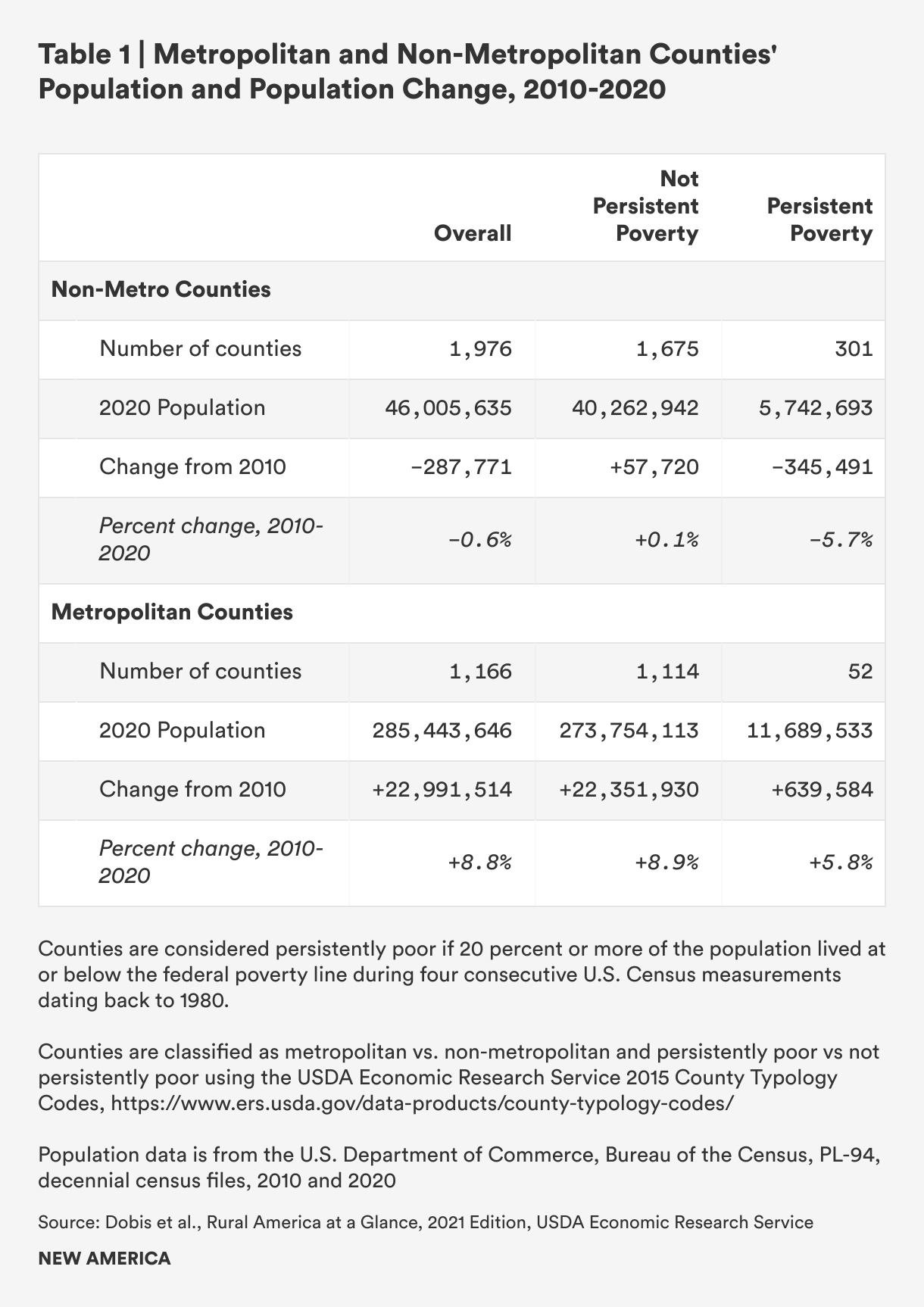
Rural population decline has implications for employers, the provision of health services to older, ill and disabled people, and the tax base needed to fund essential services and thriving, effective public institutions like schools and libraries.10 One of the main areas of focus for rural communities is attracting younger workers and families by creating good jobs—something that may be made easier by establishing baseline benefits through public policies.
Rural counties are not only losing population and lagging in population growth, they are also aging more rapidly than metro areas. Some rural areas have also attracted retirees. Overall, rural counties have a higher share of residents aged 65 and older relative to urban and suburban areas (18 percent compared to 13 percent and 15 percent, respectively)—and that share has grown since 2000.11 This has societal implications: An aging population requires more caregiving from family members or paid caregivers. The share of 35-to-64 year-olds in rural, urban, and suburban areas is constant (39 percent of the population in each), which means that the ratio of working age-to-older people in rural areas is lower than in urban and suburban areas. As a result, working-aged people in rural counties must care for a larger group of older adults than their urban and suburban counterparts.
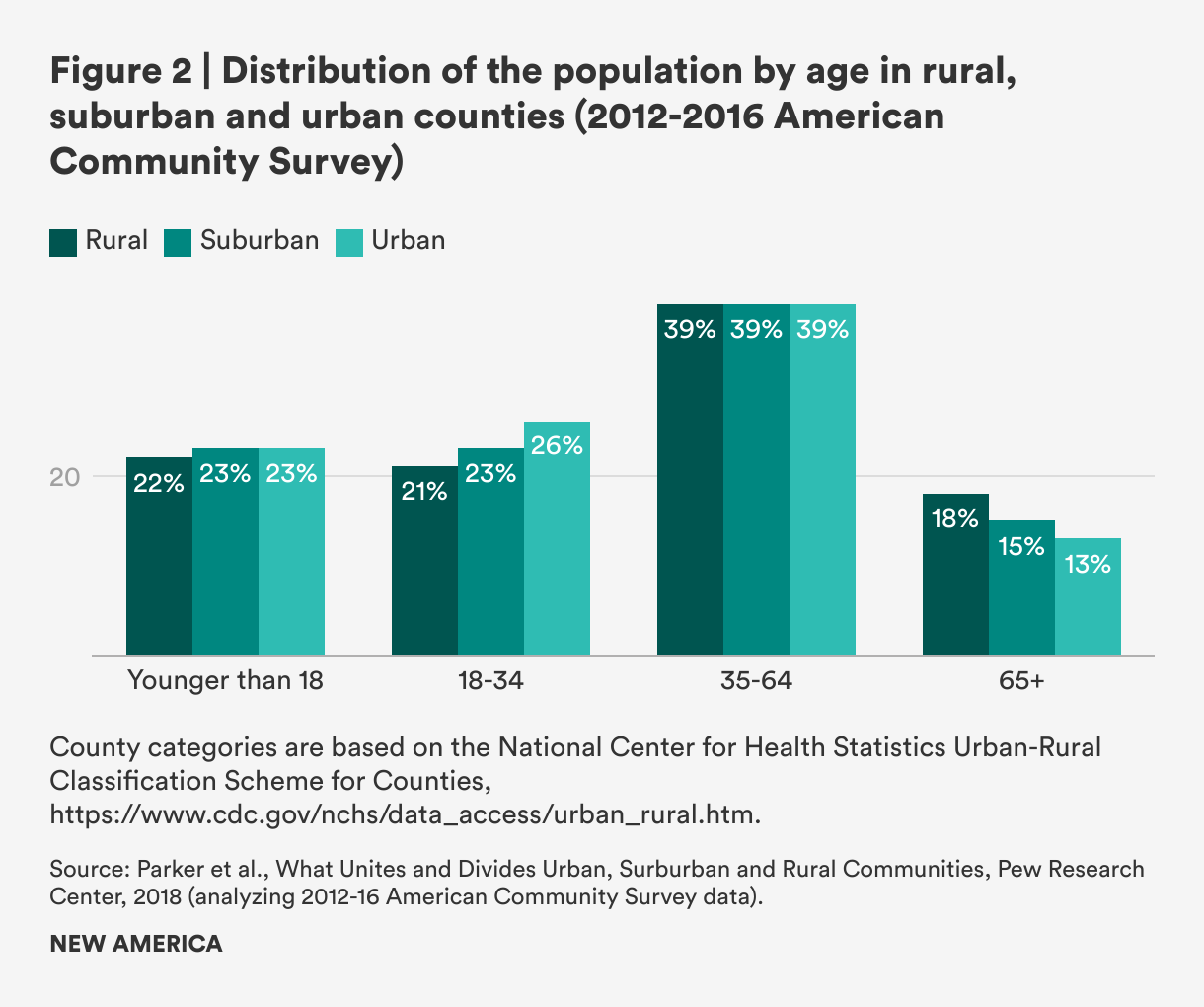
At the same time, the population of 18-to-34 year-olds is lower in rural counties than in urban and suburban areas (21 percent versus 26 percent and 23 percent, respectively)—which means a smaller number of births per capita in these counties simply due to a smaller population; this fact is potentially also exacerbated by greater difficulties accessing good jobs with living wages, child care, paid family and medical leave, and health care. The share of children under 18 in rural counties as a percentage of the total population is also slightly lower than in other areas—22 percent versus 23 percent.12 Between 2010 and 2020, the number of births only slightly exceeded the number of deaths, whereas in the prior decade, there were more than a million more births than deaths.13
Attracting younger people to rural communities and incentivizing births is an economic development and community-well-being strategy for the future—provided that supports and systems are in place to allow people to raise happy, healthy, cared-for children. Paid leave could be one of several policies and investments—including in housing, community services, and more—that helps attract workers and families to rural communities.
2. Race, Ethnicity, and Native Populations—and Poverty
The racial and ethnic composition of rural counties differ from urban and suburban areas. Whereas the white population is now a minority in urban counties and a declining share of suburban counties’ population, most rural counties have populations that are majority white, and the decline in the white population has been smaller in rural counties than in other areas. As of 2018, 79 percent of rural residents were white, 8 percent were Black, 8 percent were Hispanic or Latine, and smaller shares were Asian and Native American, but a higher share of the Native population lived in rural counties than in suburban or urban counties.14
As CORI explains, however, there is tremendous variation in racial and ethnic diversity within different types of rural communities—and portraying rural America as overwhelmingly white misses important nuances. Small towns—high-population areas within non-metropolitan areas that the U.S. Census Bureau’s definition of “rural” excludes but that the Office of Management and Budget’s definition includes and which are shrinking relative to other areas classified as rural (open lands and low-population-density areas on the fringe of metropolitan areas)—are more diverse than other rural places: CORI’s analysis shows that 10.7 percent of residents of small towns identify as Black and 13.1 percent identify as Hispanic or Latine.15
Rural counties are poorer than suburban and urban areas. In 2019, the rural poverty rate was 15.4 percent, compared to 11.9 percent in metro areas—and the gap is largest in the southern United States (19.7 percent in non-metro counties versus 13.8 percent in metro counties). Although metro and non-metro poverty rates declined from 2013 to 2019, non-metro rates declined less.16 Non-metro counties in the Mississippi Delta (which tend to be disproportionately populated by residents who are Black), in Appalachia, on Native American lands, as well as in the Southwest and the northern Midwest have the highest concentrations of poverty.17
Child poverty is also higher in non-metro areas: 21.1 percent compared to 16.1 percent, according to the USDA’s analysis of Census data from 2015-2019. Of the 138 counties in the United States with poverty rates of 40 percent or higher, 127 were in non-metro counties—disproportionately concentrated in the South (especially in counties with high concentrations of Black people), upper Midwest, and in South Dakota, where Native Americans make up the majority of the population.18
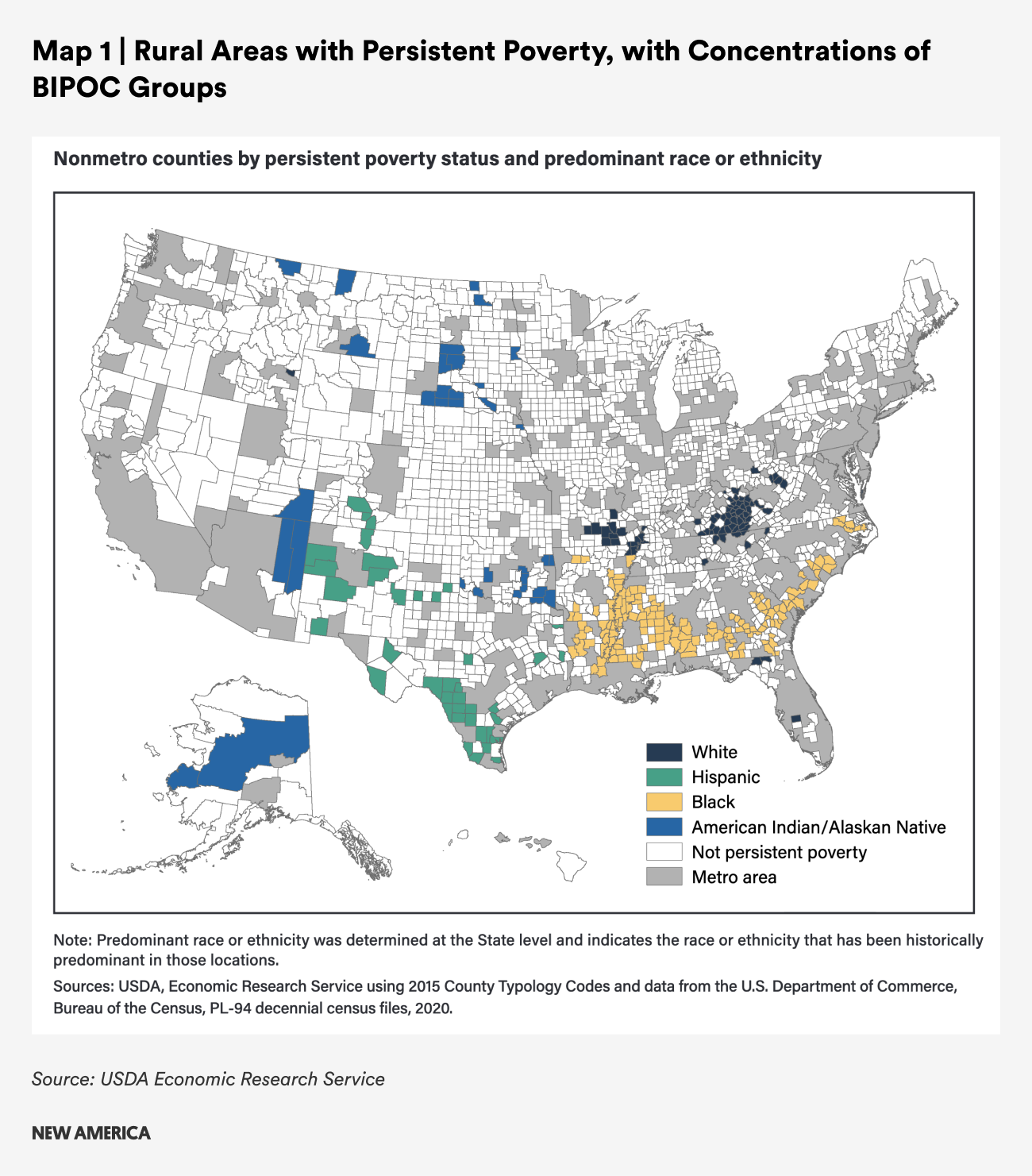
Poverty in rural America is also more entrenched than in metropolitan areas. About 12.5 percent of rural residents live in counties with persistent poverty compared to just 4.1 percent of residents in metropolitan counties.19 Race, ethnicity, poverty, and opportunity intersect dramatically: Black, Latine, Native and Asian rural residents are concentrated geographically and more likely to live in areas with persistent poverty, exacerbating the overlapping work, health, and care challenges they face.
White people are under-represented in rural counties that are persistently poor, making up just 53 percent of the population in these counties (compared to 79 percent of the population in counties that are not persistently poor). Black people make up 25 percent of the population in persistently poor counties but they are just 5 percent of the population in rural counties that are not persistently poor; the share of Latine and Native American residents is also substantially higher in persistently poor versus non-persistently poor counties.20 Concentrations of Black people in persistent poverty rural counties tend to be in the Southeast; Latine concentrations are in the Southwest; Native populations are in the Southwest and the Plains and Midwest; and Asian persistent poverty is concentrated in the Southeast, especially in Georgia.21
Implications of Travel Distances on Family Economic Security When the Need for Sick Time or Family or Medical Leave Arises
For all workers in rural communities, travel for specialized health care services is burdensome, and inadequate paid time off for treatments is an additional barrier. Among states with more than 20 percent of the population living in rural areas, none guarantees workers access to paid family and medical leave and only two (Vermont and New Mexico) guarantee access to paid sick time.22

The stress of managing work and treatment when long travel distances are involved takes a toll. One study that focuses on female cancer survivors in rural Illinois revealed the intersecting challenges posed by work and distances to care and treatment.23 Women in higher-quality jobs with access to paid time off and flexibility to work from home were better able to continue working through treatment and beyond. For example, Paula, an accountant explained the commute she had to treatment. She was working at the time she spoke with a researcher, and credited her continued employment to her employer’s willingness to accommodate her need for paid time off and flexibility—but the travel still took a toll:
During the radiation treatments, I would leave [my house], drive to work, drive to [nearby city] [for radiation], and drive home. And that was like an 85-mile round trip every day for seven weeks. So, it really wore me out. — Paula, Accountant, White, Age 67, Breast Cancer Survivor
Two other cancer survivors who were able to continue working had a similar experience with a very long commute on top of work and treatment. Yet, thanks to paid leave and employer flexibility, they were able to retain their jobs throughout—creating stability for their households.
I would drive thirty-five miles to my work. I would work for like six or seven hours and then I would go forty miles to my radiation. Then thirty-five miles back home. It was like in a big triangle. That's a lot of driving. — Marie, Nurse, White, Age 62, Breast Cancer Survivor
I had 30 sessions of radiology. And I went over there every afternoon. I would work during that period. I would come in every morning, and I think I left at 12:30 or something, because my appointments were always at 2pm. That's how they set it up. Same time, every day. So, I did that for 30 sessions, which took a period of a month and a half. So, I did that Monday through Friday. My husband was able to take me for a good portion of my appointments. I did drive at the end the last couple weeks…I probably had to go over there 10 times for injectable chemo. From my house, it's probably 50 miles. Because, on the interstate from here to St. Louis, it's 45 miles. — Misty, Health Department, White, 41, Brain Cancer Survivor
Having caregivers available to help with driving and support is also important but can be challenging, especially for patients who are disabled as a result of their cancer and cannot drive themselves.
My sister would basically just be like transportation every time we had to go to Chicago or that area [for treatment]. She would take me places I needed to go, but she also had a job at the time too. So she would take off some work that she was allowed to take off, but she couldn't take off too much. — Cynthia, Disabled on SSDI due to osteoporosis from cancer treatment, White, Age 61, Reproductive Cancer System Survivor
The challenges are even greater for workers whose work is physically demanding and those who are paid low wages and in families with low incomes. For example, among the Illinois cancer survivors, a cafeteria lunch room worker, a crane operator, and a taxi driver all faced challenges maintaining work after cancer treatments because of the work’s physical demands; several others faced discrimination when seeking jobs with prospective employers; others noted that the job market in their rural area was just too limited to make finding new work possible.
Among the 610 counties in 40 states plus Puerto Rico with poverty rates at 20 percent or above in 2020, only 40 counties are covered by state protections providing access to paid leave or paid sick time, which exacerbates employment and health challenges.24 Only Washington state, New York, Colorado and California have paid family and medical leave programs and paid sick days guarantees; Arizona, Maryland and New Mexico have paid sick day laws.25 No other state with a high-poverty county requires employers to provide workers with paid sick days or has established a statewide paid family and medical leave program that provides paid leave to new parents, family caregivers or workers with their own serious health condition. In addition, people who live in poverty and are employed most often work in low-wage jobs that do not offer paid leave—as we discuss more in the next section. Employed people in rural counties with high poverty may be especially likely to risk their jobs or their income when they need time to seek or provide care, and unemployed people may have lost or left jobs as a result of care needs.
The consequences of going without pay are significant: Even a few days of work without pay means people making tough choices about buying food or gas, housing, utility costs and more. Nationally, in 2017, for workers who were paid low wages, lost wages from two unpaid days away from work was roughly equivalent to a month’s worth of gas. Three unpaid days away from work accounted for a family’s entire monthly grocery budget or a household’s monthly utilities.26 The cost of missed wages in terms of affording basic expenses is likely to be even greater now since wages have not kept up with inflation for lower-wage households.27 In rural counties, the costs may be greater and the hardship even more severe because of longer travel distances to work and higher costs of gas, food and utilities, especially in a time of rising prices.28
Similarly, the need for a longer leave for family or medical needs exacts a high price. Nationally, among families who are not in economic hardship before the need for a longer, six-week family or medical leave, 18 percent—including 26 percent of Hispanic and Black families and 25 percent of Native families—are estimated to fall below 200 percent of the poverty line.29 For those already in economic hardship—which people in rural counties are more likely to be—the effects of an unpaid leave on families’ financial security and well-being can be even greater. People who do not have paid leave and people who are low-income are more likely to forgo a family or medical leave they need and are more likely to suffer other forms of economic hardship—the inability to pay bills, the need to borrow from savings or to borrow from friends or family—and to use public assistance programs.30
B. Jobs, Wages, and Work
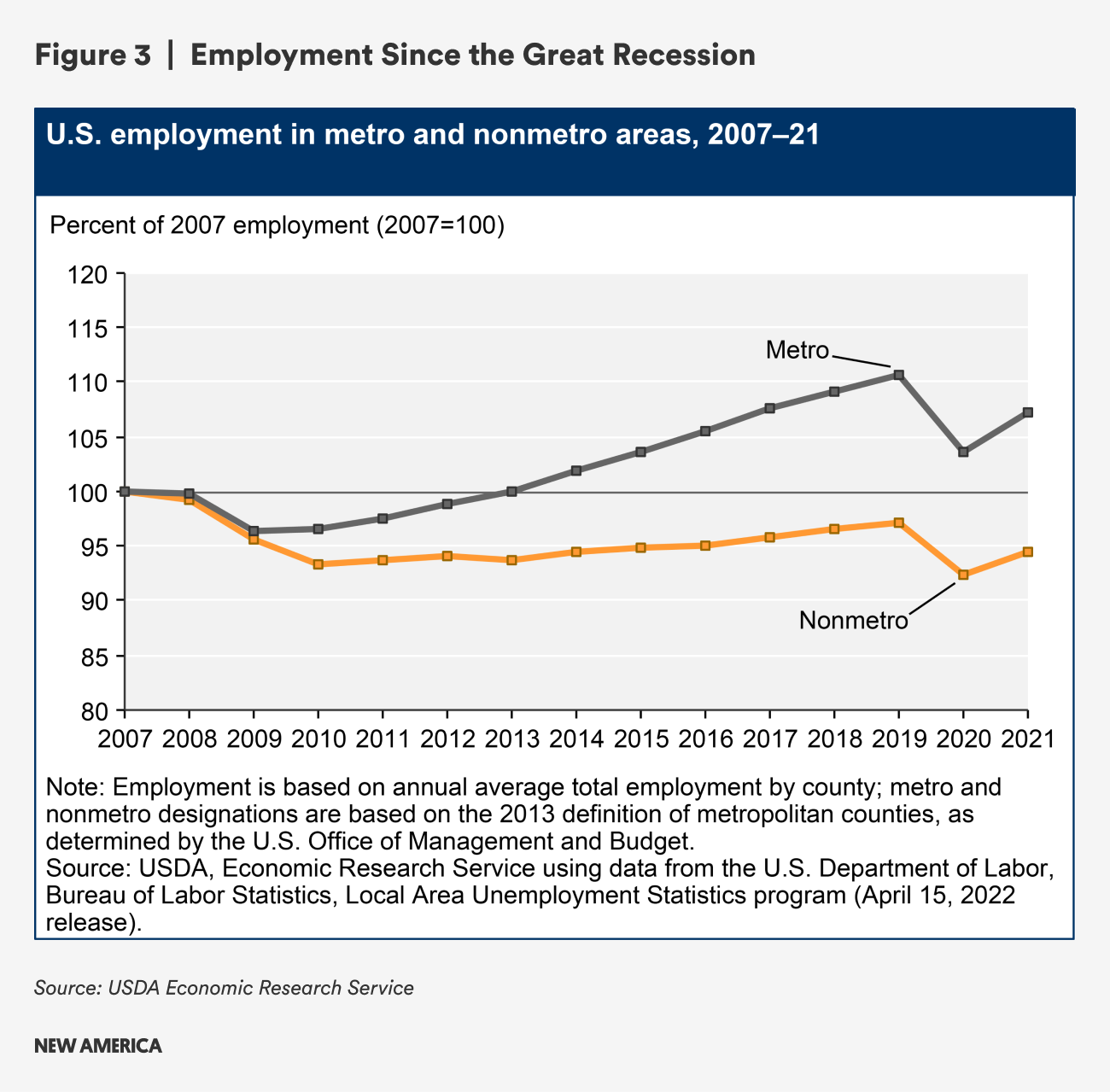
Jobs, wages, and work are central to thriving economies and vibrant communities. After the Great Recession in the late 2000s caused historic job losses, employment in rural areas did not rebound as quickly as in metropolitan counties.
One analysis from 2015 showed that the average number of jobs available to the typical resident of a rural community is 52 times smaller than in the largest metro areas.31
By 2017, while metropolitan areas exceeded their pre-2007 employment rates, rural counties had only recovered about 95 percent of theirs; labor force participation rates in rural counties dropped by about 6 percent over that same time period, while labor force participation rates in metropolitan counties rebounded and exceeded pre-2007 levels.32 One study found that, among people of “prime working age” (25-54) in rural counties, just 71 percent were employed, compared to 77 percent in urban and suburban counties, as of 2016.33
The COVID-19 pandemic substantially affected employment in rural communities in the United States. While initial evidence showed that rural employment recovered from the effects of the COVID-19 pandemic more quickly and resiliently than metropolitan areas,34 more recent data tells a different story: Nearly six-in-ten rural counties (58.4 percent) had fewer jobs in July 2022 than three years before. Overall, rural counties had 210,000 fewer jobs than before the pandemic, and rural counties are adding jobs back at half the rate of metropolitan areas.35
“… The average number of jobs available to the typical resident of a rural community is 52 times smaller than in the largest metro areas.”
Wages are also lower in rural areas than in urban and suburban counties. In 2016, rural workers were paid just $35,171, while urban workers were paid an average of $49,515 annually and suburban workers were paid just over $46,000—though the cost of living in rural areas is also different across these areas—higher for some expenses and lower for others.36
The rural employment story differs by region. Counties and areas with access to natural resources, both for recreation and tourism and for harvesting and trade have fared better over the last two decades (and in pandemic recovery), as have those that are centers for innovation in agriculture and particular types of manufacturing.37 Unemployment in these areas tends to be lower, job growth has been more swift, and wages are growing faster.38
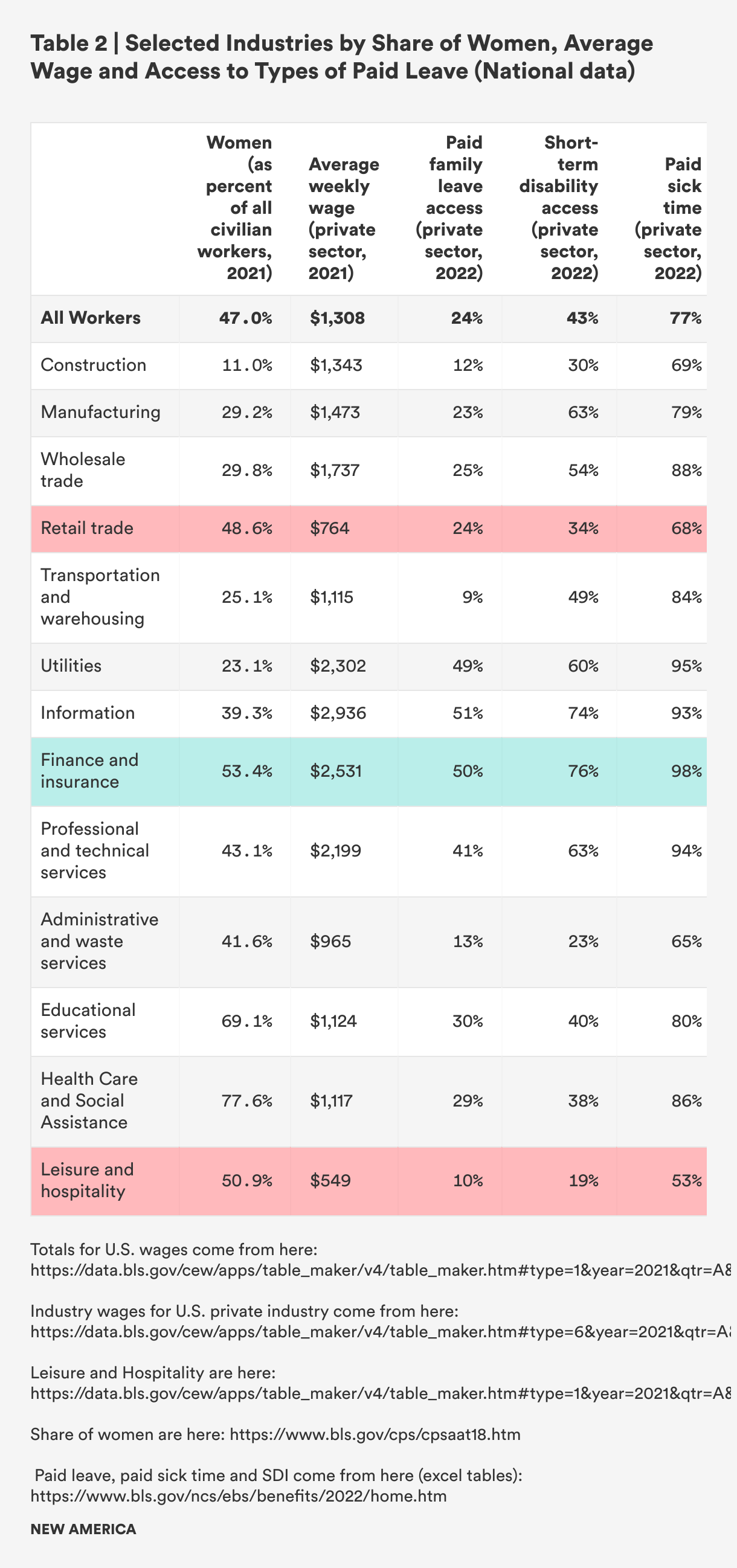
However, as of 2015, a plurality of employment in the 704 counties that are entirely rural was focused on human services—health care, education and social assistance (22.3 percent)—as well as retail trade (10.9 percent) and leisure and hospitality (arts, entertainment, recreation, accommodation and food services) (7.3 percent). Another segment with high shares of employment were manufacturing (12.1 percent), agriculture (9.6 percent) and construction (8.4 percent). Just 4.3 percent of rural employment was focused on finance and insurance, 2.3 percent on wholesale trade and 1.3 percent in information.39 A similar industry distribution was true for all non-metropolitan counties as of 2019.40
Notably, with implications for health and caregiving, overall in the United States, jobs in human services, retail, and leisure tend to be held by women, tend to pay lower-than-average wages, and tend to be less likely to offer benefits like paid leave, short-term disability insurance, or paid sick time. Among higher wage industries with better benefits, women tend to be a minority of workers—finance and insurance is the one exception.41 (See Table 2.)
There is perhaps no greater illustration of the differing experiences of workers in rural America than the influx of knowledge workers who telecommuted to their jobs during the pandemic in relative safety juxtaposed against the disproportionate share of in-person, Black and Latine workers in schools, on farms and in factories, who suffered higher rates of COVID-19 and faced higher rates of death.42
On-Site Work, Lack of Paid Leave = Death
In 2021, Jacqueline Lowery, a 28-year old teacher and mother, died of COVID-19. Her cousin told the New York Times, “She had not yet tested positive for the virus, and she needed to before she could qualify for Covid pay from her employer. In the meantime, she was using up valuable sick days … She was the sole provider, and she had to pay bills, and she wasn’t going to get paid because she’d missed a solid week of school … They kept telling her she needed proof of positive Covid status.”43
The ability to find and maintain good employment is a concern to rural residents. More than four in 10 rural residents (42 percent), including 53 percent of non-white rural residents, identified the availability of jobs as an area of major concern for them in 2018—a far higher share than urban or rural residents overall (34 percent and 22 percent, respectively) and urban residents by race. And rural residents were less optimistic than suburban and urban residents about the availability of jobs improving over the next 10 years.44 When people are concerned about being able to find jobs, they tend to focus less on the quality of the jobs that are available—and that means employers can pay low wages and offer few benefits. This harms workers’ health and community well-being in the long run.
More specifically, there may be some connection between poorer rural health, discussed below, the limited job market and employment rates. A large study of workers in Vermont found that rural workers were more likely to retire early after a cancer diagnosis; one hypothesis is that the prevalence of physically demanding work creates fewer return-to-work opportunities, as a larger share of rural residents than urban residents work in agriculture, forestry, fishing, mining, and construction.45
A second qualitative study of women cancer survivors in rural Illinois identified the limited rural job market as a barrier to employment after cancer treatment. Cancer survivors who left work—most of whom had insecure employment prior to their cancer diagnosis and treatment—cited as barriers to rejoining the workforce the lack of job opportunities in their local area, limited remote work opportunities, and the dominance of physically taxing manufacturing and service jobs with few protections, which cancer survivors could not physically do without harming themselves or further compromising their health.46 Notably, none of these industries are likely to provide paid leave as a workplace benefit.47
All of this underscores the importance of paid leave provided to everyone, regardless of their job or their employer. Rural economic development requires focusing on creating good jobs across a range of sectors and investing in policies to support a healthy workforce. Boosting rural labor force participation rates is an important goal for rural economic and community development. Access to higher wages, workplace benefits, and the ability to manage work and family demands can help boost labor force participation rates.
Both nonprofit organizations and for-profit management consultants are aligning around solutions that require greater government and private sector investments in creating livable communities and higher-quality workplace practices.48 The health care sector has been an important focal point of conversations about equitable and inclusive economic development, and has potential to marry conversations about health, work and care.49
C. Health
The health of rural populations, especially those in persistently poor counties and among people of color, is concerning and heightens the need for access to workplace leave for both workers and caregivers. Prior to the COVID-19 pandemic, 81 percent of persistently poor counties were in the bottom quartile of U.S. counties in terms of health outcomes, and—as noted above—these counties are disproportionately located in rural areas.50 The spread of COVID-19 in rural counties, where Black, Latine, and Native residents comprised a disproportionate share of deaths, was exacerbated by factors that affect rural population health overall, including more in-person work in industries with high rates of transmission, less access to and awareness of vaccines, further distances to health care, and more.51
The health of people in rural communities is affected by the social determinants of health, including higher poverty rates and lower incomes, lesser job quality, and lesser access to health care services.52 The prevalence of unhealthy behaviors like smoking and lack of aerobic exercise (likely due to lack of walkability in many rural communities) is higher in rural areas than in metro areas. Lower rates of privately provided health insurance and higher average ages are also among the drivers of health disparities and overall poorer rural population health.53
For nearly two decades, the distance to health care services has been identified as a barrier to preventive care and treatment for people in rural communities.54 The closure of rural hospitals and reduced accessibility to health care providers between 2012 and 2018 mean that rural people must travel even longer distances to receive health care evaluations, treatments, and care.55 Researchers at the North Carolina Rural Health Research Program examined closures over time and found that rural counties with hospital closures in the past decade were more likely to border metro areas and have higher shares of Black and Latine residents, and that—overall—counties with hospital closures have higher levels of income inequality, lower per capita income, and higher unemployment compared to the median rural county, and that they tend to be in the South.56 Closures are likely affecting residents’ perceptions and experiences: Two-thirds of rural residents identified access to good doctors and hospitals as a major or minor problem in 2018, whereas the opposite was true elsewhere: 64 percent of suburban residents said access to good doctors and hospitals was not a concern.57 Distances to health care and reduced access to health care services, which contribute to lower rates of preventive care and screenings, mean missed opportunities for early interventions that could eliminate or ameliorate more serious health problems in the future.
“Two-thirds of rural residents identified access to good doctors and hospitals as a major or minor problem in 2018.”
As a result of the myriad factors that affect rural health, deaths from serious conditions are higher in rural counties. Heart disease, cancer, respiratory disease, and stroke are more prevalent and death rates are higher in rural communities.58 One study found that, after hospitalization, Medicare patients in rural areas are more likely to die within 30 and 90 days than residents of urban areas, less likely to receive home health services in their community post-discharge, and less likely to be readmitted to the hospital. The study authors hypothesize that these poorer outcomes may be related to travel distances for home health aides and from rural communities to hospitals when readmission might otherwise be advisable.59 Rural counties also see more deaths that are considered preventable for each of these common conditions because they occur at a younger age than would normally be expected.60

“Heart disease, cancer, respiratory disease, and stroke are more prevalent and death rates are higher in rural communities.”
Rural health outcomes related to pregnancy and childbirth are also poor relative to urban areas—and the implications of this are likely to become even more dire in the wake of newly restricted access to reproductive health care, including contraception and abortion care services. At least half of rural areas do not have hospital-based obstetrics services, and 2.4 million women of reproductive age live in these counties. These counties, which are disproportionately more rural and geographically isolated than counties that have obstetrics services, also have fewer family physicians per capita than other rural counties and urban areas. Difficulty accessing obstetrics care is most acute in rural counties with higher percentages of non-Hispanic Black women, lower median income, and less access to publicly-funded health insurance due to restrictive Medicaid eligibility rules. During a 10 year period from 2004 to 2014, these were the same counties where access became even more limited due to hospital obstetrics department closures, potentially exacerbating racial and income-based disparities in maternal and infant health outcomes.61
Perhaps in part due both to overall poorer health and more difficulty accessing obstetrics care, maternal mortality rates are considerably higher in rural counties, with 19.8 pregnancy-related deaths per 100,000 live births in micropolitan counties (counties with 2,500 to 49,999 people) and nearly 23.8 in smaller rural counties, compared to 14.6 in large urban areas and 16.2 in medium and small metropolitan counties. Maternal mortality rates for Black women in smaller rural counties are the highest of any group—59.3 per 100,000 live births and the same is true for Black women in micropolitan counties (52.8 per 100,000 live births). American Indian and Alaska Native women’s maternal mortality rates are also significantly higher than rates for other rural women (37.5 in smaller rural counties and 32.3 in larger counties per 1000,000 women).62
The same higher mortality risk is true for rural babies, as well: neonatal mortality and infant mortality rates are 8 percent and 20 percent higher, respectively, in rural areas than in large urban counties, and rural infant mortality rates increase dramatically by maternal age—from 8 percent higher among mothers in their 20s, 30 percent higher among mothers in their 30s, and 54 percent higher for mothers in their 40s or beyond. In contrast, infant mortality rates are lower, and distinctions by maternal age for mothers in their 20s and 30s are absent, in urban areas.63 Infant mortality is a particular concern in Appalachia, which comprises West Virginia and some counties in Alabama, Georgia, Kentucky, Maryland, Mississippi, New York, North Carolina, Ohio, Pennsylvania, South Carolina, Tennessee, and Virginia. This is likely due to higher rates of preterm birth, low birth weights, maternal diabetes, and maternal hypertension in Appalachia than in other areas—in combination with higher poverty, lower employment and education levels, and lower rates of physician availability relative to need.64
Difficulty accessing high-quality maternal, neonatal, and maternal health services in rural areas is likely a significant factor in these substantial differences. Practitioners and state-based stakeholders cite prohibitive costs for travel long distances, transportation challenges, lack of financial resources that affect a person’s ability to get care, lack of insurance coverage, and lack of skilled obstetrics providers as among the factors affecting maternal mortality.65 Some data in the United States and internationally show that access to paid sick time and paid leave may play a role too.66 For example, the introduction of paid family leave in California was associated with a 12 percent reduction in post-neonatal mortality rates between 2004 when California’s program went into effect and 2008.67 Further research should examine the extent to which maternal lack of access to paid sick time for prenatal care and lack of access to paid maternity and parental leave affects maternal and infant mortality and health in rural areas.
D. Care and Caregiving
The aging U.S. population and the shrinking number of younger, working age people available to provide care to older and disabled loved ones is creating pressures for millions of working people and their families. One-in-five Americans—an estimated 53 million people—provided care to an older or disabled adult or to a child with disabilities in 2020, up from 43.5 million caregivers in 2015. Six-in-ten caregivers are also employed, and most report at least one work-related impact including late arrivals and early departures or taking time away from work to manage a loved one’s care.68
Family caregiving is a staple of life in rural communities in the United States. In 2021, nearly one-in-four rural residents (23 percent) report having provided care to a family, friend, or loved one within the past 30 days, according to analysis of the caregiver module in the Behavioral Risk Factor Surveillance System CDC Survey (BRFSS), which is a survey module administered to adults in most states.69
According to the National Alliance for Caregiving (NAC)/AARP study, Caregiving in the United States 2020 report and additional analysis of that data, a slightly higher share of caregivers reporting that they care for someone who lives in a rural area are employed, compared to non-rural caregivers (63 percent compared to 61.2 percent), but they tend to work just under two hours a week less, on average, than non-rural caregivers (34 hours per week compared to 35.9 hours per week), and a lower share of rural caregivers work a full-time 40-hour a week job.70
In rural counties, the need for caregiving is exacerbated by a relatively high share of people aged 65 and older and shrinking shares of working age and younger adults. A typical caregiver to a rural adult is 47.6 years old, which is two years younger than the typical adult caregiver in the non-rural areas (49.6), and their care recipient is also typically slightly younger than other adults who are cared for across the United States.71
Rural adults receiving care from a loved one are about as likely to have a long-term physical condition as non-rural residents (64 percent rural and 62 percent non-rural), but are slightly more likely to have a short-term physical condition (32 percent rural vs. 29 percent non-rural), a memory problem (35 percent vs. 30 percent), an emotional or mental health issue (31 percent vs. 28 percent), a developmental or intellectual disorder (11 percent vs. 8 percent), or a behavioral issue (10.3 percent vs. 7.4 percent). Children in rural areas who are receiving special health-related care are also more likely to have a short-term physical condition (31 percent vs. 26 percent).72 Short-term physical health issues may require a period of time away from work for caregivers, and short-term physical health issues, ongoing disability, mental health, and behavior issues may necessitate caregivers’ presence at medical visits, a more unpredictable need for leave and episodic care—all of which are difficult without access to paid leave and paid sick time.
Many rural caregivers do not live in a rural area themselves: Just 12 percent of the nation’s caregivers live in rural areas (about 6.4 million caregivers to adults), while 31 percent of care recipients are reported to have rural residency. This means care must be coordinated remotely or the caregiver must take time from work to travel to provide care.73 Rural counties also have higher shares of adults with disabilities who may struggle to find employment that provides paid leave, or who require care.74
Expectations about future caregiving responsibilities are higher in rural areas. Analysis of the 2021 BRFSS data shows that nearly 15 percent of rural residents compared to 13 percent non-rural residents believe that they will be called on to provide care to a family member or loved one in the next two years.75
Spotlight on Women, All Caregivers and Work
Women, particularly mothers, in rural areas may have particular challenges due to work and caregiving—both in terms of perceptions and actual navigation of work and care. In 2018, 62 percent of rural women said it is harder for women to get ahead, compared to 43 percent of rural men.76
In the wake of the COVID-19 pandemic, women with children under 18 and women with both children and other family caregiving responsibilities who work for pay outside their homes have been especially stretched—both nationally and in rural areas. According to a recent survey commissioned by the Bipartisan Policy Center, nearly six in ten rural mothers to children under 18 who had jobs in the past 12 months (57 percent) say they feel less economically secure than before the pandemic, significantly more than the shares of suburban and urban women who say the same.77 At a time when both illness and caregiving forced people to take time away from work, more than two-thirds of rural mothers (68 percent) said they could not afford four or fewer weeks off without pay (compared to 59 percent of women overall), including one-third of rural mothers (34 percent) who said they could not afford even one week without pay and still meet their family’s financial needs (compared to 26 percent of women overall).78
More than one-third of working rural mothers and mothers overall (37 percent) reported that caregiving has made it hard to remain in the workforce. A full one-quarter (25 percent) of rural mothers reported quitting a job because of caregiving in the past two years—more than mothers overall (20 percent).79
Rural mothers were less likely than mothers nationally to report having access to paid vacation time (71 percent versus 75 percent), paid sick days (64 percent versus 70 percent), paid parental leave to care for a new child (42 percent versus 48 percent), flexible work from home options (39 percent versus 45 percent), or affordable childcare or financial assistance for child care (13 percent versus 17 percent). Working mothers’ access to paid family caregiving leave is about the same in rural communities as nationally—32 percent or rural mothers and 34 percent of mothers overall report access. About half of all mothers nationwide who do not have paid parental or family caregiving leave say these supports would positively impact their ability to stay in the workforce, their financial security, their ability to fulfill their family responsibilities, and their mental health and stress levels.80
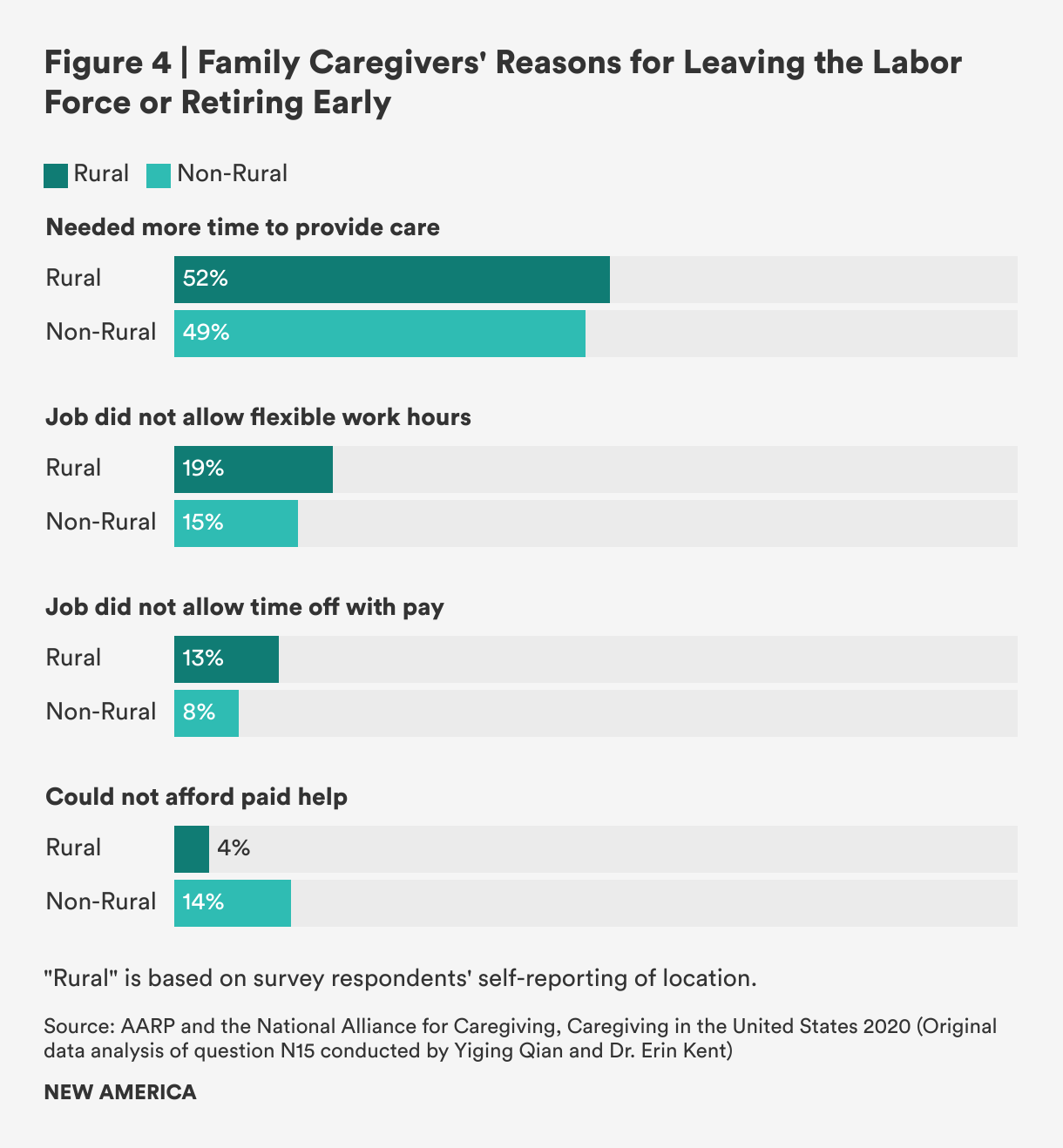
Among caregivers overall, the NAC/AARP survey also shows concerning information about caregivers’ labor force detachment: 7.5 percent of rural caregivers reported leaving work entirely or retiring early.81 The reasons they provide are illuminating: More than half (51.7 percent) said they needed more time to provide care, nearly one-in five (18.8 percent) said their job did not allow flexible hours, and more than one in ten (12.5 percent) said their job did not allow time off without pay. All of these are more common answers among rural caregivers than non-rural caregivers. And indeed, rural caregivers are less likely to report access to paid family leave and paid sick days than non-rural caregivers: 33 percent of rural caregivers report having access to paid family leave, compared to 40 percent in non-rural areas; and 55 percent report access to paid sick days compared to 58 percent in non-rural areas. Only the affordability of paid care seems to be much less of a factor in rural areas compared to non-rural locations (4.1 percent rural versus 13.9 percent non-rural).82
Citations
- Elizabeth A. Dobis, Thomas P. Krumel, John Cromartie, Kelsey L. Conley, Austin Sanders, and Ruben Ortiz, Rural America at a Glance, 2021 Edition (Washington, DC: USDA Economic Research Service, Department of Agriculture, 2021), 2, source; Kim Parker, Juliana Horowitz, Anna Brown, Richard Fry, D'Vera Cohn, and Ruth Igielnik, What Unites and Divides Urban, Suburban, and Rural Communities (Washington, DC: Pew Research Center, 2018), 19, source.
- Center on Rural Innovation, "Defining Rural America: The consequences of how we count," Center on Rural Innovation Blog, July 20, 2022, source. Center on Rural Innovation’s analysis of census tracts paints a different picture of rural America than analysis using county-level data does: a growing population, less diversity, higher incomes, more employment growth, less poverty, and less persistent poverty.
- Center on Rural Innovation, "Defining Rural America: The consequences of how we count"
- Parker et al., What Unites and Divides Urban, Suburban, and Rural Communities, 54–57.
- Dobis et al., Rural America at a Glance, 2.
- Parker et al., What Unites and Divides Urban, Suburban, and Rural Communities, 16.
- Kenneth Johnson,"Rural America Lost Population Over the Past Decade for the First TIme in History," University of New Hampshire Carsey School of Public Policy, February 22, 2022, source.
- William Frey, "New census data shows a huge spike in movement out of big metro areas during the pandemic," The Avenue (Brookings Institution blog), April 14 2022, source.
- Dobis et al., Rural America at a Glance, 2.
- Alexander Marre, "Rural Population Loss and Strategies for Recovery," Federal Reserve Bank of Richmond Econ Focus-District Digest, First Quarter 2020, source
- Parker et al., What Unites and Divides Urban, Suburban, and Rural Communities, 22.
- Parker et al., What Unites and Divides Urban, Suburban, and Rural Communities, 22.
- Johnson, “Rural America Lost Population.”
- Parker et al., What Unites and Divides Urban, Suburban, and Rural Communities, 24.
- See figures 7 and 12 in Center on Rural Innovation, “Defining Rural America.”
- USDA Economic Research Service, Rural Poverty and Well-Being (Washington DC, 2022), source.
- USDA Economic Research Service, Rural Poverty and Well-Being.
- USDA Economic Research Service, Rural Poverty and Well-Being.
- Dobis et al., Rural America at a Glance, 2.
- Dobis et al., Rural America at a Glance, 15-16.
- Change Lab Solutions, National Governors Association, and the Praxis Project, “Toward Better Rural Futures: Policy Scan Update,” PowerPoint Presentation, 2022.
- Alison Fields, Kelly Ann Holder, and Charlynn Byrd, “Life off the Highway: A Snapshot of Rural America,” U.S. Census Bureau blog, December 8, 2016, source; A Better Balance, Comparative Chart of Paid Family and Medical Leave Laws in the United States (New York, July 1, 2022), source; National Partnership for Women & Families, Current Paid Sick Days Laws (Washington, DC, August 2022), source.
- Emily Hallgren, Surviving Cancer in Rural America: The Role of Women’s Households, Social Networks, and Communities in Coping with Cancer (Chicago: PhD dissertation, Department of Sociology, University of Illinois at Chicago, 2021). The quotations in this section are from Dr. Hallgren’s dissertation research and are used with permission. All names attached to quotations are pseudonyms.
- Data USA, Map of Poverty by County (downloaded data) (2020), accessed September 2022 from source
- A Better Balance, Comparative Chart of Paid Family and Medical Leave Laws; National Partnership for Women & Families, Current Paid Sick Days Laws.
- Elise Gould and Jessica Schieder, Work sick or lose pay? (Washington, DC: Economic Policy Institute, 2017), source.
- Alexander Arnon, Zheli He, and Xiaoyue Sun, “Did Wages Keep Up with Inflation in 2021?” Penn Wharton Budget Model (blog), February 22, 2022, source.
- Amy Livingston, "Urban vs. Suburban vs. Rural Living – Differences to Consider Where to Live," Money Crashers, June 7, 2022, source.
- See table 4 in Pamela Joshi, Maura Baldiga, Allison Earle, Rebecca Huber, Teresa Osypuk, and Dolores Acevedo-Garcia, "How much would family and medical leave cost workers in the US? Racial/ethnic variation in economic hardship under unpaid and paid policies," Policy Resources for Community, Work and Family 24 (5) (2021): 517–540.
- Scott Brown, Jane Herr, Rahda Roy, and Jacob Alex Klerman, Employee and Worksite Perspectives of the Family and Medical Leave Act: Results from the 2018 Surveys, (Rockville, MD: Abt Associates, July 2020), 37, source.
- Elizabeth Kneebone and Natalie Holme, The growing distance between people and jobs in metropolitan America (Washington, DC: The Metropolitan Policy Program at Brookings, 2015), 5, source.
- Olugbenga Ajilore and Caius Z. Willingham, Adversity and Assets: Identifying Rural Opportunities (Washington, DC: Center for American Progress, 2019), source.
- Parker et al., What Unites and Divides Urban, Suburban, and Rural Communities, 27.
- Dobis et al., Rural America at a Glance, 7–8.
- Bill Bishop, “Rural Employment Down 1% Since Pandemic; Metro Employment Climbs,” The Daily Yonder, September 12, 2022, source.
- Parker et al., What Unites and Divides Urban, Suburban, and Rural Communities, 28.
- Agilore and Willingham, Adversity and Assets; United States Department of Agriculture, Rural Manufacturing at a Glance, 2017 Edition (Washington, DC: USDA Economic Research Service, Economic Information Bulletin 177, 2017), source; Bishop, “Rural Employment Down 1% Since Pandemic.”
- Agilore and Willingham, Adversity and Assets.
- Lynda Laughlin, "Beyond the Farm: Rural Industry Workers in America," U.S. Census Bureau blog, December 8, 2016, source
- Agilore and Willingham, Adversity and Assets.
- U.S. Bureau of Labor Statistics, Labor Force Statistics from the Current Population Survey, Table 18: Employed persons by detailed industry, sex, race, and Hispanic or Latino ethnicity (2021), source; U.S. Bureau of Labor Statistics, Quarterly Census of Employment and Wages, Employment and Wages Data Viewer, Private, NAICS Sectors, U.S. Total, All Establishment Sizes (2021 Annual Averages), source; U.S. Bureau of Labor Statistics, National Compensation Survey: Employee Benefits in the United States, March 2022, Tables Showing Leave Benefits, Short Term Disability Insurance—Private Sector (Washington, DC: U.S. Department of Labor Bureau of Labor Statistics, 2022), source.
- Benjamin Mueller, “In Rural America, Covid Hits Black and Hispanic People Hardest,” New York Times, July 28, 2022, source; National Center for Farmworker Health, COVID-19 in Rural America: Impact on Farms & Agricultural Workers (April 22, 2021), 5, source; Frey, “New census data shows a huge spike.”
- Mueller, “In Rural America, Covid Hits Black and Hispanic People Hardest.”
- Parker et al., What Unites and Divides Urban, Suburban, and Rural Communities, 46.
- Michelle Sowden, Pamela Vacek, and Berta M. Geller. "The impact of cancer diagnosis on employment: Is there a difference between rural and urban populations?" Journal of Cancer Survivors 2014 (8): 213–217, source.
- Emily Hallgren, Britni Ayers, Ramey Moore, Rachel S. Purvis, Pearl A. McElfish, Sanjay Maraboyina, and Gwendolyn Bryant-Smith, "Facilitators and barriers to employment for rural women cancer survivors," Journal of Cancer Survivorship (February 10, 2022), source.
- U.S. Bureau of Labor Statistics, National Compensation Survey.
- Aspen Institute, Thrive Rural Framework Overview (Aspen, CO: Aspen Institute, 2022), source; Mike Kerlin, Neil O'Farrell, Rachel Riley, and Rachel Schaff, “Rural rising: Economic development strategies for America’s heartland,” McKinsey & Company Public & Social Sector (March 30, 2022), source.
- Build Healthy Places Network, A Playbook for New Rural Healthcare Partnership Models of Investment (Oakland, CA: Public Health Institute, 2022), source.
- Partners for Rural Transformation, Transforming Persistent Poverty in America: How Community Development Financial Institutions Drive Opportunity (2019), 6, source.
- Dielle J. Lundberg, Ahyoung Cho, Rafeya Raquib, Elaine O. Nsoesie, Elizabeth Wrigley-Field, and Andrew Stokes, “Geographic and Temporal Patterns in Covid-19 Mortality by Race and Ethnicity in the United States from March 2020 to February 2022 (pre-print),” medRxiv (2022); Mueller, “In Rural America, Covid Hits Black and Hispanic People Hardest.”
- Rural Health Information Hub, Social Determinants of Health for Rural People (June 6, 2022), accessed September 3, 2022, source.
- Rural Health Information Hub, Rural Health Disparities (April 2019), accessed August 30, 2022, source.
- Snowden, Vacek, and Geller, “The impact of cancer diagnosis on employment,” 216.
- U.S. Government Accountability Office (GAO), Report to the Ranking Member Committee on Homeland Security and Governmental Affairs, United States Senate: Rural Hospital Closures: Affected Residents Had Reduced Access to Health Care Services (Washington, DC: U.S. GAO, 2020), source.
- Arrianna Marie Planey, Julie R. Perry, Erin E. Kent, Sharita R. Thomas, Hannah Friedman, Randy K. Randolph, and G. Mark Holmes, Since 1990, Rural Hospital Closures Have Increasingly Occurred in Counties that Are More Urbanized, Diverse, and Economically Unequal (Chapel Hill, NC: NC Rural Health Research Program, UNC-Chapel Hill Cecil G. Sheps Center for Health Services Research, 2022), source.
- Parker et al., What Unites and Divides Urban, Suburban, and Rural Communities, 46.
- Rural Health Information Hub, Rural Health Disparities.
- Cyrus M. Kosar, Lacey Loomer, Nasim Ferdows, Amal N. Trivedi, Orestis A. Panagioutou, and Momotazur Rahman, "Assessment of Rural-Urban Differences in Postacute Care Utilization and Outcomes Among Older US Adults." JAMA Network Open (January 8, 2020), doi:/10.1001/jamanetworkopen.2019.18738.
- Rural Health Information Hub, Rural Health Disparities.
- Peiyin Hung, Carrie E. Henning-Smith, Michelle M. Casey, and Katy B. Kozhimannil, “Access to Obstetric Services in Rural Counties Still Declining, With 9 Percent Losing Services, 2004-2014,” Health Affairs 36 (9) (2017): 1663–1671.
- U.S. Government Accountability Office (GAO), Report to the Committee on Ways and Means, House of Representatives: Maternal Mortality and Morbidity: Additional Efforts Needed to Assess Program Data for Rural and Underserved Areas (Washington, DC: U.S. GAO, 2021), 18, source.
- Danielle M. Ely, Anne K. Driscoll, and T.J. Matthews, “Infant Mortality Rates in Rural and Urban Areas in the United States, 2014,” NCHS Data Brief No. 285, (Hyattsville, Md.: National Center for Health Statistics, 2017), source.
- Gopal K. Singh, Michael D. Kogan, and Rebecca T. Slifkin, "Widening Disparities in Infant Mortality and Life Expectancy Between Appalachia And the Rest of the United States, 1990-2013," Health Affairs 36 (8) (2017), source.
- U.S. Government Accountability Office, Note to the Committee on Ways and Means: Maternal Mortality and Morbidity.
- Joia Crear-Perry, "Paid Maternity Leave Saves Lies," Bloomberg (June 24, 2021), source.
- Diana Montoya-Williams, Molly Passarella, and Scott A. Lorch, "The impact of paid family leave in the United States on birth outcomes and mortality in the first year of life," Health Services Research 55 (Suppl 2) (2020): 807–814, 808.
- National Alliance for Caregiving (NAC) and AARP, Caregiving in the U.S. 2020 (Washington, DC: NAC and AARP, May 2020), 4, 7 source.
- Erin Kent, Unpublished analysis of 2021 BRFSS Caregiver Module Data for this project (Summer 2022). Methodological information about the BFRSS 2021 module is available at source.
- Yiqing Qian and Erin Kent, Original data analysis of the Caregiving in the United States 2020 dataset (unpublished) (September 2022).
- Qian and Kent, Original data analysis of the Caregiving in the United States 2020 dataset (unpublished) (September 2022) (median age).
- Qian and Kent, Original data analysis of the Caregiving in the United States 2020 dataset (unpublished) (September 2022).
- National Alliance for Caregiving (NAC) and AARP, Fact Sheet: The "Typical" Caregiver of a Care Recipient Living in a Rural Area (Washington, DC: NAC and AARP, 2020), source; Quian and Kent, Original data analysis of the Caregiving in the United States 2020 dataset (unpublished) (September 2022). .
- Guixiang Zhao, Catherine A. Okoro, Jason Hsia, William S. Garvin, and Machell Town, "Prevalence of Disability and Disability Types by Urban-Rural County Classification-U.S., 2016," American Journal of Preventive Medicine 57 (6) (2019): 749-756; University of Montana Rural Institute, How will the COVID-19 Recession Impact People with Disabilities in Rural America (Missoula, MT: Rural Training and Research Center on Disability in Rural Communities, University of Montana, 2020), source.
- Kent, Unpublished analysis of 2021 BRFSS Caregiver Module Data for this project (Summer 2022).
- Parker et al., What Unites and Divides Urban, Suburban, and Rural Communities, 36.
- Bipartisan Policy Center and Morning Consult, Understanding Mothers in the Workforce (Washington, DC, May 2022), 11 source
- Bipartisan Policy Center and Morning Consult, Understanding Mothers in the Workforce, 10.
- Bipartisan Policy Center and Morning Consult, Understanding Mothers in the Workforce, 23.
- Bipartisan Policy Center and Morning Consult, Understanding Mothers in the Workforce, 9, 36.
- Qian and Kent, Original data analysis of the Caregiving in the United States 2020 dataset (unpublished) (September 2022). We note that this is a lower share than the 9.8 percent exit rate for caregivers in non-rural areas, but rural caregivers also tend to be slightly younger than non-rural caregivers and to work fewer hours, which may partially explain the difference. Lower wages and less savings—creating an economic imperative to continue working—may also play a role.
- Qian and Kent, Original data analysis of the Caregiving in the United States 2020 dataset (unpublished) (September 2022).
Lack of Paid Leave as a Barrier to Care, Health, and Economic Security
A. The Importance of Paid Leave
Access to paid time away from work to provide care or seek health services for a loved one or one’s self is critically important for promoting good health, economic security, and well-being. Access to paid time away from work helps patients and caregivers access the treatments patients need.
For workers who are sick with contagious illnesses or need preventive health care services, access to paid sick time facilitates staying home, keeping sick children home, getting recommended immunizations and health screenings, and reduces rates of workplace injuries.1 Access to paid sick time also promotes efficient use of health care services and reduces emergency department use.2
For workers with serious health issues—and for workers who are family caregivers to loved ones with serious health issues—access to paid family and medical leave promotes compliance with treatment recommendations and reduces nursing home use.3 For example, nationally, an American Cancer Society-Cancer Action Network survey of employed cancer patients with access to paid leave found that workers who have and use paid leave are significantly more likely than others to complete treatment, go to medical and treatment appointments, manage symptoms and side effects, exercise choice over where to get treatments and which treatments to get, and afford treatment.4 A small qualitative study of women cancer survivors in rural Illinois found that access to paid sick time and paid medical leave was one contributor to remaining employed during and after treatment; in contrast, employed cancer patients who used FMLA unpaid leave—who tended to be in lower-quality jobs with less secure employment—were more likely to use the leave and then exit work.5 For caregivers of cancer patients, having and using paid leave is associated with a higher likelihood of going to a loved one’s appointments and treatments, helping with a loved one’s care, and addressing their own health issue.6
For new parents, access to paid family leave results in more time spent with children, which contributes to better child and maternal health, greater engagement by fathers in their children’s lives, and higher rates of women’s employment, and higher earnings.7 Paid leave also plays an important role in promoting health for babies in the NICU and children who are hospitalized.8 One meta-analysis of NICU children found that more maternal care in a NICU contributes to maternal-child bonding, better infant health outcomes, better maternal mental health and more success with breastfeeding.9
B. Prior Research on Access to Paid Leave Nationally and in Rural America
The United States is one of the only countries in the world that does not guarantee any form of paid sick time or paid family and medical leave to workers. The Family and Medical Leave Act of 1993 (FMLA) provides job-protected, unpaid leave for up to 12 weeks per year, but only to certain workers with serious health conditions or who are caring for a new child or a parent, spouse, or child with a serious health condition.
Nationally, the FMLA only covers an estimated 56 percent of the workforce, because its requirements that employees be provided job-protected leave and continued health insurance benefits only apply to worksites with 50 or more employees within a 75-mile radius. Furthermore, even within covered worksites, employees must have worked for at least one year for the employer and logged 1,250 hours in the past year to be eligible for FMLA protections.10
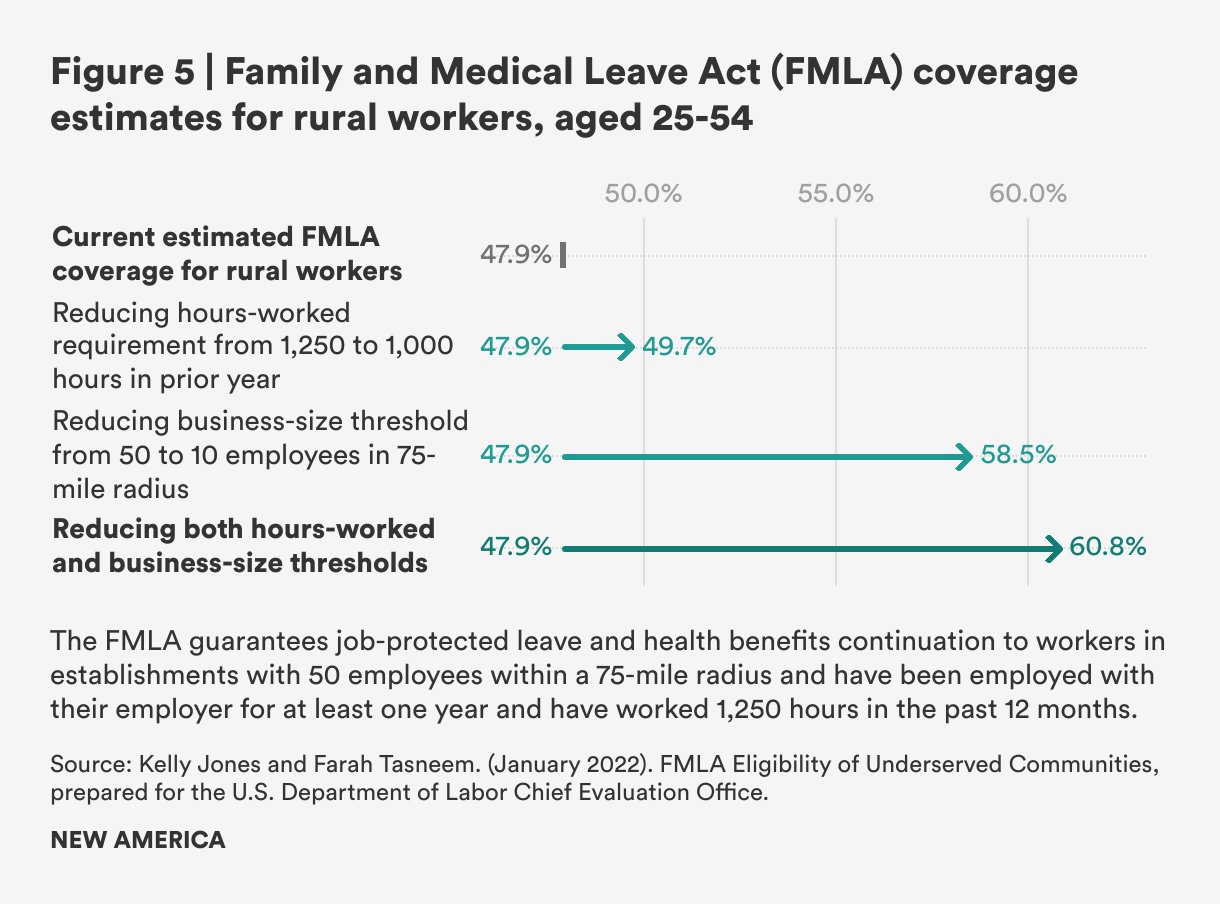
Rural workers’ FMLA coverage rates are estimated to be lower, primarily due to the firm size requirements: A simulation of FMLA access for workers aged 25-54 in rural communities estimates FMLA access for just 47.9 percent of rural workers compared to 51.4 percent for workers aged 25-54 overall under current law, and predicts expanded access with a reduction in the hours-worked requirements to 1,000 hours (49.7 percent coverage and eligibility for rural workers), a drop in the business size threshold to 10 employees (58.5 percent coverage and eligibility for rural workers), or both (60.8 percent coverage and eligibility for rural workers).11
Some U.S. states have done better than the federal floor. Twenty states and the District of Columbia have adopted more generous job protection requirements that apply to employees in smaller workplaces and workers with fewer hours or less job tenure.12 Eleven states and the District of Columbia have created paid family and medical leave social insurance programs, to guarantee paid leave to working parents and family caregivers and to workers with their own serious health issues through worker and/or employer-funded social insurance programs.13 And more than a dozen states, the District of Columbia, and two dozen localities have adopted their own paid sick days laws, which require employers to provide earned paid sick time to employees based on the number of hours an employee works.14
Notwithstanding state progress, without federal requirements or systems in place, most workers’ access to paid leave is left to the discretion of their employers. Overall in the United States, as of March 2022, 25 percent of civilian workers and 24 percent of private-sector workers had paid family leave through their jobs to care for a new child or a seriously ill loved one; 41 percent (civilian) and 43 percent (private sector) had temporary disability insurance, which is a form of personal medical leave, for extended personal serious health needs, including pregnancy and recovery from childbirth; 79 percent (civilian) and 77 percent (private) had paid sick leave. Access to benefits varies dramatically by wage level, industry and employer size—with lower-wage workers, service- and front-line occupations and workers in smaller companies less likely to have access.15
“Just 24 percent of private-sector workers nationwide had dedicated paid family leave through their jobs in 2022.”
Demographics, industry, business size, and unionization have been found to significantly affect workers' access to paid time away from work for health and caregiving needs in rural communities, but geography itself also plays a role in workers’ access to paid leave and other family-supporting benefits. For example:
- A 2009 study, using data from 2000-2006, found sizeable gaps in rural mothers’ access to paid sick and vacation days—as well as lower median earnings, lower levels of education, and lower unionization rates, but similar average labor market experience, hours worked, and share employed by the public sector. The study analyzed disparities in working mothers’ access to leave and found that about half of the difference was due to work establishment size, occupation, industry, and unionization. Even controlling for these factors, however, there were still significant differences in access among workers in sales occupations and among mothers in both very small (under 25 employees) and very large (500 or more employees) work establishments, with rural mothers’ access significantly less common than urban mothers’ access.16
- Researchers analyzed 2008 data from the National Study of the Changing Workforce and found that rural workers were significantly less likely to report having access to at least five paid sick days, and that rural parents were less likely to report having at least five paid sick days to care for a sick child. The gaps were especially pronounced in the private- and non-profit sectors. Disparities were reduced but not eliminated when controlling for full-time work hours and persisted when controlling for workplace and demographic characteristics, leading researchers to conclude that geography itself was a significant factor in the different rates of access.17
- A 2014 study of cancer patients in Vermont found that a smaller share of rural patients reported using paid disability leave relative to urban patients (12.3 percent versus 17.9 percent). Even after controlling for age, education, and cancer stage, rural workers were 33 percent less likely to use paid disability leave. The study authors noted that the types of manual labor jobs in rural communities are less likely to offer paid medical leave and that this may increase the negative impact of cancer diagnoses on rural workers and contribute to their 66 percent greater likelihood to retire early after a diagnosis, controlling for age, education, and cancer stage.18
- A 2015 analysis of a multi-decade longitudinal pooled sample of women surveyed as part of the National Longitudinal Study of Youth, from 1989 through 2020, provided insights on access to a range of family-supportive benefits. Researchers found that rural women’s odds of reporting access to paid maternity leave was 24 percent lower than urban women; the odds of rural women reporting access to paid vacation time was 20 percent lower, paid sick leave 13 percent lower, and flexible work scheduling 11 percent lower than urban women. For each benefit other than paid sick leave, workplace factors did not explain the disparities, while for paid sick leave, the size of employer and unionization explained the differences.19
Additionally, a recent analysis of the 2020 National Health Interview Study, which we also use in one of our analyses below, examined full-time rural workers’ access to paid sick time and found that rural workers’ access to paid sick days was 10 percentage points lower than urban workers’ access (68.1 percent versus 77.1 percent). Significant and large differences persisted even after adjusting for socio-demographic characteristics including age, gender, marital status, race and ethnicity, education, health status, and hours worked.20.
The 2020 NHIS data analysts concluded, “The geographic inequities we identified in access to paid leave compound other structural barriers to good health that rural residents experience.”21 They found that the workers least likely to have access to paid sick leave are 18-24 year olds, never-married people, Hispanic people, adults with a history of diabetes or stroke, and people who rate themselves as in fair or poor health. Rural workers with less than a high school degree, who make up a small but disproportionate share of the rural workforce, have particularly low rates of access, and experience significant gaps relative to their urban counterparts; lower predicted probabilities persist even at higher levels of educational attainment controlling for other factors.22
C. Additional Insights on Access to Paid Leave in Rural America
Our original analyses below add to the evidence that rural workers, and particularly rural Hispanic/Latine workers, have less access to paid sick time and paid family and medical leave than non-rural workers. We examined data from the 2019 National Health Interview Survey (NHIS) to examine access to paid sick time and the 2017-2018 American Time Use Survey (ATUS) to examine access to paid leave for family and medical reasons consistent with the FMLA.23 In addition to analyzing access between rural or "non-metropolitan" areas and metropolitan areas overall and by gender and race, we also examined access among residents of areas with a high share of people in poverty and within 200 percent of the federal poverty line. We use the terms Hispanic and Latine interchangeably in our analysis, though we note that the surveys use the terminology "Hispanic."
We note that both the NHIS and the ATUS have limitations in terms of the questions that are asked. We are unable to assess the quality or duration of the paid sick leave provided through the question asked on the NHIS. The ATUS asks about any paid time off that can be used for particular purposes, not whether that time is specifically designated for a unique purpose or the duration of the available paid leave. In addition, we note that the definition of “rural” each study uses is different because of the different rural definitions used by the Census Bureau and the U.S. Department of Health and Human Services, so these results cannot be compared to one another. In the final section of this report, we recommend better surveys for data collection on these topics.
1. Paid Sick Time
The NHIS asks respondents whether they have paid sick leave at the job or business they worked in during the past seven days. The NHIS data for all workers in rural counties (“non-metropolitan counties”), similar to the Henning-Smith NHIS analysis of full-time workers discussed above, shows a statistically significant 7-percentage point difference in access to paid sick time among rural and non-rural workers. Just over half of rural workers (55.7 percent) compared to more than six-in-ten workers in metropolitan areas (62.3 percent) reported access to paid sick time at the job they spent the most time at in the previous week.

Women and men were about equally likely to report access to paid sick time in both rural and metropolitan areas and to experience the same 7-point rural-metropolitan gap. Access is lowest among rural Hispanic workers (just 45 percent report access to paid sick leave), and the rural-metropolitan gaps are largest among Hispanic workers (9.6 percentage points) and non-Hispanic white workers (8.5 percentage points). Black workers’ access to paid sick time is about the same in rural and non-rural areas. There are big gaps among Asian people in rural versus non rural areas, but the small sample size means that the 16-percentage point gap is not statistically significant; differences in rural versus non-rural access are smaller for American Indian and Alaska Natives (AIAN) (6 percentage points) and not statistically significant. When Asian people, AIAN people and “others” are combined, the gap between rural and non-rural access is large, with rural people 11 percentage points less likely to have access to paid sick time, and it is a statistically significant difference.
The gap between rural and urban workers persists, but does not grow, among people whose household income is at the federal poverty line or at 200 percent of the federal poverty line. Access to paid sick leave among lower-income rural and metropolitan workers is low: fewer than one-third report access to paid sick time at their jobs. But for rural workers, who must travel further for health care services, lack of access to paid time off may involve particular economic burdens and employment risks.
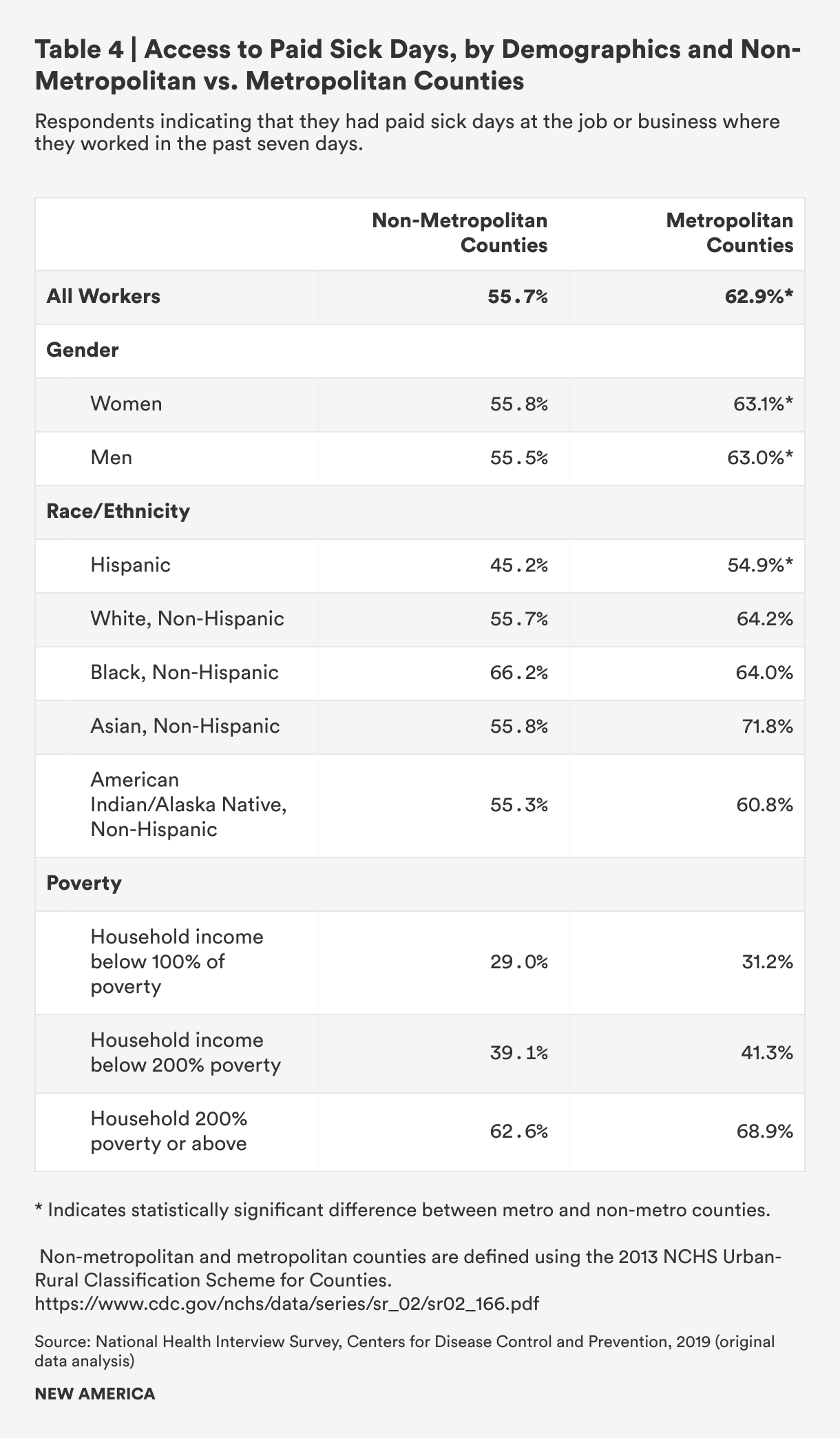
We also examined whether workers with serious health issues in rural and metropolitan areas had differential access to paid sick time. Importantly, we found that workers who reported having a cancer diagnosis in the past year were less likely than those who did not to have paid sick leave, and for rural workers, access was even lower. Just under half of rural workers who reported a cancer diagnosis in the past year said they had access to paid sick leave at their job (49 percent), compared to rural workers who were cancer-free (56 percent) and compared to both metropolitan area workers with a recent cancer diagnosis (60 percent) and metropolitan workers without a recent cancer diagnosis (63 percent). We did not find any similar geographic associations with workers who have cardiovascular diseases like strokes or heart disease—though smaller shares of both urban and rural workers with cardiovascular disease report access to paid sick leave; this is likely the result of socioeconomic status, industry, and occupation.
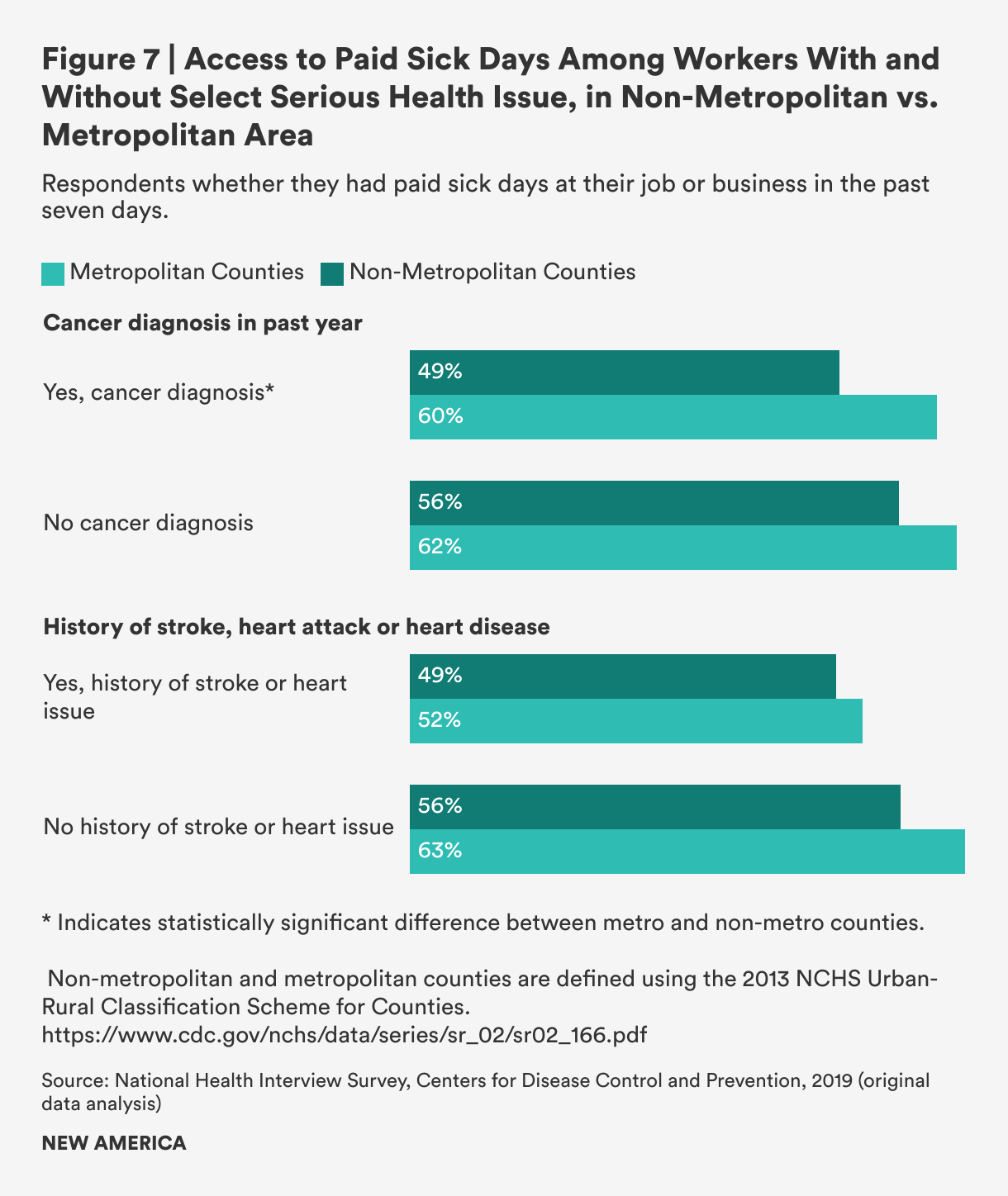
2. Paid Leave for Family or Medical Needs
Workers’ inability to access paid leave during a period of serious illness or care needs has implications for most families and households. In 2018, a national public opinion survey asked voters across the country how likely they would be to face a “serious financial hardship” if they had to take up to a few months of unpaid time off from their job because of a serious illness or injury, to care for a new child, or to care for a family member with a serious illness, injury, or disability. More than half of rural residents said they would be “very likely” to face a serious financial hardship—12 percentage points more than people in metropolitan areas.24
The ATUS provides the only federally-collected data at a large enough scale to analyze access to paid leave by rural and non-rural communities. The questions asked are imperfect for the purposes of quantifying access to designated paid family and medical leave; respondents are asked whether they have access to “any paid leave” and then a series of questions about the purposes for which they can use the leave, including the birth or adoption of a child, eldercare, the illness or medical care of a family member, or their own illness or medical care, but respondents may be thinking about paid vacation, personal or sick time that can be used for these purposes and which may be of a limited duration.
We find that 64 percent of workers in rural areas said they would have paid leave to use for these family and medical leave-type purposes if they needed it, compared to 67 percent of metropolitan area workers. Rural men and metropolitan men have about equal access, whereas just 61 percent of rural women report paid leave access compared to 67 percent of metropolitan women.

Hispanic people in both rural and non-rural areas report low levels of access—just 53 percent of rural Latine people and 51 percent of metropolitan Latine people report access to paid leave to use for family and medical needs. However, there are statistically significant and substantial gaps among rural white people compared to metropolitan-area white people (64 percent access in rural areas compared to 72 percent in metro areas). There are also gaps for people of other races, including Native, Asian, Pacific Islanders, and multiracial people (65 percent access in rural areas compared to 71 percent in metro areas), but these are not statistically significant. Black people are an outlier, and this may be related to public-sector versus private sector employment: rural Black workers have higher access rates compared to metro-area Black workers (68 percent versus 64 percent), but this difference is also not statistically significant.
People who live at the poverty level are equally unlikely to have paid leave for family and medical reasons, whether in rural or metropolitan areas (36 percent) or at 200 percent of the poverty level (49 percent in rural counties and 50 percent in metropolitan counties), but the barriers to providing care may be greater in rural areas because of travel distances and a shortage of care providers.
Workers in rural areas of the west (59 percent), south (61 percent) and Midwest (65 percent) have less access to paid leave than Northeastern rural workers (73 percent). There is also a sizable differential between rural and non-rural workers in the west (59 percent versus 67 percent) and a smaller but still meaningful difference among rural and non-rural southern workers (61 percent versus 66 percent).
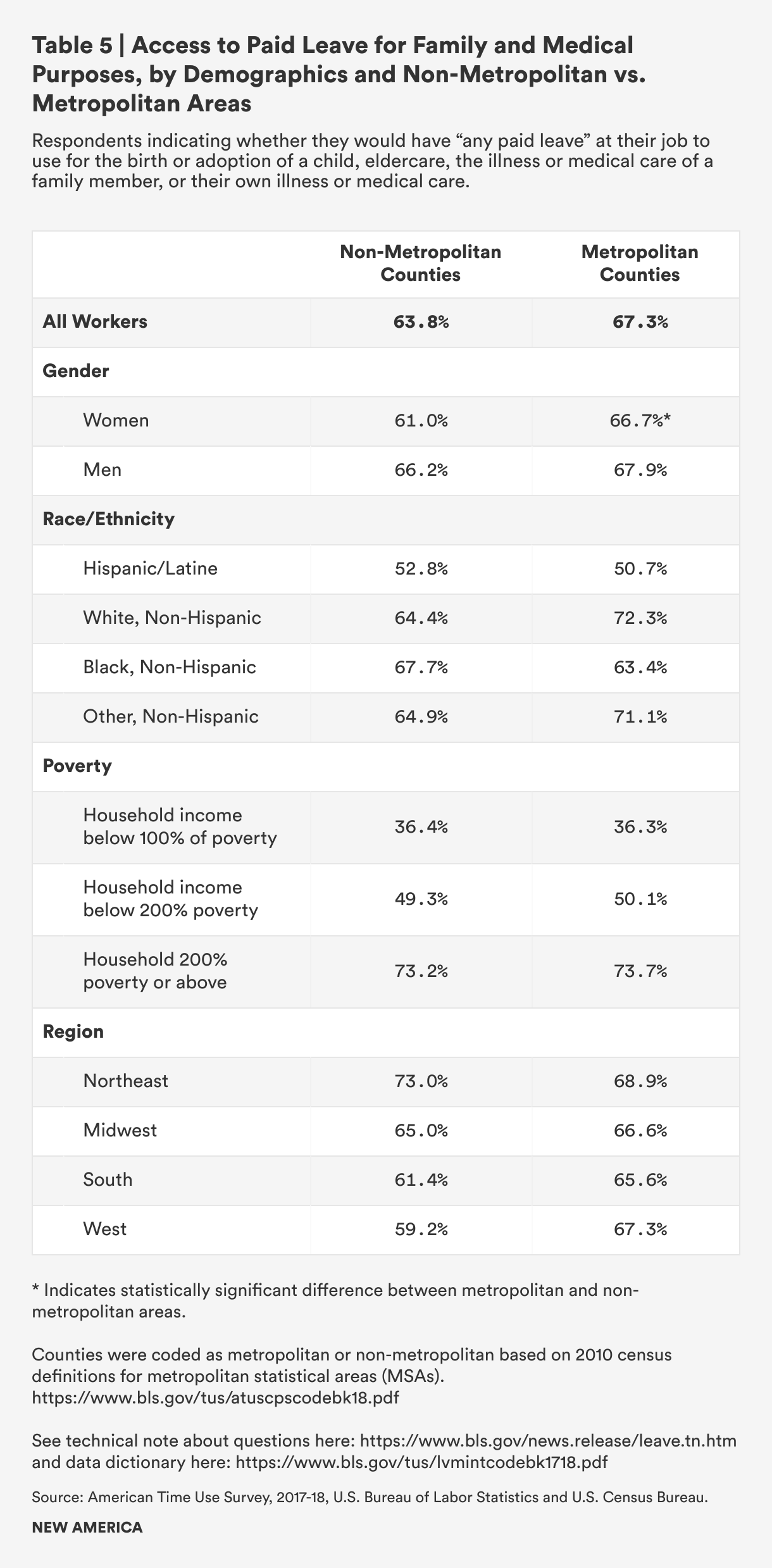
Citations
- National Partnership for Women & Families, Paid Sick Days Improve Public Health (Washington, DC, 2021), source.
- Yanlei Ma, Kenton J. Johnson, Hao Yu, Frank J. Warham, and Hefei Wen, "State Mandatory Paid Sick Leave Associated With A Decline In Emergency Department Use In the US, 2011-2019," Health Affairs 41 (8) (2022), source.
- Diana Boesch, Quick Facts on Paid Family and Medical Leave (Washington, DC: Center for American Progress, 2021), source.
- Public Opinion Strategies, Interested Parties Memorandum: Key Findings – National Surveys of Cancer Patients, Survivors and Caregivers (2017), source.
- Hallgren et al., “Facilitators and barriers to employment for rural women cancer survivors.”.
- Public Opinion Strategies, Interested Parties Memorandum.
- Jane Waldfogel, Elizabeth Doran, and Jessica Pac, Paid Family and Medical Leave Improves the Well-Being of Children and Families (Washington, DC: Society for Research in Child Development, 2019), source.
- Ashley Weber, Tondi M. Harrison, Deborah Steward, and Susan Ludington-Hoe, "Paid Family Leave to Enhance the Health Outcomes of Preterm Infants," Policy, Politics, & Nursing Practice (August 22, 2018), source; Jody Heymann and Allison Earle, Raising the Global Floor: Dismantling the Myth That We Can't Afford Good Working Conditions for Everyone (Stanford, CA: Stanford Politics and Policy, 2010).
- Susanne Klawetter, Jennifer C. Greenfield, Stephanie Rachel Speer, Kyria Brown, and Sunah S. Hwang, "An integrative review: maternal engagement in the neonatal intensive care unit and health outcomes for U.S.-born preterm infants and their parents," AIMS Public Health 6 (2) (2019): 160–183.
- Brown et al., note 29, 7.
- Kelly Jones and Farah Tasneem, “FMLA Eligibility of Underserved Communities,” Working Paper Produced for the U.S. Department of Labor Chief Evaluation Office (January 2022), 15 (Table 3), source.
- National Partnership for Women & Families, Raising Expectations: A State-by-State Analysis of Laws That Help Working Family Caregivers, (Washington, DC, 2018), source.
- Vicki Shabo, Explainer: Paid Leave Benefits and Funding in the United States (Washington, DC: New America, 2022), source; A Better Balance, Comparative Chart of Paid Family and Medical Leave Laws.
- National Partnership for Women & Families, Current Paid Sick Days Laws.
- U.S. Bureau of Labor Statistics, National Compensation Survey.
- Rebecca Glauber, Family-friendly Policies for Rural Working Mothers (Durham, NH: Carsey Institute, University of New Hampshire Policy Brief No. 15, Summer 2009), source.
- Kristin Smith and Andrew Schaefer, Rural Workers Have Less Access to Paid Sick Days (Durham, NH: Carsey Institute, University of New Hampshire Policy Brief No. 32, Summer 2011), source
- Snowden, Vacek, and Geller, “The impact of cancer diagnosis on employment.”
- Rebecca Glauber and Justin Robert Young, "On the Fringe: Family-Friendly Benefits and the Rural—Urban Gap Among Working Women," Journal of Family Economic Issues 36 (2015): 97-113.
- Carrie Henning-Smith, Janette Dill, Arianne Baldomero, and Katy Bakes Kozhimannil, "Rural/urban differences in access to paid sick leave among full-time workers," Journal of Rural Health (2022): 1–10, 6.
- Henning-Smith et al., “Rural-urban differences in access,” 5.
- Henning-Smith et al., “Rural-urban differences in access,” 6–7.
- Our original data analysis of the 2017-2018 American Time Use Survey Leave and Job Flexibilities Module (ATUS) and the 2019 National Health Interview Survey (NHIS) codes individual respondents to non-metropolitan (used interchangeably with “rural”) and metropolitan counties. NHIS uses counties (specifically the 2013 NCHS Urban-Rural Classification Scheme derived from the Office of Management and Budget classification system) and ATUS uses a metropolitan/non-metropolitan statistical area classification, which is also done at the county level. We used the data within the survey to identify access and experiences among subgroups of interest (e.g., poverty level, race/ethnicity).
- PerryUndem and Bellwether Research survey commissioned for the National Partnership for Women & Families, Voters' Views on Paid Family + Medical Leave: Findings from a National Survey (Washington, DC, 2018), www.nationalpartnership.org/2018poll.
Distances to Travel to Hospital-Based Health Care
Rural workers’ lower levels of access to paid leave benefits, greater and growing caregiving needs, and overall worse health relative to metropolitan areas—combined with greater financial insecurity and lower incomes—means that long distances to health care may pose significant challenges for rural workers who need health services for themselves or a loved one.
Our work builds on literature focused on rural hospital closures and distances to particular types of health services, for example breast cancer and lung cancer imaging. We add to this research for particular populations, with a lens on the intersections between lack of access to paid leave and long distances to receive hospital-based health care services and treatments.1 We specifically examined hospital-based obstetric care, neonatal intensive care units (NICUs) and other neonatal care, pediatric care, cardiac care, and cancer screening and treatment services, comparing mileage-based distances from rural and urban census tracts for each. We also analyzed distances to hospital facilities for rural census tracts with persistent poverty, rural census tracts with high concentrations of Black residents and rural census tracts with high concentrations of Hispanic/Latine residents. Finally, we completed the same analysis for Skilled Nursing Facilities. 2
It is important to note that our analyses reflect the availability of hospital-based services, but some types of services (such as mammography, colonoscopies, and other cancer screenings) are frequently available in outpatient settings and so access may be greater than these analyses would suggest, though people may sometimes require hospital-based care. For other services that nearly always occur in a hospital (neonatal care and neonatal intensive care units, for example), this limitation is less of a concern. It is also important to note that mileage-based distances may understate the difficulty of travel on rural roads in certain areas of the country; for example, in Appalachia, windy roads and poor road quality—especially in bad weather—may make traveling even short distances quite slow and onerous.
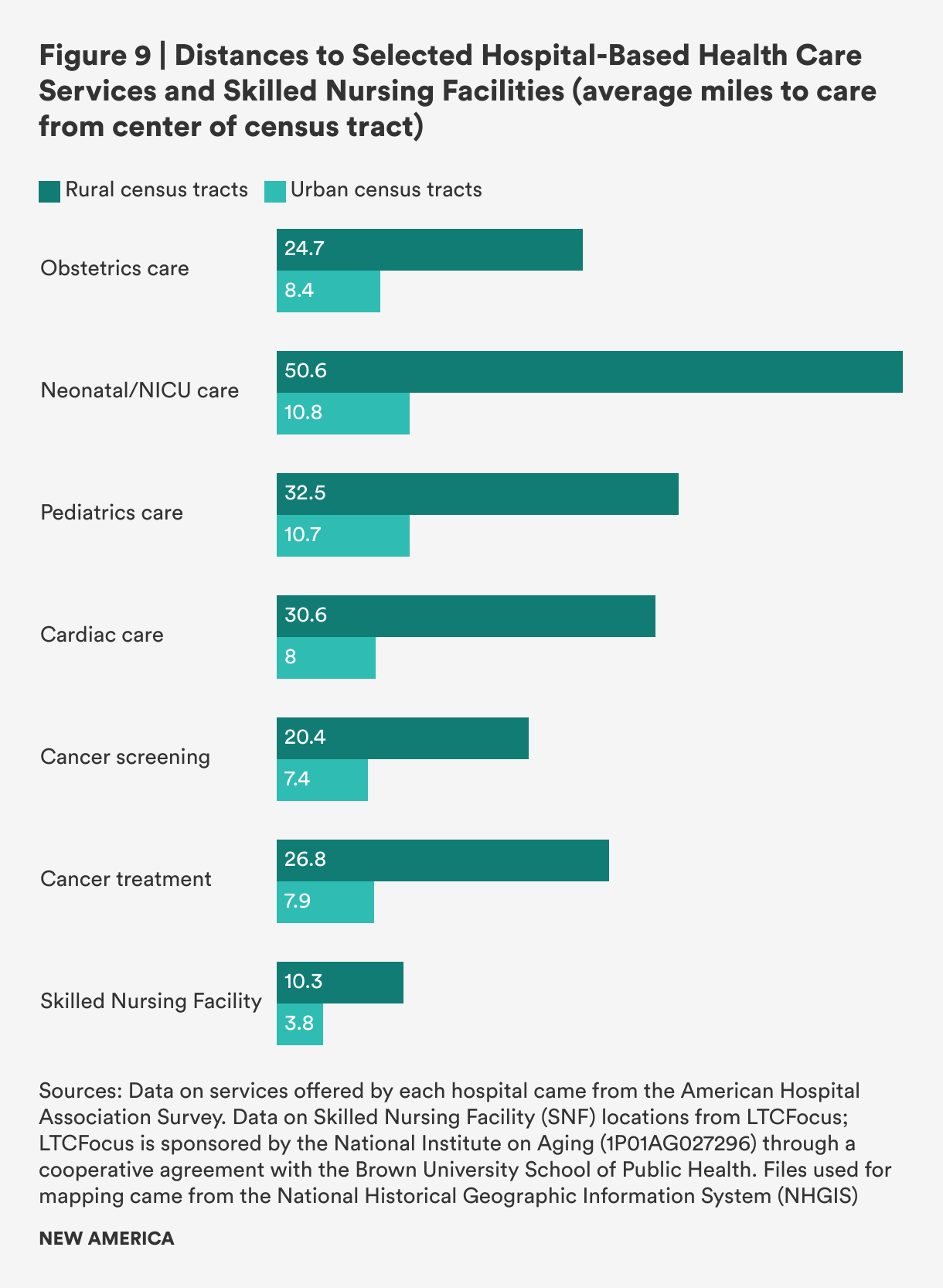
We find that people in rural census tracts must travel much further distances than people in urban areas to access hospital-based health care services: often three-to-four times as many miles on average and, for people in remote rural areas, much further than that. We find that many of the closest rural census tracts to health care services are further away from hospital-based health care services than the most distant urban census tracts are to the same kind of health care service.
Our analysis shows that Hispanic/Latine residents in rural communities are the worst off—they have further distances to travel than any other group and, as discussed in the previous section, they have less access to paid sick time and to paid family and medical leave. Census tracts with concentrations of Black residents are slightly closer to the hospital based health care services we examined, likely because a smaller share of Black residents than Latine residents and rural residents overall live in isolated rural census tracts—but health disparities and risk factors (for example, black maternal mortality) make quick access to care an important health imperative, and even shorter distances for this population are still quite significant. Distances for Hispanic/Latine residents and Black residents are also a function of geography: People in rural areas of the West, where Latine populations are concentrated, have further to travel than people in the South, where many Black residents are concentrated.
We find that rural areas with persistent poverty are slightly further than other rural census tracts from hospital-based obstetrics care and cancer screening and moderately further from cancer treatment. Even where distances are similar for all rural areas and areas with persistent poverty, the effects of that travel distance may be greater for low-income households whose workers are far less likely to have access to paid sick time or paid leave.
A. Obstetrics & Neonatal Care
Because maternal health and mother’s labor force participation are key issues for both the health and economic well-being of their children and families—and because pregnancy and parental leave is associated with better outcomes—we look at the distances to hospital-based obstetric care and neonatal units.
Rural women are less likely to have paid leave they can use to recover from childbirth and care for a new child than other women—and the barriers they face to seek care due in part to longer distances are greater. For Black women, who have higher maternal mortality rates and face well-documented bias in the health care system, the ability to get to a high-quality hospital quickly may be a matter of life and death. Moreover, every state in which abortion access is severely limited or has been eliminated entirely has a 20 percent or greater share of rural residents.3 In these states, lack of access to abortion care, plus long distances to hospital-based obstetrics care for births that may not be by choice, create one more hurdle to mental and physical health for birthing people—potentially compounded by lack of paid leave.
1. Obstetrics Care
Our analysis shows that the mean travel distance to a hospital providing any obstetrics services is nearly three times further for rural census tracts than for urban ones: 24.7 miles for rural census tracts, compared with 8.4 miles for urban census tracts. Distances to more advanced obstetrics services are likely even more limited and distances even longer for rural residents, but too few hospitals provide information on the level of obstetric care they provided to be more precise.
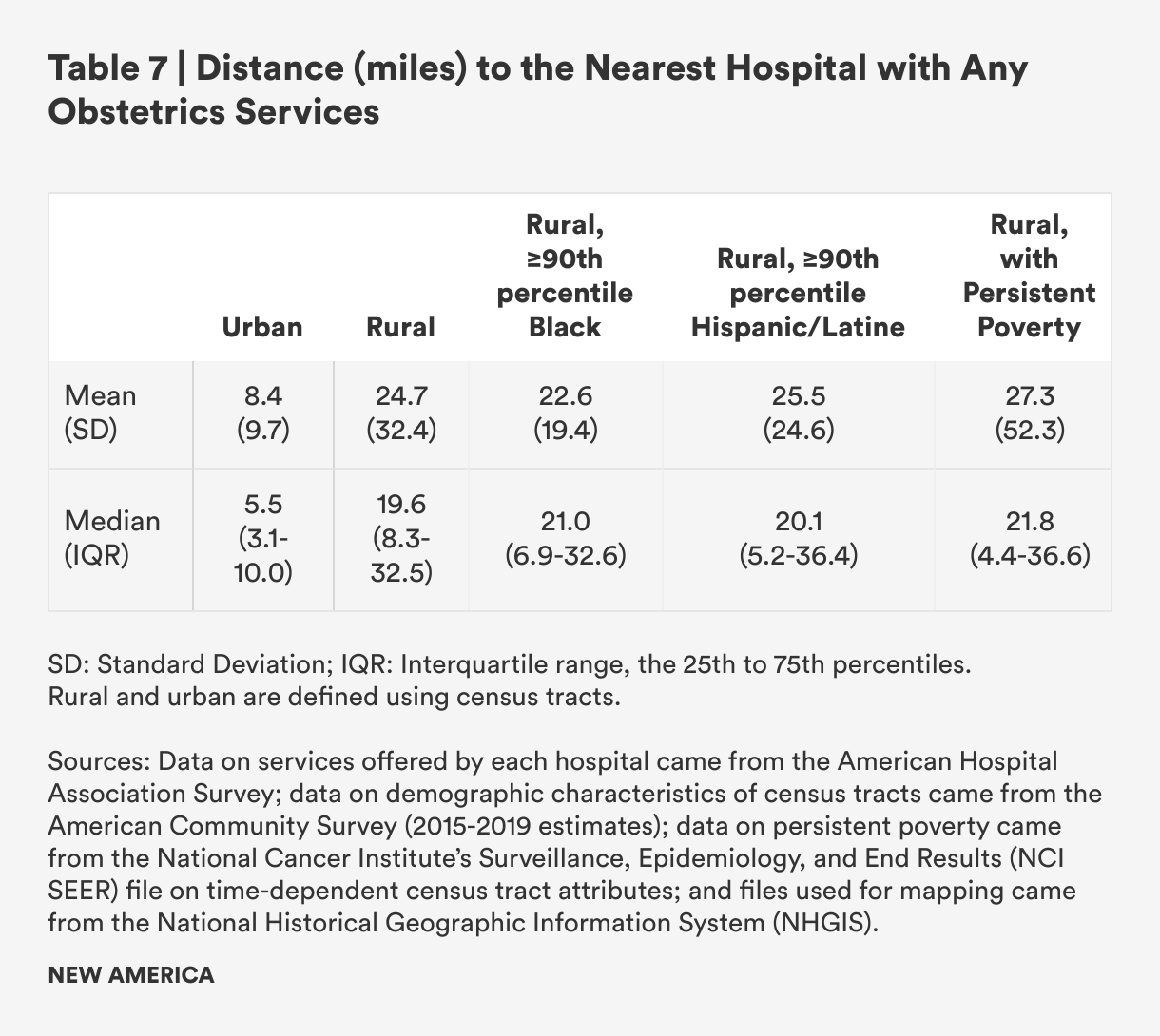
Among rural census tracts, we examined differences in mean travel distance to hospital-based obstetrics care between rural census tracts with persistent poverty compared to those without persistent poverty, those with high concentrations of Black residents compared to those without, and high concentrations of Latine/Hispanic residents compared to those without. We did not find significant differences in travel distances among these subgroups, yet the economic and health effects of long distances to travel to health care may be more pronounced for these communities given lower income, less access to wealth, and—for people in poverty and Hispanic/Latine people—less access to paid leave.
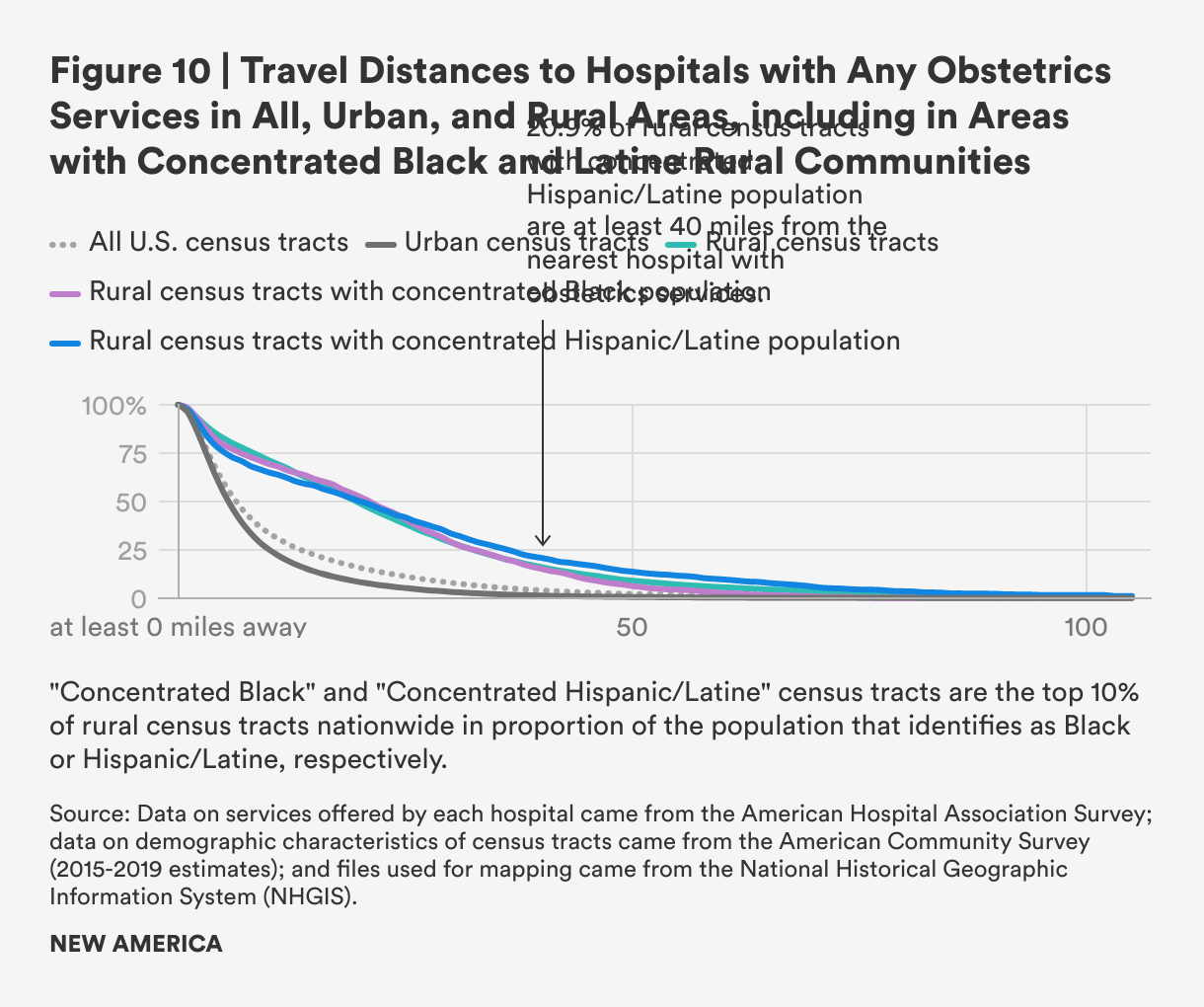
There is significant geographic variation in travel distance. Rural areas in the west experience the highest travel burden, with many of those census tracts more than 100 miles away from the nearest hospital with obstetrics services. In the eastern half of the country, distances are shorter on average, though parts of northern Maine, Michigan, and Minnesota and other spots farther South still face significant travel burdens of more than 50 miles.
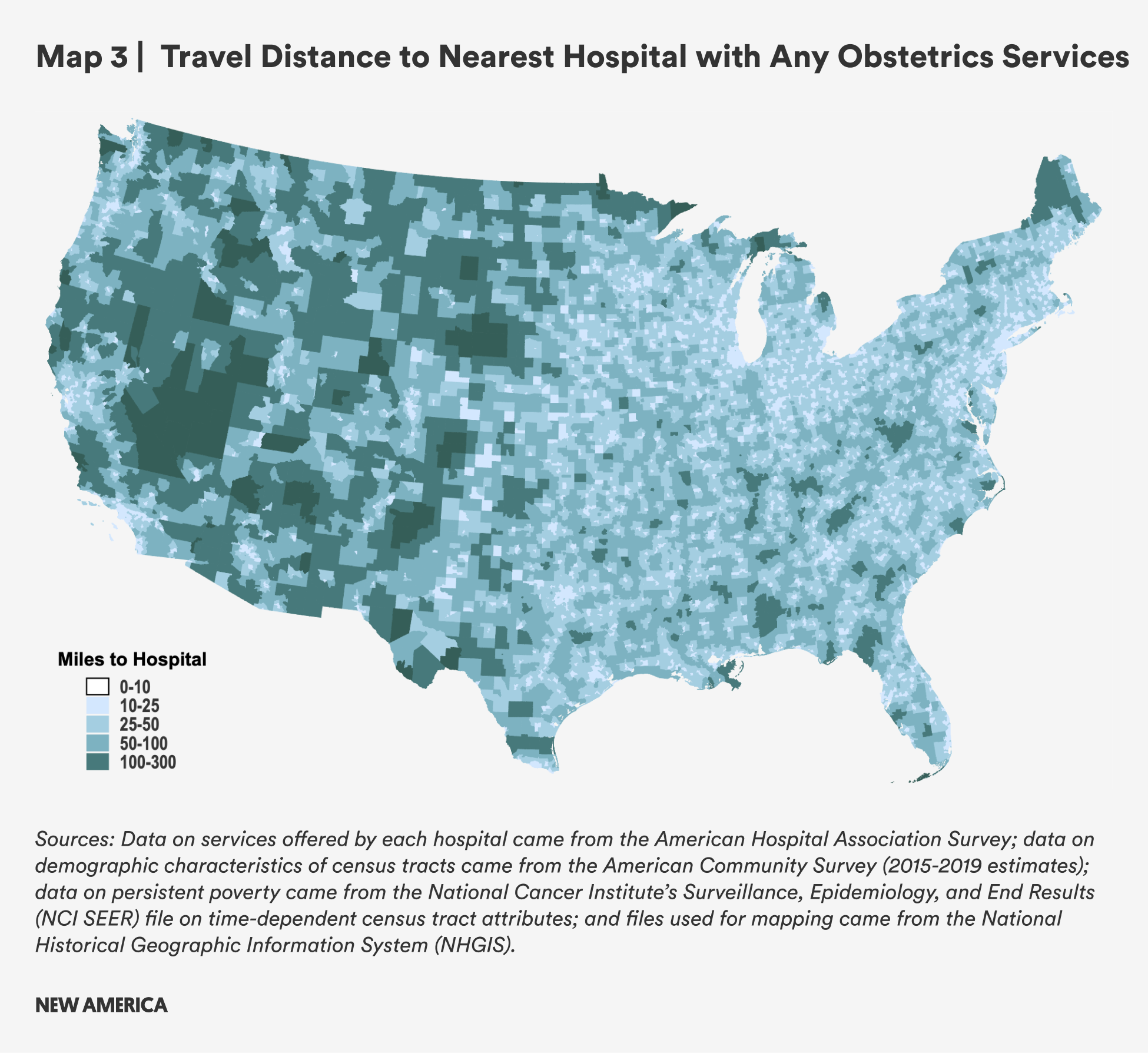
2. Neonatal Care
Access to neonatal care and neonatal intensive care units (NICUs) is rarer than obstetrics care, with fewer hospitals reporting that they offer neonatal care or NICUs. The average distance to a hospital with neonatal services in rural areas is nearly five times greater for rural residents than urban residents: 50.6 miles, compared with 10.8 in urban areas. This has implications: one study of dyads composed of mothers and preterm infants which looked at travel times rather than distances is illustrative—mothers who had to travel more than 30 minutes to get to a NICU spent fewer days per week visiting their hospitalized preterm babies.4 For parents whose children must remain in the NICU for periods of days, weeks or months, long distances and long travel times may force impossible choices between work and spending time with and caring for a baby in the NICU.

While there were less significant differences in distances to hospital NICUs and neonatal care between rural tracts with persistent poverty and those without, there were differences by demographics. Rural tracts with higher proportions of Black residents have considerably shorter travel distances on average, while those with high Hispanic/Latine populations have longer travel distances on average.
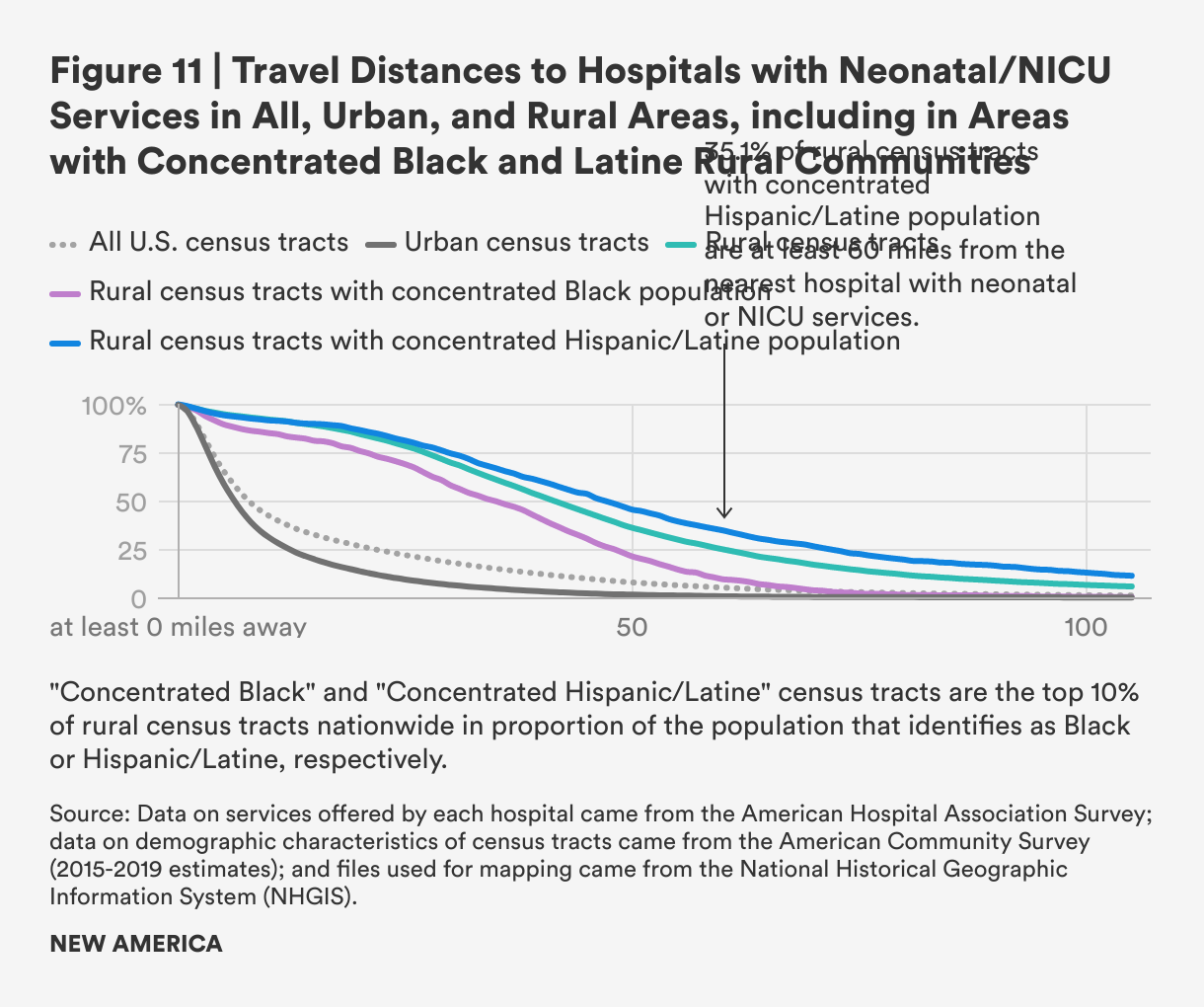
These findings likely reflect the heterogeneity of rural populations across the country. Rural areas with the largest proportion of Black residents are concentrated in the South, while there are more Hispanic/Latine people in the rural West, where travel burden is greater. As with obstetrics services, many census tracts in the rural West are more than 100 miles aways from the nearest hospital with neonatal services, with only a few areas on the east coast having similar distances.
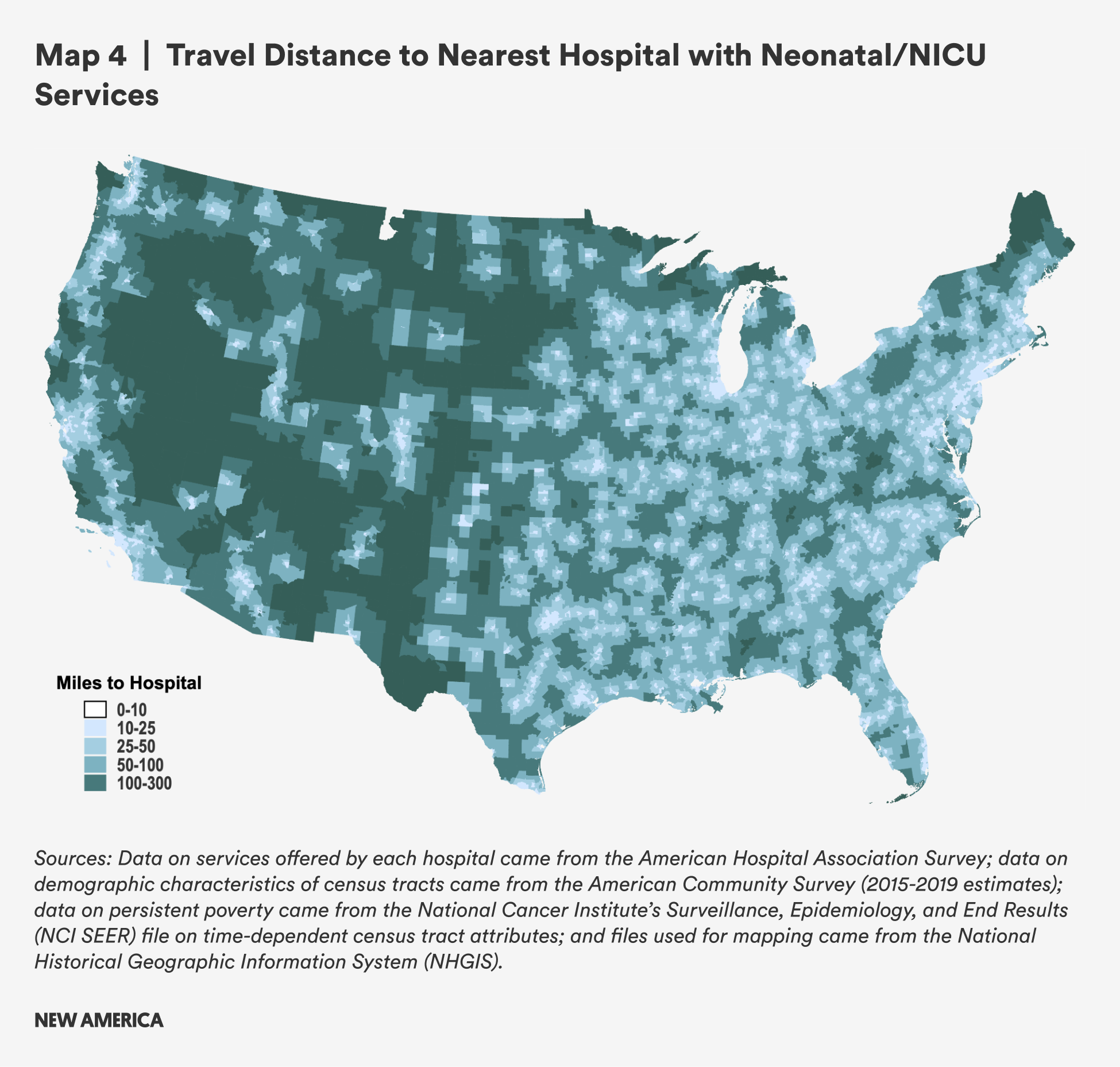
B. Pediatric Care
Access to care for children with serious health issues is essential. Hospitalized children recover more quickly and with fewer complications if a parent is able to be with them.5 Distances to care can be a barrier for working parents, and lack of access to paid leave creates even more strain on working parents. While all hospitals may provide care to children who require it, these results show the distance to hospitals that specifically report providing pediatric health care, are a pediatric hospital, or who have a pediatric ICU.
Table 9 shows that the mean distance from a rural census tract to a hospital that provides pediatric health services is three times further than in urban census tracts: 32.5 miles compared with 10.7 miles. Median distances are nearly four times greater for rural versus urban census tracts. Distances are not substantively different in rural areas with persistent poverty compared to all other rural census tracts.
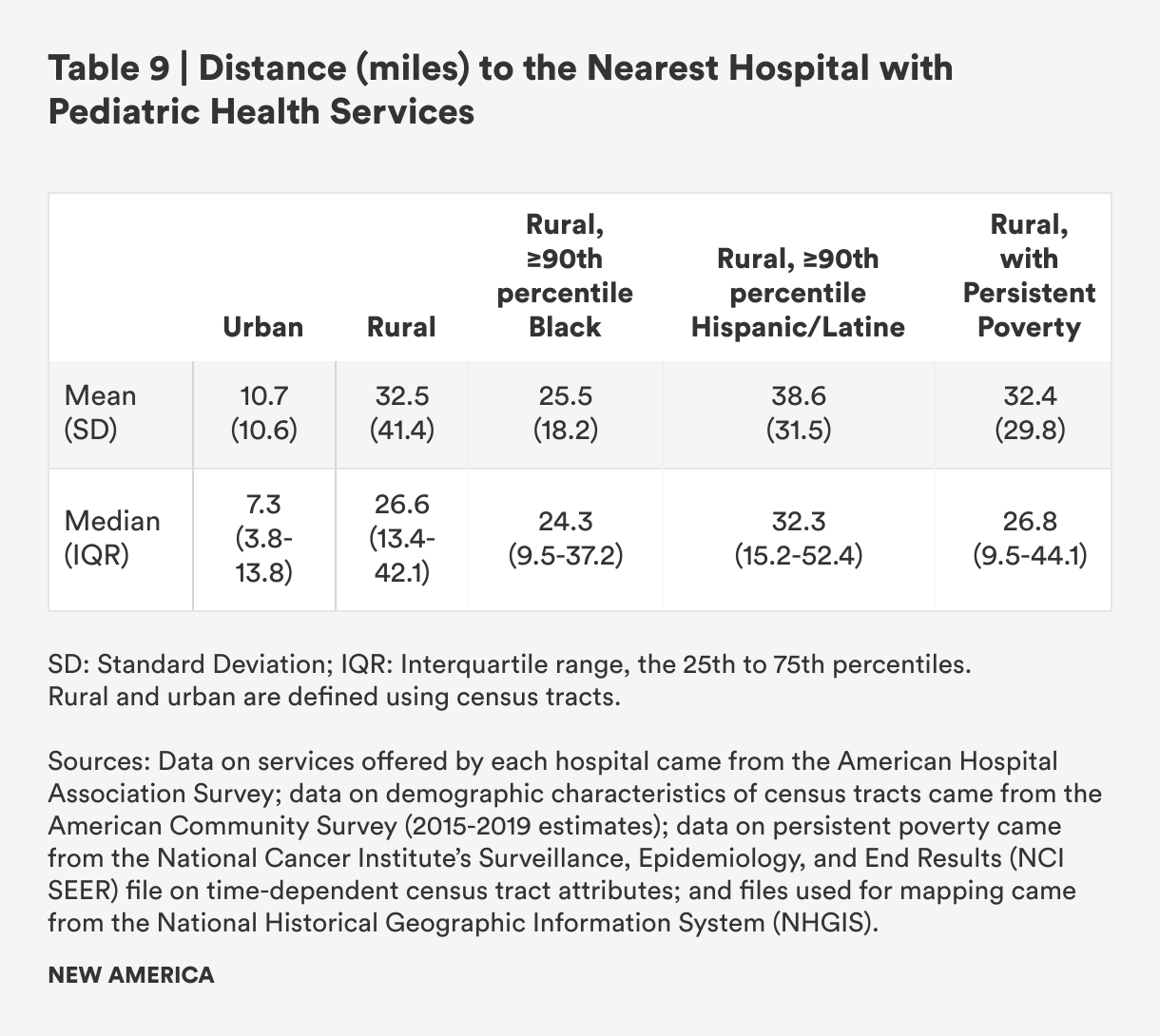
Rural census tracts with concentrated Black populations have substantially lower mean travel distances than rural census tracts overall, but the median is much closer to the median for all rural census tracts. This likely reflects the distribution of census tracts with concentrated Black populations in the South rather than the West. Rural areas with concentrated Hispanic/Latine populations have higher mean and median distances to travel when compared to rural census tracts as a whole, with higher proportions of those areas having to travel in excess of 60 miles for pediatric hospital care, as seen in Figure 12.
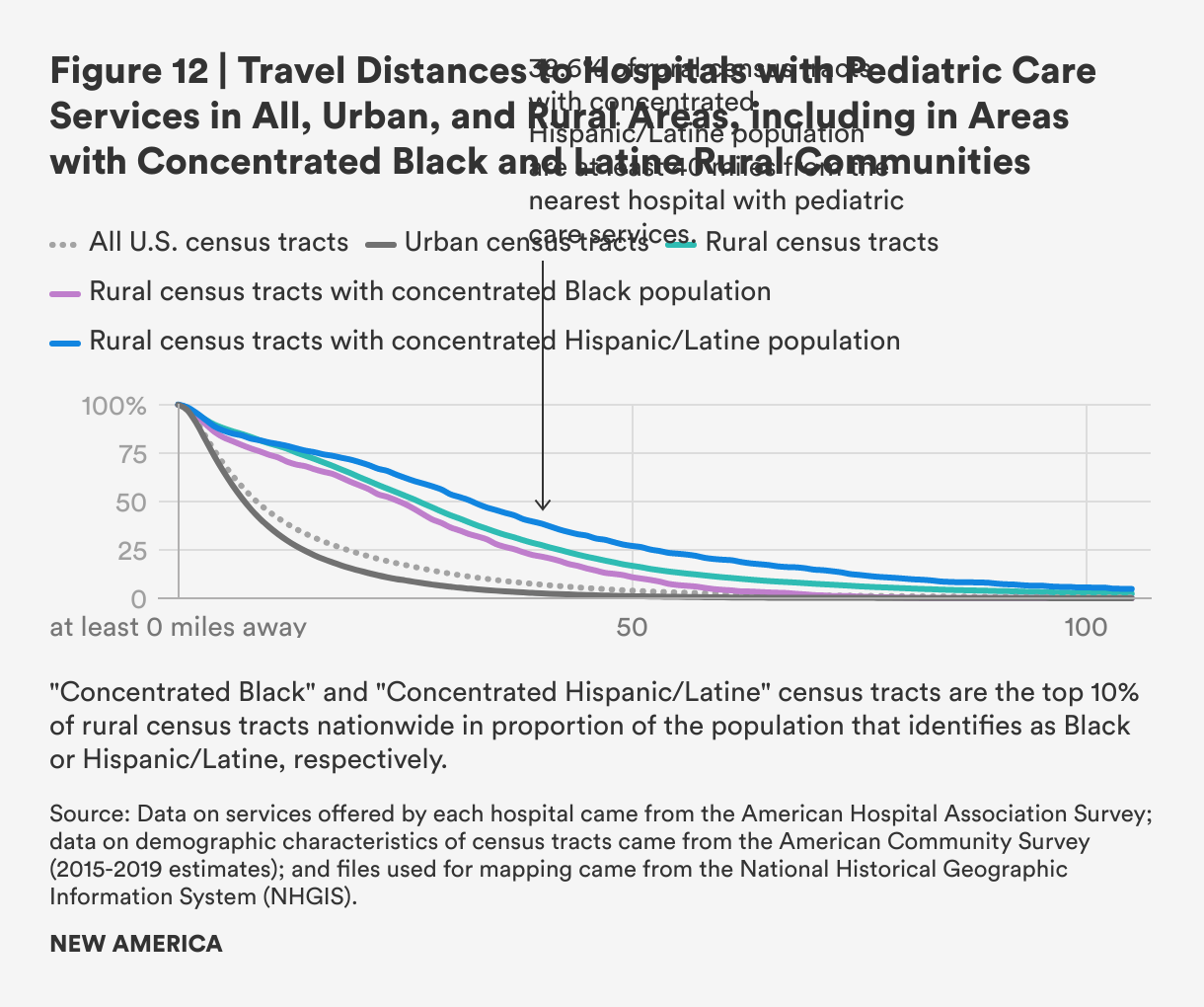
The largest distances are found in the western half of the United States, but areas in northern Maine, Minnesota, and Michigan also have travel distances greater than 100 miles. Many other rural areas still have distances between 50 to 100 miles, which still places a substantial burden on families in need of pediatric health services and especially on working parents.
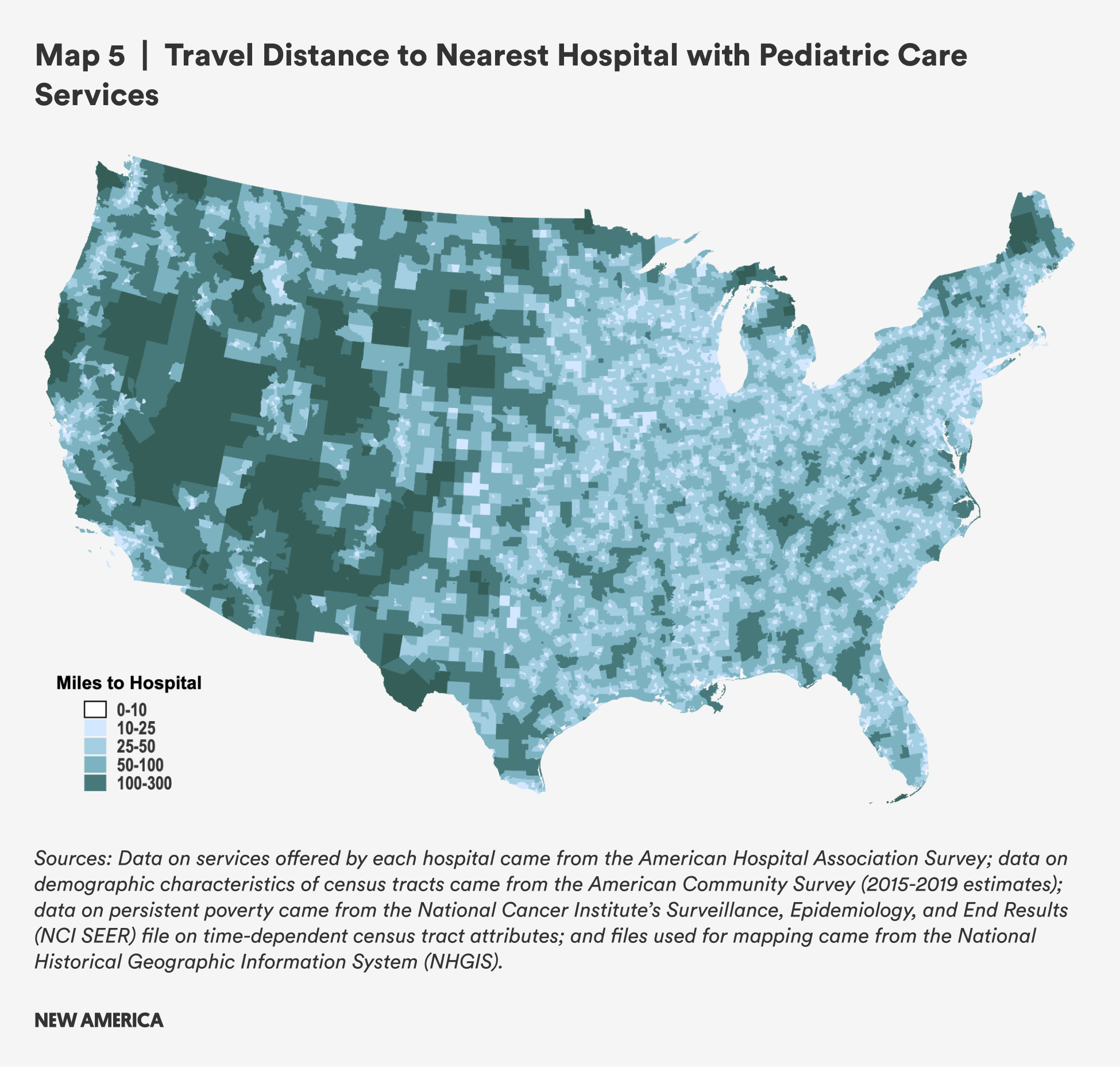
C. Cardiology Services
Because cardiovascular disease is pervasive in rural communities and is a leading cause of premature death—and because people with cardiovascular disease have lower rates of access to paid sick leave, according to our analysis of NHIS data—we looked at distances to hospitals with cardiac services, including hospitals that report providing adult cardiac care as well as those reporting that they have cardiac intensive care unit. There is variation among these hospitals in the level of cardiac care provided, which means higher level or more specialized services may require further travel than the estimates below.
Table 10 shows that rural census tracts are about four times as far from hospitals that offer cardiology care as urban census tracts: The mean distance from a rural census tract to a hospital that provides cardiology health services is 30.6 miles, compared with 8.0 miles in urban census tracts. The median distances are 22.3 miles and 5.1 miles for rural and urban census tracts, respectively. People in rural census tracts with persistent poverty have similar travel distances.
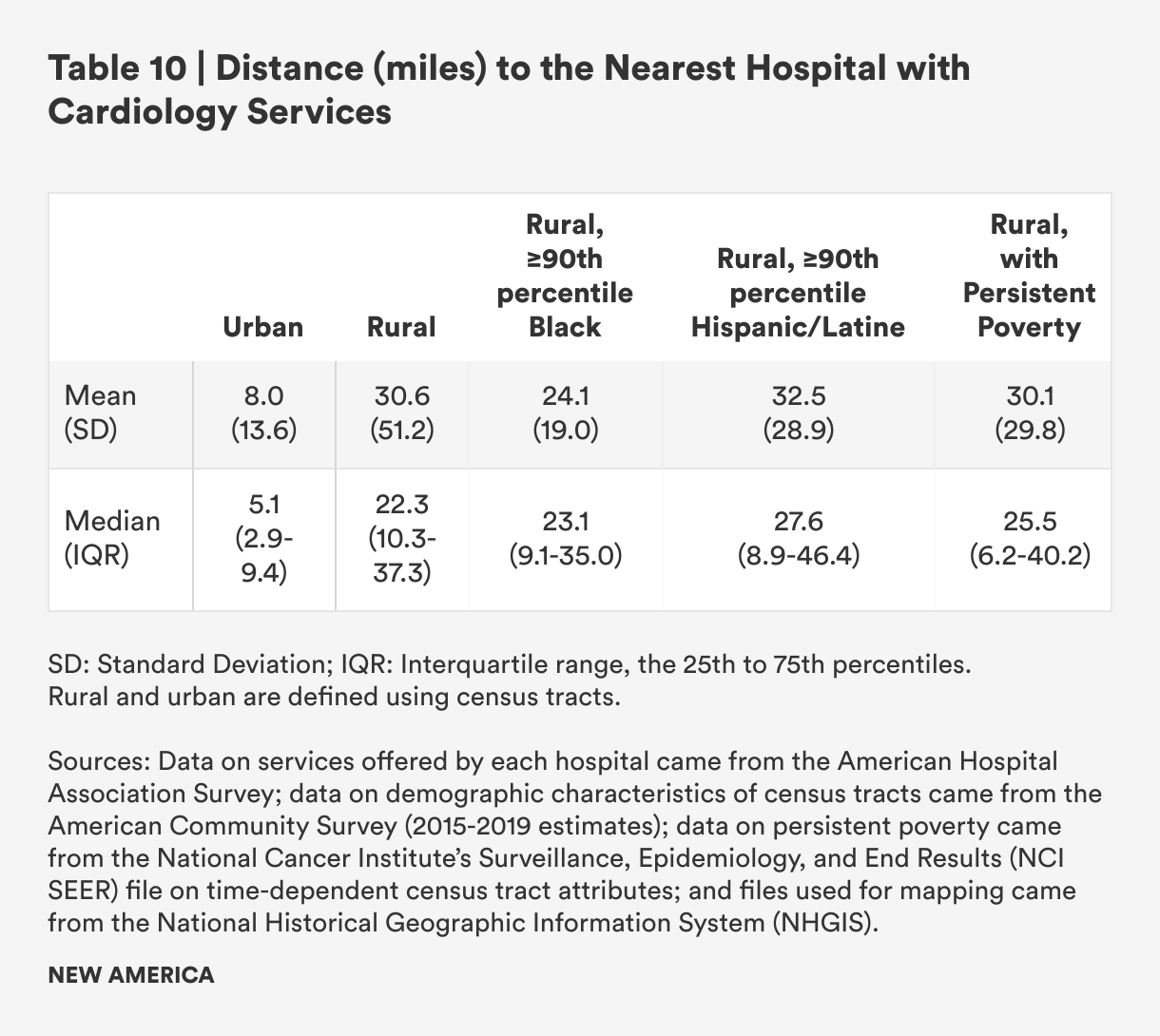
Rural census tracts with concentrated Black populations have lower mean travel distances, but the median distance is closer to overall rural mean distance. Rural areas with concentrated Hispanic/Latine populations have higher mean and median distances to travel when compared to rural census tracts as a whole. As seen in Figure 13, areas with both concentrated Hispanic/Latine and Black populations are more likely to have very short travel distances (<10 miles) but are also more likely to have distances between 25 to 40 miles. A greater proportion of census tracts with concentrated Hispanic/Latine populations have travel distances greater than 50 miles when compared to all rural census tracts—a distance that may be prohibitively far for workers with cardiac conditions who require ongoing or periodic hospital-based care and for caregivers to cardiology patients.

There are many parts of the country which are more than 100 miles from the nearest hospital that provides cardiology services. This map reflects similar findings to previous sections of this report, with people in the West most likely to experience the greatest travel burdens. For cardiac health needs in particular, long distances to hospitals that provide cardiology services may have direct detrimental effects on health outcomes for people who need emergency care. Even among hospitals that provide cardiology services, patients requiring more intensive care may be transferred to other hospitals that may be quite a distance away, so the travel burden on patients and caregivers may be even greater than what is reflected in the map below.6
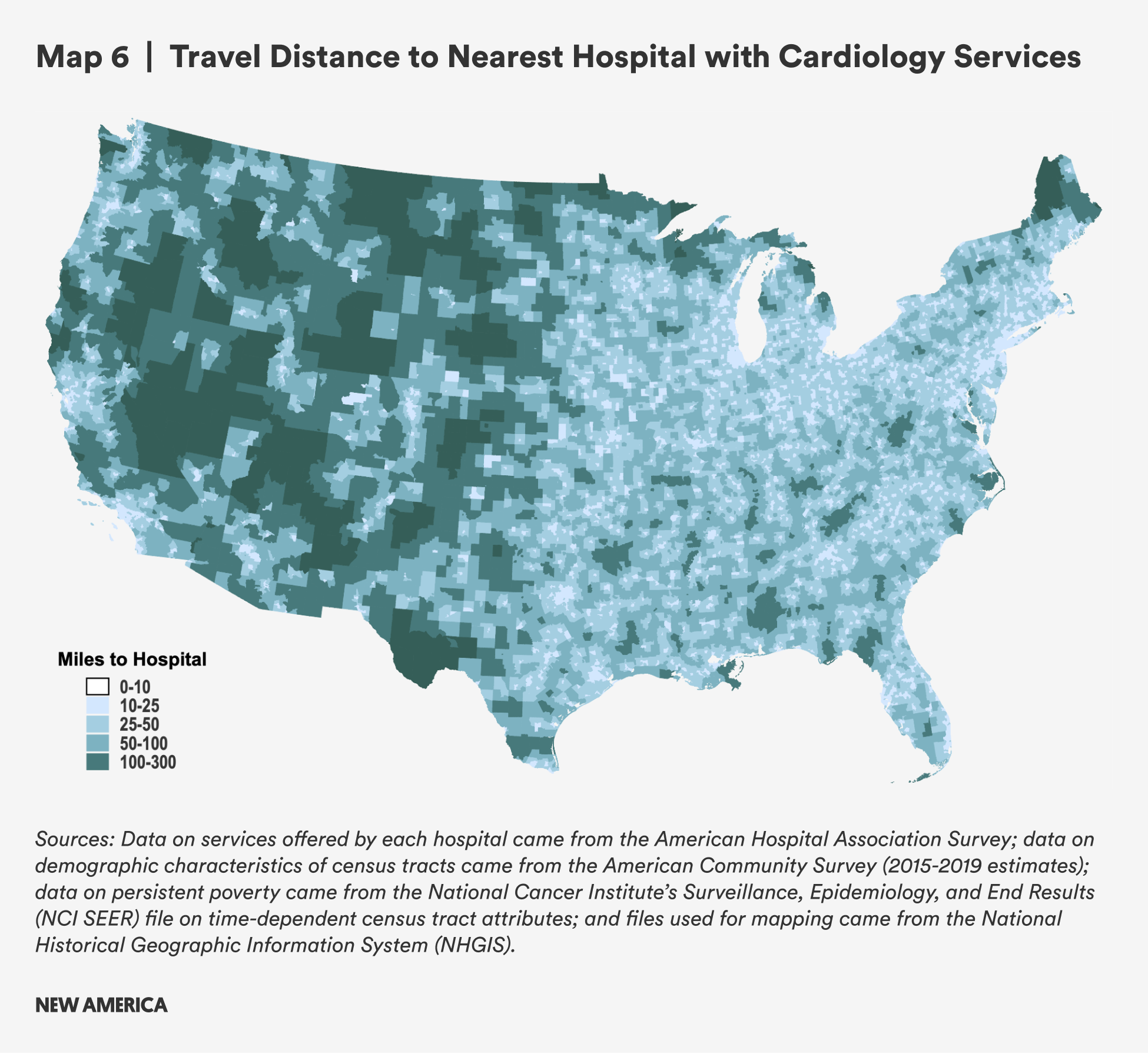
D. Cancer Screening and Cancer Treatment
Because cancer is a leading cause of rural death, we examined distances to cancer screenings and treatments. Cancer screenings and cancer treatments both require time away from work; workers are more likely to get screenings on time when they have access to paid sick time, and outcomes from disease are better when both patients and caregivers have and use paid time off.7 We examine distances to hospital-based cancer care services in rural communities (defined as providing at least one of optical colonoscopies, endoscopic ultrasounds, and mammograms)—recognizing that longer distances to travel may combine with lack of access to paid leave to adversely affect patient compliance and treatment, or may slow recovery processes due to the fatigue of traveling long distances while working.
1. Cancer Screening
Overall, mean and median distances to hospitals with cancer screening services are further in rural areas than urban ones, but the difference is somewhat smaller than for the other types of hospital-based services analyzed in this report. Rural census tracts are still more than twice as far from cancer screening services as urban ones, and median distances are nearly three times as far (mean: 20.4 miles for rural census tracts vs. 7.4 miles for urban census tracts; median: 14.6 miles vs. 5.0 miles). Rural census tracts with persistent poverty are slightly further away from hospital-based cancer screening services.
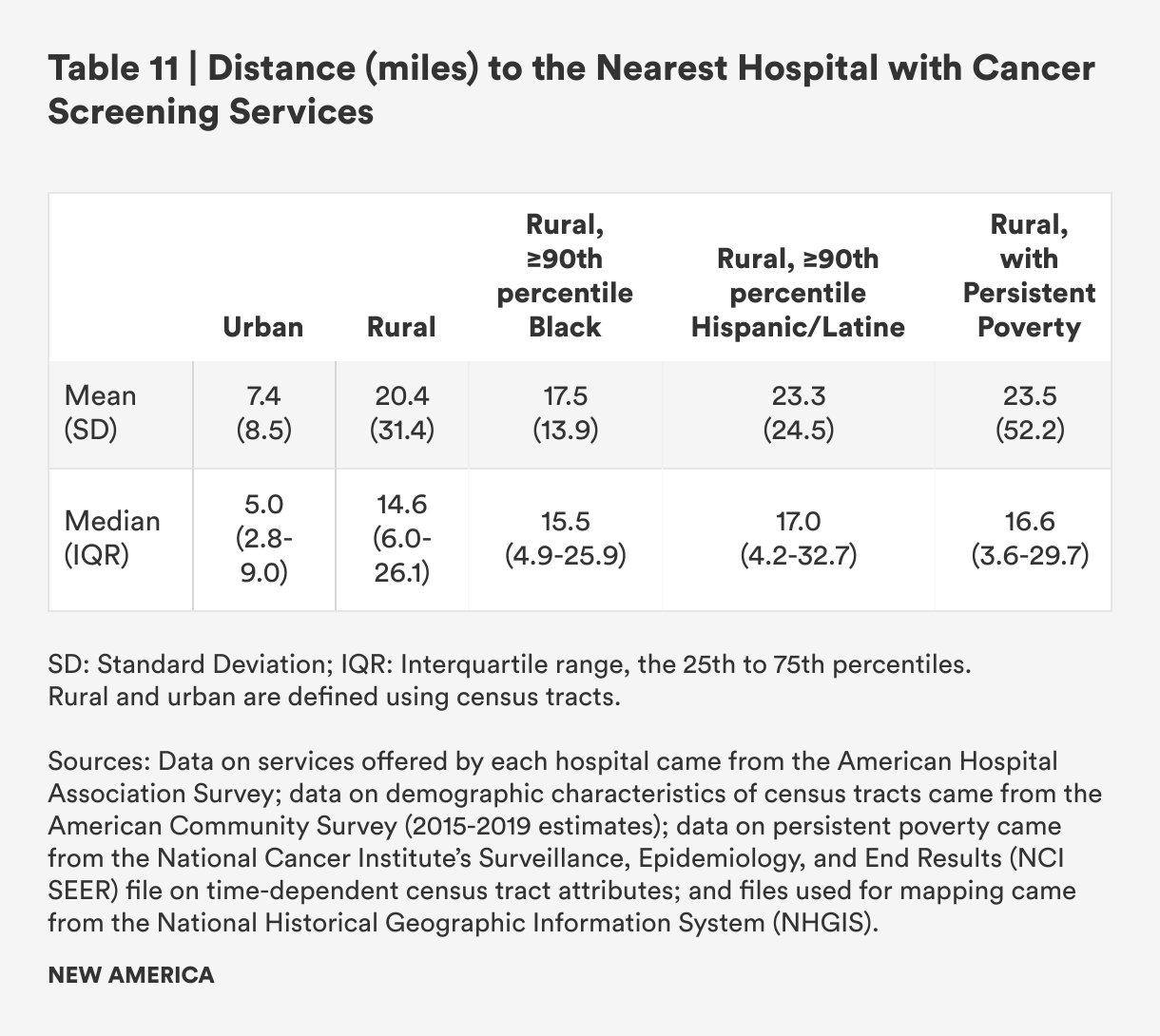
As with other services, distances to hospital-based cancer screenings are slightly larger for areas with concentrated Hispanic/Latine populations and slightly shorter for areas with concentrated Black populations.
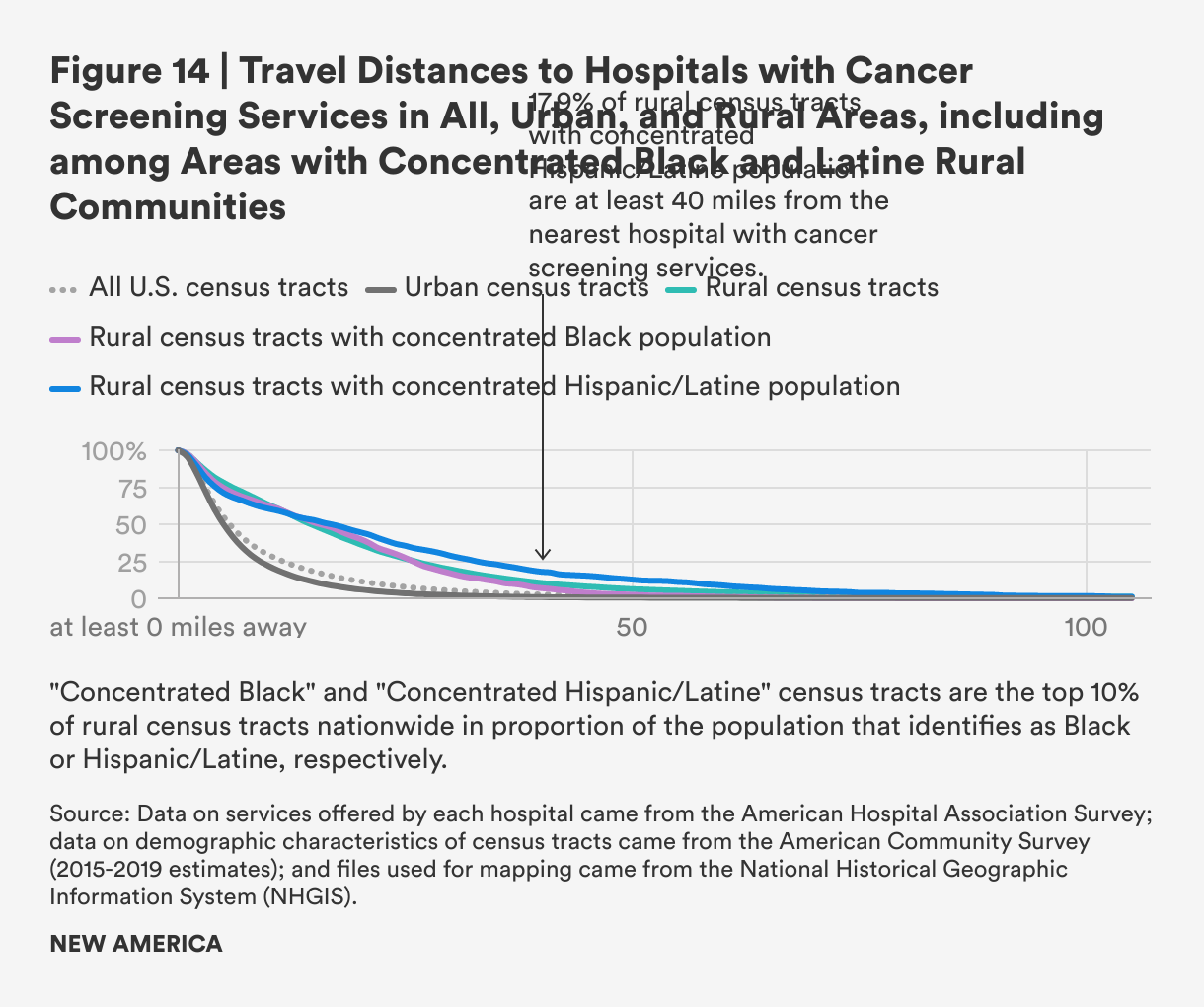
Overall, far fewer rural census tracts have more than 100 miles, or more than 50 miles, between them and the nearest hospital with cancer screening services, compared to other types of health services, yet there are still a nontrivial number places in which residents face significant travel burdens to access these cancer screening services.
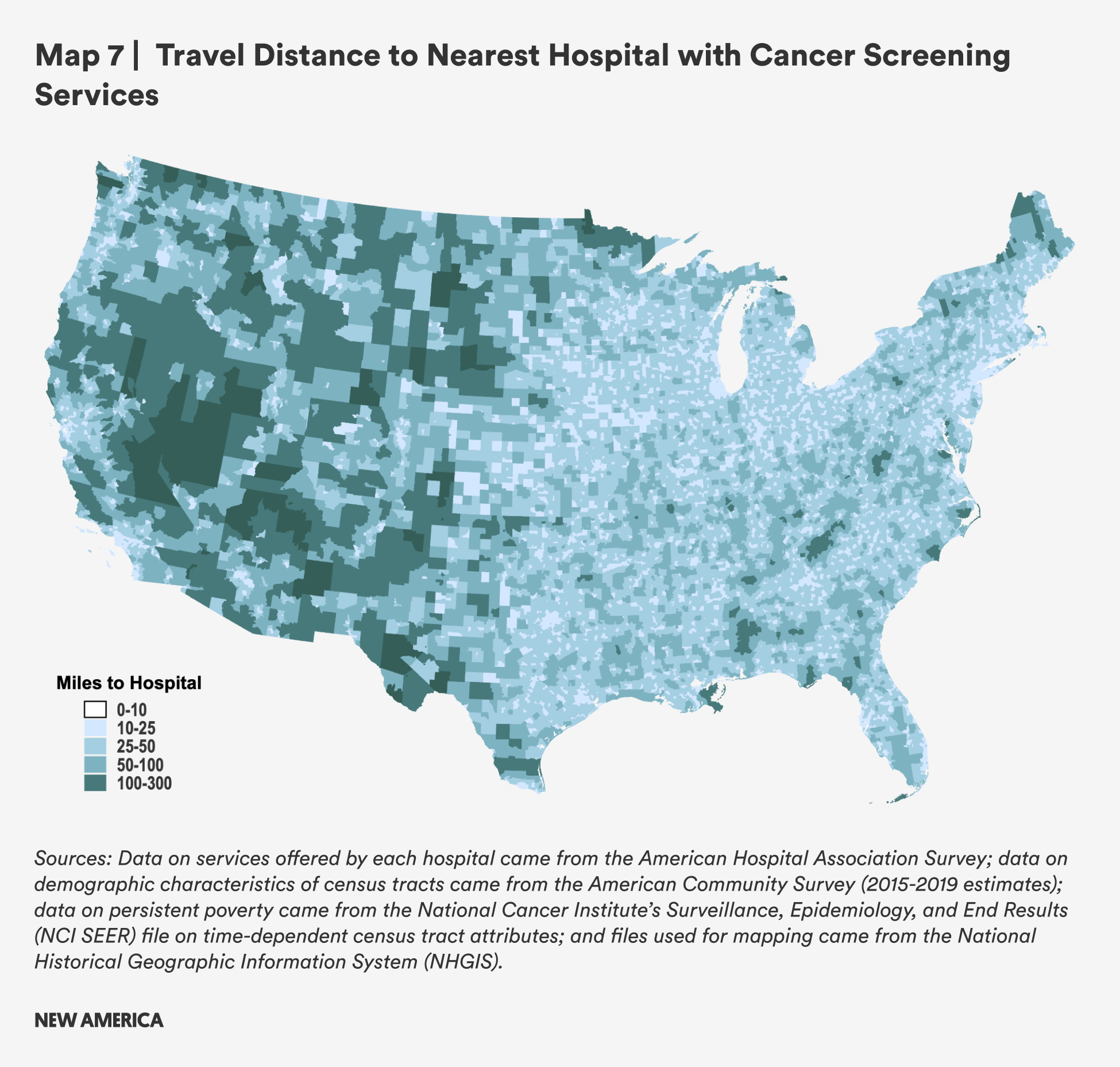
2. Cancer Treatment
Distances from rural census tracts to hospitals that provide cancer treatment (at least one of chemotherapy, radiation, or other oncology treatment) are greater than distances to cancer screening, with a mean of 26.8 miles to the nearest hospital in rural area and a mean of 20.9, and these are three-to-four times as far from rural areas than from urban ones in terms of mean and median distances, respectively: Urban residents must travel just 7.9 miles, on average, to cancer treatment. Rural areas with persistent poverty have higher travel burdens to those without, with travel distances of about five additional miles to receive cancer treatment at a hospital.

Rural census tracts with concentrated Hispanic/Latine populations have much higher mean (37.3 miles) and median (30.9) travel distances compared to rural census tracts overall. The difference between census tracts with concentrated Hispanic/Latine populations and other rural census tracts is more than 10 miles for both mean and median travel distances, the largest difference for all health care services. This excess distance places greater burden on rural Hispanic and Latine populations who have cancer or are caregivers for people undergoing cancer treatment. The finding for rural census tracts with concentrated Black populations is mixed, with a lower mean distance and a higher median.
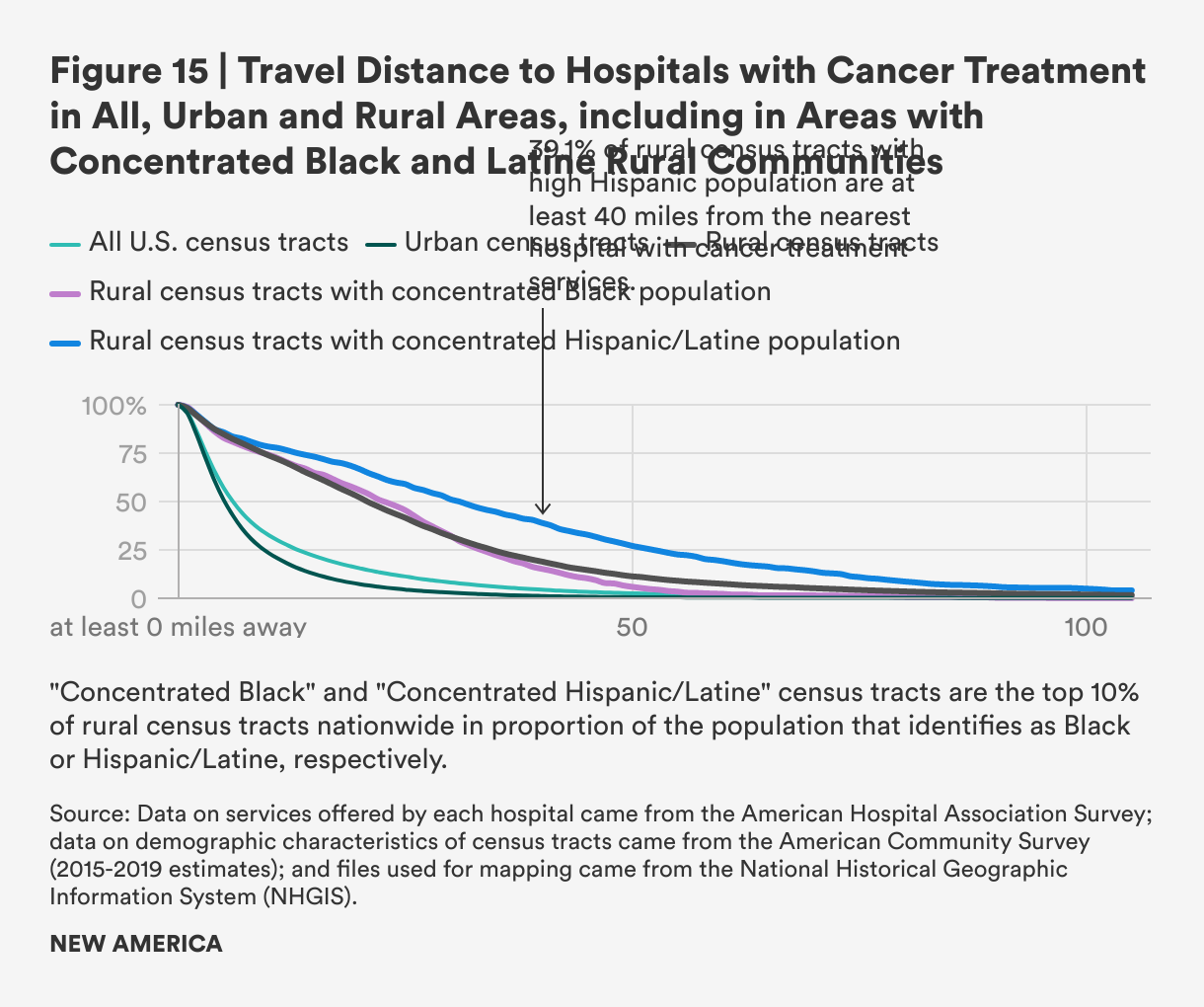
Rural areas in the West and Southwest, and some areas in the northern plains, Midwest and Northeast, face the highest travel burden to hospitals that provide cancer treatment, with much of it more than 100 or 50 miles from care. As many types of cancer care require regular, frequent trips, and care may continue for months, longer distances may be especially burdensome for those undergoing treatment for cancer and the caregivers they may rely on to get to and from treatments.
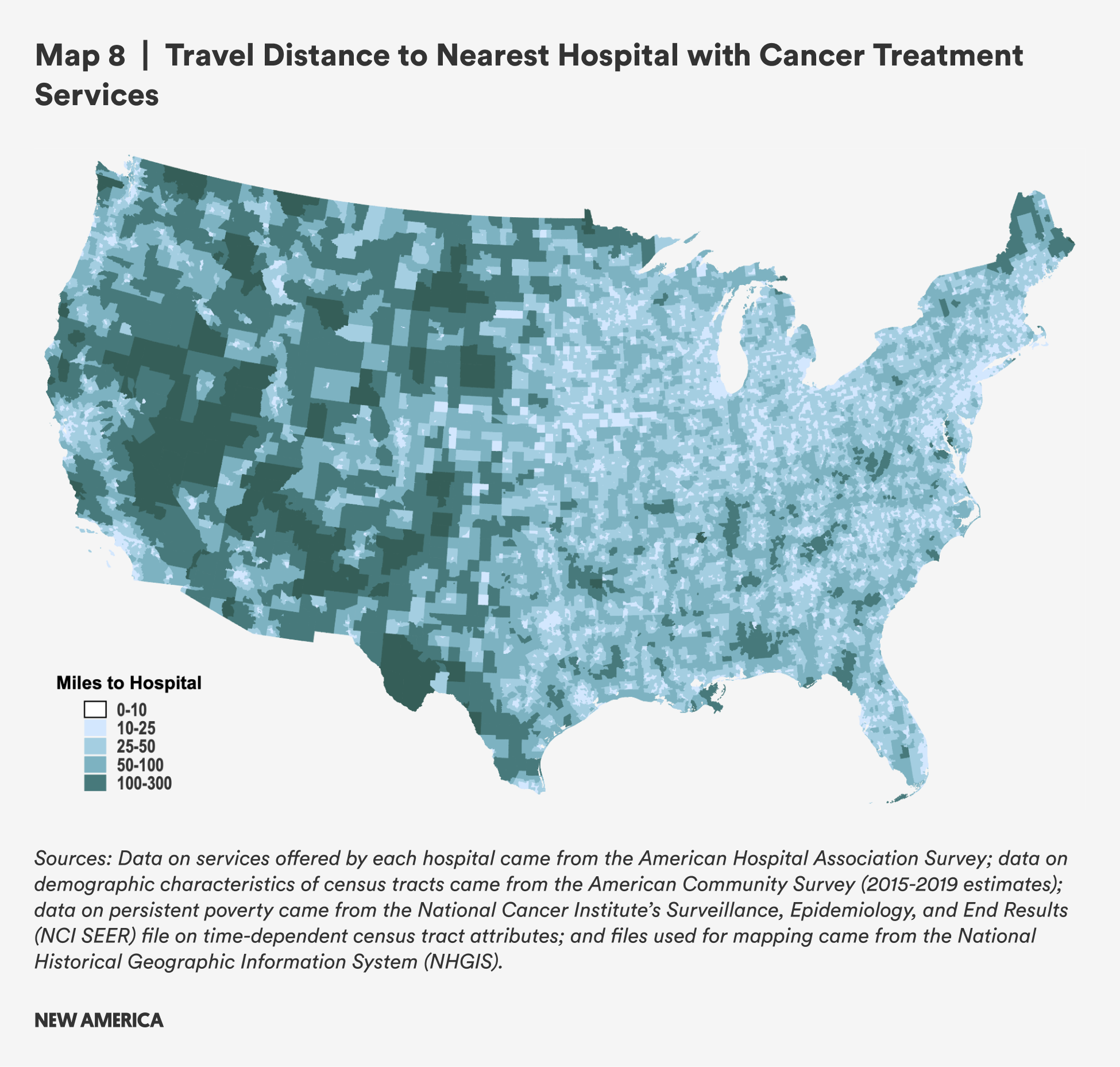
E. Skilled Nursing Facilities
Family caregivers are better able to continue to work when their loved ones are able to access paid care. Skilled nursing facilities (SNFs) are often used after a hospital discharge, but the continued attention of a loved one can be key to better outcomes.
Distances to SNFs are smaller compared to distances to hospitals because there are 14,400 SNFs with location data available, compared with 3,351 hospitals with information on the types of services they provide. To better reflect the vast majority, we exclude 157 census tracts (out of 73,041 tracts where distance could be calculated) in Alaska where the calculated driving distance is more than 500 miles in the results for Table 13, as they significantly skew the mean distance when included. While both mean and median distances are shorter for SNFs than distances to hospitals for any health care services, rural census tracts still have greater mean travel distance by a factor of about three (10.3 miles vs. 3.8 miles) and median travel distance (6.9 miles vs. 2.4 miles), likely creating pressures for family members who are working and providing oversight and care.
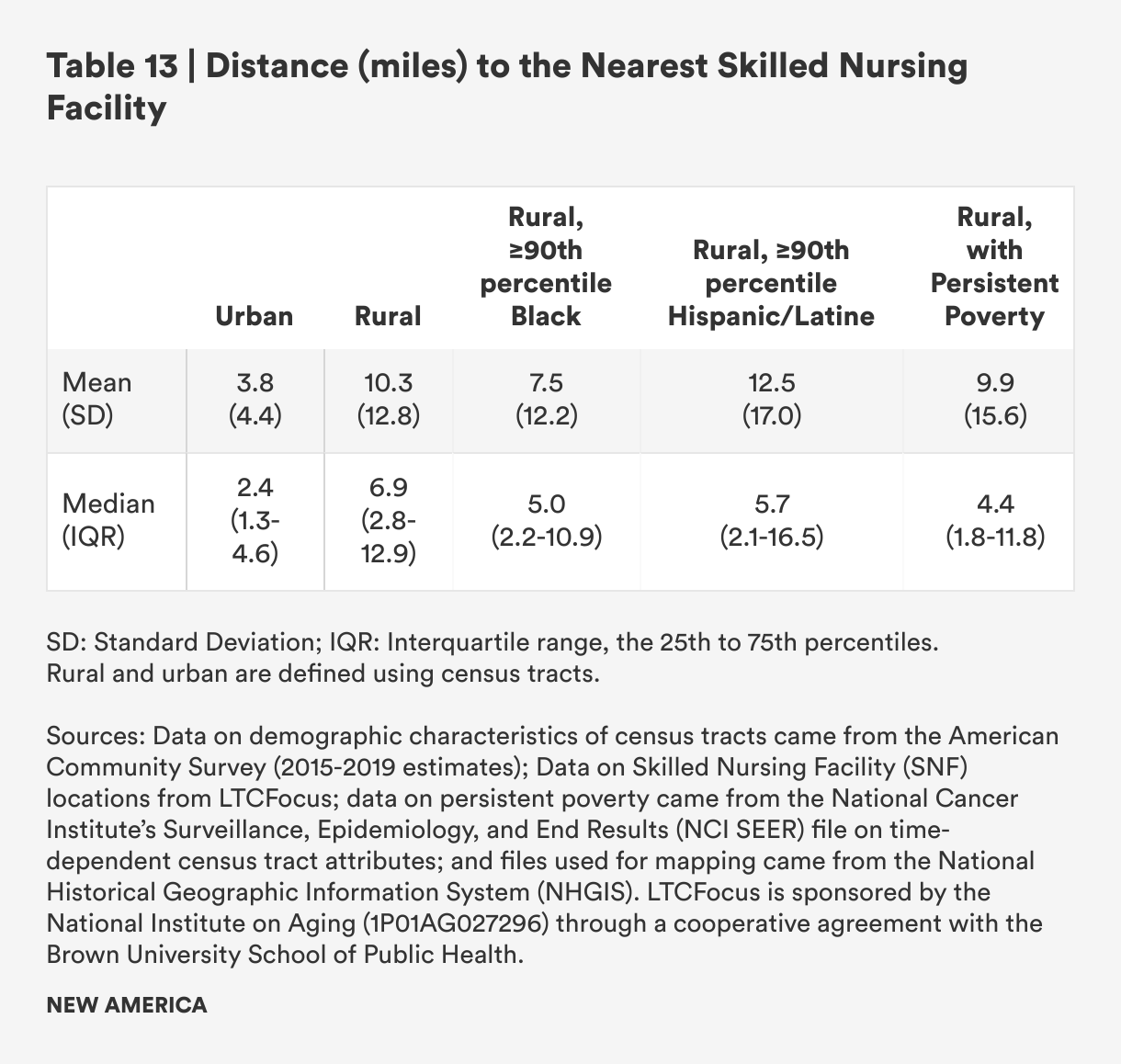
Similar to travel distances to hospitals, rural census tracts with concentrated Black populations have slightly lower mean and median travel distances, while census tracts with concentrated Hispanic/Latine populations have slightly higher mean and median travel distances.

Overall, the travel burden to SNFs is significantly lower when compared to the travel burden for hospital-based health care. There are still areas, however, particularly in the western half of the country, where the nearest SNF is more than 50 or even 100 miles away, making access to skilled nursing services more difficult or entirely inaccessible. These are also likely to be areas where home health services and other non-institutional support services are less accessible because low population density and long travel times between patients may hinder care providers from practicing there. This may increase burdens on family caregivers and make paid employment and caregiving very challenging or impossible.
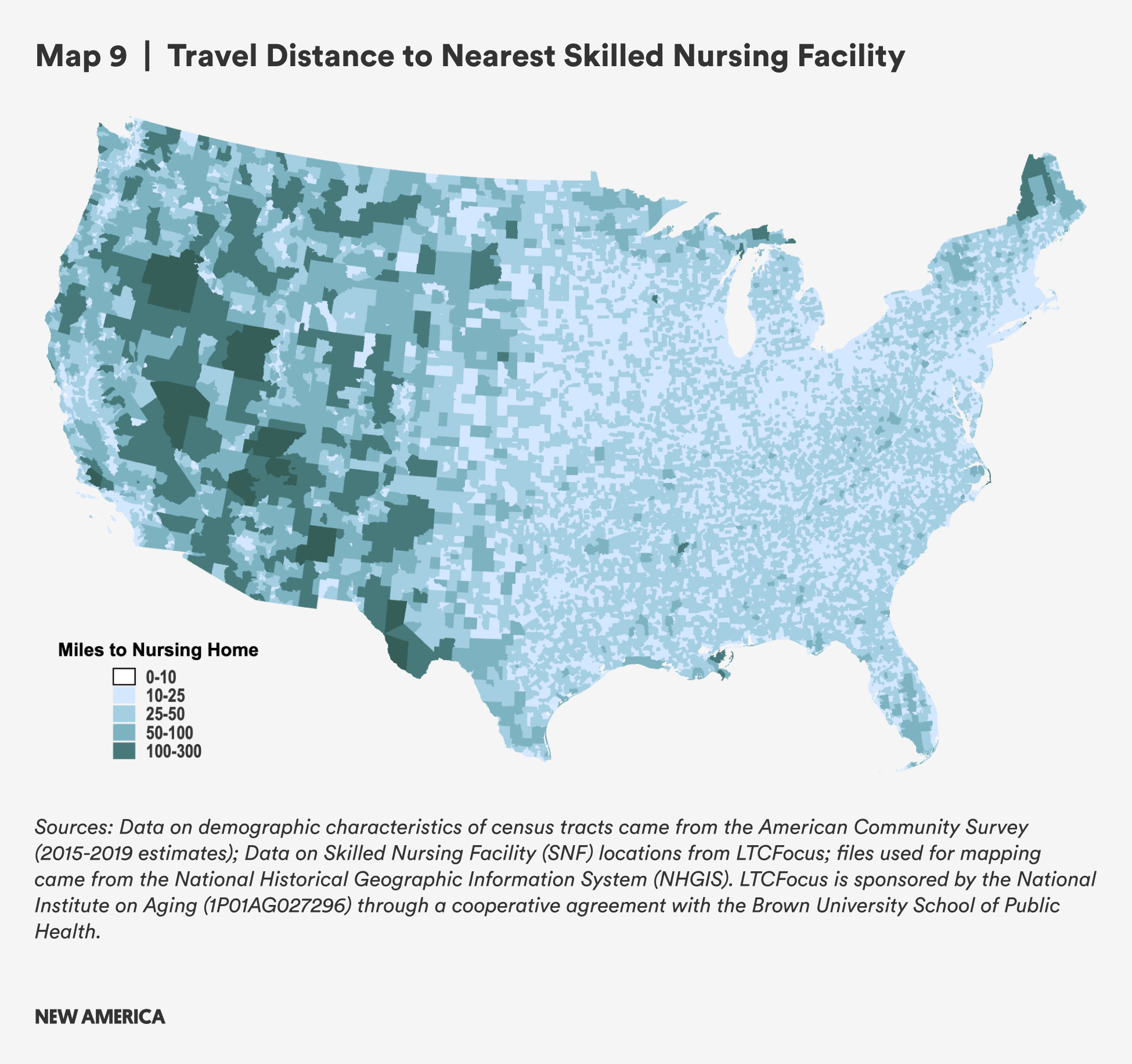
Citations
- Data limitations mean that we cannot map both access to leave and access to care for the same individuals. Therefore, this report simply adds to the body of literature on each front, to reinforce the point that people in rural communities—especially new parents, people with serious health issues and people caring for loved ones with serious illnesses, injuries or disabilities—would be well-served by new public investments and standards that expand and guarantee access to paid leave.
- We used multiple data sources: data on services offered by each hospital came from the American Hospital Association Survey; data on demographic characteristics of census tracts came from the American Community Survey (2015-2019 estimates); data on Skilled Nursing Facility (SNF) locations from LTCFocus; data on persistent poverty came from the National Cancer Institute’s Surveillance, Epidemiology, and End Results (NCI SEER) file on time-dependent census tract attributes; and files used for mapping came from the National Historical Geographic Information System (NHGIS). LTCFocus is sponsored by the National Institute on Aging (1P01AG027296) through a cooperative agreement with the Brown University School of Public Health.
- Fields et al., “Life off the Highway”; "Tracking the States Where Abortion Is Now Banned,” New York Times, September 23, 2022, accessed October 5, 2022, source
- Stephanie L. Borque, Blair W. Weikel, Mauricio A. Palau, Jennifer C. Greenfield, Anne Hall, Susanne Klawetter, Madalynn Neu, et al. "The Association of Social Factors and Time Spent in the NICU for Mothers of Very Preterm Infants," Hospital Pediatrics 11 (9) (2021): 988-996, source
- Heymann and Earle, Raising the Global Floor.
- Lauren Ziaoyuan Lu and Susan Feng Lu, "Distance, Quality, or Relationship? Interhospital Transfer of Heart Attack Patients," Productions and Operations Management 27 (12) (2017): 2251–2269, source; Daniel Bechtold, G.G. Salvatierra, Emily Bulley, Alex Cypro, and Kenn B. Daratha, "Geographic Variation in Treatment and Outcomes Among Patients With AMI: Investigating Urban-Rural Differences Among Hospitalized Patients," Journal of Rural Health 33 (2) (2015): 158–166, source; Theodore J. Iwashyna, Jeremy M. Kahn, Rodney A. Hayward, and Brahmajee K. Nallamothu, "Interhospital Transfers Among Medicare Beneficiaries Admitted for Acute Myocardial Infarction at Nonrevascularization Hospitals," Circulation: Cardiovascular Quality and Outcomes 3 (5) (2010): 468–475, source.
- Lucy A. Peipins, Ashwini Soman, Zahava Berkowitz, and Mary C. White, "The lack of paid sick leave as a barrier to cancer screening and medical care-seeking: results from the National Health Interview Survey," BMC Public Health 12 (2010), source; Public Opinion Strategies, Interested Parties Memorandum.
Implications
Lack of access to paid leave is a significant barrier to health care access and to work retention for parents, caregivers, and workers with serious health issues. Because of its high correlation with income, race, economics, labor force participation and job quality, access to paid leave should be considered a social determinant of health for rural workers just as access to health care facilities and other economic stability indicators are. For rural women of reproductive age, the overlapping effects on abortion restrictions, low levels of access to paid leave, and long distances to travel for hospital-based obstetrics care creates particular barriers—and this is especially true and dangerous for Black women whose maternal mortality rates are high.
The private sector has not increased access to paid leave at the scale needed, except when required by public policy interventions like earned paid sick days laws and the establishment of statewide paid family and medical leave programs. Employers can, of course, provide access to job-protected paid sick time and paid family and medical leave on their own, but if history is a guide, access to these protections are seen as fringe benefits rather than as essential to a healthy, thriving workplace within a vibrant community, a mechanism to attract workers to a particular geography, and a retention tool. While higher-wage, professional workers may be offered paid leave, middle- and lower-wage workers generally are not—even though their needs may be greater and going without pay is more difficult. The rural employment outlook—the types of jobs that are likely to be created, especially in leisure and hospitality, retail, and (to a lesser extent) education, health and social services where wages tend to be low and benefits are typically sparse—makes significant expansion of paid leave access unlikely without public policy interventions.
We therefore recommend as a rural health and economic imperative, public policies that provide access to paid sick time and paid family and medical leave either through federal legislative action or at the state level. Fortunately, there are strong models to learn from and build on. Eleven states plus the District of Columbia have paid family and medical leave programs in place or in the process of implementation; these are social insurance programs that guarantee new parents, family caregivers, and most workers access to paid family and medical leave. Fourteen states and 26 localities have paid sick time laws, that entitle workers to earn an hour of paid sick time for health and medical needs of their own or a loved one for every 30-to-40 hours they work, up to a cap. Federal legislation could create these policies at the national level, and states can continue to adopt policies on their own.
Rural people are highly supportive of public investments and requirements that guarantee access to paid leave. In November 2020, 78 percent of rural voters said they supported a national paid sick days law and 80 percent expressed support for a permanent paid family and medical leave program for people with illness or child or family care—support equal to that of voters overall.1 The same was true in 2018 with respect to a national paid family and medical leave plan, with 80 percent of rural voters saying it is important to create a national policy that makes paid leave available and affordable for higher wage, management-level people in a workplace as well as for middle-level and lower-wage, front-line workers, and 76 percent said they supported a national fund paid for by small payroll deductions that would guarantee paid leave for up to 12 weeks to new parents, family caregivers, workers with serious health issues, and military family care.2
In November 2020, 80 percent of rural voters said they supported a permanent paid family and medical leave program and 78 percent said they supported a national paid sick days law.
How policy is designed will matter substantially for rural workers. In particular:
- The higher share of part-time workers and the higher share of smaller businesses in rural areas mean that eligibility rules must be expansive to include workers in non-traditional and part-time jobs, and that businesses of all sizes must be included—with paid leave that is job-protected. For example, a qualitative study of women cancer survivors in rural Illinois concluded that existing federal policies meant to protect workers with serious illnesses—the Family and Medical Leave Act and the Americans With Disabilities Act—do not protect rural workers effectively because these policies do not apply to smaller workplaces or, in the case of the FMLA, to workers with temporary or limited work histories at their current jobs. Researchers found that paid leave, workplace flexibility, and supportive workplaces, along with informal decision-making by managers and supervisors, were facilitators of continued employment for cancer survivors, whereas those in temporary or informal jobs did not have access to these supports and were more likely to leave work. They identified more inclusive workplace policies, including paid medical leave for all workers, as supporting employment for cancer survivors. They noted that informal workplace accommodations, as opposed to standardized, universal baseline policies, are unequally applied and not subject to oversight, which harms cancer survivors in lower-quality jobs.3
- The higher share of lower-wage jobs and lower-income households in rural areas mean that wage replacement rates for public paid leave programs must be high. Most newer state paid family and medical leave programs guarantee 80 to 100 percent wage replacement for low-wage workers and an average of about two-thirds for most other workers, up to a cap.4 Wage replacement at this level will help ensure that taking paid leave is affordable for rural workers over a multi-week span. Paid sick days should replace 100% of workers' usual wages for the limited number of days a law requires.
- The growing share of the aging population and the smaller share of younger people to provide care in rural areas means that it is important for policies to cover caregiving for a range of family members and loved ones. The ability to care for extended family and loved ones is especially important for rural families where substance use disorders among parents mean children are living with relatives, or where extended family members are caring for adults with substance use challenges. All but one state program (Delaware) allows workers to take leave to care for their grandparents, and many include a provision that allows workers to care for extended family, including “chosen” family as well.5
Checklist: Elements of Paid Leave Programs and Paid Sick Time Policies That Meet the Needs of Rural Communities
- Cover workers in businesses of all sizes for both paid leave and paid sick time
- Cover part-time, hourly and contract workers, as well as providing paid leave access to self-employed people
- Replace a substantial share or all of workers’ wages
- Make paid leave available to care for extended and chosen family
- Protect workers from losing their jobs and against other forms of workplace retaliation, even if they work for a small business
- Continue health benefits for workers in businesses of all sizes
- Include outreach tailored to specific communities and to community-based institutions that can help workers' navigate paid leave
Outreach to rural communities will also be important—and there are likely to be lessons learned from the implementation of paid family and medical leave programs in the rural counties of California, New Jersey, New York, Washington, and Massachusetts, as well as from the roll-out of Medicaid expansion and the Affordable Care Act. There may also be applicable lessons to draw from the federal emergency paid sick and child care leave provisions that were briefly in place in 2020 to address the COVID-19 pandemic and applied to most workers in businesses with fewer than 500 employees.6 These are areas for future study, pilots, and innovation.
Citations
- National Partnership for Women & Families, Voters Show Bipartisan Support for Permanent Paid Sick Days and Paid Family and Medical Leave (Washington, DC, 2020), source.
- PerryUndem and Bellwether Research, Voters' Views on Paid Family + Medical Leave.
- Hallgren et al., “Facilitators and barriers to employment for rural women cancer survivors.”
- Shabo, Explainer: Paid Leave Benefits and Funding in the United States.
- Vicki Shabo, Paid and Unpaid Leave Policies in the United States (Washington, DC: New America, 2022), source.
- U.S Department of Labor, "Families First Coronavirus Response Act: Employee Paid Leave Rights," Wage and Hour Division, Essential Protections During the COVID-19 Pandemic (n.d.), accessed October 2022, source.
Areas for Future Research
The questions raised in and limitations of this study illustrate many areas for further research. Among them, there is a need for:
- Better national surveys with questions about workers’ access to paid sick time and designated paid family and medical leave, with more detail about what level of wage replacement workers are offered, for how long, and whether they have faced consequences for using that time—and with samples big enough to disaggregate rural residents and workers from others.
- More data collection nationally and in concentrated areas of high Native, Asian, and Pacific Islander populations so that their access to leave and the distances they must travel to receive health care can be better studied and understood.
- The ability to cross-match individual-level data on paid leave access and distances or travel time to various types of healthcare facilities at a granular level.
- Qualitative research, including rural-resident-led ethnographic research, as well as quantitative research, focused on rural workers’ and caregivers’ unique challenges accessing care, and any issues caused by distances to work and to health care—including the extent to which challenges finding or receiving care lead to reduced work, missed work, or quits or discharges from work.
- Research focused in rural areas on whether the prime-age employment gap between rural and non-rural areas is attributable, in part, to caregiving responsibilities.
- Research focused in rural areas on the relationship between paid leave and labor force participation, part-time versus full-time employment or underemployment, and modeling that examines how family-supportive interventions might strengthen employment, the tax base, and individual, sub-population and community health outcomes.
- Paid leave implementation research in states with paid family and medical leave programs, with a particular focus on barriers, opportunities, and nuances that apply to rural communities and rural health systems—including especially for Black, Latine, Native, and Asian communities. Research that projects the needs of rural people in states with substantial rural populations that are considering paid leave (e.g., Maine, New Mexico and Minnesota) would also be beneficial.
- Research on health and economic outcomes in paid leave states among rural residents.
It would also be helpful to understand the ways in which community organizations, businesses, public health authorities and departments, and policymakers might intervene in expanding access to paid leave and in helping to build a case for public policies and public investments from health, job quality, and economic development perspectives. Work could be done to assess these stakeholders’ views on opportunities and challenges. There is also a need for research on employer best-practices in creating supportive work environments across jobs and industries in rural communities.
Methodology and Data Sources
Defining “Rural”
Rural literature uses differing definitions of “rural” or “non-metro” areas and different data sources also define “rural” in different ways. The United States Department of Agriculture’s (USDA) “What Is Rural” page includes definitions for the most common—Office of Management and Budget definitions and U.S. Census Bureau definitions. An explanation of each is here. We also recommend the Center on Rural Innovation’s excellent analysis explaining how the different definitions of rural can lead to different conclusions about the composition and conditions in rural communities.
The Pew Survey Research report cited throughout this report used respondents’ self-descriptions of their communities for their survey data and U.S. Census Bureau Data on county-level classifications created by the National Center for Health Statistics at the Centers for Disease Control and Prevention for the demographic analysis.
The Caregiving in the United States 2020 study used respondents’ self-descriptions of their communities and the community of their care recipient to identify rural respondents. The USDA sources cited throughout this paper use rural and non-metro interchangeably and use the metro and non-metro definition defined by the Office of Management and Budget.
Our original data analysis of the 2017-2018 American Time Use Survey Leave and Job Flexibilities Module, the 2019 National Health Interview Survey and the 2021 Behavioral Risk Factor Surveillance System (BFRSS) survey used census data to code individual respondents to non-metropolitan (used interchangeably with rural) and metropolitan counties. We used the data within the survey to identify access and experiences among subgroups of interest (e.g., poverty level, race/ethnicity).
Our original data analysis of distances traveled to different types of hospital-based health care services used data from the American Hospital Association Survey to determine which services were available at each hospital and to determine each hospital’s location. Each census tract’s location was defined as the geographic center of the census tract, with data coming from the 2019 U.S. Census Gazetteer files. Census tracts were defined as urban or rural using Rural Urban Commuting Area (RUCA) Codes, which assign a value of 1 (Metropolitan Core) to 10 (most rural), with RUCA codes of 1-3 being considered urban and codes of 4-10 being considered rural. Demographic information (such as race/ethnicity, poverty level) on all census tracts was obtained from the U.S. Census and from the 2019 American Community Survey 5-year estimates.
Information on skilled nursing facility locations was obtained from LTC Focus. Geographic files used in maps were obtained from IPUMS National Historical Geographic Information System at the census tract level. LTCFocus is sponsored by the National Institute on Aging (1P01AG027296) through a cooperative agreement with the Brown University School of Public Health. Travel distances were calculated using the Open Source Routing Machine package in Stata 17 and R.
High Concentrations of Black, Hispanic/Latine, and Poverty
There are multiple ways to define a high concentration of minoritized populations, including using fixed cutoffs (like 20 percent) or using a percentile of the distribution like the 90th or 95th, which has been done in prior studies. For this study we defined highly concentrated Black and Hispanic/Latine areas as being in the 90th or 95th percentile by proportion of Latine or Black population in the census tract. The 90th and 95th percentile cutoffs were calculated separately for urban and rural areas. Analysis using both the 90th and 95th percentiles yielded similar findings, so we reported only the 90th percentile figures in the report. Census tracts classified as having persistent poverty were census tracts where 20 percent or more of the population was below the poverty line in the 1980, 1990, 2000 censuses, and 2007-2011 American Community Survey five-year average.1 To date, Rural Urban Commuting Area (RUCA) codes are only available for the census tracts as they were defined from 2010-2019 with new RUCA classifications for the 2020 revised census tracts forthcoming, so we used 2019 data for all census-related data, including estimates from the American Community Survey on racial/ethnic composition and census tract locations.
Citations
- National Cancer Institute (NCI) Surveillance, Epidemiology and End Results (SEER) Program, County/Tract Attributes – SEER Datasets (2019), accessed October 7, 2022, source.
More About the Authors

Vicki Shabo
Senior Fellow for Gender Equity, Paid Leave & Care Policy and Strategy, Better Life Lab