Wesley Whistle
Project Director, Higher Education
Introduced last year, Sen. Kamala Harris's 21st Century SKILLS Act can't address the pandemic's employment impacts on its own. But coupled with infrastructure investments that prioritize reemployment in stable, well-paid, and upwardly mobile jobs, it could still help Americans get back on their feet.
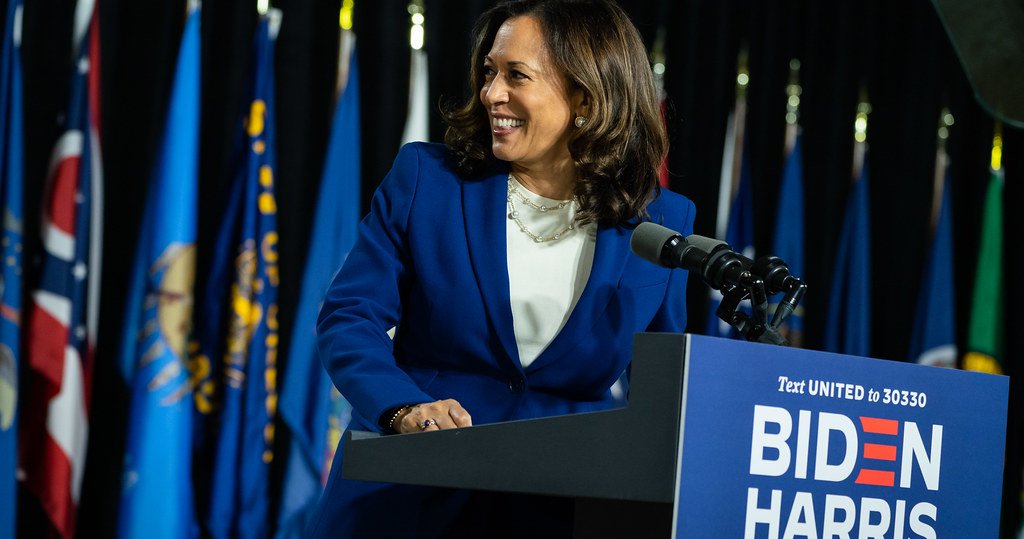

Last summer, we wrote about Senator Kamala Harris’s 21st Century SKILLS Act, a proposal to support the American public workforce system with more flexible job training investments. The bill set out increased funding and broader eligibility for individual training accounts (ITAs)—public subsidies that support job seekers pursuing relatively short, industry-aligned training programs. Harris was running for president; the national unemployment rate was under 4 percent; and employers loudly complained of prospective recruits’ “skills gaps.” The SKILLS Act seemed a timely policy ask, pragmatically calibrated to appeal both to employers looking for talent and workers seeking to advance in the skills-hungry modern labor market.
A lot has changed since then. Senator Harris is no longer running for president, but instead is the running mate of Democratic presidential nominee Joe Biden. The coronavirus pandemic has sunk the country into a deep recession, and over 26 million Americans are receiving some form of unemployment compensation. Black and Hispanic Americans are both the most likely to be out of work and to be recalled to work under dangerous conditions in essential roles. Though expanded investments in workforce training are even more urgent now than last summer, it’s clear that training alone won’t be enough. Federal policymakers must couple their efforts to expand job training with bold new steps to ensure that enough stable, well-paid jobs are available to all Americans in the first place.
Harris’s 21st Century SKILLS Act includes two crucial steps towards improving the public workforce system under the Workforce Innovation and Opportunity Act of 2014 (WIOA). First, it would expand the allowable uses of ITAs (which it renames Upskill Accounts) to include support services such as childcare and transportation, reducing barriers to success in career education. Second, it would provide more generous funding for some ITA recipients, including for job seekers currently employed in low-wage jobs.
Both of these elements of Harris’s bill are welcome policy updates, but even if the 21st Century SKILLS Act passes, it is no match for the coronavirus economic crisis on its own. From the start, economists recognized that this crisis differed from the Great Recession because its cause was external (a pandemic) not internal (excessively risky Wall Street practices). The current recession is also vastly more severe: months after the pandemic’s initial shock, unemployment is still almost as high as at its peak in the Great Recession. Recent upticks in hiring are encouraging, but hardly constitute a full-on recovery. Worse, temporary job losses are becoming permanent. Lawmakers must push forward with new education and reemployment policies, and cannot fall back on the well-worn truisms and easy policy compromises of the last recession.
The American public workforce system prioritizes quick re-employment in an effort to get Americans off of the unemployment rolls, and tends to focus on easily obtained skills and credentials. Commercial drivers’ licenses, for example, are easy to earn, and trucking jobs are easy to find, so it’s no surprise that they are the most common targets of employment services and WIOA placements. But trucking jobs are difficult, dangerous, and not particularly well-paid—characteristics that account for the industry's nearly 90 percent annual turnover rate.
State and local workforce agencies are notorious for their stringent performance and reporting requirements, and Harris’s SKILLS Act would require governors to set additional performance thresholds. But that likely isn’t enough to ensure success for workers. If public workforce investments continue to focus disproportionately on credentials and jobs that are easy to get but hard to hold or advance through, there’s no guarantee that they will leave American job seekers any better off in the long term. To weather this recession, policymakers must avoid hasty reemployment strategies that ignore job quality, providing workers with subsistence earnings but no greater chance of actually living the American dream.
Now that Biden and Harris have teamed up in their quest for the White House, they should incorporate their ideas to improve skills training into a federal jobs strategy that can properly address the current crisis. A two-pronged approach that provides workers with access to both jobs and skills, setting them on a pathway to both short-term and long-term economic stability, is the way to ensure that Americans will be better off after the economic upheaval brought on by the pandemic.
The workforce provisions of Biden and Harris’s plans feature some important first steps for getting (and keeping) Americans back to work in good jobs, including community college investments, expanded short-time compensation, and a commitment to raising the astonishingly low national minimum wage. If elected, they will need to go further—we can’t claim full recovery until all Americans can return to work in high-quality, well-paid jobs. To start this transformation in the pit of an unprecedented recession, a federal jobs bill will be essential. Without one, many millions of Americans will need to wait on an uncertain private sector recovery before they begin working back towards economic security. That would leave struggling families in the lurch in the near term, and risks a repeat of the Great Recession recovery, which saw more Americans taking lower-paid and even more precarious work than they had before.
Large-scale public employment subsidies aren’t a new idea. The Works Progress Administration put millions of Americans to work during the Great Depression; the American Recovery and Reinvestment Act of 2009 employed a quarter of a million Americans in publicly subsidized jobs; and more recently, senators have proposed massive job creation through infrastructure investments, with some notable economists advocating for a Jobs for All Guarantee. But public employment strategies, which may subsidize private employers to take on new workers or may hire workers directly onto government payrolls, are neither cheap nor quick, especially if universal job quality is the final objective.
Biden and Harris have introduced a coronavirus recovery plan that can help: Build Back Better. The plan provides a unique opportunity for an ambitious and durable public jobs investment. Under the plan, the Biden campaign proposes infusing $2 trillion of public funds to provide sorely needed social goods such as affordable housing, broadband expansion, energy retrofits, senior and child care, and transportation and community health infrastructure. All of these projects could be used to hire Americans into good jobs, and can be easily integrated with workforce training and education. By incorporating credit-bearing community college training and Registered Apprenticeships, and by using executive action to implement job quality protections related to pay, scheduling, training opportunities, and benefits, Biden’s Build Back Better plan could drive more equitable hiring and improved compensation as the private sector recovers.
A jobs bill that provides infrastructure funding tied to hiring and job quality requirements would be a crucial first step towards recovery, but there would still be more work to do to bring the public workforce system into the 21st century. If elected, Biden and Harris should quickly focus on reauthorizing WIOA with a new focus on lifelong learning and long-term economic dynamism rather than the simplistic skills gap narrative. Some short-term credentials can be very valuable, but nowhere have short-term credentials or programs proven as useful on their own as associate or bachelor’s degrees, whose holders fare much better after recessions. A revamped public workforce system should acknowledge this fact, and do more to support all job seekers—youth, adults, and dislocated workers—in pursuing higher levels of training and education should they desire it.
The trauma of the coronavirus pandemic, and especially its aggravation of longstanding racial inequities, will take decades to fade and will require national reconciliation as much as policy change. Improving pandemic-era labor market conditions is also no short-term affair, but at least it can be addressed through recovery-oriented workforce and education reforms. Policymakers have a historic opportunity to use the power of the federal government to create good jobs and build career pathways through high-quality training. They may not get it again.
Interested in staying up to date on education and workforce policy? Subscribe to our newsletter to receive updates on the latest from our experts.
Project Director, Higher Education