Peter Bergen
Vice President, Global Studies & Fellows; Professor of Practice, Arizona State University
Editor’s note: This report was originally published on September 10, 2021. The data and figures within are updated on an ongoing basis. The surrounding analysis and text have not been updated since the original publication. Readers should refer to the figures for the most current information.
This report examines broad trends in the jihadist terrorist threat facing the United States that have emerged since the 9/11 attacks. We provide an overview of the terrorism in cases we’ve tracked since 9/11, and we examine three key questions: Who are the terrorists targeting the United States? Why do they engage in terrorism in the first place? And what threat do they pose?
The data in this report consists of individuals accused of jihadist terrorism related crimes since 9/11 who are either American citizens or who engaged in jihadist activity within the United States. The data also include a small number of individuals who died before being charged but were widely reported to have engaged in jihadist criminal activity. We define jihadists to include those who are motivated by versions of bin Laden’s global ideology or otherwise provide support to groups that follow a version of that ideology. We exclude cases linked to Hamas, Hezbollah, and similar groups that are not associated with al-Qaeda and its off-shoots.
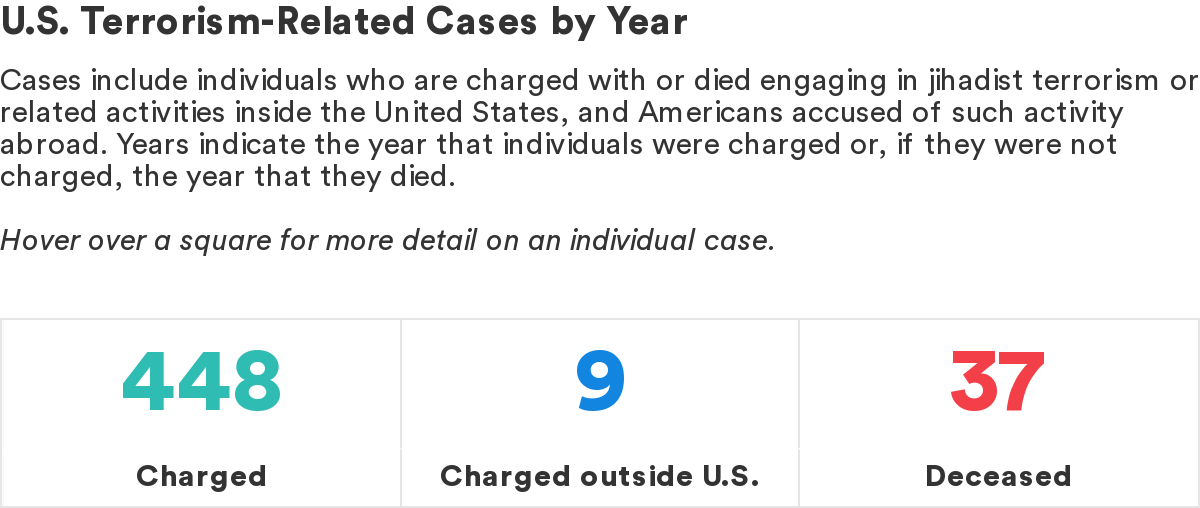
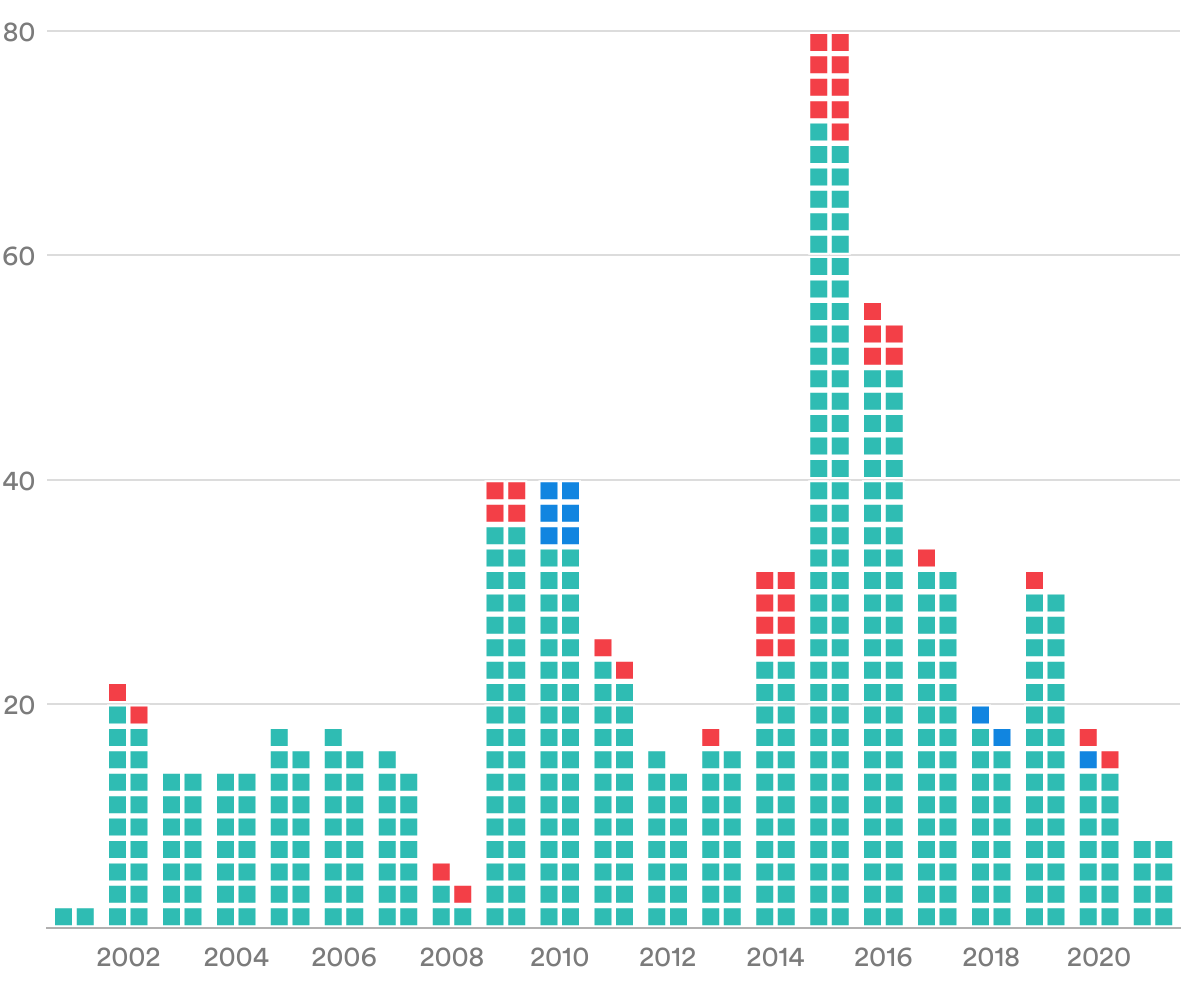
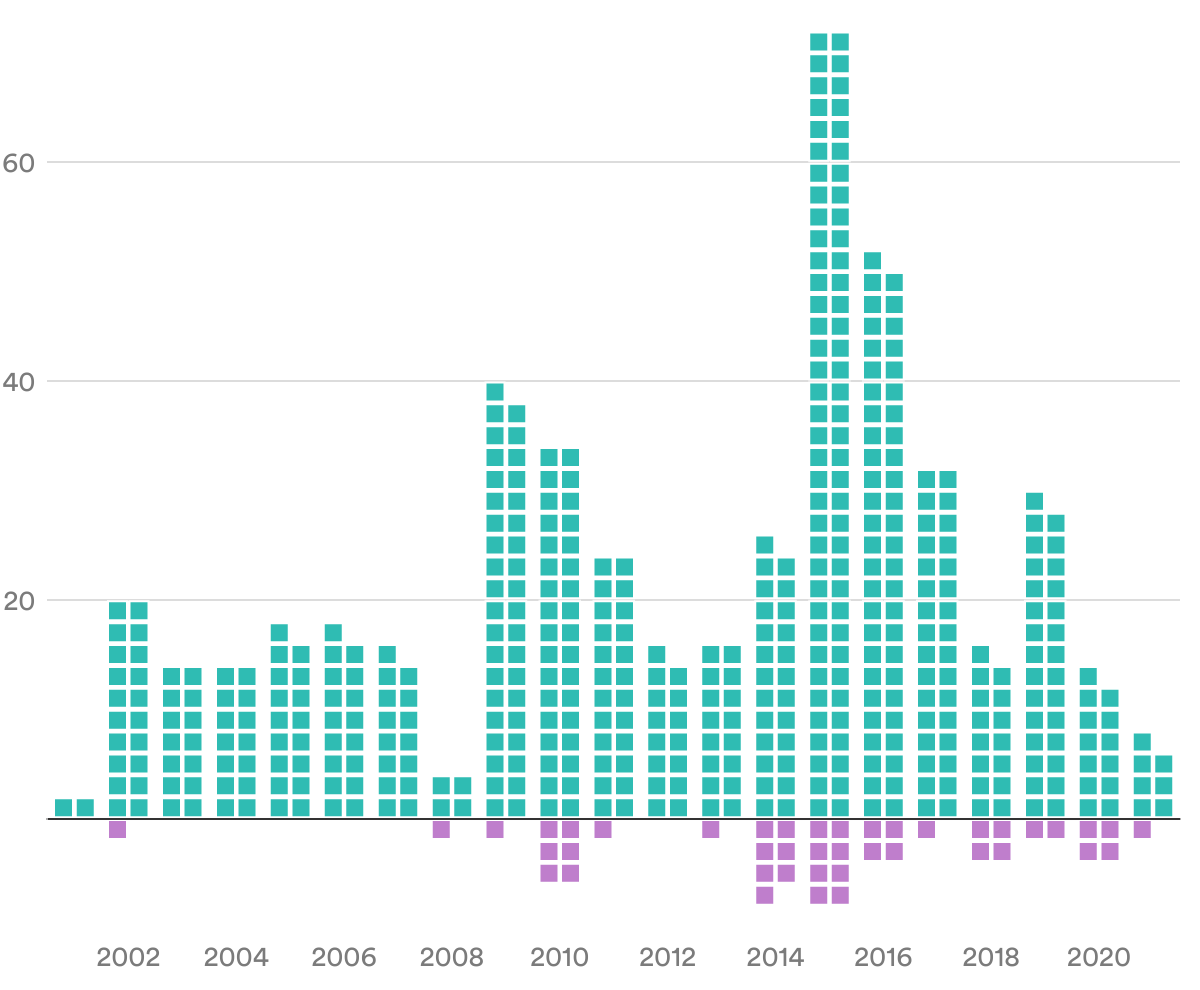
Since 9/11, hundreds of Americans and people residing inside the United States have been charged with jihadist terrorism or related crimes, or have died before being charged, but were widely reported to have engaged in jihadist criminal activity. The rise of ISIS has brought an unprecedented surge in terrorism cases, though there have been cases every year since 9/11, as illustrated below. As the years have passed since the peak of ISIS’s influence, the number of terrorism cases has declined.

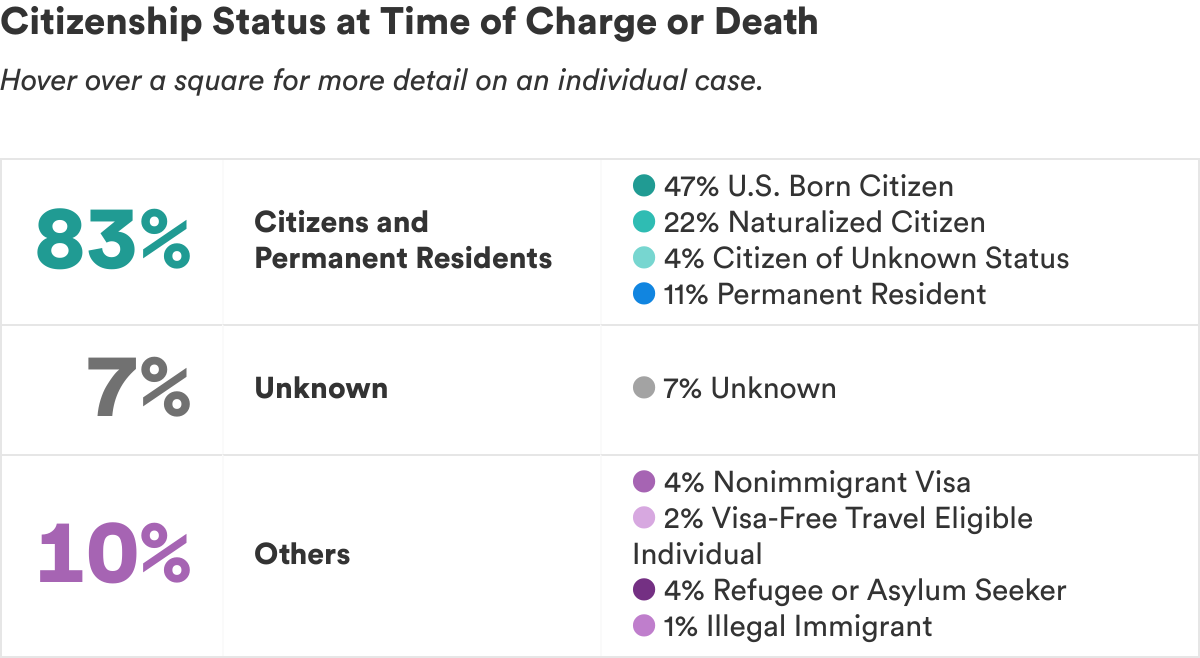
In the post-9/11 era, conventional wisdom holds that the jihadist threat is foreign, which is understandable. After all, it was 19 Arab hijackers who infiltrated the United States and conducted the 9/11 attacks. Yet today, as Anwar al-Awlaki, the American-born cleric who became a leader in al-Qaeda in the Arabian Peninsula, put it in a 2010 post, “Jihad is becoming as American as apple pie.” Far from being foreign infiltrators, the large majority of people accused of jihadist terrorism in the United States have been American citizens or legal residents. Moreover, while a range of citizenship statuses are represented, every jihadist who conducted a lethal attack inside the United States since 9/11 was a citizen or legal resident except one who was in the United States as part of the U.S.-Saudi military training partnership.
“Far from being foreign infiltrators, the large majority of people accused of jihadist terrorism-related crimes in the United States have been American citizens or legal residents.”
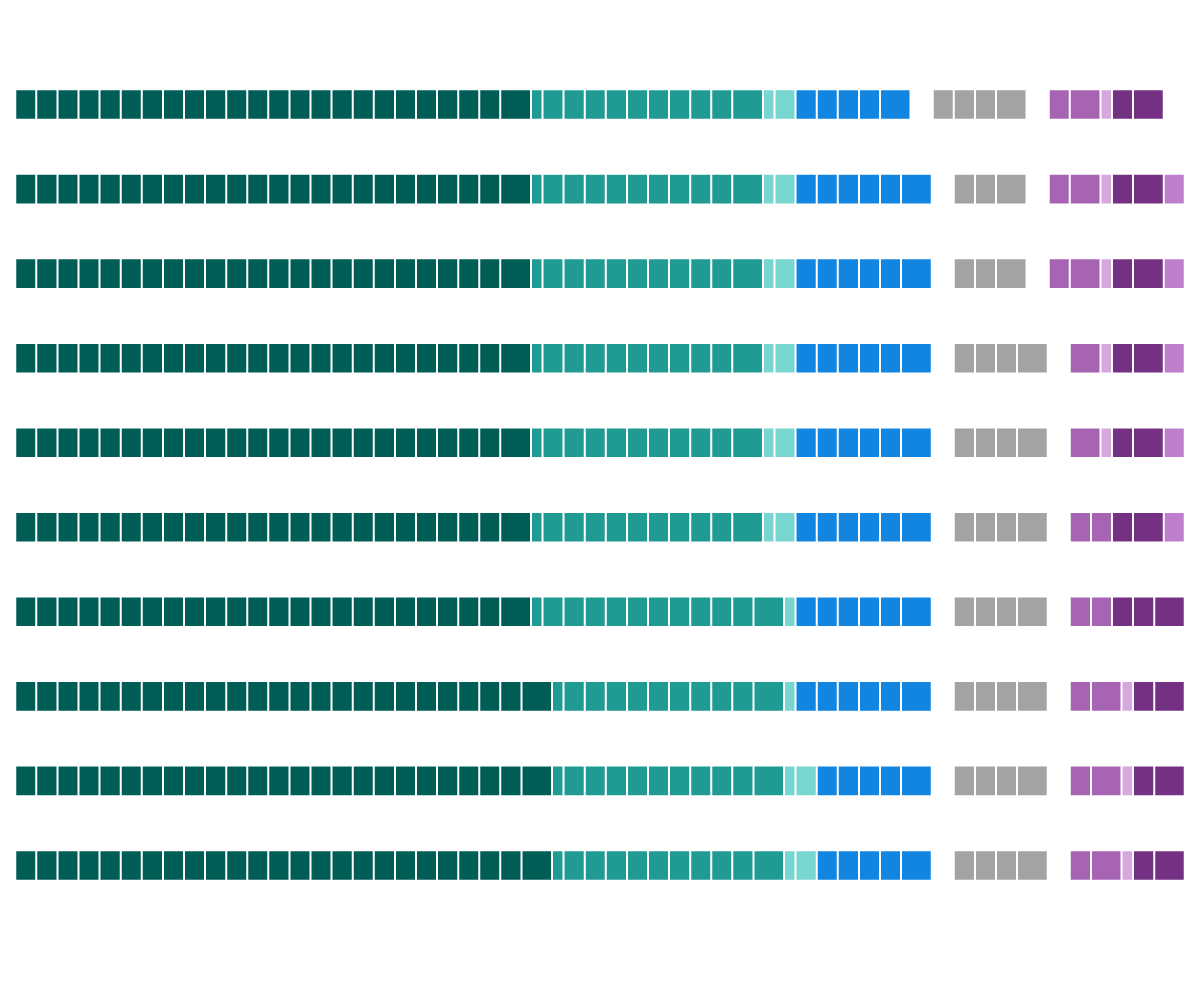
On January 27, 2017, President Donald Trump issued an executive order banning entry from seven majority Muslim countries (Iran, Iraq, Syria, Sudan, Libya, Yemen, and Somalia) citing national security reasons. None of the deadly attackers since 9/11 emigrated or came from a family that emigrated from one of these countries, nor were any of the 9/11 attackers from the listed countries. Nine of the lethal attackers were born American citizens. One of the attackers was in the United States on a non-immigrant visa as part of the U.S.-Saudi military training partnership. On March 6, 2017, the Trump administration issued a new executive order that dropped Iraq from the travel ban among other changes. In September 2017, the Trump administration again revised the ban, dropping Sudan while adding restrictions on travel from Chad, Venezuela, and North Korea.
Of the sixteen lethal jihadist terrorists in the United States since 9/11:
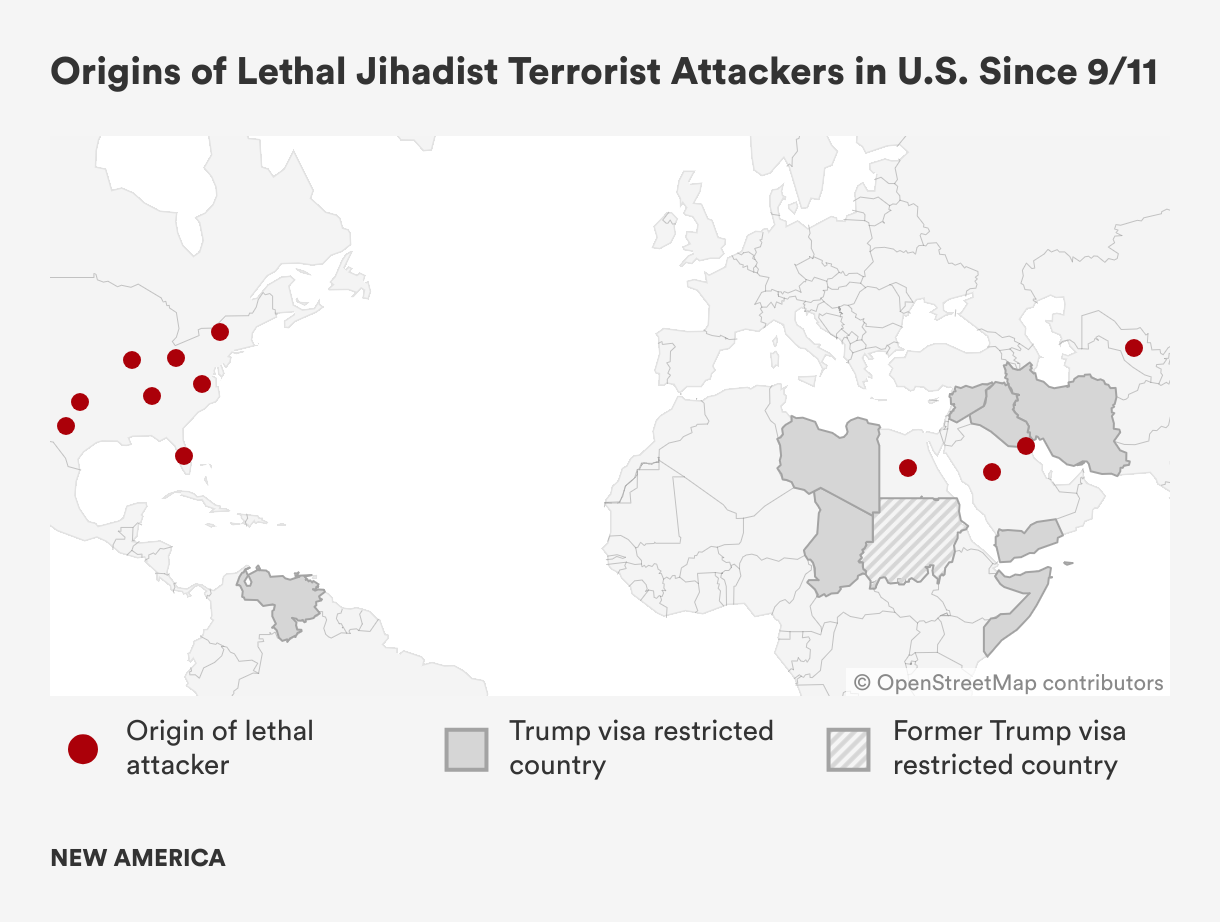
When the data is extended to include individuals who conducted attacks inside the United States that were foiled or otherwise failed to kill anyone, there are only four cases that the travel ban could have applied to. However, in at least two of those cases, the individual entered the United States as a child. In a third case the individual had a history of mental illness and assault not related to jihadist terrorism. In a fifth, non-lethal attack Adam al-Sahli, who conducted a shooting at a military base in Corpus Christi on May 21, 2020, was born in Syria but was a citizen because his father was an American citizen and thus would not have been subject to the travel ban.
On March 3, 2006, Mohammed Reza Taheri-Azar, a naturalized citizen from Iran, drove a car into a group of students at the University of North Carolina, injuring nine people. However, Taheri-Azar, though born in Iran, came to the United States at the age of two. As a result his radicalization was homegrown inside the United States.
On September 17, 2016, Dahir Adan, a 20-year-old naturalized citizen from Somalia—though born in Kenya—injured 10 people while wielding a knife at a mall in Minnesota. However, like Taheri-Azar, Adan had come to the United States as a young child.
On November 28, 2016, Abdul Razak Ali Artan, an 18-year-old legal permanent resident who came to the United States as a refugee from Somalia in 2014—having left Somalia for Pakistan in 2007—injured 11 people when he rammed a car into his fellow students on the campus of Ohio State University and then proceeded to attack them with a knife. However, it is not clear that the attack provides support for Trump’s travel ban. Artan left Somalia as a pre-teen, and if he was radicalized abroad, it most likely occurred while in Pakistan, which is not included on the travel ban. Furthermore, it is far from clear that Artan radicalized abroad rather than inside the United States, and in a Facebook posting prior to his attack, he cited Anwar al-Awlaki, the Yemeni-American cleric born in the United States, whose work—which draws largely upon American culture and history—has helped radicalize a wide range of extremists in the United States, including those born in the U.S.
On November 12, 2017, Mahad Abdirahman, a 20-year-old naturalized citizen who was born in Somalia, stabbed and injured two men at the Mall of America. During his trial, Abdirahman stated he was inspired by ISIS. However, Abdirahman’s case is far from clear evidence for the travel ban. He had previously been hospitalized for mental illness and prescribed medication that he stopped taking. He also faced an earlier assault charge having stabbed a psychiatrist with a pen.
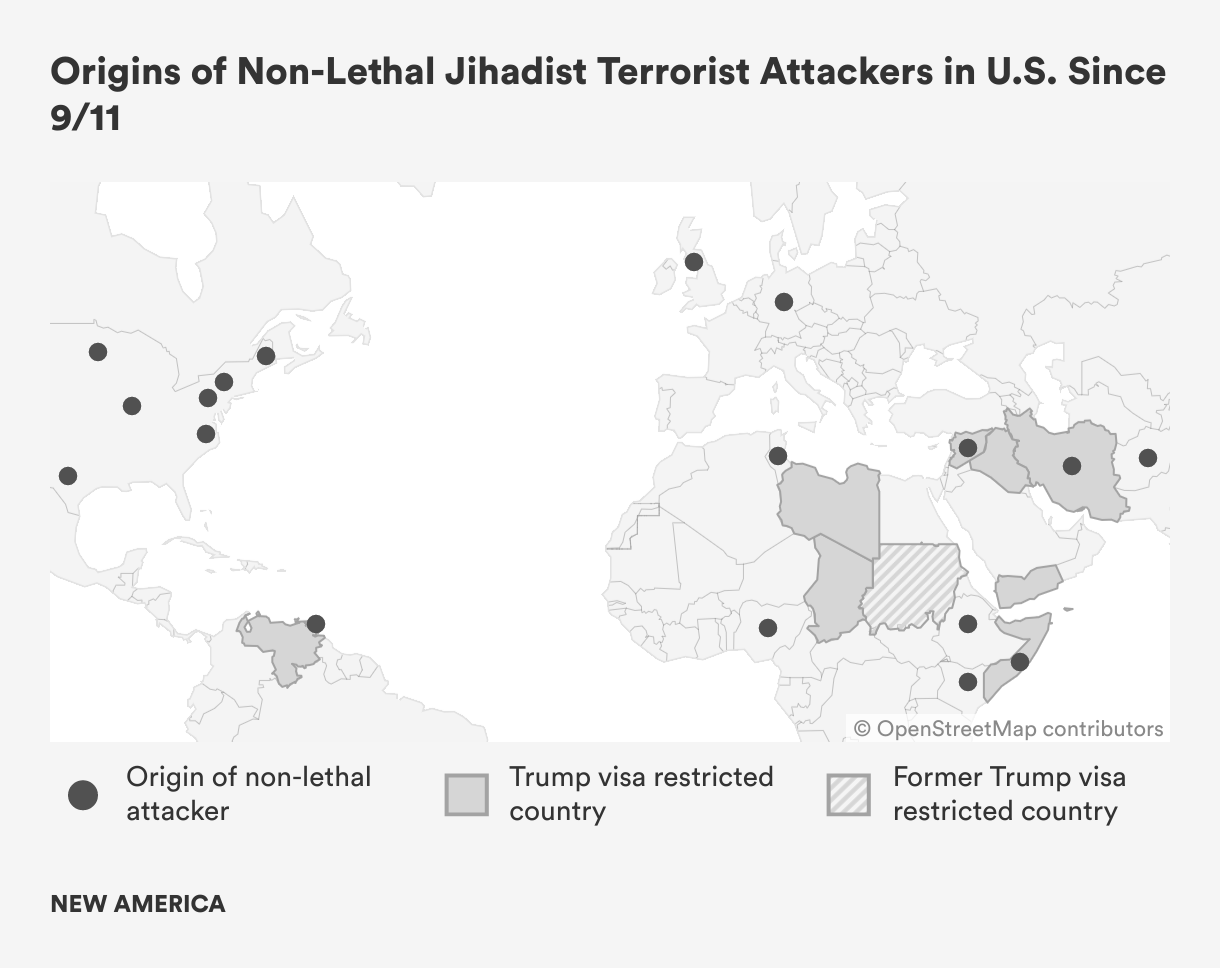
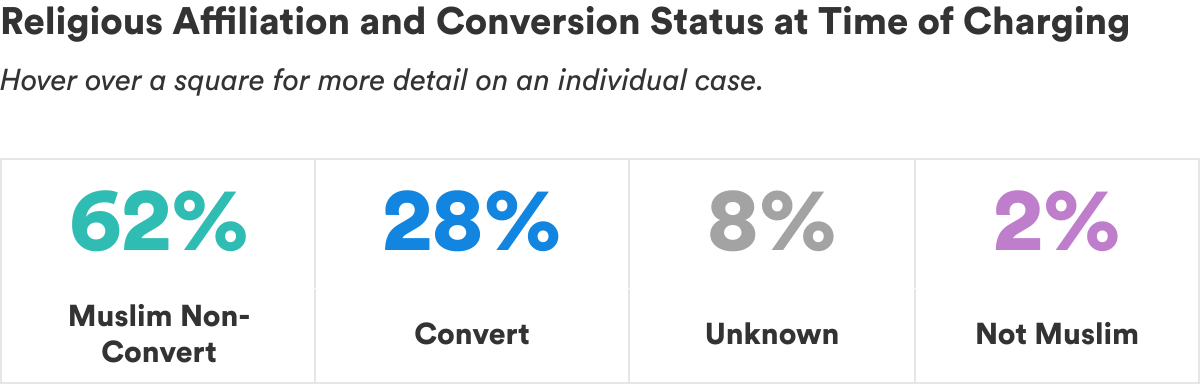
A large proportion of jihadists in the United States since 9/11 have been converts. This is not entirely surprising, as one in five American Muslims are converts, according to a 2011 Pew Research Center study. In addition a small number of cases involve non-Muslims, including those convicted in the Liberty City Seven case who were followers of the Moorish Science Temple, a syncretic religion combining aspects of Islam and other religions.
The large number of converts and even non-Muslims among those accused of jihadist terrorism challenges visions of counterterrorism policy that rely on immigration restrictions or focus almost entirely on second-generation immigrant populations.
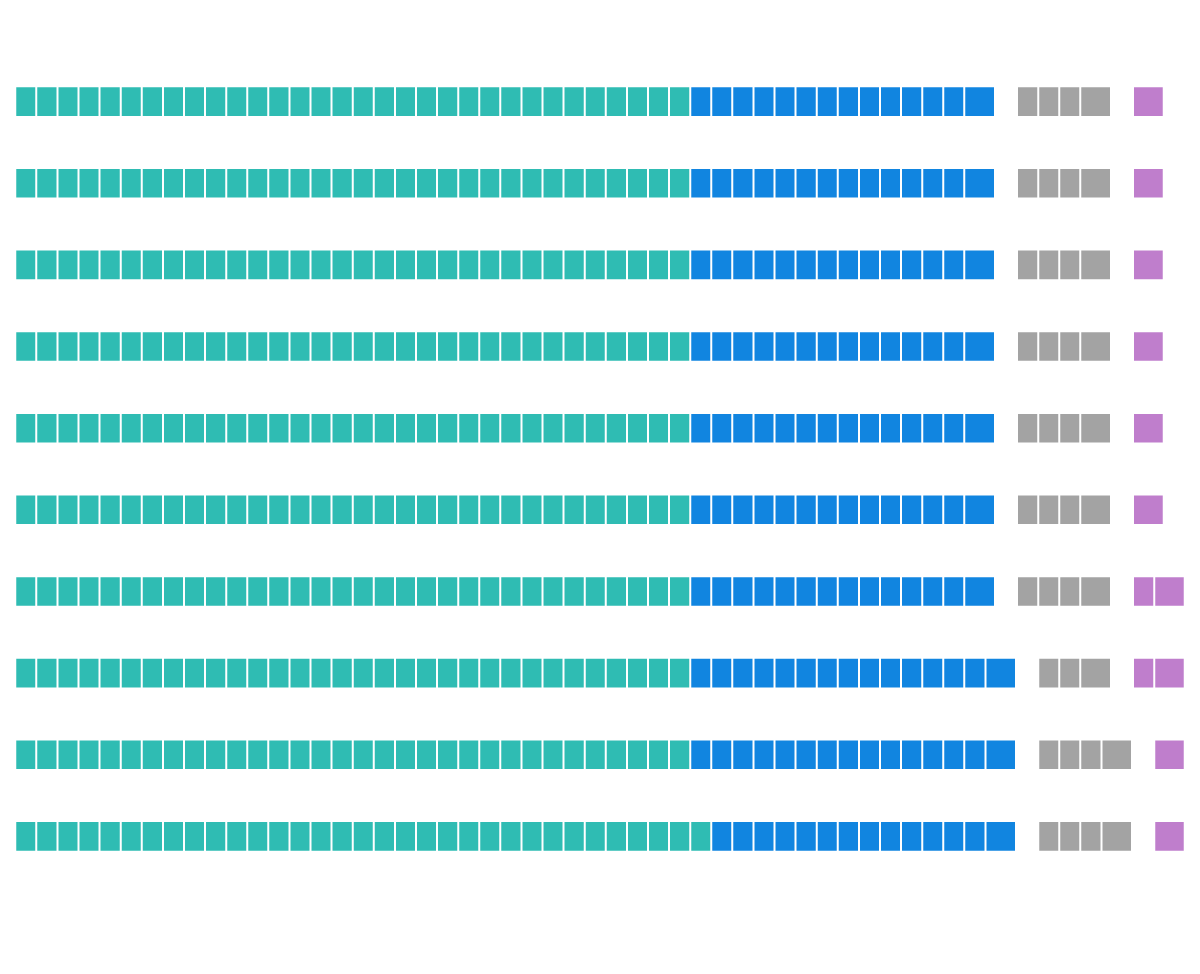
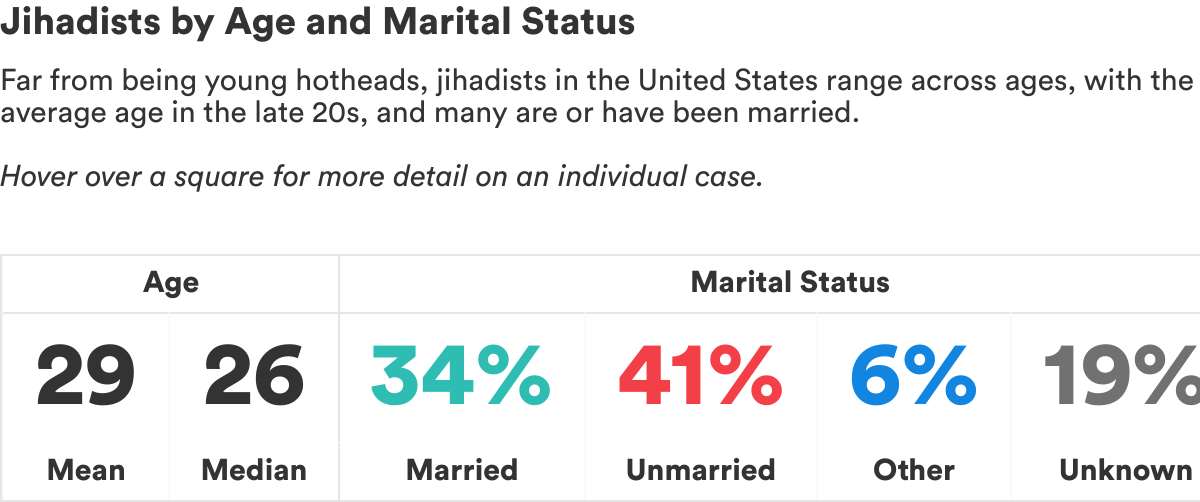
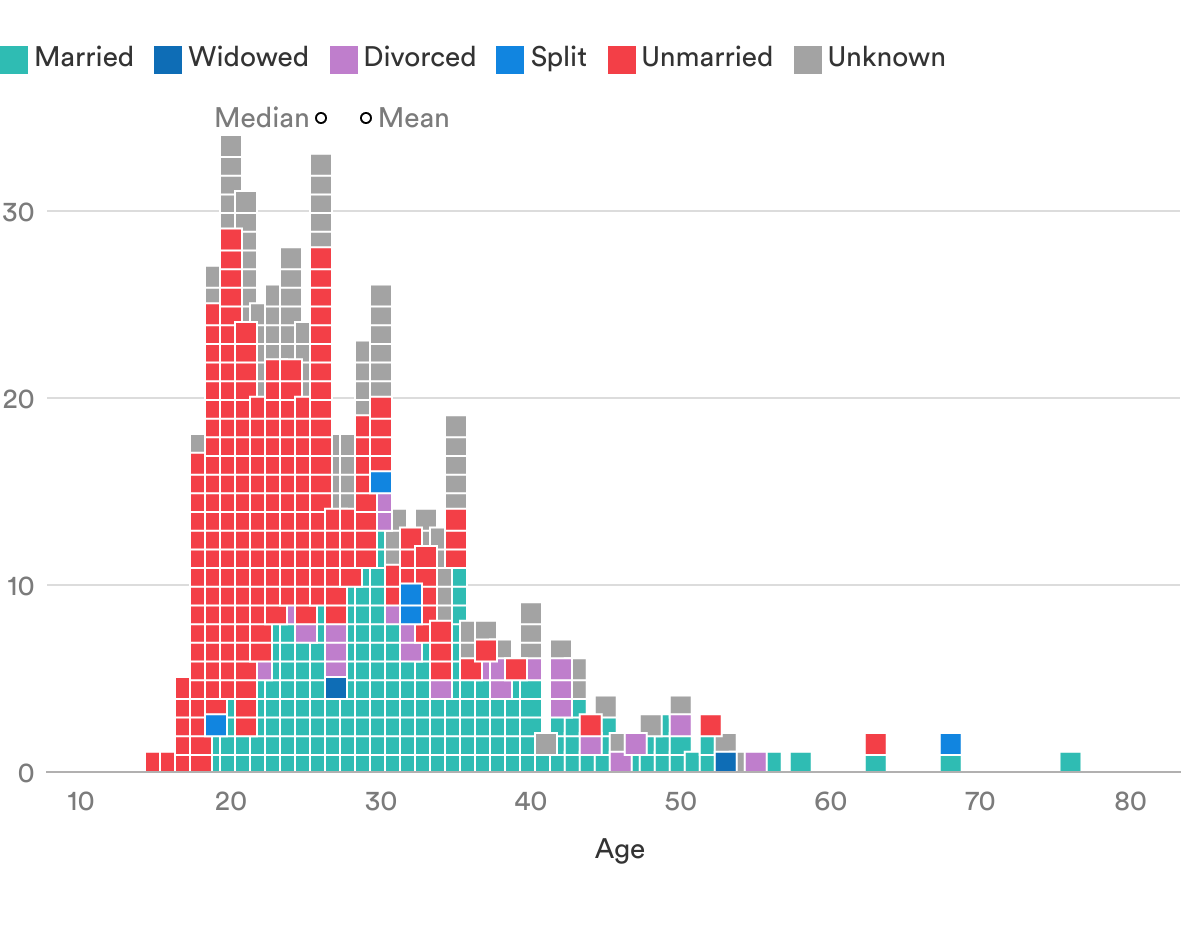
Another misconception is that jihadist extremism is the province of only young hotheaded loners. Such individuals certainly exist, yet in the United States, participation in jihadist terrorism has appealed to individuals ranging from young teenagers to those in their advanced years. Many of those involved have been married and even had kids—far from the stereotype of the lone, angry youngster.
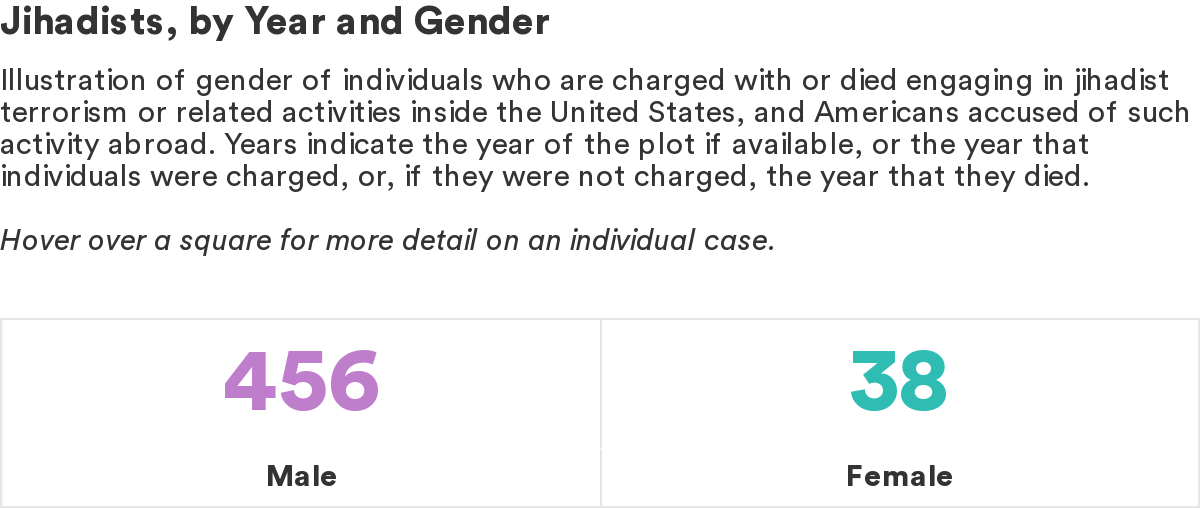
Political violence broadly, and jihadist terrorism more specifically given the misogyny of the ideology, has long tended to be dominated by men. Unsurprisingly, those accused of jihadist terrorism in United States have fit this pattern, but more women have been accused of jihadist terrorism crimes in recent years.
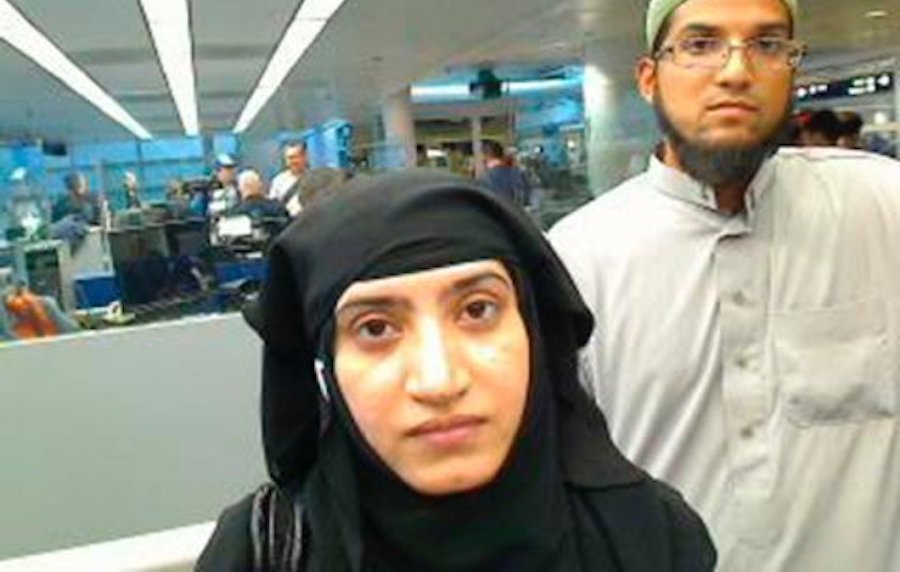
The motivations of jihadists in the United States are difficult to disentangle. After reviewing hundreds of cases in this database, thousands of pages of court documents, and interviews and correspondence with extremists and their family members, it is far from clear there will ever be a straightforward answer. Complaints regarding American foreign policy certainly play some role as does religious ideology, but so do profoundly personal attributes. Some jihadists appear to follow understandable paths of radicalization while others don’t. Nor does it appear that the extremists are simply mentally ill or criminals. In the end, as Immanuel Kant put it, “From the crooked timber of humanity not a straight thing was ever made.”
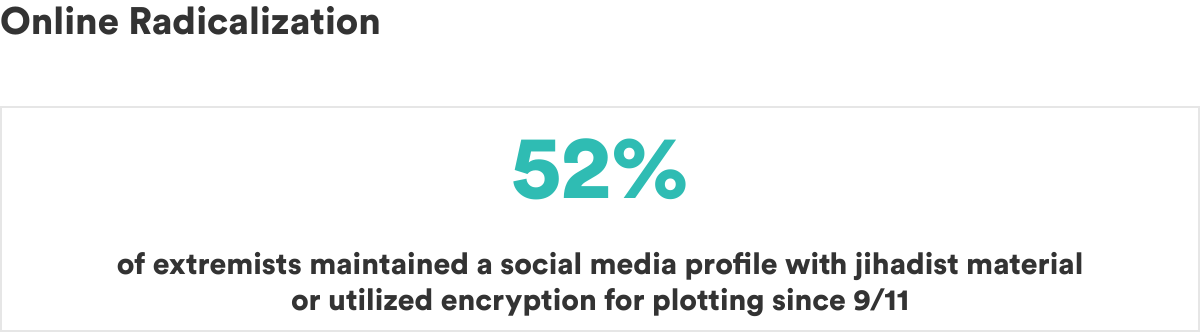
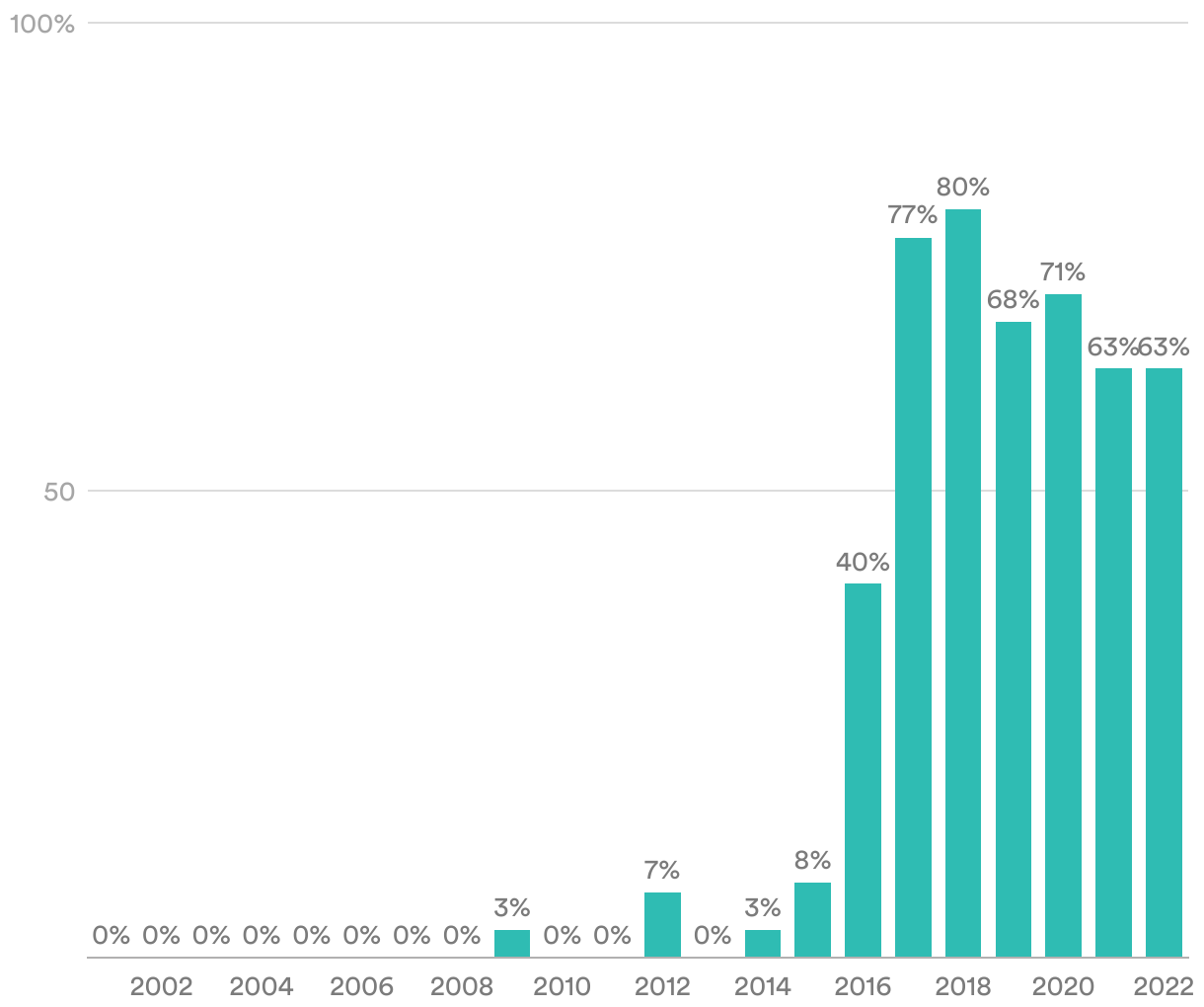
The rise of social media as well as the use of the Internet more broadly to disseminate propaganda and connect people to extremist groups, including encryption, has reshaped the jihadist scene. Many extremists today either maintain public social media profiles displaying jihadist rhetoric or imagery or have communicated online using encrypted messaging apps. The percentage of cases involving such online activity has increased over time.
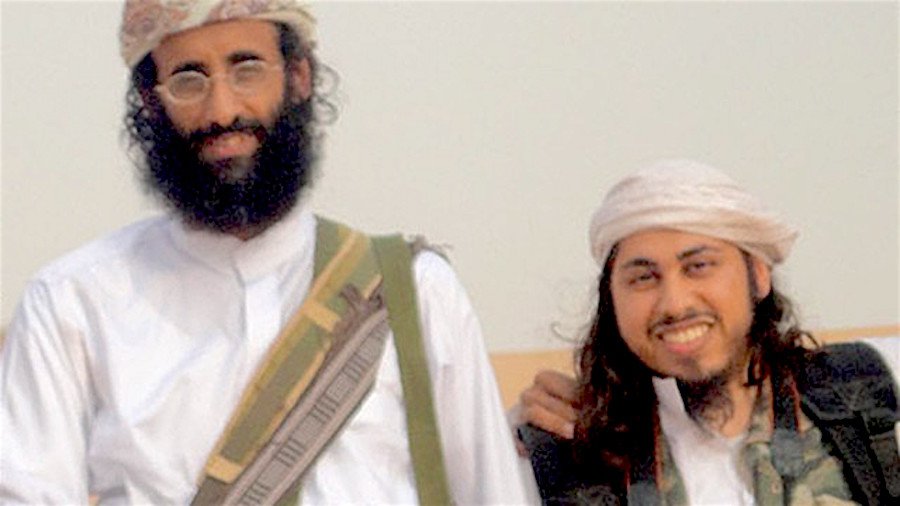
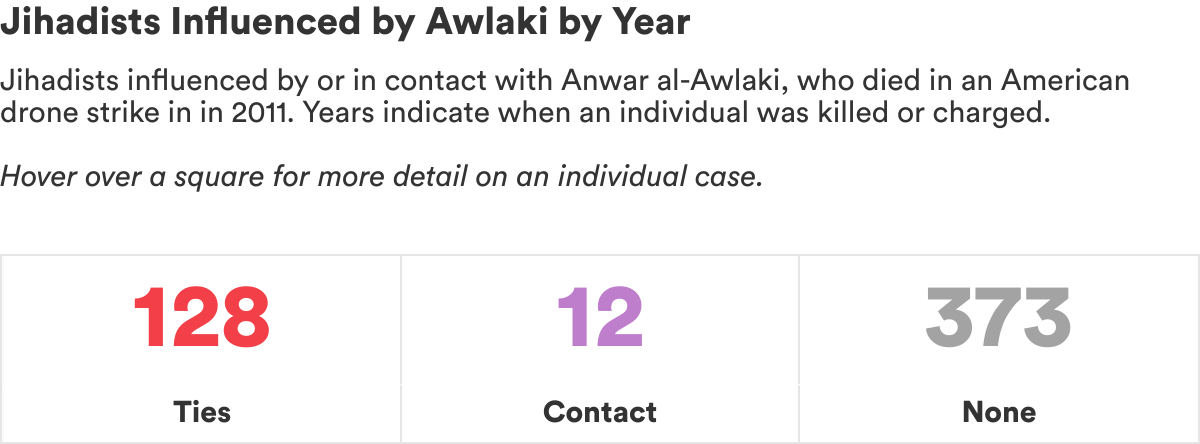
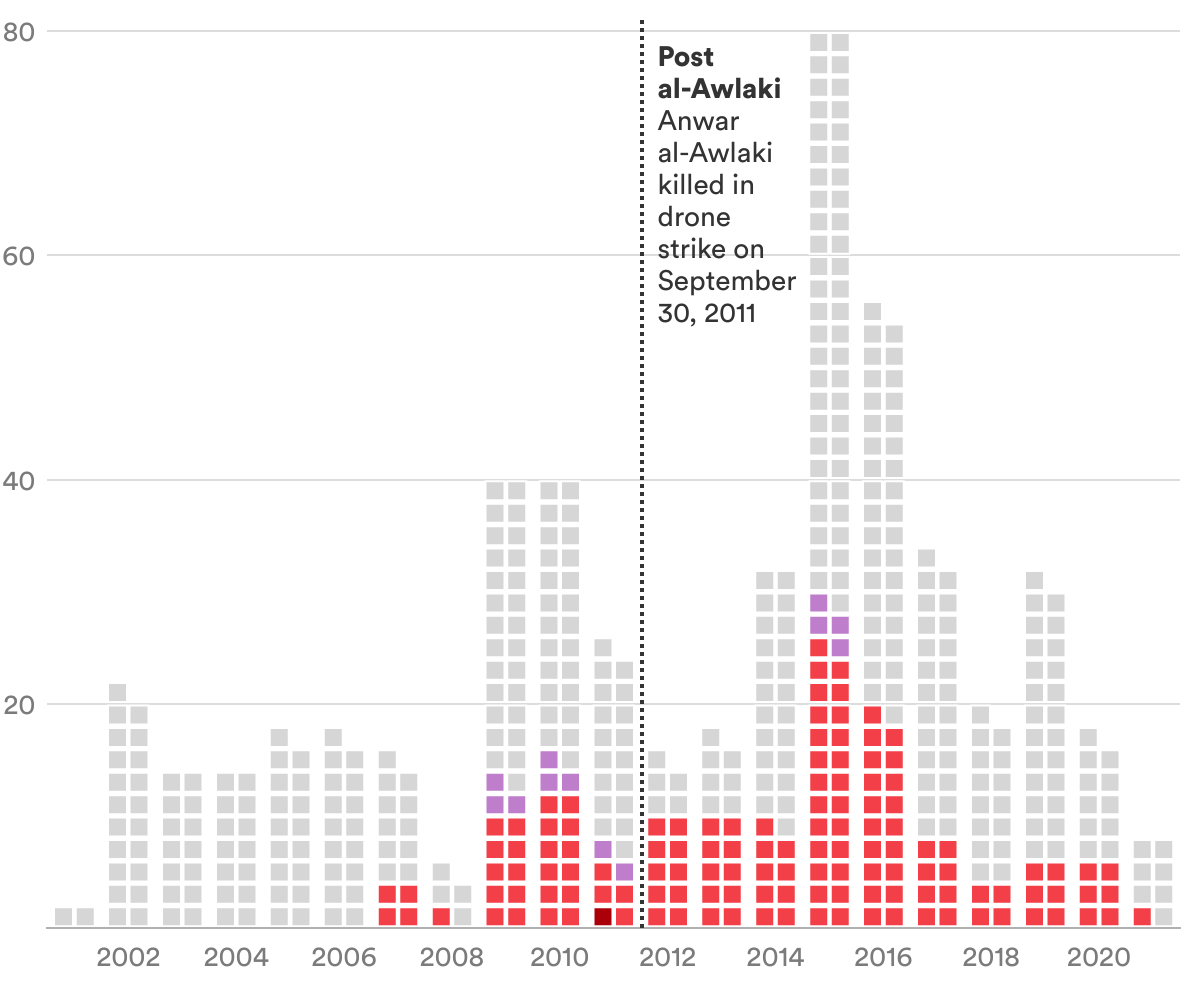
The rise of social media and the Internet as a force in the proliferation of jihadism in the United States was facilitated by a number of key figures who fine-tuned the message and the distribution apparatus. Among them were Samir Khan, the North Carolinian who would come to edit al-Qaeda in the Arabian Peninsula’s (AQAP) propaganda magazine, Inspire, and Zachary Chesser, who became involved with Revolution Muslim, an organization that put out extremist propaganda via websites and YouTube videos, and made the infamous threat against the South Park television show creators. But the extremist with the most widespread influence was the American-born cleric Anwar al-Awlaki, whose influence continues to play a role in radicalization half a decade after his death in an American drone strike in Yemen.

The main terrorist threat today in the United States is best understood as emerging from across the political spectrum, as ubiquitous firearms, political polarization, and other factors have combined with the power of online communication and social media to generate a complex and varied terrorist threat that crosses ideologies and is largely disconnected from traditional understandings of terrorist organizations.
In the almost two decades since 9/11, there is only one case of a jihadist foreign terrorist organization directing or coordinating a deadly attack inside the United States, or of a deadly jihadist attacker receiving training or support from groups abroad. That case is the attack at the Naval Air Station Pensacola on December 6, 2019, when Mohammed al-Shamrani shot and killed three people. al-Qaeda in the Arabian Peninsula (AQAP) claimed the attack. According to the FBI, evidence from al-Shamrani’s phone confirms he was in contact with an AQAP militant and AQAP prior to his entry to the United States continuing through the attack and also confirms that the will presented in AQAP’s video claim was sent to them by al-Shamrani. The exact character and level of the interaction between al-Shamrani and AQAP remains unknown.
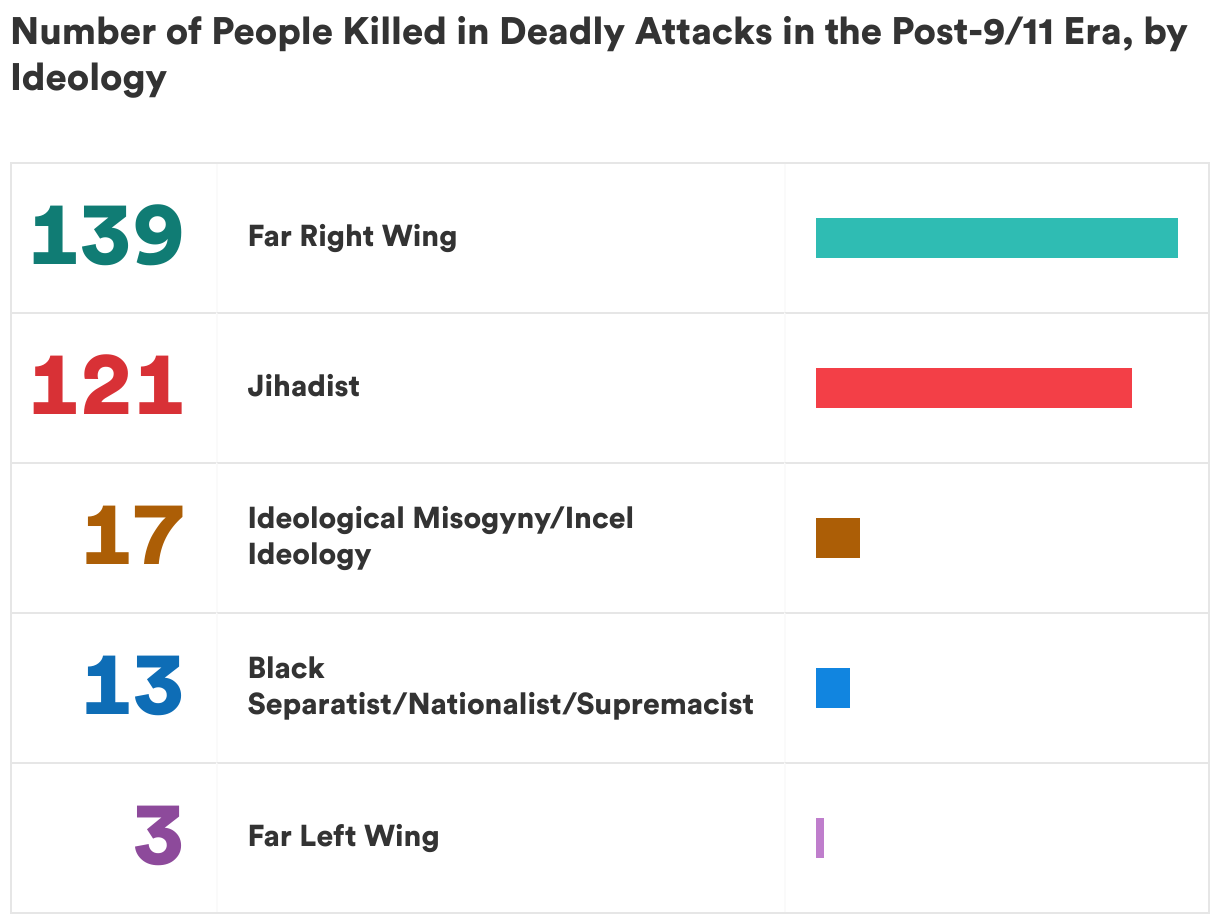
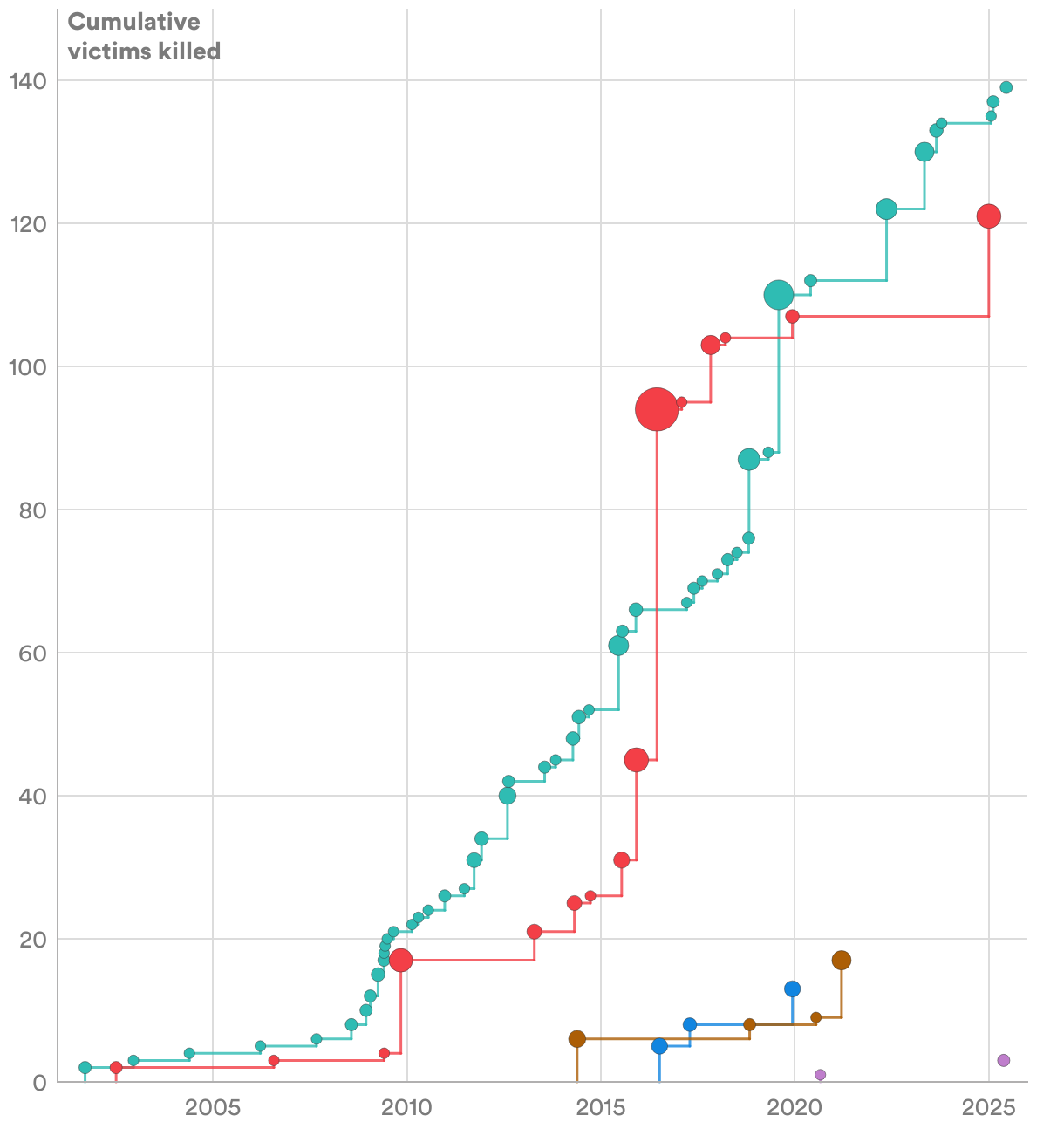
Since 9/11, jihadists have killed 121 people inside the United States. This death toll is similar to that from far-right terrorism (consisting of anti-government, militia, white supremacist, and anti-abortion violence), which has killed 137 people. The United States has also seen attacks in recent years inspired by Black separatist/nationalist ideology and ideological misogyny. Individuals motivated by these ideologies have killed 13 and 17 people, respectively, and those with far-left views have killed one person. America’s terrorism problem today is homegrown and is not the province of any one group or ideological perspective.
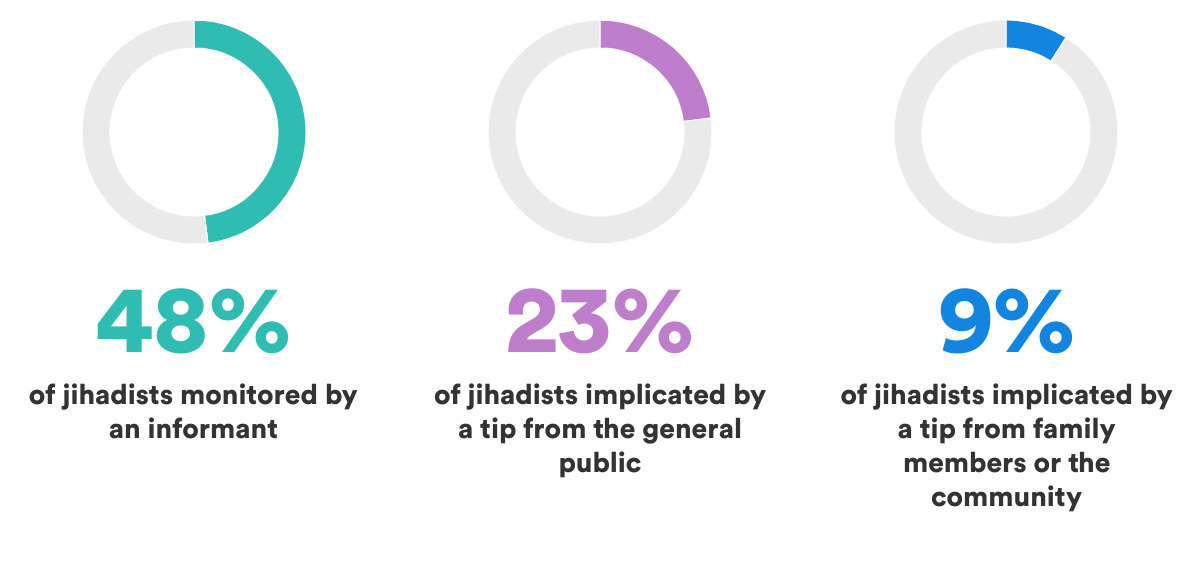
While the United States has seen a series of deadly attacks by individuals and pairs inspired by jihadism, the United States today is a hard target for foreign terrorist organizations. This is the result of a layered set of defenses including tips from local communities, members of the public, and the widespread use of informants.
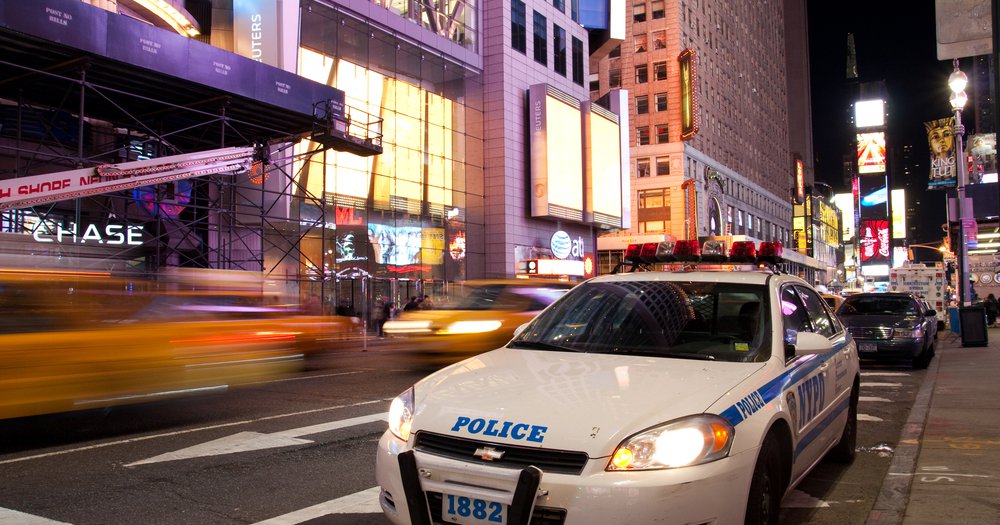
Despite the United States being a hard target, there have been directed attacks that failed to successfully kill Americans, in addition to the deadly 2019 attack by al-Shamrani. For example, the 2009 Christmas Day bomb plot by Umar Farouk Abdulmuttalab—who was trained and directed by al-Qaeda in the Arabian Peninsula—failed only because the explosive didn’t work. The Times Square bomb plot by Faisal Shahzad, who in 2010 managed to place a car bomb in Times Square undetected after training with the Pakistani Taliban, which again did not detonate properly, is another example. Despite these cases, the most likely threat continues to be lone individuals or pairs inspired by jihadist ideology without the type of extensive plotting, communication, or travel activity that would tip off the layered counterterrorism defense system.
Vice President, Global Studies & Fellows; Professor of Practice, Arizona State University

Deputy Director, Future Security