The Science of Work-Life Balance, and the Future of Work & Wellbeing
An overview of the Better Life Lab's projects on workplace redesign.
Research has shown that the way Americans work – intense and long hours, work-life and work-work conflict, unpredictable workloads and schedules – reinforces gender inequality and creates so much stress that research shows the workplace itself has now become a leading cause of ill health and even death. As technology has enabled work to spill into evening and weekend hours, and algorithms, not humans, set work schedules, many Americans feel they don’t have enough time for family, themselves, or the things that make life worth living. There has to be a better way. How can we organize work for better effectiveness, work-life balance, health and equity?
What is The Good Life in the 21st century, and how can all people live it? Our mission in the Science of Work-Life Balance, Health & Wellbeing Project is to find out. This collection consists of reports, articles, and resources produced by the Better Life Lab. Explore this page to learn more about our research, toolkits, and writings on this topic.
Reports
Below are reports about making workplaces healthier and more inclusive.

Mapping the Road to a Better Future of Work and Wellbeing
Designing Equitable and Effective Workplaces for a "Corona-normal" Future of Work
The global COVID-19 pandemic that has disrupted virtually every aspect of life has also created an unprecedented opportunity to profoundly transform the way we work, how work shapes our lives, and what productive, effective—and equitable—work looks like. What comes next in a "Corona-normal" future of work is uncertain. This Toolkit is designed to help guide managers and leaders in designing equitable, high results, flexible cultures of trust and wellbeing.
Hybrid Work Best Practice Guide
“The big quit.” That’s what HR officials are calling the post COVID-19 labor market because so many employees are deciding to quit rather than return to full-time on-site work. One in two people report they won’t return to jobs that don’t offer remote work. Not surprisingly, nine in ten large companies intend to embrace a hybrid working model, with many employees expected to come into the office one to four days a week.
Making hybrid work successful requires careful thought and intentional planning. This toolkit will help organizations successfully transition to a hybrid work model.
The Return to On-Site Work toolkit was developed in partnership with the University of California Hastings Center for WorkLife Law.

The Better Work Toolkit
A practical, accessible set of tools to understand the psychology of human decision making to design better systems around flexibility, autonomy and collaboration.
Worker Voices: Technology and the Future for Workers
Narratives around the future of work often center on the risks to workers in male-dominated and machine-heavy professions like truck driving and manufacturing. But our research and other recent publications suggest that substantive changes are ahead for sectors like food service, retail, and clerical work and have the potential to disproportionately impact women and African American and Hispanic workers. We went directly to a diverse group of workers who are at the forefront of change, but who are all too often absent from these discussions. We asked them about their lives, their experiences with their jobs and their dreams and fears for themselves and for a technology-altered future in general.
Story Series
Below are pieces authored by members of the Better Life Lab and outside contributors plus relevant media mentions.

Time for Care: The next revolution at work
This article is part of a series in which OECD experts and thought leaders — from around the world and all parts of society — discuss and develop solutions now and for the future. Aiming to foster the fruitful exchange of expertise and perspectives across fields to help us rise to this critical challenge, opinions expressed do not necessarily represent the views of the OECD.
The Way We Work Isn't Working
The COVID-19 pandemic hasn’t only disrupted virtually every aspect of life, it’s also created an unprecedented opportunity to profoundly transform the way we work, how work shapes our lives, and whether we have time for the things that matter most to us. The next revolution at work is about making time for care.
Companies need to address child-care crisis before bringing workers back to the office
Brigid Schulte was interviewed by CNBC about the importance of robust child care infrastructure for working parents.

So, What Happens to WFH Now?
Brigid Schulte was the guest on Slate's What Next: TBD podcast to discuss work after the pandemic for white-collar workers.

How Companies Can Support Single Parents
Brigid Schulte and Stavroula Pabst wrote for the Harvard Business Review about what companies can do to support single parents who are at higher risk of burning out.
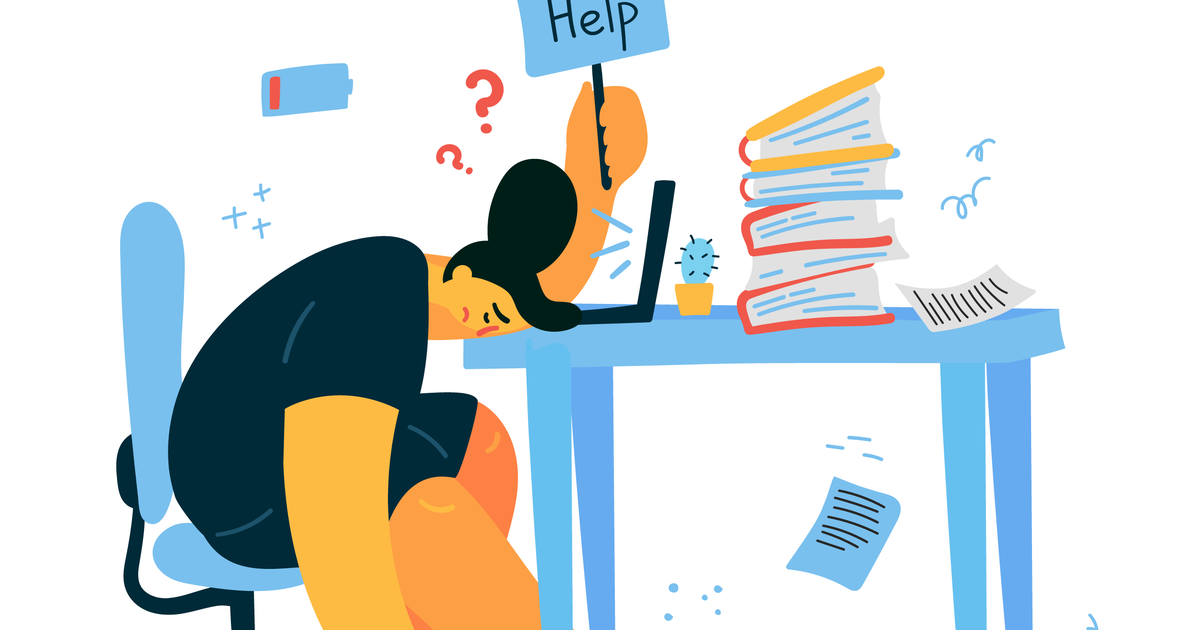
Feeling overwhelmed? Make more time for love and play
Brigid Schulte was interviewed by the Association of American Medical Colleges about how medical professionals fall into the busyness trap.

What Moms Always Knew About Working From Home
Brigid Schulte writes about the obsession with office "face time," how it hurts women, and the need to reimagine what productivity means and what the "ideal worker" looks like.

Why Today's Shopping Sucks
Brigid Schulte writes about how the rise of on-demand scheduling has negatively impacted the health and wellbeing of workers.

Why the US is one of only a few countries with no paid time off
Brigid Schulte explains why workers in the U.S. do not have paid vacation days, unlike workers in other parts of the world.

How busyness leads to bad decisions
Brigid Schulte writes about being under pressure and how tunneling diminishes our ability to focus and prioritize.
Make work-life balance a key performance metric
Brigid Schulte explore the topic of equitable workplaces and discusses the need to change the culture of presenteeism.

Work-work conflict needs addressing for companies to thrive
Brigid Schulte tackles the topic of work-work conflict and how it needs to be confronted in order for companies to thrive.

Preventing Busyness from Becoming Burnout
Brigid Schulte writes about how workers experience work-life conflict, the busyness paradox, and three ways managers can break employees out of the busyness paradox.

You Can Be a Great Leader and Also Have a Life
Brigid Schulte tackle ideas about the "ideal worker," work-life balance being a myth, making plans to put family first, and speaking up about them.
Leaders who prize overwork create burnout cultures
Brigid Schulte writes about burnout culture and how leaders who reward overwork are responsible for creating it.
The Way We Work Is Killing Us
Brigid Schulte interviews Jeffrey Pfeffer, the author of Dying for a Paycheck.

Three Reasons We Can’t Be Trusted to Set Our Own Work Schedules, and What to Do About It
Brigid Schulte write about flexible work with schedule control, what the science tells us about how human behavior can get in the way, and how we can design better systems or “nudges.” to get out of our own way.

Why Your Best Productivity Hacks Still Come Up Short (And What Really Needs To Change)
Brigid Schulte discusses new research on the causes of overwork which suggests that there's only so much individuals can do to avoid it because the problem is bigger than any one person.

Even Work-Life Balance Experts Are Awful at Balancing Work and Life
Brigid Schulte explains that everyone, including experts, deal with work-life conflict. Part of the problem? The overly optimistic way humans tend to plan (or not plan) for the future.

Why you can't stop checking your email
Brigid Schulte writes about the struggle to unplug and disconnect.

Flexible, family-friendly work policies are more popular than ever. So why are we still so stressed out?
Brigid Schulte reports on how work culture discourages workers from using family-friendly and work-life balance policies and the role that behavioral science plays in nudging workers towards making healthier choices.
Is Gig Work Our New Normal?
The media drumbeat about the gig economy and the future of work is intense. We’re told gigging is the wave of the future and virtually everyone has or will need a side hustle. Flowery narratives tell us that soon we’ll all be contractors instead of employees, working in the bliss of endless flexibility and the chance to be our own boss. Or, the doomsayers suggest, we’ll all be scraping together a living from multiple hustles, without any security or reliable benefits. But what does the data tell us about the real prevalence of the gig economy?
Brand new data from the Bureau of Labor Statistics suggests both these narratives might be overhyped.
Work-Life Balance: Capturing an Elusive Myth
Some surveys show that people think work-life balance for top leaders is impossible—that it’s a myth. But Michelle Hickox shows that that’s not true.
Today, Hickox is vice president and chief financial officer of Independent Bank. It’s a $5.5 billion bank serving North Texas, Houston, and Austin. She’s found a way to build a powerful career, and protect the time she needed for her family. And she did it when few of her co-workers even dared to speak about things like flexible schedules or working reduced hours. Her path was often challenging, but for anyone who struggles with the mix of work and life, Hickox’s tale is also pretty inspirational.

A new study shows how other countries are making paid leave work
There are a slew of new, flexible, shared office options in the marketplace, and a surprising number of them cater exclusively to women. Check out Hera Hub, Shecosystem, the Allbright, and Quilt. None has gotten more attention than a co-working and social club for women called the Wing, founded by CEO Audrey Gelman and her business partner Lauren Kassan. In just its first year and a half in business, the Wing has had over 20,000 women apply to be members in their New York City and Washington locations, and the company has plans to expand to Los Angeles; Chicago; San Francisco; Seattle; Williamsburg (Brooklyn), New York; London; and Toronto. What explains the demand for these spaces?
Taking Action
Below are events we’ve held and initiatives we’ve launched that call for action.
Your Work May Be Killing You
The Better Life Lab and ideas42, along with a panel of health experts, behavioral scientists, and business leaders, discuss the real costs of work-life conflict and how to design innovative interventions for promoting better work and healthier, happier lives.

Redesigning Work: Making Flexibility the Solution, Not the Problem
The Better Life Lab hosts a discussion about a path forward for crafting policies and practices that support all workers in environments that promote effective work, and allow time for full, healthy lives.

Beyond Life Hacks: Big Ideas for the Future of Work and Life
In a lightning round panel, leading thinkers share one big, bold idea for shattering assumptions about how to live a good life, followed by questions and conversation about what individuals, organizations, and policymakers can do to turn ideas into action.

Better Work Workshop
The Better Work Workshop is an interactive, design thinking experience that offers practical tools, mindset shifts and nudges based in behavioral science for individuals, teams and organizations to better manage workplace stress and overload for better work effectiveness, health and wellbeing, gender equity, diversity and inclusion, and work-life integration.
Worker Voices: Technology and the Future for Workers
Molly Kinder and Amanda Lenhart present their worker-focused research report that explores the views of workers who are at the forefront of technological change.
Better Life Lab Podcast on Slate
On the Better Life Lab podcast, we explore the art and science of living a full and healthy life. The podcast combines the power of storytelling – people sharing their own very real struggles, failings and triumphs with work-life balance. The aim of the podcast is to create awareness and connection, open minds, provide evidence-based solutions, tools and role models, and to give hope.
Introducing Better Life Lab
There are real costs with our current driven, harried, work-identified culture. We explore what it will take to transform the way we work and live, as individuals, as organizations, and as a culture, to make time for both meaningful work and fuller, healthier lives.
Your Work May Be Killing You
Bragging about being overworked is not badge of honor. Economists say the way we work has become so stressful it’s now the fifth leading cause of death. That’s according to Jeff Pfeffer, a Stanford business professor and author of some of the first meta-analyses of the health costs of the modern workplace. What will it take for us to transform the way we work and live — as individuals, as organizations, and as a culture — in order to make time for both meaningful work and fuller, healthier lives? That conversation starts here in the inaugural episode of Better Life Lab, hosted by Brigid Schulte.
How to Take Summers Off and Still Get Promoted
Michelle Hickox took summers off and still got promoted. First, she had to believe that she could, then she had to prove to others it was possible. Now she wants everyone to know how she did it. She tells her story to Better Life Lab.
Why You’re Addicted to Being Busy
Email inboxes and push notifications were designed to keep us busy. But when we break it all down and how we think about busyness, we should be paying attention to the way our environment is designed — both at work and at home. Behavioral economist Dan Ariely explains how we can change our surroundings and our actions to fight our addiction to being busy.
Ariely is an author of The New York Times best-selling book “Predictably Irrational,” a popular TED speaker, and professor and director of the Center for Advanced Hindsight at Duke University. We also hear from David Sbarra, a professor in the psychology department at the University of Arizona, where he directs the Laboratory for Social Connectedness and Health. And he confesses — he is obsessed with busyness.
Even Progressive Offices Fail at Work-Life Balance
No meeting Wednesdays and work from home Fridays are not enough.
In this episode, you'll find out how employers can really create a healthier and more productive workplace. Tara Oakman, a former Obama White House official who is currently working as a senior program officer at the Robert Wood Johnson Foundation, and David Waldman, vice president human resources and administration at the Robert Wood Johnson Foundation, weigh in.
Inside A Workaholics Anonymous Meeting
What happens when you can’t stop working? In this episode, the Better Life Lab podcast goes to a workaholics anonymous meeting to find out.
We also here from Malissa Clark, a professor of psychology at the University of Indiana and an expert in workaholism. She discusses the science and research behind workaholism, and how we can change.
The Surprising Reason Why the Gender Pay Gap Hasn’t Shrunk
It gets more intense every year — the drive to work longer and longer hours. And there’s striking new research that shows that women, who already get paid less than men, are put at a distinct disadvantage by an American job market that rewards overwork rather than performance.
In the final episode of season one of Better Life Lab, we hear from Youngjoo Cha, a sociologist at Indiana University and an expert on overwork and gender. Her research shows that, while the education gap is closing between men and women, overwork has all but cancelled out efforts to equalize the job market. In fact, the gender pay gap would have actually shrunk by 10 percent in recent decades if it wasn’t for this phenomenon.
Ciannat Howett, an associate professor at Emory University, shares her own story of job growth and overwork.
Introducing Season 2
Better Life Lab is back! In Season 2, join host Brigid Schulte as she explores the torture of "Inbox Zero", work schedule chaos, and the Japanese idea of "karoshi" — a sadly common phenomenon where people work so hard they die — and much more. The Better Life Lab podcast from Slate and New America will show you why work-life balance seems so unattainable for so many people—and what we as individuals, as organizations, and as policy makers can do about it.
The Calm Company
When Jason Fried founded Basecamp, he and his partner decided not to focus on growth, but on sustainability, and healthy work-life balance. While Fried’s stance is unorthodox in an economy where success is literally measured by growth, economist and bestselling author Juliet Schor says Fried is onto something.
Work-Work Conflict
You’ve heard of work-life conflict, but when one Stanford researcher looked into how doctors managed it, she discovered another complicating factor: work-work conflict. It's having so many different tasks and responsibilities at work that you can quite literally feel pulled in a hundred different directions at once. We hear the stories of a doctor, a nonprofit executive and a home health aide, and how real solutions will require systems change.
Beyond Inbox Zero
In a famous 2007 talk at Google, productivity guru Merlin Mann introduced the world to Inbox Zero, his idea of managing the raging river of digital overload. But is such a high standard even possible today? In this episode, we explore Email Mindset, and how to think about your inbox. And we compare Mann’s Inbox Zero approach with writer Amy Westervelt’s Inbox 100,000.
Schedule Chaos
While an unpredictable schedule has always been a part of a restaurant worker’s experience, the advent of scheduling technology and the pressure to keep labor costs low has turned the schedules – and lives – of restaurant and retail workers upside down. We hear stories of waitstaff and big box retail workers from around the country. Joan Williams, Director of the Center for WorkLife Law at UC Hastings, shares research on how predictable schedules not only make life better and healthier for workers, but actually makes businesses more profitable.
Egalitarian Relationships
Research shows that egalitarian couples who fairly share work and home responsibilities are happier, healthier and have better sex. But are egalitarian partnerships really possible, especially when U.S. work cultures demand all-out devotion and women still carry the load as primary caregivers and household managers? We hear stories from workers striving for that egalitarian ideal: An Ethiopian immigrant nurse and Uber driver, A military “trailing spouse” with big dreams. And Amy Nelson, founder and CEO of The Riveter. To make sense of why egalitarian relationships can be hard no matter your circumstances, we hear from Jennifer Petriglieri, professor of organizational behavior and author of the forthcoming book, Couples that Work.
Karoshi
In Japan, workers are so used to working punishingly long hours that dying from overwork is a common phenomenon: so common, in fact, that victim families can and do routinely apply for worker compensation benefits. We hear the stories of Japanese workers caught up in a system of overwork, young activists trying to change things on the ground, and a professor trying to make sense of it all. Is it just a Japanese phenomenon? What can Americans learn from a culture of overwork?