A Chapter of: All Disasters Are Local. Resilience Should Be, Too
Summary of Expert Conversations
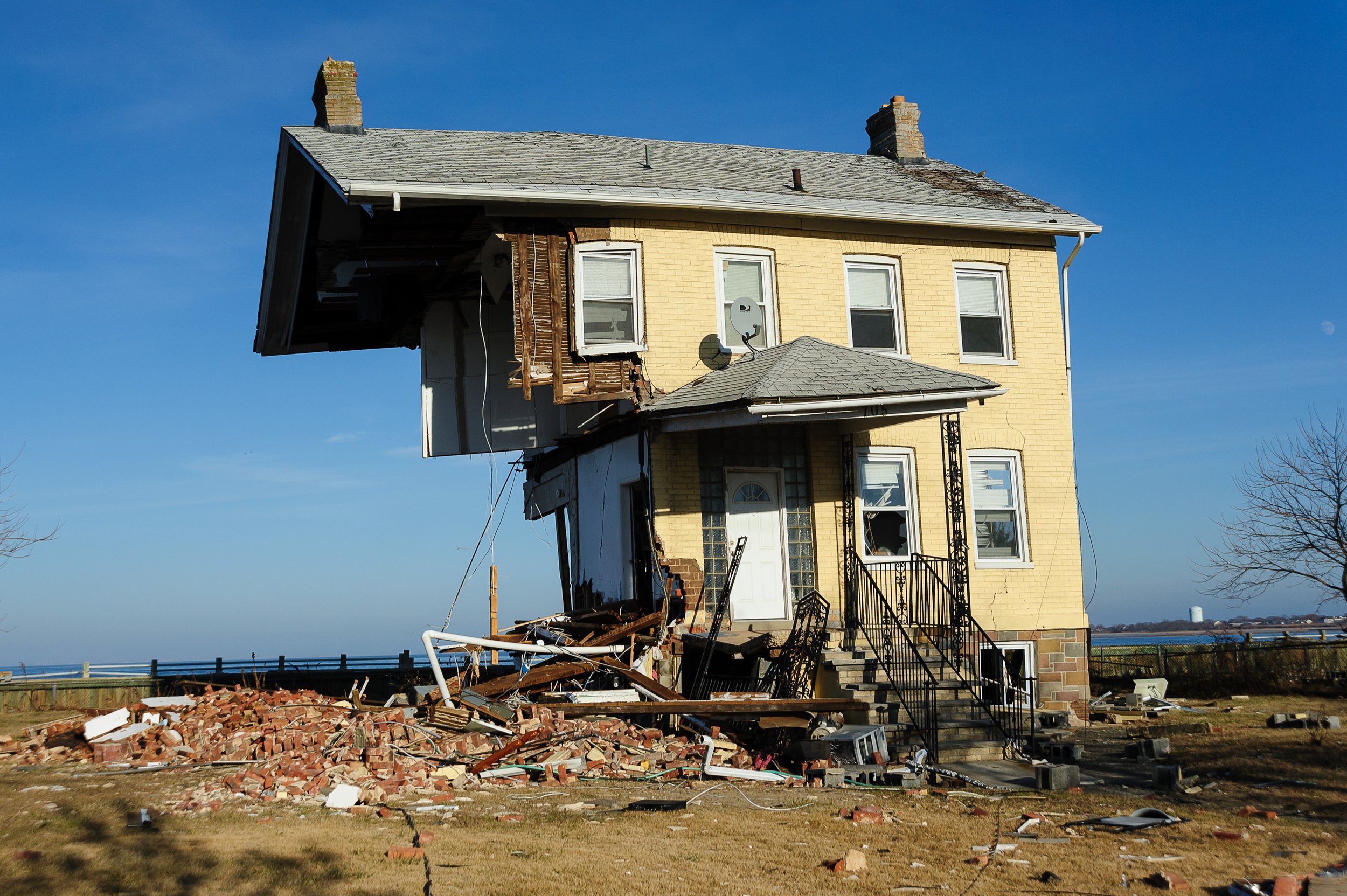
On October 22, 2012, toward the end of the Atlantic hurricane season, a squall gathered in the Caribbean Sea. Within six hours, it had become a full-blown tropical storm large enough to earn a name: Hurricane Sandy. By the time Sandy dissipated almost a week later, it had killed more than 150 people and become one of the costliest storms in American history. Hundreds of thousands of homes were either damaged or fully destroyed, and 8.5 million people were left without power, in some cases for weeks, in the most densely populated region of the United States.
These numbers do not tell the full story of all the hurdles people faced before, during, and after the storm, nor the fact that for some, the hurdles were higher than for others. For example, FEMA’s Sandy after action report noted that “confusion” about FEMA’s role in meeting “the immediate lifesaving and life-sustaining needs” of disabled individuals left some without full access to aid. During Hurricane Katrina, the black population of New Orleans suffered the most. The catastrophic storms that wracked Puerto Rico in 2017 took an especially heavy toll on low-income populations. Challenges that exist along socioeconomic, racial, gender, ability, age, and medical status lines do not disappear during a crisis; indeed, they amplify.
On February 26, New America gathered a group of disaster responders, resilience builders, scientists, policy experts, technologists, and storytellers to examine how technology might help better meet the needs of the vulnerable and underserved before, during, and after natural disasters. In particular, are there technologies to help build resilience in these populations in advance of disasters?
To create a common operating picture (to borrow the Department of Defense term) for the afternoon workshop, New America moderated conversations with four experts (the livestream is available here) on disaster management, climate change, disability advocacy, and disaster storytelling. The speakers included: Christopher Rodriguez, Director of DC’s HSEMA office; Bernadette Woods Placky, Director of Climate Central’s Climate Matters program; Linda Mastandrea , Director of FEMA’s Office of Disability Integration and Coordination; and Amanda Ripley, author of The Unthinkable: Who Survives When Disaster Strikes and former New America fellow.
Emergency Management and Disaster Resilience in the Nation’s Capital
Christopher Rodriguez is the Director of the Homeland Security and Emergency Management Agency (HSEMA) for Washington, D.C. Prior to his current position, he played a similar role in New Jersey’s Office of Homeland Security and Preparedness, dealing with Sandy during his tenure. The Director of New America’s Phase Zero project, Sharon Burke, engaged Rodriguez in a conversation about his work.
Rodriguez explained that the “emergency” in emergency management covers many bases: domestic terrorist attacks, such as the Boston Marathon bombing; major cyberattacks that can sever communications; and severe storms. All fall within his office’s scope (and all keep him up at night, he said).
While his office invests great effort to be ready for all those contingencies, Rodriguez emphasized that government is not able to do everything alone—there just isn’t enough capacity. As such, building relationships with private sector partners during “blue sky times” is crucial. Speakers throughout the day echoed this theme, noting that if all the individuals who play an important part in crisis response meet for the first time during a disaster, it’s already too late for effective crisis response and preparedness.
Even with the additional support from outside partners, however, Rodriguez noted that underserved populations will not get their needs met without advance consideration. For example, older populations with mobility, dietary, and medical restrictions may have specific needs that aren’t easily met (for example, are the evacuation transports and shelters wheelchair accessible? Is the food donated by restaurants readily digestible?) Low-income, predominantly African-American communities in Washington, D.C.’s Fifth, Seventh, and Eighth Wards face systematic barriers before a disaster even begins that leave them more vulnerable to consequences, said Rodriguez.
Rodriguez emphasized that individuals also have a role to play in improving resilience to disasters. First, he explained that a community will recover best if the individuals themselves are prepared. Knowing your own risks, setting up emergency plans with family members, and knowing where to get information before disaster strikes are all important disaster mitigation (and potentially life saving) strategies. He also noted that he’s interested in new tools for understanding the vulnerabilities and hazards better, though he had guidance for technologists and toolmakers:
“For me, it’s always simplify, simplify, simplify. My boss, the mayor, needs very clear, concise information to make decisions. Sometimes, these tools try to do too many things…we lose focus sometimes. What I’m trying to do is find the simplest, cleanest, most interoperable tool—I don’t want to be buying five different tools that do five different things. I’m trying to consolidate a lot of those efforts in my office.”
For me, it's always simplify, simplify, simplify.
Climate Change and Natural Disasters: How the Hazards—and Our Understanding of Them—are Changing
The day’s second speaker, Bernadette Woods Placky, is Chief Meteorologist and Climate Matters Program Director at the non-profit research and educational organization, Climate Central. As a former Emmy Award-winning meteorologist, her current work with Climate Matters is aimed at providing easily consumable, relevant, and data-driven resources connecting climate change to weather for meteorologists nationwide. Sharon Burke moderated the discussion.
Woods Placky’s opening statement left no room for doubt: natural disasters are getting worse and more frequent. The phrase “billion dollar disaster” may evoke images of a “Day After Tomorrow” type event for many people, but, according to NOAA data, there were 14 billion dollar disasters last year alone. Moreover, these billion dollar disasters are happening simultaneously, said Woods Placky—which places a major strain on our response and recovery systems. In 2016 and 2017, New America’s Resource Security Program looked at these very issues in Weather Eye, a research effort focused on both the rising natural disaster trends and the ground truth within the affected communities.
At this point, there is little benefit to debating whether or not climate change is happening, said Woods Placky, because it clearly is. It’s more productive to have conversations about what people can do at their immediate local level to mitigate climate risks and build with climate resilience in mind to prepare for what’s to come.
There is little benefit to debating whether or not climate change is happening, because it clearly is.
Approaching climate change at the local level is essential because, even though everyone is affected by climate change, it manifests in different ways for different areas, and as such, resilience strategies look different for everyone, too. Someone living in Tornado Alley, for example, might not see the immediate benefit of building flood walls that someone living on a coast might.
Even though there is a strong scientific consensus on climate change, there’s some reluctance to attribute any specific hurricane to climate change, and not without good reason, according to Woods Placky. She explained that hurricane trends (specifically, how frequently they’re happening) are established over the course of decades, and that there’s little historical data to capture long-term trends from the pre-satellite era. Woods Placky quoted Penn State scientist and retired Navy Rear Admiral David Titley: “Just because we don’t know everything doesn’t mean we don’t know anything.” What we do know, she said, is that hurricanes are getting worse. She attributed that to basic physics: warm water fuels storms. Climate change is warming the oceans close to the coast, which means that storms will worsen right before impact, which may give coastal communities less time to prepare.
In response to a question from the audience, Woods Placky explained that, in her work, constant discussions between the scientists gathering the data and the communicators delivering it to audiences ensure that they “present information solidly grounded in science in a way that can meet people where they are.”
(Re)defining Vulnerability
Linda Mastandrea, Director of FEMA’s Office of Disability Integration and Coordination, was the third speaker of the day. Her office is responsible for ensuring that FEMA’s programs, policies, and procedures are accessible to and available for people with disabilities. She joined Sarah Tuneberg, CEO and Co-Founder of Geospiza, an online tool that creates actionable information from open source data, in conversation.
In her position, Mastandrea is responsible for disability inclusion at all levels of the FEMA hierarchy. There are headquarters initiatives to train all program staff in disability competency, for example. At the regional level, there is a capacity builder from her office in each federal region. Finally, in the field, there are integration advisors, who ensure that the senior advisors in the field meet the needs of the community.
Though all these activities are important for disability inclusion in disaster planning, Mastandrea emphasized that “disaster happens at the local level, so preparedness needs to happen at the local level.” That is, there is no way to standardize disaster response in a way that meets the unique needs of every city, every neighborhood, or even every street: the only way to know what any community needs is to actually know the community. According to Mastandrea, it is important to gain that knowledge in “blue sky times,” or in advance of a disaster.
Disaster happens at the local level, so preparedness needs to happen at the local level.
Knowing who makes up a community does not necessarily tell you how to meet their needs, however, especially if they don’t know what they need themselves. “People don’t know what they don’t know,” said Mastandrea. She emphasized the valuable role disability advocates can play. Through training, education, and outreach, advocacy organizations can help individuals appraise their own situations and plan according to their needs. Communication is the common thread in all of this: knowing how to get information not only to disabled people, but also from them, is crucial. They know their risks better than anyone else, are best equipped to know their needs, and must be included during disaster management and mitigation discussions. An accessible community, said Mastandrea, is an inherently resilient community.
Marccus Hendricks, a participant in the workshop and professor at the University of Maryland, commented during the discussion with Mastandrea:
“I want us to flip the lens in how we think about vulnerability—we use these secondary indicators of race, gender, class—and I think those things work on a higher level in terms of identifying those groups… [People in this room] need to think about what is our role in contributing to vulnerable communities, in terms of how we’re planning, how we’re zoning, what technology and private sector resources are available to support these communities, because I don’t think these communities are inherently vulnerable—in fact, I think they’re the opposite: they’re inherently resilient. But, systematic and structural barriers place these groups in vulnerable situations.”
I don’t think these communities are inherently vulnerable—in fact, I think they’re the opposite: they’re inherently resilient.
The Human Angle: The Importance of Storytelling about Disasters
The final session featured Amanda Ripley, a journalist, former New America Fellow, and New York Times best-selling author of The Unthinkable: Who Survives When Disaster Strikes—and Why. Amanda spoke with Simón Rios, reporter for WBUR Boston and recipient of the Weather Eye Award for Local Reporting for his work on severe weather and resilience in Massachusetts.
Ripley described three stories that tend to surface during a disaster: stories about the victims, stories assigning blame to a perpetrator, and stories about heroes—those everyday people who rise up and take action during crisis. Though perhaps easily written and consumed at the time of a tragedy, these stories actually have the unintended side effect of disempowering readers. For example, she said, articles on climate change tend to include terrifying statistics and anecdotal evidence that seems intended to instill existential dread and panic in readers. Writers may intend to spur action from readers through this sort of doomsday storytelling, Ripley acknowledged, but it tends to have the opposite effect—it’s paralyzing, and may actually encourage denial.
Some reporters don’t think it’s their responsibility to “give hope” to their readers, noted Ripley. “I’m not sure what your job is,” she responded, adding:
“I don’t think your job is to give people hope… but your job is to help people make informed decisions in a very complex world. Part of that is not scaring the crap out of them to the point where they just tune out.”
I don't think your job is to give people hope…but your job is to help people make informed decisions in a very complex world.
The pathway to making those informed decisions, Ripley said, is through trust. It means trusting ordinary people to not panic when they read about disasters, and using “the power of the anecdote,” as Rios called it, to give readers the agency to be their own disaster response team. Reporters are uniquely qualified to translate data into relatable, empathy-generating narratives. Knowing statistics about how frequently planes crash (not often), noted Ripley, does not dissuade dread before a flight as well as hearing the story about someone who survived one (and thereby learning how you might live through one, too). Enabling action is key: it is not helpful to write about an Arctic town literally melting away from climate change without mentioning how they rebuilt their community in response.
Ripley’s takeaway advice: “Deputize everyone. Give everyone information. People talk to an average of five people before they decide to evacuate. [When everyone is informed], when people inevitably mill around for advice, make sure they get good advice.”