
Acknowledgments
The Humanities+Tech project could not have happened without our local partners in the greater Pittsburgh area: Remake Learning, The CREATE Lab at Carnegie Mellon University, the Western Pennsylvania Writing Project, Carnegie Library of Pittsburgh, the Senator John Heinz History Center, and Steeltown Entertainment. We are also appreciative of the organizations and institutions that helped us to bring the perspective of high school and college students to the conversations, including the YMCA Lighthouse project at the YMCA in the Homewood-Brushton neighborhood, A+ Schools, and West Virginia University. Andy Mink of the National Humanities Center provided valuable guidance from beginning to end. Thank you to Sabrina Detlef for her keen editing and to our events and communications colleagues (Riker Pasterkiewicz, Angela Spidalette, and Narmada Variyam) for being nimble and creative throughout the full event series. This project was funded by the Grable Foundation and the Claude Worthington Benedum Foundation and we are grateful for their generous support.
Introduction
Over the past several years, discussions about digital and social media, artificial intelligence, and technological innovation have moved from hopeful to woeful. A special issue of the New York Times Magazine late last year captured this feeling with a photo of a furious, wet, white cat with claws out and hair on end, hissing in outrage—a far cry from the innocent little kittens pawing around in shared YouTube videos a decade ago. Below the photo was this headline: ”So the internet didn’t turn out the way we hoped.”1 Stories in mainstream media and among politicians on the campaign trail talk about once-well-paying jobs being automated while online provocateurs (or bots) stoke shouting matches across widening cultural divides. In communities and households around the country, people wonder if the lure of new technology has led us to lose a sense of what matters most. A whole new industry of well-being initiatives and self-improvement speakers has emerged to poke us with this question: How do we tame technology to bring our humanity back?
In 2019, New America began to tackle this question by applying what we call a Humanities+Tech approach, setting up three interactive events with local partners in Pittsburgh and surrounding areas. This report explains the why and how of this approach and distills insights from interviews and conversations at the events in select quotes and a full video library at the end. It also provides tools and resources for leaders across the country to activate forward-thinking, inclusive, creative, and solutions-oriented discussions about the future of learning and work in their own organizations and communities. (Update 2/25/20: See also our recap of the capstone event that accompanied this report release.)
Hosting Events in the Greater Pittsburgh Region
Pittsburgh is a city teeming with positive energy for envisioning and creating new tools and networks for learning and working. The region has already had to reshape itself through technological ups and downs, especially the shift from the booming Industrial Age to the closure of steel mills and coal mines that affected its residents in towns across southwestern Pennsylvania and West Virginia. With support from community foundations and higher education institutions focused on learning and technology, not to mention the growth of internationally renowned medical institutions, the city has become a hotbed of innovation. This includes the Remake Learning Network, a constellation of education and youth-oriented organizations in the greater Pittsburgh region that may be best known for producing Remake Learning Days, a region-wide festival of hands-on, collaborative learning opportunities for families. The Remake Learning Network has grown to include 488 organizations and more than 500 individual members and now helps to facilitate Remake Learning Days in cities around the United States.
In spite of this success, or perhaps because of it, leaders in Pittsburgh are the first to admit that when it comes to including diverse perspectives in decision-making and the design of technologies to promote economic growth, good jobs, and quality education systems, they still don’t have it all figured out. In 2018, the Grable Foundation published Still Hiring Humans: The Future of Work in Pittsburgh and Beyond to highlight the challenges ahead, noting that predictions about the impact of automation and artificial intelligence “have created immense anxiety.”2
“What will work look like in 10, 20, or 50 years?” the report asks. “What will children find when they grow up to enter the workforce? And how will they compete with ever-smarter technology?”
As in many communities, this anxiety is accompanied by a dawning awareness (though shamefully slow given how long some subgroups have been marginalized) that not everyone in a community is on equal footing in being able to demand what they want and/or show what they need in this technological age. Many organizations talk of a desire to bring in more voices and conduct more outreach. Yet even the strongest of organizations find it difficult to make time to do so, let alone to forge new partnerships to hear and act on what varied members of the community want. The desire to make better connections across the community, draw in diverse perspectives, and tap into ideas from youth and educators was a driving force behind this project.
Using the Tools of the Humanities
Bringing people together to have a meaningful conversation about their needs and wants requires deep thinking about how to frame those discussions. New ideas and a stronger feeling of connection are not likely to emerge if the event is only designed for venting about fears of disconnection or technological overreach. We wanted to test the hypothesis that constructive conversations are more likely if we apply the tools of the humanities to understand how people are thinking about promises and pitfalls. Tools of the humanities can include literature and storytelling, art and music, religion, philosophy, the study of history, language, and culture—anything that helps people to process, analyze, and make sense of how humans live and work together in and across communities and over time.
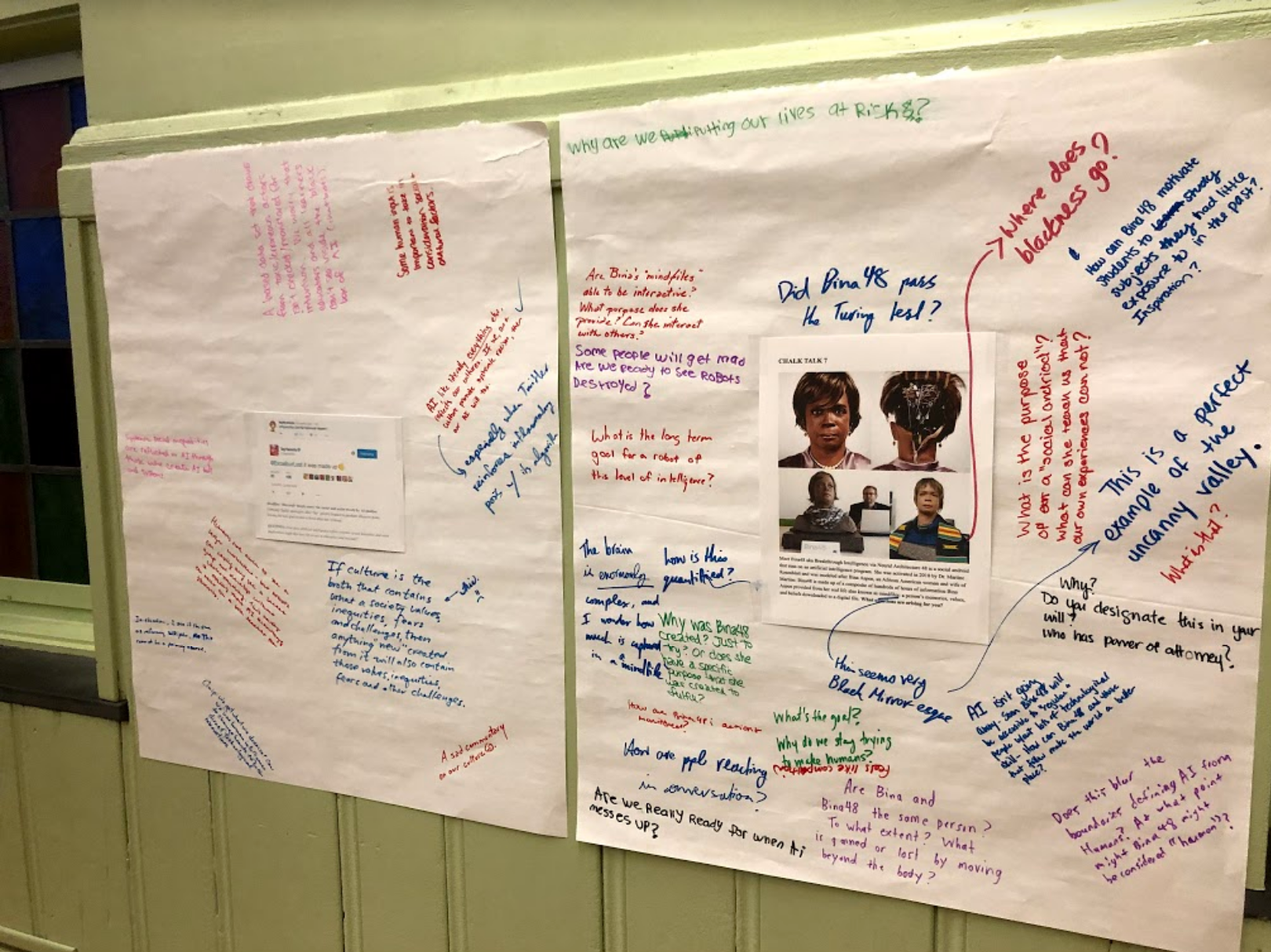
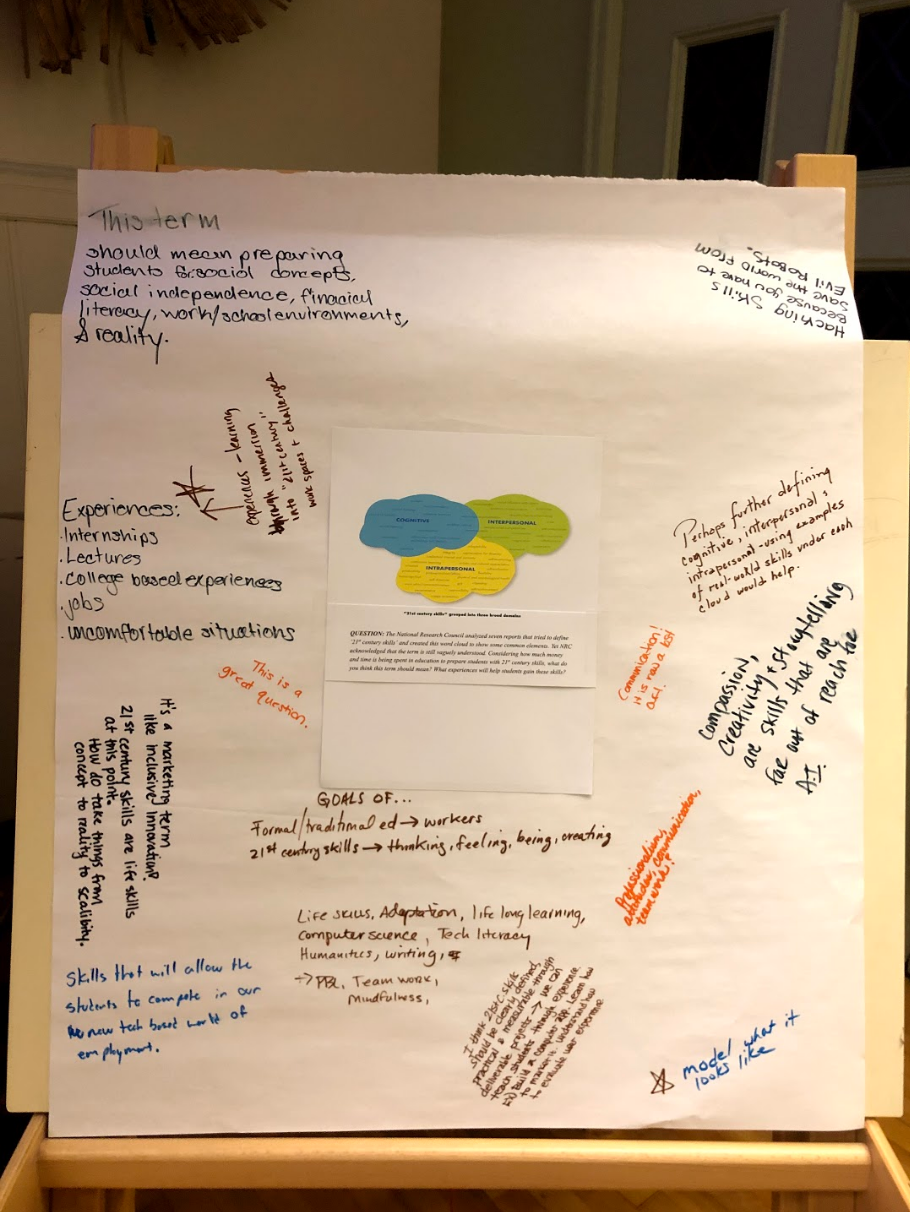
We designed three events around writing and storytelling, history and maps, and the artisanship that can emerge from being a maker and craftsperson. Each event featured interactive activities to allow participants to engage with the topics. The first, Learning Power: Examining the Future of Education Amid Automation and Artificial Intelligence, gave teachers and attendees from the worlds of education and technology a chance to reflect on images and provocative quotes by jotting down thoughts and questions on large pieces of paper spread out on tables and by participating in video interviews. The second, Neighborhood Stories: Looking Into the Past to Map the Future, encouraged educators to take part in a digital mapping project using 1910 census data from their own neighborhoods as a way to bring alive history and social science lessons in classrooms. The third, Crafting Pathways: Makers and the Future of Work in Appalachia, was a facilitated discussion with and about makers and artists in West Virginia and Southwestern Pennsylvania who want to harness tech tools to advance their careers, elevate their crafts, and also tell their personal stories of resilience and reinvention in those areas.
Video Partnership with Steeltown Entertainment
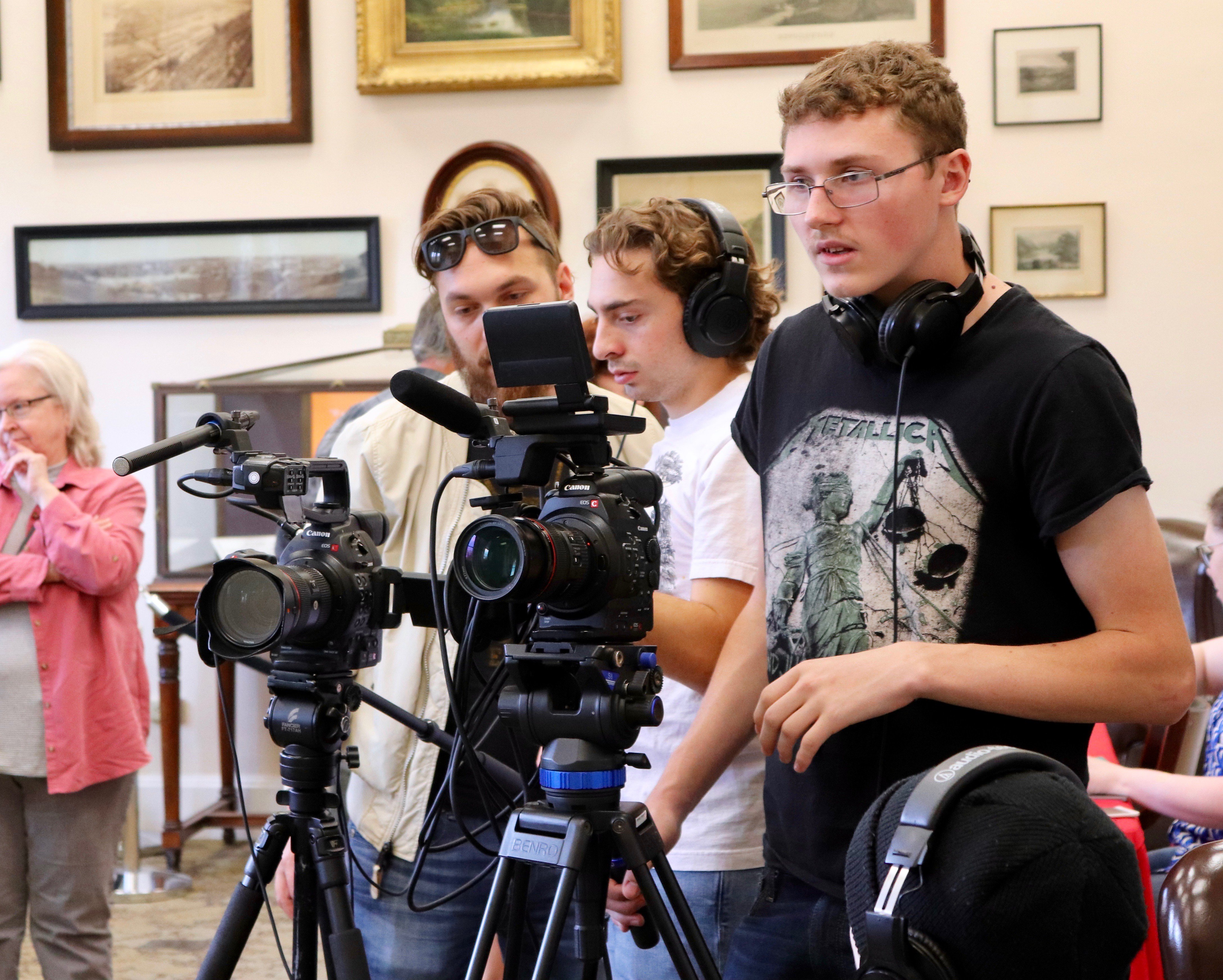
Steeltown Entertainment Project, a nonprofit that provides hands-on experience in videography for teenagers in the greater Pittsburgh region, captured footage at each event and worked with New America to design this video synopsis of the three events and some project insights:
Humanities Moments
The National Humanities Center, a partner with New America on this project, has developed an online library of Humanities Moments to highlight the power of the humanities in understanding the human experience. The Humanities Moments website enables anyone to upload a brief written story or video of how they came to a new understanding about the world because of a particular speech or a moment in history; a poem, song, or piece of literature; a trip to a new place; and more. The site, which now carries more than 250 of these personal moments for anyone to view, read, and share, can be a helpful prompt or launch pad for discussions in schools and communities.
Citations
- “So the Internet Didn’t Turn Out the Way We Hoped,” New York Times Magazine cover story, November 17, 2019. Available as an interactive article: https://www.nytimes.com/interactive/2019/11/14/magazine/internet-future-dream.html
- Ryan Rydzewski, Still Hiring Humans: The Future of Work in Pittsburgh and Beyond (Pittsburgh: Grable Foundation, 2019): https://grable.org/content/uploads/2019/02/still-hiring-humans.pdf
Ideas, Provocations, and Stories
Below are a collection of key themes and comments from participants at the events, gathered and documented via video either from one-on-one video interviews or moderated discussions with speakers and facilitators.
Learning Power: Examining the Future of Education Amid Automation and Artificial Intelligence
July 24, 2019
The first event was developed with the Western Pennsylvania Writing Project (WPWP) and the CREATE Lab at Carnegie Mellon University, which are also hosting working group discussions about the role and impact of artificial intelligence in education. This event became a way to continue some of those conversations with a larger group of educators from Pittsburgh and other areas. It was held as an evening event at Falk Laboratory School and affiliated with the WPWP’s Summer Institute. In addition to prompting participants to do some writing and group reflecting, the event featured a conversation with Nicole Mirra, author of Educating for Empathy: Literacy Learning and Civic Engagement, and an assistant professor of urban teacher education at Rutgers University.
Key themes and questions:
● Many of today’s students are interested in using new technologies to help their voices be heard and wish more educators would give them those opportunities.
● If artificial intelligence systems are used in education, are inherent biases taken into account? How?
● What does it take to ensure that technology for classrooms is designed with educators instead of just for educators?
● Guiding the use of new communications tools, such as remote video chat, with students across boundaries (geographic or otherwise) may help to create space for more empathy and understanding of different groups.
Comments from participants:
● “It was really exciting to hear the discussion of critical civic empathy and how we can use digital tools to help students learn how to break those bubbles created by residential and school segregation as a way to foster empathy, inquiry, and responsiveness.” —educator
● “I’m into people using technology to create human experiences and expanding their network to find more information and more people to connect with and collaborate with for new content or to explore or inquire about all content.” —tech business leader
● “We need to examine who is creating the AI [artificial intelligence] tools and what biases they bring to the table—and understand that since it is created by humans and we are innately flawed that the systems too are going to be reflective of those biases that the programmers bring into them.” —educator
● “So it’s not so simple to say, ‘let’s all just get along.’ We need to go a little deeper to understand why power manifests itself in certain ways and if I truly want to understand what life is like through another person’s perspective, it takes a lot of personal excavation of my own privilege; it takes true dialogue and communication, it takes moving past a lot of those surface narratives we have.” —researcher and writer
“How do we get that conversation centered back on what is the learning that occurs rather than the newest and latest?” —educator
Video of interviews with participants.
Event recap: Artificial Intelligence, Youth Media, and the Future of Education
Neighborhood Stories: Looking into the Past to Map the Future
October 5, 2019
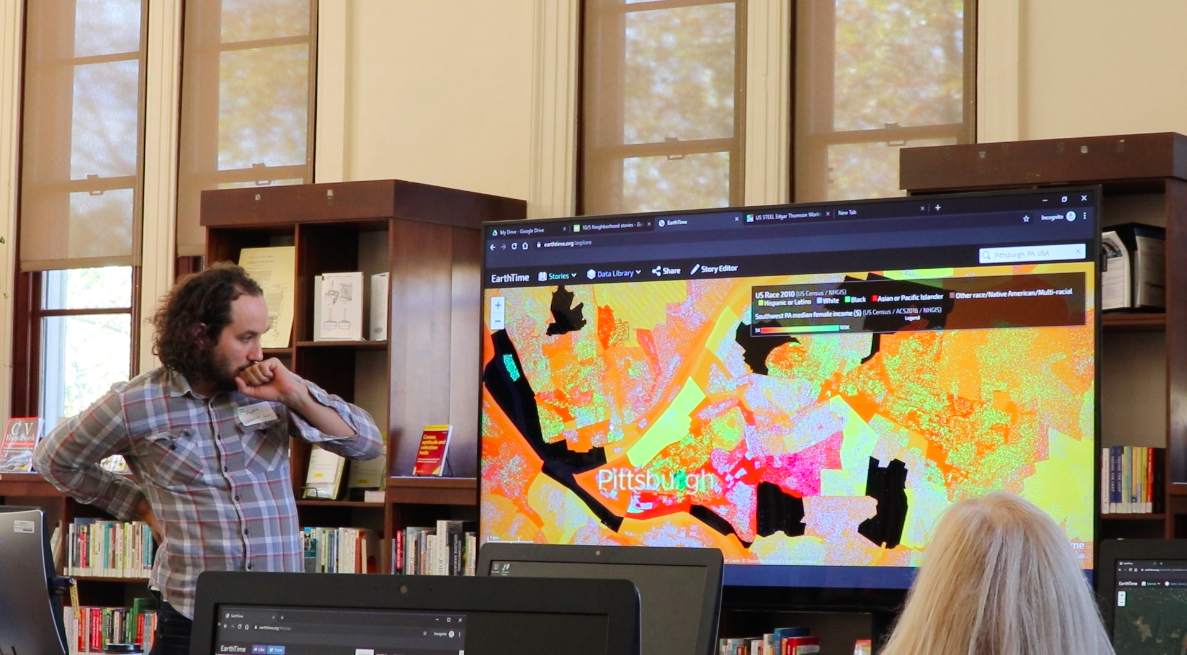
The second event was hosted at Carnegie Library of Pittsburgh as part of the Historic Pittsburgh Fair. In addition to exploring displays from historical societies showcasing their artifacts and photos, educators were invited to a professional development workshop on how to merge the teaching of history with digital map-making tools. The Senator John Heinz History Center presented a lesson on how to use 100-year-old census data with the pin-drop functionality of Google maps to visualize the various nationalities and ethnicities that shaped the city a century ago. CREATE Lab showed teachers how to use EarthTime, an open-source data visualization and mapping program that can use demographic data to identify disparities from one neighborhood to another and provoke educators and students to inquire about the roots of those disparities. Andy Mink, vice president of education for the National Humanities Center, and Sunanna Chand, then director of Remake Learning, gave lunchtime talks on the usefulness of mapping not only for geographic understanding but also as a way to analyze social connections.
Key themes and questions:
● Maps are not just depictions of geography or physical space. They show connections between groups and ideas.
● Who or what is left off of a map can be as telling and important as who or what is placed on the map.
● Where can teachers, students, and community members go to learn more about digital mapping as a tool for understanding history, culture, and society?
Comments from participants:
● “I’d like to see and apply these tools to talk about social justice issues that have historically happened in our community and that are happening now for young people in our schools….Challenging these systems is important to make sure we’re uplifted and affirmed and celebrated and not invisibilized.” —community educator and youth organizer
● “My grandmother is 93 years old and is still alive….We’re capturing oral history and hope to be able to pinpoint them on a map and tell some stories…and that’s great for my nieces and nephews. Grandma tells you something. Imagine the amount of history [she is privy to].” —tech business leader
● “What [our digital landscape] requires is an ethical core. It requires us to understand [our] values and relationships and purposes… and hopefully technology will express that and not the other way around.” —education leader
● “We really need the humanities—the history, the arts—to pair with the technology to create a more just and equitable society.” —education leader
Video of lunchtime key notes at 2nd event.
Video at the end of the 2nd event, about the digital mapping in education.
Crafting Pathways: Makers and the Future of Work in Appalachia
December 4, 2019
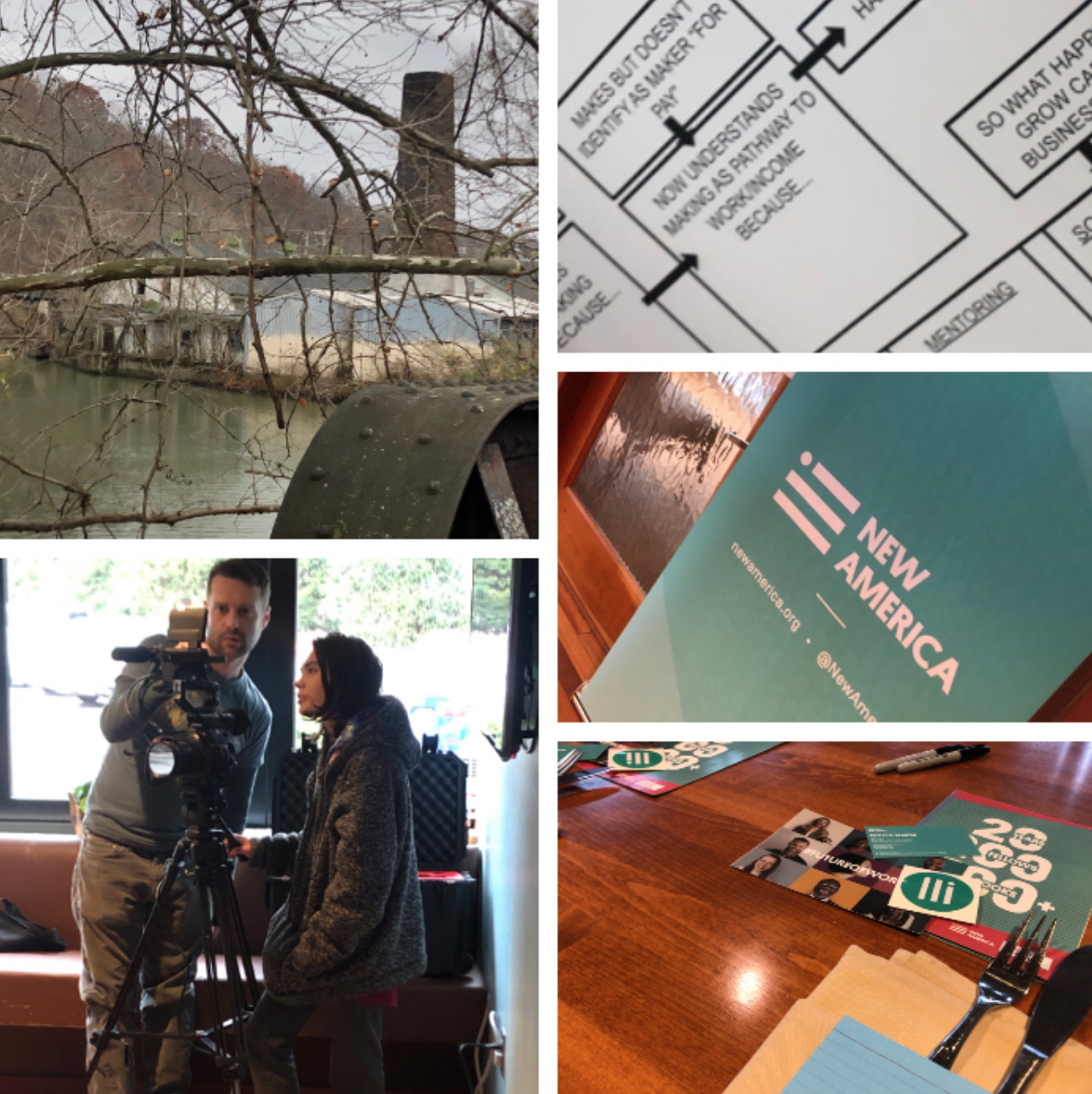
The third event in the series, held in Morgantown, WV, focused on the economic and cultural importance of artisans and makers. Pittsburgh has a strong legacy of art and makers; it is also a city at once tied to and separate from the rural communities that surround it. It is important for artisans across the region to have their work validated—by educators, consumers, and the public—but it is potentially a matter of economic survival for the most rural areas, perhaps most in West Virginia. Local makers, social impact investors, educators, and arts organization leaders gathered at a local restaurant to discuss economic and labor market factors leading to the economic vulnerability of residents and how artisans’ and makers’ work builds future-proof skills and a vital craft manufacturing culture.
Key themes and questions:
● There is both an appetite and a system support for the credentialing of makers and artisans. But the label “makers” does not always resonate with the makers themselves, and we need a clearer public conversation about the market value and portable skills associated with these creators, as well as how to attract and retain them in the market.
● Beware of “parachute fatigue” in rural spaces: journalists, think tanks, non-local fellowships dropping into the region to fetishize or lecture locals. Participants talked of needing resources and programs to elevate existing programs and leaders, versus replacing them.
● How might rural residents participate in the economy remotely? What cultural and community-building needs must be met in order to make remote work fulfilling and not isolating?
● People value locally-made and/or handmade goods, a demand that more artisans in West Virginia could meet if provided resources to connect to education, platforms, and workspace.
● Do not underestimate the importance of telling stories of hope when you are working for a rural community’s survival. Telling stories and showing success achieved through authentic work is vital.
Comments from participants:
● “There are young people who really want to stay but feel like they don’t have any opportunity.” —economic consultant
● “We have a crisis of hope.” —STEM outreach coordinator
● She makes beautiful works of art,…has two kids, works at Pizza Hut,…has no technological training. If she had a website where she could post her art and this stuff, then people like y’all and all around the world would be paying her a lot of money for her Appalachian art.” —author and activist
● “[When we talk about helping people see themselves as ‘makers’] why start with the word ‘maker?’ It’s been co-opted….We should start by talking about them…the people.” —education leader
For more on makerspaces and collaboratives in the region visit https://remakelearning.org/maker-learning-collaborative/, https://www.monmade.org/ and https://wvmakes.com/
For the Future
The quotes, themes, and stories from all three events are evidence of just how much people want and need tools to tell their stories, communicate their values, identify and address gaps in who is included in decision-making, and make a positive difference in the world. Those tools certainly include communication technologies of all kinds, from pen on paper to video documentation of a person’s insights to the ability to share artwork across social media. We also want to acknowledge how other tools of the humanities helped generate these insights, whether through storytelling, analyzing and interpreting history, or considering the intersection of artisanship and economics.
Below are three actions that could take this work forward—both in the greater Pittsburgh region and in communities around the country and across the globe grappling with the tough questions and opportunities afforded by technological change.
- Continue to integrate the humanities in conversations about the impact of and design of technology. The Remake Learning Network provides an important platform for continuing to share ideas for two themes that emerged from the first event: lifting up youth voices and including more educators in the decision-making and design of technology. Next iterations might include yet more humanities activities, such as providing opportunities for participants to write and reflect on the impact of a particular technology from the present and the past, or describing a new app or tool they wished existed in the learning space today.
- Build on interest at the intersection of digital mapping, storytelling, and social studies. Educators wanted more details on how to use digital maps for particular lesson plans and in ways that are relevant to the standards and concepts they have to teach. Could educators join with mapping developers as well as education and history faculty at universities to form an affinity group that explores the topic further?
- 3. Consider new events and messages that highlight the work and stories of all kinds of people who make and create, recognizing that the label “maker” itself may feel limiting. On its face, one might assume that the word “maker” should easily apply to many different people and many different types of making, creating, crafting, and building. But participants at the third event in Morgantown raised concern that “maker” can quickly become defined by the most visible players (such as those who are white, male, and live in cities). Artisans and craftspeople do not necessarily identify as makers, but all need access to learn, validate, sell, and share work.
A Checklist for Hosting Your Own Humanities+Tech Discussions
Humanities+Tech discussions can be as big or small as you want them to be. But holding events that require multiple thought partners is complex and requires a unified vision and commitment across organizations. The questions below come from New America’s experience hosting scores of events every year and are based in large part on lessons we learned producing these particular events in the Pittsburgh area.
- Where do you want to go and who is driving? Get leaders together to set goals and decide which organization will be the lead coordinator. If there is a desire in your community for a values-oriented discussion about technology, do planners have a fair representation of voices which express opportunity as well as concern? Are there debates afoot about what you want your school system or your community to look like in the future? Are there segments of society that are not often in the same room together? Why is that? Use those questions as a starting point. Determining early on what success looks like—whether it is engaging a diverse audience, uncovering scalable solutions, or elevating a particular idea—is essential to a robust conversation that satisfies all stakeholders.
- Are you able to conduct personal outreach? The most dynamic discussions come from varying viewpoints, but it can be challenging to get people from different realms into a room together. Even in the Humanities+Tech series, which had multiple partners, we found securing divergent and marginalized voices a challenge. For example, in the first event, a tech designer from CMU pointed out that although educators said they wanted more say in design decisions, “this whole meeting was designed towards educators and there were not as many designers present." Ask stakeholders whether they have the capacity to do personal outreach for future events, and make diverse representation—both with speakers and in the audience—a foundational group agreement. Consider how it could be useful to design the event to favor conversations between people with different or contrasting backgrounds. Making outreach a priority when goal-setting ensures that inclusivity remains a consistent and driving theme when designing the scope of the project and prevents redundancies by provoking cross-cutting conversations in safe environments.
- Do you have connections to humanities locales? Take an inventory of various learning centers in your community. Are you able to partner with humanities experts, docents, or storytellers at libraries, museums, or universities who could provide tools or artifacts (film reels, digitized photos, pieces of artwork) to spark discussions? Could you piggyback on or augment an already standing event or workshop with a Humanities+Tech lens? By tapping into existing institutions or initiatives, you increase the potential for substantive conversations and elevate the visibility and impact of programs in inventive ways.
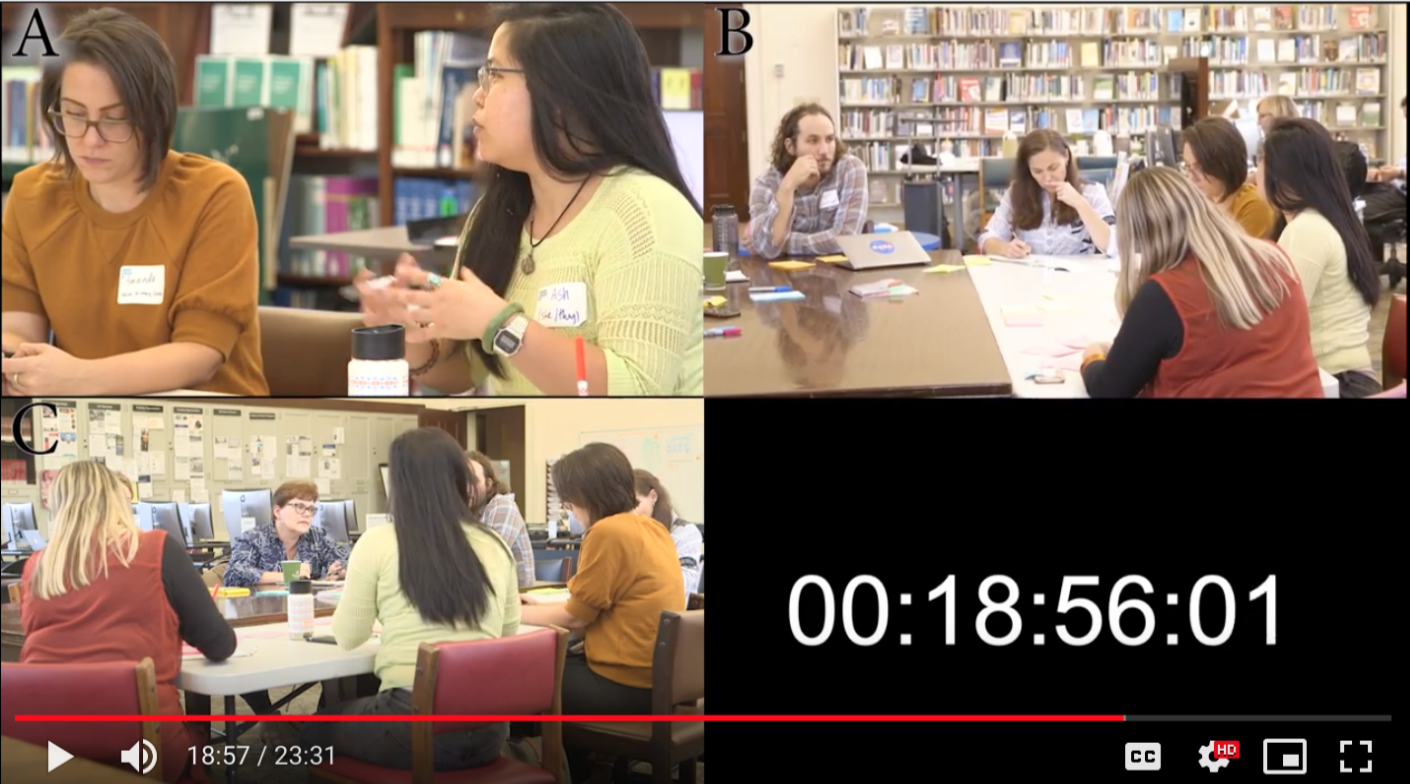
- Can you design opportunities for participants to record reactions and ideas? One of the most successful aspects of the Pittsburgh Humanities+Tech events was the use of a “Chalk Talk” strategy. Borrowed from the Western Pennsylvania Writing Project (an arm of the National Writing Project), Chalk Talks encourage participants to ruminate on particular prompts (photos, quotations, etc.), both silently and in conversation with others, and to express top-of-mind thoughts by writing a few lines of response. For example, at the July 24 event, participants wrote items such as, “I see a lot of focus on the ‘risk’ of online spaces. What about the possibilities of taking transformative action?” and, “When profit is the motivation of AI systems, there is always an overlooking of what people actually need and/or want. We often strive for this idealistic win-win scenario, where companies can make a profit while improving society. However, I think that is a false premise.” Building in ample opportunities for attendees to participate and be heard fosters a shared ownership of the project’s outcomes and gives critical food for thought about future collaborations and community-informed solutions.
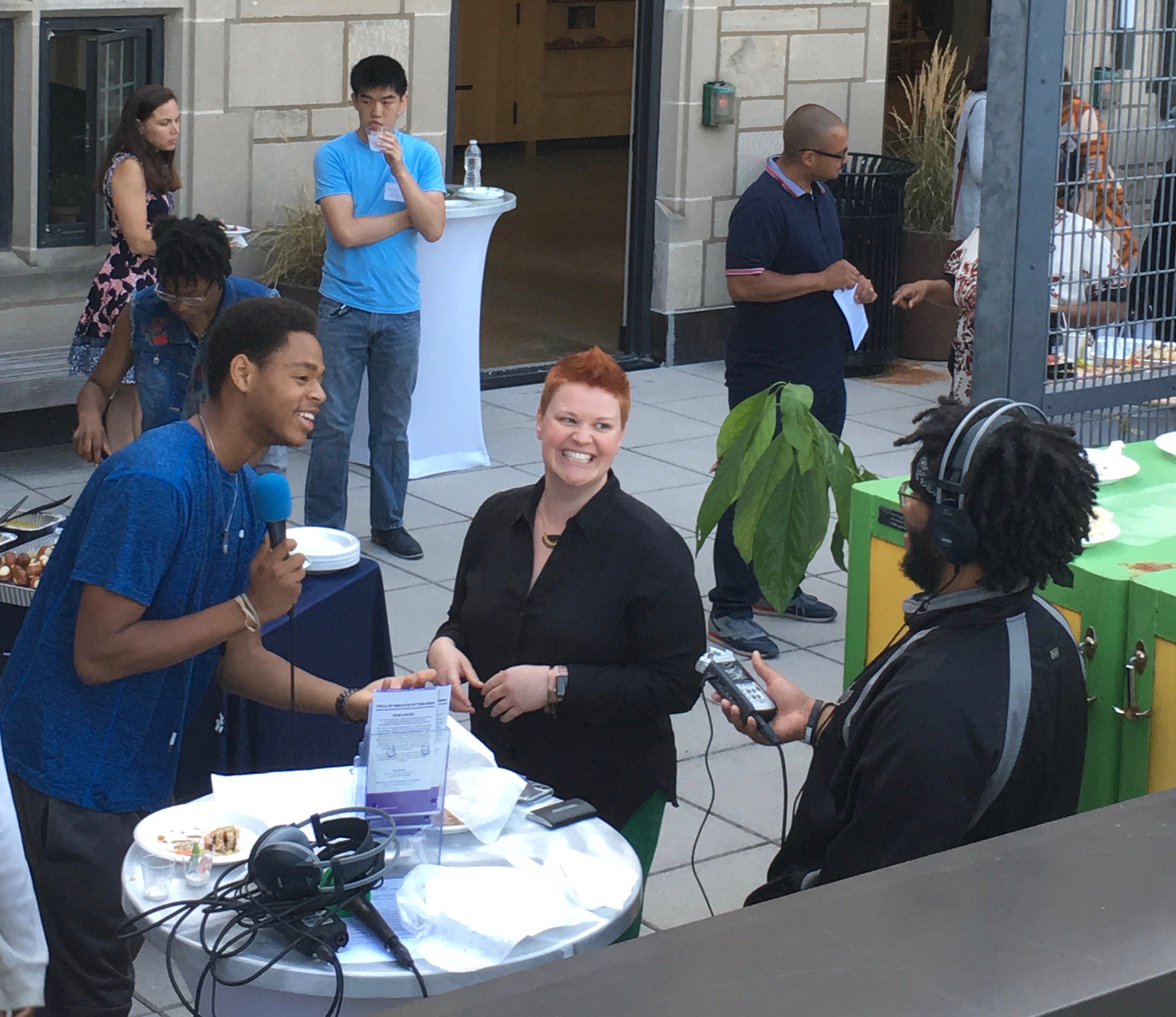
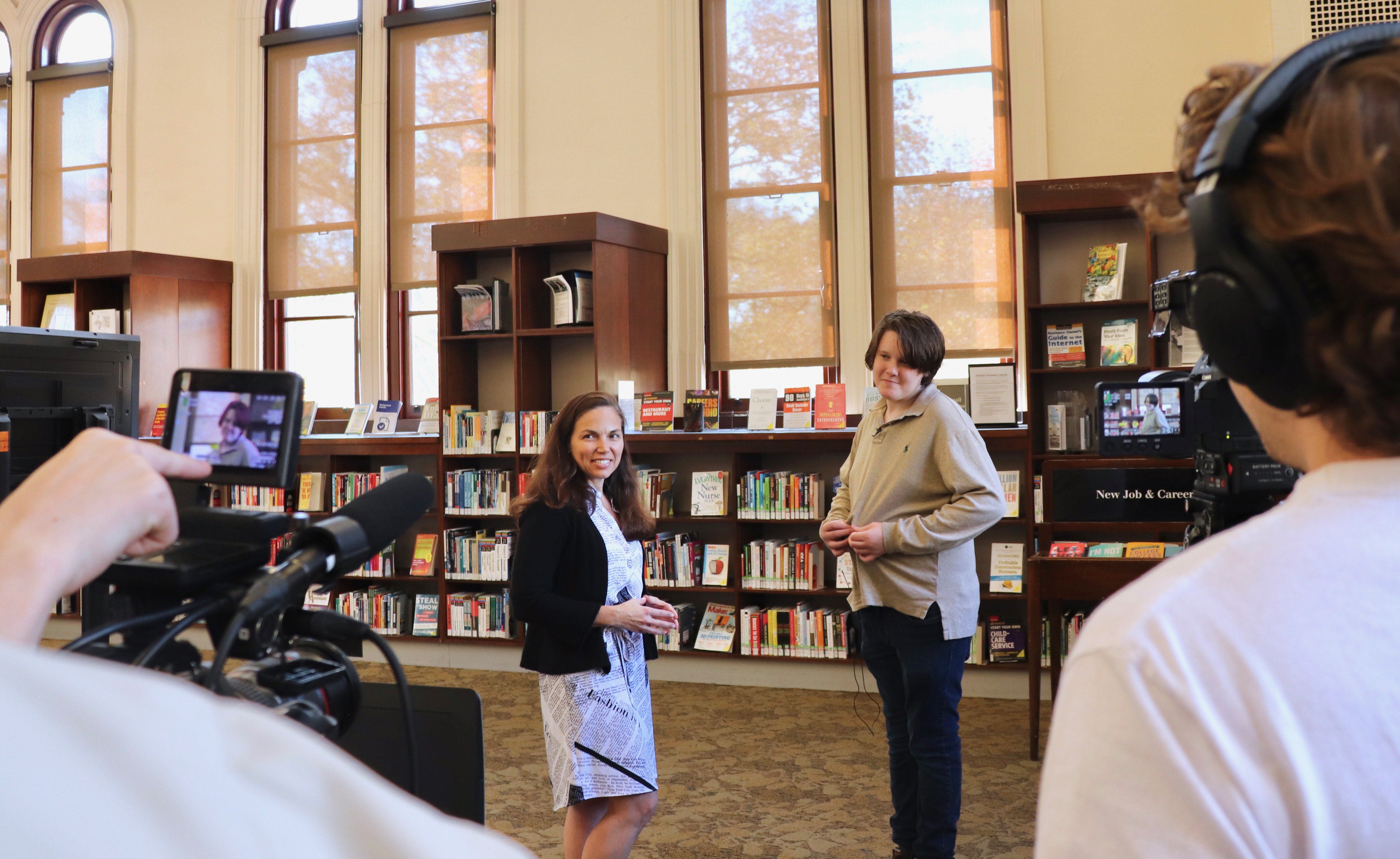
- Do you have a way to engage youth in the events? As young adults are interacting with the humanities and tech on a daily basis, understanding their perspective is a crucial piece of this conversation, and could be used for pioneering your event’s design and outputs, generating innovative ideas (when they are included as participants), or disseminating the discussion to their peers through social media or an educational project. The greater Pittsburgh area has the benefit of Steeltown Entertainment, a nonprofit that supports film and digital media arts by developing diverse content creators with training, mentoring, equipment, and networking opportunities. But even if your community does not have a Steeltown, there are opportunities to draw in youth and young adult participants by connecting with local high school and college film clubs, youth podcasting studios, or journalism courses. Engaging youth in this way not only gives them valuable experience in using digital media to document and record, but it also opens opportunities for older people to talk with younger people about their perspectives. Being part of these events also helps expose youth to current debates and helps them make their own connections to history, art, philosophy, and other humanities subjects. “We’re learning audio, how to record the audio, how to record on all sorts of cameras and how to set them up, and we’re also doing editing,” said Charles McDonald, a sophomore at Pittsburgh CAPA (Creative And Performing Arts) 6-12 School and student lead for the Steeltown crew. “You’re getting a lot of experience that you wouldn’t get otherwise.”
Resources
In this section you will find:
- Video resources documenting the Humanities+Tech series
- Digital Mapping Resources
- Information about Mission: Visible
This 4-minute video provides an overview of the Humanities+Tech event series produced by New America in 2019, which was designed to use tools of the humanities (writing, storytelling, history, geography, art, and more) to draw out insights from diverse groups of educators, youth, families, technologists, artists, and workers about the future of learning and work. It includes quotes and other take-aways from speakers at three events throughout the greater Pittsburgh Region throughout 2019. Videography by Steeltown Entertainment as part of New America’s Humanities+Tech project.
This video introduces the first Humanities+Tech event, Learning Power: Examining the Future of Education Amid Automation and Artificial Intelligence, which took place at the Falk Lab School in Pittsburgh on July 24, 2019. It features an hour-long moderated conversation between New America’s Kristina Ishmael and Nicole Mirra, the author of Educating for Empathy, as well as questions from educators and others in the audience. The event was held in conjunction with CREATE Lab at CMU and the Western Pennsylvania Writing Project’s Summer Institute. Videography by Steeltown Entertainment as part of New America’s Humanities+Tech project.
This 4-minute video is a composite of interviews conducted by Steeltown Entertainment students and teaching artists to capture reflections on the event, Learning Power: Examining the Future of Education Amid Automation and Artificial Intelligence, held at the Falk Laboratory School in Pittsburgh on July 24, 2019. Videography by Steeltown Entertainment as part of New America’s Humanities+Tech project.
This video captures the lunch talks given at the second Humanities+Tech event, Neighborhood Stories: Looking into the Past to Map the Future, which took place at the Carnegie Library of Pittsburgh’s Oakland library on October 5, 2019 as part of the Historic Pittsburgh Fair. The video features ~45 minutes of remarks by Andy Mink, vice president of education at the National Humanities Center, and Sunanna Chand, then-director of Remake Learning. The remarks were given as part of a workshop for educators designed by CREATE Lab at CMU and the Senator John Heinz History Center. Videography by Steeltown Entertainment as part of New America’s Humanities+Tech project.
This video captures a 30-minute afternoon discussion at the Carnegie Library of Pittsburgh on October 5, 2019 among educators and workshop presenters, as well as New America event leaders. The discussion centered on what it will take to bring the tools of digital mapping into K-12 classes that cover history, social studies, climate science, and social justice topics. Videography by Steeltown Entertainment as part of New America’s Humanities+Tech project.
This nearly 2-hour video captures the introduction and discussion of the third event in the Humanities+Tech series, titled Crafting Pathways: Makers and the Future of Work in Appalachia. It took place in Morgantown, W.Va., and features a moderated discussion by Molly Martin, director of New America Indianapolis, with leaders from West Virginia University as well as artists and makers in West Virginia. Videography by Steeltown Entertainment as part of New America’s Humanities+Tech project.
Digital Mapping Tools
Digital mapping tools provided to educators and other attendees of the second event:
● Special collections and databases at Carnegie Library of Pittsburgh (including 19th century newspapers and The Pittsburgh Courier)
● Tours at Carnegie Library of Pittsburgh
● Learning Lab at the Senator John Heinz History Center
● EarthTime by the CREATE Lab at Carnegie Mellon University
● Humanities Moments from the National Humanities Center
Additional resources noted by participants:
● Historypin (including the Heinz History Center’s Historypin page)
● Map activities for young children, from Erikson Institute’s Early Math Collaborative
Mission: Visible
At the same time that New America’s Teaching, Learning, and Tech team was leading the Humanities+Tech project, the Better Life Lab at New America was launching Mission: Visible, a new resource for elevating the voices of women and people of color who are too often invisible or underrepresented on TV; in the news, movies, and history books; and at public events. The resource provides a directory of organizations that highlight untold stories, distribute materials such as photographs that are true to the diversity of society, and can provide starting points for Humanities+Tech discussions. A section on “arts, humanities, and social sciences,” for example, links to the National Women’s History Project, and the “performing arts and culture” section highlights WOCinTech Chat Stock Photos, which provides photos of women of color in tech, free to use under Creative Commons license.
More About the Authors

Molly G. Martin
Vice President, Development & Strategy
Lisa Guernsey
Senior Director, Birth to 12th Grade Policy; Co-Founder and Director, Learning Sciences Exchange

Kristina Ishmael
Senior Research Fellow, Teaching, Learning, & Tech Program