Myanmar, interrupted
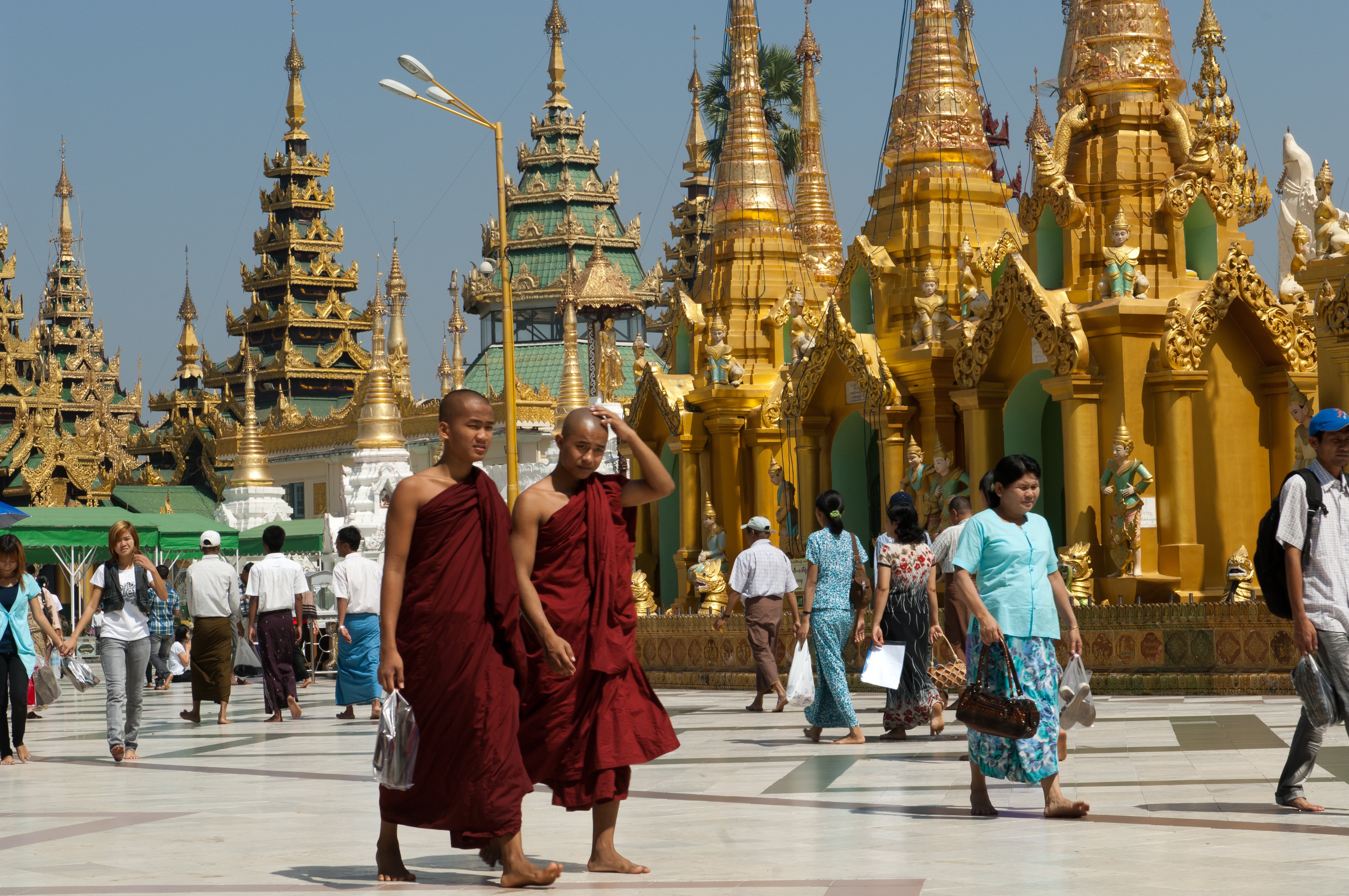
2015 seems like it’s primed to be a new turning point in
Myanmar’s history.
Last week, officials announced that Myanmar is
slated to go to the ballot box on November 8 for what will be the country’s first
open general election in 25 years. In 1990, Aung San Suu Kyi, Myanmar’s darling
of peaceful resistance to state oppression, overwhelmingly won at the polls – but
the ruling military junta tossed out the results. Because of her efforts to stimulate
democracy, Suu Kyi spent the better part of two decades under house arrest. She
was released in 2010 as part of the state’s transition to a quasi-civilian
government.
Myanmar has witnessed far-flung political changes since
then, and hopes are indeed running high that the election will position the
country to take critical steps toward full-fledged democracy. How significant
the election will prove to be, however, is still an open question.
Understanding the election’s political stakes requires a
look back at the past few years, which have seen some promising developments.
In 2011, the state released
some dozens of political prisoners as part of a national pardon. In 2012, Suu
Kyi’s National League for Democracy (NLD) swept a special election,
speaking to a popular hunger for reform, and in that same year, President
Barack Obama became the first U.S. president
to visit what had long been one of the world’s most isolated countries. In
2013, the E.U. followed suit and loosened some of its
sanctions on Myanmar. And in her 2014 bestseller Hard Choices, Hillary Clinton lauded the
country’s pivot away from authoritarianism as one of the jewels in her diplomatic
crown as the U.S. Secretary of State.
But these flashes of hope obscure darker stories of oppression
and impending crisis that lie just beneath the surface.
Despite the above, many pundits are treating this year’s
general election with a healthy dose of skepticism.
They caution against careless optimism over a multi-party election in the face
of the overall dwindling pace of reform in Myanmar’s burgeoning democracy.
Myanmar has recently been gripped by student demonstrations
and violent crackdowns on them. A few months ago, in March, baton-wielding police
officers arrested
over 100 students calling for academic freedom at rallies in Letpadan, a city on
the fringes of the old capital, Yangon. International actors confined their
responses merely to doubts about the state’s willingness to usher in reform, despite
history’s
lessons that student movements have often signaled important political change
in Myanmar, as was the case with the 8888
Uprising in 1988.
Another reason the national election may not be a barometer
of progress is the fact that the most severe crisis confronting Myanmar is
playing out beyond its borders. Since 2012, swells of violence
between Rakhine Buddhists and Rohingya Muslims in Rakhine State, sprawled along
Myanmar’s west coast, have killed nearly 200 people and left several thousands more
homeless. Anti-Muslim violence is hardly new in the country – rather, it’s stitched
into its colonial roots – but oppression has, predictably, increased after several
years of internal détente. This unrest has prompted thousands of stateless
Rohingya Muslims to trek between countries across the region, seeing who will let
them in, which has in turn triggered a migrant
crisis in Southeast Asia.
Ethnic tensions have ricocheted across other parts of Myanmar
as well. In the northern mountains, neighboring China, the army is locked in a war
with ethnic Kachins. Recent moves by radical Buddhist groups to push the
parliament to restrict
interfaith marriage have also inflamed ethno-religious conflict.
These various clashes threaten to limit the positive impact
of November’s election. Aung Zaw, editor of The
Irrawaddy, a news magazine focusing on Myanmar, recently told
CNN that the “aspirations of these diverse ethnic groups, each represented by
political parties, are likely to play a big role in the election and ensuing
political negotiations.” (Full disclosure: I’m currently working for The Irrawaddy.)
Most attempts to inch forward are snagged on an unyielding
power structure built around the centrality of the military. In an interview,
Bertil Lintner, a Myanmar expert whom the country had blacklisted
for almost 30 years, said to me that “foreign diplomats and assorted academics
keep talking about a ‘reform process,’ but there’s an entirely different
reality on the ground,” especially for the military, which, as the country’s
most powerful institution, has always held the trump card in the political game.
A 2008 constitutional referendum spells
out that the military must “participate in the national political
leadership role of the state.” But that’s not all: 25 percent of the 664
parliamentary seats are reserved for the military, and making constitutional
changes requires the say-so of more than 75 percent of the parliament. What’s
more, even though Suu Kyi’s NLD has said
that it will contest the election, the Nobel laureate herself is barred from
vying for the presidency because her two sons hold foreign passports. Put
another way, “there are enough safeguards in the 2008 constitution to prevent
changes that would or could undermine the military,” Lintner explained.
This isn’t to suggest that Myanmar’s stab at shedding its decades-long
status as a global pariah over the past five years is somehow trivial. But rather
than being the forerunner of a new Myanmar, 2015 ought to be a year for taking
stock of what ethnic tensions and structural issues might mean for the
much-heralded election – and the country’s supposed return to democracy.
“The election may be free and fair, but that’s unlikely to
change the basic power structure,” Lintner told me. “Once the smoke has
cleared, it might just be business as usual.”
This article originally appeared in Foreign Policy’s South Asia Channel.
More About the Authors
Related

Cosmetology Students Deserve Better Than Debt and Broken Promises
Mixed-Member Proportional Representation and the U.S. House of Representatives