A Wobbly Stool

The House version of legislation to reauthorize the Higher Education Act contains language that proposes to change how student loan defaults are calculated, a move that could have serious implications for schools and students access to federal student aid. This is a welcome change to the current shaky three-part system of accountability that fails to provide good information about the absolute and relative quality of a schools education.
 The Current System
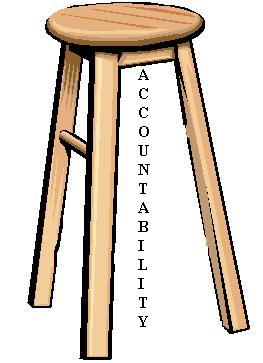
The absence of national examinations leaves only three things with enough teeth to effectively judge colleges that are not meeting desired standards for higher education: (1) accreditation, (2) licensure, and (3) loan defaults. Failure to meet these requirements can cause the school to lose the ability to receive federal funds meaning all its students will be denied Pell Grants, Stafford Loans, and other forms of aid. Unfortunately, these measures do little more than guard against diploma mills or fake schools, indicating nothing about the quality of an individual institution.
Accreditation appears to be the strongest of the three legs of this accountability stool, but in practice it is little more than a rubber stamp. To be accredited, an accreditation agency, which is typically one of six regional groups, looks at a schools resources and goals. Yet, as a July 2007 report by the American Council of Trustees & Alumni points out, these visits generally consist of little more than seeing if a school is meeting certain inputs, such as enough highly-qualified faculty. Accreditation agencies pay little to no attention to the outcome-oriented measures.
State licensure operates in a similar manner to these regional accreditation bodies with universities required to meet certain benchmarks set by their state. In many respects, state licensure is even easier to meet than accreditation standards, as the requirements are only on the local level.
Of these three standards, loan default rates are by far the most complex, yet also possibly the best measure of quality. The Department of Education calculates the percentage of students repaying federal loans from every given graduation year, known as a cohort, that default on those loans within two years of leaving school (for example, the 2005 cohort is measured in 2006 and 2007). Defaults in the third year or later are not counted.
Schools with more than 30 individuals in a given repayment cohort are subject to sanctions if more than 10 percent of a cohort defaults. A default rate of 40 percent in a given year or 25 percent for three consecutive cohorts results in the school losing access to federal funds.
The connection between cohort default rates and quality is not as obvious as regional and state accreditation, but it plays just as important a role. Since students can defer payments due to certain forms of hardship, defaulting on a loan is a sign that a student took on too much debt or could not obtain a job that allowed him or her to meet monthly payments. A large number of students in default thus can expose a school as being overpriced, poorly preparing its students for the working world, or both.
Despite their utiltiy, default rates are also a weak accountability measure in their current form. As our colleagues at Education Sector point out, it takes some time for a loan to officially default, meaning that the two-year window really only reflects students who make no payments on their loans.
A Welcome Change
Within the House reauthorization of the Higher Education Act there is a provision that would extend the cohort default rate measurement window (page 91) by another year, meaning students that default any time in their first three years after graduation will be counted for accountability purposes.
An analysis of default rates by the Department of Education found that a longer-term snapshot could show that default rates are as much as 60 percent higher than with the two-year window. Under the proposed change, public schools would see their average default rate go from 4.7 percent to 7.2 percent, while private schools would edge up to 4.7 percent from 3.0 percent.
The biggest increase, however, would be at for-profit institutions, which would see their average default rate increase from 8.6 percent to an estimated 16.7 percent. Even more troubling, though, is the fact that were the cohort window extended to four years, for-profit colleges would have an average default rate of 23.3 percent. In other words, after four years, one out of every four for-profit students would likely have defaulted on their federal student loans.
The Career College Association, an organization of vocational private schools, is opposing the House provision (click on Background Information), claiming that defaults far into the future have “little to do with [the students] education and more with their personal behavior and responsibility, or the lack thereof.” The group goes on to claim that socioeconomic status is the highest indicator of default and that institutions enrolling lower-income students are thus likely to have higher default rates.
Even taking this argument into account, the projected for-profit default rates are still much higher than community colleges and other public institutions that enroll a large number of low-income students. For-profit default rates with a four-year window would still be seven percentage points higher than two-to-three year public schools.
This raises some troubling questions about for-profit colleges, such as whether students may be taking on overly high levels of debt to pay for programs that carry little value in the job market. It adds credence to the assertion that for-profit schools unscrupulous admissions and marketing policies are having long-term detrimental effects on their students.
When nearly one-fourth of a schools graduates default on their federal student loans, its not a sign of individual flaws. Its a troublesome indicator of an institution that is failing its students. If Congress wants to actually measure the quality of an institution, it needs to adopt the three-year window and strengthen at least one part of these supposed accountability measures.
Issues
Programs/Projects/Initiatives
Related

Accreditor Exposes Sensitive Student Information in ‘AI University’ Case

New Findings on Student and Public Stances on Higher Ed