More College-Business Partnerships

Last week we wrote about how reduced state support for higher education is leading some public universities to enter into questionable financial deals with banks and other financial companies. Today, we take a closer look at this trend, specifically the outsourcing of student identification (ID) cards.
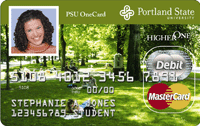 From dorm and building access, to discounts for movie tickets and accessing the meal plan, a student’s ID card is a nearly indispensable part of campus life. But at a growing number of colleges, those same ID cards are taking on a whole new slew of functions, including serving as debit and bank cards.
Allowing students to use their ID cards to purchase books or take out cash from an ATM sounds nice and convenient . But in reality, it’s indicative of a larger willingness by schools to sell anything for a profit, no matter what the downsides are for their students.
According to CR80News, an online ID technology publication, there are 127 schools with bank-ID partnerships, including most of the largest public universities in the country. At institutions like Portland State University in Oregon, students are provided an ID card that automatically comes with a credit card company’s logo. A slight variation is offered by colleges like the University of Minnesota, where students can use their “U Cards” as calling cards and to access funds at ATMs but not for purchases.
All Portland State students wishing to use the card still have to activate it on a site run by Higher One, the affiliated company. There’s no requirement to use the debit feature but doing so is strongly promoted. A cheesy company infomercial shown to incoming students (which is embedded below) actively discourages them from shopping around. “When you were accepted into this school, you were automatically approved for a new One Account, so there’s no reason to go open a new checking account,” Chris, the company’s student liaison, says repeatedly throughout the video.
What about those students who don’t want to be so aggressively steered toward a specific bank? Well, they have the option of getting a non-debit card — for a fee.
These partnership deals, which seem eerily similar to the sweetheart arrangements colleges have had with student loan providers, can be a huge financial boon both for schools and banks.
According to BusinessWeek, the University of Minnesota system received an estimated $40 million to extend its ID card partnership with TCF Financial through 2030. The bank even threw in a $2 million signing bonus to the school for making the deal. For the bank’s part, it has already signed up around 80 percent of the students at Minnesota’s campuses in the Twin Cities and Duluth for a gain of $50 million in deposits. The deals have proved so lucrative for TCF that it is now offering even better incentives for some schools, such as a percentage of student purchases or interest earned from student deposits.
So everyone’s a winner, right? Not exactly. Although Higher One promises students that they “cannot go into credit card debt with this,” there are still a litany of fees students are assessed, including ATM surcharges and overdraft payments. These can be pretty high. USA Today reported that one Portland State student was hit with $150 in charges for two overdrafts.
Fees aren’t the only way these banks can leverage their exclusive deals with colleges to exploit students. Having access to a large number of student deposits provides banks with personal and purchasing information that they can use for targeted marketing of other services, including credit cards.
To their credit, some universities have turned down these types of deals in order to protect their students. According to BusinessWeek, officials at Ohio State created their own debit system for ID cards to help their students avoid overdraft fees. Instead, purchases are simply declined if students don’t have enough money in their accounts. “We’re dealing with students who may have had no prior banking experience,” the head of Ohio State’s ID card told the magazine. “To see them hit with fees of $30 to $35 is not something we want to do.”
Just as reports of overly close deals between lenders and colleges raised alarms, so too should these ID card partnerships. The “pay for play” loan scandals raised fundamental questions about whether colleges were in fact looking out for the best interests of their students. Similar questions should be asked about these deals, which provide windfalls for colleges and banks but leave students further in debt.
Students should bank on their college for support, not the other way around.
Issues
Programs/Projects/Initiatives
Related

Accreditor Exposes Sensitive Student Information in ‘AI University’ Case

New Findings on Student and Public Stances on Higher Ed