
Higher Ed Roundup: Week of August 4 – August 8

 IG Faults Dept. of Ed’s Management of Grant Programs
Shareholders Suffer Setback in University of Phoenix Lawsuit
Massachusetts Governor Asks Colleges to Help Save Lender
IG Faults Dept. of Ed’s Management of Grant Programs
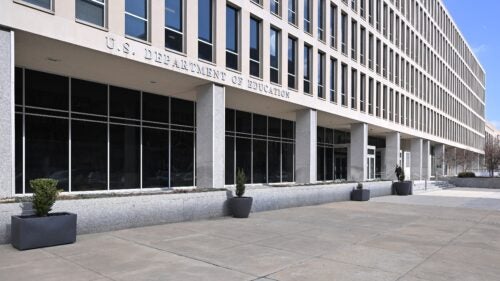
The U.S. Department of Education has not done enough to promote and oversee two relatively new federal grant programs that aim to reward low-income students who take academically-challenging courses, according to the Department’s Inspector General. In an audit report released last Friday, the Inspector General said that the agency needs to do a better job of ensuring that colleges that are required to offer Academic Competitiveness Grants (ACG) and National SMART grants are doing so. According to federal law, all colleges that take part in the Pell Grant program are required to participate in the ACG and SMART grant programs, which Congress created in 2006 as part of the Higher Education Reconciliation Act. Some colleges have been reluctant to offer the programs, which they say the Department has made too difficult to administer. The IG report urged the Department to do more to verify claims by non-participating institutions that they are ineligible for the program and to penalize those that are willfully non-compliant. The grant programs, now entering their third year, have suffered from low uptake, as barely half of the grant money available for the 2006-07 school year was actually disbursed.
Shareholders Suffer Setback in University of Phoenix Lawsuit
Shareholders in a lawsuit against the University of Phoenix, the largest for-profit university in the country suffered a major setback this week, when a federal judge in Arizona overturned a $280-million jury verdict against the Apollo Group, the university’s parent company. In January, a federal jury found the company guilty of securities fraud for having withheld crucial information from investors. At issue was the failure of the trade school chain to disclose in its Security and Exchange Commission filings and in its conference calls with financial analysts the existence of a U.S. Department of Education review that blasted its student recruiting practices. That report, which found that the university had violated a federal law that bans colleges from compensating admissions officers on the basis of enrollments, became public only after the university reluctantly agreed to a $9.8-million settlement with the Department in which it denied any wrongdoing. In his ruling overturning the jury’s action, Judge James Teilborg of the U.S. District Court of Arizona said that while Apollo Group “misled the market in many ways,” evidence presented at the trial “was insufficient to support the jury’s finding” that investors suffered significant harm as a result of the company’s actions.
Massachusetts Governor Asks Colleges to Help Save Lender
Just in time for classes to start, Massachusetts governor Deval Patrick called upon the state’s largest universities and state pensions program to help rescue the state’s nonprofit lender, the Massachusetts Education Finance Authority (MEFA), after the loan provider stopped issuing federally backed loans on July 1. Gov. Patrick’s proposal asks the state pensions fund, Harvard University, Boston University, the University of Massachusetts system, MIT, and other schools to invest in the upcoming $425 million bond sale by MEFA, which issued $110 million in federally backed student loans last year. Massachusetts state legislators have been pressuring Patrick to loosen up funds for MEFA after more than 40,000 students were left scrambling to find other lenders after the loan provider decided to stop lending.
National associations representing colleges and universities expressed reservations about establishing financial relationships between colleges and lenders in the wake of the high-profile 2007 investigations by New York State Attorney General Andrew Cuomo and ensuing student loan scandal. “It would be risky for a college to invest in a student-loan organization given the charges of conflict of interest that would surely follow,” Terry Hartle, senior vice president for government and public affairs at the American Council on Education, told The Chronicle of Higher Education. A representative for Harvard University and the pensions fund said that they will consider the proposal.
Issues
Programs/Projects/Initiatives
Related
A Key Piece of the Trump Accreditation Plan Threatens Accountability