
Higher Ed Roundup: Week of September 1 – September 5

 Cuomo Moves to Sue Loan Company
Education Department Reports 43 Percent Growth in Direct Loan Program
Audit Urges Restructuring of PHEAA’s Board
Congress Returns, and so Does the Endowment Debate
Cuomo Moves to Sue Loan Company
New York Attorney General Andrew Cuomo has announced that he is planning to sue Goal Financial, one of the nation’s largest federal loan consolidation companies, over alleged improper marketing tactics. Cuomo claims that Goal, which also provides direct-to-consumer private loans, lured students with promises of i-pods, cash, and gifts and misled students about the benefits of the loans they offered. The New York Times reports that while other direct-to-consumer student loan marketers are cooperating with Cuomo’s office, Goal is being sued because it has refused to change its practices. This forthcoming suit is the latest in a long-term investigation of the student loan industry by Cuomo, which up to this point has primarily focused on sweetheart deals between lenders and colleges.
Education Department Reports 43 Percent Growth in Direct Loan Program
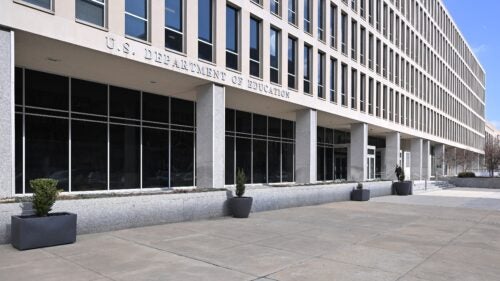
In the wake of the student-loan credit crunch, the U.S. Department of Education reported last week that it has experienced subtantial growth in the Direct Student Loan program over the past year. The Department said that it has originated nearly $11 billion in loans this year to 1,156 colleges compared to $8 billion to students at 851 colleges at the same time last year, representing a 43 percent increase in loan volume. The largest share of this growth came from Pennsylvania State University, which switched to the Direct Loan program in March after the state’s largest lender, the Pennsylvania Higher Education Assistance Agency (PHEAA), temporarily suspended its participation in the Federal Family Education Loan (FFEL) program. So far this year, Penn State students have borrowed more than $100 million through the Direct Loan program. In an interview with The Chronicle of Higher Education, which first reported this story, Anna Griswold, Penn State’s executive director of student aid, said that she was “pretty pleased” with the transition, and that she expected operations to run smoother than they did working with PHEAA. “When there was a problem” with PHEAA, she stated, “getting it resolved took a little bit more effort.”
Audit Urges Restructuring of PHEAA’s Board
More than a year after documents revealed that executives at Pennsylvania Higher Education Assistance Agency (PHEAA) lavished themselves with expensive hotels and falconry lessons, the Pennsylvania state auditor is urging reform, starting from the top. In his report, state auditor Jack Wagner described bloated compensation packages for several PHEAA executives and board members, including salaries of more than $164,000 paid to 12 executives and an all-expenses-paid trip for employees and their families to an amusement park.
The report recommended that PHEAA reduce the number of legislators on its board from sixteen to eight and add five representatives of institutions of higher education, a current student, and two members from the state’s finance and business community. In it’s response to the report, PHEAA noted that it is already working to reform employee compensation practices but argued that reducing the number of legislators on the board might lead to reduced state funding or loss of the lender’s tax-exempt status.
Congress Returns, and so Does the Endowment Debate
Sen. Charles Grassley (R-IA), who has led the effort to expose the ways in which elite colleges have hoarded their wealth, will bring the debate back to Capitol Hill on Monday with a roundtable discussion on college costs. Grassley and other lawmakers say they have been alarmed by recent reports that show that many college endowments are growing at rates exceeding 20 percent, but payouts from these endowments to support students have not kept pace with the rising cost of tuition. Grassley has proposed requiring colleges to spend a minimum of 5 percent of their endowments each year to make college more affordable for financially-needy students. Several colleges, such as Harvard and Yale Universities, have responded to the pressure by expanding the reach of their institutional financial aid programs. The Sept. 8 roundtable, which the Senator is sponsoring with Rep. Pete Welch (D-VT) will include experts on college endowment practices, college leaders and lobbyists, and advocates supporting Grassley’s proposal.
Issues
Programs/Projects/Initiatives
Related
A Key Piece of the Trump Accreditation Plan Threatens Accountability