
Certifiably Weak

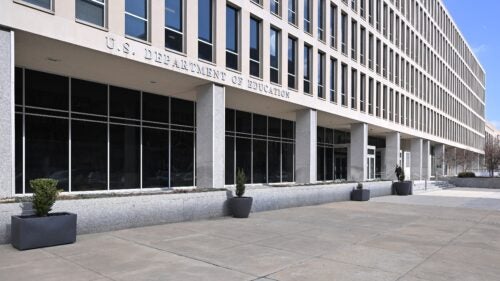
Congress took a small step this summer to try to prevent students from taking on unnecessary private loan debt. But without careful implementation by the U.S. Department of Education, this effort may end up being little more than another toothless measure.
 At issue is a provision that was included in the recent reauthorization of the Higher Education Act that aims to encourage students to seek out the advice of their financial aid administrators before taking on expensive private student loan debt. The lawmakers were responding to reports that lenders’ aggressive marketing practices were pushing a substantial number of students to take on expensive private loans before exhausting their eligibility for safe, cheaper federal student loans.
We share this concern. Last year, the New America Foundation joined a coalition of student and consumer advocacy groups that called on Congress to require colleges to certify a student’s need for private loans before that individual could receive them. As we’ve noted, financial aid administrators at Barnard College and Colorado State University have shown the benefits of this approach. Targeted counseling prior to certification has helped students at these schools make better-informed borrowing decisions that will save them thousands of dollars over the lives of their loans.
Unfortunately, direct-to-consumer private loan providers lobbied aggressively against our proposal and Congress ultimately buckled. Instead of requiring colleges to certify students’ private loans, lawmakers included a compromise in the Higher Education Act reauthorization that requires students to certify their own private loan eligibility by obtaining a form from their schools and giving it to their lender. The form will have a token acknowledgement of other ways to pay for college by including some information about eligibility rules for federal aid.
While this self-certification requirement falls far short of what is needed, we think it could still serve a useful purpose as a mini-roadblock, giving students an opportunity to consider using federal loans instead of high cost, variable rate debt. Whether or not it will be effective, however, depends largely on how the Department of Education decides to implement it.
Here are some of our concerns about the new provision, and suggestions we have made to the Department for addressing them.
First, we are worried about the required form’s dissemination. We fear that colleges will take the easy way out and simply mail these forms to all students, absolving themselves of any responsibility to provide guidance to those considering borrowing private loans. Certainly, an item mailed en masse is less likely to be carefully read by students, which lessens its potential beneficial effect. In addition, it requires no personal contact be made between these students and financial aid administrators.
To address these concerns, we suggest that the Department require schools to provide a certification form only following a direct request from a student. This personal level of contact is more likely to result in counseling and follow-up on the parts of both the financial aid officer and the student.
Second, we are concerned that the certification form, which will be developed by the Secretary of Education and the Board of Governors of the Federal Reserve System, will not contain enough personalized information to fully educate borrowers about federal financial aid options. We propose that the Department require schools to provide students with additional information that is more detailed than current legislation entails.
For starters, colleges should use the National Student Loan Data System (NSLDS) to determine how much, if any, federal student aid an individual has used. Using NSLDS results, the certification form should tell students how much of their federal financial aid eligibility has been exhausted and how much more is available. For dependent and graduate students, this figure should include the availability of PLUS loans. Moreover, the form should provide a side-by-side comparison of the federal options, including estimated cost of repayment and interest rates, to go along with deferment, forbearance, and income-related repayment descriptions. Including these details allows borrowers to easily compare their federal options with the new information lenders have to provide as part of private loan disclosures.
Next, the form should include the difference between the estimated cost of attendance and the total amount of federal aid (grants and loans) available to students. Dependent students, therefore, could see that Stafford and PLUS loans cover their whole cost of attendance — provided their parents are willing to sign for the PLUS loan. This might also convince some parents to take out PLUS loans rather than requiring their children to borrow private loans.
Finally, the form should contain information about how students can find out more about federal aid sources, including the number for the school’s financial aid office and the Department’s Federal Student Aid Information Center.
Admittedly, these are small alterations, rather than a more substantive policy suggestion for reducing private loan volume. Ideally, schools would be the entities certifying the private loans, not the students. But while the Department of Education can’t change the law, it can work to ensure that the provision at least fulfills the purpose lawmakers initially intended.
Students should not be left in the dark about their student loan options – because, as we’ve seen, a bad decision in college can mean a lifetime of financial distress.
Issues
Programs/Projects/Initiatives
Related
A Key Piece of the Trump Accreditation Plan Threatens Accountability