
Higher Ed Roundup: Week of October 27 – October 31


Tuition and Student Debt Up, College Board Says
Dept. of Ed Issues Final Rules on Public Service Loan Forgiveness
Tuition and Student Debt Up, College Board Says
College prices rose steadily this year and are likely to increase at an even faster pace next year as a result of the downturn in the economy, according to the latest annual reports from the College Board on tuition and student aid trends. At the same time, student debt levels continue to escalate, despite a slight reduction in private student loan borrowing. According to the reports, average tuition and fees rose in the 2008-09 academic year by:
- 6.4 percent to $6,585 for in-state students attending public four year colleges.
- 5.2 percent to $17,452 for out-of-state students attending public four year colleges.
- 5.9 percent to $25,143 for students at private four year colleges.
- 4.7 percent to $2,402 for students at community colleges.
- 4.5 percent to $13,046 for students at for-profit trade schools.
Meanwhile, the average room and board charges for those students who are in campus housing rose by about 4 percent to $8,000.
In 2007-08, the most recent data available, students graduated with an average loan debt of $22,700, an 18 percent increase since the 2000-01 academic year. For the first time in a decade, there was a slow down in private loan borrowing — decreasing by 1 percent to $19.1-billion last year. Financial aid experts and student-loan industry officials expect a much steeper drop this year, as many loan companies have stopped making private loans due to the credit crunch.
Dept. of Ed Issues Final Rules on Public Service Loan Forgiveness
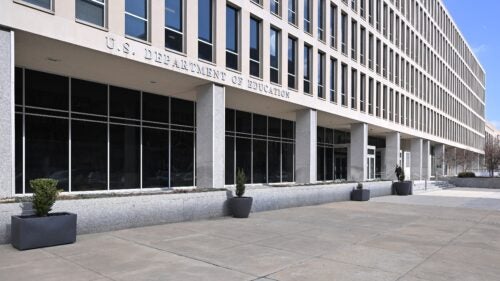
Final regulations that the U.S. Department of Education issued late last week may still keep federal student loan borrowers in the dark as to whether they qualify for the new Public Service Loan Forgiveness Program. Under the program, the federal government will forgive the remaining debt of Direct Student Loan borrowers who have made 120 payments on their loans while working in a public service profession. Borrowers with loans through the competing Federal Family Education Loan (FFEL) program can take advantage of this benefit by consolidating their debt into Direct Lending.
When the Department released its proposed regulations in July, it indicated that it didn’t intend to let people know whether they qualified for the benefit until after they had made all 120 required payments. At Higher Ed Watch, we questioned this decision — asking why borrowers working at low-paying jobs should have to wait at least 10 years to find out whether they were eligible for the new benefit. Instead, we joined our colleagues at the Project on Student Debt in calling for the Department to develop “a system that lets borrowers confirm and track their eligibility” over time for this benefit. [Disclosure: Higher Ed Watch is supported in part by Institute for College Access and Success, the sponsor of the Project on Student Debt, with funds provided by the Pew Charitable Trusts.]
In its final rules, the Department did not commit to providing periodic confirmation notices to borrowers about their eligibility. Instead, the agency said that the onus will be on borrowers “to document” their eligibility over time. Department officials said that they do not want to provide borrowers “with a contractual right to the benefit,” as Congress may decide to eliminate the program in the future. Higher Ed Watch hopes that Congress will revisit this issue next year to insure that the program lives up to its promise.
Issues
Programs/Projects/Initiatives
Related
A Key Piece of the Trump Accreditation Plan Threatens Accountability