Guest Post: Five Steps the Government Can Take to Help Private Loan Borrowers

[Editor’s Note: The National Consumer Law Center is releasing a report today asking the Obama administration and Congress to provide relief for financially distressed private loan borrowers. In this guest post, Deanne Loonin, the report’s author, explains why these individuals are deserving of help and outlines steps federal officials can take to ease their burdens and protect future borrowers.]
By Deanne Loonin
For many years, private student loans generated steady, if unspectacular, profits for lenders. The business model was relatively conservative, providing loans mainly to graduate students and creditworthy borrowers. Over the last decade, however, the student loan industry turned that model on its head. Spurred by Wall Street, lenders began aggressively marketing expensive private loans to high-risk students with little ability to repay them. For the most part, these companies were eager to make these loans because they could securitize them and shift the risk onto investors.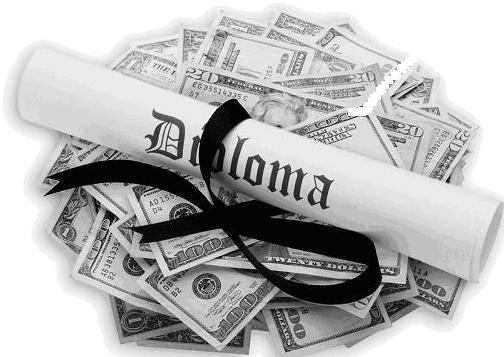
The recent crash in the private student loan market should not have been so surprising. The writing was on the wall but, as so commonly occurred during the bubble economy, most chose not to read the warning signs. Most rating agencies continued to rate private loan pools highly, even after signs of trouble began to emerge.
Lenders have paid a price for their irresponsible practices. By all accounts, delinquencies and defaults on these loans are continuing to accelerate and investors have little interest in taking a stake in these loans.
But the heaviest price is being paid by financially distressed borrowers who never should have been stuck taking out these unaffordable loans to begin with. At the National Consumer Law Center’s Student Loan Borrower Assistance Project, we have found private loan providers to be universally inflexible in granting long-term repayment help for these borrowers. Meanwhile, while the government is considering offering assistance to lenders so they can continue making private loans, it has yet to offer any relief to these borrowers.
Apparently federal officials have decided that these borrowers are “too small” to help. In reality, their numbers are large, but their political power is not. To the extent that their problems are exposed, it is generally through the voices of investors angry at crashing stocks and declining revenues.
In our report, we argue that these borrowers desperately need a safety net to give them some hope of escaping their debilitating debt and starting again. Among other things, we recommend that the government do the following:
- Require private lenders and servicers that receive federal bail out assistance to offer loan modifications and other kinds of repayment relief to borrowers who are clearly struggling to repay their high-cost debt. Servicers should have the authority to modify loan terms, change interest rates, forbear or forgive principal, extend maturity dates, and offer forbearances, deferments, and other types of flexible repayment options. There is ample precedent in the mortgage sector tying loss mitigation and other consumer benefits to the receipt of federal funds.
- Restore the rights of financially distressed borrowers to discharge private student loans in bankruptcy. As readers of Higher Ed Watch well know, the loan industry persuaded Congress in 2005 to make private loans as difficult to discharge in bankruptcy as federal loans. As a result, borrowers who are too poor to repay their private loans are treated in the same severe way in bankruptcy courts as people who fail to pay child support, alimony, overdue taxes, and criminal fines.
- Cancel the private loan obligations of borrowers who took on this debt to attend unlicensed, unaccredited trade schools that have shut down unexpectedly. As Higher Ed Watch has reported extensively, private lenders have partnered with unregulated trade schools to help students take on high-cost private student loans to attend these institutions, and then refused to cancel them when the schools shut down. These loan providers have spared no expense to try to prevent victims who challenge these practices from having their day in court. In the current environment where creditors are rewarded with bail outs for prior bad acts and where no one wants to take responsibility for the meltdown, taking action in this area is one small way to hold lenders liable for the damage they have done.
- Impose more stringent regulations on the private loan market, including placing a cap on the interest rate and fees that private loan borrowers can be charged, and requiring lenders to strengthen their underwriting standards. Private loans should go only to borrowers who likely will be able to repay them, and they should be available at reasonable rates.
- Strengthen consumer protection laws to expressly give victims of abusive lending practices the right to file individual and class action lawsuits against lenders and schools, and ban lenders from including mandatory arbitration clauses in loan contracts. Private loan borrowers who have been harmed currently have very little recourse because the loan industry often uses its market power to limit their access to justice.
Our report shows how an unsustainable business model helped lead to a credit crunch that has decimated our economy. These unsustainable products were taken out by individuals trying to improve their futures. “Unsustainable” in human terms means individuals who pursue their dreams of upward mobility, only to find that these dreams are shattered due to unaffordable debt loads that they will never be able to repay. While it may be impossible to get all of these individuals back on track, it is clearly possible to help some. The fact that lenders are hardly trying is a national disgrace. We cannot truly begin to reshape the future and improve access to education without redress for those left behind.
Deanne Loonin is a staff attorney with the National Consumer Law Center and the director of the center’s Student Loan Borrower Assistance Project. She focuses on consumer credit issues generally and more specifically on student loans, credit counseling, and credit discrimination. She is the principal author of numerous publications, including “Paying the Price: the High Cost of Private Student Loans and the Dangers for Student Borrowers.“ Her views are her own and do not necessarily reflect those of the New America Foundation.
Issues
Programs/Projects/Initiatives
Related
Accreditor Exposes Sensitive Student Information in ‘AI University’ Case

New Findings on Student and Public Stances on Higher Ed