Stephen Burd
Senior Writer & Editor, Higher Education

Last week brought answers to two key questions that could be pivotal to President Obama’s proposal to overhaul the federal student loan programs.
Ever since the administration introduced its plan in February to eliminate the Federal Family Education Loan (FFEL) program and use the savings to turn the Pell Grant program into a true entitlement for low-income students, the proposal’s supporters have wondered whether the president would truly throw his weight behind it. In other words, they wanted to know whether Obama was invested enough in the plan that he would use the nation’s most powerful bully pulpit to fight for it.
 The plan’s supporters also wondered whether the president had enough political clout to persuade wavering Democrats in Congress to move forward with a controversial budget procedure that would make it significantly easier for him to get the votes he would need to achieve his goal. As we have said previously, many Congressional Democrats have close ties to the student loan industry (or “constituent interests,” as Sen. Kent Conrad (D-ND) said of his relationship with the Bank of North Dakota, the country’s only state-owned bank).
Thankfully, as we learned late last week, the answer to both these questions is “Yes.”
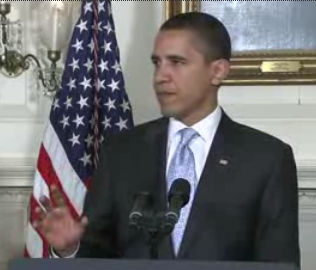
President Obama put advocates’ concerns to rest on Friday when he held an event at the White House in which he vowed to do battle with the student loan industry. “The banks and the lenders who have reaped a windfall from these subsidies have mobilized an army of lobbyists to try to keep things the way they are,” he said. “They are gearing up for battle. So am I.”
Obama laid out the stakes of the fight clearly and effectively. “In the end this is not about growing the size of government or relying on the free market — because it’s not a free market when we have a student loan system that’s rigged to reward private lenders without any risk,” he stated. “It’s about whether we want to give tens of billions of tax dollars to special interests or whether we want to make college more affordable for eight and half million more students. I think most of us would agree on what the right answer is.”
The president also wisely used his remarks to chide colleges and state leaders to get “the spiraling costs” of higher education under control. We hope he will continue to make this case as he moves forward with his plans to make college more affordable. Because he too will eventually get tired of boosting spending on student aid, only to see his efforts squandered by ever-escalating tuition increases.
Meanwhile, Congressional Democrats provided supporters of the president’s proposal with the answer to their other pressing question on Friday when they announced that they had agreed to include reconciliation instructions in the 2010 fiscal year budget resolution they expect to finalize this week. The administration has been pushing Congress to include the instructions because reconciliation bills, unlike regular legislation, cannot be filibustered in the Senate and need only a simple majority to pass. White House officials knew that getting reconciliation instructions into the final budget blueprint plan was critical to the proposal’s fate in the Senate since they are unlikely to get any Republican support for the plan and will probably face some Democratic defectors.
The agreement that was struck between the House and Senate lawmakers does include “a Sense of the Congress” that calls for maintaining a role for private and nonprofit lenders in the government’s loan program (which the Obama plan does by continuing to have loan companies service federal loans). The language is fairly broad and is non-binding.
The compromise is certainly a victory for Obama, as it will allow his plan to move forward. We are under no illusions, however, that he will get everything he wants. Assuming that Congress approves the budget resolution this week, as is expected, the battlefront will shift to the House and Senate education committees, which will be in charge of writing the legislation to carry out the President’s proposal. Expect fierce lobbying and plenty of horse trading over the next several months — and not just with the loan industry. According to news reports, Congressional appropriators also have concerns about giving up their authority to set the maximum Pell Grant through the annual appropriations process.
Still, it’s impossible to overstate the significance of Friday’s events. The cause of student loan reform is advancing, and that’s certainly good news for students and taxpayers alike.
Senior Writer & Editor, Higher Education