Guest Post: The More Things Change…

By Travis Reindl
For those of us who work in or follow higher education policy, the past six months have been eventful. A new administration came into office, naming education as one of its top policy priorities and setting a goal for reclaiming world leadership in college attainment by 2020. Congress is now debating whether to end the bank-based student loan program and pump $40 billion into the Pell Grant program. That’s a decent amount of movement, even for the biggest cynic.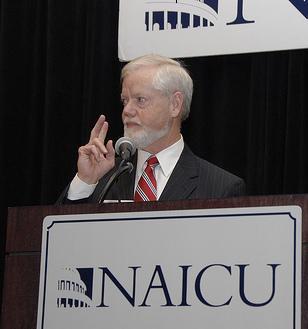
But lest you fear that the higher education policy agenda will move too far, too fast, rest assured — the guardians of the status quo in the higher education lobbying world are alive and well in the era of “change we can believe in.”
Last month, President Obama announced the American Graduation Initiative, a ten-year, $12 billion effort designed to boost the number of community college graduates by five million over the next decade. The program includes a competitive grant program for states to build stronger community college linkages to K-12 education and the workforce; funding for efforts to increase college completion at these institutions and others; and capital for updating or expanding facilities. Reaction to the proposal has been largely positive, though some, including the American Council on Education, have expressed the entirely legitimate concern that states could use the new federal funds to supplant, rather than supplement, their support for postsecondary education.
But the proposal ran into resistance from some higher education lobbying groups, particularly the National Association of Independent Colleges and Universities (NAICU), which represents the nation’s private colleges. Even before the President’s announcement, NAICU President David Warren privately e-mailed members, warning that “there are some disturbing signs that enthusiasm for expanding their [community colleges’] role may drive policy decisions that are both unfair and unwise.” The proposal, he complained, has “the federal government providing funds directly to one sector of American higher education, to the exclusion of other sectors.”
Several days later, another NAICU official voiced concern to Inside Higher Ed about “the precedent of deferring national higher ed policy to state bureaucrats who may or may not have the national interest in mind.” NAICU then issued a legislative alert arguing that the proposal “shifts the relationship with the federal government from student-based toward institution-based.”
Some facts are in order at this point. Community colleges serve 40 percent of the nation’s students and receive 32 percent of total Pell Grant dollars, so for private colleges to claim that community colleges are receiving something out of turn is questionable. Moreover, helping community colleges, which are experiencing double-digit enrollment increases and double-digit funding cuts from their state legislatures, seems to be more in “the national interest” than aiding institutions that are barely growing and many of whom have sizable endowments. Finally, the idea that spending just over $1 billion per year on community colleges represents a fateful step toward government control of higher education when the federal government spends tens of billions of dollars on student aid each year is pretty melodramatic.
A FAMILIAR STRATEGY
In the end, this all comes down to money. Ending the Federal Family Education Loan Program (FFELP) would be fine with NAICU and many of the other higher education associations as long as all of the estimated savings (up to $90 billion) would go to student financial aid. Why? There are relatively few “strings” (i.e. institutional accountability measures) attached to federal student aid, and the higher the maximum Pell Grant, the more private institutions stand to gain because of their prices. So when the House passed a bill that redirected nearly $20 billion of the “new” money away from Pell Grants to community colleges and K-12 construction, private colleges and their advocates immediately geared up for battle.
We’ve seen this strategy before. In 2003, Rep. Howard “Buck” McKeon (R-CA) proposed stronger congressional monitoring of and institutional accountability for skyrocketing tuition increases (which averaged $683 that year at private universities, compared with $332 at public universities). NAICU led the opposition, declaring that:
“The concept behind this proposal is federal price controls, pure and simple. This nation tried that approach to wages and gasoline prices in the 1970s, with disastrous results. We can anticipate similar results if the concept is applied to higher education.”
In 2006, the issue was the proposal for a federal data system that could account for student movement across institutions and state lines, so that policymakers and researchers would be able to more accurately assess how well the nation’s higher education system was serving students. The creation of a “unit record” data system would have been especially useful in gauging the performance of community colleges and public comprehensive colleges because they deal with a significant number of transfer students, who are not counted in graduation rate data currently collected by the federal government.
NAICU officials decried the proposal as “Orwellian” and commissioned a poll that, not surprisingly, showed that 60 percent of Americans opposed “requiring colleges and universities to report individual student information to the federal government” (implying that institutions would be sending course grades and a host of other personal data to Washington, a major overstatement of the proposal). At a news conference releasing the poll, David Warren said the proposal “is so egregious and ill-conceived that it is necessary to express the views of the public.”
A CLEAR PATTERN
There is a clear pattern here. Just about any proposal that questions or threatens the status quo-one in which the federal government is expected to continue pumping billions of dollars into the existing student aid system, no matter the cost, no matter the result-is met with doomsday rhetoric that appeals to Americans’ (and politicians’) basest fears. Big Brother is watching you. Bureaucrats waste your money and screw up everything. Colleges’ autonomy and academic freedom are in peril. This strategy has been quite effective, but at a time when more Americans than ever believe that college is essential but increasingly out of reach, these arguments are becoming a little tired and tone-deaf.
As they plow ahead through the dog days of summer on higher education reform, and hear from higher education associations such as NAICU, Congress and the White House should remember just how much many of these groups have at stake in keeping things just as they are.
Travis Reindl is the state policy and campaigns director at CommunicationWorks, a public affairs firm that specializes in educational improvement. Prior to joining the firm, he had 15 years of experience in higher education policy and advocacy. Most recently, he served as program director at Jobs for the Future, where he led a national initiative focused on increasing productivity in higher education. Before that, he headed the state policy analysis unit at the American Association of State Colleges and Universities. He has written extensively on issues of college affordability, accountability, and governance. His views are his own and do not necessarily reflect those of the New America Foundation.
Issues
Programs/Projects/Initiatives
Related

Accreditor Exposes Sensitive Student Information in ‘AI University’ Case

New Findings on Student and Public Stances on Higher Ed