Stephen Burd
Senior Writer & Editor, Higher Education

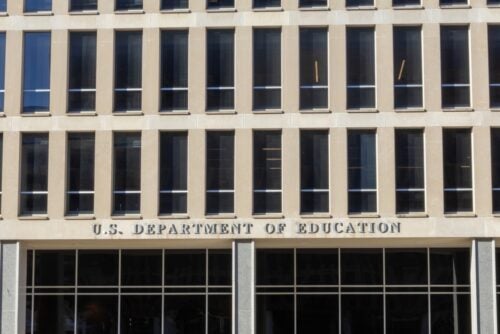
On Thursday, the Obama administration took decisive action to try and stop for-profit colleges from continuing to engage in illegal recruiting practices by eliminating, once and for all, the “safe harbors” that Bush administration officials put in place to help these institutions skirt a long-standing federal law that prohibits colleges from compensating recruiters based on their success in enrolling students. The U.S. Department of Education included this change as part of a broader set of regulations it finalized this week that aim to improve the integrity of the federal student aid programs.
“The Department’s experience has demonstrated that unscrupulous actors routinely rely upon these safe harbors to circumvent the intent” of the law, these officials wrote in the preamble to the regulatory package it released on Thursday. “As such, rather than serving to effectuate the goals intended by Congress … the safe harbors have served to obstruct those objectives and have hampered the Department’s ability to efficiently and effectively administer” federal financial aid.
As faithful readers of Higher Ed Watch well know, Congress in 1992 prohibited colleges from providing “any commission, bonus, or other incentive payment based directly on success in securing enrollments” to admissions officers. The ban on incentive compensation for college recruiters was included as part of a broader effort by lawmakers to crack down on for profit colleges that were set up to reap profits from the Title IV federal student aid programs. With reports rampant that these schools were enrolling unqualified low-income individuals to get access to Title IV funds, policymakers believed it was important to bar post-secondary-education institutions from paying recruiters on the basis of how many students they admitted.
A decade later, Bush administration officials with close ties to the for-profit college sector set out to undermine the prohibition. At first, they worked closely with allies in Congress to try to push through legislation that would have gutted the law. But after that effort sputtered, they decided it would be easier to take matters into their own hands.
Under their leadership, the Education Department issued new regulations creating 12 loopholes for colleges that wished to provide incentive payments to their admissions employees. Among other things, the revised rules allowed colleges to adjust the annual or hourly wages of recruiters up to twice a year, as long as the adjustment was “not based solely on the number of students recruited, admitted, enrolled, or awarded financial aid.” In other words, the Department’s leaders allowed colleges to expressly violate the law, which bars schools from providing any commission-based compensation to their recruiters.
In explaining their action at the time, these officials said that the out-right ban included in the Higher Education Act (HEA) was no longer needed because the most unscrupulous schools had already been shut down, and the Education Department had other tools in place to prevent a repeat of these types of abuses. “We do not agree…that the safe harbors will allow unscrupulous institutions to engage in the kinds of improper recruiting activities that took place during the 1980s and early 1990s,” they wrote in the preamble to the 2002 regulations. “… During that period, institutions would recruit ability-to-benefit students who were not qualified to enroll in their institutions and keep the Title IV, HEA program funds those students received. That result is no longer possible today.”
Could they have been more wrong?
In the years since the safe harbors were added, some of the largest publicly traded and privately-held for-profit higher education companies have come under scrutiny from federal and state regulators and have faced numerous lawsuits from former employees, shareholders, and students over allegations that they have engaged in misleading recruiting and admissions tactics to inflate their enrollment numbers. Some of these companies have willfully recruited and enrolled unqualified students and stuck them with huge amounts of debt for training from which these individuals are unlikely to benefit.
Here are some examples of where recruiting violations have been found:
Similar accusations of recruiting abuses have also been raised in recent class action and False Claims lawsuits against Career Education Corporation, Education Management Corporation, and Kaplan University.
At Higher Ed Watch, we have long called for the elimination of the safe harbors and we applaud the Obama administration for doing so. As we’ve said before, the law is the law and, thankfully, there’s not going to be any way around that anymore.
Hopefully, these changes, and others that the administration made on Thursday, will help alter the incentives that have driven an industry that has all too often had a “recruit at any cost” mentality — lavishing rich rewards on admissions officers who get students in the door and signed up for classes and financial aid, even if they know full well that many of these individuals have little chance of succeeding and don’t fully understand their student loan repayment obligations.
Such a shift would help students, taxpayers, and even, over the long term, the schools themselves. Now if only those who masterminded the 2002 changes were held to account for the damage they have helped cause….
Senior Writer & Editor, Higher Education