Stephen Burd
Senior Writer & Editor, Higher Education

We hope that you had a very nice winter break. While we were enjoying the holidays, the debate over for-profit higher education continued to rage on the country’s news pages. Even we were surprised by the stack of articles we found awaiting us upon our return.
Now that we’ve dug through most of them, we thought we’d highlight several that we found to be particularly noteworthy. We chose these articles because they either provide new information that we believe is important for the public and policymakers to know, or because they provide extra color on topics we’ve previously covered.
So without further ado, here is the first part of our roundup this week of news stories and commentary you don’t want to miss on for profit higher ed:
“Guerilla Registration” at Kaplan University?
Shortly before Christmas, new allegations emerged about deceptive recruiting practices at Kaplan University, the for-profit school chain owned by The Washington Post. In an investigative report, the Huffington Post accused the company of encouraging its recruiters to continue to enroll students in classes even after they have withdrawn from the university. Former Kaplan employees told the online publication that the company engages in this practice — which the article reports is “known informally inside Kaplan as ‘guerilla registration’” — primarily so that it can continue to collect federal financial aid dollars the schools would otherwise have to return to the government and lenders.
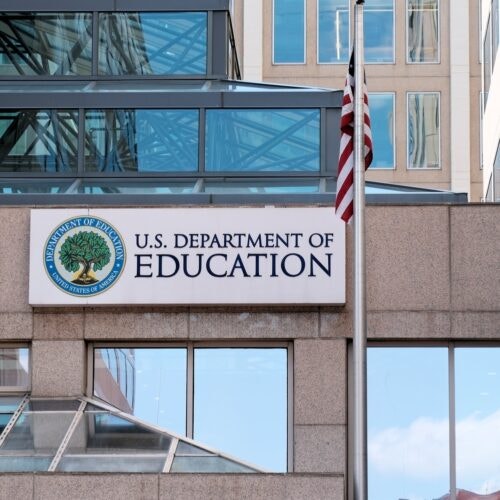
According to the article, one of the victims of this “unwritten policy” was Arlen Castillo, who withdrew from the company’s online associate’s degree program “only two weeks into her first term” because of a family emergency. Castillo said she filled out all of the required paperwork and was told she would not incur “any additional expenses beyond the registration fees she had already paid.” But a year-and-a-half later, she began hearing from a collection agency working on behalf of the U.S. Department of Education demanding she repay a federal student loan that paid for courses she had never taken. “Despite having attended only two online sessions,” Castillo later learned that she “had remained officially enrolled at Kaplan for nearly a year after her withdrawal.”
Kaplan officials would not comment on Castillo’s accusations. But in a response to the article, Jeff Conlon, the chief executive officer of Kaplan Higher Education, denied that recruiters “used something called ‘guerilla registration’ to enroll students without their knowledge.” Such a claim, he wrote, was “a gross distortion of Kaplan’s actual policies.”
At Higher Ed Watch, we haven’t conducted our own investigation so we have no way of knowing whether such practices are prevalent at Kaplan’s schools. We do find the allegations compelling, however, because we know that similar abuses have occurred at other for-profit colleges. In fact, as a senior writer for The Chronicle of Higher Education, I uncovered evidence that the Los Angeles branch of Career Education Corporation’s American Intercontinental University (which the company has since shut down) regularly kept a number of students who had dropped out on the books, even if they had withdrawn without having attended a single class. A professor at the school told me at the time that he was always surprised to find “people on the roster who had never shown up” for classes. “I’d mark them absent, absent, absent,” he said. “And they would still be on my roster.”
The Washington Post Comes Under Fire from One of its Own
Last week, The Washington Post, which not only owns Kaplan but has a significant financial stake in Corinthian Colleges, once again used its opinion pages to rail against regulations that the Obama administration has proposed that would penalize for-profit colleges and other vocational schools that saddle students with unmanageable levels of debt. Since August, the Post has published an editorial and three opinion columns (see the earlier ones here and here) attacking the U.S. Department of Education’s proposed Gainful Employment rules, while running just a single column — by Sen. Tom Harkin, the Iowa Democrat — supporting the administration’s effort.
Meanwhile, in reporting on the battle over this issue, the Post has had only one significant scoop: last month, the Post revealed that the Government Accountability Office had revised an earlier report on for-profit college recruiting abuses and softened some of its findings. While this was certainly a legitimate story, it played right into the hands of industry lobbyists who have been waging a campaign to discredit the GAO report. In other words, the article, unintentionally or not, ultimately served the newspaper company’s self interest.
We at Higher Ed Watch have argued that by carrying the fight over for-profit higher education regulation into the newspaper, the Post’s leadership has damaged the sterling reputation it has built over the past 40 years. While this concern may seem extreme to some, it turns out that a number of former Post reporters and editors apparently share it. In an impassioned column in the Huffington Post in late December, the well-respected journalist Peter Goodman wrote that he and “many alumni” of the Post have been alarmed to see the company’s chief executive Donald Graham – “the son of the most courageous publisher in the history of American journalism” — apply “his prestige and legacy toward protecting an enterprise that, by many indications, makes its money fleecing vulnerable people.”
“As a writer fortunate enough to have worked for Don Graham at the Washington Post for a decade (from 1997 until 2007), I find this hard to stomach, and difficult to square with the institution I knew and loved,” Goodman, who now serves as the Huffington Post’s executive business editor, continued. “The Post tended to impart an enduring, almost tribal sense of identity on those of us who worked there, and many alumni now feel disturbed by what is happening.”
“In short,” he stated, “the same company bearing the name of the newspaper that uncovered Watergate, that published the Pentagon Papers, and more recently revealed the existence of secret CIA-operated prisons in Eastern Europe now draws its largest share of revenues from an enterprise that seems on par with subprime mortgage lending in terms of its commitment to public welfare.”
It’s great to see someone with such deep ties to the newspaper speaking out. For the good of the Post and its readers, the more who do, the better.
We will continue our roundup tomorrow. Stay tuned.
Senior Writer & Editor, Higher Education