Stephen Burd
Senior Writer & Editor, Higher Education

In finalizing the “Gainful Employment” rule last Thursday, Obama administration officials did what federal policymakers often do when dealing with highly polarizing issues: they attempted to split the difference between the opposing sides. But as is often the case in such situations, the compromises they made didn’t satisfy anybody (with the exception of the for-profit higher education sector’s friends on Wall Street who were delighted to see career-college companies’ long-beleaguered stocks soar on the news).
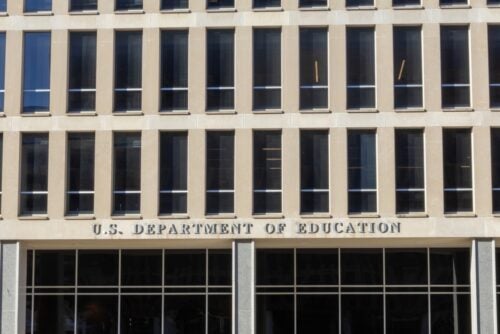
As we reported at Higher Ed Watch last week, the biggest concession that the administration made to the industry was that it significantly delayed the point at which even the most irredeemable for-profit college programs would be in jeopardy of losing access to federal financial aid. Under the proposed rule, which the Department of Education released a little less than a year ago, career college programs that leave low-income and working-class students buried in debt but without the training they have been promised could have been kicked out of the federal student aid programs right away.
The final rule, however, takes a “three strikes” approach to disciplining the worst programs (those at which fewer than 35 percent of former students are repaying their loans, and where graduates have a debt-to-income ratio greater than 12 percent of their total income and 30 percent of their discretionary income). Instead of immediately losing access to federal financial aid, these programs would have to fail each of these tests at the same time three out of four years in a row before they could become ineligible.
If administration officials thought that this concession and others like it would mollify the industry and its champions on Capitol Hill, they were — unsurprisingly — mistaken. In reacting to the final rule, industry groups signaled that the fight is far from over. “As we closely review the U.S. Department of Education’s final gainful employment regulation, nothing changes the fact that Congressional leaders have made it clear that the definition of ‘gainful employment’ is the purview of Congress and not the Department,” Penny Lee, the managing director of the for-profit college lobbying group the Coalition for Educational Success, stated. “The Department’s attempt to arbitrarily expand the definition of ‘gainful employment’ is clearly at odds with the intent of Congress.”
Meanwhile, Republican Congressional leaders were predictably unmoved. “With this regulation, the administration has chosen to disregard the concerns of countless Americans and blatantly ignore the bipartisan will of the House of Representatives,” Rep. John Kline, the Minnesota Republican in charge of the House Committee on Education and the Workforce, claimed.
The industry’s Democratic friends were not any kinder. In a press release entitled “House Democrats Blast Department of Education on Gainful Employment Regulation,” seven Democratic Members took the administration to task for daring to crack down on the sector. “It is deeply troubling that an administration supposedly committed to increasing college completion in the United States would propose a regulation that restricts minority access to higher education and limits job opportunities for those who need them the most,” Rep. Alcee Hastings (D-FL), who won his seat in Congress in 1992 after having been impeached as federal judge over bribery charges, stated.
Perhaps the one silver lining for the administration was that the Association of Private Sector Colleges and Universities — which was formerly and more accurately known as the Career College Association — announced that it would at least temporarily hold off from filing its long-promised lawsuit seeking to stop the Education Department from implementing the rule. The group said that it remained “very concerned” about the regulation but would “run an independent analysis” of the regulation’s impact before deciding how it plans to proceed. “The gainful employment regulation, while reflecting the fact that the Department has listened to the sector and made changes to its initial proposal, is still using the same ill-advised metric approach to this matter and is clearly outside of its statutory authority,” the association stated.
While the final ruled failed to assuage its critics, it also managed to demoralize many of the consumer advocates who have been on the front lines in supporting the administration’s efforts to rein in the industry’s worst actors. While some organizations tried to put the best possible face on the rule (arguing, for example, that it’s at least a good start), others refused to hide their deep disappointment and even outrage at the administration’s concessions — particularly that the most exploitative career college programs to continue operating “with no requirements to improve,” as the research and advocacy group Education Trust pointed out, until at least 2015. Whether the administration will be able to count on these groups to rush to the regulation’s defense when the industry inevitably tries to kill it again is now far from certain
Now, it’s true, as David Halperin at Campus Progress has pointed out, that the Gainful Employment rule is just one part of the administration’s broader effort to eliminate the sector’s most unscrupulous players and practices. Bold new rules the Education Department issued last fall that are aimed at curbing recruiting abuses and stopping schools from misleading students may go a long way in protecting the most vulnerable students when they go into effect in July — as long as they are vigorously enforced. The administration also deserves a tremendous amount of credit for putting the spotlight on for-profit college abuses and spending so much time and effort trying to rewrite student aid rules in order to combat them. The Education Department’s efforts have forced changes at least at some of the schools and accrediting agencies, and helped spur investigations into the sector by Senate Democrats and by nearly a dozen state attorneys general.
It may also be possible — as Kevin Carey of Education Sector argues – that the administration deserves far more credit than it is getting for changing the paradigm in federal higher education funding. He writes:
For half a century, the federal government has been handing out untold billions of dollars to colleges with no real quality control mechanism other than ‘if you’re accredited by someone, somehow, we trust you.’ Now for the first time, it has decided to judge colleges not by their inputs and processes but by what actually happens to their students after graduation … This is a historic change. One can fairly argue that some specific parameter is too weak. But the most important thing is to establish the principle and build the underlying structure of the regulation and data collection on which the parameters are based.
This is a strong argument, but it only holds water if the regulation is allowed to fully go into effect. As we wrote last week, we are not entirely optimistic. By designing the rule as it has, the administration has given career college lobbyists plenty of time to try and kill it before any schools are penalized. And it has, at least for the time being, weakened the resolve of those who would ordinarily rush to the barricades to defend it.
No wonder the industry’s friends on Wall Street are celebrating.
Senior Writer & Editor, Higher Education