Both the nature of work and the ability to secure it are changing. The former has always been the case and is a concern recently explored by California Governor Newsom’s Future of Work Commission. The latter – joblessness, economic precarity, and dearth of new work opportunities – has been severely impacted by the unprecedented Covid-19 global pandemic.
Twenty eight percent of California’s workforce has filed for unemployment support since March 1, making it the 14th highest nationally. While some workers may be able to return to their old jobs in the near future, others are in danger of losing their jobs permanently and will need to find new opportunities and pathways to stable work. In connection to human centered research conducted in Fresno, California at the beginning of the year, New America analyzed data from Burning Glass Technologies to determine vulnerable sectors of the workforce in order to lift up authentic, worker and lived experience.
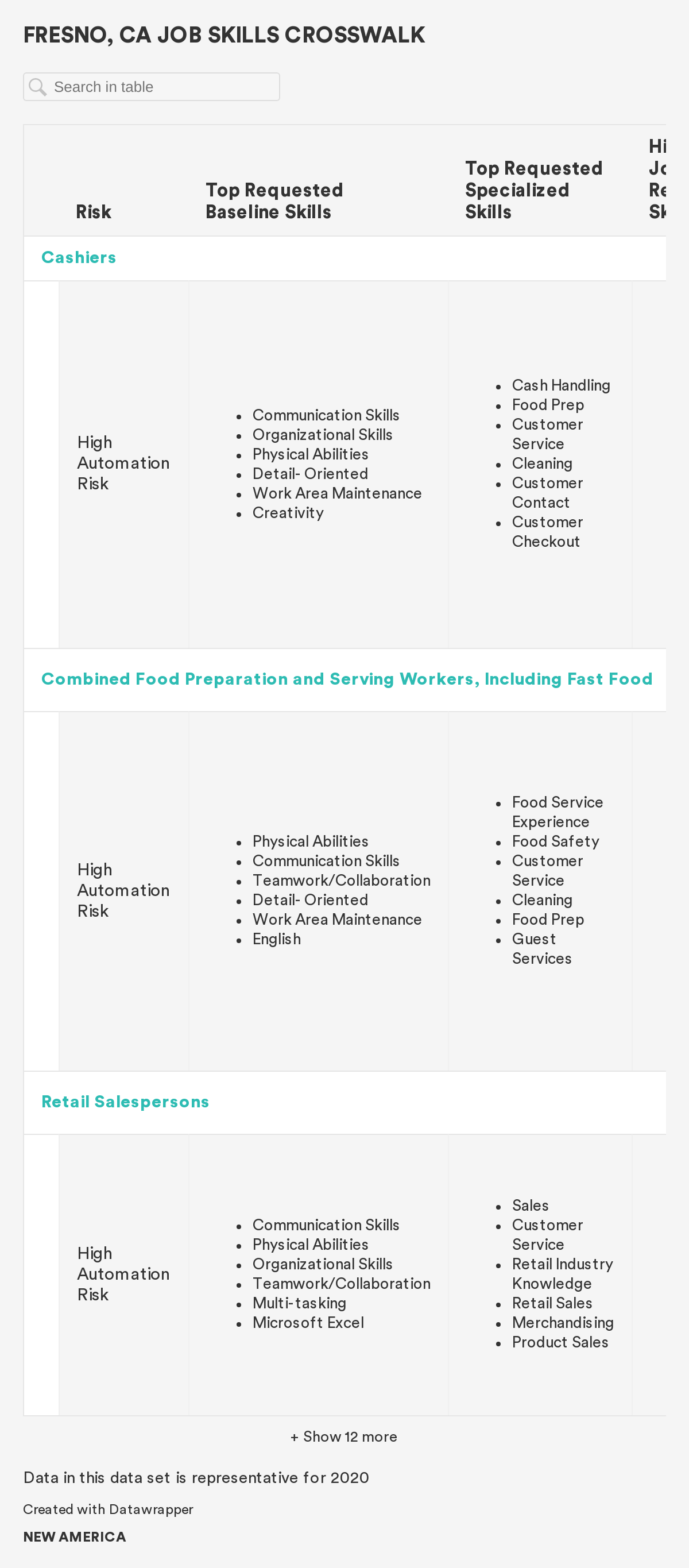
The data provided another important opportunity: the ability to create a skills crosswalk as guidance for Fresnans interested in finding jobs to which they could more immediately transition based on skills acquired in their potentially recently vacated roles. This crosswalk is a useful beginning point for those looking for inventory related, in-demand jobs in the region. This may also be a starter tool for organizations that support those currently out of work or in jobs highly susceptible to future job cuts.
Each selected "transition" job needed to fit three criteria: (1) appearing in more than 150 job postings over the past year; (2) low to moderate risk for automation; and, (3) a high projected 10 year growth rate.
*Select Show 12 more at the bottom of the chart to fully expand data
A few notes:
- We highlighted two high-contact occupations, per Covid-19, and the top seven high automation risk occupations as these jobs are historically most likely to be lost during a recession.
- The majority of the in-demand, related jobs are themselves vulnerable to automation.
- As expected, the projected 10-year growth does not take into account the Covid-19 pandemic.
- These projections are based on current unemployment trends and aggregate job postings and do not attempt to predict the extent to which the coronavirus will disrupt whole industries or occupation groups.
The most timely pathways to new jobs, an example of which is embodied in this crosswalk, can be useful in securing work, but often fail to lead workers in the short term to resilient, stable, or “good jobs”. As emerging technology and massive pandemic-related disruption continue to alter job opportunities and requirements, skills-based hiring and on the job training are two ways employers can enhance opportunities for upward mobility.
We have written in the past on the importance of job quality, and now is the time for education, workforce development, and training ecosystems to help make career transitions to better jobs easier. Use this crosswalk for urgent and immediate transitions to work, but we encourage referencing our other writing on increasing skillsets as a means to remaining relevant and resilient. In addition to a focus on critical and time-sensitive worker solutions, we recommend the skill building and opportunity creation that lead to jobs which provide family-sustaining wages, health care, and protections from automation risk.
More About the Authors

Margaret Streeter
Issues
Programs/Projects/Initiatives
Topics
Related

Art & Advocacy: Comedy About Making it in America
Can California Plan for Equitable Growth in the Face of Climate Migration?
Community Priorities for Public Policy