
Economic Security

FLH Urges U.S. Census Bureau to Establish a National Housing Loss Rate
FLH and 16 other organizations co-signed a letter to the Census Bureau advocating for the creation of a nationwide metric for housing loss.

Modernizing WIOA: How to Include the 41 Million Workers Missing from the Reauthorization Bill
Reauthorization of the Workforce Innovation and Opportunity Act (WIOA) gives Congress a chance to finally include 41 million gig workers.

Ukraine’s Unconventional Approach to Reconstruction
The Week UK profiled an article co-authored by Yuliya Panfil on Ukraine's eRecovery program.

Biden Should Address ‘Housing Loss Rate’ In the 2024 State Of The Union
Yuliya Panfil discusses a key metric that will be missing from the State of the Union Address: a national metric for tracking housing loss.

Ukrainians Are Using an App to Return Home
Yuliya Panfil and Allison Price wrote an article on Ukraine’s innovative eRecovery program in Foreign Policy.
How to Use ARPA Funds to Improve Local Eviction Data
Our February webinar surfaced several helpful recommendations for local leaders.
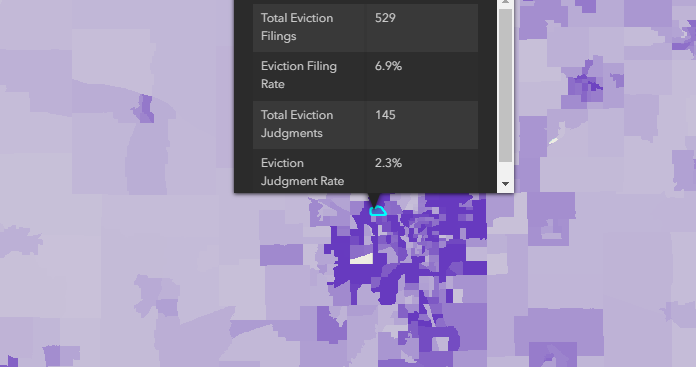
Indiana: Using FEAT to Build a Statewide Dashboard
Indiana's statewide foreclosure and eviction dashboard has informed a diverse array of stakeholders in its first month since publication.

Looking Back to Step Forward: 2023 in Review
Our team put together a microsite to highlight and share more about the New Practice Lab’s recent work and where we’re headed

Trumanitarian Podcast: Someone Else’s Problem
Yuliya Panfil appeared on the podcast Trumanitarian to discuss Ukraine’s innovative property compensation and restitution process.

America Needs a National Housing Loss Rate
The Federation of American Scientists chose FLH's policy brief as a winner of its creative ideas challenge.

The True Victims of the US Evictions Crisis
Are sky high childcare costs, and poor availability of care, to blame for high eviction rates among young children?

Family Thriving: How Social Policy Can Promote Greater Connection
How real families’ thriving is impacted by their support networks, and how future social policy can promote more connection.