House Minority Representation Under List-PR
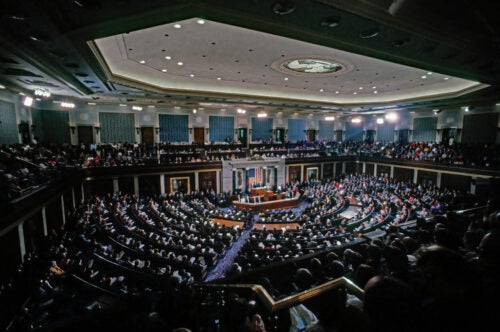
Oscar Pocasangre published a draft of a paper looking at minority representation under different proportional representation models.
Oscar Pocasangre published a draft of a paper looking at minority representation under different proportional representation models.
The Power, People, and Planet initiative at New America supports real action on urgent global challenges. We have no shortage of bold ideas for addressing climate change, rapid AI development, and other planetary threats. Yet our institutions fail to act, solutions lost in the messy middle between idea and reality. We investigate the power dynamics and structural forces that block progress; build novel coalitions spanning diverse sectors, communities, and governments; and develop intelligence, tools, and strategies to enable action. Underlying our approach is the conviction that global governance must go beyond nation-states and account for the complex interplay of peoples, companies, states, and the natural environment. Our mission is to contribute to building a more resilient, effective, and pluralistic global order.

A timeline of U.S. disability history and a reflection on its resonance as the nation turns 250.

The ECE Implementation Working Group launched a new cohort with a few tweaks but the same message: local implementation is everything.


The Godfrey family has moved more than two dozen times, cycling through hotels, rooming houses, and even their car as rent and unstable work put a stable home out of reach. Watch the video to see what their story reveals about the hidden toll of housing instability on children.

Our June’s Public Insight newsletter discusses latest data on how students and faculty view AI’s role in higher education.

Maegan Godoy discusses four key themes about what Gen Z wants and needs to know about youth apprenticeship.

An inside look at AI-powered Maestro University exposes a pattern of policy failures, potential legal violations, and widespread frustration among students—acting as a warning sign for higher education.
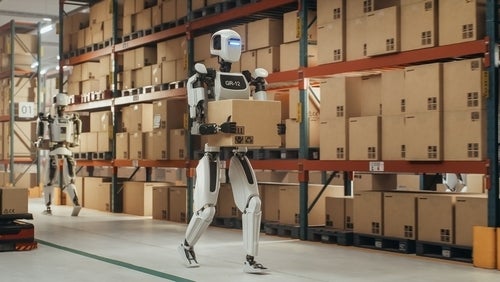
The key question is whether we learn from deindustrialization and treat this moment as a chance to reimagine the economy: to build, and in some cases rebuild, institutions that center working people and communities, can respond at scale to AI disruption, and actually rebuild economic stability for working people. Retraining and safety‑net programs alone won’t get us there.