
The Digital Standard Testing Handbook
The Digital Standard Testing Handbook aims to provide guidance about how to perform the tests that the Digital Standard describes. You can view the tests individually or print the entire handbook.
The Internet of Things (IoT) is rapidly expanding, with more and more consumer products and software connecting to the internet for added functionality—but this connection, if not properly configured, can increase privacy and security risks for consumers. To help researchers to evaluate how thoroughly any given internet-connected hardware or software product ensures information security and data privacy—and to enable designers, developers, and manufacturers to create products with specific benchmarks in mind—Ranking Digital Rights and Consumer Reports, in collaboration with other organizations, developed the Digital Standard framework. While instructions were initially open-ended, OTI developed a detailed process for conducting independent product testing in our Digital Standard Testing Handbook. We then used this handbook to test three example products and published our notes as a series of case studies, demonstrating how the handbook can be used to measure any IoT product against the Digital Standard.
The Digital Standard Testing Handbook aims to provide guidance about how to perform the tests that the Digital Standard describes. You can view the tests individually or print the entire handbook.

Our first test product in evaluating the Digital Standard's tests: a smart lock. See how we carried out each test on this product, and see how it performed.

Our second test product in evaluating the Digital Standard's tests: a smart pressure cooker. See how we carried out each test on this product, and see how it performed.

Our third test product in evaluating the Digital Standard's tests: a smart baby monitor. See how we carried out each test on this product, and see how it performed.
OTI’s Christine Bannan and Andi Wilson Thompson write for Tech Policy Press about the proliferation of health and fitness IoT devices (which produce data which are largely not protected by U.S. health information privacy law) and how privacy legislation could fill this gap and protect consumers. They also offer advice for making informed privacy decisions when choosing health and fitness devices and apps.

When the Bidens moved into the White House, their Peloton may not have made the move with them. Security officials feared the popular exercise bike with a camera, microphone, and wifi connection was a cybersecurity threat. OTI's Nat Meysenburg and Andi Wilson Thompson discuss the challenges experts face in determining whether or not these kinds of internet-connected products are truly secure.

Writing in Tech Policy Press, OTI's Nat Meysenburg argues consumers have far too little information to make informed decisions about their privacy when choosing to use Internet of Things devices. Smart baby monitors, for example, collect a great deal of sensitive information, yet little transparency from manufacturers means parents are mostly in the dark about the security of their children's data.

This report serves as an addendum to the handbook, further explaining the role that the tool plays within a larger Digital Standard ecosystem. It describes some of the choices and thinking that guided our construction of the Handbook, and answers some of the most common questions we have received about the project. Finally, reflecting on our experiences testing products, the paper concludes with a set of recommendations for updating the Digital Standard, and helping make it more accessible to new partners who want to conduct their own product testing.

Our blog introduces what the Digital Standard is and what OTI hopes to accomplish by creating a testing handbook.

In January 2019, the Raising the Standard team traveled to Las Vegas to take part in CES, the world’s largest and most influential technology event. They were there to educate today’s innovators about the importance of including digital security and privacy best practices in all network-connected products through the adoption of the Digital Standard.

Former OTI Director Kevin Bankston joins Mozilla Vice President of Advocacy and Engagement Ashley Boyd in penning a San Jose Inside op-ed on how holiday shoppers can verify that the new connected device they’re eyeing was designed with the necessary privacy and security protections to keep their loved ones safe from digital attacks.

Former OTI Intern Lawrence McDonald writes about how the CloudPets hack should encourage consumers to know what’s at stake, especially for children, when using even the most mundane of IoT items.
OTI’s Andi Wilson Thompson joins a group of experts to discuss the role of collaboration in the mission to bring better security, privacy protections, and transparency to the evolving IoT space.

Raising the Standard is focused on educating consumers and companies about the Digital Standard, an open-source testing regimen created to evaluate the privacy and security of network-connected consumer devices.

As everyday consumer appliances and devices like televisions are increasingly connected to the internet, concerns about privacy and security are mounting. Adding to growing consumer anxiety about the implications of bringing internet-connected appliances into our homes, on February 7, 2018, Consumer Reports reported that certain TV models sold by Samsung and TCL are vulnerable to hackers. Tatevik Sargsyan, formerly with Ranking Digital Rights, reflects.

In a survey of U.S. technology decision-makers, concerns over data security and privacy were considered to be the most important factors hindering acceptance and uptake of IoT solutions. Inside Tech Law breaks down the key legal considerations.

As part of a commitment to fostering multi-stakeholder discussion about human rights and information and communications technology (ICT), the Global Network Initiative (GNI) took a first step toward filling that void by facilitating a panel discussion on the topic of “5G and Human Rights” at the Freedom Online Conference in Berlin in November 2018. GNI’s Jason Pielemeier offers some takeaways in a Medium blog.
OTI’s Andi Wilson Thompson appears as a guest on the IoT Podcast to discuss the Digital Standard.
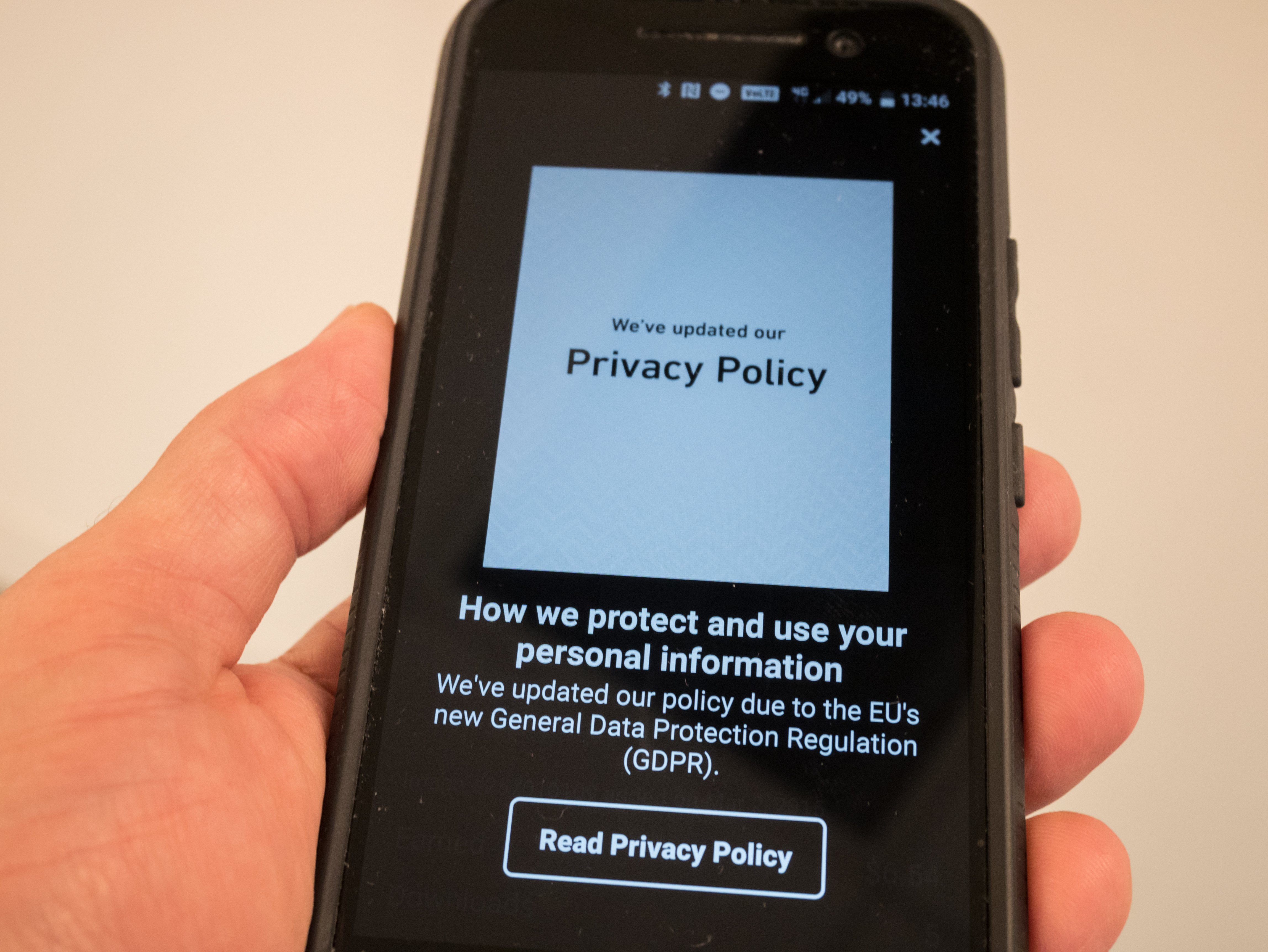
The General Data Protection Regulation (GDPR) that went into effect in May 2018 facilitates data portability, one of the measures set out in the Digital Standard. Consumer Reports’ Allen St. John breaks down the implications.

Inside Cybersecurity’s Rick Weber reports on OTI’s role in developing the Digital Standard.

Inforsecurity Magazine’s Tara Seals reports on OTI’s role in developing the Digital Standard.


The home page of Ranking Digital Rights, a Digital Standard developer.

The Consumer Reports Digital Lab’s landing page for the Digital Standard.