A Disaster-Prone Place
http://blog.sina.com.cn/s/blog_8d3799ba0100y11p.html, Public Domain, https://commons.wikimedia.org/w/index.php?curid=18840497
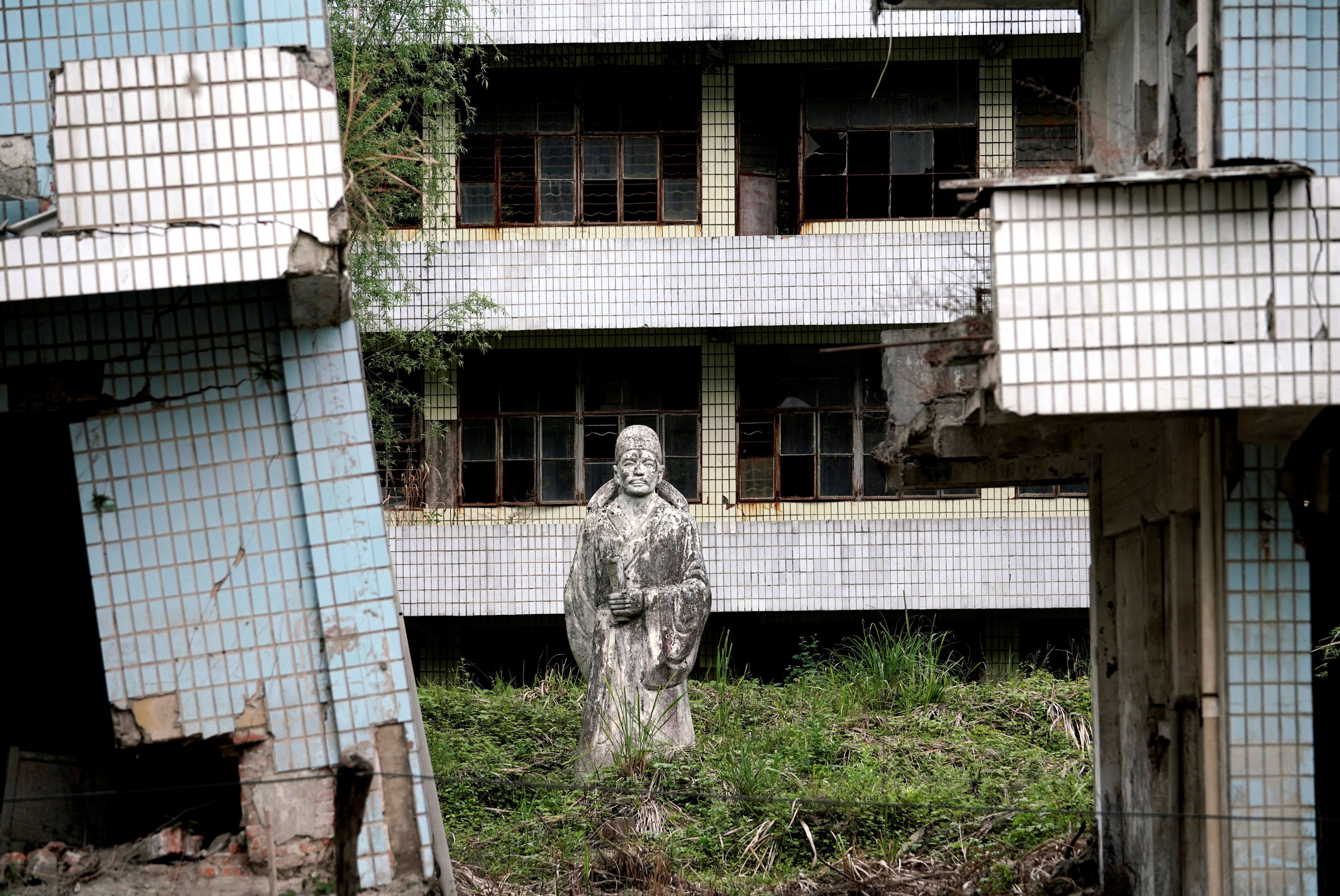
Disasters have long been a fact of life in the Pacific, from the Indian subcontinent to the Hawaiian Islands. The region has tempestuous seasons, active tectonic plates, a “ring of fire” of volcanoes, and dramatic topography. These conditions create what can be a violent natural environment. At the same time, the population of the region is fast-growing, with many people moving from rural areas into cities accompanied by, for some, rising incomes. Now climate change is ratcheting up the severity of natural disasters. This high hazard, high vulnerability, high value situation translates to a high risk location. While governments in the region and around the world are getting better at meeting these challenges, extreme events have a history of overwhelming even the best prepared communities, as the current pandemic unfortunately now shows.
Earthquakes and Tsunamis
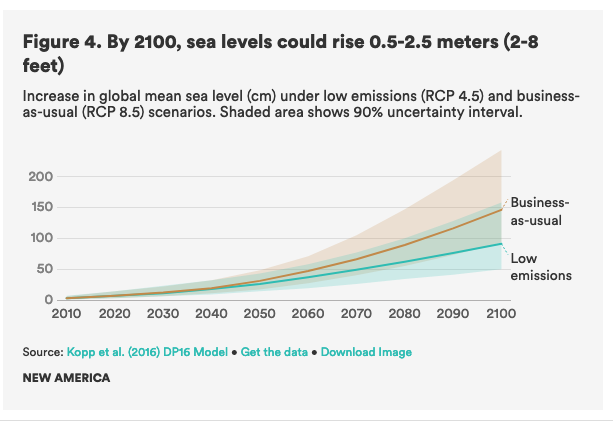
Historically, the most destructive disasters in the region, counting in both lives lost and dollars spent, have been earthquakes and the tsunamis that sometimes follow. These tend to be unpredictable, sudden onset disasters, which is part of their destructive power. Although climate change does not generally affect earthquakes and tsunamis, it may increase the reach of these events. Sea-level rise, for example, amplifies coastal flooding and tsunamis, even as already large coastal populations in the region continue to grow and put more people in harm’s way.
Tropical Cyclones
After earthquakes and tsunamis, tropical cyclones are the leading cause of disaster deaths in the region. There is considerable variation, with a high frequency of such storms in the Western Pacific Basin, and fewer but more powerful storms in the Northern India Basin. In general, the United Nations Intergovernmental Panel on Climate Change and other scientific experts expect that warmer oceans will fuel larger storms, and there is already, a noticeable trend over the past 30 years toward more big storms.
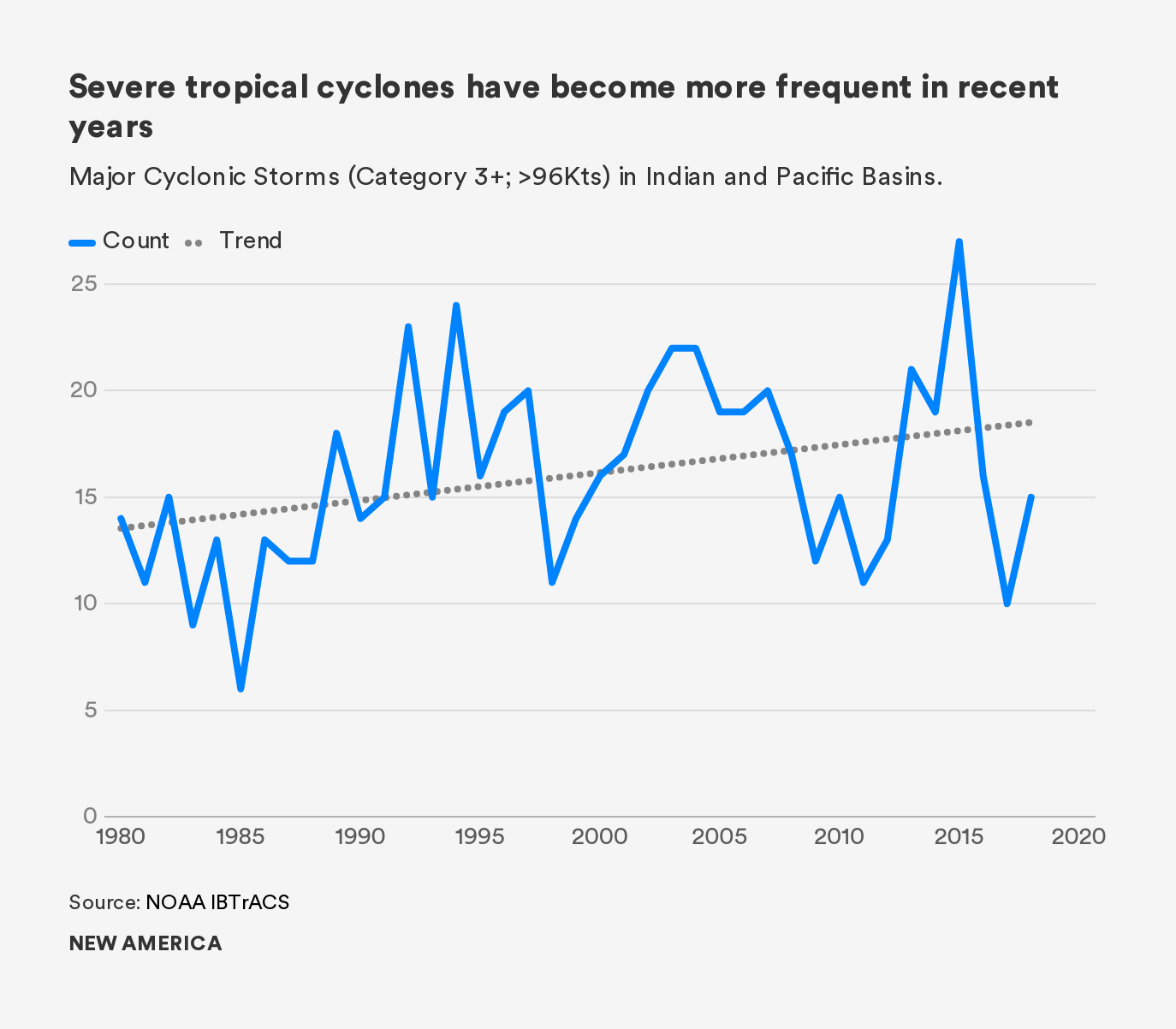
This increase in extreme storms is of particular concern, as it is the most severe storms that cause the highest numbers of deaths and property damages. At the same time, communities have a hard time building for the least frequent but most extreme events, which means that all the measures that can mitigate damage, such as early warning systems or flood control infrastructure, are likely to be overwhelmed by the biggest events. Investments in resilience are important to reducing the toll from such disasters, but an increase in more severe storms may inescapably mean an increasing demand for humanitarian assistance and relief efforts.
River Floods
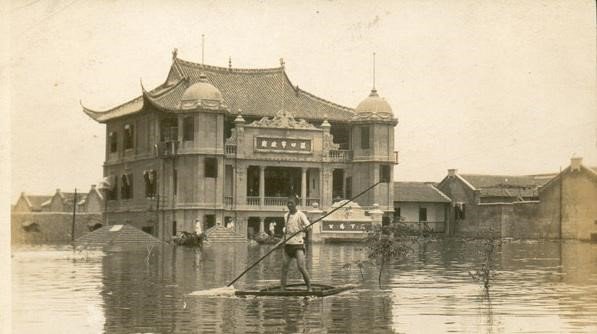
The map of Asia shines with blue ribbons of water, including some of the largest rivers in the world. These river basins, combined with intense rainfall in some areas, contribute to frequent seasonal flooding, a costly but not unpredictable disaster that can affect broad land areas. Economic development and the rise of cities have been a mixed blessing, bringing some infrastructure that has mitigated flood risks, and some development that has made them worse. Climate change is certainly exacerbating these seasonal floods, increasing both average and extreme rainfall in some places.
Drought
Drought, a slow moving disaster that covers wide areas, is not simply the absence of water; it is the inability to get enough water at the right time in the right place. For rainfed agriculture, for example, a period without precipitation during critical points of the growing season or a late onset of the monsoon season can be a catastrophe. Climate change is likely to increase this kind of drought across the region, with drier dry seasons and less predictable monsoons. Compounding this trend, in many parts of South and East Asia, water stress is already a significant issue with population growth, economic development, and increased evaporation straining aquifers and reservoirs. While climate change will increase risk for rainfed and subsistence agriculture, other forms of drought risk will depend more on how countries manage their water resources.