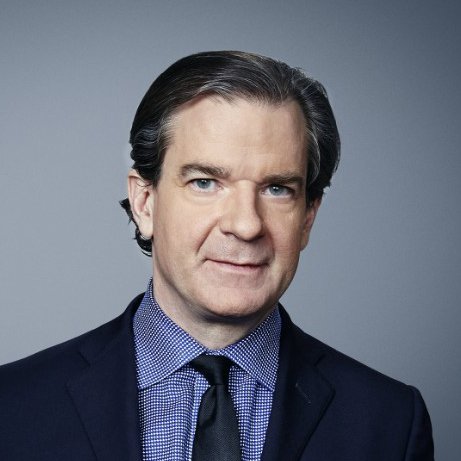
Peter Bergen
Vice President, Global Studies & Fellows, New America; Professor of Practice, Arizona State University; Author, All the Presidents’ Wars
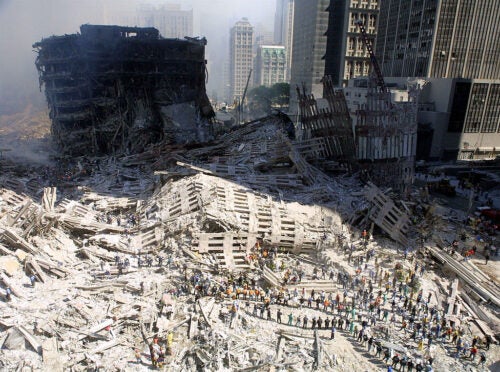

Few people have spent as much time analyzing the forces behind 9/11 as Peter Bergen. Having produced the first television interview with Osama bin Laden in 1997 when he was 34 years old and spent the decades since studying counterterrorism, Bergen brings a rare and authoritative perspective on the attacks that reshaped American life. His new book, written with David Sterman, All the President’s Wars, offers a deeply reported account of what followed—tracking the United States’ war on terror across four presidential administrations.
We sat down with both global security experts as they reflect on the legacy of September 11, share lessons learned, and offer advice for the next generation of national security professionals.
Editor’s note: This conversation has been edited for length and clarity.
This week, the world will mark 25 years since 9/11. If you had to sum up the global war on terror in just a few sentences, what would they be?
Peter Bergen: Wow. Well, the “war on terror” is as much an epoch in American life as the Cold War was for previous generations. Obviously, the stakes are not as existential in the same way—there was no mutually assured destruction. But it was a defining era in American life. And we are still in that era today.
When President Donald Trump announced the Iran War, he framed it as a war against the number-one state sponsor of terror, an imminent threat about to obtain nuclear weapons, which was very similar to the framing that George W. Bush had in the lead-up to the Iraq War.
The war on terror has shaped the outcome of multiple presidential races and changed Americans’ perceptions of and trust in their government. It also had a huge effect around the Muslim world in ways that were very unpredictable. If you’d said in 2002 that the United States would conduct major military operations in eight countries around the Muslim world that were in some way or another connected to this idea of terrorism, that would’ve seemed a very improbable statement. [Editor’s note: Those eight countries are Afghanistan, Iraq, Iran, Libya, Pakistan, Somalia, Syria, and Yemen.] But my students, even the graduate students, were either not born or were very young children when 9/11 happened. And so it seems like an event from distant history, but it’s had a very long tail in its effects on the American body politic and on the world.
Since 2001, the U.S. has funneled trillions of dollars into waging three major conflicts—Afghanistan, Iraq, and now Iran. In reflecting on America’s wars over the last quarter-century, what strikes you as a major lesson?
Bergen: The United States is very good at breaking things and killing people, but it’s not very good at considering, “What does the day after look like?” Essentially, when the guns fall silent, what happens? Again and again, we’ve not thought this through, whether it’s overthrowing Saddam Hussein in three weeks and then what followed was years of war, the rise of ISIS [the Islamic State of Iraq and Syria], 200,000 Iraqi civilians dead, and 4,500 American service members dead, as well as thousands of U.S. contractors, and Iran being the sole winner of the Iraq War, according to an official U.S. Army history of the war.
Machiavelli says, “Wars begin when you will, but they don’t end when you please.” People thought that World War I would be over in the summer of 1914. Obviously, that didn’t happen.
We defeated ourselves in Afghanistan by pulling out at the end, and now the Taliban are back in power. The post-9/11 American wars are mostly a record of failure and hubris, but we did get some things right. In Afghanistan, we overthrew the Taliban in three months, and there was a semi-functional, semi-democratic state where women could work and girls could be educated. Hundreds of independent media outlets were established. Child mortality plummeted. Women’s access to health care massively increased. However, the Trump administration negotiated not a peace agreement with the Taliban but a withdrawal agreement, which the Biden administration went through with. And now the Taliban are more powerful, better armed, and more radical.
The big lesson to me would be, if you’re going to go to war, you need a checklist of things that are important for success. You’d want an actual imminent threat. You want public buy-in. You want congressional authorization. You want NATO allies. You want a UN resolution, hopefully in your favor. You want to understand the environment you’re going into. And often we have no idea. And if you think about that checklist, we did none of those things during the present Iran War, and only some of them during prior wars. In the case of Iran, there wasn’t an imminent threat. There was no congressional authorization. There was no NATO. There was no UN resolution. There was very little understanding of the environment that we were going into, at least by senior Trump administration officials.
David Sterman: Another key lesson that shows up throughout the 25-year history of the war on terror is, it’s important to know what the United States wants when it initiates and makes major decisions in a war. The U.S. has often failed to understand and state its true objectives or to wrestle with trade-offs between different possible aims.
Beginning in the hours after 9/11, there was this desire to hit Iraq. Of course, Iraq and Saddam Hussein had nothing to do with 9/11. But this desire intruded upon even the relatively successful initial invasion of Afghanistan, when it came to Tora Bora, where there was a chance to capture or kill bin Laden that was bungled in part because key decision-makers were already turning towards planning for Iraq. It also eventually drew resources away from Afghanistan more broadly.
Part of the failure to get bin Laden at Tora Bora may simply have been the difficulty of the operation to begin with. But part of it also has to do with competing visions of what the U.S. wanted to do in Afghanistan and the war on terror more broadly, for example, whether the real enemy was states like Iraq. There was also dispute over the relative importance of getting bin Laden versus managing Afghan governance. And that reappears as a debate in the late Bush and Obama years, when the Taliban reassert themselves as an insurgency: Is the primary objective to destroy and degrade al-Qaeda, or is it to destroy or degrade the Taliban?
And, likewise, I think it’s very clear when looking at the Iran War that there seemed to have been uncertainty about whether the administration wanted regime change or to just degrade certain capabilities that the Iranians had.
Another lesson of this period is that you can only exert so much control over a war once it begins. It is easy with the benefit of hindsight to imagine more rational and detailed decision-making than may have been possible at the time. But the U.S. could certainly have exerted more control over its own theories of victory and what it was seeking than it did. The U.S. often did not because ultimately it did not know what it really wanted.
The United States is very good at breaking things and killing people, but it’s not very good at considering, ‘What does the day after look like?’
Tell us about your book, All the President’s Wars.
Bergen: The book really is a story about the ever-increasing power of the imperial commander-in-chief. After 9/11, Bush went to war on the basis of a “preventative” war doctrine. It was a new doctrine at the time: this idea that you attack another country even before they pose a threat, just in case they might pose a threat. And then Obama became the drone president, conducting very substantial drone campaigns in countries we were not at war with—Pakistan, Somalia, Yemen. And then he went to war in Libya without congressional authorization and overthrew Libyan dictator Muammar Gaddafi. And he said the lack of planning for the day after Gaddafi was overthrown was his biggest mistake. And Libya then had a 10-year civil war, and it still has two governments today.
We’ve seen a great expansion in the claims the commander-in-chief has for his powers, including now the ability to go after “narco-terrorist organizations,” which is a kind of oxymoron because there are very few narco-terrorist organizations. Most drug cartels are not interested in violence against civilians for political purposes; they’re just interested in making money. So we’ve expanded the definition of the war on terror to include these drug cartels. And then the Iran War was justified under some of the same rubric as the war in Iraq. And Trump basically ignored Congress both when starting the war and when it passed a resolution trying to rein him in. We’ll see if that changes if he loses the House and the Senate, if Congress is really able to pull back some of the powers that he’s claimed for himself.
Is the U.S. any safer today than it was in 2001?
Bergen: Yes. We hugely damaged al-Qaeda. We hugely damaged ISIS. The TSA didn’t exist on 9/11. The Department of Homeland Security didn’t exist on 9/11—and it’s now the biggest U.S. government agency outside the Pentagon. On 9/11, the intelligence budget was $20 billion. Today it’s $100 billion. On 9/11, there were 30 joint terrorism task forces. That grew to more than 100. On 9/11, there wasn’t public knowledge that this was an issue.
Today, some may still think of the U.S. as vulnerable to a major foreign terrorist attack, which, by this point, we’re just really not.
The threat has not gone away, but we’ve managed it. And I use the word “manage” in a very specific sense because “manage” is not a word politicians want to use. They want to say “defeated,” “destroyed,” “annihilated.” And a politician won’t say we’ve managed a threat, or it’s rare for them to say it, but that’s what we’ve done. And we’re never going to end it because terrorism as a tactic has been around for millennia. We had a fair amount of terrorism in the 1970s, with the Weather Underground, the Black Panthers, Puerto Rican nationalists, lots of hijackings. People tend to forget. We’re quite a violent society as a general proposition.
But I think we’re certainly safer. On 9/11, there was very little of this national security state in place. And of course, that comes with some costs as well. We’ve seen a sort of paramilitarization of the Department of Homeland Security. We’ve seen the ability of intelligence agencies to get inside everybody’s communications. But that said, we are definitely safer than we were on September 10th, 2001.
Sterman: It also depends on the “safer from what?” question. If the question is safe from attacks by al-Qaeda or almost any jihadist foreign terrorist organization, there’s no question that we’re safer. After 9/11, there was a semi-annual survey of experts and commentators on the various threats to the U.S, and people routinely estimated that there would be a 9/11-scale attack over the short to medium term. And we’re here 25 years out, and it just hasn’t happened.
But what was the cost paid to achieve that? And was the cost overpaid when it could’ve been achieved with fewer actions? We’ve seen a degradation of the international community norms, and as a result, other threats have certainly increased. And then there are ways that our world has become less safe. Journalists in the region, for example, are far less safe today, whether they’re targeted for deadly attacks or for hostage-taking, than they were in 2001. You can’t travel as easily. Reporters often can’t talk as easily to hostile parties to the U.S. because they may be subject to kidnapping. And of course, the death toll in the region of these wars has been significant.
Bergen: It all came at a pretty high cost: $6 trillion of Pentagon, State Department, and veterans care [combined spending on the Iraq and Afghanistan wars], projected and current, 45,000 Afghan civilians dead, not including quite a large number of Afghan soldiers and police, more than 60,000, and then also a cost to America’s standing in the world.
When historians of the twenty-second century look back on us, will they say that 9/11 set in motion some things that ended our global dominance? The incompetence of the Iraq War, the botched Afghan withdrawal in 2021, the stalemated Iran War, and so on… So yes, we are safer, but it could’ve come at a much lower cost.
New America is co-hosting the Future Security Forum with Arizona State University next week. Why are these kinds of panel discussions still so critical in 2026?
Bergen: We’ve assembled an amazing group of some of the most important practitioners of counterterrorism and some of the most important academics and journalists studying and reporting on terrorism. And it’s going to be great to have them all in one place, talking about the lessons learned. But it’s not just about what the panelists are saying; it’s also about meeting like-minded people and meeting people you’ve never encountered. Some of my closest professional friendships have come out of a conference. There’s a certain kind of fortuitous aspect to attending a conference where you actually meet people, and you’re not on a screen, and you can actually interact and socialize.
Sterman: There’s also something particularly valuable at a moment like this—the twenty-fifth anniversary of the 9/11 attacks—to bringing together so many people with a breadth of expertise from across those 25 years. One of the challenges of grasping the epoch of the war on terror is that because it has shaped our politics and the world for so long, it has so many stories or lessons within it that can easily be missed if you’re not taking the opportunity to look back.
What advice do you have for early-career professionals interested in conflict resolution or counterterrorism?
Bergen: Well, I can tell you the David Sterman story. David started as an intern in my program at New America 13 years ago, and he was brilliant. David is extremely smart, very hardworking, and prepared to do whatever is required. My advice is, it doesn’t matter how senior you get in any organization—you’re always going to have to deal with things you prefer not to deal with. Be prepared to do both the small things and the big things. If you can’t do both, you’re not going to succeed. Some things you don’t particularly want to do seem pretty small-bore, but they’re necessary. And David is a sort of exemplar of that. He’s now the deputy director of the New America Future Security program.
And the other piece of advice is, do what you’re interested in. When I write a book, if I find myself being bored by the writing, I’m like, “Well, if I’m bored, you can only imagine the boredom of the reader.” You’ve got to focus on the things that you are interested in, and the rest will follow.
Vice President, Global Studies & Fellows, New America; Professor of Practice, Arizona State University; Author, All the Presidents’ Wars
Deputy Director, Future Security, New America; Term Member, Council on Foreign Relations