Sara Hendren
Program Fellow, Education Policy; National Fellow, 2018
New America 2018 Fellow Sara Hendren spoke about her book What Can a Body Do? for “Three questions” in The Fifth Draft, the Fellows Program’s monthly newsletter. Hendren is a professor at Olin College of Engineering whose work focuses on disability, design, and the built environment.
Your Fellow’s project is going to be a book about the unexpected places where disability is at the heart of design both in everyday objects and environments. Could you tell us a little more about it and why you chose it?
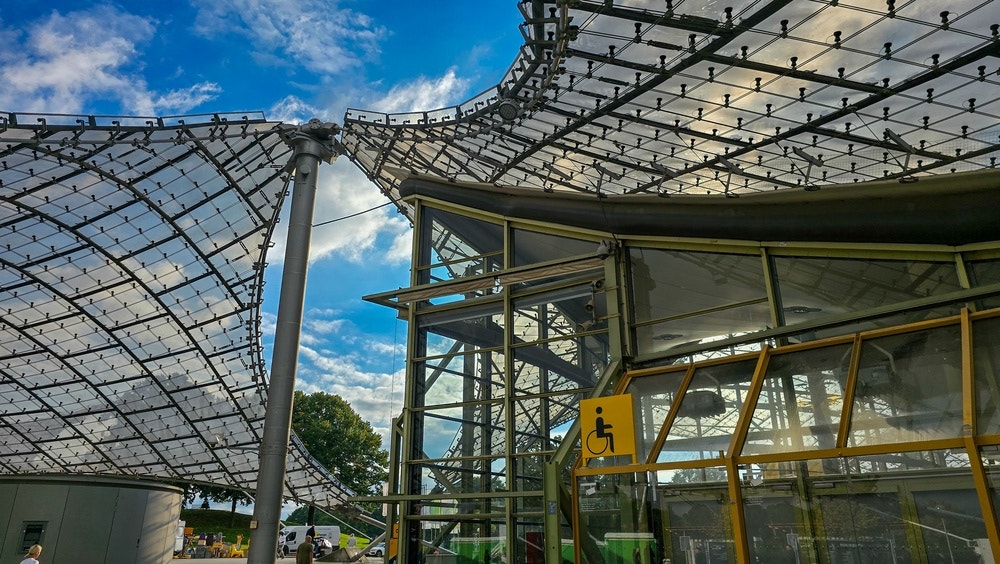
The book is significantly about how the very ordinary features of the designed world are a rich index of ideas: inherited ideas about bodies and cultures and relationships and more. The steps leading to a building, the presence or absence of sidewalks, the shape of a doorknob—all of these things had to come into being as a result of human deliberation that was packed with assumptions about the human body, about a desirable life, about efficiency, cost-benefit analyses, and more.
I’m telling those stories of design to invite people to consider disability in their lives with a robust imagination: to see their own aging and the aging of their loved ones, their bodies and minds and emotions as working in concert—or at profound odds—with the built world. I’ll be talking about furniture, kitchen tools, living rooms, city streets and more, where re-design is a way to ask questions. Whose bodies are normal? Where is vulnerability in every human life?
Design is a bridge between the body and the world—public space, education, transportation, employment, and more. If we take seriously what that means, then everything changes.
What is your process for working on a book of this nature? Are you out in the field exploring new design concepts, interviewing other design creators to find out more about their projects, working on designs yourself, a combination of these, or something else entirely?
I’ve spent a lot of time in the last near-decade working as an artist and designer in an engineering context, collaboratively developing prosthetics alongside people with disabilities. With my students, I’ve worked on things like a stage-scale ramp for wheelchair dancing—what looks like “assistive technology” or prosthetics, but is doing something more. That ramp, designed with wheelchair dancer Alice Sheppard, is creating the conditions for beauty, where disability is actually a resource: it’s a constraint that, like all design constraints, produces creativity. Working on projects like this has led me into scores of conversations, academic and personal, about the designs being built by and with people with disabilities, and I wanted those stories to be heard. The stories serve as an entry-point to a much deeper series of questions about what it means to be human.
Is there is a commonly held belief about ability/disability that you frequently encounter? If so, what would you want the world to know about it that would make them think differently?
My book and my work is influenced by several decades of scholars and activists with disabilities who’ve been articulating a central claim: that disability is not just a condition of the body, but that it’s also a socially produced condition. Wheelchairs are made for bodies with non-normative mobility, but they’re also made to redress the shape of cities and buildings that have been built with stairs instead of ramps! Design is a bridge between the body and the world—public space, education, transportation, employment, and more. If we take seriously what that means, then everything changes.
I am also raising three children, one of them a son with Down syndrome, in a nominally progressive public school system. But the challenges remain for him, and they’re not fixes for physical mobility or sensory assistance. I’m asking myself how and where you design for difference that’s harder to name. Whose life is worth including, and to what end?
Subscribe here to receive next month’s issue of The Fifth Draft.
Program Fellow, Education Policy; National Fellow, 2018