Emily Ladau
Disability Rights Activist, Writer, and Speaker
Obstacles abound for people with disabilities to exercise their right to vote, but policy solutions could eliminate these barriers.
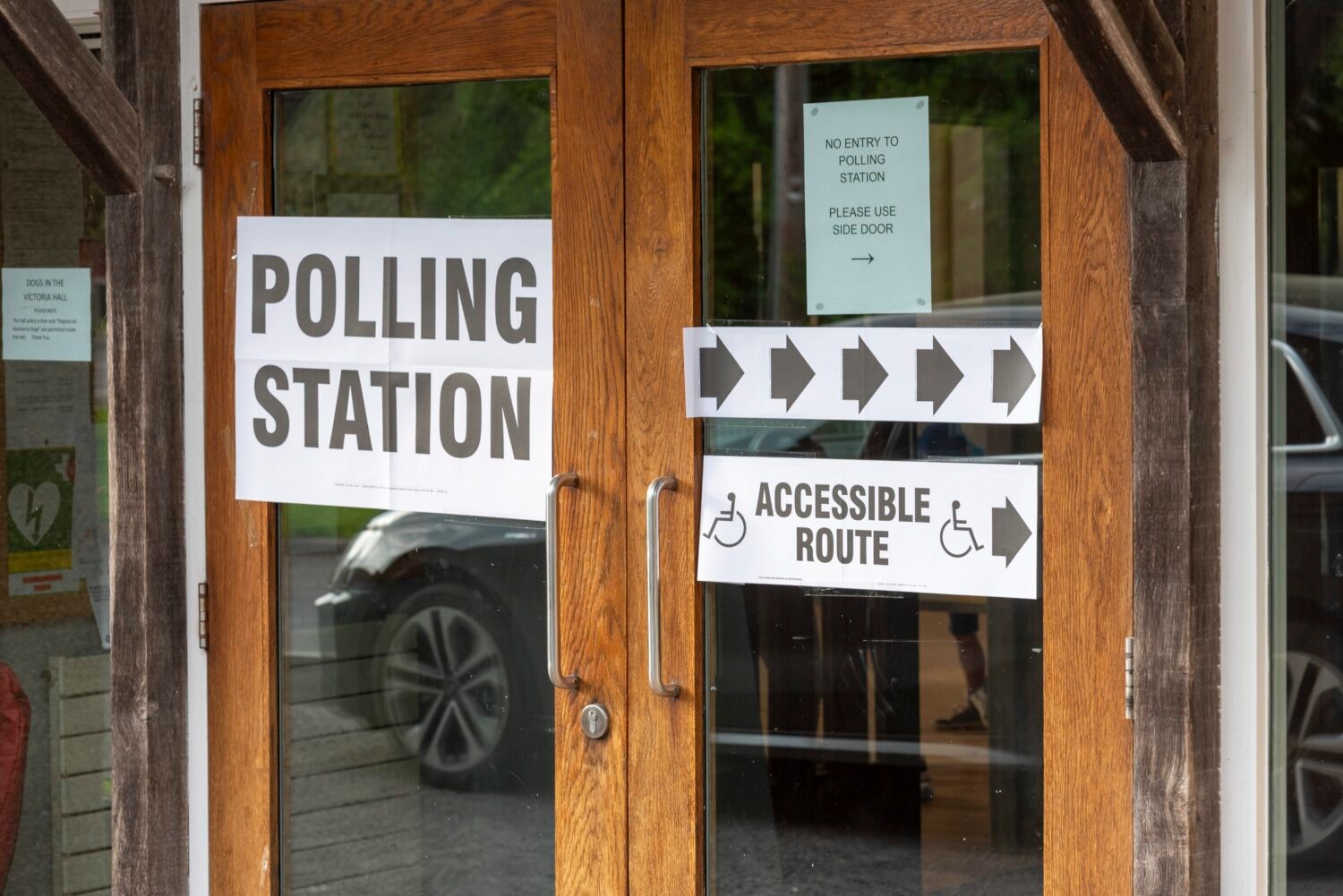
Democracy only works when everyone can take part, but for disabled Americans, the right to fully participate is under serious threat. As voting laws have become increasingly restrictive, a tangled web of procedural barriers continue to put significant limitations on voting accessibility and puts the privacy of voters at risk.
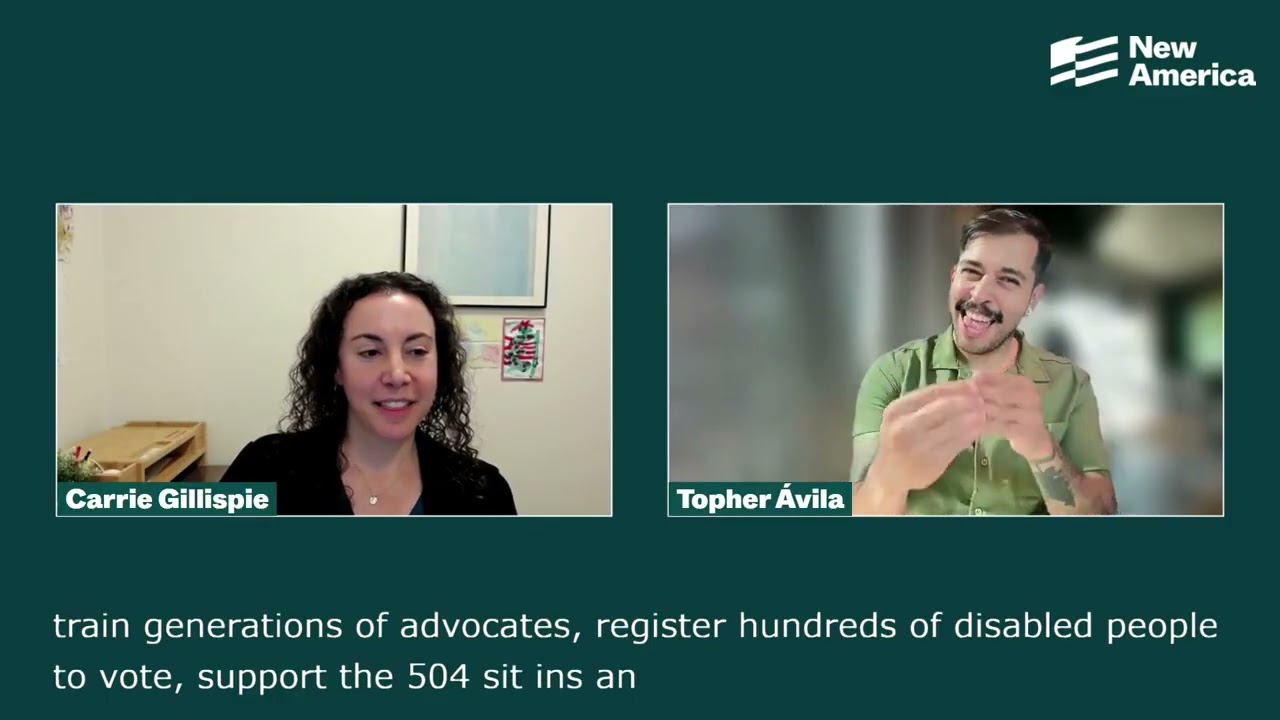
The urgency of these changes were at the forefront of New America’s recent event, Power at the Polls: Confronting Barriers to Accessible Democracy, featuring a panel of experts on democracy and elections, as well as leaders in disability voting rights.
Rebecca Cokley, Program Director for U.S. Disability Rights at the Ford Foundation, kicked off the event by rallying the disability community to meet the moment: “Having a seat at the table and using our voices is now more important than ever,” she said, “as we continue to see the programs and services and the rights that belong to us as disabled Americans come under attack.”
The disability community indeed continues to show up as best they can; according to the U.S. Election Assistance Commission, 62 percent of eligible voters with disabilities voted in 2020. And notably, 53 percent of people with disabilities voted by mail, compared to 42 percent of people without disabilities. But access to this option, along with legal impediments being put in place across the voting process, have caused voting to become what Lee Drutman, senior fellow in the Political Reform Program at New America, described as “an obstacle course.”
As Drutman explained, there are approximately 10,500 separate jurisdictions in the United States, each of which sets its own rules. The people who struggle most because of this, Drutman said, “are the ones who have the least slack: people with disabilities, older voters, rural voters, low-income voters, people who move.”
The impact is worsened by cuts to federal election funding, which fell from about $825 million in 2020 to just $15 million in 2025. “When resources are tight…accessibility work is often the first thing that goes,” Drutman pointed out.
Drutman also provided an overview of the SAVE Act, another major barrier looming over accessible democracy, which has passed the U.S. House but not the Senate. The bill would require showing proof of citizenship in person to register to vote and showing a government-issued photo ID to vote or providing a copy of it to vote by mail. The bill, Drutman said, targets noncitizen voting, which is “extremely rare.” However, he noted that “the test is not whether you are a citizen. It’s whether you have the right papers.”
While this poses a challenge for the estimated 21.3 million Americans who lack ready access to a passport or birth certificate, the challenge is amplified for the 20 percent of disabled Americans who do not have a driver’s license. Drutman asserted that by sowing “chaos and uncertainty about who is able to vote and under what conditions,” it deters people from showing up.
Beyond legal restrictions, Sydney Saubestre, senior policy analyst on the Privacy and Data Project at the Center for Democracy and Technology, raised flags about “a concerted effort, not just to use voting laws to disenfranchise people, but actually to use data to disenfranchise people.” She pointed to the efforts of the current administration to use intimidation tactics by demanding access to voter roll data and attempting to reclassify people through census data, skewing what she describes as “the true portrait of America.”
These tactics are also a major privacy issue. “Privacy is fundamentally a question of agency,” Saubestre said, and nowhere more so than in voting. The result, she warned, is a “chilling effect where you’re less likely to participate in all of the systems” out of fear of what knowledge could be gleaned by a person’s actions.
Saubestre also named privacy and accessibility issues built into the voting process. For instance, she noted, “accommodations [at] polling places actually require people to out themselves, because they might have to use a different machine or they might have a ballot that looks a little bit different than other people’s.”
For now, power at the polls remains at stake for disabled Americans, one of the largest voting blocs in the country.
While inaccessibility is a very real problem within the voting process, it has also unfortunately become a guise under which legislators are attempting to further disenfranchise voters. Dom Kelly, co-founder, president, and CEO of New Disabled South, illustrated this reality. “One of the main reasons why disabled people can’t vote in the South,” he said, “is because our legislators use disabled people as a reason to stop Black people from voting.” He specifically highlighted action taken in Georgia in 2018, when then-Secretary of State Brian Kemp, who was the Republican candidate for governor, attempted to close nine out of 13 polling places in a majority-Black county due to inaccessibility, rather than actually making those polling places accessible. In the end, Kemp was unsuccessful.
Since 2020, Kelly said, there has been a wave of anti-voting legislation, particularly in the South. One such example is the laws passed in multiple states that limit voter assistance by making it a felony to help a non-family member request, fill out, or return an absentee ballot. “While those laws may actually not be enforced,” Kelly explained they are “designed to intimidate voters,” and have stopped some from voting. Ultimately, Kelly said, “there’s so much rampant misinformation and disinformation [and] the constant changing of voting laws is confusing to voters, not just disabled voters, to everybody.”
Asked what they would change about the current voting rights landscape, the panelists encouraged structural fixes. Drutman called for an independent federal election agency that sets “a floor and consistent baseline for accessibility” everywhere, and for proportional representation so “every vote matters.” And Saubestre would “make privacy and accessibility the default rather than the accommodation” to protect people’s “time, privacy, and dignity.”
Kelly called for the option to enact a system for people to vote remotely, and also shined a light on a promising bipartisan curbside voting bill for Georgia’s next legislative session. It would serve disabled and aging voters alike, including many in rural counties. “Access is not just for disabled voters, it’s for all voters,” he said.
For now, power at the polls remains at stake for disabled Americans, one of the largest voting blocs in the country. Protecting the disability community’s right to vote means treating accessibility and privacy as essential to a functioning democracy, and not as afterthoughts. As disability policy analyst and advocate Mia Ives-Rublee urged at the close of the event with a direct appeal: “Please go out to vote, if you can.”
Watch a recording of this event below.
Disability Rights Activist, Writer, and Speaker